REVIEW · ATHENS
Athens: Early Morning Guided Tour to Acropolis and Museum
Book on GetYourGuide →Operated by Key Tours · Bookable on GetYourGuide
First light makes the Acropolis feel like a secret again. I like how this tour uses early entry to get you on the hill before the worst crowds, and it pairs that with a story-forward, licensed guide (the kind of guiding you hear praised by people who mention guides like Irene and Petros). You’ll also get a practical assist with an audio device, which matters when you’re dealing with crowds and wind on marble.
My favorite part of this setup is what it teaches you while you’re walking—myths, politics, religion, and what you’re actually looking at—so the Parthenon and the smaller temples stop feeling like random ruins. The Acropolis Museum then connects the dots by showing the originals and related finds, with natural light doing most of the heavy lifting. One possible drawback: this is a moderate uphill walk with uneven, sometimes slippery stone, so it’s not the best match if your legs are sensitive.
In This Review
- Key points to know before you go
- Early-Morning Access to the Acropolis: What It Changes for You
- The Route on Foot: From Hadrian to the Drama of Dionysus
- Propylaea, Athena Nike, and the Parthenon: The Masterpiece Sequence
- Erechtheion and the Long Lookout Break
- Walking Down With Meaning: Why Dionysiou Areopagitou Matters
- Acropolis Museum: Where the Story Becomes Objects
- A heads-up about museum-access expectations
- Pace, Comfort, and Practical Details That Decide the Experience
- Price and Value: Is $35 a Good Deal?
- Guides and Storytelling: What People Remember
- Should You Book This Early Acropolis and Museum Tour?
- FAQ
- How long is the Athens early morning Acropolis and museum tour?
- Is the Acropolis ticket office line skipped?
- Does the tour include entrance fees?
- Where does the tour start?
- What languages is the tour available in?
- What should I bring?
- Is this tour suitable for wheelchair users or mobility impairments?
- What is the cancellation and refund policy?
Key points to know before you go
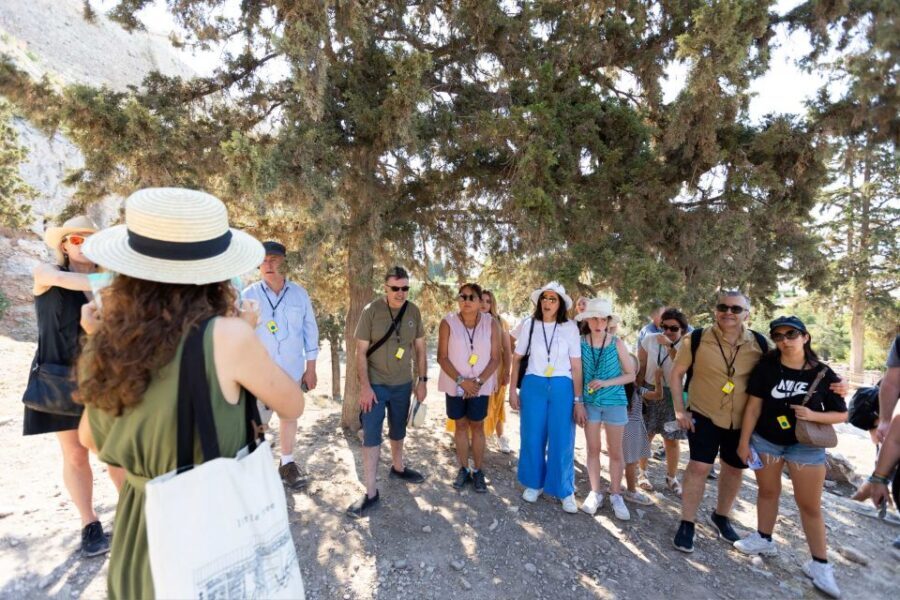
- Beat the crowds with early access, so you’ll enjoy key viewpoints with less push and shove
- A licensed guide tells the myths tied to each stop, from Dionysus to Athena
- Acropolis + museum in one flow, so you see artifacts in context right after the ruins
- Timed entry considerations can matter for certain age/free admission situations
- Walking-heavy, not wheelchair-friendly, and you’ll want good grip shoes
- Tour pace includes breaks, but you should still plan for a steady climb
Early-Morning Access to the Acropolis: What It Changes for You
The big reason to book this particular tour is timing. Starting early gives you a cooler climb and a calmer first look at the hill, when the light is softer and the crowd energy hasn’t fully hit yet.
You also avoid the classic Athens headache: standing around while others stream in, then realizing you missed prime photo angles. With this format, your guide gets you moving toward the most important sights while the day is still fresh.
You can also read our reviews of more guided tours in Athens



The Route on Foot: From Hadrian to the Drama of Dionysus
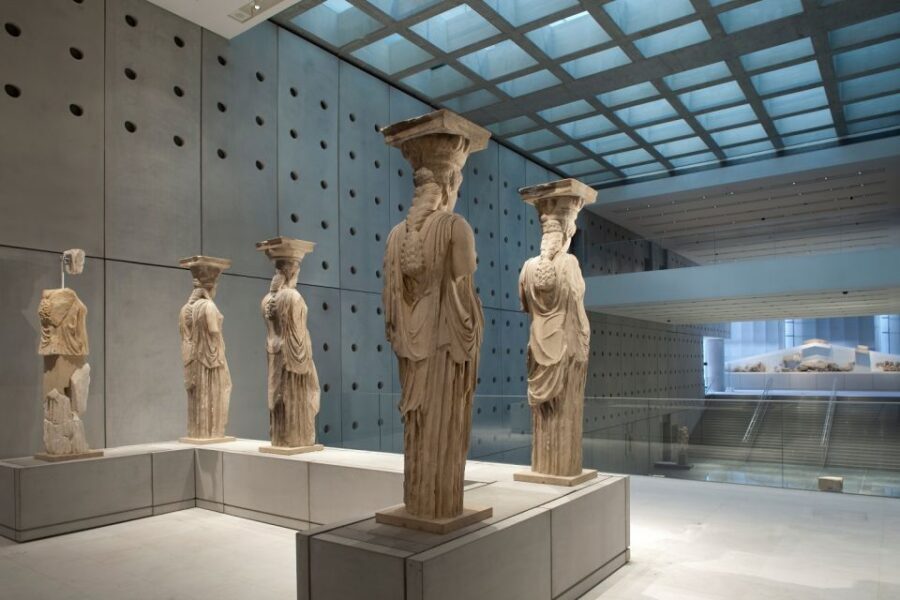
Your tour doesn’t just drop you at the Parthenon. You build context first, starting down at the Arch of Hadrian, a quick stop that helps explain Athens’ shifting eras rather than treating the Acropolis like one static museum piece.
Next comes the Theatre of Dionysus, where the focus turns to ancient drama—an Athens theme people often associate with the wrong century or miss entirely without guidance. Your walk also takes you past the Odeon of Herodes Atticus, which is a great reminder that this hill wasn’t only about temples; it was also a stage for public life.
These lower-slope stops are smart because they help your brain organize what you’re seeing. When you reach the main monuments, the myths and civic purpose land faster.
Propylaea, Athena Nike, and the Parthenon: The Masterpiece Sequence
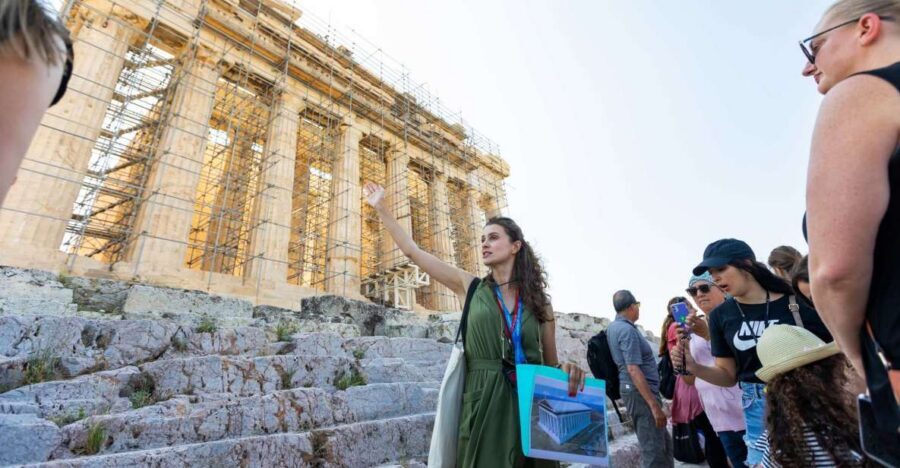
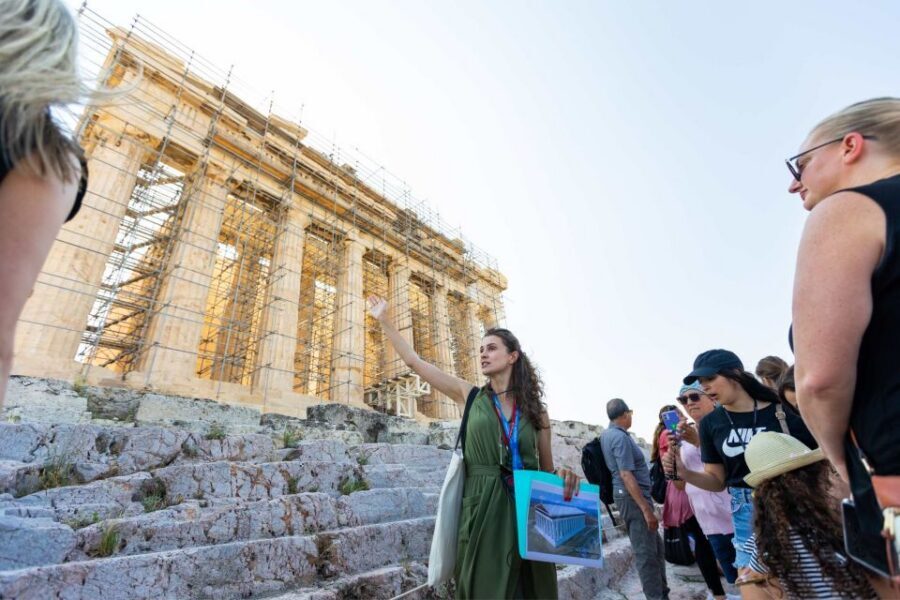
Once you arrive higher, the tour turns into a clean highlight run: Propylaea first, then the Temple of Athena Nike, and finally the Parthenon.
Propylaea is more than a fancy entrance. It frames your entrance into the sacred space and sets the visual rhythm for everything beyond—this is where the hill starts to feel like a designed journey rather than a pile of stone.
At the Temple of Athena Nike, you’ll connect the idea of victory and wisdom to the goddess Athena, which makes the symbolism click when you stand near the structures. Then the tour reaches the Parthenon, the headline monument people come for. With a licensed guide, you’re not just reading a plaque—you’re hearing how the dedication to Athena connects to Athens’ self-image and the political story of the time.
One small practical note: this stretch is where you want your camera ready, since you’ll get multiple photo moments and viewpoints. Also, watch your step as you transition between levels.
Erechtheion and the Long Lookout Break
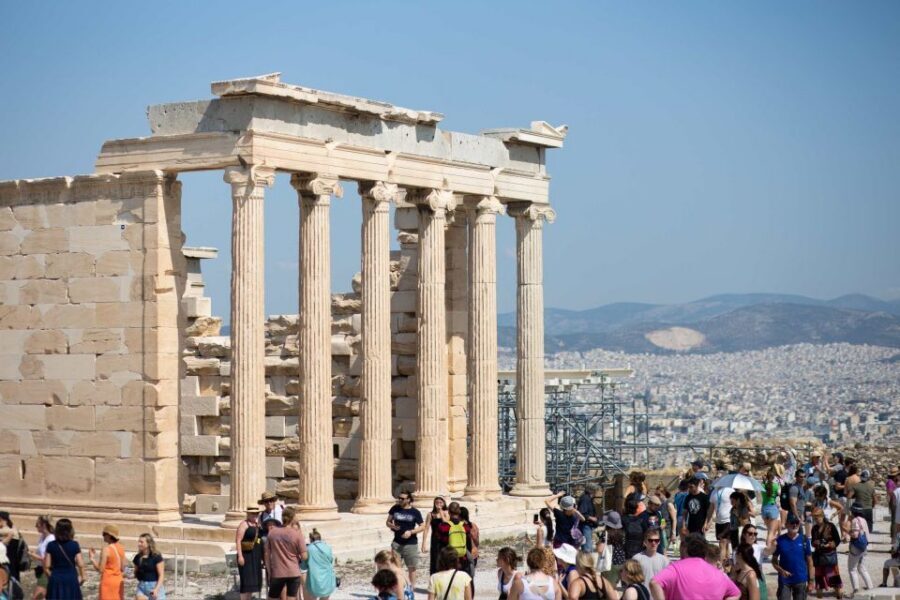
After the Parthenon, the route includes Erechtheion, a stop that’s especially helpful for understanding that the Acropolis wasn’t just one single temple “theme.” It’s a patchwork of different sacred spots and building phases.
Then you get a break with free time and a photo stop. That pause is more useful than it sounds. It gives you a chance to regroup, hydrate, and take in the views without feeling like you must keep up with every spoken detail.
If you’re sensitive to walking uphill, use this moment to slow down and stretch your legs. The view from the top is one of the rewards, but your body has to get there first.
Walking Down With Meaning: Why Dionysiou Areopagitou Matters
After the main hill, the tour continues with a sightseeing walk along Dionysiou Areopagitou. This isn’t just movement on a map. It helps you mentally shift from “temple complex up high” to “Athens as a living city with layers underneath.”
That transition is one reason people feel the tour improves their whole understanding of Athens. You stop treating ancient history like something you can only look at from one angle and instead start seeing how it shapes the city’s layout and identity.
You can also read our reviews of more museum experiences in Athens
Acropolis Museum: Where the Story Becomes Objects
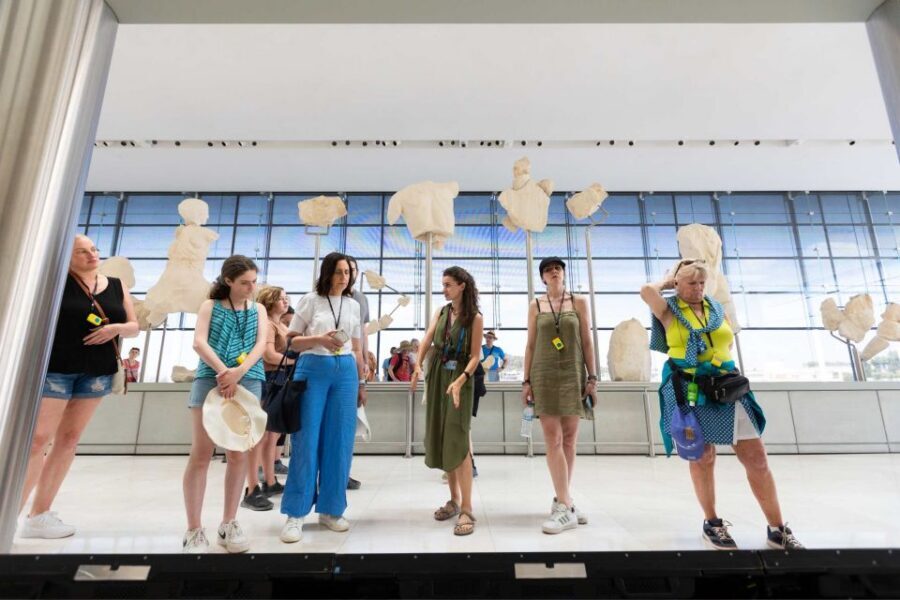
The second half happens at the Acropolis Museum, with about 1.5 hours to explore. This timing works well because it keeps the ruins fresh in your head while you study the artifacts that connect directly to what you saw outside.
The museum is ranked among the top worldwide, and the design supports that reputation. You’ll find multiple galleries, including pieces retrieved from the Acropolis slopes, with archaeological material reaching back to very early periods.
A key detail that improves the visit: original surviving masterpieces are displayed using natural light. That matters for sculpture and architectural elements because the lighting isn’t fighting you as much as in a darker, artificial space.
You can also see excavations under glass floors and walkways. This is the “how we know what we know” part of the experience, where ruins stop being only visual and start becoming evidence you can trace.
Tip for getting the most from the museum time: don’t try to read everything. Use your guide’s pointers to focus on the objects and areas most connected to the stops you already did on the hill.
A heads-up about museum-access expectations
One review concern that’s worth respecting: some people were disappointed that certain excavation viewing areas under the museum weren’t accessible without an individual ticket. The tour includes entrance fees if your selected option covers it, but the exact extras can vary. Before you go, confirm whether your ticket option includes access to the full set of museum features you care about most.
Pace, Comfort, and Practical Details That Decide the Experience
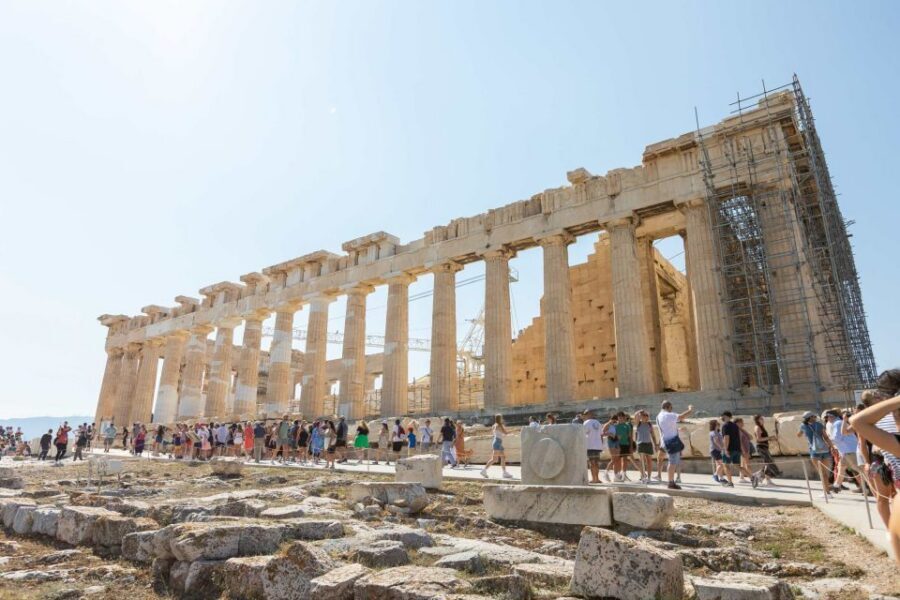
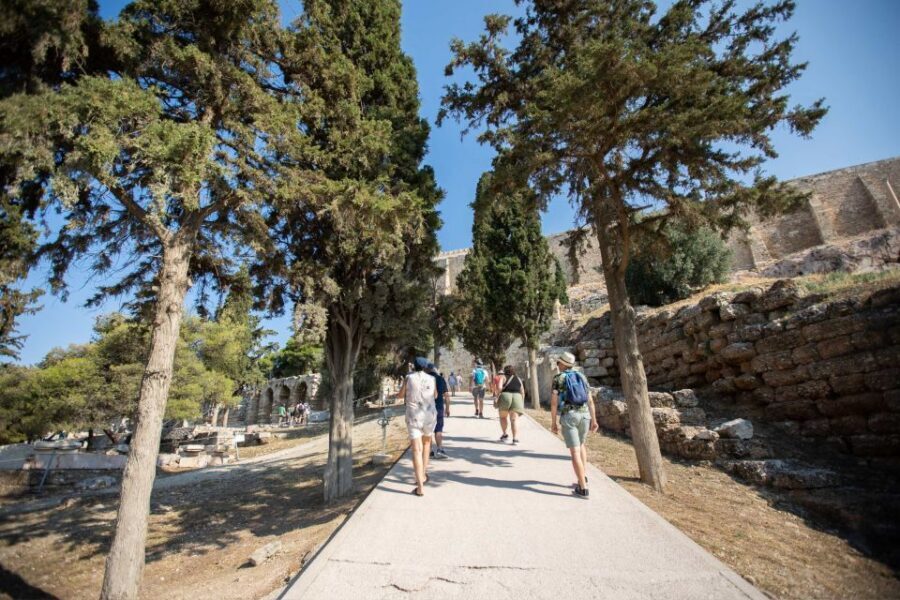
This tour is listed as moderate difficulty, and that’s fair. You’re climbing uphill on uneven ground, and in summer conditions it can feel demanding fast.
Here’s how to make it easier:
- Bring comfortable shoes with good grip for marble steps
- Water and a sun hat are non-negotiable
- Wear a layer you can handle early-morning temperatures, since you’ll warm up as you climb
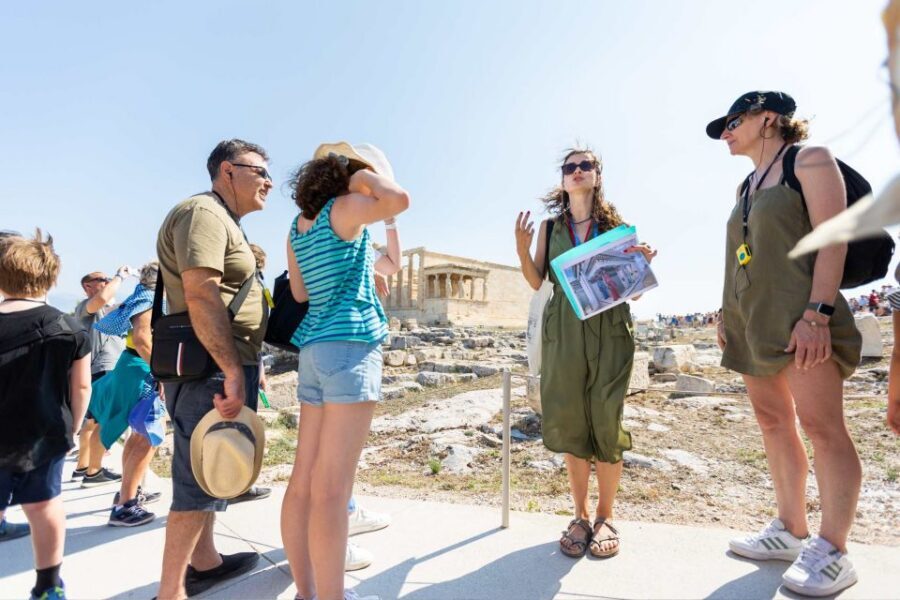
- Use the audio device so you don’t strain to hear in open areas
From the guide feedback, one recurring theme is pacing done with care. Some guides are noted for keeping the group together, checking on participants, and watching footing on slick stone. Still, the terrain is real, so plan as if you’ll be walking for most of the 4 hours.
Price and Value: Is $35 a Good Deal?
At $35 per person for a tour around 210 minutes (about 4 hours), the value depends on the option you select.
If you choose the version that includes entrance fees, you’re bundling guided access plus ticket handling in a single purchase. If you choose an option without tickets, you’ll need to buy entrance tickets yourself at the correct time slot, timed for the tour’s departure. Either way, the structure is designed to get you into the most important parts of both sites without wasting time.
What makes this price feel reasonable is that you’re not just paying for admission. You’re paying for a guided route that connects myths, architecture, and museum objects so you walk away with a mental map, not just photos.
Guides and Storytelling: What People Remember

A strong guided tour is really about clarity and energy, and the guide comments here line up with that.
People specifically praise guides like Irene and Petros for making details feel fun, not robotic. Others mention guides such as Eirini for combining deep explanations with enthusiastic delivery, while still keeping the pacing comfortable for the sites and photos.
There’s also praise for guides who manage the group well and answer questions patiently. One practical detail: if you’re worried about hearing, confirm the audio device will work well for you, since good guides rely on it when a microphone can be too far in open spaces.
Should You Book This Early Acropolis and Museum Tour?
I’d book it if you’re visiting Athens for the first time or if you want your Acropolis visit to come with context. Early access makes a noticeable difference, and the museum portion helps the experience last longer than a quick walk-through.
I’d skip or rethink it if you can’t handle a long uphill walk, slippery stone, or a schedule that keeps you moving through multiple major stops. Also consider your museum priorities and whether you want access to specific excavation viewing areas that may require extra attention.
If you choose it, do it for one reason: you’ll see the Acropolis and then immediately understand it, piece by piece, at the museum.
FAQ
How long is the Athens early morning Acropolis and museum tour?
It runs for about 210 minutes, or roughly 4 hours.
Is the Acropolis ticket office line skipped?
There’s an option that includes skip-the-ticket-office line, which depends on the package you select.
Does the tour include entrance fees?
Entrance fees are included if you choose the option that covers them. If you select an option without tickets, you’ll need to purchase tickets for your time slot before the activity starts.
Where does the tour start?
The meeting point may vary depending on the option you booked.
What languages is the tour available in?
The live guide offers English and Spanish.
What should I bring?
Bring your passport or ID, comfortable shoes, a sun hat, and water.
Is this tour suitable for wheelchair users or mobility impairments?
No. It’s not suitable for people with mobility impairments or wheelchair users.
What is the cancellation and refund policy?
You can cancel up to 24 hours in advance for a full refund, and there’s also a reserve and pay later option.