REVIEW · SANTORINI
Santorini Traditional Villages and Oia Sunset Tour
Book on Viator →Operated by Cretan Holidays · Bookable on Viator
Santorini’s famous sunset is only part of the story. This six-hour tour takes you away from the whitewashed postcard views and into Mesa Gonia, an earthquake-damaged village where old Santorini still feels close at hand. You’ll also see the island from hilltop Pyrgos, caldera-edge Imerovigli, and cliffside Oia.
I like two things here: the mix of old villages and big views, and the chance to visit the island’s oldest Byzantine church, built in 1115 over the ruins of a sixth-century church. Guides Tanya or Tanja have earned especially warm praise for their explanations of Santorini’s history, customs, and wine country.
The main drawback is the final stop’s popularity. Oia can be packed at sunset, and you may need to claim a viewing place one to two hours early. August brings another change: Imerovigli is replaced by Santo Winery because of a road closure.
In This Review
- Key points to know before you book
- Why this route shows more than postcard Santorini
- Mesa Gonia and a church built in 1115
- Pyrgos, the former capital above the vineyards
- Imerovigli and the caldera edge
- Oia gives you the sunset, with a crowd to match
- What the transport and group size mean
- Is $50.98 good value for six hours?
- Who will enjoy this Santorini outing?
- Booking, weather, and cancellation details
- Should you book the traditional villages and Oia sunset tour?
- FAQ
- How long does the Santorini Traditional Villages and Oia Sunset Tour last?
- What time does the tour start?
- Is hotel pickup available?
- Is transportation included?
- Are food and drinks included?
- What is the group size?
- What will I see in Mesa Gonia?
- Is the oldest Byzantine church included?
- Is Imerovigli visited in August?
- Can I cancel for a full refund?
Key points to know before you book
- Mesa Gonia shows pre-1956 Santorini: The village was not rebuilt after the great earthquake, making it one of the island’s most unusual historical stops.
- Pyrgos delivers the best high viewpoint: Its former capital setting, Venetian castle, churches, and broad island views give you a different look at Santorini.
- The oldest Byzantine church is part of the route: Expect wall paintings and a monument built over an earlier sixth-century church.
- Oia gets two hours: That is enough time to find a sunset viewpoint, but not enough to avoid the crowds entirely.
- Pickup is limited to selected hotels: Service is offered from meeting points in Fira, Kamari, and Perissa.
- Check the group size carefully: The tour is described as a small group of 15 or fewer, while the additional booking information gives a maximum of 50.
Why this route shows more than postcard Santorini
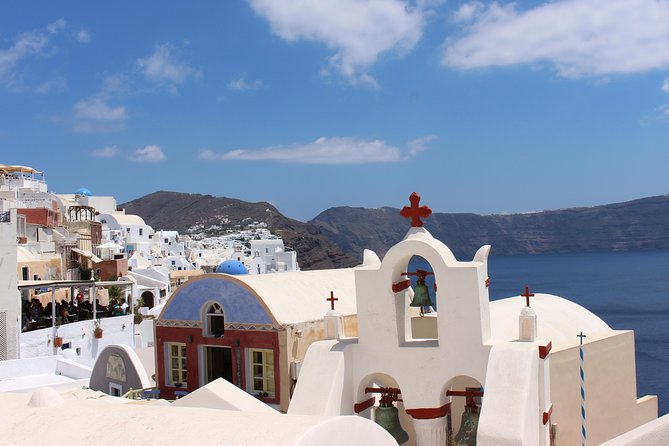
Many Santorini excursions focus on the caldera villages and little else. I like this route because it gives you a fuller picture of the island. You pass vineyards, old church buildings, damaged homes, castle walls, and famous cliff views in one afternoon.
The order also makes sense. You begin inland, where the mood is quieter and the history feels more physical. Then you move to Pyrgos for a high view, continue to Imerovigli for the caldera, and finish in Oia when the light is softening.
This is not a museum-heavy tour. You will not spend hours inside formal exhibits. Instead, you see places in their setting and depend on your escort to explain why they matter. That makes the guide important. Tanya, also spelled Tanja in the available information, received the strongest praise for her explanations, with Stephanus also singled out as part of one especially enjoyable outing.
The tour begins around 1:00 p.m. and lasts about six hours. That timing is built around the sunset, so the exact amount of daylight at each stop will change with the season. You should expect the later part of the outing to feel busier, especially in Oia.
You can also read our reviews of more evening experiences in Santorini



Mesa Gonia and a church built in 1115
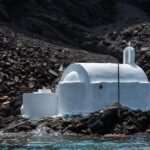
The first part of the route takes you into Santorini’s traditional interior. You visit the island’s oldest Byzantine church, built in 1115 on the remains of a sixth-century church. Its wall paintings give the stop more weight than a quick photo break, though the visit is likely to appeal most if you care about religious art, architecture, and local history.
The church is described as one of Santorini’s most important historical monuments. That matters because Santorini is often presented only through its bright villages and volcanic cliffs. Here, you get a reminder that the island has centuries of religious and village life behind its modern tourism.
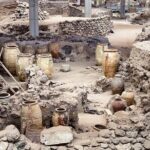
Next comes Mesa Gonia, known as Santorini’s ghost village. The name is not just a dramatic label. The village was the only one not restored after the great earthquake of 1956, so its damaged buildings offer a rare look at how the island appeared before the disaster.
You should not expect a polished old town. That is precisely the point. Ruins and unrepaired structures can be uneven underfoot, and the setting may feel more stark than scenic. Still, Mesa Gonia is one of the tour’s most distinctive stops because it shows the cost of the earthquake rather than presenting only the island’s pretty side.
This area is also tied to Santorini’s wine production. Vineyards surround the route, and the connection between the old village and local wine gives your guide a useful way to explain how people worked the island before mass tourism became its main business.
Pyrgos, the former capital above the vineyards
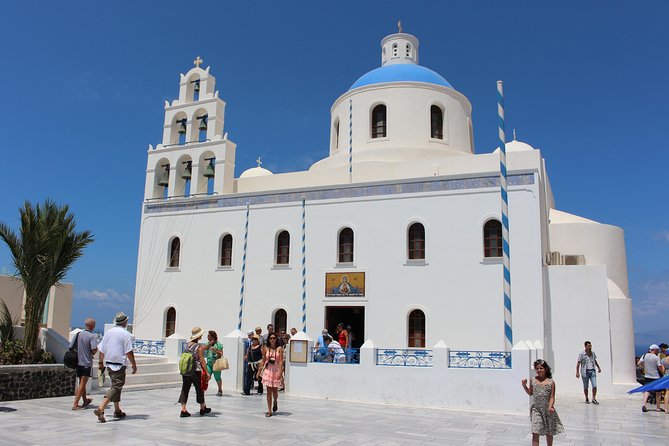
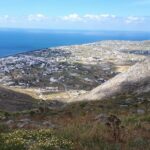
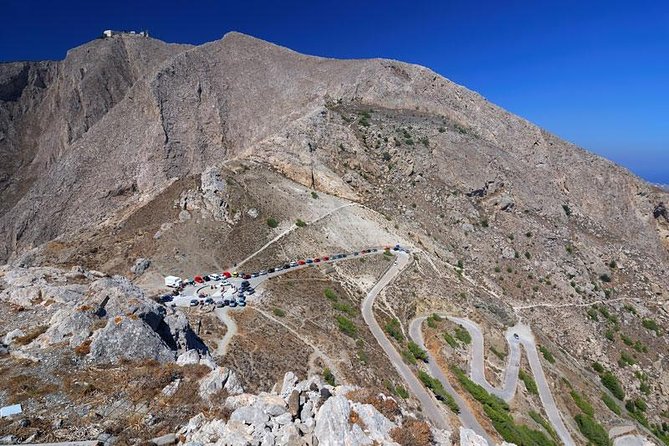
Pyrgos is the visual high point of the inland section. This picturesque village once served as Santorini’s capital, and its hilltop position gives you wide views across the island.
The village is known for its Venetian castle and Byzantine churches. You can expect narrow lanes, old stone buildings, and a climb toward the upper part of the settlement. The reward is the view from above, which one of the strongest tour experiences specifically praised.
I like Pyrgos because it gives you a different angle on Santorini. From the caldera, the island can feel like a wall of white houses above the sea. From Pyrgos, you can see more of the island’s interior and understand its relationship to vineyards, roads, and traditional villages.
The climb is worth keeping in mind. This is not a flat sightseeing stop, and the route through an old hilltop village may be awkward for a stroller or anyone who has trouble with uneven ground. One piece of feedback raised a stroller problem, so families should ask the operator about the conditions before booking rather than assume every stop is easy for wheels.
You also have less control over your time than you would on a private tour. The guide needs to keep the group moving toward Oia, so Pyrgos is best treated as a focused visit for the castle area, churches, and views, not a long independent exploration.
Imerovigli and the caldera edge
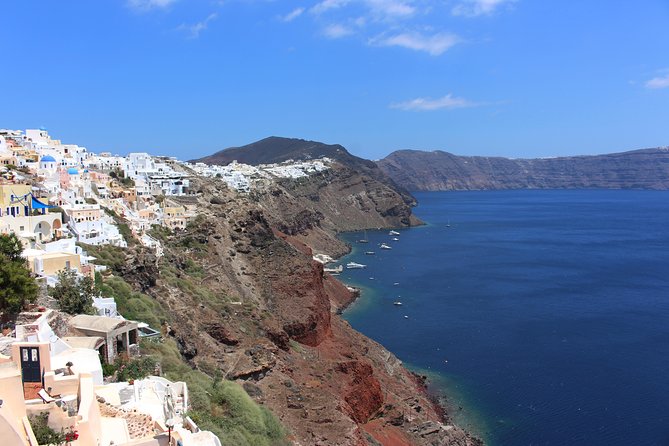
The next planned stop is Imerovigli, one of Santorini’s caldera-edge villages. Here, the appeal is the setting: high views over the volcanic basin, white buildings on the cliff, and ruins that connect the modern village with Santorini’s older defensive past.
The supplied route information refers to ruins and caldera views rather than a long list of named monuments. That means you should come for the outlook and the sense of place, not for a formal archaeological visit.
Imerovigli helps balance the inland villages. Mesa Gonia and Pyrgos show the island’s older rural and fortified side. Imerovigli returns you to the famous caldera view, but before the sunset crowds reach their peak.
There is an important seasonal change. During August, the main road from Fira to Imerovigli is closed, so the tour does not visit Imerovigli then. The replacement is Santo Winery near Pyrgos, described as the island’s largest winery and located close to the caldera.
That substitute may suit you well if wine and views appeal more than another cliffside village. If Imerovigli is the reason you are considering this outing, avoid assuming it is included in August. Confirm the seasonal route before paying.
Oia gives you the sunset, with a crowd to match
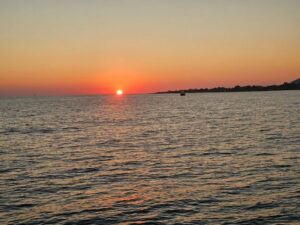
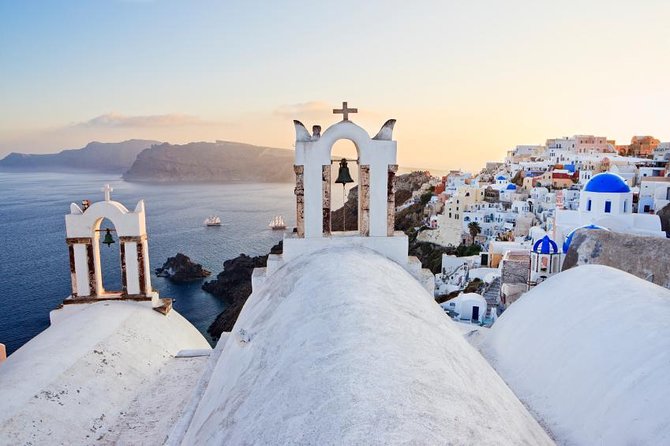
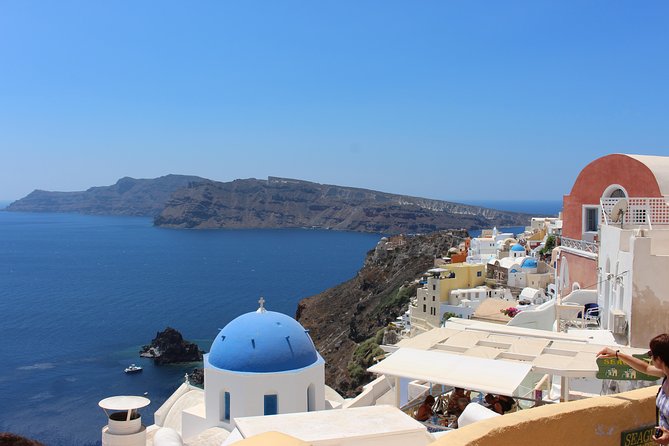
The final stop is Oia, on the western end of Santorini. You have about two hours here, making it the main event rather than a rushed photo stop.
Oia’s architecture reflects its past as a village connected with captains and sailors. The cliffside terraces and white buildings create the classic Santorini scene, but the experience is not quiet or private. The most famous sunset areas fill early.
The practical tip is simple: arrive at the sunset boulevard one to two hours before sunset if you want a good public viewing place. That can use much of your free time in Oia, but it is better than reaching the edge at the last moment and finding the best spots blocked.
You can also choose a terrace, though prices are described as very expensive. Since food and drinks are not included, you will pay separately if you want to sit down for the view. At $50.98 per person, the tour remains reasonably priced for transport, a guide, several stops, and a sunset finish, but add-on drinks or a terrace table can quickly increase the day’s cost.
I would not book this tour expecting a relaxed restaurant sunset. Book it for the chance to reach Oia without arranging transport yourself and for the added villages along the way. Once there, you will need to make your own choice: secure a public viewpoint early, find a terrace, or spend some of the time exploring Oia’s lanes.





What the transport and group size mean
Pickup and drop-off are offered at selected hotels or meeting points in Fira, Kamari, and Perissa. This is useful if your accommodation is within the service area, but do not assume the vehicle can stop directly outside every hotel.
One return experience involved a walk of more than a kilometer in strong wind and cold weather because the bus could not reach the stated meeting area. The operator apologized and investigated the disruption, but the practical lesson remains: ask exactly where pickup and drop-off occur, especially if your hotel sits on a narrow road or in a restricted village zone.
The tour is promoted as a small group of 15 or fewer. Elsewhere, the maximum is listed as 50 people. That is a meaningful difference. A group of 15 can make village stops and explanations fairly manageable. A group approaching 50 will take longer to load, gather, and move through narrow lanes.
I would confirm the expected group size at booking. The transport is included, along with a tour escort or host, but meals and drinks are not. Children must be accompanied by an adult, and most people can participate, though the hilltop villages and old surfaces may be tiring for anyone with limited mobility.
Is $50.98 good value for six hours?
For Santorini, $50.98 is a fair price if you want several locations in one afternoon. You are paying for transportation, pickup and drop-off within the selected service area, and a guide who can connect the church, earthquake ruins, wine country, castles, and caldera villages.
The value is strongest for first-time visitors without a rental car. Santorini roads and parking can be stressful, and Oia at sunset is not the easiest place to reach independently. This tour takes care of the broad route and lets you focus on the views.
The price is less compelling if you want long, unhurried visits. You will see several places in six hours, but each stop has limits. You also do not get food, drinks, winery purchases, or a reserved sunset seat.
I see the tour as a good orientation to Santorini rather than a full study of each village. It introduces you to the island’s past and gives you the classic Oia moment, all in one half-day. A private tour would give you more control, but likely at a higher cost.
Who will enjoy this Santorini outing?
I would recommend it to first-time visitors who want more than Fira and Oia. The route suits you if you like church art, old villages, earthquake history, vineyards, castle remains, and wide viewpoints.
It also works well for families with older children or young adults who can handle a long afternoon and some uneven village routes. One especially positive experience included a 20-year-old who had a great time, helped by the lively guidance of Tanya.
You may not like it if you want a quiet sunset, a slow meal, or a flexible schedule. The Oia stop is scenic but crowded, and the tour has to keep to its timetable.
People using strollers or anyone worried about steep lanes should check access in advance. The general information says most people can participate, but that is not the same as saying every surface is easy or every stop is fully accessible.
Booking, weather, and cancellation details
Confirmation is provided at booking, and free cancellation is available until 24 hours before the 1:00 p.m. start time. Changes or cancellations made inside that window are not accepted for a refund.
The tour depends on good weather. If poor conditions force a cancellation, you are offered another date or a full refund. Since the experience ends outdoors in Oia, this policy is sensible, but you should still keep a little flexibility in your Santorini schedule.
Book early if your dates are fixed. The experience is commonly booked well ahead, with an average lead time of 37 days. That is especially worth noting for summer dates, when the sunset route and hotel pickups may fill.
Should you book the traditional villages and Oia sunset tour?
Book it if you want an efficient introduction to Santorini that combines places many short caldera tours skip. Mesa Gonia’s earthquake ruins, the old Byzantine church, and Pyrgos give the afternoon substance, while Oia supplies the famous final view.
I would book with three conditions in mind: confirm the pickup point, ask about the actual group size, and check whether Imerovigli is included for your month. In August, you will visit Santo Winery instead.
If you can accept a busy Oia sunset and a fixed schedule, the $50.98 price offers solid value. If your priority is peace, privacy, or a long meal with a sunset view, choose a smaller private outing instead.
FAQ
How long does the Santorini Traditional Villages and Oia Sunset Tour last?
The tour lasts approximately six hours, including visits to the traditional villages, Imerovigli or the August replacement stop, and Oia.
What time does the tour start?
The stated start time is 1:00 p.m.
Is hotel pickup available?
Pickup and drop-off are offered from selected hotels or meeting points in Fira, Kamari, and Perissa. Confirm your exact pickup location before departure.
Is transportation included?
Yes. Transportation and a tour escort or host are included in the price.
Are food and drinks included?
No. Food and drinks are not included.
What is the group size?
The experience is described as a small group of 15 travelers or fewer, but the additional information lists a maximum of 50 participants. Confirm the expected group size when booking.
What will I see in Mesa Gonia?
You will visit Mesa Gonia, known as Santorini’s ghost village, and learn about its connection to the 1956 earthquake. The village was not restored after the disaster.
Is the oldest Byzantine church included?
Yes. The route includes a visit to the island’s oldest Byzantine church, built in 1115 over the ruins of a sixth-century church. Its interior has wall paintings.
Is Imerovigli visited in August?
No. During August, a road closure means the tour replaces Imerovigli with Santo Winery near Pyrgos.
Can I cancel for a full refund?
Yes, if you cancel at least 24 hours before the experience start time. Poor-weather cancellations offer a different date or a full refund.