REVIEW · SANTORINI
Santorini: Walking Tour of Fira
Book on Viator →Operated by NST Santorini Tours · Bookable on Viator
Fira’s appeal comes into focus on foot. This tour takes you from the white lanes around the Metropolitan Church through Gold Street, old Catholic quarters, small shops, and the caldera rim, finishing with a cable-car ride toward the old port. I especially like the mix of daily life and postcard views, plus the chance to see Fira’s churches rather than simply photograph them from outside.
I also like the small maximum group of 16 and the handmade ice cream stop, two details that make a three-hour outing feel more personal. The main caution is the terrain: cobbled streets, steps, and a section of the old donkey route call for sensible shoes and moderate fitness. Fira can also feel crowded, especially around its famous viewpoints and cable-car area.
In This Review
- Key points to know before booking
- Why walking is the right way to meet Fira
- Starting at the Metropolitan Church of Ypapanti
- Gold Street, workshops, and the Venetian district
- Saint John the Baptist and Fira’s Catholic past
- Donkey roads and the Karavolades Stairs
- Churches beside the caldera
- The Three Bells of Fira viewpoint
- Ice cream, wine cellars, and what is actually included
- Cable car views toward the old port
- Is $57.01 a fair price?
- Crowds, comfort, and safety
- Who should book this Fira walk?
- My booking advice
- FAQ
- Where does the Fira walking tour begin?
- What time does the tour start?
- How long does the tour last?
- What is included in the price?
- Is lunch included?
- How large is the tour group?
- What happens if the weather is poor?
Key points to know before booking
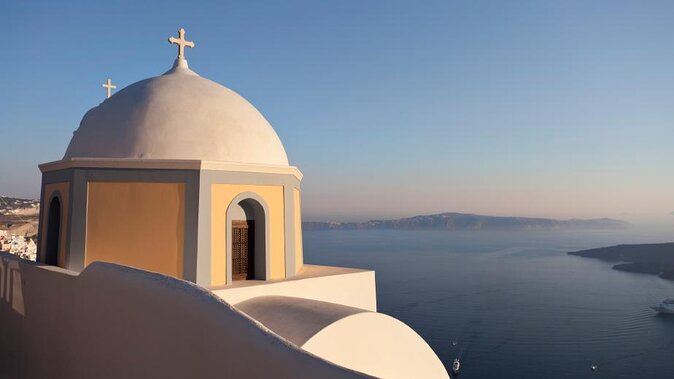
- Fira on foot: Explore white cobbled lanes, Gold Street, the Venetian district, workshops, galleries, and wine cellars.
- Six named sights: See the Catholic Cathedral of Saint John the Baptist, both major cathedrals, Agios Minas, and the Three Bells of Fira.
- Caldera views: Reach the edge of the cliffs and the white Orthodox Metropolitan Cathedral, one of Fira’s best-known views.
- A taste of Santorini: Handmade ice cream is included, while lunch and alcoholic drinks are not.
- Cable-car finish: The package includes a round-trip cable car ticket, with the panoramic ride linked to the old port.
- Simple logistics: Meet at the Metropolitan Church of Ypapanti at 10 a.m. for about three hours.
Why walking is the right way to meet Fira
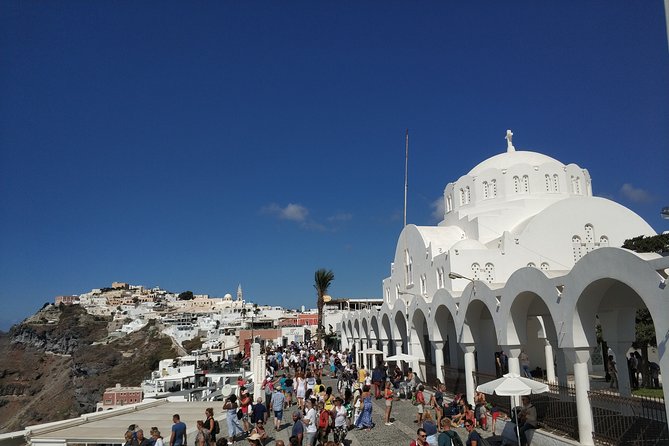
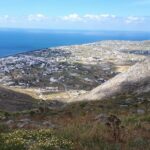
Fira is easy to admire from a distance. Its white buildings spill down the cliffside, while the caldera opens out below. Yet the town makes more sense when you move through its lanes slowly, turning from a bright church facade into a narrow passage, then finding a small workshop or gallery around the next corner.
That is the useful idea behind this tour. You are not spending three hours on a bus or being rushed from one viewpoint to another. You walk through central Fira with a local guide who explains how the town developed, points out its religious buildings, and helps you notice details you could easily miss on your own.
Fira has about 2,000 inhabitants, but its main streets can feel much busier when visitors arrive by cruise ship or gather around the caldera. A guide cannot remove the crowds, but a planned walk gives you a clearer route and some context. You will know why a building matters, where the old noble homes stood, and how the cliffside paths once served practical purposes.
The tour lasts about three hours and begins at 10 a.m. That gives you a morning of sightseeing without taking the entire day. You will still have time afterward for lunch, more shopping, a museum, or a trip elsewhere on Santorini.
You can also read our reviews of more walking tours in Santorini



Starting at the Metropolitan Church of Ypapanti
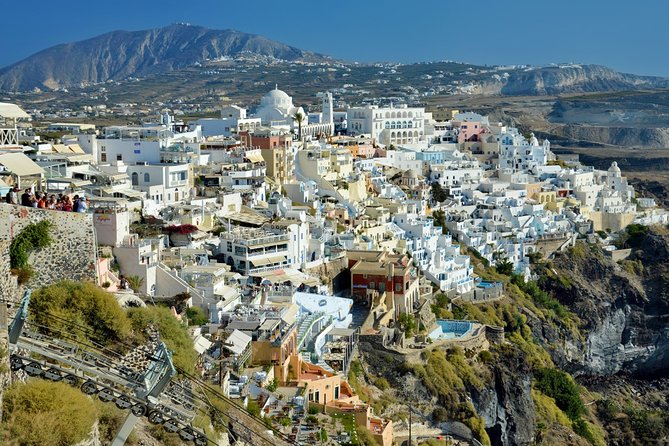
The meeting point is the Metropolitan Church of Ypapanti, also known as the Orthodox Metropolitan Cathedral, at Ipapantis in Thira. Arrive ready to walk, since the opening part of the outing leads straight into Fira’s pedestrian lanes.
The church is also part of the sightseeing. Its large white facade faces the caldera and acts as a useful visual marker in town. You are not beginning at a random street corner. You start beside one of Fira’s trademark buildings, then move into the older quarters.
This is a good arrangement for first-time visitors because it gives you your bearings quickly. Fira’s lanes can look alike, and the bright walls and narrow passages can make navigation less obvious than a map suggests. With the guide setting the route, you can focus on the buildings, views, and small details rather than checking your phone every few minutes.
The maximum group size is 16. That is not a private tour, but it is small enough for the guide to keep the group together and answer questions without needing to shout across a crowd.
Gold Street, workshops, and the Venetian district
The first substantial part of the walk takes you through Fira’s white cobblestone streets. Gold Street brings you into the commercial side of town, with shops and local businesses along the route. You may find art galleries, workshops, and wine cellars mixed among the places aimed at tourists.
This section is valuable because it shows the difference between seeing Fira as a picture and understanding it as a working town. The white walls and blue details are familiar from photographs, but the workshops and small stores give the streets a more grounded feel.
The Venetian district adds another layer. Catholic nobles built mansions in Fira from 1811 onward, and the Gyzi Megaron is identified as one of these homes. The building provides a link to the Catholic community and the old elite who helped shape the town’s architecture.
I would pay attention here to the changes in scale. A large mansion, a narrow lane, a tiny chapel, and a modern shop may all appear within a short walk. That mixture is part of Fira’s character. It is also why a local guide helps. Without explanation, the district can look like a series of attractive walls. With context, you can begin to see how religion, trade, and domestic life fit together.
Saint John the Baptist and Fira’s Catholic past
The Cathedral of Saint John the Baptist has a pink bell top and belongs to Fira’s Catholic heritage. The tour includes a short visit inside the Catholic monastery and church, lasting around five minutes.
Five minutes is not enough for a long architectural study, so keep your expectations in check. This is a brief stop that adds variety to the walk, rather than a full church tour. Still, it matters because Fira is not defined by one religious tradition or one style of building.
The route also passes the oldest Catholic nunnery in Greece, founded in 1595. That date gives the area a sense of age that the polished shops and busy streets can hide. You may find the stop most interesting if you enjoy the human stories behind old buildings, especially the way Catholic institutions remained part of Santorini’s identity.
Dress and behave respectfully inside religious sites. The supplied details do not specify a dress code, but a quiet approach is appropriate in any active church or monastery.
Donkey roads and the Karavolades Stairs
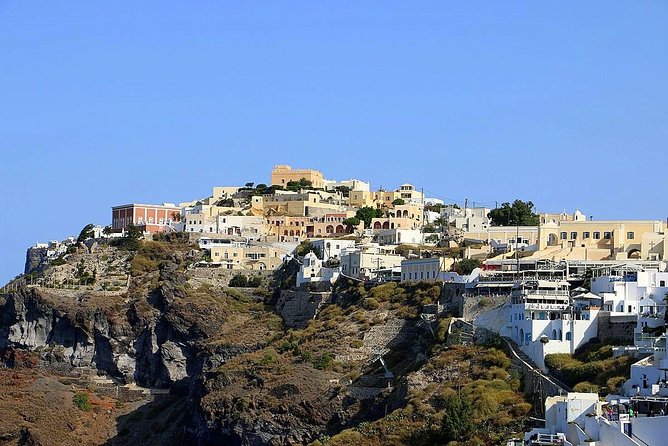
The Karavolades Stairs are one of the tour’s most distinctive stops. You walk a short section of the old donkey roads, paths once used by local people to carry goods up and down the cliff.
The stop itself is brief, about five minutes, but the idea is memorable. Before modern transport made the route easier, these steep paths were part of everyday work. They help explain why movement around Fira has always required effort.
Do not confuse this with a long stair workout. The scheduled visit is short, but the tour as a whole still involves cobbles and changes in level. You need a moderate fitness level, and sturdy shoes will make the outing much more pleasant.
One practical point deserves attention. A separate account of Santorini described the cable-car and donkey access as uncomfortable, and objected to the way donkeys carry people on the steep route. This walking tour only promises a short section of the old roads, not a donkey ride. If animal transport is a concern for you, the route lets you see the historic path without booking that type of activity.



Churches beside the caldera
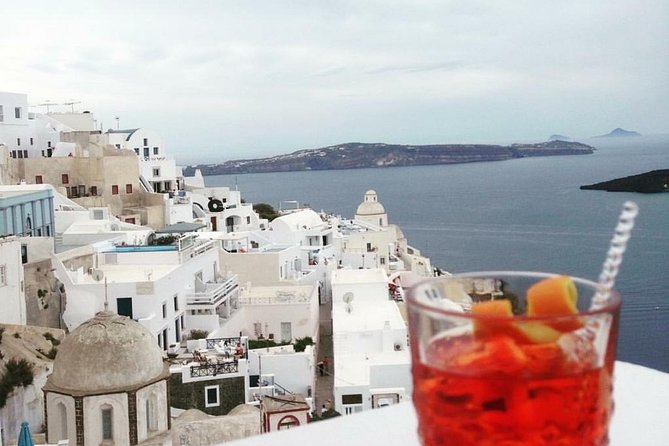
The Orthodox Metropolitan Cathedral is one of the main visual stops. Its large white form sits in front of the caldera, so you get both a religious landmark and a strong viewpoint in one place.
The tour also includes Agios Minas, described as one of the oldest churches in Fira. Its smaller scale offers a useful contrast with the Metropolitan Cathedral. Santorini’s churches are often reduced to their color scheme in photographs, but their location and role in town are just as important.
Another stop is a colorful church on the caldera. The exact details of that building are not specified, so you should treat it as part of the guided route rather than expect a formal museum visit. The value comes from seeing several different church styles and learning how they fit into Fira’s neighborhoods.
These stops are short, usually around five minutes each. That suits a walking tour with several points of interest, but it means you will not have a long time inside every church. If you want to study religious art or architecture at length, you may need to return on your own.
The Three Bells of Fira viewpoint
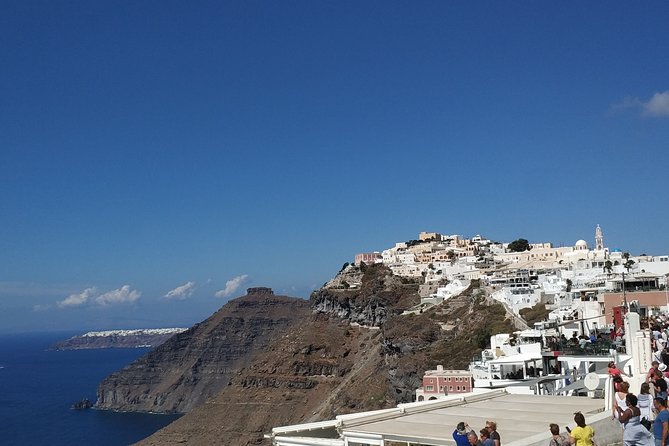
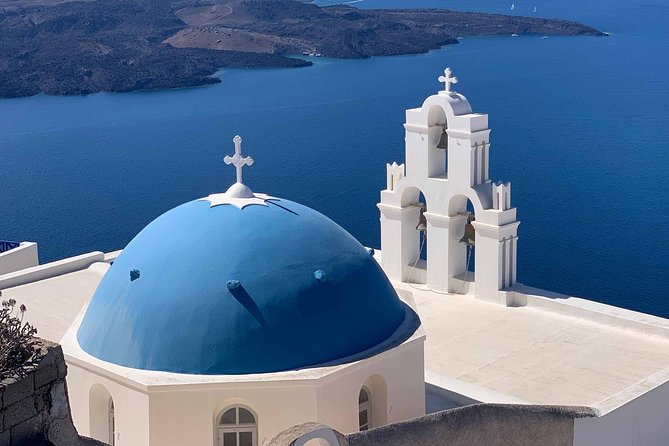
The final named landmark is the Three Bells of Fira, the blue-domed church often seen in Santorini photographs. It is in Firostefani, just beyond central Fira, and the stop lasts about 10 minutes.
This is the classic photo point, but it is not only about taking a picture. The blue dome, white walls, and open caldera view show the visual style that makes Santorini so recognizable. You will want time to frame your own photographs, but keep the setting in perspective. Famous viewpoints can be crowded, and a guide cannot guarantee a clear, empty foreground.
The stop also gives the walk a natural climax. You have moved from streets and historic buildings to one of the island’s most familiar views. If you are visiting Santorini for the first time, this is likely to be one of the moments you remember most clearly.
Ice cream, wine cellars, and what is actually included
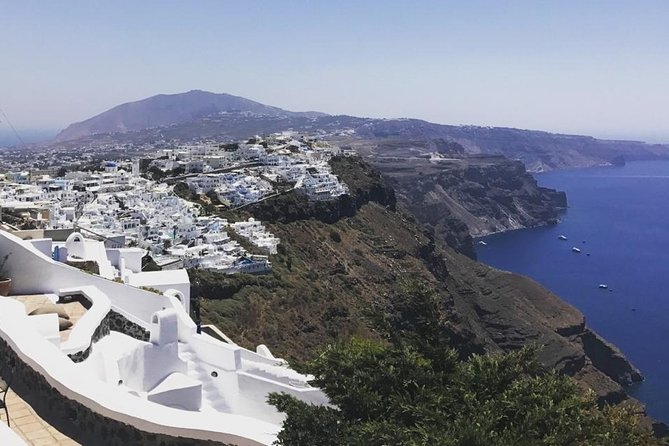
Handmade ice cream is included in the price. That is a small but welcome touch after a morning of walking, especially under the strong island sun. The tour also passes wine cellars and local shops, but the listed inclusions specify an ice cream tasting, not a wine tasting.
That distinction matters. One account of a similar Fira outing described a wine tasting as a highlight, but this package lists alcoholic beverages as not included. If wine is central to your plans, confirm the exact version before booking rather than assuming the cellar visits include a tasting.
Lunch is also not included. At three hours, the tour ends early enough for you to choose your own meal afterward. That is better for flexibility, since Fira offers many choices, but you should budget separately for food and drinks.
Cable car views toward the old port
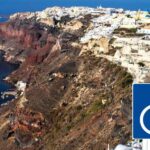
The cable car is included as a round-trip ticket, and the route description highlights the short panoramic ride down toward the old port. From the cliff, the ride gives you a different view of Fira than the walking route. Instead of looking across the caldera from the rim, you see the steep descent and the connection between the town above and the port below.
The ride is short, so think of it as a scenic transport link rather than a major attraction on its own. Its value is practical as well as visual. You avoid walking the full steep route to the port, and you get a clear look at the dramatic position of Fira.
There is a small logistical wrinkle: the meeting and ending details say the activity ends back at the starting point, while the route highlights the cable car down to the old port. Since a round-trip ticket is included, ask the guide at the start how the cable-car portion fits into that return arrangement. This is especially important if you have a cruise departure, a timed transfer, or another booking afterward.
Is $57.01 a fair price?
At $57.01 per person, this is not the cheapest way to stroll around Fira. You can walk through town without paying an admission fee, and the churches listed here are free to enter.
The price buys more than access to the streets. You get a local guide for about three hours, a planned route through several historic areas, handmade ice cream, and a round-trip cable-car ticket. The group limit of 16 also gives the outing more structure than a large coach excursion.
I think the value is strongest for a first visit, especially if you want an introduction rather than a full day of sightseeing. You are paying for orientation and interpretation. The guide helps connect the Catholic district, old mansions, Orthodox churches, donkey roads, and caldera viewpoints into one readable story.
The value is weaker if you already know Fira well, dislike guided walks, or mainly want unstructured time for shopping and photographs. You may prefer to spend the same money on a meal, a private guide, or another island activity.
Crowds, comfort, and safety
Fira can be busy. One account described it as crowded and preferred the quieter feel of Akrotiri and the beauty of Oia. That is a useful comparison, not a reason to reject this tour. Fira is the lively, central choice, and the walk places you in the middle of that energy.
Keep your bag closed and in front of you in crowded areas. A French visitor described losing identification, a driving license, and a bank card from a backpack in Fira. That report does not mean theft is certain, but it is a sensible reminder to carry only what you need and secure important documents.
Wear shoes that handle uneven cobbles. Bring water, sun protection, and a small bag that stays comfortable while walking. The tour requires moderate physical fitness, and the combination of stairs, slopes, and bright sun can feel harder than the distance suggests.
The group size is capped at 16, but this is not an exclusive private experience. If you need a very slow pace or extensive time at every church, ask before booking.
Who should book this Fira walk?
I would recommend it to first-time visitors who want to understand Fira in a single morning. It suits you especially well if you like architecture, religious buildings, local shops, caldera views, and short walks with clear explanations.
It also works for cruise passengers or anyone with limited time, provided the cable-car timing fits your schedule. The meeting point is central, and the tour covers several of Fira’s key sights without taking a full day.
You may want another plan if your priority is a quiet island mood. Oia and Akrotiri offer different experiences, while Fira can feel crowded and commercial in its busiest areas. You should also skip this outing if cobbles, stairs, or steep paths are a serious problem for you.
Book at least a day ahead if your plans are firm. The experience is often reserved well in advance, with an average booking lead time of about 36 days. Free cancellation is available up to 24 hours before the 10 a.m. start, but late cancellations and changes are not refunded. Poor weather or failure to reach the minimum group size can lead to a different date or a full refund.
My booking advice
Book this tour if you want a useful first look at Fira, with a guide, a manageable morning schedule, and the cable car and ice cream included. The strongest parts are the variety of stops and the way the route joins everyday streets with major viewpoints.
Do not book it expecting a quiet walk, a long church visit, lunch, or a guaranteed wine tasting. Go with comfortable shoes, protect your belongings, and clarify the cable-car return plan if you have a tight schedule. For most first-time visitors, the combination of local context, classic views, and practical transport makes the price reasonable.
FAQ
Where does the Fira walking tour begin?
The tour begins at the Metropolitan Church of Ypapanti, also called the Orthodox Metropolitan Cathedral, at Ipapantis in Thira, Santorini.
What time does the tour start?
The scheduled start time is 10 a.m.
How long does the tour last?
The walking tour lasts approximately three hours.
What is included in the price?
The price includes a round-trip cable-car ticket and a handmade ice cream tasting.
Is lunch included?
No. Lunch and alcoholic beverages are not included.
How large is the tour group?
The activity has a maximum of 16 travelers.
What happens if the weather is poor?
The experience requires good weather. If it is canceled because of poor weather, you can choose a different date or receive a full refund. Free cancellation is also available when you cancel at least 24 hours before the start time.