REVIEW · ATHENS
The Apostle Paul’s Missionary Journey in Athens and Corinth
Book on Viator →Operated by Colours of Greece · Bookable on Viator
Paul’s footsteps in Greece feel oddly close.
This private day outing links biblical moments with the real stone, hills, and harbors that shaped ancient life, from Athens’ Agora to Corinth’s Acrocorinth.
I especially love the door-to-door transport. You skip the hassle of figuring out buses and meeting points, and you start fresh from your hotel (or the port) with bottled water and on-board Wi‑Fi to keep things easy.
My one main consideration: expect uneven ground and a full day of walking, so comfy shoes and sun protection matter.
In This Review
- Key highlights you’ll feel right away
- Paul’s Athens: from the Ancient Agora to the Areopagus hill
- Saint Dionysius Areopagitis Church in Kolonaki: a living link to early Athens
- Corinth Canal and Kenchreai: the sea route behind the mission
- Ancient Corinth: the Bema, the Agora, and the Temple of Apollo
- The Archaeological Museum of Corinth: seeing what ruins can’t tell you
- Acrocorinth: hilltop fortress, Aphrodite, and the view that ends the story
- Getting there smoothly: transport, timing, and a private day
- Price and value: what $200.25 buys you (and what it doesn’t)
- What to pack, and how to get the most from the day
- Should you book this Paul’s Athens and Corinth day trip?
- FAQ
- How long is the Apostle Paul’s Missionary Journey in Athens and Corinth tour?
- Is this tour private?
- What does the tour cost per person?
- What’s included in the price?
- Are entrance fees included?
- Is airport pickup included?
- Where do you pick me up from in Athens?
- What about walking and comfort?
- Is there Wi‑Fi during the tour?
- Can I bring a child seat?
- Is free cancellation available?
Key highlights you’ll feel right away
- Private format (small group): it stays personal, not crowded.
- Paul-in-context route: ancient political spaces, ports, and markets that explain how ideas spread.
- Wi‑Fi and bottled water on board: small comforts that keep the day from dragging.
- Corinth’s “mission geography”: Canal + Kenchreai help you picture why Corinth mattered.
- Acrocorinth views from the hilltop fortress: the final payoff for the day’s effort.
Paul’s Athens: from the Ancient Agora to the Areopagus hill
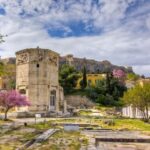
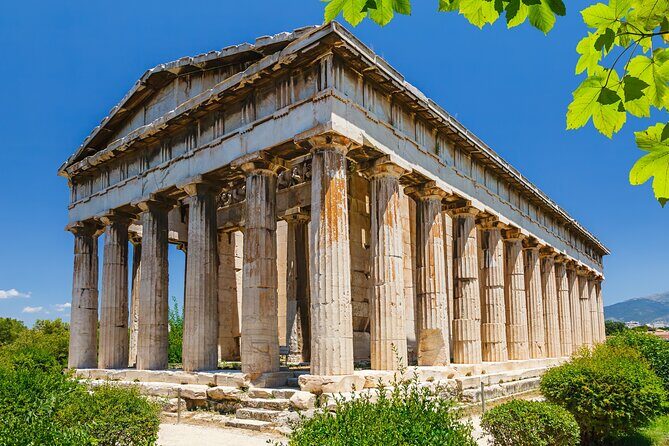
Your day starts at the Ancient Agora, the real heart of Athens where politics, trade, daily life, and religion all met in one place. For a Paul-focused trip, this stop does two things well. First, it grounds the story in how Athenians actually gathered. Second, it sets you up to understand why a message could catch on—or clash—with philosophers and thinkers who loved argument as much as ideas.
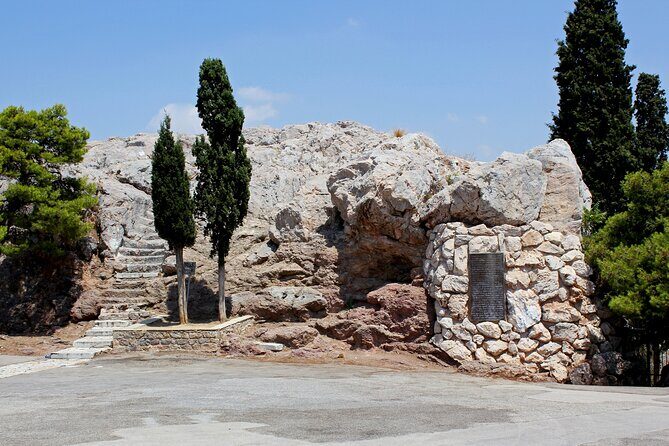
You’ll then head to the Areopagus, the marble hill northwest of the Acropolis. In ancient times it functioned as a judicial and political meeting place. In Paul’s era, it’s also remembered as a spot tied to serious debate and discussion. Even if you don’t treat it like a set from a play, it’s a strong reminder: Paul wasn’t speaking in a quiet chapel. He was presenting ideas in a public, intellectual arena where questions had weight.
One practical note: this is a day where you’ll be switching between big-picture meaning and close-up details. On stops like these, I like how the structure encourages you to “read” the ruins instead of just looking at them.
You can also read our reviews of more tours and experiences in Athens.
Saint Dionysius Areopagitis Church in Kolonaki: a living link to early Athens
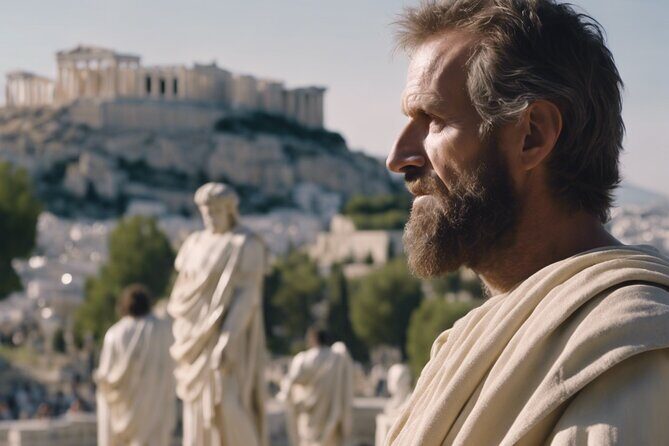
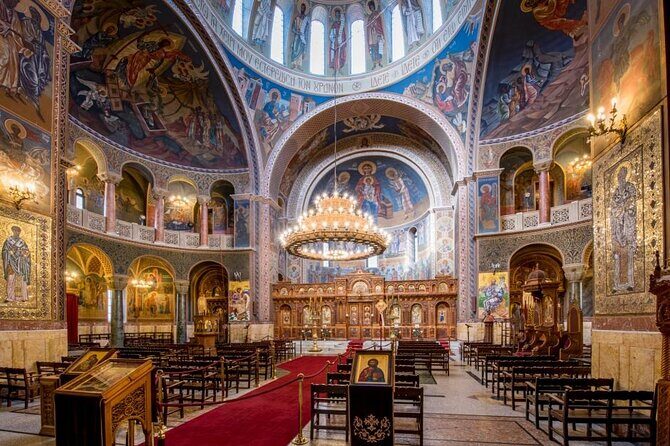
Next you’ll visit the Church of Saint Dionysius the Areopagite on Skoufa Street in the Kolonaki district. This matters because it’s not just about ancient ruins. It’s about how Athens remembered Paul’s story afterward—through local devotion and named saints.
Dionysius is associated with conversion to Christianity after Paul’s presence in Athens, and the church honors his legacy as Athens’ early bishop figure. The setting also gives you a nice break from “archaeology-only mode.” Kolonaki is more modern and upscale, and that contrast helps you feel how old stories keep getting carried forward in a city that never fully stopped changing.
This stop is short, but that’s a plus. You’re not burning time here—you’re getting a clear sense of continuity.
Corinth Canal and Kenchreai: the sea route behind the mission
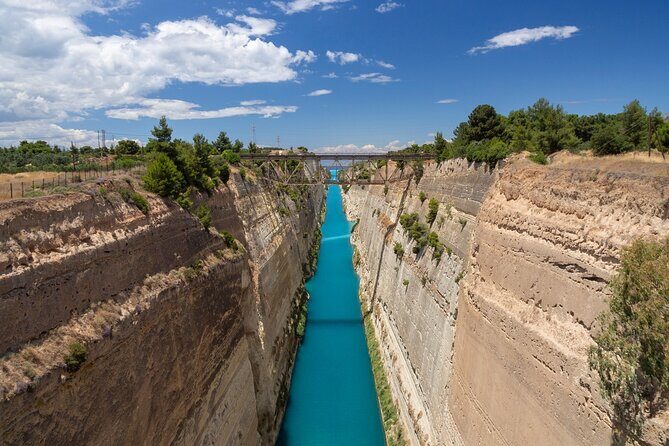
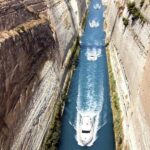
Then the route turns toward Corinth, and you’ll pause at the Corinth Canal. Even though it’s built long after Paul’s time, it’s a smart way to visualize the region. The canal slices through the narrow Isthmus of Corinth, separating the Peloponnese from mainland Greece—so it turns a peninsula into something like an island. That geography helps you understand why control, travel, and trade mattered here.
From there you continue to the ancient Port of Kenchreai (Kechrees). This is one of the most interesting stops on the day because it layers practical life with spiritual meaning. During the Roman era, Kenchreai was a key trade and travel hub on Corinth’s eastern side. Even with parts submerged or ruined, you can still sense the scale: Roman storerooms, breakwaters, a nymphaeum, sanctuaries, and an early Christian basilica from the 4th century A.D.
And importantly for Paul-focused travelers, this is tied to Paul arriving around 51 A.D., beginning his mission in Corinth. Standing in a place where the “how people moved” question was answered by ports, you get a more grounded feeling for how letters and communities could form.
Time here is limited, so use it to focus on the layout. Look for the sense of harbor function: movement, storage, and worship zones all close together.
Ancient Corinth: the Bema, the Agora, and the Temple of Apollo
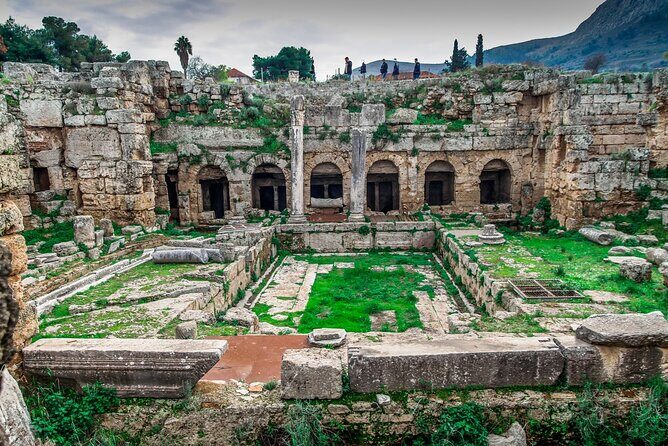
Now you shift into Ancient Corinth (Archaia Korinthos), one of the most important classical cities in the region. This is where the day really tightens around Paul and the lived world behind his letters.
Two highlights matter most for Christian visitors:
- The Bema: a raised platform in the center of the city. Paul is believed to have addressed the local community and stood trial here before the Roman proconsul.
- The Agora: the marketplace area, which helps you imagine everyday life in Corinth—what people bought, argued about, and organized around.
You’ll also notice the Temple of Apollo nearby, which anchors you in the fact that Corinth wasn’t “one religion.” It was religiously layered, with older cult life continuing alongside newer beliefs.
Admission fees aren’t included for this stop, so budget for that. Also, plan for uneven ground and extra attention to where you step. If you’re traveling in summer heat, this is the kind of site where hydration and shade breaks are not optional.
The Archaeological Museum of Corinth: seeing what ruins can’t tell you
Before you wrap up, you’ll visit the Archaeological Museum of Corinth, established in 1932. This works as a gentle reset. Ruins give you atmosphere; the museum gives you the clues that explain that atmosphere.
The collections cover a long timeline, including prehistoric treasures and finds from the Sanctuary of Asklepios. What I like about the museum here is the way it supports the day’s “Paul + context” goal. You’re shown artifacts and arranged exhibits that help connect daily life, religious practice, and artistic achievement to the places you just walked through.
It’s also an efficient use of time. You don’t need to be a museum person to benefit. Look for the objects that match what you saw outside: religious spaces, city life details, and the ways people marked identity.
Admission is listed as free for this museum stop, which is a nice value add.


Acrocorinth: hilltop fortress, Aphrodite, and the view that ends the story
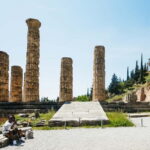
Your final major stop is Acrocorinth, the imposing acropolis guarding Corinth through centuries. This fortified hilltop wasn’t only military. It was also a religious center, including the famous Temple of Aphrodite, described as housing up to 1,000 priestesses. Whether you take that number literally or as a strong historical marker, the point lands: this was an important sacred site.
As you explore the ruins, the views do the heavy lifting. You get a sense of why a hilltop position mattered for control and communication. You also see the region as a whole, which makes the earlier stops—canal, port, city center—feel connected instead of like separate checkboxes.
Admission is listed as free here, so the cost control is good at the end of the day. The trade-off is physical effort. The hilltop is an easy place to overdo it in warm weather, so pace yourself and take breaks when the light is good and the climb feels steep.
Getting there smoothly: transport, timing, and a private day
This is designed to be low-stress logistically. You get an air-conditioned vehicle, Wi‑Fi on board, bottled water, and pickup/drop-off from Athens hotels or the port. The driver waits outside your hotel or at the port arrival area holding a signboard with your name.
The tour runs about 8 to 9 hours. On a day like this, that duration is a big part of the value equation. It’s long enough to include both Athens and Corinth without needing multiple separate bookings. It’s also short enough to keep you from losing the thread.
Because it’s private, your group stays together. For groups of 1 to 4, you’ll travel by sedan, which makes a difference for comfort on a full day. I also like that the provider keeps the group small and personal; your questions can actually get answered in the moment instead of competing with a crowd.
Price and value: what $200.25 buys you (and what it doesn’t)
At $200.25 per person for an 8–9 hour private day, the value is mostly in the structure: door-to-door transport plus a Paul-and-context route that touches the key places in one go.
Here’s what you should expect to pay extra for:
- Entrance fees to archaeological sites and museums (some stops are free, some are not)
- A licensed guide to accompany you into archaeological sites (this isn’t listed as included)
- Airport pickup is optional and costs extra
So the pricing is fair if you want the convenience and the narrative, but you still need to plan your budget for site tickets. If you’re traveling with friends and splitting costs in a small group, the sedan format and private attention can make the price feel even more reasonable.
Compared with doing Athens and Corinth separately, you’re paying for not having to manage logistics all day. That time-saving is real value, especially if your first instinct is to avoid “coordinate chaos” while you’re on vacation.
What to pack, and how to get the most from the day
This kind of itinerary rewards good prep. Greece can be hot and sunny, and you’re dealing with outdoor ruins and uneven ground. Bring:
- Comfortable shoes for rough pavement and changes in terrain
- A hat and sunscreen
- A refillable water bottle if you like, even though you do receive bottled water
Also, use the car time wisely. The route moves between major zones, and those short transitions are when it helps to ask questions. You’ll get more from the Bema, Agora, and hilltop sites if you understand how ancient cities worked: public meeting places, ports, and religious centers all shaped community life.
If you want lunch, you’ll likely handle it on your own. A practical move is to ask your driver to recommend a local place near where you end the day at Acrocorinth, so you’re not scrambling at the last minute.
Should you book this Paul’s Athens and Corinth day trip?
Book it if you want a single, well-paced day that connects faith stories to the physical geography of Athens and Corinth. I’d especially recommend it if:
- You like “place-based” history that helps you picture why Paul’s message traveled.
- You want a private day with door-to-door pickup instead of assembling your own plan.
- You care about comfort basics like air-conditioning, Wi‑Fi, and bottled water.
Skip it (or at least rethink timing) if:
- You hate walking on uneven ground or you struggle with long outdoor days in heat.
- You’d rather spend time on fewer sites and skip the “see a lot” approach.
Overall, this is a strong option for anyone who wants to understand Paul’s world as a lived city—Agora to port to acropolis—without turning the trip into a transport puzzle.
FAQ
How long is the Apostle Paul’s Missionary Journey in Athens and Corinth tour?
It runs about 8 to 9 hours.
Is this tour private?
Yes. It’s a private tour/activity, and only your group participates.
What does the tour cost per person?
The price is $200.25 per person.
What’s included in the price?
Included are air-conditioned vehicle, Wi‑Fi on board, bottled water, hotel/port pickup and drop-off, and a professional English-speaking tour driver with in-depth history knowledge.
Are entrance fees included?
No. Entrance fees to archaeological sites and museums are not included.
Is airport pickup included?
Airport pick-up is optional and comes with an additional cost.
Where do you pick me up from in Athens?
You can be picked up from Athens hotels or the port. The driver waits outside your hotel, or at the port arrival area holding a signboard with your name.
What about walking and comfort?
Wear comfortable shoes. The day includes walking on uneven ground.
Is there Wi‑Fi during the tour?
Yes, Wi‑Fi is provided on board.
Can I bring a child seat?
Yes. A child seat is available upon request.
Is free cancellation available?
Yes. You can cancel up to 24 hours in advance for a full refund, and this experience requires good weather (if it’s canceled due to poor weather, you’ll be offered a different date or a full refund).