REVIEW · CRETE
Traditional Villages of Kritsa and Kroustas
Book on Viator →Operated by Summer Tours and Taxis in Crete · Bookable on Viator
Kritsa and Kroustas offer a useful look at Crete beyond the beach resorts. In one half-day, you move from Byzantine wall paintings and a Doric hilltop city to narrow village lanes, lace shops, stone houses, local wine, and dishes such as myzithropites and skioufihta. The small minivan group, limited to eight people, keeps the day more personal than a large coach outing.
I like the varied route, which mixes archaeology, religious art, village life, and food rather than repeating the same kind of stop. I also like the chance for a small-group outing with Christos, a driver praised for explaining the sights and adjusting the pace to the group. The main drawback is the amount of road time. Transfers can take one to one and a half hours each way, depending on traffic, so this is a full half-day away from the coast rather than a quick village visit.
In This Review
- Key points to know before you book
- Why this route gives you more than a village photo stop
- Panagia Kera and the art inside a small church
- Ancient Lato, a city on the saddle between two hills
- Kritsa, where lanes and handicrafts do the talking
- Kroustas, the meal with a Cretan accent
- The six-hour schedule and the cost of the outing
- Who will get the most from this Crete tour
- Should you book Traditional Villages of Kritsa and Kroustas?
- FAQ
- How long does the Traditional Villages of Kritsa and Kroustas tour last?
- Where does the tour start and finish?
- Is pickup offered?
- How large is the tour group?
- Is lunch included?
- Are entrance fees included?
- What food can I try in Kroustas?
- What happens if the weather is poor?
Key points to know before you book
- Panagia Kera has some of Crete’s finest Byzantine wall paintings, with roughly 30 minutes to see the church.
- Ancient Lato sits between two hills, with broad views toward Mirabello Bay and a strong connection to Cretan and Greek history.
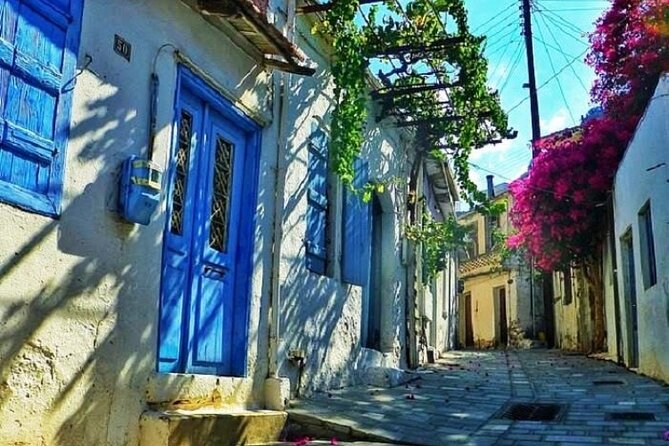
- Kritsa is the best stop for handicrafts, narrow lanes, textile shops, old buildings, and traditional coffee shops.
- Kroustas is the food stop, with tavernas serving local pasta, kalitsounia, cheese pies, bread, and goat.
- The group is capped at eight people, and the minivan setting may allow a more flexible day.
- Budget about 6 euros extra for listed entrance fees, plus the cost of lunch in Kroustas.
Why this route gives you more than a village photo stop
Many trips from the coast to inland Crete focus on one village and a few shops. This route has more shape. You begin with a Byzantine church, continue to an ancient city, then spend time in two living villages where food, crafts, and daily routines still matter.
That range makes the tour a good choice if you want to understand how different periods of Crete fit together. You see religious art from the Byzantine era, the remains of a Doric city-state, and present-day village life. The setting changes often enough to keep six hours interesting.
The small-group format matters here. With no more than eight people in the minivan, you avoid the feel of a large excursion bus. The schedule can also be adjusted around the group’s interests, at least within the limits of the day. One especially useful detail is that the experience has worked with only three couples in the vehicle, leaving enough room for a quieter and more personal outing.
You receive bottled water and soda, but lunch is not included. That is not necessarily bad. Kroustas is one of the main reasons to take this trip, and paying for your own meal lets you decide how much you want to eat and which local dishes appeal to you.
You can also read our reviews of more tours and experiences in Crete.

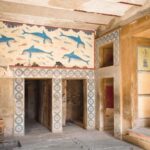
Panagia Kera and the art inside a small church
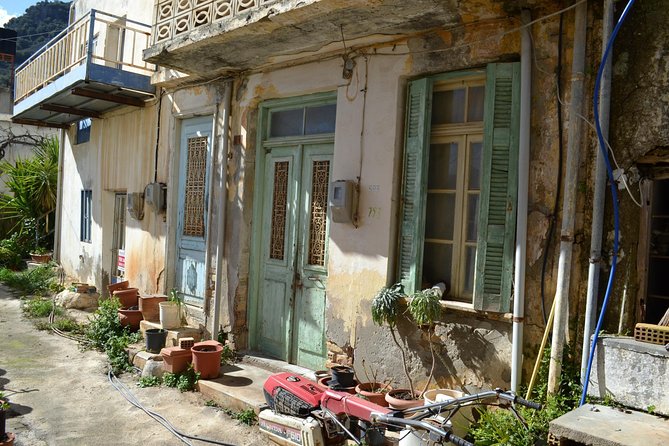
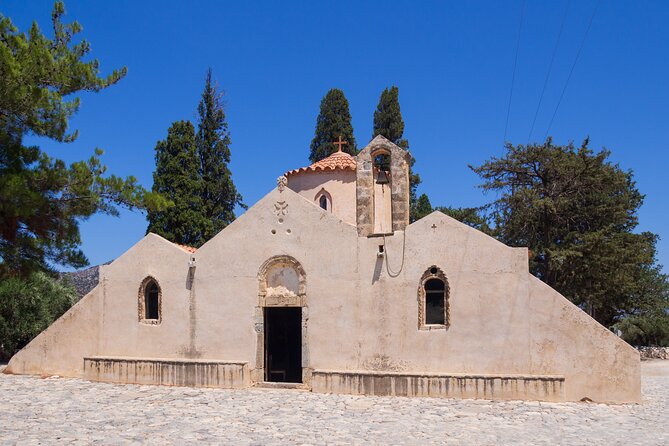
The first stop is the Church of the All-Holy Virgin, usually called Panagia Kera. It sits about 500 meters south of Kritsa and is one of Crete’s important Byzantine monuments.
From the outside, the church may seem modest. Inside, the wall paintings are the reason to pay attention. The three-aisled, barrel-vaulted structure has a dome over the nave, and its decoration comes from several periods of Byzantine art. The paintings are especially valuable because much of the work remains well preserved.
You have about 30 minutes here. That is enough for a focused visit, but not for a slow study of every image and detail. If religious art interests you, use the time carefully. Look at how the paintings cover the interior and how the different periods can be seen in the decoration.
The listed entrance fee is 3 euros, despite the general tour description also indicating free admission at the stop. I would plan to carry the 3 euros in case it is collected on the day. This is a small extra cost, but knowing about it avoids confusion.
Panagia Kera works well at the start of the route because it sets a quiet tone. You are not simply being driven to a pretty village. You are first shown a major piece of Crete’s religious and artistic past.
Ancient Lato, a city on the saddle between two hills
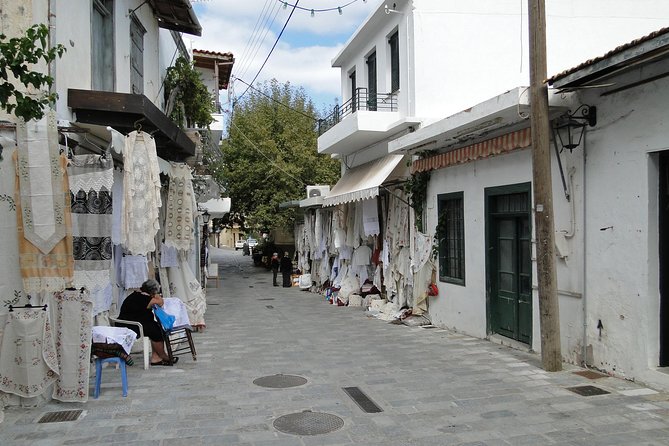
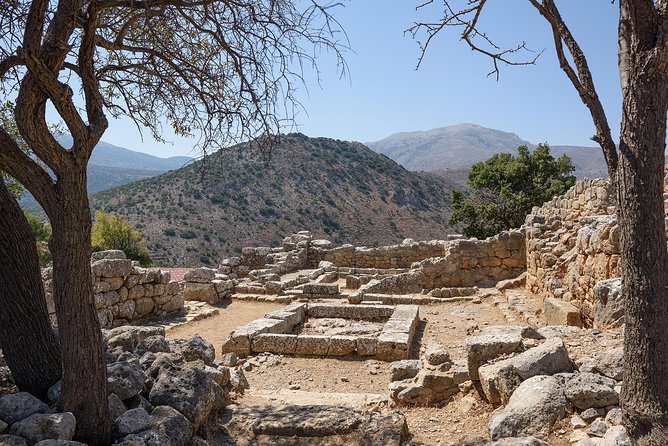
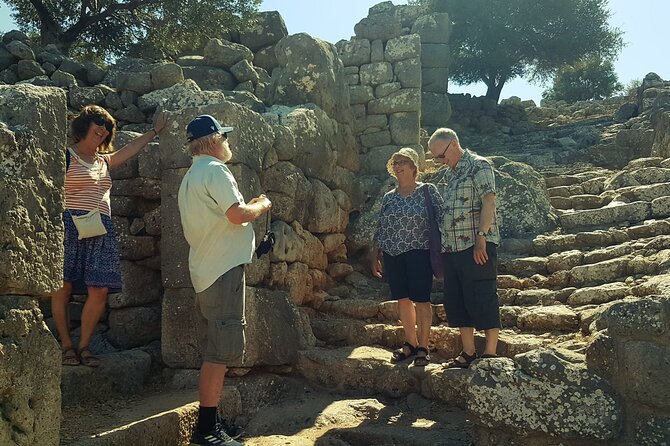
Lato is the most demanding stop physically and one of the most rewarding historically. The ancient Doric city-state was built on a saddle between two hills. Its position helped protect it from attack, while also giving it wide views toward Mirabello Bay.
The city was named for Leto, the mother of Apollo and Artemis. Lato is the Doric form of her name. The main deity worshipped here was Eileithyia, a goddess associated with childbirth, and her image appeared on the city’s coins.
Lato also connects to Nearchos, who was born here and later became an admiral under Alexander the Great. The city’s harbor, Lato pros Kamara, was modern Agios Nikolaos. By the middle of the second century AD, the harbor had grown so important that the administrative center moved there, and Lato was eventually abandoned.
You have around 50 minutes at the site. That gives you time to see the basic remains and appreciate the setting, but it is not an all-day archaeological visit. The ground at an ancient hilltop city can be uneven, so sensible shoes are a good idea. The tour information says most people can participate, but the visit is more active than browsing the shops in Kritsa.
The listed entrance fee is 3 euros. Add it to the Panagia Kera fee when working out your total cost. The site is not included in the advertised tour price.
What I like about Lato is that the setting helps explain the city. You can see why people chose the site, how the hills offered protection, and why the harbor below eventually changed the balance of power. The views are not just decoration. They are part of the story.
Kritsa, where lanes and handicrafts do the talking
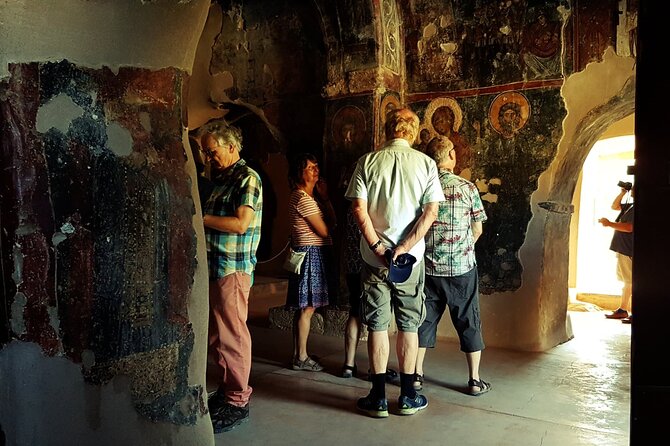
Kritsa receives about an hour and a half, the longest scheduled visit apart from Kroustas. That is appropriate because the village rewards slow walking rather than a quick look from the minivan.
The village is known for lace making, textiles, and handicrafts. Its narrow streets pass old buildings, flowering yards, small shops, traditional coffee places, Byzantine churches, and folklore collections. Taken together, these features give Kritsa the feel of an open-air record of Cretan life.
You should not expect every building to be polished. Some houses are beautifully kept, while others are abandoned or in poor repair. That mixture is part of the real village, even if it makes the experience less picture-perfect than a carefully restored heritage center.
The lanes are the main attraction. Allow yourself time to look above the shopfronts, not just at the merchandise. Old stonework, balconies, doorways, and small courtyards can be more revealing than a formal display. The textile shops are useful if you want a practical souvenir connected to local craft rather than a generic tourist item.
Kritsa is also a place where the pace can become your own. You might browse, stop for coffee, visit a church, or simply walk without a fixed target. The village has clean, free toilets, and parking has been described as easy and free, though the tour itself handles the transport rather than asking you to find a space.
Do not assume Kritsa will be crowded. Even in late August, it can feel quiet, with relatively few people in the lanes. That may change by date and time, but the village is not guaranteed to be overrun with visitors.
The drawback is that the commercial side is visible. Some shops focus on selling, and the condition of the buildings varies. I would visit Kritsa for the combination of craft, architecture, and ordinary village life, not for a perfectly preserved old town.
Kroustas, the meal with a Cretan accent
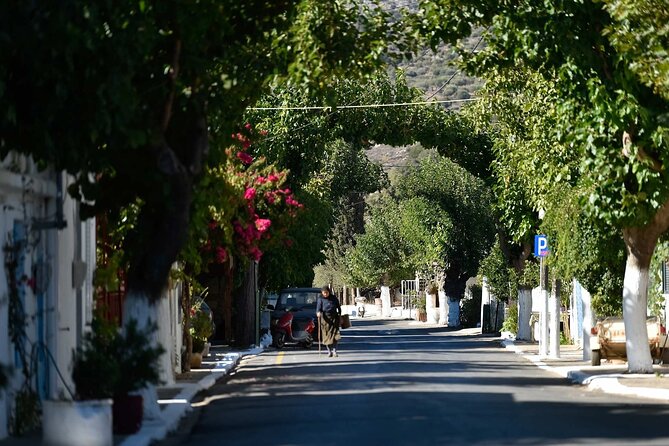
Kroustas is a smaller village of about 500 residents, and it has a different feel from Kritsa. Here, the focus shifts toward food, wine, and local hospitality.
The village has narrow streets, stone houses, and countryside around it. Several traditional tavernas serve local dishes, so this is the natural place to eat. Lunch costs extra, but that gives you control over both the menu and the budget.
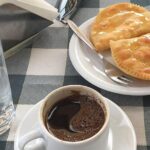
Look for skioufihta, a traditional local pasta dish, and kalitsounia, which can be sweet or savory. You may also find myzithropites, small pies made with local cheese, along with ftazymo bread and aiga vrasti, boiled goat. These are not the standard restaurant choices you see everywhere in Greece, which is exactly why Kroustas adds value to the day.
The area is also known for wine made from local grape varieties such as Liatiko and Mandilari. Beekeeping is well developed here too, so local honey is another food connection to look for.
You have about one hour and 40 minutes in Kroustas. That is enough time for lunch and a short walk, though you should keep an eye on the schedule if you want to do both at an unhurried pace. The village is small, so the pleasure comes from sitting down, eating slowly, and noticing the setting rather than collecting a long list of sights.
Kroustas is likely to be the most satisfying stop for anyone who plans trips around food. If you prefer to skip lunch or want a packed sightseeing schedule, the long meal break may feel less useful. For me, the slower pace is a strength. Cretan cuisine makes more sense when you encounter it in a village setting rather than as a rushed tasting between bus stops.

The six-hour schedule and the cost of the outing
The tour lasts about six hours and begins and ends at Andrea Papandreou 36 in Schisma Elountas. Pickup is offered, and the activity returns to the meeting point at the end.
The stated price is $69.46 per person. For that amount, you get transport, a small group of up to eight, bottled water, soda, a driver, and access to four distinct stops. Lunch and the two listed entrance fees are extra.
I see the price as fair if you are staying around Elounda and want someone else to handle the inland roads. A rental car might cost less for a group of several people, especially if you skip paid entries, but then you take on driving, parking, route planning, and timing. The small group also gives this outing an advantage over a large coach tour.
The value depends on what you want from a day in Crete. If you only want a quick village walk, six hours and the long transfers may be too much. If you want archaeology, art, food, and village life in one organized route, the cost is easier to justify.
Since transfer time can reach one to one and a half hours each way, do not book this as a light morning activity before an important afternoon plan. Traffic affects the timing, and the road portion is a real part of the experience.
Who will get the most from this Crete tour
I would recommend this outing to you if you want to see inland Crete without renting a car. It suits people who enjoy small museums, religious art, ruins, village lanes, local food, and conversations with a driver who can explain what you are seeing.
It is also a good match for couples and small groups. The minivan has a maximum of eight people, and the flexible format may make it possible to spend a little more time on the subjects that interest your group.
You should think twice if you dislike uneven archaeological sites, long drives, or unstructured village time. Lato is not a polished attraction, and Kritsa includes abandoned buildings alongside attractive old homes. Kroustas is at its best when you are willing to sit down for lunch rather than rush through.
Most people can participate, and service animals are allowed. The tour requires good weather. If poor weather causes cancellation, you can choose another date or receive a full refund. You can also cancel for a full refund up to 24 hours before the start time. Changes or cancellations inside that window are not accepted.
Should you book Traditional Villages of Kritsa and Kroustas?
Book it if you want a small, varied day in inland Crete and care more about local character than a long list of famous landmarks. Panagia Kera gives you serious Byzantine art, Lato adds ancient history and views, Kritsa brings crafts and old lanes, and Kroustas supplies the meal.
I would especially choose it over a large coach excursion if the group size and flexible pace matter to you. Go with realistic expectations: this is not a flawless heritage village, and much of the day includes driving. But for $69.46, plus lunch and up to 6 euros in listed admission fees, it offers a practical way to see a side of Crete that is easy to miss from the resort coast.
FAQ
How long does the Traditional Villages of Kritsa and Kroustas tour last?
The experience lasts approximately six hours, including travel between the meeting point and the villages and sites.
Where does the tour start and finish?
It starts at Andrea Papandreou 36, Schisma Elountas 720 53, Greece, and ends back at the same meeting point.
Is pickup offered?
Yes. Pickup is offered for the experience.
How large is the tour group?
The tour has a maximum of eight participants.
Is lunch included?
No. Lunch in Kroustas is not included in the price and must be paid for separately.
Are entrance fees included?
No. The listed entrance fees are 3 euros for Panagia Kera and 3 euros for Lato.
What food can I try in Kroustas?
Possible local specialties include skioufihta, kalitsounia, myzithropites, ftazymo bread, and boiled goat. The village is also known for local wine made from Liatiko and Mandilari grapes.
What happens if the weather is poor?
The experience requires good weather. If it is canceled because of poor weather, you can choose a different date or receive a full refund.