REVIEW · GREECE
Tzoumerka: Rafting Arachthos Trail: Plaka Bridge- Tzari
Book on GetYourGuide →Operated by Alpine Zone · Bookable on GetYourGuide
Plaka Bridge makes rafting feel cinematic. I like the sheer scale of the 20m one-arch stone Plaka Bridge and the way the Arachthos River delivers real, splashy fun through a canyon that can rise to 700 meters. It’s a big “wow” day with a clear plan: gear up, ride the rapids with an instructor, then cool down and snack afterward.
One thing to plan around: the river changes a lot with the season. By summer, parts of the riverbed may be barely covered and some spots can even run dry, and the trip only happens if weather conditions allow it.
In This Review
- Key points worth getting excited about
- Where the day starts: Alpine Zone and the Plaka Bridge setting
- The 20m one-arch Plaka Bridge: the best kind of pre-rafting photos
- Gear-up and briefing: how “no experience required” stays true
- Downstream time: Class III rapids in a canyon that can hit 700 meters
- Arachthos in different seasons: why timing changes the river
- The route “trail” change in 2025: what you should know
- The finish at Tzari: ending strong after a 9-kilometer descent
- Timing and transport: how the 5 hours adds up
- Price and value: what $76 buys you in the real world
- What to bring (and what to do with wet clothes)
- Who this rafting day suits best
- Should you book this rafting Arachthos run Plaka Bridge to Tzari?
Key points worth getting excited about
- Plaka Bridge scale: a 20m-high, 40m-wide single-arch stone bridge, the largest of its kind in the Balkans
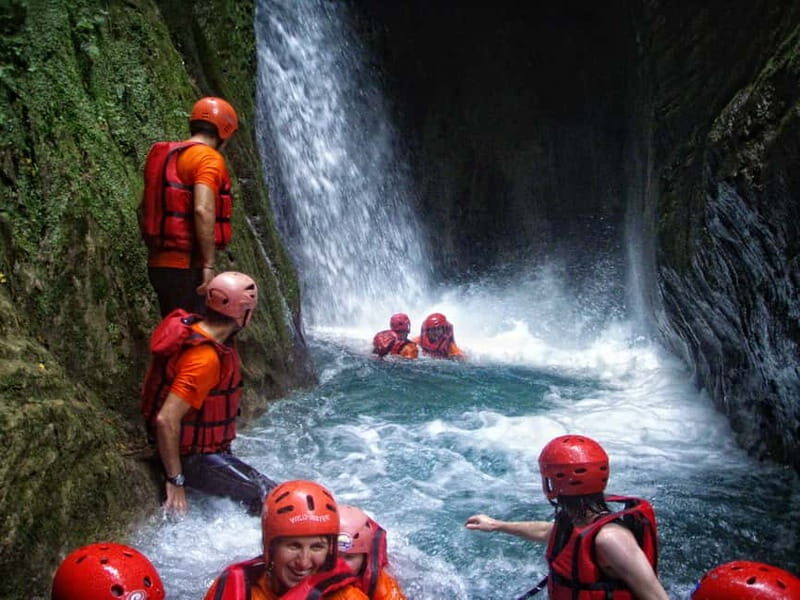
- Class III rapids, guided: no prior rafting experience needed, with safety equipment and instruction
- Big canyon walls: scenery as the gorge squeezes in, with walls reaching up to 700 meters
- Tzoumerka finish at Tzari: the ride ends after about a 9-kilometer descent
- Baklava and water after the run: a proper post-rafting reset with changing and washing facilities
- 2025 route may shift: road construction in the area can mean a temporary modification for safety
Where the day starts: Alpine Zone and the Plaka Bridge setting
This experience begins at the Alpine Zone rafting base near the old Plaka Bridge. If you’re the kind of traveler who enjoys a strong start, you’ll appreciate that the rafting day doesn’t feel like it’s “just logistics” before the fun. You’re already in the right place—right by a standout landmark—so the scenery is in your face from the first moment.
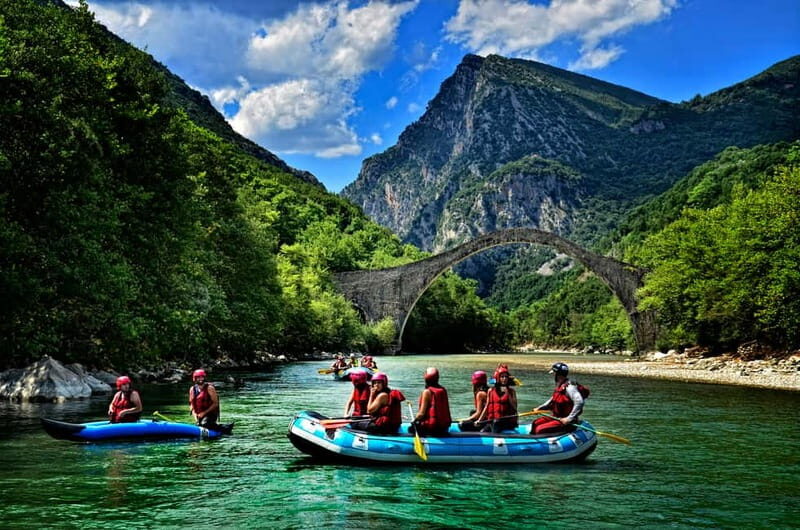
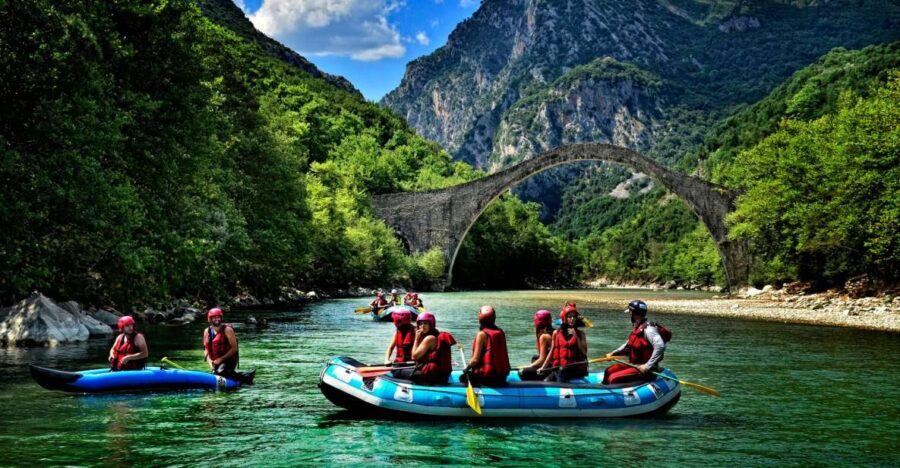
And Plaka Bridge isn’t a tiny bridge you glance at from a parking lot. It’s a 20-meter-high, 40-meter-wide single-arch stone structure. The size matters here because it frames the whole experience: you’re not only rafting in a canyon, you’re launching the ride from one of the most dramatic bridge backdrops in the Balkans.
You can also read our reviews of more tours and experiences in Greece.

The 20m one-arch Plaka Bridge: the best kind of pre-rafting photos
The Plaka Bridge area gives you a rare mix of views and history-adjacent scale. Even if you’re not a bridge-nerd, you’ll get why it’s famous: it’s one arch, stone, and built in a way that looks solid even from far away. In practical terms, it also helps you orient your expectations. When you understand where you are visually, the later gorge sections feel even wilder.
This is also where the pacing clicks into place. After you check in and get sorted, you’ll move into the equipment phase and then into the river. That matters because rafting can feel chaotic if you’re scrambling for gear. Here, the flow is designed so you’re ready before you hit the water.
Gear-up and briefing: how “no experience required” stays true
The tour includes a short briefing and personal and technical equipment. That’s not just a checkbox—it’s the difference between a stressful first time and a confident first run.
You’ll be with a guide/instructor who speaks Greek and English, and you’ll get the basics before you’re sent downstream. The experience is designed so all levels can join. In other words, you’re not expected to know how to read whitewater on your own. You follow the guide’s cues, and the river does the entertaining.
If you’ve rafted before, you’ll still likely appreciate the structure: the equipment, instructions, and timing are set up so you spend your energy on the ride—not on figuring out how the day works.
Downstream time: Class III rapids in a canyon that can hit 700 meters
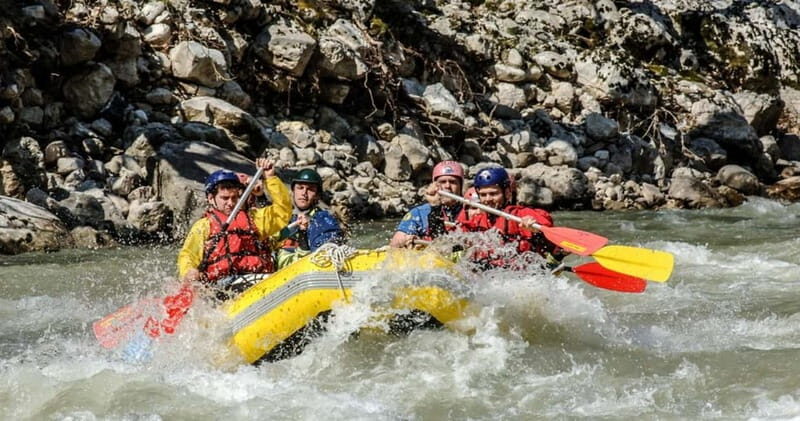
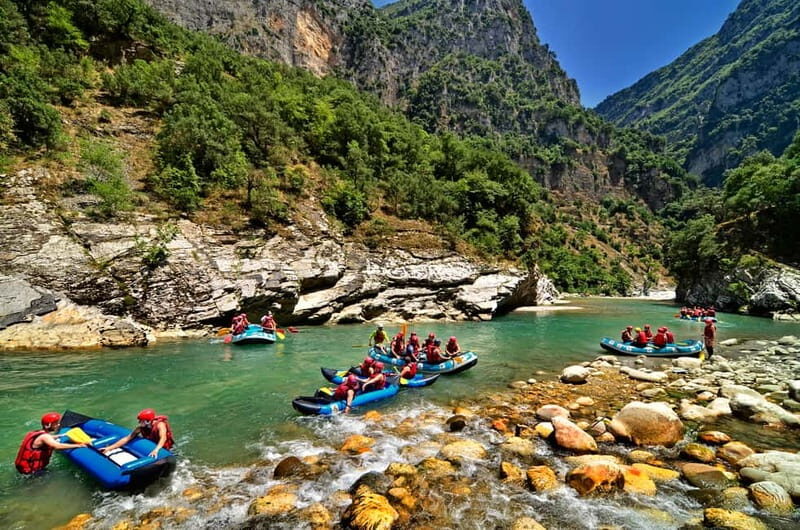
The main action is the rafting run—about 3.5 hours on the Arachthos River. The water difficulty is rated at Class III. That’s a sweet spot for many people: it’s exciting and physical, but it’s not the kind of extreme where you feel completely out of your depth.
What makes the rapids worth it is the setting. As you paddle, canyon walls rise dramatically—up to 700 meters. That height changes how you experience the water. The rapids feel more powerful because the river is squeezed into a steep corridor, and the reflections off the clear water can look almost unreal.
Also, the river is described as narrow and wild. Translation: you’ll feel like you’re riding through a real place, not a controlled attraction. That’s part of the charm of the Arachthos—famous, yes, but still wild enough to feel like you’re earning your smile.
Arachthos in different seasons: why timing changes the river
This is important if you’re deciding when to go. The Arachthos River isn’t identical all year.
- In winter, the waterfall is full and roaring.
- In summer, parts of the riverbed can be barely covered with water, and some spots can even run dry.
So if you’re visiting in the drier months, manage expectations. You may get plenty of action, but you might also have stretches that feel more like scenic moving water than constant wave after wave. The good news: the scenery still hits hard because the gorge walls don’t shrink just because the water level changes.




The route “trail” change in 2025: what you should know
For the 2025 season, the operator notes that local authorities directed a temporary modification of the usual trail due to unforeseen circumstances and ongoing road construction in the Tzoumerka area.
Practically, this means you should expect some variation in how the day runs, especially on the land-transfer portion or any roadside approach. The operator’s message is clear: the goal is safety, quality, and a pleasant time, even with the detour. When you book, just keep your plan flexible and trust that they’ve done this enough to keep the river day on track.
The finish at Tzari: ending strong after a 9-kilometer descent
After about 9 kilometers of descent, the rafting ends in the Tzari area. Ending by the river keeps the experience feeling complete—rather than turning it into “raft, then hike for an hour.”
When you’re done, the next part is a real value add: you return via bus back to the Alpine Zone base, located just a few meters past Plaka Bridge. You’ll also find friendly staff offering traditional syrupy sweets (including baklava), plus refreshing water.
Then there are changing rooms and washing facilities, which is exactly what you want after you’ve been splashed, paddled, and likely soaked. It’s a small thing that changes the whole vibe. Instead of feeling like you’re stuck in wet clothes, you can reset for the rest of your travel day.
Timing and transport: how the 5 hours adds up
This is a 5-hour total experience. The rafting itself takes 3.5 hours, and the rest is mainly transfer time and setup/finish.
That “transfer time” matters more than people think. If you’re juggling other stops in Epirus, you’ll want to treat this as a half-day anchor, not something you tack on casually. Your best move is planning a relaxed schedule around it, so you’re not rushing at the end while you’re still drying off.
The transport is also a point worth noting: the service has a very strong transport score (89% of reviewers gave it a perfect score). That usually means the pick-up and return rhythm is smooth, which makes first-time rafting less stressful.
Price and value: what $76 buys you in the real world
At $76 per person for a 5-hour guided river experience, the value comes from what’s included, not just the “price tag.”
You’re getting:
- gear and equipment (so you don’t shop for anything)
- instructor-led guidance for a Class III experience
- a short briefing that helps beginners relax
- changing rooms and washing facilities
- baklava and water after rafting
- photos from the trip
- guided support and an organized return
If you compare this to piecing together a DIY plan (equipment rentals, local driving, safety planning, and the hassle of organizing a river day), the bundled experience is honestly easier. And because it’s guided, you’re also paying for peace of mind—the stuff that lets you focus on the fun.
What to bring (and what to do with wet clothes)
You don’t need much, but you do need the right basics.
Bring:
- swimwear
- a towel
That’s it. The tour provides the equipment, and you’ll have changing rooms and washing facilities at the base. My practical tip: wear something quick-dry for the boat-to-bus transition, even if you’ll change later. It makes the end of the day feel smoother.
Who this rafting day suits best
This tour is aimed at people who want action without needing previous experience. It’s listed for all ages and levels, with the big caveat that it’s not suitable for children under 2 and not suitable for pregnant women.
So who should book it?
- First-time rafters who want a guided Class III day
- Families where everyone can comfortably swim and follow instructions
- Travelers who love big natural settings and short, well-run adventure days
If you’re very risk-averse, you should still approach Class III with respect—but the guided setup, gear, and briefing are built to keep the day manageable.
Should you book this rafting Arachthos run Plaka Bridge to Tzari?
Book it if you want a half-day adventure that blends three things well: a famous starting landmark (Plaka Bridge), real guided river action (Class III), and a comfortable finish with changing and a sweet snack. The canyon scale alone is worth it, and the included photos can help you actually remember the day beyond a few blurry phone shots.
Skip—or at least choose dates carefully—if you’re visiting in a season when you strongly expect nonstop water at every moment. The river can run lower in summer, and the trip depends on weather. Also, if anyone in your group falls under the stated exclusions, plan a different activity.
Overall, this is a solid value way to experience Epirus water and Tzoumerka scenery in one organized, fun chunk of time.