REVIEW · VIKOS AOOS NATIONAL PARK
Vikos Gorge Full-Day Guided Hike
Book on GetYourGuide →Operated by Hikes 4 All · Bookable on GetYourGuide
Vikos Gorge is not a gentle sightseeing walk. It is a full mountain crossing through the Pindus range, from stone-built Monodendri down to the Voidomatis River, then uphill to Vikos village. I like the wild river section and the chance to see rare plants and untouched mountain terrain. I also like that guides such as George, Maria, Lazaros, and Nikos adjust the pace and help at tricky spots.
The catch is simple: 7.5 miles and about six hours of actual walking is a serious day out. The route begins with a steep descent, ends with a stepped climb, and offers no easy shortcut in the middle. If your knees, ankles, or general fitness are uncertain, this is not the place to find out.
In This Review
- Key points to know before you book
- Why this gorge hike is worth your day
- Starting in stone-built Monodendri
- Following the Voidomatis River
- The four-hour point: reaching the springs
- The uphill exit to Vikos village
- What the guides add
- How hard is the 8-hour hike?
- Weather, shade, and timing
- Is $153 a fair price?
- Who should book this hike?
- Should you book the Vikos Gorge hike?
- FAQ
- Where does the hike start?
- Where does the hike finish?
- How long does the activity last?
- How far is the hike?
- How much of the route is actual walking?
- Is the hike difficult?
- Does the route follow the Voidomatis River?
- Is transportation included?
- What languages are available?
- Is activity insurance included?
Key points to know before you book
- The route crosses the gorge: You start in Monodendri and finish in Vikos village, with a vehicle returning you to the starting point.
- The river is your companion: Much of the middle section follows the Voidomatis through shade, rocks, woods, and open stretches.
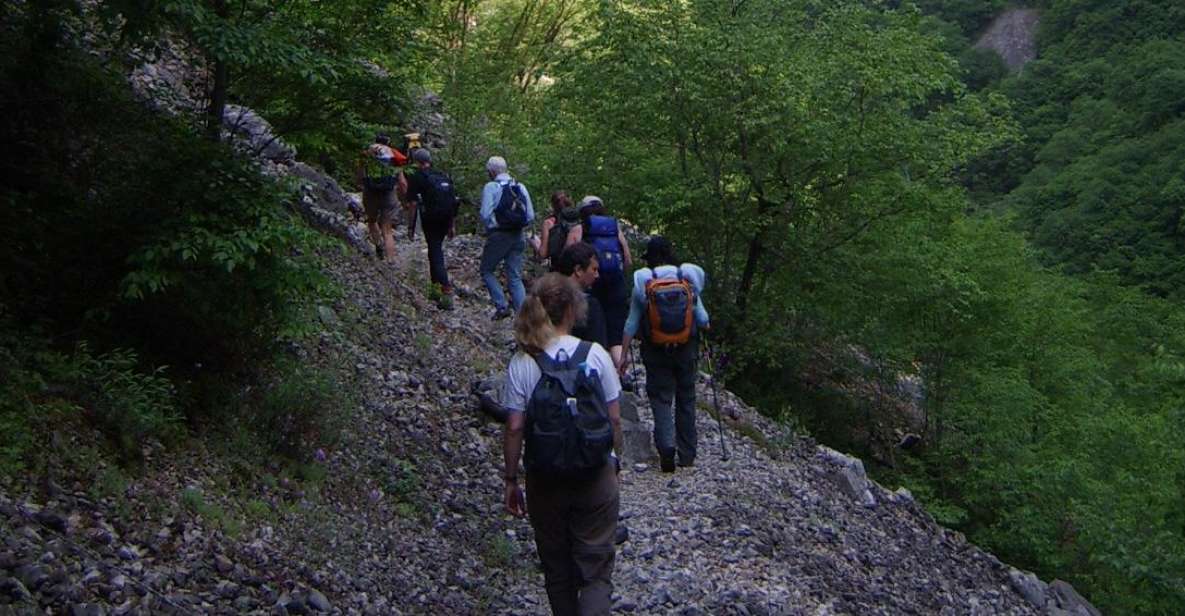
- The walking is demanding: Expect a steep descent, uneven ground, gentle hills in the gorge, and a stair-like climb at the end.
- The guide adds safety and context: Guides explain plants, animals, local culture, gorge history, and how to handle difficult sections.
- The scenery changes all day: Stone villages, limestone and dolomite walls, clear water, forest, and open mountain views all appear along the way.
- The price buys more than directions: At $153 per person, you are paying for a full-day guide, transport to the trail entrance, and the return ride from Vikos.
Why this gorge hike is worth your day
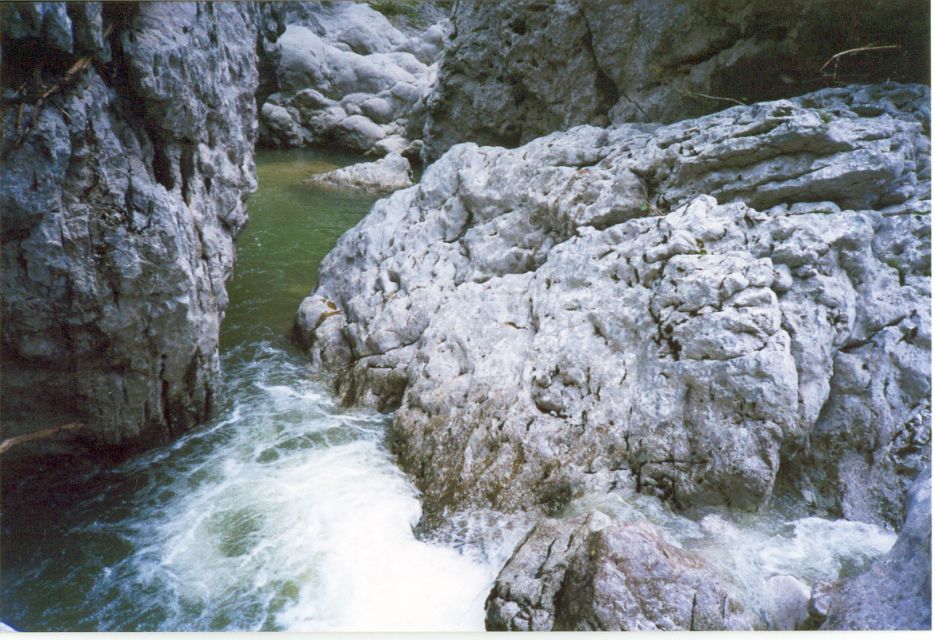
Vikos Gorge gives you a strong sense of northern Greece beyond the usual island-and-ruin itinerary. The Pindus Mountains feel remote, rugged, and largely untouched, with old stone villages fitted into the folds of the mountains rather than spread across flat ground.
The gorge is listed by the Guinness Book of Records as the deepest in the world. That claim depends on how depth is measured, so I would not book this walk only for the record. Book it for the scale of the rock walls, the clear Voidomatis River, and the rare chance to spend most of a day moving through a protected mountain setting under your own power.
This is also a useful way to connect two traditional villages without driving between them. Monodendri is your starting point, and Vikos is your finish. The transfer at the end removes the awkward problem of arranging a second vehicle, which matters on a one-way route.
You can also read our reviews of more guided tours in Vikos Aoos National Park
Starting in stone-built Monodendri
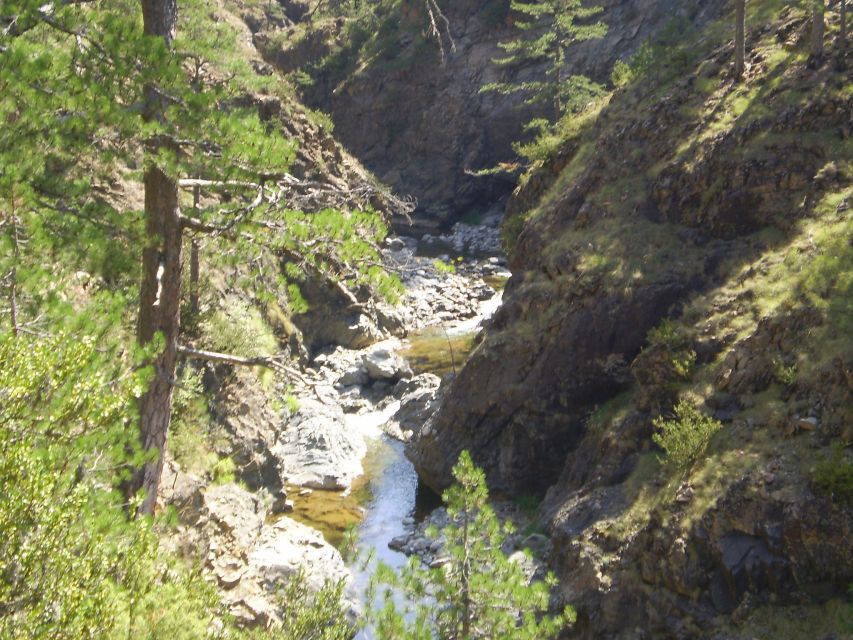
The hike begins in Monodendri, a restored stone village on the southern rim of the gorge. Its walled courtyards and fortress-like gates give you a quick introduction to the local building style before the walking begins.
Near the open-air theater, you follow a marked trail toward the gorge. The first major section drops sharply. This descent is exciting because the views open quickly, but it is also the part that can be hardest on your knees. You should treat the first hour as real mountain walking, not as a warm-up stroll.
The signposted trail is considered easy to follow, but that does not make it easy underfoot. A guide is useful here for pointing out safer footing, keeping the group together, and judging how to handle the steeper stretches. Lazaros was especially praised for showing people how to manage difficult sections, while Nikos was noted for keeping a close eye on safety.
Following the Voidomatis River
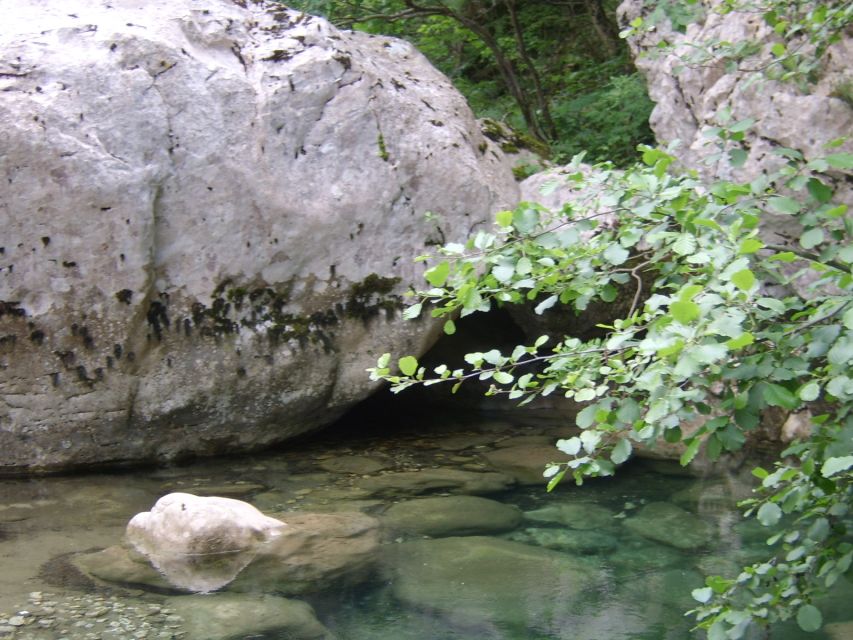
After dropping from Monodendri, the route reaches the Voidomatis River. This is the heart of the hike. The water is famous for its clarity, and the river gives the long middle section a steady focus as you walk beside it.
The route changes as it goes. Some stretches are relatively flat, while others include small hills, uneven ground, and rocky footing. Much of the walking is shaded, an important detail in warmer weather. Still, the final climb is more exposed in feel, and an overcast day can make that uphill section far more comfortable.
You will pass towering limestone and dolomite rock, forest, and native vegetation that has not been heavily altered for tourism. The quiet here is part of the appeal. This is not a parade of viewpoints reached by bus. You earn the best sights with steady walking.
The river section also gives the guide room to explain what you are seeing. George has been praised for discussing plants, animals, the gorge, and local risks while still allowing plenty of time for photos. That balance matters. A guide who talks without pause can make a long hike tiring, while a guide who says nothing reduces the outing to trail navigation.
The four-hour point: reaching the springs
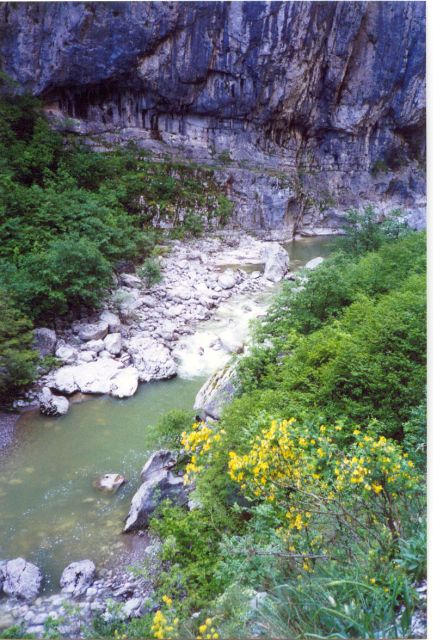
After roughly four hours, you reach the Voidomatis River springs. This marks an important point in the day, both as a natural highlight and as a useful way to judge your remaining effort.
The springs are associated with the river’s clear water and the wooded setting. You then continue through the forest before the trail turns uphill toward the exit. At this point, the hike is not finished, even if the scenery has given you a psychological lift. You still have the final climb to Vikos village.
The trip information describes the whole outing as about 12.6 kilometers, or 7.5 miles. Actual walking time has ranged from about five and a half hours to six hours, with several short breaks included in some outings. The full activity lasts eight hours because it includes stops, transfers, and the time needed to manage the route at a sensible group pace.
The uphill exit to Vikos village
The final section leaves the river and climbs through the woods toward Vikos. This uphill exit is the part most likely to test you. One account describes it as a stair-like path, and another calls the overall effort considerable. That is useful information for planning: the hike does not end with an easy walk along a village lane.
Vikos village provides a satisfying finish because you have crossed the gorge rather than simply looked into it from above. A vehicle waits there to take you back to Monodendri, where the activity began. The return transfer is included, so you do not need to arrange a taxi or ask someone to collect you.
The return ride is practical rather than scenic entertainment, but it makes the one-way plan work. Without it, you would need to retrace your steps or organize separate transport between mountain villages.
What the guides add
The route is signposted, and one person found the markings clear enough that a guide did not add much for navigation. That is a fair point. If you are an experienced mountain walker, the trail itself may not be the main reason to hire help.
The guide’s stronger value is judgment and company in a demanding setting. A professional trekking leader can help you over difficult sections, watch the pace, respond if someone develops physical trouble, and explain the plants, animals, gorge, and local culture.
The guides have different strengths. George has been praised for giving clear information about nature, history, and risks while leaving time for photographs. Maria allowed the group to walk at its own pace and connected the gorge to Greek culture. Lazaros was friendly and helpful at difficult points. Vasilis was praised for his understanding of the route and natural surroundings, while Nikos was noted for safety awareness and for arranging the return pickup.
You should not expect a nonstop lecture. The best version of this tour seems to be a walking day with useful explanations at the right moments. One less positive experience involved a guide who offered little information about the gorge or its history. That shows how much the quality of the day depends on the individual guide assigned to you.
How hard is the 8-hour hike?
You should be comfortable walking for most of a day on uneven mountain paths. The distance alone, 12.6 kilometers, does not tell the whole story. The route loses height at the start, follows mixed ground through the gorge, then gains height again near Vikos.
The walk has been completed in around five and a half to six hours of walking, including small rests in some cases. The rest of the eight-hour schedule allows time for meeting, transfers, photographs, explanations, and the return vehicle.
I would rate it as demanding rather than technical, based on the information provided. The descriptions point to steep sections, light hills, rocky paths, and a stepped climb, but they do not describe climbing equipment or technical scrambling. You still need to be honest about your fitness. The provider does not include activity insurance, so check your own cover before setting out.
A guide can help you pace yourself, but no guide can remove the physical work. The group may move at different speeds, and the best guides appear willing to let people walk at a comfortable rate rather than rushing everyone to the finish.
Weather, shade, and timing
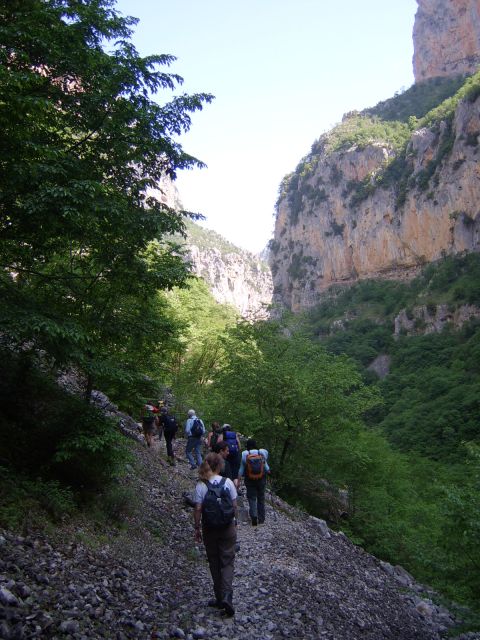
Much of the gorge section is shaded, which is a major advantage in summer. The final climb can feel hotter, especially when the sun is out. A cloudy day was described as making the uphill exit more pleasant.
Weather can change the character of the hike. Clear conditions give you sharper views of the limestone and dolomite walls, while cooler or cloudy weather may make the long climb easier. Since the activity runs for eight hours, you are exposed to the day’s conditions for a long time.
Bring enough water and plan for a full day outdoors. The supplied information does not specify food, equipment, or clothing, so you should not assume these are provided. Wear footwear suited to uneven mountain paths and dress for changing conditions. These are practical choices, not extras, on a route with a steep start and finish.
Is $153 a fair price?
At $153 per person, this is not a cheap walk. The value depends on what you need.
If you already know the gorge, are confident on marked mountain trails, and have your own transport between Monodendri and Vikos, you may decide the price is more than you need to spend. The path is signposted, and independent walkers can sometimes manage without a guide.
For most visitors who want the full one-way crossing, the price has a reasonable practical side. It includes a professional trekking leader, transport to the entrance point, and transport from Vikos back to Monodendri. You also get local interpretation and help with the difficult sections. A private taxi arrangement alone would require planning, and a poor decision on pacing can make a long mountain day harder than it needs to be.
The strongest value comes from the combination of safety, local knowledge, and logistics. You are not simply paying for someone to point at the trail. You are paying to start and finish in different villages without leaving your car problem unsolved, while having an experienced person manage the day.
Who should book this hike?
I would recommend it to fit hikers who want a serious day in nature and prefer a guide who can explain the setting as they walk. It suits you if you enjoy changing scenery more than a short viewpoint stop, and if the idea of walking beside a clear mountain river appeals to you.
It is also a good match for people who want to explore the Pindus Mountains without designing their own transport plan. The English and Greek guiding options make it accessible to visitors who do not speak Greek, though you should confirm your preferred language when booking.
I would be cautious if you dislike steep descents, long uphill finishes, or uneven paths. The walk is not presented as a gentle family outing, and the physical effort is a central part of the experience. If your main goal is a quick view of Vikos Gorge, a shorter viewpoint visit would be more suitable, though that is not what this activity offers.
Booking is flexible, with free cancellation up to 24 hours before the start and a reserve-now, pay-later option. Check the available starting time before committing, since the activity lasts a full eight hours.
Should you book the Vikos Gorge hike?
Book this if you want to walk through the gorge rather than admire it from a rim. The river, forest, high rock walls, old villages, and changing trail make this one of the more substantial nature outings in Epirus.
The guide is most valuable if you are new to the area, want help with the tougher sections, or care about plants, animals, local culture, and gorge history. If you are a strong independent walker, the marked trail may reduce the need for a guide, but you will still need to solve the return transport.
At $153, it is best seen as a guided mountain crossing with transport, not as an inexpensive stroll. For a fit visitor who wants a full day of wild scenery and a clear plan from Monodendri to Vikos, I think it is a solid choice. Just save some energy for the final climb.
FAQ
Where does the hike start?
The hike starts in Monodendri village, near the open-air theater at the top of the trail.
Where does the hike finish?
The walking portion finishes in Vikos village. A transfer then takes you back to Monodendri.
How long does the activity last?
The full activity lasts eight hours.
How far is the hike?
The route covers about 12.6 kilometers, or 7.5 miles.
How much of the route is actual walking?
Walking time has been around five and a half to six hours, including several short breaks on some outings.
Is the hike difficult?
The hike includes a steep descent into the gorge, mixed terrain beside the river, gentle hills, and a stepped uphill route out to Vikos village. It requires considerable physical effort.
Does the route follow the Voidomatis River?
Yes. After descending from Monodendri, the route follows the Voidomatis River through shaded sections and woodland before continuing toward the springs.
Is transportation included?
Yes. Transportation to the trail entrance and transportation back to the meeting point at the end are included.
What languages are available?
The live tour guide is available in English and Greek.
Is activity insurance included?
No. Activity insurance is not included in the price.