REVIEW · ATHENS
Acropolis Museum Private Guided Tour
Book on Viator →Operated by Let's Book Travel · Bookable on Viator
The best part of this private Acropolis Museum tour is its calm, focused pace. In 90 minutes, you move from everyday objects and ancient statues to the Caryatids and the Parthenon Gallery, with a guide who can answer questions as they come up.
I like the skip-the-line entry, which removes one small but annoying task in Athens. I also like the personal format: Josephine and Nicky, two guides featured in the experience, are described as clear and well-informed, with Josephine praised for judging the timing well. The main drawback is the price, $185.71 per person, which is a serious expense for a short museum visit.
In This Review
- Key points at a glance
- Why the Acropolis Museum deserves a guided visit
- Meeting at Dionysiou Areopagitou 15
- A short walk past Herodion and the Theater of Dionysus
- Votives and everyday objects first
- Archaic statues and the Caryatids
- The Parthenon Gallery and its sculpted story
- What the private format changes
- Is $185.71 per person a fair price?
- Timing, pace, and practical limits
- Who should book this museum tour?
- Should you book the Acropolis Museum Private Guided Tour?
- FAQ
- Where does the Acropolis Museum tour begin?
- Where does the tour end?
- How long does the tour last?
- Is museum admission included?
- Is this a private activity?
- What language is the tour offered in?
- What does the tour cover inside the museum?
- Is transportation included?
- Can I cancel for a refund?
Key points at a glance
- Ninety focused minutes: The tour concentrates on the museum’s main works without trying to cover every display.
- Private group format: Only your party takes part, so you can set the pace and ask questions freely.
- Parthenon Gallery finale: Metopes, pediments, and the frieze provide the tour’s grand central stop.
- Ancient daily life included: The visit is not limited to famous sculptures. Votives and household artifacts add useful human detail.
- Short walk past major sites: The route includes views of Herodion and the Theater of Dionysus before entering the museum.
- English-language guiding: The experience is offered in English, with explanations of Greek history and mythology.
Why the Acropolis Museum deserves a guided visit
The Acropolis Museum is not simply a place to look at beautiful marble. Its collections help you understand what once stood on the Acropolis and how people used the sacred site. A good guide connects the objects to their setting, so the museum becomes more than a room full of ancient pieces.
You begin with votives, offerings left for the gods. These objects show the personal side of ancient religion. People did not visit the Acropolis only for grand ceremonies. They also came with hopes, thanks, and requests, leaving behind small reminders of ordinary lives.
The museum also presents artifacts from daily life. These can be easy to skip when the famous statues are waiting nearby, but I find them useful because they give the ancient world a human scale. You may see less familiar objects that explain how people lived, worshiped, and worked.
That is where a private guide earns the fee. You can ask why a particular object matters, how it was found, or what the museum is showing you in relation to the Acropolis above. The guide can spend more time on the subjects that interest your group and move on when a display does not hold your attention.
You can also read our reviews of more guided tours in Athens



Meeting at Dionysiou Areopagitou 15
The meeting point is the Acropolis Museum at Dionysiou Areopagitou 15 in Athens. The activity begins and ends there, which keeps the arrangement simple. You do not need to coordinate a separate museum exit or find a guide at another neighborhood landmark.
The museum is near public transportation, another practical benefit in central Athens. The supplied details do not specify a particular station, route, or walking distance, so you should confirm your own transport plan before setting out.
The visit includes entry fees and skip-the-line access. That matters most on a busy day, when buying a ticket at the museum could take time and interrupt an already full Athens schedule. Guaranteed admission also gives you more certainty than arriving without a booking.
The tour is offered in English. Confirmation arrives at booking, and most people can participate. No special accessibility details are provided, so if you have mobility or other access needs, ask the provider before booking.
A short walk past Herodion and the Theater of Dionysus
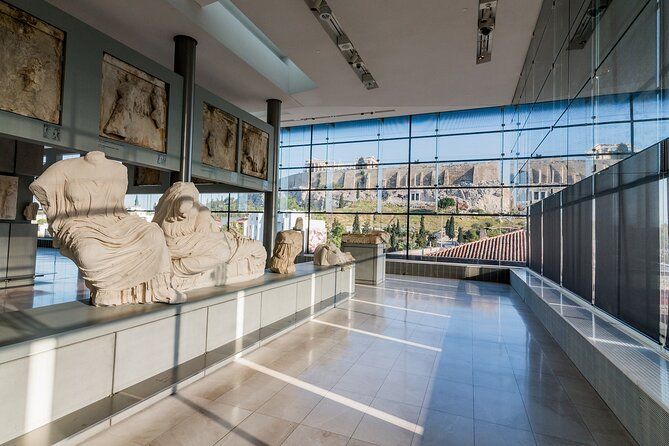
The museum visit includes a pleasant short walk passing Herodion and the Theater of Dionysus. These sites help place the museum in its wider setting, even though the main guided portion takes place inside the museum.
Herodion is the ancient theater associated with the south slope of the Acropolis. The Theater of Dionysus is especially important for understanding Greek performance and public life. From the information provided, these are part of the approach rather than separate, extended stops with their own admission.
That distinction matters. If you want a full tour of the theaters, temples, and slopes around the Acropolis, this experience is not designed for that. It is a museum tour with a short outdoor introduction, not a complete archaeological walking tour.
Still, the walk gives you a helpful transition. Instead of entering the museum cold, you pass the historic remains connected to the hilltop sanctuary. Then the exhibits inside can make better sense.
Votives and everyday objects first
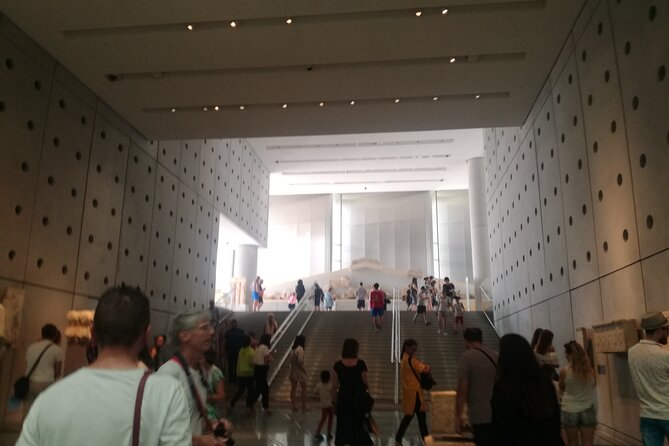
The collection’s less famous objects are a strong reason to take the tour. Votives reveal the private side of ancient worship, while artifacts from everyday life help you picture the people behind the monuments.
I would pay close attention here, even if your main goal is the Parthenon sculptures. The grand works attract the eye, but the smaller pieces often explain how the Acropolis functioned as a religious center. A guide can point out what is worth noticing and prevent you from spending too long on displays that may be less important to your interests.
This portion also gives the 90-minute schedule a sensible shape. You start with context, then move toward the most famous material. The tour does not open with the biggest attraction and leave you without a framework for understanding it.
Because the group is private, you can ask for more explanation about Greek mythology, religious practice, or ordinary life. Nicky is described as especially clear when explaining Greek history and mythology. That kind of plain explanation is useful in a museum where names, gods, and architectural terms can quickly blur together.
Archaic statues and the Caryatids
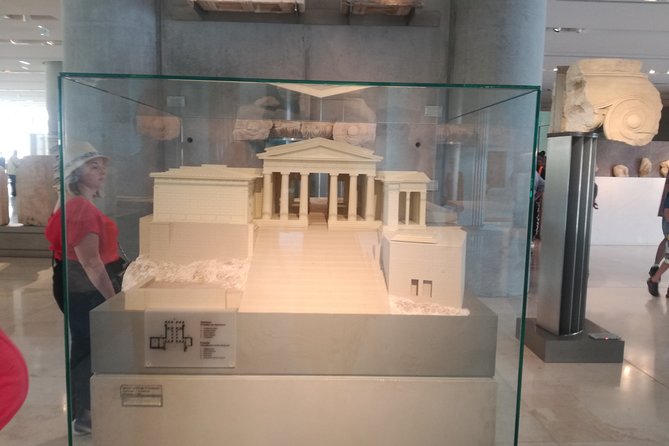
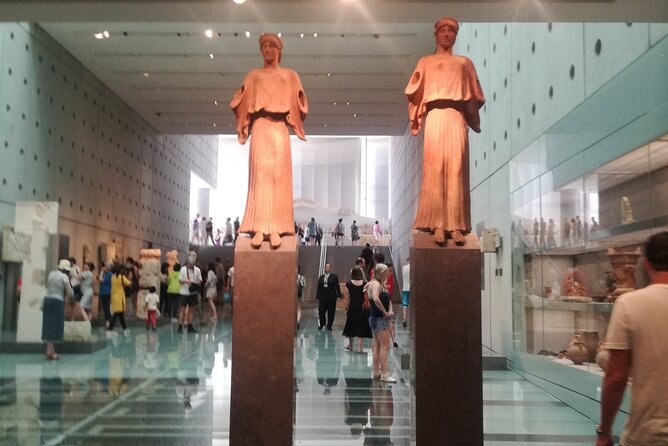
The archaic-period statues form another central part of the visit. These works predate the classical masterpieces most people associate with ancient Athens, and they help you see how Greek sculpture developed.
You may notice the more formal style of earlier statues, along with the way artists handled clothing, hair, posture, and the human body. The exact objects covered can depend on the guide’s route and the time available, so the tour should be viewed as a highlights visit rather than a full examination of every gallery.
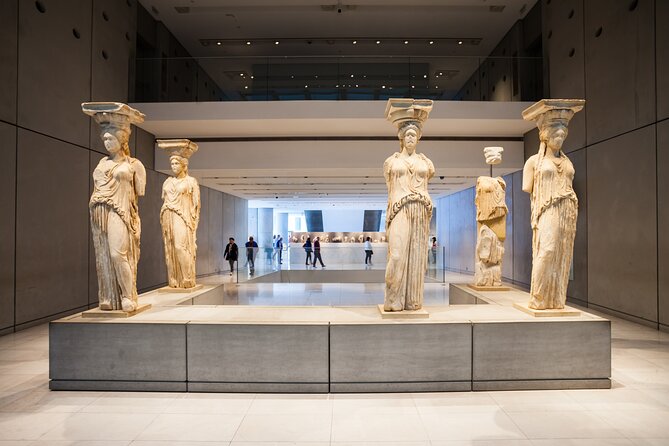
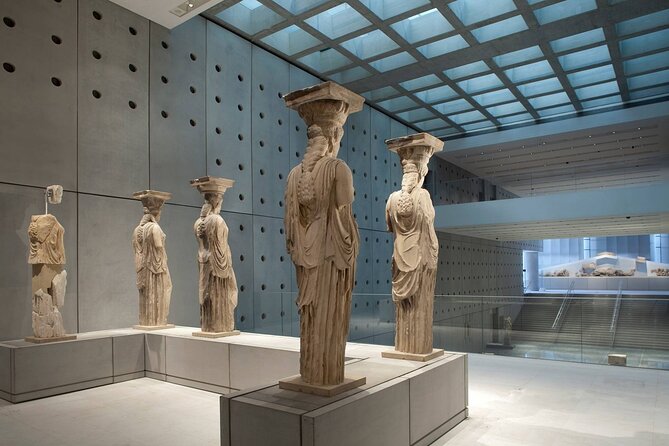
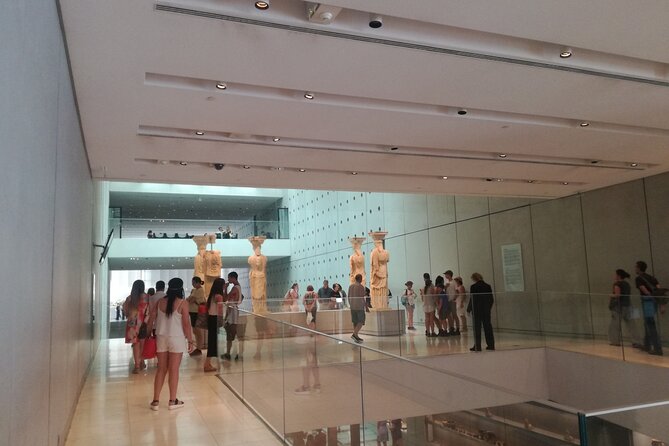
The Caryatids are among the museum’s best-known sights. These sculpted female figures once served as architectural supports on the Acropolis. Seeing them indoors allows you to study their details at close range, while also understanding why the originals are protected in a museum setting.
A guide can explain the difference between seeing a famous work as a symbol and seeing it as part of a building. That is a useful distinction. The Caryatids are not isolated statues created only for display. They were part of an architectural design, and their role makes the work more remarkable.
You can also read our reviews of more private tours in Athens





The Parthenon Gallery and its sculpted story
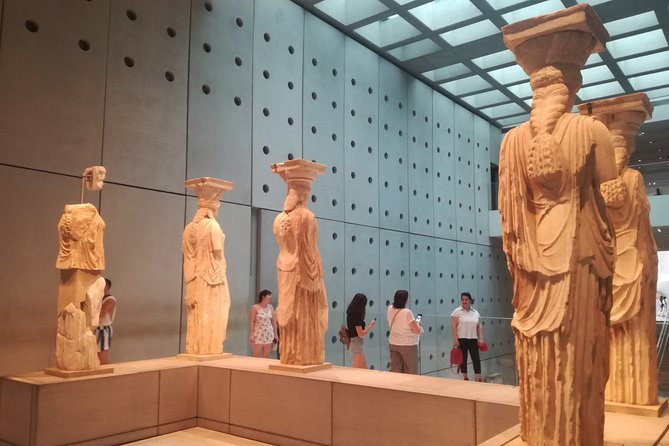
The tour finishes with the Parthenon Hall, the museum’s major draw. Here you see the metopes, pediments, and frieze, the sculptural elements that once formed part of the Parthenon’s decoration.
The metopes show carved panels from the temple. The pediments held large sculptural compositions at the building’s ends. The frieze ran along the temple and formed a continuous sculpted band. Even if you are new to classical art, these categories give you a basic map for what you are seeing.
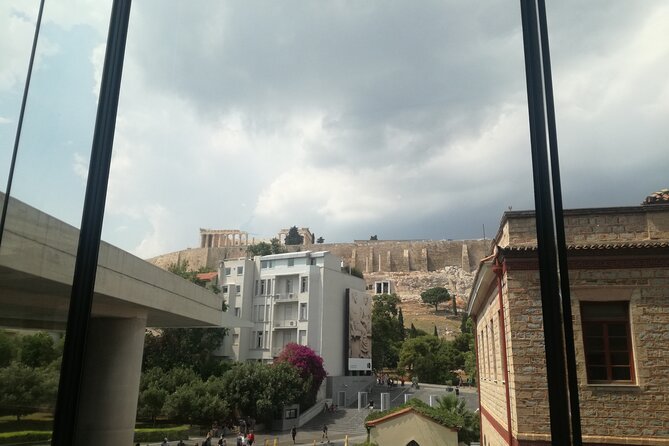
This is the point where a guide’s explanation can save you from simply walking past marble fragments. The placement of each piece matters. A guide can help you connect the museum’s displays with the Parthenon visible outside, making the relationship between the building and its sculpture easier to grasp.
The hall also rewards a slower pace. You can look at posture, fabric, missing sections, and the surviving details without the pressure of a large group waiting for everyone to catch up. The tour’s private format is particularly useful here because you can stop for a question or ask for a quick explanation of a confusing scene.
Do not expect the 90 minutes to provide a complete art-history course. The strength of this experience is selection. It gives you a guided route through the major themes, then leaves you with time to return to the displays that caught your eye.
What the private format changes
Large museum tours can be efficient, but they often impose one speed on everyone. This tour avoids that problem. Only your group participates, so you can ask questions without speaking in front of strangers and can spend a little more time on subjects that matter to you.
That privacy is also helpful for families, couples, or small groups with different levels of interest. One person may want mythology explained, while another may care more about architecture. A private guide can respond to both without turning the visit into a lecture for a crowd.
The format does not guarantee that every guide will teach in exactly the same way. Your experience depends on the person assigned to your booking. Josephine and Nicky are the named guides associated with the experience, and both are presented as strong communicators. Josephine is especially noted for giving the right amount of time to the highlights without overwhelming the group.
That balance is important. The museum contains plenty to see, and a guide who tries to cover everything can leave you with a blur of dates and names. A focused route is often more useful than a longer but hurried explanation.
Is $185.71 per person a fair price?
At $185.71 per person, this is not a budget museum visit. You are paying for a private English-speaking guide, museum admission, skip-the-line access, and the convenience of guaranteed entry. All taxes and fees are included, while personal expenses are not.
The value depends heavily on your group. For one or two people, the cost is high for 90 minutes. For a larger private party, group discounts may improve the calculation, though no discount amount is specified. Check the final price for your group before assuming the advertised per-person figure will change.
I would also compare the cost with your priorities. If you already feel comfortable reading museum labels and organizing your own visit, buying entry directly may be better value. If you want someone to explain the Caryatids, the Parthenon sculptures, and the mythology without preparation on your part, the guide can justify the added cost.
Skip-the-line access has value on a crowded day, but it is not a reason by itself to pay this much. The stronger case is the combination of reserved entry and private interpretation. You are buying time, structure, and the chance to ask questions.
The short duration cuts both ways. It keeps the visit manageable, especially after a morning at the Acropolis, but it means you should not expect a full museum survey. Think of it as a carefully chosen introduction to the main works.
Timing, pace, and practical limits
The tour lasts about one hour and 30 minutes. That is long enough to see the main highlights but short enough to fit into a busy Athens itinerary.
I would schedule it when you still have enough energy to pay attention. The museum rewards close looking, and the guide’s explanations will be easier to follow if you are not rushing from another appointment. The provided details do not give a recommended arrival time, so allow enough time to reach the meeting point and locate the museum entrance.
The activity ends back at the starting point. That makes it easy to continue exploring Athens afterward, return to your accommodation, or arrange another nearby activity. Since no extra transportation is included, you are responsible for getting to and from the museum.
Free cancellation is available if you cancel at least 24 hours before the start time. Cancellations made less than 24 hours ahead are not refunded, and late changes are not accepted. The provider also requires a minimum number of participants, so a cancellation by the operator could result in another date or experience, or a full refund.
Who should book this museum tour?
I would consider this a good match for you if you want the major museum highlights but do not want to prepare a route yourself. It also suits anyone who learns better from spoken explanations than from labels alone.
The private format works well for:
- Couples who want to move at their own speed
- Families who need a shorter, focused visit
- Small groups with questions about mythology or architecture
- First-time visitors who want context for the Acropolis
- Anyone with limited time in Athens
I would be more cautious if you are a serious museum enthusiast who wants hours with the collection. Ninety minutes will give you a guided selection, not a complete examination. You may want to stay afterward, but the supplied details do not state whether the booking includes extended independent time, so confirm that point first.
The price may also rule it out for budget visitors. A private tour is a comfort and learning choice, not the cheapest way into the museum.
Should you book the Acropolis Museum Private Guided Tour?
Book it if you value a calm visit, direct questions, and a guide who can connect small votives and daily-life artifacts with the grand Parthenon sculptures. The private format and included skip-the-line entry make the experience easy to manage, while the 90-minute length keeps it from becoming exhausting.
I would skip it if you prefer to explore museums alone, need more than a highlights tour, or cannot justify $185.71 per person. For everyone else, especially a small group splitting the cost, this offers a clear route through one of Athens’ most important collections without the noise and delay of a large group.
FAQ
Where does the Acropolis Museum tour begin?
It begins at the Acropolis Museum, Dionysiou Areopagitou 15, Athina 117 42, Greece.
Where does the tour end?
The activity ends back at the Acropolis Museum meeting point.
How long does the tour last?
The tour lasts approximately one hour and 30 minutes.
Is museum admission included?
Yes. The admission ticket, tour, skip-the-line access, all fees, and taxes are included.
Is this a private activity?
Yes. Only your group participates in the private tour.
What language is the tour offered in?
The experience is offered in English.
What does the tour cover inside the museum?
It covers votives, artifacts from everyday life, archaic-period statues, the Caryatids, and the Parthenon Hall with its metopes, pediments, and frieze.
Is transportation included?
No transportation is listed as included. You meet at the museum, which is near public transportation.
Can I cancel for a refund?
Yes, you can receive a full refund if you cancel at least 24 hours before the experience start time. Cancellations or changes made less than 24 hours before the start time are not accepted for a refund.