REVIEW · ATHENS
Ancient Greece and Meteora, 5-Days Private Tour
Book on Viator →Operated by CATTAXI · Bookable on Viator
The great strength of this five-day trip is its sweep. In one carefully packed circuit, you go from the Parthenon and Temple of Poseidon to Mycenae, Olympia, Delphi, Thermopylae, and the cliff-top monasteries of Meteora. It is a serious history tour, but the sea roads, mountain towns, and small bits of local time keep it from feeling like five straight days in museums.
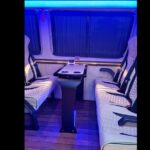
I like the private vehicle, which lets your group set a preferred departure time and travel with Wi-Fi, air conditioning, and a driver who can offer practical advice. I also like the mix of guided and independent time, especially at Corinth, Olympia, Delphi, and two Meteora monasteries. The main caution is the pace: long drives and early starts leave little room for an unplanned afternoon.
In This Review
- Key points to know before booking
- Why this route works for a first look at Greece
- Day one: Athens, the Acropolis, and Cape Sounion
- Day two: Corinth, Epidaurus, Mycenae, and Nafplio
- Day three: Olympia and the mountain road to Arachova
- Day four: Delphi, Thermopylae, and Kalambaka
- Day five: Meteora’s monasteries above the rocks
- Guides, vehicle, hotels, and the real price
- Who should book this five-day circuit?
- Should you book Ancient Greece and Meteora?
- FAQ
- Is this tour private?
- What is included in the price?
- Are entrance fees and meals included?
- Which sites have professional guides?
- What time does the tour depart?
- Is the tour suitable for someone with limited mobility?
Key points to know before booking
- The route covers Greece’s major ancient sites: Athens, Cape Sounion, Corinth, Epidaurus, Mycenae, Olympia, Delphi, Thermopylae, and Meteora.
- Your party has the vehicle to itself: Sedans are used for one to three people, while four to six people generally travel by minivan.
- Four hotel nights and breakfast are included: Other meals, drinks, snacks, and archaeological admission fees are extra.
- Site guides are included in four important places: Corinth, Olympia, Delphi, and two Meteora monasteries.
- The longest day is the final day: Meteora visits are followed by a return drive to Athens late in the afternoon.
- Ask about Terry if you want a particular guide: He is the guide name connected with especially strong praise for family care, planning help, and attention to teenagers.
Why this route works for a first look at Greece
This is not a relaxed island holiday. It is a concentrated tour of ancient Greece, with enough modern Greek scenery to connect the sites. You begin in Athens, swing through the Peloponnese, cross toward western Greece, then head north to Meteora before returning to the capital.
That route matters because many of these places are difficult to combine by public transport in only five days. A private car removes the need to piece together buses, taxis, and hotel transfers. You also avoid the fixed schedule of a large coach group.
The tradeoff is time in the vehicle. You will cover a great deal of ground, and some days contain several major stops. If you want long museum visits, leisurely meals, or time to linger in one town, this plan may feel too full. If you want to see the country’s biggest ancient landmarks in one trip, its efficiency is the point.
You can also read our reviews of more private tours in Athens

Day one: Athens, the Acropolis, and Cape Sounion
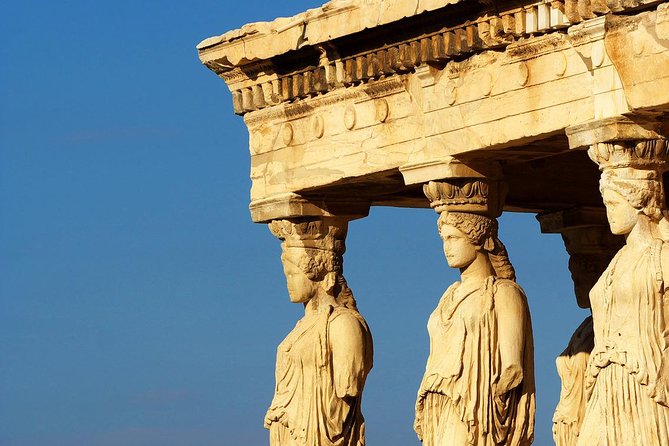
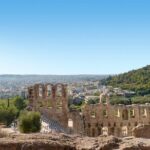
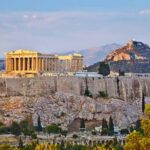
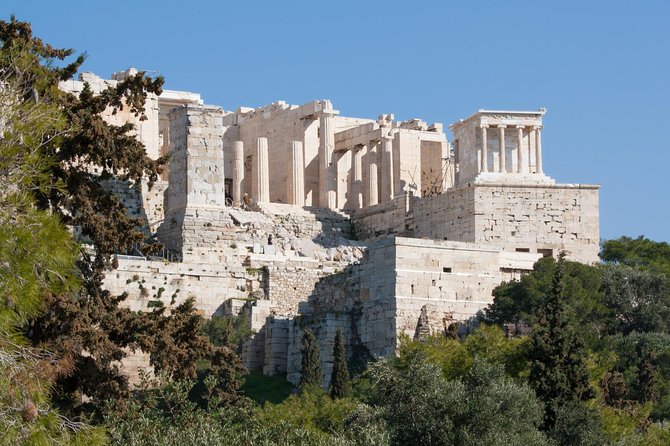
The morning begins at the Acropolis, where about an hour and a half is set aside for the hilltop complex. The Parthenon is the main event, but the value of the visit comes from seeing the whole rocky citadel above the historic center of Athens. Admission is not included, so budget for that separately.
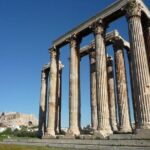
The schedule then moves through central Athens in short visits. Hadrian’s Arch takes about 15 minutes and offers a quick look at the Roman layer of the city. The Temple of Olympian Zeus gets about 30 minutes, enough to see the surviving columns and understand the scale of a project that once included 104 of them.
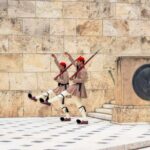
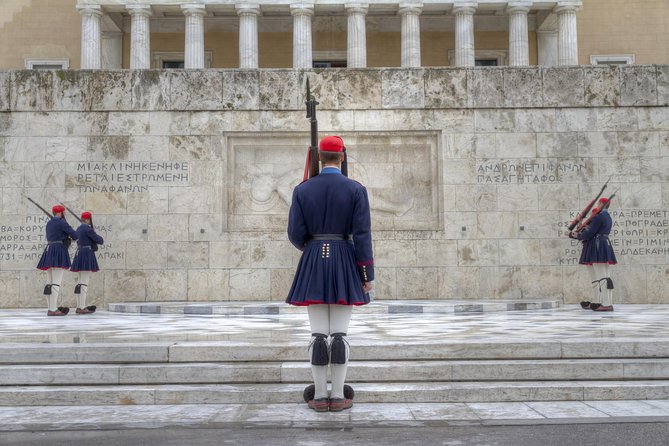
At Syntagma Square, you watch the Changing of the Guard at the Tomb of the Unknown Soldier. The Evzones wear a uniform based on traditional mountain clothing, and the ceremony gives you a brief connection to modern Greek national identity. It is free, and the 20-minute stop is a good counterpoint to the older ruins.
You also see the Panathenaic Stadium, the white marble venue used for the first modern Olympic Games in 1896. Entry is extra, but even a short visit helps connect ancient athletic traditions with the modern Olympic movement.
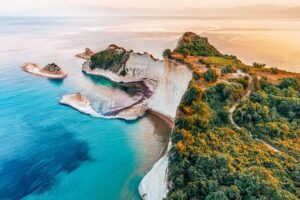
The day then shifts from city monuments to the coast. The drive to Cape Sounion follows the Athenian Riviera, ending at the Temple of Poseidon above the Aegean Sea. Allow about two hours here, including travel and the site visit. The location is the real prize: the temple ruins sit high above the water, and the open views provide a welcome change after the crowded center of Athens.
Sounion also carries the myth of Aegeus, the king who is said to have leapt from the cliffs after mistakenly believing his son Theseus had died. That story gives the cape a memorable human edge, though the site is best appreciated for its setting as much as its ruins.
This is a long first day. Wear shoes that work on uneven ground, carry water, and do not expect every Athens stop to receive a full guided explanation. The driver provides information and tips but does not enter the sites. Extra professional guides can be arranged at an added cost.
Day two: Corinth, Epidaurus, Mycenae, and Nafplio
The second day heads toward the Peloponnese, beginning at the Corinth Canal. The canal cuts through the Isthmus of Corinth and links the Corinthian and Saronic Gulfs. The current canal was completed in 1893, though the idea of crossing this narrow strip of land goes back much further.
The stop lasts about 20 minutes and is free. It is brief, but useful. You see the steep walls, the bridges, and the practical reason Corinth became so important. The canal is a modern engineering work placed in an ancient strategic corridor.
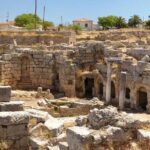
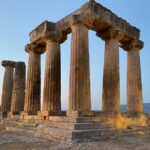
At Ancient Corinth, you get about 90 minutes. Corinth grew wealthy from its position between mainland Greece and the Peloponnese, and its commercial power shaped the city’s role in ancient Greek politics. This is also the Corinth associated with St. Paul, adding an important early Christian connection to the classical ruins.
A professional guide is included at Corinth. That is valuable here because the site combines Greek, Roman, and biblical associations, and a good explanation can help you sort out the layers. Admission is still extra.
The Ancient Theatre of Epidaurus follows, with about an hour and a half. Its fame rests on its acoustics, and the visit gives you a chance to appreciate both the engineering and the peaceful setting. The theatre is one of those places where a simple demonstration can make the site memorable, so listen for the guide’s explanation or test the acoustics if permitted.
Mycenae brings you further back, into the world associated with Agamemnon and the Trojan War. The Lion Gate and massive Cyclopean walls are the central sights. Later Greeks believed that only Cyclopes could have moved such huge stones, which tells you how imposing the walls remained long after the Mycenaean age.
You also see nearby royal tombs linked by tradition with figures such as Clytemnestra and Aegisthus. The site is uneven and exposed, so sturdy shoes and sun protection matter. Like most archaeological stops on this tour, admission is not included.
The final major stop is Palamidi Castle above Nafplio, Greece’s first capital. The Venetian fortress is linked with the famous story of 999 steps, though the number is part of local legend. The climb can be demanding, and the tour gives you about an hour, so ask your driver about the most practical way to use the time.
Nafplio itself is one of the more pleasant places on the route, with Venetian character and a scenic harbor. The schedule gives you free time, which is welcome after a full day of ruins. This is one of the few chances to pause, walk without a checklist, and choose your own meal. Food is not included, so plan for that expense.
Day three: Olympia and the mountain road to Arachova
Olympia receives the most time on day three, about two and a half hours. A professional guide accompanies you through the archaeological site and museum, making this one of the tour’s strongest guided visits.
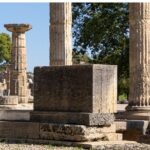
Olympia was the meeting place for the Panhellenic Games, held every four years when Greek city-states set aside their conflicts for athletic competition. You see the Temple of Zeus, the Temple of Hera, the stadium, and the Shrine of Pelops. The Temple of Zeus once held a 13-meter statue made of gold and ivory, one of the ancient world’s great works.
The modern Olympic Flame is still lit at Olympia before each Olympic Games. That continuing ritual makes the site feel connected to the present rather than sealed in the past.
After Olympia, the trip turns north through the Greek countryside toward Arachova. The town is a mountain resort and a popular winter skiing base. The stop lasts about 90 minutes, giving you time for a coffee, a break, and views over the surrounding hills.
Arachova is not a major ancient site, and that is exactly why the stop helps. After several hours of temples and excavated stones, you get a change of rhythm. Still, the day involves substantial travel, and you should see this as a transfer day with a worthwhile stop rather than a leisurely mountain visit.
Day four: Delphi, Thermopylae, and Kalambaka
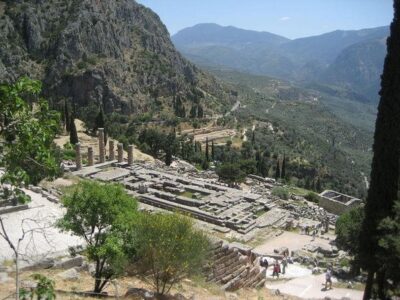
Delphi is one of the tour’s essential stops. Set on the slopes of Mount Parnassus, it was regarded by ancient Greeks as the center of their world. The sanctuary of Apollo was home to Pythia, the oracle consulted by people seeking guidance on major personal and political questions.
The visit includes the archaeological museum and the sanctuary area, with about two hours and a professional guide. The Temple of Apollo is the central sight, but the treasuries and the mountain setting add depth. Delphi works best when you take time to connect the buildings with the oracle’s role, rather than treating the ruins as a quick photo stop.
The terrain is uneven, and the site is on a slope. You need to be comfortable walking on unpaved surfaces. If mobility is limited, the driver will try to help you see as much as possible, but this is not an ideal tour for anyone unable to manage archaeological ground.
Thermopylae comes next, with about 90 minutes at the museum and site connected to Leonidas and the 300 Spartans. The narrow pass allowed a small Greek force to hold back the much larger Persian army for a time. Their defeat gave other Greek forces time to prepare, eventually leading to victory at Salamis.
The museum helps put the famous stand into military and geographic context. Thermopylae is not as visually grand as Delphi or Meteora, so its appeal depends more on the story and the guide’s explanation. If the 300 Spartans are familiar to you from popular culture, this is a chance to separate the legend from the actual setting.
The day ends in Kalambaka, the town below Meteora. The schedule allows a long overnight period, listed as about 10 hours, with dinner and views of the monasteries from town. Dinner is not included, but this is a good place to rest before the final morning.






Day five: Meteora’s monasteries above the rocks
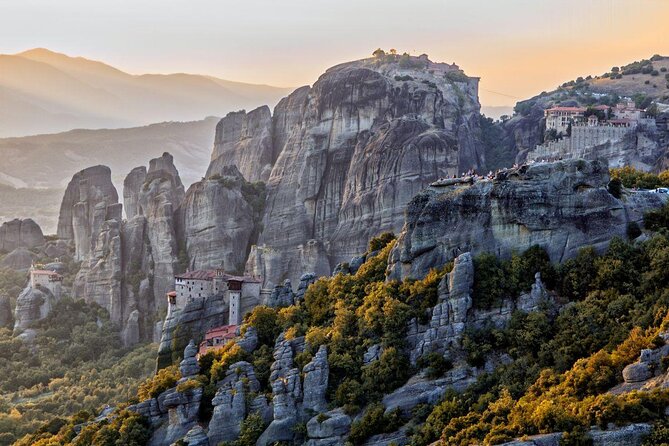
Meteora is the visual high point of the trip. Monasteries sit on tall rock pillars above Kalambaka, creating a setting unlike anything else on the route. The total Meteora visit lasts about six hours, followed by lunch and the drive back to Athens late in the afternoon.
At least two monasteries are visited, and time may allow more. The named possibilities include Great Meteoron, Varlaam, Holy Trinity, and Roussanou, also called Saint Barbara. Two monasteries receive professional guided visits, while additional stops depend on time.
Great Meteoron is the largest and most important monastery in the group. Varlaam gives you another view of the monastic tradition and the dramatic rock setting. Holy Trinity is especially striking for its position high above the plain, while Roussanou offers a different scale and setting.
Entry fees are extra. You should also expect steps, uneven surfaces, and practical clothing requirements at religious sites. The tour data does not specify a dress code, so ask the provider before departure rather than arriving unprepared.
Meteora deserves more than a quick photograph, and this tour gives it the best time allocation of any single destination. Still, the return to Athens makes day five long. If you want a slow Meteora morning or a second night in Kalambaka, a longer independent trip would suit you better.
Guides, vehicle, hotels, and the real price
This is a private tour for your party only. One to three people generally travel in a sedan, while four to six use a minivan, usually a Mercedes-Benz. An eight-person vehicle may be possible by request.
The private format is especially useful for families. The driver can adjust departure times within the usual 6:00 to 9:00 AM range, offer restaurant and sightseeing tips, and help manage the needs of teenagers. Terry is the guide name associated with careful planning and strong attention to families with teens, so ask CATTAXI if he is available for your dates.
Your professional English-speaking driver does not enter the archaeological sites. Separate site guides are included at Ancient Corinth, Olympia, Delphi, and two Meteora monasteries. If you want a guide at the Acropolis, Cape Sounion, Epidaurus, Mycenae, or Palamidi Castle, you can request one for a small extra charge.
The $3,328.11 price per person is substantial. Its value depends heavily on group size. For a couple, it buys a private car, four hotel nights, four breakfasts, airport, port, or central Athens hotel transfers, fuel, tolls, Wi-Fi, and a complicated route that would be hard to arrange independently. For four to six people sharing a minivan, the private format becomes easier to justify, though you still need to add entrance fees, meals, drinks, snacks, and tips.
The price description also refers to the private vehicle arrangement, so confirm the final total and how the per-person figure is calculated before paying. That question matters more here than it would on a simple half-day outing.
Who should book this five-day circuit?
I would recommend it to a first-time visitor who wants ancient Greece’s headline sites without changing transport plans every day. It also suits families who value a private driver, hotel pickup, flexible departure times, and help choosing practical stops.
It is a good fit if you enjoy archaeology, mythology, military history, and scenic drives. The included guides at Olympia and Delphi are especially useful, since both sites reward context rather than a quick look.
I would hesitate if you dislike early starts, long road days, or paying extra at nearly every major site. The tour includes breakfast, but not lunch or dinner, and none of the archaeological admission fees are included. It also gives you limited free time outside Nafplio and Arachova.
You must be able to walk on uneven or unpaved terrain. Children and young people under 18 must travel with an adult, and anyone aged 12 or older pays the adult rate. Service animals are allowed, and most people can take part if they are comfortable with the walking and pace.
Cancellations are fully refundable up to three full days before the start time. Weather, health issues, and site closures can also lead to cancellation with a full refund or a new date.
Should you book Ancient Greece and Meteora?
Book this tour if your priority is coverage, comfort, and private transport. In five days, you see the places that define classical Greece, then add the very different world of Meteora. The route is demanding, but the range is impressive.
Before booking, ask for the exact hotel names, the total admission budget, the vehicle for your group, and whether Terry is available. If those details suit you, this is a practical way to turn Athens into a base for a major Greek history circuit. If you want slower mornings and longer stays, remove one or two destinations and build the trip at your own pace.
FAQ
Is this tour private?
Yes. Only your party participates. The vehicle is generally a sedan for one to three passengers and a minivan for four to six passengers.
What is included in the price?
The tour includes private transportation, air conditioning, Wi-Fi in the vehicle, fuel, tolls, four hotel nights, four breakfasts, transfers from central Athens or Piraeus, and Athens International Airport transfers. Professional site guides are included at Corinth, Olympia, Delphi, and two Meteora monasteries.
Are entrance fees and meals included?
No. Archaeological site and museum admission fees, meals, coffee, drinks, and snacks are extra. Breakfast is included for each passenger.
Which sites have professional guides?
Professional guides are included at Ancient Corinth, Ancient Olympia, Delphi, and two monasteries at Meteora. Extra guides can be requested for other sites for an added charge.
What time does the tour depart?
Departure is usually between 6:00 AM and 9:00 AM, based on your preference. The tour lasts five days and four nights.
Is the tour suitable for someone with limited mobility?
You must be able to walk on unpaved or uneven terrain. The driver will do their best to help you see most sites, but the archaeological areas and Meteora monasteries can require substantial walking and steps.