REVIEW · ATHENS
Athens & Acropolis Highlights: Greek Mythology Small-Group Tour
Book on Viator →Operated by Alternative Athens · Bookable on Viator
One climb, countless stories. This small-group Athens tour ties Greek mythology to real stone: you’ll stand at the Acropolis, hear how the gods shaped ancient life, then continue into the city’s political and daily heartbeat at the Ancient Agora. I love the small-group feel because you get time to ask questions and actually see what you’re looking at.
I also like the way the route mixes the big photo stops with smaller, high-impact details. You’ll get the scale talk at the Temple of Olympian Zeus, then move through the Acropolis highlights (Parthenon, Athena Nike, Erechtheion) before finishing at the Temple of Hephaestus. One thing to plan for: it includes a steep, stair-heavy climb and uneven ground, and the Acropolis has strict rules about what you can bring.
In This Review
- Key Highlights at a Glance
- Why Greek Mythology at the Acropolis Changes Everything
- Price and Logistics: Tickets Are the Real Math
- Starting at the Temple of Olympian Zeus: The Big Setup
- Acropolis Main Event: Parthenon, Athena Nike, Erechtheion
- The Parthenon: More Than a Photo
- Athena Nike: Victory as Worship
- Erechtheion: Sacred Specifics
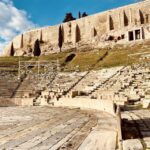
- Theatre of Dionysus Eleuthereus: Where Plays Began
- Athena Nike and Erechtheion Again? Yes, With a Purpose
- Ancient Agora: The City’s Real Center
- Temple of Hephaestus: Ending at One of the Best-Preserved Temples
- Walking Reality: Stairs, Heat, and What Actually Helps
- Guide Quality: Why the Person Matters More Than the Script
- Small Group Size: How It Changes Your Photos and Your Answers
- Who This Tour Suits Best (and Who Might Want Something Else)
- Should You Book This Athens and Acropolis Mythology Tour?
- FAQ
- Is the Acropolis admission included in the tour price?
- Do I need a separate ticket for the Ancient Agora?
- How long is the tour?
- What language is the tour offered in?
- What’s the group size?
- Where do I meet the guide?
- Is a mobile ticket used?
- Are bags or strollers allowed at the Acropolis?
- What if the weather is bad?
- What is the cancellation window?
Key Highlights at a Glance
- Myth meets architecture: guides explain why temples looked the way they did, not just what they’re called
- Small group max 15: easier pacing and less hunting for your guide in crowds
- Acropolis route is the main event: Parthenon + Athena Nike + Erechtheion, with context as you go
- Ancient Agora follow-through: you leave with a clearer picture of politics, justice, and daily commerce
- Guide styles vary, but the best ones use visuals: printed photos and simple comparisons help you picture how it looked
Why Greek Mythology at the Acropolis Changes Everything
Athens can feel like a museum you walk through. This tour makes it feel like a living storybook—without turning it into a kids’ cartoon.
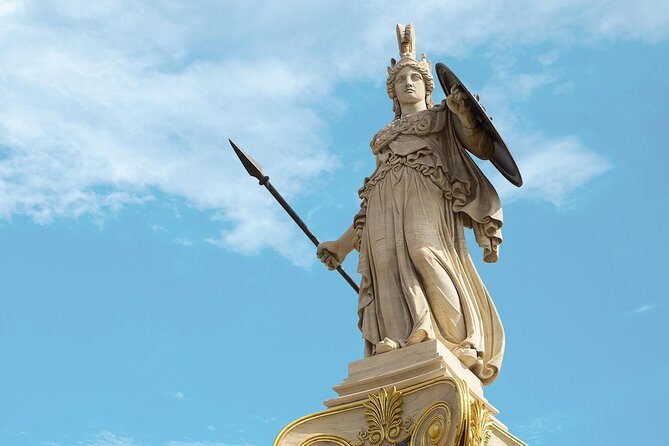
Greek mythology is everywhere on these hills, but the payoff is practical: you learn how the ancient Athenians connected gods to power, war, craft, and civic life. Once you know that link, the Parthenon and the smaller temples stop being random landmarks and start acting like deliberate propaganda and worship sites.
And because it’s a small group, you’re not stuck with only one viewpoint or one rushed photo. You can ask why a temple mattered, or what a symbol meant, and usually get a clear answer.
You can also read our reviews of more tours and experiences in Athens.


Price and Logistics: Tickets Are the Real Math
The tour price is listed at $54.42 per person for about 4 hours. The important part is what’s not included.
You’ll need to budget for the Acropolis admission (listed as €30 per person) and, for this full 4-hour option, the Ancient Agora admission (€20 per person). Entrances are not refundable, so only buy what matches your date and plan.
Good news: the operator says they can prepurchase entry tickets for you. If you prefer fewer lines and fewer decision points, this is worth asking for when you book. You’ll also get a mobile ticket and a fun Athens map for a little self-guided follow-up later.
Starting at the Temple of Olympian Zeus: The Big Setup
You begin near the Arch of Hadrian at Leof. Vasilisis Amalias. The first stop is the Temple of Olympian Zeus (Olympeion)—even though you talk about it from the outside.
That’s not a waste. From ground level, this place helps you appreciate scale before the climb. The guide also shares the temple’s stories and why Zeus mattered in the ancient world, which gives you context for what you’ll see higher up.
What to watch for: even in partial ruins, notice how the site signals grandeur. It’s a strong first mental image, and it makes the next stops more meaningful.
Acropolis Main Event: Parthenon, Athena Nike, Erechtheion
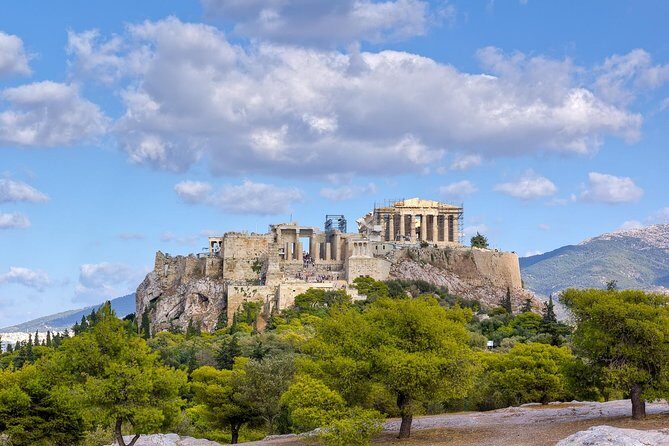
This is where the tour earns its reputation. The Acropolis visit takes about 1.5 hours, and you’ll move through the major monuments that shaped Classical Athens.
You’ll see:
- the Parthenon, dedicated to Athena Parthenos
- the Temple of Athena Nike, tied to victory worship
- the Erechtheion, connected with Athena’s cult and sacred history
The Parthenon: More Than a Photo
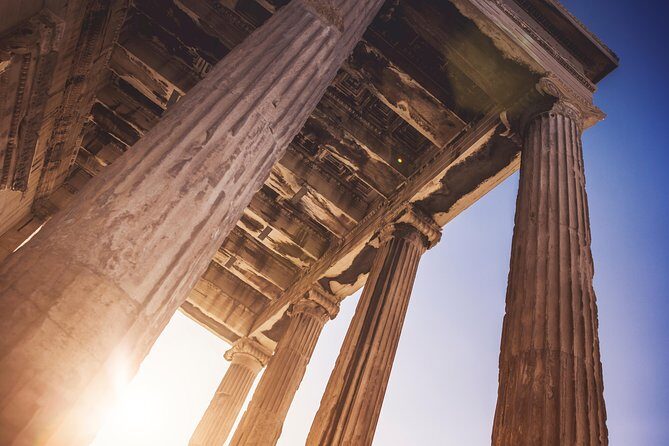
The Parthenon dominates the hill. It’s mid-5th century BCE, and it’s associated with Athena the Virgin. The guide’s job here is to connect “Doric style” and design choices to how people used the space.
Practical takeaway: listen for explanations of function and form. When you understand what different parts were meant to do, you start spotting details instead of just seeing a silhouette.
- All Day Cruise -3 Islands to Agistri,Moni, Aegina with lunch and drinks included
★ 5.0 · 4,958 reviews


Athena Nike: Victory as Worship
The Temple of Athena Nike is smaller than the Parthenon, which is exactly why it’s a smart stop. You learn how “Nike” (victory) connects to Athena’s role in war—and there’s a well-known story that links the worship statue to the idea of Athena never leaving Athens.
Erechtheion: Sacred Specifics
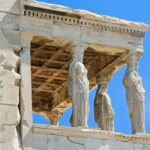
The Erechtheion is built to hold an important cult statue and to honor the city at the height of its power. This stop often lands best for people who like symbolism and sacred history more than raw size.
What to bring into your brain: the Acropolis isn’t one temple. It’s a set of choices—different buildings for different sacred meanings.
Theatre of Dionysus Eleuthereus: Where Plays Began
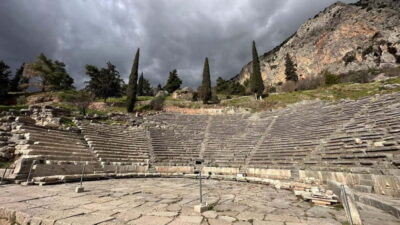
After the main Acropolis highlights, you’ll step to the Theatre of Dionysus Eleuthereus. Even with a shorter stop (about 15 minutes), it matters because it links mythology to the arts.
Dionysus is the god of wine and grape harvest, and this theatre is described as one of the earliest foundations in Athens for performances. The guide explains that major tragedians and comedians—like Aeschylus, Sophocles, Euripides, and Aristophanes—are tied to early performances connected to this space.
Why it helps: once you connect gods to festivals and theatre, you realize these myths weren’t just bedtime stories. They were public events—part ritual, part entertainment, part social glue.
Athena Nike and Erechtheion Again? Yes, With a Purpose
You’ll also spend time at Temple of Athena Nike and Erectheion stops as part of the walking route around the Acropolis highlights.
If that feels repetitive on paper, it’s usually not in person. These segments are spaced so you can catch each spot from different angles and learn why each monument sits where it does on the hill.
My best advice: at each stop, pick one question to carry forward. For example: What is the building trying to do—worship, victory messaging, or cult preservation? That keeps the experience from turning into a checklist.
Ancient Agora: The City’s Real Center
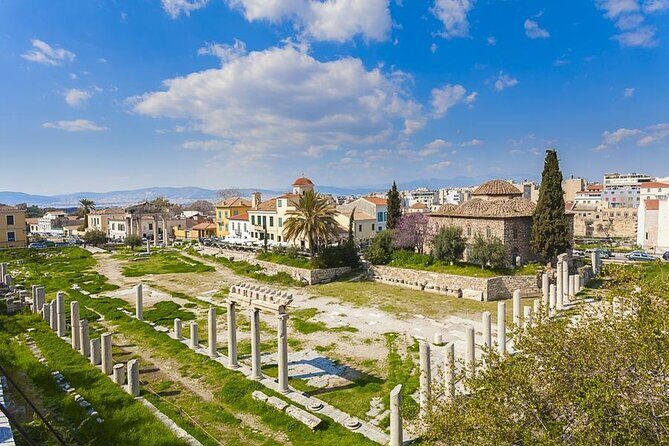
After the height of the Acropolis, you move down to the Ancient Agora of Athens. This is about 1 hour, and it’s the part that helps you understand Athens as a system—not just a collection of monuments.
The Agora is described as the heart of ancient Athens:
- political and administrative activity
- social life and commerce
- religious and cultural center
- seat of justice
This is where mythology turns into everyday life. You start to see how gods and civic identity worked together. Ancient Athens didn’t keep religion separate from politics; it braided them together.
Temple of Hephaestus: Ending at One of the Best-Preserved Temples
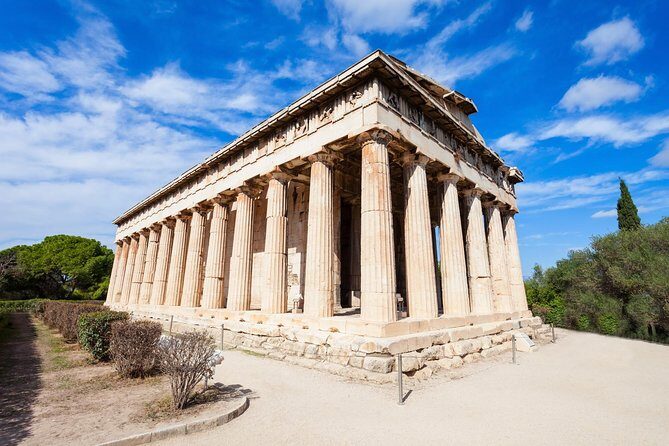
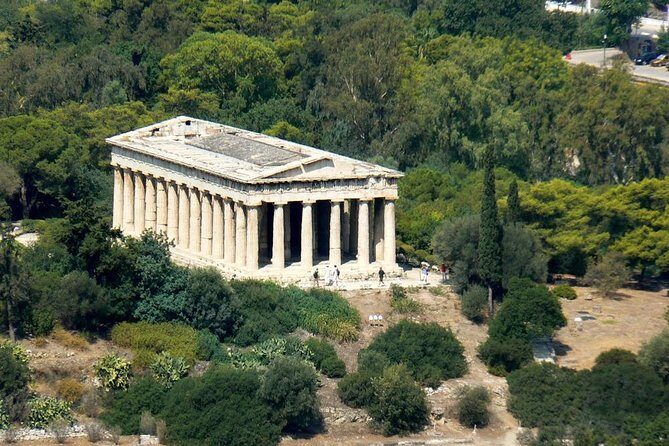
The tour caps off at the Temple of Hephaestus (one of the best preserved ancient temples in the world). It was a place of worship linked to Hephaestus, protector of metallurgists, and also connected to Athena Ergani, protecting potters and cottage industries.
This ending stop is satisfying because you finish with something visually strong and easy to understand: you can literally compare a temple’s condition to what you’ve just learned.
In other words: it’s a good “wrap your head around it” finale.
Walking Reality: Stairs, Heat, and What Actually Helps
Even if you’re fit, the Acropolis area involves:
- a steep climb
- uneven surfaces
- lots of steps
So I strongly recommend planning like you’re doing a workout with rewards, not a stroll with statues.
Bring essentials:
- good walking shoes
- water
- a hat
- and keep in mind that strollers, backpacks, and big bags are not allowed at the Acropolis.
If you’re sensitive to sun, choose a time of day that gives you shade breaks. Guides on this route often manage pacing with short stops, and some have been noted for stopping in shaded areas and reminding people where to refill water.
Guide Quality: Why the Person Matters More Than the Script
This tour lives or dies by the guide’s storytelling and pacing. The operator promises an expert certified guide, and the experience is often described as friendly, well paced, and easy to follow.
You might encounter guides such as Irene/Irini, Michael, Dani, Theo, Angie, Chrysanthi, and Kristina—and their styles show up in small but important ways:
- Some use printed photos and visual aids to help you picture buildings as they once looked
- Some break the climb into small stages with frequent talk breaks
- Some keep the group together well in crowds, while others (on busier days) can be harder to spot
One practical heads-up: one review noted there was no microphone, so hearing can depend on crowd noise and how close you stay.
My advice: stay near the front when you can. Not because it’s a competition—because it keeps you able to hear the story thread.
Small Group Size: How It Changes Your Photos and Your Answers
With a maximum of 15 travelers, you’re usually not fighting for space at every turn. That matters on the Acropolis, where crowds can multiply fast.
A smaller group also means your guide can:
- adjust pace
- answer niche questions
- check in if someone needs a break
- keep people from splitting away too far in busy sections
It’s the difference between sightseeing and learning.
Who This Tour Suits Best (and Who Might Want Something Else)
This is ideal if:
- you want mythology with real context, not just names
- you’ve never been to the Acropolis and want a structured route
- you’d rather ask questions than wander for hours
- you like architecture and how it connects to power and worship
It might feel less ideal if:
- you struggle with steep stairs and uneven ground
- you need a fully stroller-friendly route (remember the Acropolis bag and stroller restrictions)
- you’re expecting long museum-style explanations at each monument rather than guided stops
Should You Book This Athens and Acropolis Mythology Tour?
If you’re doing Athens for the first time and you want your Acropolis visit to mean something beyond photos, I’d book it. The added value is the story-to-stone connection: Zeus at ground level, Athena on the hill, and the Agora’s civic machine below.
Book especially if:
- you love mythology and want it tied to architecture
- you’d rather pay for guided interpretation than guess your way through
- you want a small-group pace that doesn’t feel like a factory line
I’d hesitate only if stairs are a major problem for you or if you hate the idea of entrance fees adding up. But if you’re willing to plan for shoes, water, and ticket math, this is a strong way to see the core highlights without losing the plot.
FAQ
Is the Acropolis admission included in the tour price?
No. Acropolis admission is listed as not included, and an entry fee of €30 per person is required for the 2-hour and 4-hour options.
Do I need a separate ticket for the Ancient Agora?
For the 4-hour option, yes. The Ancient Agora admission fee is listed as not included at €20 per person.
How long is the tour?
The duration is listed as approximately 4 hours.
What language is the tour offered in?
The tour is offered in English.
What’s the group size?
The tour has a maximum of 15 travelers.
Where do I meet the guide?
The start point is the Arch of Hadrian area at Leof. Vasilisis Amalias 50, Athina 105 58. The end point is the Ancient Agora of Athens at Athens 105 55.
Is a mobile ticket used?
Yes. The tour includes a mobile ticket.
Are bags or strollers allowed at the Acropolis?
No. Strollers, backpacks, and big bags are not allowed at the Acropolis and should not be taken on the tour.
What if the weather is bad?
This experience requires good weather. If it’s canceled due to poor weather, you’ll be offered a different date or a full refund.
What is the cancellation window?
Free cancellation is available up to 24 hours in advance for a full refund. If you cancel less than 24 hours before the start time, the amount paid is not refunded.