REVIEW · ATHENS
Athens: Food Tasting Tour on a Trikke Vehicle
Book on GetYourGuide →Operated by Scooterise · Bookable on GetYourGuide
Athens is a city made for short hops, narrow lanes, and sudden historical surprises. This electric Trikke food tour lets you cover more ground than you would on foot, while sampling koulouri, Greek taverna dishes, and honeyed loukoumades along the way.
I like the easy mix of sightseeing and eating, especially the stop at one of Plaka’s old family-owned taverns. I also like that a Trikke can slip through streets and lanes that are awkward for a car. The main drawback is that this is a tasting tour, not a full Greek dinner, and the food stops may feel brief if food is your chief reason for booking.
A second consideration is timing. The route lasts 2.5 hours, but the order of stops can change, and the Changing of the Guards at Syntagma depends on the schedule. You’ll need to arrive at Chatzichristou 18 with a passport or ID card, and large bags are not allowed.
In This Review
- Key points to know before booking
- Why the Trikke is a smart way to see central Athens
- Koulouri brings a simple Greek breakfast to the route
- The National Gardens and Presidential Mansion add a quieter stretch
- Plaka is the main food stop
- Monastiraki and the Roman Agora keep the history moving
- The Lysicrates Monument is a small but memorable stop
- Syntagma Square may include the Changing of the Guards
- Loukoumades provide a sweet finish
- What the guide adds to the ride
- Is $112 a fair price for 2.5 hours?
- Practical details that affect your choice
- Who should book this Athens food tour?
- Should you book the Trikke food tour?
- FAQ
- How long does the Athens Trikke food tour last?
- Where does the tour start and finish?
- What food is included?
- Is the Changing of the Guards guaranteed?
- What language is the tour offered in?
- What should I bring, and what cannot I bring?
Key points to know before booking
- Koulouri starts the food trail: Try Athens’ sesame-covered bread ring, a classic snack with roots in Thessaloniki.
- The Trikke handles Plaka’s tight streets: An electric three-wheeled scooter gives you a quick, unusual way to move through the old town.
- Lunch-style dishes arrive in a family tavern: Expect moussaka, Greek salad, tzatziki, and traditional appetizers rather than a formal tasting menu.
- The route links major sights: You pass the National Gardens, Presidential Mansion, Monastiraki Square, the Roman Agora, Lysicrates Monument, and Syntagma.
- A small group can make a difference: One family of three had a private-feeling outing and could adjust the pace with the guide.
- The final bite is loukoumades: These crisp dough bites come with honey and cinnamon, a fitting Greek finish.
Why the Trikke is a smart way to see central Athens
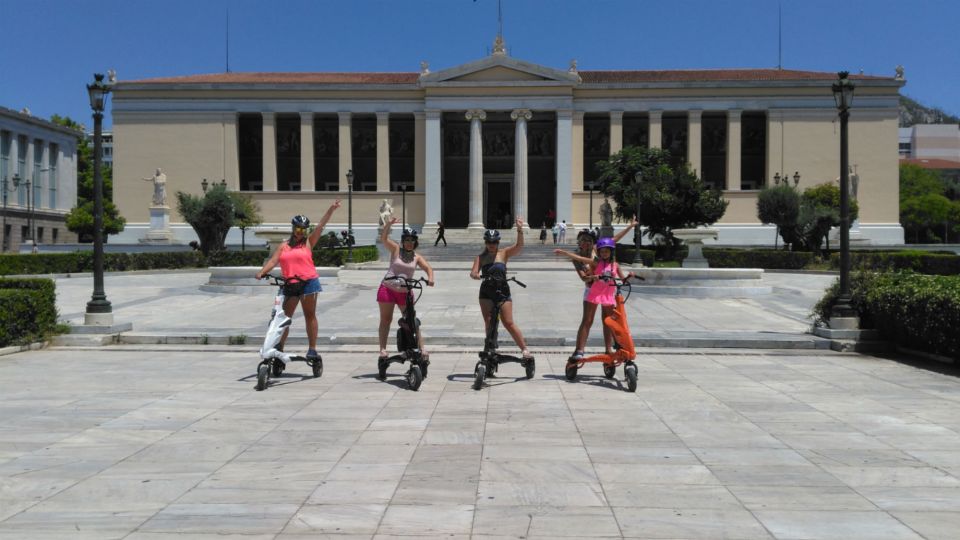
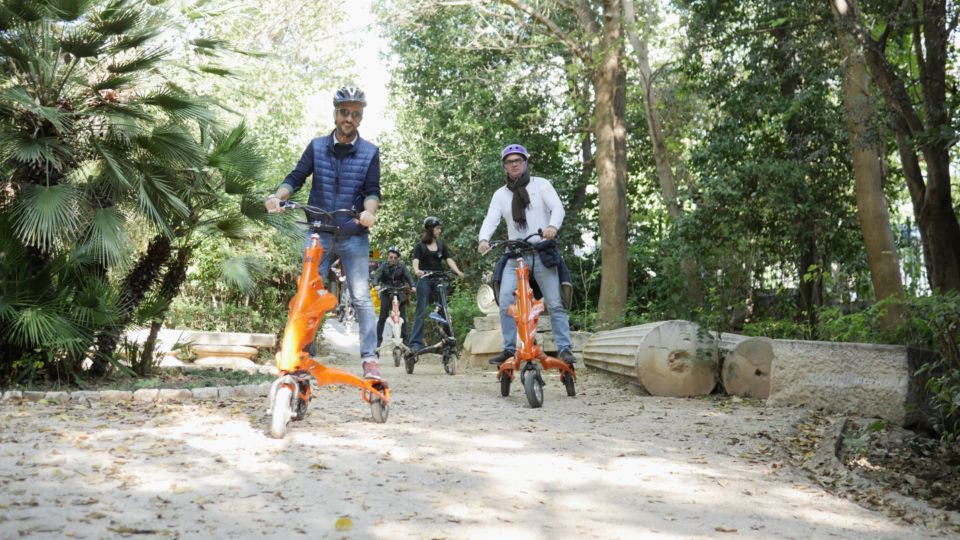
A Trikke scooter is an electric three-wheeled vehicle. You ride it rather than walk, and the format gives the tour a playful feel without demanding the effort of a long bike ride. The three-wheel design also feels less intimidating than a two-wheeled bicycle for many riders.
The real benefit is coverage. Central Athens has several sights close together, but the distances add up quickly in the heat. On foot, you may spend much of your morning moving between places. On a Trikke, you can connect the National Gardens, Plaka, Monastiraki, the Roman Agora, and Syntagma in one outing.
The vehicle also helps with the shape of old Athens. Plaka has narrow streets, pedestrian areas, and lanes where a regular sightseeing vehicle would be useless. One family with an eight-year-old daughter found the Trikkes practical even in crowded Plaka, with the child riding in front of a parent. That does not establish a general age rule, so check the booking details for your own group, but it does show how the vehicle can work for a family outing.
You should still expect to pay attention to the guide and your surroundings. This is not a passive ride where you simply sit behind a window. You are moving through city streets, so comfortable clothing and a calm approach will help.
You can also read our reviews of more food & drink experiences in Athens


Koulouri brings a simple Greek breakfast to the route
The first food taste is Thessaloniki koulouri, a crunchy bread ring covered in sesame seeds. It is a common Greek snack, often eaten on the go, and it gives you a useful introduction to everyday food rather than only famous restaurant dishes.
Koulouri is not a dramatic plate of food. That is the point. Its appeal is its simplicity: bread, sesame, and a crisp bite that works well while exploring. If you have already eaten breakfast, it is still easy to sample. If you start the tour hungry, it gives you a light opening rather than filling you before the main stop.
This kind of food is also a good match for a moving tour. You do not need a long sit-down service at the start, and you get a taste that connects Greece’s modern street-food culture with the rest of the itinerary.
The exact order of food stops can change with the time of day and other conditions. Keep a little flexibility in your expectations. You are promised food tastings at each stop, but the route is not presented as a fixed restaurant schedule.
The National Gardens and Presidential Mansion add a quieter stretch
After the opening snack, the ride takes you past the National Gardens and the Presidential Mansion. These sights give the tour a change of pace from the packed lanes around Plaka and Monastiraki.
The National Gardens offer a leafy center-city setting, while the Presidential Mansion brings you close to one of Greece’s official civic sites. The tour does not list a long stop inside either place, so think of this part as a scenic passage with commentary rather than a garden visit or palace tour.
That distinction matters when you compare this experience with a walking tour. You will see more of the city’s central layout, but you will not have extended time at every sight. I would use this tour to get an overview and a sense of place, then return on foot to the locations that catch your interest.
Plaka is the main food stop
Plaka is where the tour’s food promise becomes more substantial. In the old town, you stop at a traditional family-owned tavern and share several Greek specialties in an inviting setting.
The listed dishes include:
- Moussaka
- Greek salad
- Tzatziki
- Traditional appetizers
This is a strong combination for a first taste of Greek cooking. Moussaka gives you a warm, filling dish. Greek salad brings a fresh contrast, while tzatziki adds the familiar yogurt, garlic, and cucumber element that works well with bread and other small plates. The appetizers round out the meal and let you sample more than one flavor.
I like this format because Greek food is often best shared. You can try several dishes without committing to a full entrée of your own, and the table setting gives you a break from the vehicle.
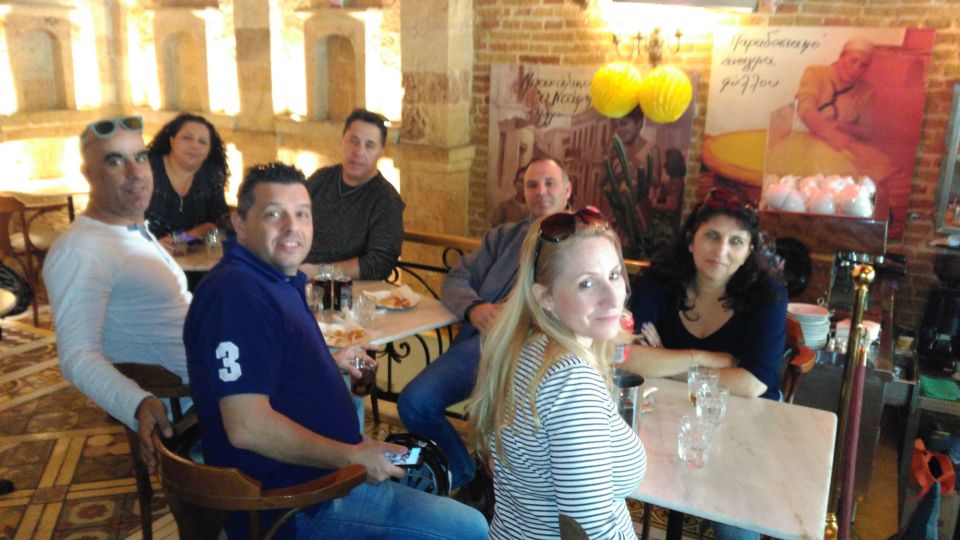
Do not book this expecting a large feast. One family that took the afternoon departure had two food stops, one sweet snack and one restaurant meal, and found the food tasty but could not finish the meal because dinner was already planned. That is a useful warning. If you have dinner reservations soon afterward, the taverna stop may be more food than you want.
The experience may work best as a late-morning lunch or an early-afternoon meal. If you choose a 3 p.m. departure, you may want a lighter breakfast and a flexible dinner plan. Starting times vary, so check the available slot before you decide how to arrange the rest of your day.
Monastiraki and the Roman Agora keep the history moving
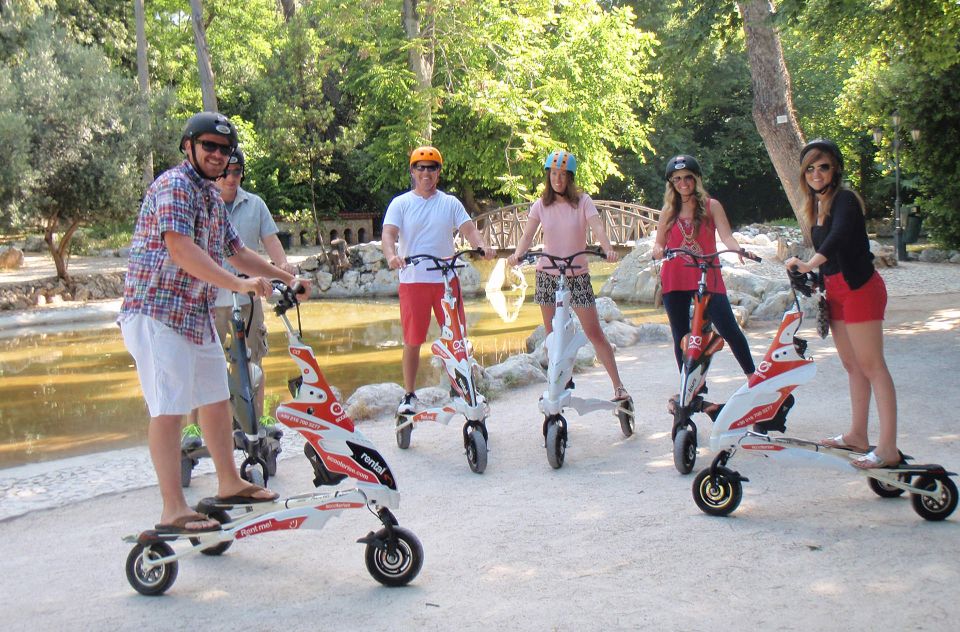
After Plaka, the route continues toward Monastiraki Square and the Roman Agora. These are two of the most recognizable parts of central Athens, but they offer different views of the city.
Monastiraki Square is a useful place to see Athens at street level. Shops, food spots, pedestrians, and ancient remains all crowd into the same central district. The Trikke gives you a way to pass through without spending your whole day on foot.
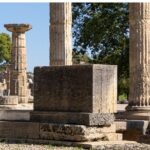
The Roman Agora provides the ancient counterpoint. Its columns and ruins remind you that Athens was an active Roman-era city as well as the classical center most people first picture. You may ride past rather than enter the archaeological site, so this part is best understood as an outside view and a guide-led introduction.
The guide’s commentary is important here. A Trikke tour is not only transport from one snack to the next. The English-speaking guide explains the sights and the city’s story as you move. One guide on a small private-feeling outing also spoke fluent German, which helped that family, but English is the stated tour language and guide names are not provided.
A few more Athens tours and experiences worth a look


The Lysicrates Monument is a small but memorable stop
The Choragic Monument of Lysicrates is easy to miss when you are walking through Plaka on your own. It is a compact ancient monument with a clear connection to Athens’ theatrical and civic past.
This is the sort of sight that benefits from a guide. It does not take long to see, and it may not be the reason you came to Athens, but a short explanation can turn an overlooked structure into a memorable part of your route.
The stop also shows the value of traveling through Plaka by a small vehicle. You can reach lesser-known corners without making the day feel like a long archaeological march. The tradeoff is that you will not linger at every monument. If you want detailed study time, add a separate walking visit.
Syntagma Square may include the Changing of the Guards
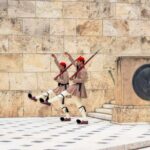
The final sightseeing section brings you to Syntagma Square, in front of the Greek Parliament and the Tomb of the Unknown Soldier. If the timing works, you can watch the Changing of the Guards.
This is one of Athens’ most recognizable public ceremonies, but it is not guaranteed on every departure. The schedule and the order of stops affect what you see. Treat it as a welcome extra, not the central reason to book the tour.
Even without the ceremony, Syntagma gives you an important view of modern Greek public life. The square links the Parliament, major streets, and the ceremonial space at the Tomb of the Unknown Soldier. It is a fitting place to finish the sightseeing portion before the final dessert.
Loukoumades provide a sweet finish
The last tasting is loukoumades, small fried dough bites served with honey and cinnamon. They are crisp outside, soft inside, and easy to share.
After koulouri and savory taverna dishes, loukoumades make sense as the closing taste. They are distinctly festive without requiring a full dessert course. The honey and cinnamon also give the tour a clear final flavor, rather than ending with a generic snack.
If you are sensitive to sweets, remember that the taverna portion may already be satisfying. Still, loukoumades are the sort of bite that most people can sample even after a meal, especially when shared around the group.
What the guide adds to the ride
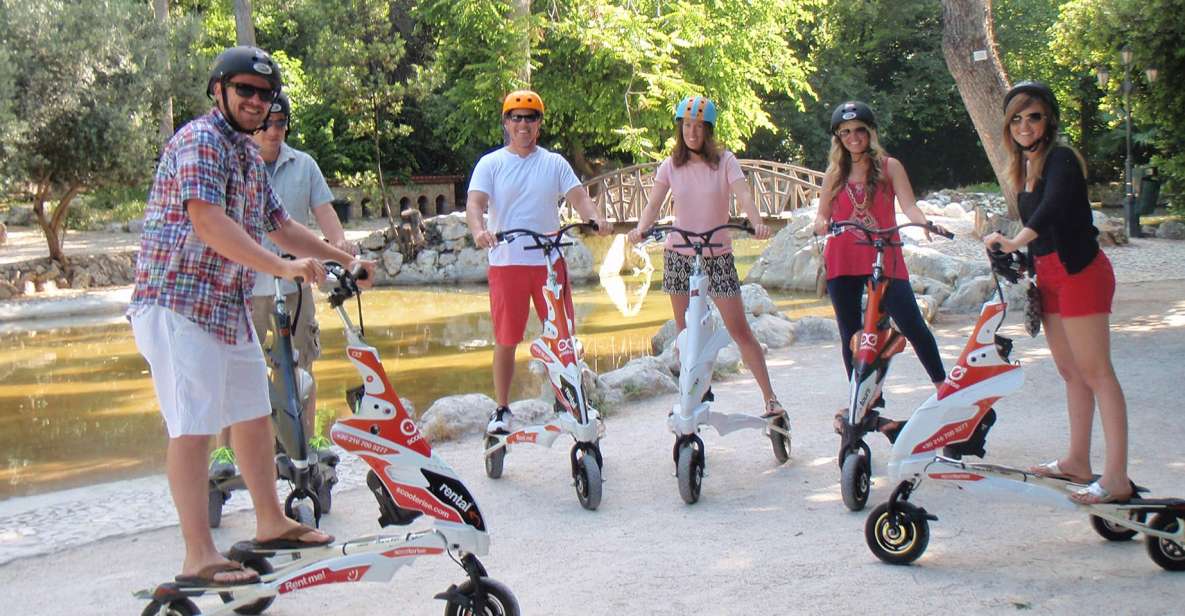
The guide is central to the experience. You are not simply renting a Trikke and following a map. The guide leads you through the city, explains the sights, manages the food stops, and helps the group adjust to the streets.
The language listed is English. A guide on one family’s outing also spoke German fluently. No guide names are supplied, so you should not book this expecting a particular person.
A small group can make the ride feel especially personal. A family of three on a 3 p.m. departure was the only group at that time, allowing the guide to adjust the outing to their preferences. Group size can vary by date, so consider this a possible benefit rather than a promise of a private tour.
The flexible approach is useful if you are traveling with a child or if your group has mixed interests. The same family focused less on the food and more on seeing the city, and the guide adapted. If your priority is food, tell the guide early so you can make the most of the tasting stops.
Is $112 a fair price for 2.5 hours?
At $112 per person, this is not the cheapest way to eat in Athens. You are paying for the Trikke, helmet, English-speaking guide, route planning, and food tastings, not just for the dishes themselves.
I see the strongest value for first-time visitors who want a quick orientation. In 2.5 hours, you cover several central districts and get a sample of Greek street food, taverna cooking, and dessert. The vehicle also saves your legs, which can matter on a hot day or early in a longer Athens visit.
The value is weaker if you already know central Athens well or want a serious food tour with many small tastings. The meal stop sounds more like a shared restaurant meal than a long line of specialist food vendors. You also do not get hotel transfers, and transport to the meeting point is not included.
For a family, the unusual vehicle may help justify the price. For a solo visitor on a tight budget, a walking route plus a meal bought independently will cost less. You are paying for convenience, movement, and the novelty of the Trikke.
Practical details that affect your choice
The tour starts and ends at Chatzichristou 18 in Athens. Plan your route to the meeting point because transfers are not included. Since the activity returns there, you do not need to arrange a second pickup across town.
The duration is 2.5 hours. Starting times vary, so check the available departures before booking, especially if you want to catch the Changing of the Guards or fit this around a museum visit.
Bring a passport or ID card. Pets, oversize luggage, and large bags are not allowed. This is worth noting if you are arriving directly from a hotel changeover or the airport. Leave bulky belongings at your accommodation when possible.
A helmet is included, as is the Trikke itself. Food tastings are included at each stop. The tour offers free cancellation up to 24 hours before the activity for a full refund, and you can reserve now and pay later, which gives you some flexibility while planning.
Who should book this Athens food tour?
I would recommend it to first-time Athens visitors who want a lively overview without committing to a full-day excursion. It suits families, couples, and small groups who like food but also want to see monuments and neighborhoods between bites.
It is especially useful early in your stay. The route introduces you to Plaka, Monastiraki, Syntagma, and the central sights, helping you decide where to return for a slower visit.
You may want another type of tour if your main goal is a serious food crawl. The food is part of the experience, but sightseeing and transportation take a large share of the 2.5 hours. It is also not ideal if you need to carry luggage or prefer a fully scheduled route with guaranteed ceremony times.
Should you book the Trikke food tour?
Book it if you want to combine Athens sightseeing with easy food stops, and if the idea of riding an electric three-wheeler through Plaka sounds more fun than walking every street. The route covers a lot, the taverna meal gives you a proper taste of Greek cooking, and a flexible guide can make the outing work well for a small family group.
Skip it if you want a long, food-first dinner or the lowest possible price. For most visitors, the best reason to choose this tour is the combination: you get an introduction to central Athens, a few local favorites, and a memorable way to move through the old city.
FAQ
How long does the Athens Trikke food tour last?
The tour lasts 2.5 hours. Starting times vary, so check availability for the date you want.
Where does the tour start and finish?
It starts at Chatzichristou 18 in Athens and ends back at the same meeting point.
What food is included?
Tastings include Thessaloniki koulouri, Greek dishes such as moussaka, Greek salad, tzatziki, and traditional appetizers, plus loukoumades with honey and cinnamon.
Is the Changing of the Guards guaranteed?
No. The Changing of the Guards at Syntagma Square is subject to timing, and the order of stops may change.
What language is the tour offered in?
The live tour guide speaks English. German was also spoken by one guide on a particular outing, but English is the stated tour language.
What should I bring, and what cannot I bring?
Bring a passport or ID card. Pets, oversize luggage, and large bags are not allowed.