REVIEW · ATHENS
8 Days Peloponnese: Sightseeing, Historical & Tasting Private Tour from Athens
Book on Viator →Operated by GREECE TAXI · Bookable on Viator
The best thing about this eight-day Peloponnese tour is its range. In one trip, you move from the Corinth Canal and Bronze Age palaces to Byzantine ruins, Venetian fortresses, Maniot tower villages, quiet beaches, and Nemea vineyards. The route is built for people who want to stop often, look closely, and take photographs rather than rush from one famous sight to the next.
I like the small private format, since your driver can adjust the pace and help you find good sunrise and sunset positions. I also like the mix of major sites and less obvious places such as Vathia, Foloi oak forest, Cape Tainaron, and the monasteries near Kalavryta. The main caution is the price: $2,659.81 per person is before hotel charges and many entry tickets, so the final cost can climb quickly.
In This Review
- Key points to know before booking
- What this Peloponnese road trip is really designed to do
- Day 1: Corinth Canal, Diakopto, and Kalavryta monasteries
- Day 2: The Cave of the Lakes and ancient Olympia
- Day 3: Nestor, Voidokilia, Pylos, and Methoni
- Day 4: Methoni Castle and the stone villages of Mani
- Day 5: Vathia, Cape Tainaron, and Porto Kagio
- Day 6: Monemvasia, Sparta, and Byzantine Mystras
- Day 7: Mountain villages and Nafplio
- Day 8: Nafplio museums, Nemea wine, and Loutraki
- Price, hotels, and what you really pay
- Who should book this tour?
- FAQ
- Where does the tour start and end?
- How long does the tour last?
- Is the tour private?
- Who drives the tour?
- Is the driver an archaeological guide?
- Is accommodation included?
- Are entrance fees included?
- How much is the rack railway ticket?
- Can I pay a deposit?
Key points to know before booking
- Eight full days from Athens: You cover much of the Peloponnese, with overnight stops in Kalavryta, Olympia, Methoni, Sparta, and Nafplio.
- Photography is part of the plan: The route includes sunrise, sunset, coastal views, mountain roads, castles, villages, and people photography.
- Nikolaos is a driver and photographer: He is described as a professional artist with experience in photography and portrait painting, but he is not a licensed archaeological guide.
- Hotels are extra: Suggested boutique or three and four-star hotels with breakfast cost roughly €100 to €130 per double room per night, depending on the stop and dates.
- Entrance tickets are mostly extra: Archaeological sites, museums, the Diros cave boat trip, and the rack railway can add a noticeable amount.
- The pace is active: Expect long drives, early starts, walking over uneven historic ground, and several days with many separate stops.
What this Peloponnese road trip is really designed to do
This is not a standard highlights tour with a quick photo at Corinth and a long lunch in Nafplio. It is a private road trip through the Peloponnese, shaped around scenery, archaeology, local food, and photography.
The driver handles the transport, fuel, toll roads, parking, and hotel pickup from Athens or Piraeus. You travel in an air-conditioned sedan, minivan, or minibus, depending on the size of your party. Since only your group participates, you have more control than you would on a fixed coach tour.
The photography angle matters. Nikolaos is presented as a professional artist and photographer, and the route includes places chosen for changing light and strong compositions. You will want a camera, but a phone is enough to enjoy the views. Ask in advance how much time can be given to tripod work, sunrise departures, and portrait photography, since the published schedule does not specify a fixed photography program at every stop.
The route is ambitious. Eight days sounds generous, but the Peloponnese is large, and several days combine mountain roads, archaeological sites, beaches, villages, and castle visits. You get a broad look at the region, but this is not a slow holiday with long afternoons at one beach.
You can also read our reviews of more food & drink experiences in Athens



Day 1: Corinth Canal, Diakopto, and Kalavryta monasteries
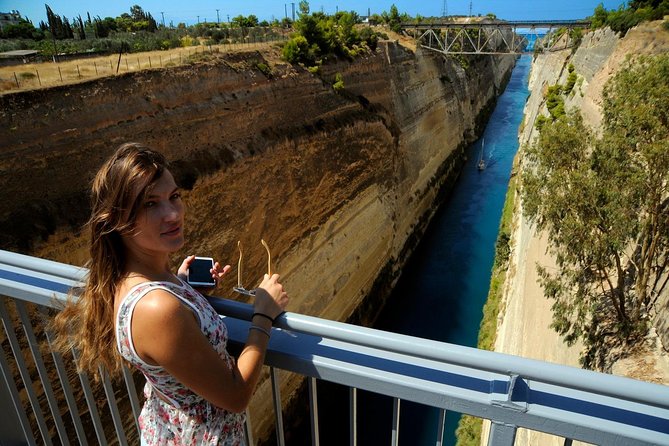
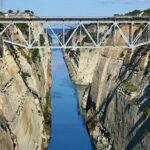
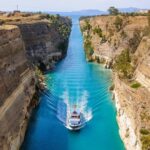
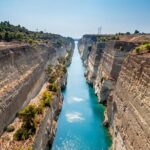
Your first stop is the Corinth Canal, where a pedestrian bridge gives you a direct look down into the narrow cut. The canal links the Gulf of Corinth with the Saronic Gulf and separates the Peloponnese from mainland Greece. A 15-minute stop is enough for photographs, but not much more.
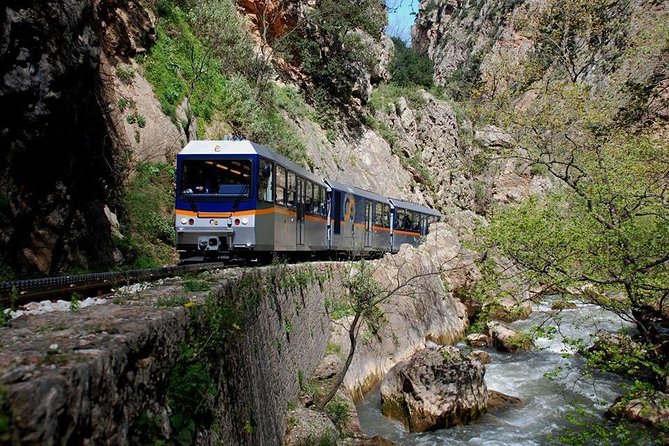
The day then turns toward Diakopto and the Vouraikos Gorge. Diakopto sits at the lower end of the gorge, beside the Gulf of Corinth, and is the starting point for the rack railway toward Kalavryta. The schedule lists both a short Diakopto stop and a longer visit with admission not included, so clarify the train plan before departure. Rack railway tickets are listed at €10 per person.
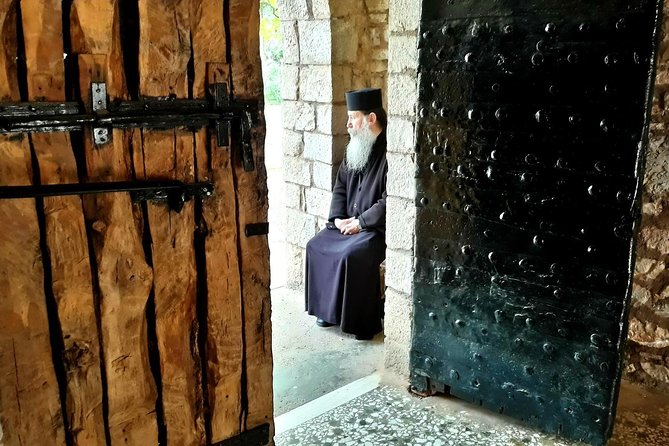
From Zachlorou train station, you continue by car to Mega Spileo Monastery. Built into a cliffside cave, this is one of the most dramatic religious sites on the route. Its setting gives you more than a church visit: you get rock walls, a gorge, and a story reaching back to ancient references and early Christian hermits.
Agia Lavra offers a different kind of historical weight. The monastery is linked with the Greek War of Independence and the raising of the revolt’s flag in 1821. Its buildings have been damaged and rebuilt several times, including destruction during the Second World War. The site is useful for understanding how religion and national memory overlap in Greece.
You spend the night in Kalavryta. The town is associated with Byzantine, Frankish, Ottoman, and modern Greek history, making it a good first base. The proposed day is long, and the overnight stay prevents this opening section from becoming a tiring out-and-back drive from Athens.
Day 2: The Cave of the Lakes and ancient Olympia
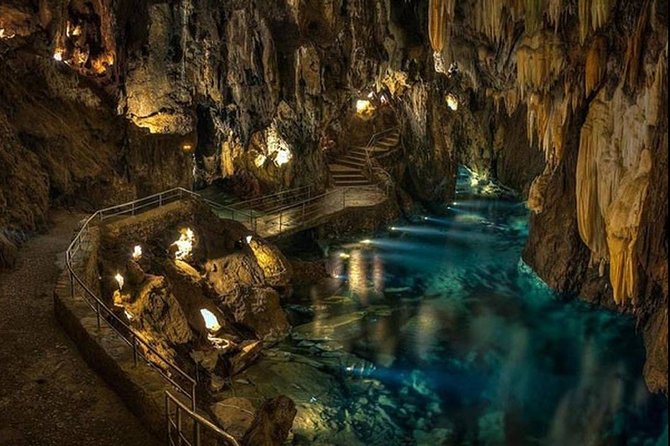
Near Kastria, the Cave of the Lakes offers one of the trip’s most unusual natural stops. It is an old underground river system with three levels. In summer, the water leaves behind 13 lakes, while winter snowmelt can turn the cave into a flowing river with waterfalls.
The cave visit lasts about an hour, and admission is not included. Listed ticket prices are €9 for adults and €4.50 for children and visitors over 65. Opening hours are limited, so this is a place where the season matters.
The road then crosses the Aroanian Mountains and passes through Lampeia, a mountain village at about 800 meters. These drives are part of the appeal, especially if you enjoy changing views and small settlements, but they also take time. If you are prone to motion sickness, plan accordingly and ask for a front seat.
Foloi oak forest provides a break from ruins and road stops. It is a protected oak forest at about 600 meters, spread across the boundaries of Elis, Arcadia, and Achaia. Greek mythology connects it with the centaur Pholus and Hercules. The stop is best for woodland photographs and a short walk, not for a major sightseeing checklist.
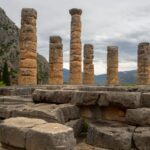
The main event is Olympia. The ancient sanctuary hosted the Olympic Games every four years from 776 BCE and includes remains from the Bronze Age through the Byzantine period. The site is spread out among trees, with the ancient stadium as its emotional center. Give yourself the full three hours listed if you want to see the grounds without hurrying.
The Museum of the Olympic Games adds context to the athletics, records, and traditions of the ancient contests. It is included in the schedule, while the main archaeological site ticket is extra. You sleep in Ancient Olympia, with breakfast accommodation available at an additional charge.
Day 3: Nestor, Voidokilia, Pylos, and Methoni
Day three brings you into Messenia, one of the most scenic parts of the western Peloponnese. The Palace of Nestor is the key archaeological stop. This Mycenaean palace is associated with Nestor, the king of sandy Pylos in Homer’s epics, and is considered the best-preserved Mycenaean palace.
The surviving walls are not towering, but raised walkways help you understand the plan of the rooms. You will need imagination here, and a licensed guide would add useful detail. Nikolaos can provide general historical context, but he cannot legally guide you inside archaeological sites as an official archaeologist.
Voidokilia Beach is one of the route’s strongest photography stops. Its sand curves in the shape of the Greek letter omega, with Gialova Lagoon behind it. The beach and lagoon form part of a protected natural area, and the setting combines sea, dunes, wetlands, and the ruins of an old Frankish castle above.
Divari Beach gives you time for photographs and lunch beside the water. The nearby lagoon is important for migratory birds, with 258 bird species recorded in the area. Keep this stop relaxed, since the beach is a welcome change after the palace visit.
In Pylos, the Bay of Navarino brings modern Greek history into view. The Battle of Navarino in 1827 was a major defeat for Ottoman and Egyptian forces during the Greek War of Independence. It was also the last major naval battle fought entirely with sailing ships.
The New Castle of Pylos, or Niokastro, overlooks the bay. The fortress was built by the Turks in 1573 and later changed hands between Turks, Venetians, and French forces. Admission is extra, and the walls offer broad views across the bay.
You finish in Methoni, with an overnight stay timed to sunset. That timing suits the photography purpose of the trip. Methoni is a historic port town, and the next morning’s early visit to its castle should provide cooler temperatures and softer light.
Day 4: Methoni Castle and the stone villages of Mani
Methoni Castle is one of the great fortress visits in the Peloponnese. The Venetian-built fortified city occupies a rocky cape, with an artificial moat separating it from the mainland. A fortified islet and octagonal tower extend into the sea, giving the site a strong sense of place.
Allow the full 90 minutes. The ruins are broad rather than compact, and the open setting can be hot. Admission is extra. Comfortable shoes, water, and a hat are sensible.
Kalamata is a short city stop before the route enters the Mani. The city is known for olives, but the schedule gives you only about an hour, so treat it as a break and orientation stop rather than a full city tour.
Kardamili is more rewarding if you like villages, sea views, stone houses, cypress trees, and old olive groves. The two-hour stop gives you time to photograph the harbor and surrounding hills and perhaps eat lunch. The description presents Kardamili as a quiet seaside resort, but conditions vary by season, and summer can be much busier than the word quiet suggests.
The Caves of Diros are visited by boat on an underground lake. The caves were inhabited from Paleolithic times until an earthquake ended that settlement, and the modern ride passes through narrow channels with stalactites and stalagmites. The boat trip takes about half an hour, though the full stop is listed as one hour.
You will negotiate steps to reach the entrance. Commentary may be in Greek, so ask ahead if English explanation is available. The cave ticket is extra.
The day ends in Areopoli, the historic center of Inner Mani. Its stone lanes, tower houses, and central square help explain the region’s long tradition of family fortifications and resistance. This is an attractive overnight base, but after a full day of driving and stops, you may prefer a quiet dinner rather than another ambitious walk.
You can also read our reviews of more private tours in Athens



Day 5: Vathia, Cape Tainaron, and Porto Kagio
Day five is the most remote and rugged part of the route. Gerolimenas, once a working fishing harbor, gives you a brief look at the southern Mani coast. It was once reached mainly by boat, which helps explain its isolated character.
Vathia is the day’s most striking village. Its stone tower houses rise on a hill, with abandoned buildings and chapels spread across the surrounding slopes. This is a strong place for architectural photography, particularly if you like weathered stone, empty lanes, and the severe shape of Maniot defensive homes.
Cape Tainaron is the southernmost point of mainland Greece. Ancient myths placed the entrance to the underworld in a nearby cave, while the area also held temples connected with Poseidon. The walk and visit are listed at about an hour, so ask how far you will go on foot and bring proper shoes.
Porto Kagio provides two hours by the coast. The harbor has ancient and Venetian connections, and the setting offers time for photographs and a meal. This is a day for open views and small historical traces rather than large museums.
The main drawback is road time. Southern Mani roads can be slow, and several stops are exposed to sun and wind. Still, this section gives you the kind of scenery and quiet village atmosphere that a faster Peloponnese circuit often misses.
Day 6: Monemvasia, Sparta, and Byzantine Mystras
Monemvasia is one of the most memorable stops of the trip. The medieval town occupies a rocky island connected to the mainland by a short causeway. Its name means single entrance, a good description of the narrow approach into the fortified settlement.
Inside, you find stone lanes, Byzantine churches, walls, and views from the rock. The lower town is atmospheric, while the upper fortress area requires uphill walking. Two hours gives you a useful introduction, but you could easily spend longer if you enjoy medieval architecture and photography.
Sparta offers a different experience. The modern city is not preserved like an ancient ruin town, and the ancient remains are more scattered. The Archaeological Museum, housed in a 19th-century neoclassical building, costs €3 according to the supplied information.
The ancient acropolis and theater provide a look at Sparta beyond the military legend. The city was a major rival of Athens and Corinth and played a central role in the Peloponnesian Wars. The ancient theater is included in the itinerary, while the exact admission arrangement should be confirmed.
Mystras is the day’s major historical reward. The abandoned Byzantine city climbs a hillside below a fortress, with churches, palaces, and walls spread through a beautiful setting. The site involves steep paths and uneven ground, so this is not a casual stroll. General admission is listed as €8 in summer and €4 in winter.
The Museum of the Olive and Greek Olive Oil rounds out the day with food culture and rural technology. It covers olive cultivation, oil production, trade, diet, art, and religious use from prehistoric times into the early 20th century. You stay overnight in Sparta.
Day 7: Mountain villages and Nafplio
The route heads north through Agios Petros, a mountain village on Mount Parnonas at about 950 meters. Its appeal is quiet air, traditional buildings, and tavernas rather than a headline monument.
Paralio Astros shifts you back to the coast. Its tiled houses, narrow lanes, fishing harbor, and hilltop medieval fortress give it an island-like feel. The fortress provides views over the coast and olive groves, though the schedule allows only about an hour.
Palamidi Castle in Nafplio deserves more time. Built by the Venetians between 1711 and 1714, it is a powerful hilltop fortress with carefully planned defenses. The site requires walking and climbing, but the views over Nafplio and the sea repay the effort. Admission is extra.
Nafplio itself is one of the best overnight stops on the tour. It served as the first capital of the modern Greek state from 1827 to 1834 and combines Venetian, Frankish, Ottoman, and Greek influences. The old town is compact enough for an evening walk, but the schedule does not include a formal guided city tour.
Day 8: Nafplio museums, Nemea wine, and Loutraki
The Archaeological Museum of Nafplio occupies a well-preserved Venetian building on Syntagma Square. The collection helps connect the region’s prehistoric and classical sites, and the building itself is part of the visit. Admission is not included.
Acronafplia Fortress, the oldest of Nafplio’s castles, rises directly above the old town. Parts of its walls date back to the Bronze Age, with later additions by Romans, Franks, Venetians, and Turks. The walk offers a different view of Nafplio from Palamidi, and the two fortresses work well together.
Ancient Nemea is the final major archaeological stop. The sanctuary was dedicated to Zeus and hosted the Nemean Games. The complex includes the temple area, baths, stadium, and other structures from several building periods. Admission is extra.
The Cooperative Winery of Nemea introduces you to Agiorgitiko, the area’s native red grape. Founded in 1937, the cooperative now works with more than 500 growers and can process large quantities of grapes. The visit is included in the schedule, but confirm exactly what the tasting includes and whether food is served.
The Monastery of the Dormition of Rock Nemea provides a short final stop with views over vineyards and the valley. You then continue to Loutraki, a seaside resort known for mineral springs, spas, and Greece’s first casino, established there in 1928.
Price, hotels, and what you really pay
The listed price is $2,659.81 per person. That includes private transport, fuel, toll roads, parking, hotel pickup and drop-off, and an English-speaking driver with photography experience.
It does not include your accommodation. Suggested rooms cost roughly €100 to €130 per double room, with some higher weekend and holiday rates. The driver’s room is complimentary when the company arranges the hotels, but if you book your own rooms, you must reserve an additional room for the driver.
You also pay for most archaeological sites and museums. The supplied pricing says sites and museums cost €10 per person from November through March and €20 from April through October, though individual attractions list separate prices. Add the rack railway, Cave of the Lakes, Diros Caves, and meals to your budget.
For a couple or small family, the price can make sense if you value door-to-door transport and a custom route. It is less attractive if you prefer to book inexpensive hotels, spend several days in one town, or use public transport. Ask for a full written estimate before paying, including room type, taxes, expected admission fees, and tasting details.
Who should book this tour?
Book it if you want a private Peloponnese circuit with a strong photography focus, long historical reach, and access to places that are awkward to connect by public transport. It suits couples, families, and small groups who prefer a flexible car-based trip.
You should be comfortable with early starts, long drives, stairs, uneven ruins, and changing hotel rooms. It is not the right choice for a beach-first holiday or for anyone who wants a licensed guide explaining every stone at every site.
The experience is non-refundable, so confirm dates, hotel plans, site opening days, and the assigned driver before booking. Archaeological sites and museums can close on Tuesdays, and opening hours change sharply between winter and summer.
FAQ
Where does the tour start and end?
Pickup and drop-off are offered from your hotel or apartment in Athens or Piraeus. Another location may be possible by request.
How long does the tour last?
The tour lasts approximately eight days, with overnight stays listed in Kalavryta, Ancient Olympia, Methoni, Sparta, and Nafplio.
Is the tour private?
Yes. Only your group participates in this private activity.
Who drives the tour?
The tour provides a professional English-speaking driver with photography experience. Nikolaos is identified as the photographer and artist connected with the experience. Confirm the assigned driver at booking.
Is the driver an archaeological guide?
No. The driver is not a licensed archaeological guide. You can arrange an archaeologist guide separately in advance if you want guided visits inside sites and museums.
Is accommodation included?
No. Accommodation is an additional cost. Suggested boutique and three or four-star hotels with breakfast cost about €100 to €130 per double room, depending on location and dates.
Are entrance fees included?
No. Most archaeological site and museum admission fees are extra. The tour also lists separate charges for the rack railway, Cave of the Lakes, and Diros Caves.
How much is the rack railway ticket?
The listed rack railway ticket is €10 per person.
Can I pay a deposit?
Yes. You can pay 50 percent by credit card when booking and pay the remaining 50 percent in cash to the driver or tour leader on the tour date. Full credit-card payment is also offered.