REVIEW · ATHENS
Athens: Guided Urban Street-Art Tour
Book on GetYourGuide →Operated by Truevoyagers · Bookable on GetYourGuide
Street art in Athens has teeth. In this 2-hour urban walk, you’ll see how murals carry Greece’s social and political mood on real walls. I especially love the way the guide teaches you to decode the images instead of just pointing at pretty paint.
My other favorite part is the route through real neighborhoods—Monastiraki, Psyrri, Sarri, Omonoia, and ending in Metaxourgeio—so you get a different Athens than the postcard routes. One possible drawback: it’s a walking tour with a decent pace, and you’ll want comfortable shoes and a bit of heat tolerance.
In This Review
- Key Things to Know Before You Go
- Street Art in Athens: Your 2-Hour Decoder Ring
- Where the Tour Starts at Lonis (MAKARON) Near Monastiraki
- Monastiraki to Psyrri: The Route Where Messages Get Personal
- Platia Iroon and Sarri: Look for the Past, Then for the Punchline
- Omonoia: Where the Mood Turns Serious
- Metaxourgeio: Ending Where Athens Shows Its Work
- How the Guide Changes What You See
- Walking Pace, Comfort, and Who It Suits Best
- Price and Value: Is $47 Fair for Street Art Insight?
- Should You Book This Athens Street-Art Tour?
- FAQ
- How long is the Athens guided street-art tour?
- What does the $47 price include?
- Where exactly is the meeting point?
- What should I do if I’m arriving by metro?
- Is the tour offered in English?
- Is hotel pickup or drop-off included?
- Do I get food or drinks during the tour?
- Is it a private or small-group experience?
- What’s the cancellation policy?
Key Things to Know Before You Go
- Start in Monastiraki right by the metro exit, making it easy to find and easy to return to later.
- You’ll walk through multiple districts (Psyrri, Sarri, Omonoia, Metaxourgeio) rather than repeating the same blocks.
- The guide focuses on how Greece’s crisis and changing finances shaped street art themes and artists.
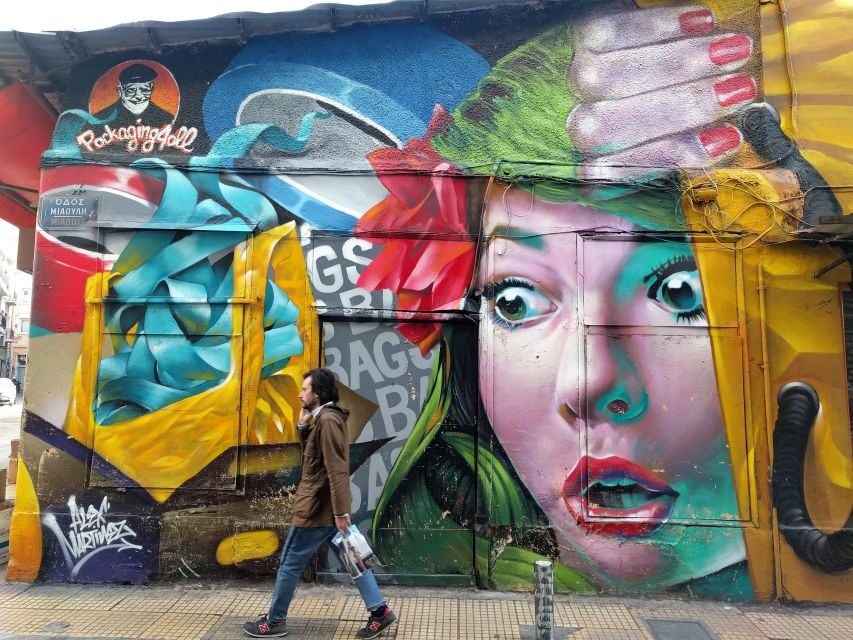
- You’ll learn to read street art like a message board: symbols, drawings, and references.
- Many stops include works by local and international artists, with stories tied to the past and the present.
- The tour is built for small groups or private settings, which helps you ask questions and linger.
Street Art in Athens: Your 2-Hour Decoder Ring
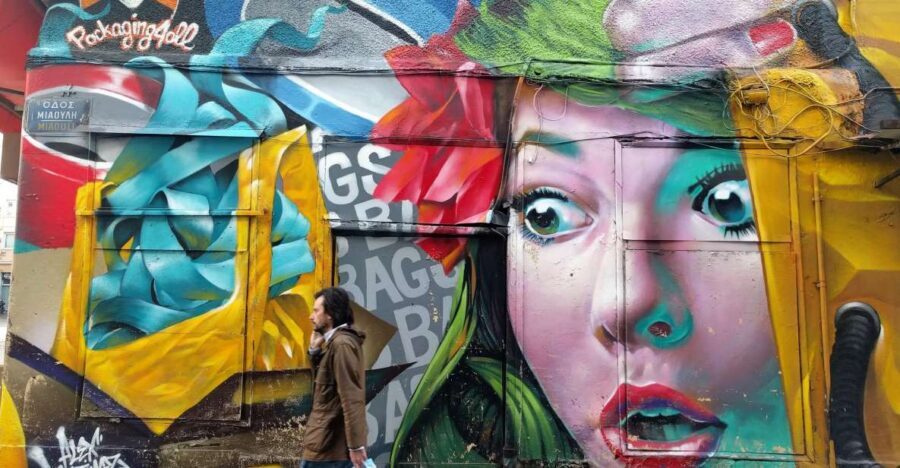
Athens street art isn’t just decoration. It’s a public language—often political, sometimes personal, and usually honest about what people are feeling. This tour is a fast way to understand why the city has so much wall-to-wall creativity without needing an art degree.
You’ll also get a “how to look” lesson from the first alley onward. Guides on this tour (often people like Penelope, Greg, Pascal, Katerina, and Eeleni) tend to explain styles, themes, and why specific pieces ended up where they did. That makes the experience stick in your brain long after the photos fade.
At $47 for 2 hours, it’s not a bargain in the budget sense, but it is good value for the time you’re getting. You’re paying for an English-speaking guide who can connect images to context—and that’s what turns street art from random graffiti into something you can actually read.
You can also read our reviews of more guided tours in Athens

Where the Tour Starts at Lonis (MAKARON) Near Monastiraki
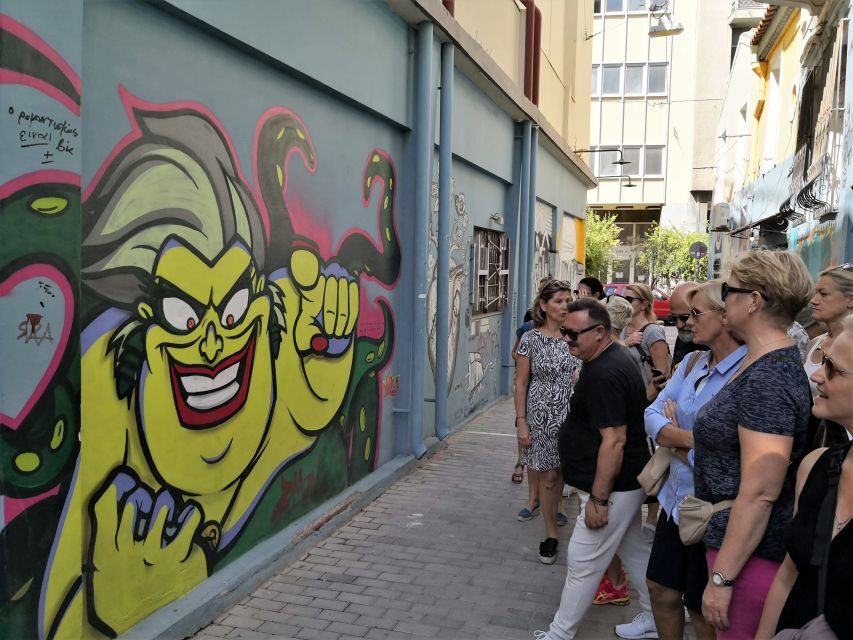
You’ll meet at Athinas 7 street in central Athens, right next to the Monastiraki metro station exit, standing in front of a pastry shop called Lonis (MAKARON). If you’re coming by metro, the tour note is simple: use the Athinas street exit.
This matters more than it sounds. Monastiraki is a practical hub, which means you’re not wasting time commuting across the city before you even start looking up. It also sets the tone: you begin in a lively area and then transition into the smaller lanes where street art becomes more intimate.
Monastiraki to Psyrri: The Route Where Messages Get Personal
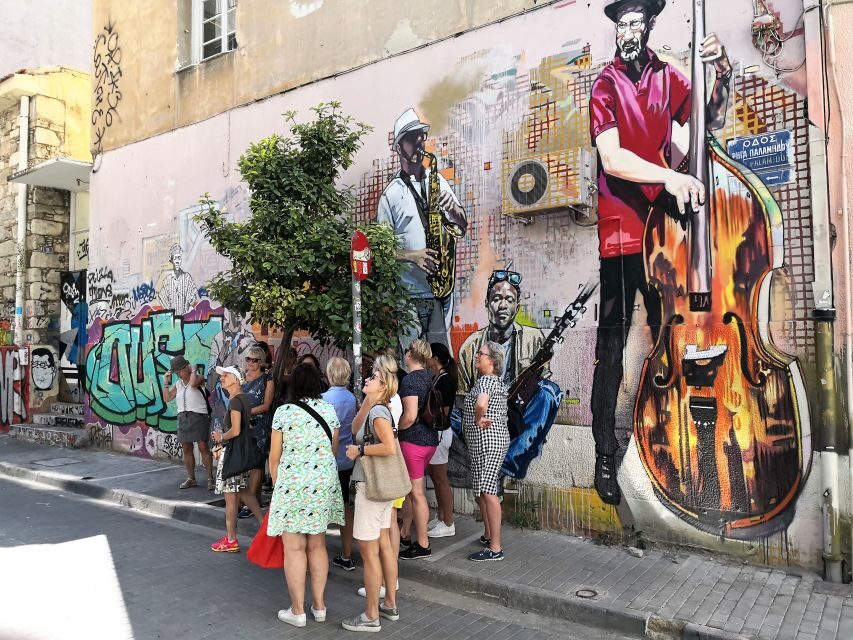
From Monastiraki, the tour shifts on foot into Psyrri, a part of central Athens where you’ll see street art that feels closer to daily life. The itinerary gives you a longer stretch here—about 40 minutes walking—so you’re not rushing through the neighborhood like it’s a checklist.
In Psyrri, you can expect more of the “read the wall” style of storytelling. The guide typically connects works to Greece’s social and economic reality—especially how the crisis affected both artists and audiences. You’ll see pieces tied to the past but also reacting to the present, which is why the art feels layered instead of one-note.
Practical tip: when you’re moving quickly between spots, the key is to slow your eyes down. I like to treat each stop like a mini museum label—just on brick and plaster instead of behind glass.
Platia Iroon and Sarri: Look for the Past, Then for the Punchline
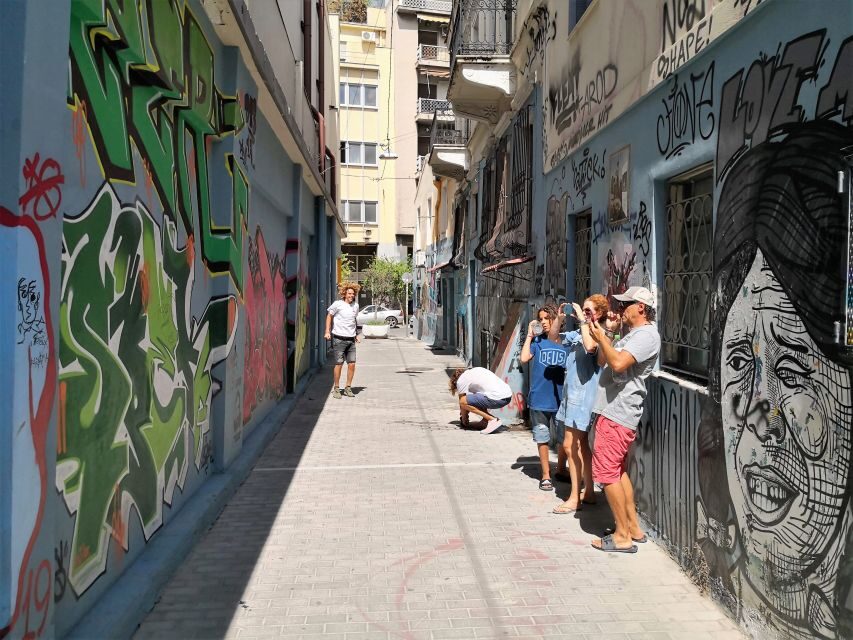
Next comes Platia Iroon (with a shorter walk segment, about 10 minutes). This is the kind of stop that works as a reset. You get a bit of open space, then you’re back into streets where murals can feel tucked in or partially hidden.
Then you head toward Sarri (around 15 minutes walking). Sarri is a good place to notice how street art can feel both deliberate and spontaneous—big messages mixed with smaller, quieter visuals. The guide’s role is important here, because the tour doesn’t just show you what’s painted. It helps you understand why those images use certain symbols, references, or visual tricks.
What makes these stops worth it is the interpretation. Greece’s street art scene often mirrors the country’s shifts in power, money, and public mood. When your guide points out those connections, the walls stop being background and start being commentary.
Omonoia: Where the Mood Turns Serious
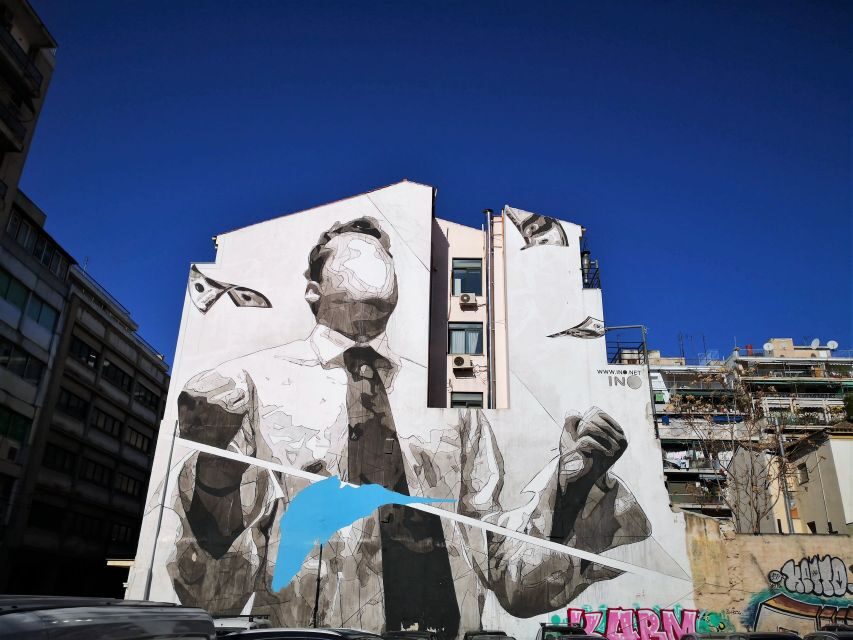
You’ll then move to Omonoia (another 15 minutes on foot). This is where the tour’s tone can tighten. Street art here often carries sharper social signals—ideas about identity, stress, inequality, and the lived experience of economic pressure.
From the tour descriptions, you’re specifically meant to learn how the socio-economical situation and crisis shaped urban culture and the work of local artists. In other words, the guide is not treating street art like a pop-culture trend. You’re learning it as a response—sometimes angry, sometimes reflective, sometimes both.
One thing I appreciate: the tour language emphasizes decoding. That means you’re not just looking at color. You’re trying to understand message-making—how drawings and images act like headlines.


Metaxourgeio: Ending Where Athens Shows Its Work
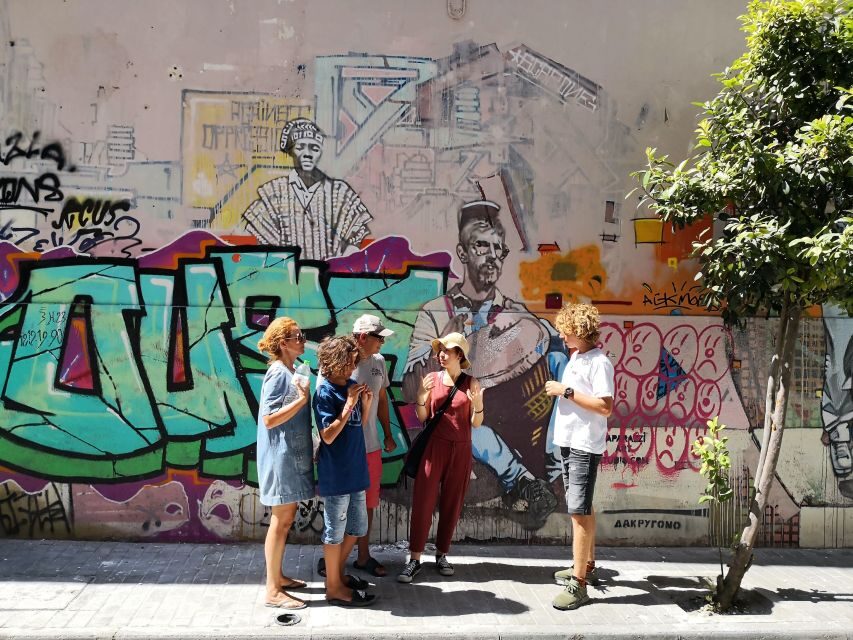
Finally, the tour reaches Metaxourgeio, with about 30 minutes walking through this stretch. It’s a fitting closing neighborhood because it feels like Athens is willing to show its rough edges and its creativity in the same frame.
You finish at Metaxourgeio Square. By the time you arrive, you’ve already crossed several districts and you’ve trained your eyes to notice things you’d normally miss: small details in a mural, hidden references in a symbol, and contrasts between different artists’ styles.
If you’re the type who usually keeps your gaze at eye level, this tour is a nice correction. Many guides on this experience emphasize looking up, because that’s where the strongest storytelling tends to live.
How the Guide Changes What You See
The biggest reason this tour earns a 4.9 overall rating isn’t that the streets have art. It’s the human decoder in front of you.
Across the guides mentioned in bookings—people like Penelope, Greg, Pascal, Katerina, and Eeleni—the common theme is engagement. Guides frequently explain styles and the meaning behind pieces, and they tend to answer questions with patience. Some also use additional materials, like tablet references, to help tie the mural to context.
You’ll also notice the tour is designed to include conversation and participation. That shows up in how people describe guides checking on the group and keeping things interactive. It’s also a good sign if you want more than a lecture and fewer than “stand in one place for a selfie” moments.
My advice: come with at least one question in mind. Something simple like, Why this symbol? or Who made this? gives the guide an easy opening to go deeper.
Walking Pace, Comfort, and Who It Suits Best
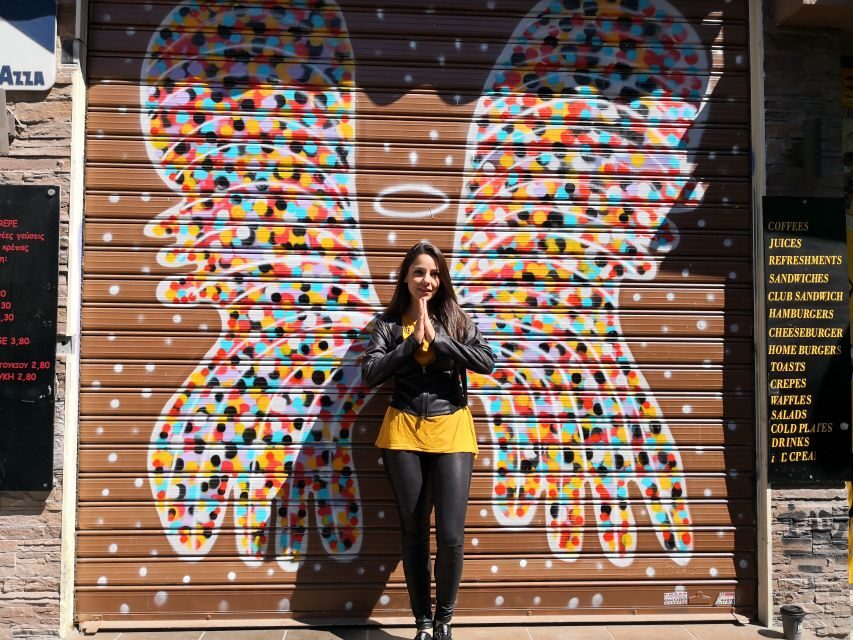
This is a 2-hour walking tour, and the itinerary is made up of multiple on-foot segments. That means you should expect a solid walk, not a slow scenic stroll. The pace is generally described as good, with enough time to observe and ask, but the route still adds up.
So: this tour suits you if you’re curious about modern Athens and you like street art for its ideas—not only its visuals. It also fits well if you enjoy neighborhood texture: small alleys, side courtyards, and the feeling of moving with locals rather than hovering like a tourist bubble.
It may be less ideal if you want minimal walking or if you struggle with heat. Even when guides build in observation time, you’re still moving through several districts.
Price and Value: Is $47 Fair for Street Art Insight?
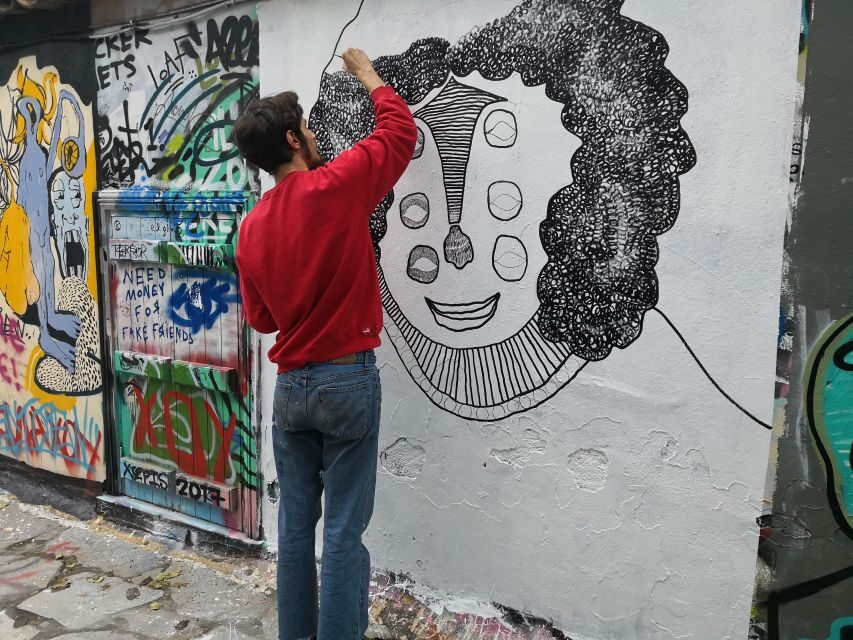
At $47 per person for about 2 hours, the price feels fair when you think about what’s included. You get an English-speaking guide, and more importantly, you get interpretation: social context, political and financial themes, and help decoding the imagery.
If you tried to do this solo, you’d still be able to find street art—but you’d likely miss the “why.” This tour’s value lives in that gap. It turns random walls into readable stories and helps you connect the dots between past and present.
If you’re an art lover, this is a strong “time well spent” choice. If you’re only in Athens for classic landmarks and you don’t care about modern culture, you might feel the price more than the art.
Should You Book This Athens Street-Art Tour?
I’d book it if you want Athens that feels alive right now. The route through Monastiraki, Psyrri, Sarri, Omonoia, and Metaxourgeio gives you variety, and the guide-led decoding is the difference between seeing graffiti and understanding street art.
Choose it especially if:
- you like tours with stories, not just sights,
- you’re interested in how art responds to real-world change,
- you want to end the day with a better sense of Athens as a living city.
If you prefer landmark-heavy days, keep expectations realistic. This one is about the streets and the messages written on them.
If you want, tell me your travel dates and what neighborhoods you’ll also visit (or what you dislike). I can suggest a smart way to pair this with the rest of your Athens plan.
FAQ
How long is the Athens guided street-art tour?
It lasts 2 hours.
What does the $47 price include?
The tour includes an English-speaking guide. Food and drinks are not included.
Where exactly is the meeting point?
Meet at Athinas 7 street in Athens, right next to the Monastiraki metro station exit, in front of the pastry shop Lonis (MAKARON).
What should I do if I’m arriving by metro?
Use the Athinas street exit from Monastiraki metro.
Is the tour offered in English?
Yes, the tour guide speaks English.
Is hotel pickup or drop-off included?
No, hotel pickup and drop-off are not included.
Do I get food or drinks during the tour?
No, food and drinks are not included.
Is it a private or small-group experience?
You can choose private or small groups, depending on availability.
What’s the cancellation policy?
You can cancel up to 24 hours in advance for a full refund.