REVIEW · CHANIA
Battle of Crete WW2 Private Tour (price per group of 6)
Book on Viator →Operated by Niriis Tours · Bookable on Viator
The Battle of Crete becomes much easier to understand when you see the actual ground where it happened. This private tour links cemeteries, villages, bridges, hills, and memorials across western Crete, while showing how German airborne forces, Allied troops, Greek units, and local civilians became caught in the same fight. The stories are not limited to generals and dates. They also cover families who hid and fed Allied soldiers at great risk.
I especially like the private format, which lets you ask about a particular regiment, country, or family connection instead of sitting through a fixed lecture. I also like the useful take-home material: bring a USB stick and you may receive reports, books, diaries, maps, and photographs. The main drawback is that this is a serious history tour, not a light sightseeing outing, and several stops involve walking outdoors in exposed areas.
In This Review
- Key points to know
- Why this tour gives the Battle of Crete a human scale
- Souda Bay War Cemetery and the 42nd Street memorial
- Hill 107, Maleme, and the German military cemetery
- Tavronitis Bridge and the RAF memorial
- Galatas, the New Zealand and Greek memorials
- Agia Prison valley and the Alikianos Memorial
- A private tour that can follow your family connection
- Transport, timing, and what to bring
- Who will get the most from this six-hour history tour
- Should you book the Battle of Crete private tour?
- FAQ
- How long does the Battle of Crete private tour last?
- What locations are included?
- Is pickup included?
- How many people can join the private tour?
- Is lunch included?
- What happens if the weather is poor?
Key points to know
- Five meaningful battlefield stops: Visit Souda Bay, Hill 107, Tavronitis Bridge, Galatas, and the Alikianos area.
- A tour shaped around your interests: Ask to focus on individual units, Allied countries, local resistance, or the wider battle.
- Private transfers for up to six people: Pickup and drop-off are available from much of Chania and nearby areas.
- Cemeteries with very different stories: The Commonwealth and German military cemeteries help you see the human cost on both sides.
- Helpful historical material to take home: A USB stick can be used for reports, books, diaries, maps, and photos.
- A full morning or half-day commitment: The tour lasts about six hours, with the listed visits taking just over four hours before driving time.
Why this tour gives the Battle of Crete a human scale
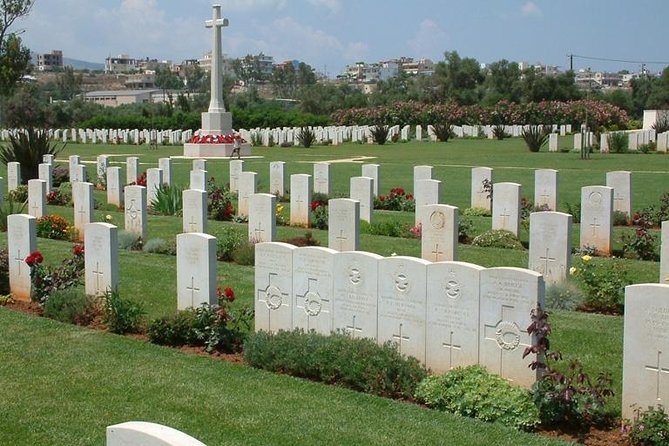
The Battle of Crete was fought in May 1941, but this experience does not treat it as a list of military movements on a map. You move through places where the outcome depended on airfields, bridges, roads, hills, and local knowledge.
That physical setting matters. From Hill 107, you can look toward Maleme airfield and understand why control of the area mattered so much. At Galatas, the story shifts toward village fighting and the efforts of Greek and New Zealand forces. In the Agia Prison valley, you see how the war continued after the main battle through occupation, imprisonment, executions, and resistance.
The guide brings a local Cretan point of view to the subject. That is valuable because the battle was not only fought by soldiers from Britain, New Zealand, Australia, Greece, and Germany. Cretan civilians became involved in hiding, feeding, and moving Allied soldiers. Their families faced severe danger if discovered.
You should expect a personal, discussion-based approach rather than a scripted bus tour. The guide has a strong interest in modern history and tries to pack in detail without turning every stop into a long classroom session. If someone in your group has a family connection to a particular unit, tell the guide before or during the tour. The private setup makes that kind of adjustment possible.
You can also read our reviews of more private tours in Chania

Souda Bay War Cemetery and the 42nd Street memorial
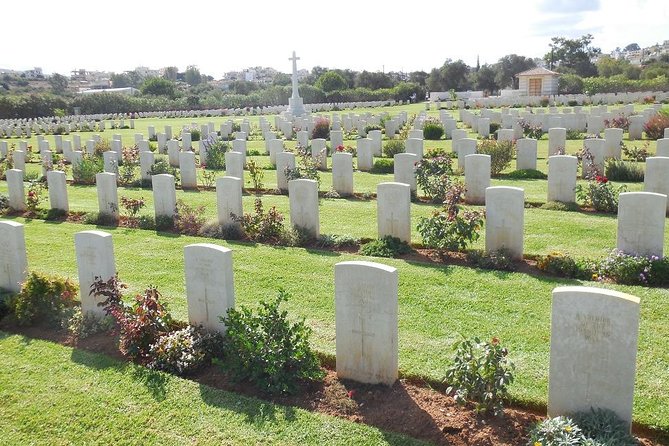
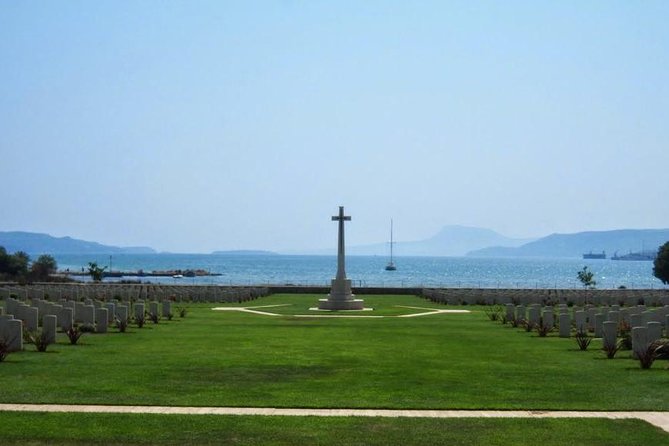
The tour begins at Souda Bay War Cemetery, where Allied soldiers who died during the Battle of Crete are buried. The visit is not simply a quick photo stop. You walk among the graves while the guide explains the people and events connected to the cemetery.
This is likely to be the most solemn opening to the day. The neat rows of graves can make the scale of the battle easier to grasp, but the real value comes from the individual stories. If you have come because of a relative or a particular national unit, this is a good place to ask focused questions.
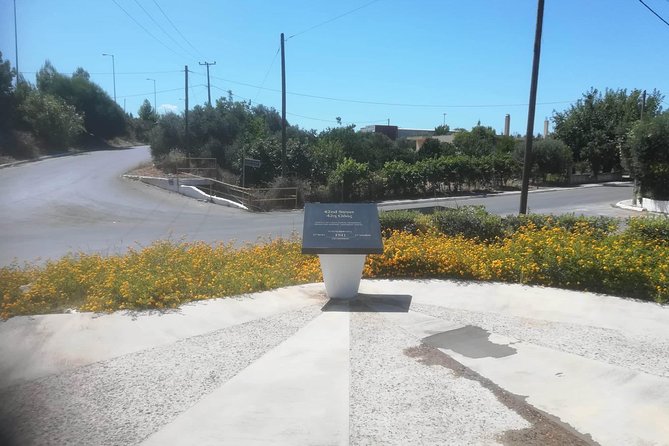
The nearby 42nd Street memorial adds a battlefield detail that a cemetery alone cannot provide. A bayonet charge took place here, and the guide explains how the action fitted into the fighting around the area.
You have about an hour at this stop. Admission is included, and the tour information lists no separate entrance charge. Wear shoes suitable for walking and allow yourself time to pause. This is not the kind of place where you will want to rush from one grave to the next.
Hill 107, Maleme, and the German military cemetery
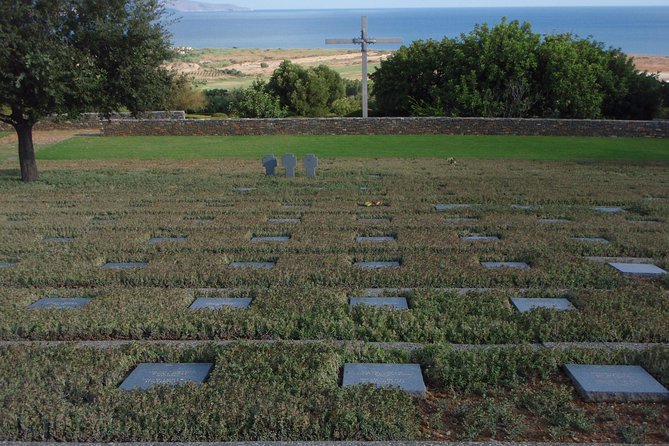
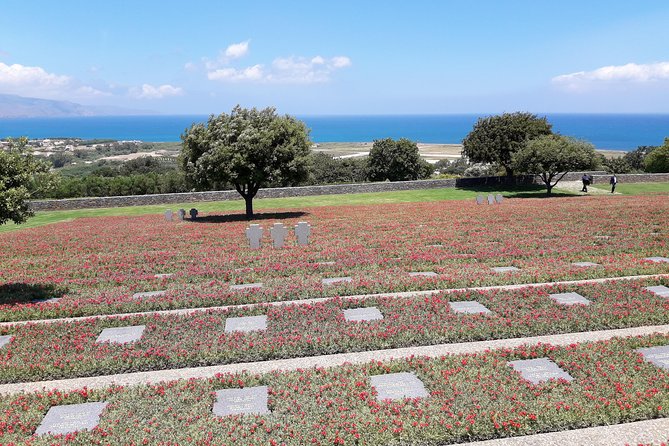
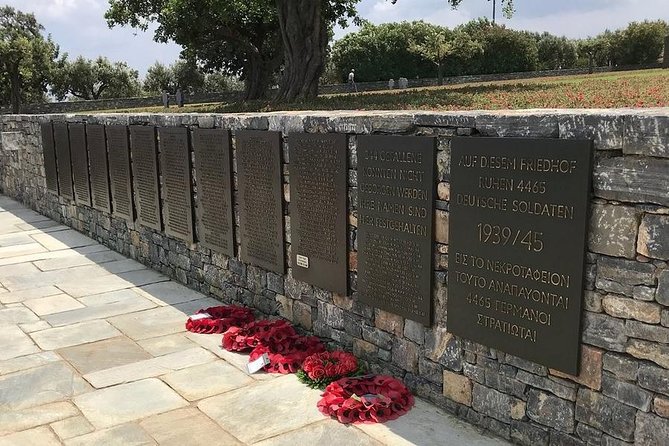
The next major stop takes you to the German Military Cemetery on strategic Hill 107. The hill overlooks Maleme airfield, so the view helps explain the battle in a direct way. You are not just hearing that the airfield mattered. You are looking down toward the area that German forces needed to secure.
The guide explains how the battle developed around Maleme and Hill 107. You also make a short stop beside Maleme airfield, though the airfield remains a military area and access is forbidden. That restriction is important to know before booking. You see the site from nearby rather than walking across the runway or exploring military buildings.
You then walk toward the former Allied headquarters on top of Hill 107. The views are one of the strongest parts of this section, but the hilltop also gives the historical explanation a clear shape. The position, the airfield, and the movement of troops make more sense when seen together.
The German cemetery creates a difficult but necessary contrast with Souda Bay. The tour does not present only one side of the dead. Visiting both cemeteries encourages a more complete understanding of the battle and its cost.
Plan on about an hour here. Some travelers may find the cemetery and hill walk emotionally heavy, while others will value the chance to see the battle from both the Allied and German perspectives. If anyone in your group has mobility concerns or other serious health issues, notify the operator in advance.
Tavronitis Bridge and the RAF memorial
Tavronitis Bridge was one of the primary German targets during the assault on Crete. The bridge may look like a modest piece of infrastructure, but its location gave it military importance. It helped connect the battle to movement, access, and control of the area around Maleme.
The guide explains what happened here and why the bridge formed part of the German plan. This is where a map can become useful, especially if you want to follow the battle in sequence. Bring a USB stick if you would like the available maps, reports, and photographs to support what you see on the ground.
Nearby, you visit the RAF Memorial, dedicated to RAF pilots who died during the battle. That stop broadens the story beyond the best-known ground fighting. Air operations were central to the campaign, and the memorial gives those losses a specific place.
You spend about 45 minutes in this area. It is a shorter stop, but it connects well with the earlier visit to Maleme and Hill 107. The sequence helps you understand how airfield operations and ground positions were tied together.
Galatas, the New Zealand and Greek memorials
Galatas brings the tour into a village setting. In the main square, you visit the Greek-New Zealand memorial and discuss the fighting in and around the village. This is one of the places where the international nature of the battle becomes clear. Greek units and New Zealand forces fought in the same area, alongside other Allied troops.
The village setting also changes the tone. At a cemetery, the emphasis is on remembrance. At Galatas, you are looking at a lived-in community where the battle affected ordinary residents as well as soldiers. The guide connects the military action with the people who remained in the area during and after the fighting.
You also visit the Welch memorial. The details of the local fighting can become dense, so this is a good moment to ask the guide to slow down or return to a particular unit. Since the tour is private, you do not have to follow the interests of a large mixed group.
The stop lasts about an hour. It is also one of the places where the tour may feel most rewarding to people who want more than the standard wartime landmarks. You get a village, memorials, military history, and local context in the same visit.

Agia Prison valley and the Alikianos Memorial
The final listed stop takes you to the Agia Prison valley, where Greek units were stationed. You visit the Alikianos Memorial and see Agia Prison, which served as a hospital during the battle and later became a prison during the German occupation.
The site carries two separate layers of wartime history. First comes the battle and the medical care connected with it. Then comes the occupation, when hundreds of Greeks were executed at the prison. The guide explains how these events relate to the wider story of Crete after the initial fighting ended.
This is a short stop of about 20 minutes, but its subject is weighty. You may want to treat it as a place for quiet attention rather than a long sightseeing break. The visit also helps explain why the Battle of Crete remains a living subject for many Cretan families.
The Alikianos area is especially useful if you want to understand the connection between military resistance and civilian courage. Local people were not passive observers. They hid Allied soldiers and accepted serious risks for themselves and their families. That part of the story gives the tour a distinctly local character.
A private tour that can follow your family connection
The tour costs $555.98 for a private group of up to six people. If you fill all six places, that works out to about $92.66 per person, before optional food costs. For a couple, the per-person price is much higher, but you are still paying for a private vehicle, a dedicated English-speaking guide, and a full day built around your group.
That makes the value depend on your interests. If you only want a quick look at one memorial, the price will feel high. If your group includes a serious World War II enthusiast, a New Zealand or Australian family connection, or several people who want to ask detailed questions, the private arrangement makes more sense.
You can customize the tour around individual units and particular areas of interest. That is a major advantage over a large group excursion, where the guide must keep to a fixed explanation. You can also ask for clarification when the battle map becomes complicated or request more information about the local resistance.
A previous group used the tour as a family experience because one parent was a World War II enthusiast. The result was not limited to that one person. The mix of villages, memorials, personal stories, and battlefield sites can give non-specialists a way into the subject without requiring prior knowledge.
The experience may also include access to a large private collection of wartime artifacts, according to the guide’s description of the tour experience. Since the exact availability and timing of this part are not set out in the schedule, ask about it when booking rather than treating it as guaranteed.
Transport, timing, and what to bring
The tour lasts about six hours. The five listed stops add up to roughly four hours and five minutes, so the remaining time is used for driving between sites, pickup, drop-off, and transitions. That is a sensible length for this route. You cover several locations spread around western Chania, and trying to squeeze them into a much shorter outing would make the day feel rushed.
Pickup and drop-off are offered at Souda port, your accommodation, or another convenient address within about 10 kilometers, or six miles, of Chania Old Town. Pickup is also available near the national road toward Maleme airport. Contact the operator with your exact address before booking if you are unsure that it fits the service area.
An air-conditioned vehicle is included, which matters in Crete, especially when you move between exposed memorials and hilltop viewpoints. The tour is offered in English and runs in the morning, with the stated operating window from 7:00 a.m. to 11:00 a.m. Check the available start time for your chosen date.
Bring water, sun protection, and practical walking shoes. The tour includes cemeteries, memorials, a hill, and outdoor battlefield locations. You will not need to pay admission at the listed stops, but snacks and drinks are offered at an additional cost of 10 euros, while optional lunch costs 25 euros per person.
A USB stick is one of the more useful details to remember. The guide can provide reports, books, diaries, maps, and photos for you to take home. Digital material gives you a way to revisit the day later, especially if you want to compare the sites with the sequence of events.
Who will get the most from this six-hour history tour
I would choose this tour for a group that wants to understand the Battle of Crete rather than simply photograph a memorial. It suits World War II enthusiasts, families tracing a soldier’s service, visitors from New Zealand or other Allied countries, and anyone interested in the connection between military events and Cretan civilian life.
It also works well for mixed-interest groups because the guide can adjust the focus. A history specialist can ask about units and strategy, while other members of the group can concentrate on local stories, village life, memorial design, or the views around Maleme.
I would think twice if you want a relaxed scenic drive with only brief historical explanations. The tour covers difficult subjects, including battlefield deaths, occupation, imprisonment, and executions. The experience is rewarding, but it asks for attention.
The walking is not described as highly strenuous, and most travelers can participate. Still, you should mention serious health problems or other medical concerns in advance. The hilltop and outdoor stops may not suit everyone, and the operator needs to know about any limitations.
Free cancellation is available up to 24 hours before the start time for a full refund. Changes made inside that 24-hour window are not accepted, and poor weather can lead to a new date or a full refund. Because the activity depends on outdoor visits and views, keep that weather condition in mind when planning your Chania days.
Should you book the Battle of Crete private tour?
Book it if you want a focused, personal look at western Crete’s wartime sites and can gather several people to share the vehicle. The strongest reasons are the private guide, the option to follow individual units, the paired Allied and German cemetery visits, and the local stories of resistance and sacrifice.
The $555.98 group price is easier to justify with five or six people. For a smaller party, decide how much the private format matters to you. If the Battle of Crete is a central reason for visiting Chania, the flexibility and depth are likely worth the cost. If it is only a passing interest, choose a lighter sightseeing day instead.
FAQ
How long does the Battle of Crete private tour last?
The tour lasts approximately six hours, including transportation between the sites and the scheduled visits.
What locations are included?
The route includes Souda Bay War Cemetery, the nearby 42nd Street memorial, the German Military Cemetery on Hill 107, a stop beside Maleme airfield, the former Allied headquarters area on Hill 107, Tavronitis Bridge, the RAF Memorial, Galatas, the Welch Memorial, and the Alikianos Memorial near Agia Prison valley.
Is pickup included?
Yes. Pickup and drop-off are available at Souda port, your accommodation, or another convenient address within about 10 kilometers, or six miles, of Chania Old Town. Pickup is also available near the national road toward Maleme airport. Contact the operator about your exact location.
How many people can join the private tour?
The price covers one private group of up to six people. Only your group participates in the activity.
Is lunch included?
No. Lunch is optional at a listed cost of 25 euros per person. Snacks and drinks are also optional and listed at 10 euros.
What happens if the weather is poor?
The experience requires good weather. If it is canceled because of poor conditions, you will be offered another date or a full refund. You can also cancel for a full refund if you cancel at least 24 hours before the start time.