REVIEW · CHANIA
In Crete Discover the miracle of Olive Oil and Organic Fruits
Book on Viator →Operated by Proper Cretan Guide · Bookable on Viator
The most unusual moment on this Chania tour comes at an undisclosed spot near Tsivaras, where you may touch an olive tree said to be more than 2,500 years old, and in some descriptions, close to 3,000. That living link to ancient Crete gives the day a sense of place that a standard food tasting cannot match.
I like the way the tour shows all three stages of olive oil production, from old stone machinery to modern processing. I also like the mix of working farms, quiet villages, a monastery, and wide views over Chania’s inland valleys. The main drawback is the long day in a vehicle, with lunch and drinks not included.
In This Review
- Key points
- Why olive oil gives this Chania tour its focus
- Vamos shows the modern side of olive oil
- Vryses brings the old mill back to life
- Kalyves puts farming in your hands
- Tsivaras offers the day’s oldest story
- The Apokoronas monastery links oil with local life
- Riverside Vryses supplies a needed pause
- Malaxa ends with broad Chania views
- What the private format really changes
- How the $179.43 price measures up
- Who will enjoy this day most
- My call on the olive oil route
- FAQ
- How long does the olive oil tour last?
- Is hotel pickup included?
- Can I take this tour from a cruise ship?
- Is this a private tour?
- Is lunch included?
- What is included in the olive oil tasting?
Key points
- Three eras of olive oil production: See ancient, medieval, and modern methods at different stops.
- A very old olive tree: Visit a private, undisclosed location near Tsivaras and see a tree believed to be over 2,500 years old.
- Hands-on farm time: Pick fresh fruit and learn about daily work from a professional farmer.
- Private transport from Chania: Hotel pickup and drop-off are included from central Chania areas, with Souda port pickup also available.
- Mountain and valley views: The stop at Malaxa adds a fine photo break above the Chania region.
- A full countryside day: Allow about 6 to 7 hours, beginning at 8:30 a.m.
Why olive oil gives this Chania tour its focus
Olive oil is not just a product in Crete. It is tied to farming, family work, village life, food, religion, and trade. This tour gives you several ways to understand that connection instead of stopping at a shop for a quick tasting.
You begin at a modern factory in Vamos. Here, you learn how olives are processed into extra virgin olive oil, how quality is judged, and what happens to the byproducts. You also taste fresh organic extra virgin olive oil, which helps turn technical information into something you can understand with your own senses.
The private format matters. Your group travels with a professional olive oil producer and a licensed historian guide and driver. Since only your group takes part, you can ask questions at a pace that suits you, although the exact balance between farming information and historical detail will depend on your guide.
The price is $179.43 per person. That is not a cheap quick outing, but it covers a private 6 to 7-hour day, transport, hotel pickup and drop-off in central Chania, several admissions, a tasting, and a guide who combines farming and historical knowledge. For a couple or family that wants a focused rural experience without arranging a car, the cost can make sense. For a solo visitor, it is harder to justify unless the private format and subject are especially important to you.
You can also read our reviews of more tours and experiences in Chania.
Vamos shows the modern side of olive oil
The first stop in Vamos lasts about an hour and takes you inside a modern olive oil factory. This is where you see the current method of turning harvested olives into oil.
The visit covers the stages of processing, the qualities that separate good olive oil from lesser oil, and the various byproducts. That last part is useful because it shows that olive production is not limited to a bottle on a supermarket shelf. The factory presents the working side of the trade.
The tasting of organic extra virgin olive oil is a central part of the stop. I like that the tasting follows the factory explanation, since you have some idea of what you are sampling. If you plan to buy oil later in your trip, pay attention to the language used here about quality and production rather than treating the tasting as a simple snack.
There is no admission charge listed for this stop. The visit is scheduled for one hour, so it should give you a clear introduction without taking up most of the day.
Vryses brings the old mill back to life
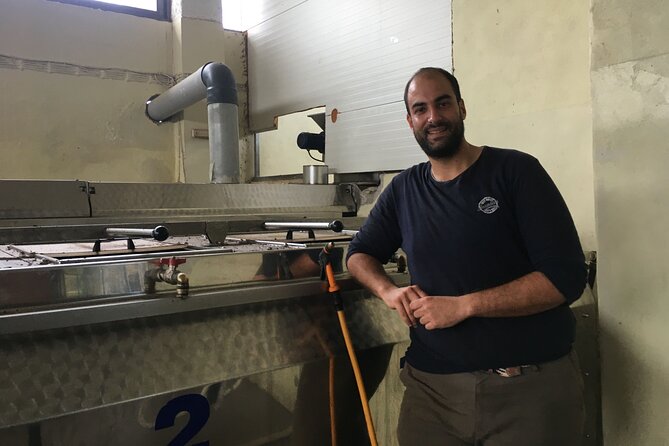
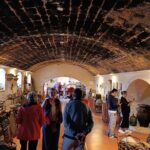
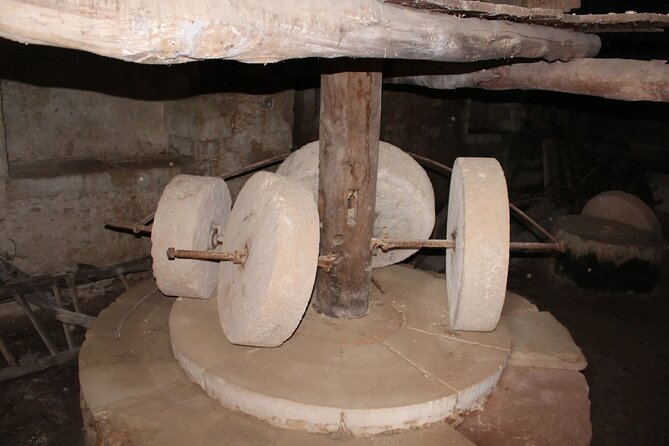
At Vryses, the tour shifts from modern equipment to a traditional olive oil mill. The stop lasts about 30 minutes and shows how olive oil was extracted in earlier centuries.
You see the machinery at close range while your guide explains the laborious process. This is a short visit, but it supplies an important contrast. At the factory, production is organized around modern efficiency. At the old mill, the equipment helps you picture the physical effort once required to crush and press olives.
I would not expect a large museum or a long formal presentation here. The value is in seeing the machinery and hearing how it worked. If you enjoy old tools, industrial history, or traditional food production, this may be one of the most useful short stops on the route.
Kalyves puts farming in your hands
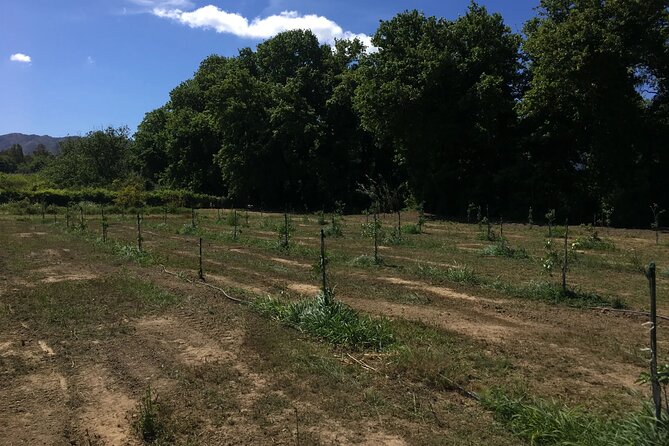
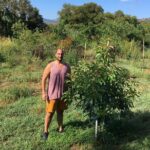
The private fruit and olive tree farm near Kalyves gives the day a more personal feel. You spend about an hour learning about olive varieties, collecting fresh fruit directly from the trees, and hearing about the farmer’s daily routine.
This stop helps explain the work behind the oil. Olive cultivation is seasonal and practical, not simply a matter of taking fruit to a factory. A professional farmer describes the routine of olive oil production and the demands of farm life, giving you a clearer idea of how much care sits behind a finished bottle.
Picking fruit is a small activity, but it changes the pace. After two stops focused mainly on machinery and processing, you get outside among the trees and take part in a simple farm task. That makes this a good choice for families and anyone who prefers experiences that involve more than listening.
The wording of the tour emphasizes organic produce and original Cretan olive oil. You should still ask your guide which fruit is available during your visit, since the selection depends on the season. Lunch is not included, and this stop is not presented as a full meal, so bring that fact into your planning.
Tsivaras offers the day’s oldest story
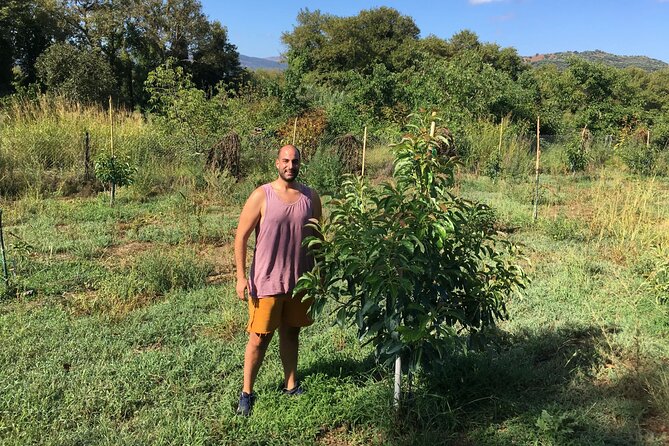
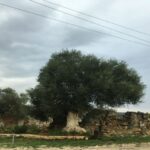
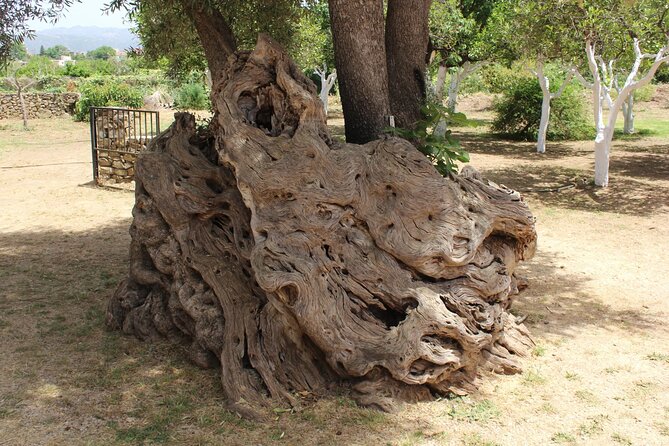
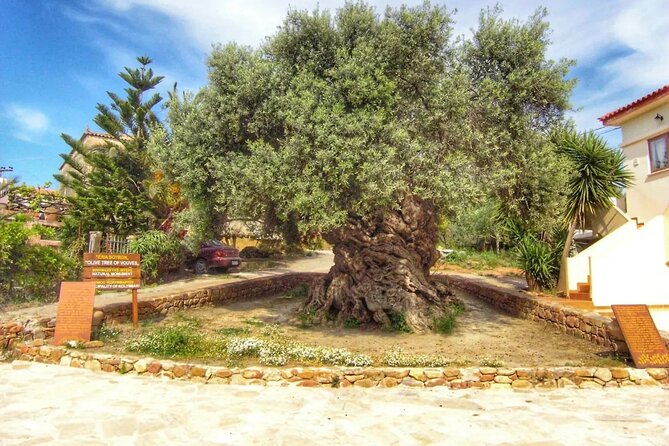
The visit near Tsivaras is the tour’s most memorable feature. The exact location is kept undisclosed, and the tree is described as possibly the oldest olive tree in the world. Its estimated age is given as more than 2,500 years, with another description calling it 3,000 years old.
That difference is worth noting. The age is a traditional or approximate claim rather than a precise fact you can verify from the information provided. Still, the tree’s scale and survival make the stop meaningful even without a perfect number.
You get to stand beside it and touch a living tree that has endured for many centuries. This is not the same as viewing an artifact behind glass. The tree connects ancient agriculture with the working groves you see elsewhere during the day.
The location is described as desolate and unknown, which adds to the sense of discovery but also means you should not expect a conventional attraction with signs, shops, or facilities. Wear practical shoes and be ready for an outdoor stop. The tour data does not promise a specific walking distance or terrain, so ask about conditions if mobility is a concern.


The Apokoronas monastery links oil with local life
The Apokoronas stop lasts about an hour and takes you to a monastery connected with olive oil production. You see the monastery’s own olive oil factory and learn why oil has mattered to local people over the years.
This stop broadens the subject beyond farming and machinery. Olive oil has also had a place in religious communities and local traditions. The monastery gives you a setting where production and belief meet, helping explain why olive oil has remained such a lasting part of Cretan life.
The stop is not described as a full monastery sightseeing visit, so I would treat the oil-making connection as the main reason for going. Your licensed historian guide can provide the historical frame, while the factory gives you a practical look at how the product was made in that setting.
As with the other stops, admission is included. The hour-long visit also gives the day a slower middle section, useful after the early factory and farm visits.
Riverside Vryses supplies a needed pause
The second stop in Vryses is a break of about 50 minutes in a romantic village beside the riverside. It is a small change of pace rather than another major olive oil lesson.
This pause matters because the full route includes several countryside stops and a lot of driving between them. You can use the time to stretch, take in the village setting, or buy a drink if available. Since lunch and drinks are not included, do not assume this break replaces a planned meal.
The information does not specify a restaurant or a set lunch arrangement, so ask your guide how the stop will work on your date. The tour begins at 8:30 a.m. and runs for most of the day. A little planning around breakfast and snacks will make the schedule easier.
Malaxa ends with broad Chania views
The final listed stop is Malaxa, where you pause for about 45 minutes to photograph the valleys, villages, and regions of Chania. It is the tour’s main scenic viewpoint.
After spending much of the day close to trees, mills, and farm buildings, the elevated view gives you a wider sense of the area. You can connect the small places visited during the day with the larger pattern of inland Crete.
I like the placement of this stop near the end. It lets you finish with open views rather than another technical explanation. Conditions can affect how clear the views are, of course, but the stop is designed for photos and a final look across the Chania region.
What the private format really changes
This is a private activity, so only your group takes part. That is a major part of the value, especially if you want to ask detailed questions about olive varieties, production, farming, or local history.
Private does not mean you can change every stop or set your own timetable. The route is built around seven scheduled points, and the day starts at 8:30 a.m. Still, you avoid the fixed social pace of a large coach group and can discuss what interests you most.
Hotel pickup and drop-off are included from all central Chania areas. Pickup is also available for a shore excursion from Chania and Souda cruise ports. If you are staying outside central Chania, confirm the pickup area before booking rather than assuming all accommodations are covered.
The tour is listed as suitable for most participants and near public transportation, though the activity itself relies on provided transport between rural locations. Details about vehicle type, walking distances, child seats, and accessibility are not supplied, so ask the provider if any of those points affect your plans.
How the $179.43 price measures up
At $179.43 per person, the tour is best judged as a private countryside day, not as a single olive oil tasting. You are paying for a guide and driver, transportation, several visits, an oil tasting, a farm experience, and scenic stops.
The value improves when two or more people share the private booking. You get a full route without having to rent a car, learn the back roads, locate rural mills, or arrange access to a private farm and an undisclosed ancient tree.
The cost is less appealing if you mainly want to taste olive oil or visit one factory. You could likely find a shorter food-focused activity for less. This tour earns its price through variety and access, particularly the farm, monastery, old mill, and ancient tree.
Group discounts are available, though the exact amount is not provided. If you are booking for several people, check the final group price before comparing it with other excursions.
Who will enjoy this day most
I would choose this experience if you have a real interest in olive oil, rural traditions, food production, or Cretan history. It also suits you if you want to see inland Chania rather than spend the whole visit on the coast.
Families may like the mix of tasting, fruit picking, old machinery, and views. Couples can enjoy the private vehicle, quiet villages, and riverside pause. Cruise passengers can consider it because the route covers Chania and Souda port pickup is available.
I would think twice if you dislike long day trips, have no interest in agriculture, or want a relaxed meal-centered outing. The schedule is full, and lunch and drinks are not included. The ancient tree stop may involve outdoor ground and an undisclosed site, with no specific access details provided.
The experience is booked on average 79 days ahead, which suggests you should not leave it until the last moment if your dates are fixed. Confirmation is provided at booking, and free cancellation is available up to 24 hours before the start time. Changes or cancellations inside that window are not accepted for a refund.
My call on the olive oil route
I would book this tour if you want the most complete private look at how olive oil fits into Crete, from old extraction methods to modern factory work and everyday farming. The ancient tree, private farm, and Malaxa viewpoint give the day more character than a standard tasting.
I would skip it if your priority is a short, inexpensive activity or a guaranteed restaurant lunch. Before booking, confirm your pickup point, ask about the meal break, and check the walking conditions at the old tree and farm.
For the right visitor, this is a strong use of a day in Chania. You taste the finished oil, see how it is made, meet the farming tradition behind it, and leave with a better understanding of the countryside that supplies the table.
FAQ
How long does the olive oil tour last?
The experience lasts approximately 6 to 7 hours and begins at 8:30 a.m.
Is hotel pickup included?
Yes. Free hotel pickup and drop-off are included from all central Chania areas.
Can I take this tour from a cruise ship?
Yes. The experience is available as a shore excursion and covers Chania and Souda cruise port pickup.
Is this a private tour?
Yes. Only your group participates in the activity.
Is lunch included?
No. Lunch and drinks at the private tour stops are not included.
What is included in the olive oil tasting?
You taste original Cretan organic extra virgin olive oil during the modern factory visit.