REVIEW · CHANIA
Chania Old Town – Millennial Olive Tree – Olive Oil Mill
Book on Viator →Operated by MOYSIDIS TRAVEL · Bookable on Viator
Chania’s story makes more sense when you see it beside Crete’s olive-oil tradition. This private tour moves from Minoan streets and Venetian walls to a roughly 3,000-year-old olive tree, then into a working mill where stone, press, and modern equipment turn fruit into oil.
I like the personal pace and the clever mix of city and countryside. I also like that Tatiana, the named guide, brings both ancient history and present-day Cretan culture into the walk. The main drawback is price: $752.43 covers up to six people, so it offers better value for a full group than for one or two people.
In This Review
- Key points to know
- From Minoan Chania to modern Crete
- The Vouves tree and Crete’s olive-oil culture
- Inside Astrikas Estate Biolea’s working mill
- What the private vehicle adds
- Is $752.43 good value?
- Who will enjoy this Chania day trip?
- A few practical details before you reserve
- Should you book this private olive-oil tour?
- FAQ
- How long does the tour last?
- Is hotel pickup and drop-off included?
- Is this a private tour?
- What is included in the price?
- Are food and drinks included?
- Are morning and afternoon departures available?
- What should I bring?
- What happens if the weather is poor?
Key points to know
- Chania’s Old Town in two hours: See layers of Minoan, Hellenistic, Ottoman, Venetian, Latin, and modern Cretan life.
- A rare ancient olive tree: Visit the Vouves tree, estimated at about 3,000 years old, and the small museum beside it.
- A working oil mill: At Astrikas Estate Biolea, watch traditional methods such as a stone mill and press used with modern equipment.
- Private transport: Hotel pickup and drop-off, bottled water, onboard Wi-Fi, and your own vehicle keep the half-day comfortable.
- Tasting with a peaceful finish: Sample olive oil, then enjoy Cretan snacks and wine at Biolea’s café and garden area.
- Flexible timing: You can choose a morning or afternoon departure, with the full experience lasting about five to six hours.
From Minoan Chania to modern Crete
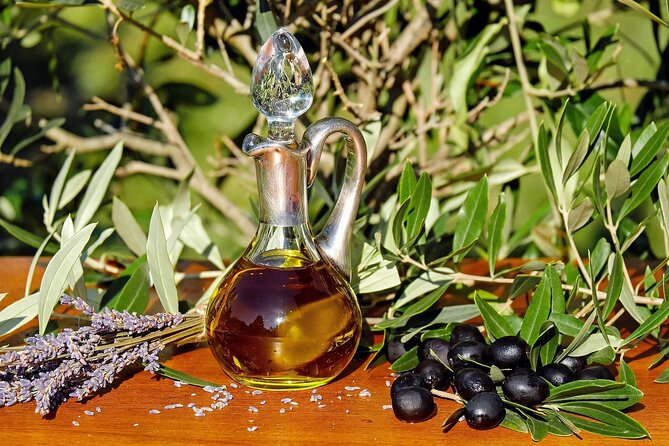
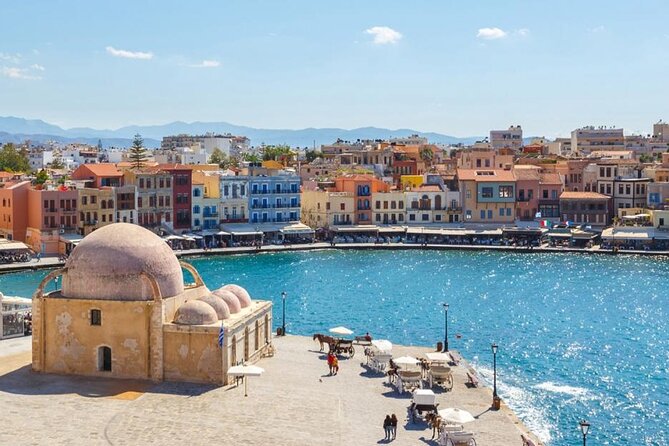
The Chania portion gives you a compact lesson in how many powers have shaped western Crete. In about two hours, you can encounter Minoan neighborhoods, Hellenistic walls, Latin inscriptions, Ottoman bathhouses, Venetian bastions, churches with symbols from two religions, and old workshops linked to boot-making and knife-making.
That range is the real value of having a guide here. Chania’s Old Town can look like a pleasant waterfront maze, but its stones carry several different chapters. I like the way this tour treats the city as more than a backdrop for photographs. You get clues to its military past, religious changes, trade, and everyday work.
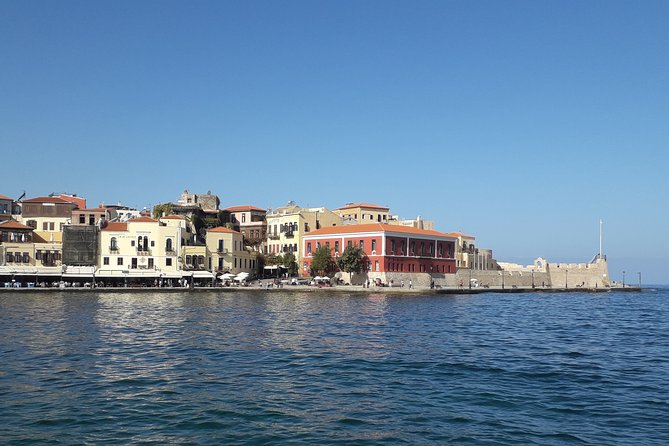
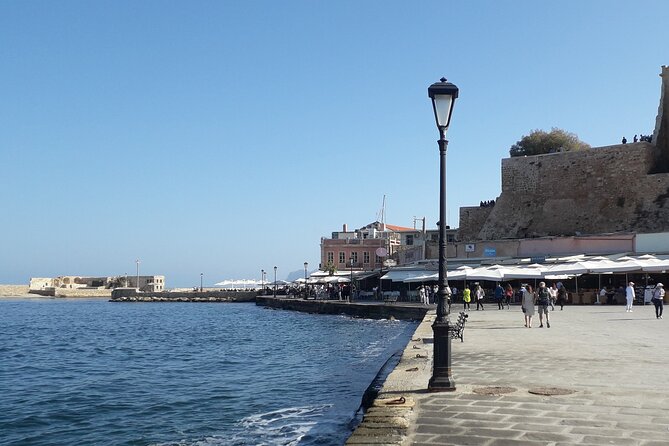
The route also includes the Venetian harbor, underground cisterns, and an African village area. Those details give the walk a human scale. You are not only looking at grand façades. You are also seeing the practical spaces that supported a port city.
A private format helps if your group wants to pause for questions or spend more time on a particular corner. There is no larger group to slow you down or pull the guide toward a fixed rhythm. Still, two hours is an introduction rather than a complete study of Chania, so keep your expectations sensible. You will get a focused orientation, not every church, museum, and lane in town.
Tatiana is especially important here. Her approach, as described in the tour information, covers pre-Minoan and ancient Chania along with more recent events and current culture. That combination should suit you if you want dates and monuments explained without losing the local details that make the town feel lived-in.
You can also read our reviews of more tours and experiences in Chania.
The Vouves tree and Crete’s olive-oil culture
After Chania, the vehicle heads into the countryside around Vouves. The change of setting matters. You move from dense stone lanes and harbor architecture to an area shaped by olive trees, which have long been central to Crete’s food, work, and identity.
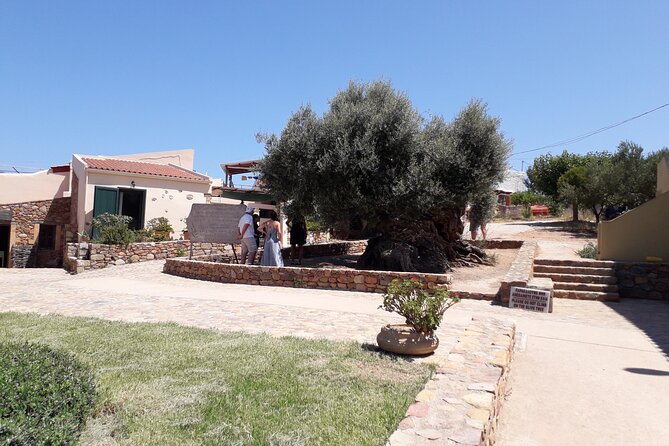
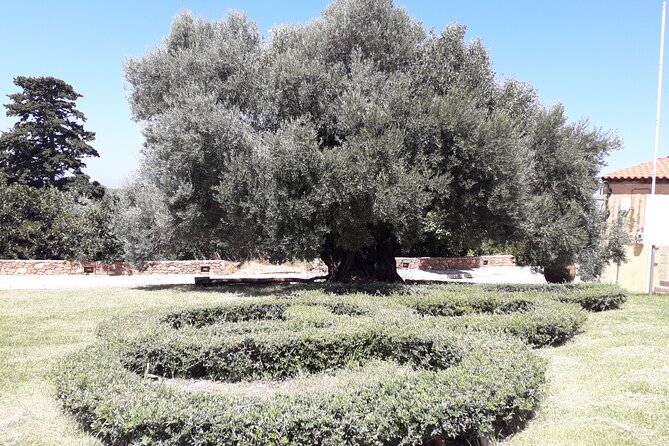
The main sight is the so-called grandmother olive tree, an ancient trunk estimated at about 3,000 years old. The age is difficult to picture until you see the thick, twisted form for yourself. This is not a quick roadside photo stop. The tree gives the next part of the tour a clear focus: how olive oil fits into the island’s past and present.
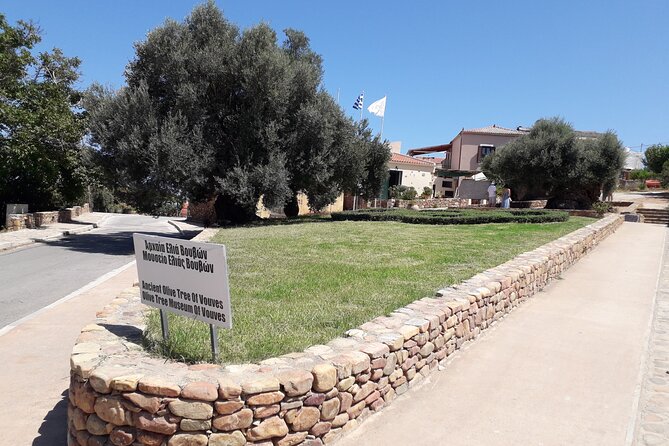
The Olive Tree Museum of Vouves sits beside the tree, and admission is included. It is a small museum, so do not expect a large national collection. Its strength is context. The displays explain olive-oil production on Crete and add practical facts that connect the old tree to the wider culture.
I like the order of this visit. You first see the ancient source of the story, then enter a museum that explains the tools and traditions around it. That makes the later mill visit easier to follow. You will understand why the equipment matters instead of simply watching machinery at work.
The stop lasts about an hour. A short break is built in before continuing, which helps the day avoid feeling like one long lecture. Wear comfortable shoes and clothes, and bring sunglasses and a hat. The tour information also advises carrying money for souvenirs, drinks, or a meal, since personal purchases are not covered.
Inside Astrikas Estate Biolea’s working mill
The final major stop is Astrikas Estate Biolea, a nearby olive-oil estate and mill. Here you get the most hands-on part of the experience, with a firsthand look at how olive oil is made using traditional methods alongside modern equipment.
The stone mill and press are central details. They show how older production ideas remain part of the process, even when the operation uses newer equipment as well. This is useful for you as a food-minded visitor because the tour connects technique to the bottle you may buy later.
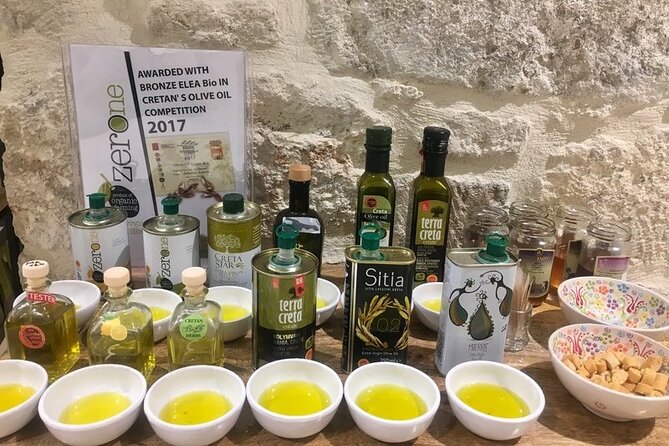
The tasting follows the mill visit. It is not simply a generic food break. The point is to help you notice the character of Cretan olive oil after seeing how it is produced. If you are interested in local ingredients, this part may become the day’s highlight.
The tour ends in Biolea’s backyard, described as a quiet and scenic place with a café and bar. Cretan snacks and wine are available there, with high-quality snacks and wine included in the experience description, while personal beverages and meal expenses are listed separately. Since the supplied details are not perfectly specific about what is covered at the café, confirm the exact tasting and food arrangements when booking.
This ending is well judged. After the history walk and the museum, you get time to sit, taste, and take in the setting. It gives the tour a slower finish rather than ending beside a machine and sending you straight back to town.
What the private vehicle adds
Hotel pickup and drop-off in Chania are included, which removes the need to arrange separate transport to Vouves and Astrikas. That matters because the tour combines three places that are not all in the same part of town.
You travel in a comfortable private vehicle with a professional driver. Bottled water from the springs of the White Mountains is provided, and Wi-Fi is available onboard. Those are modest touches, but they make a half-day road trip easier, especially in warm weather.
The private setup means only your group participates. The vehicle and guide are not shared with strangers, and your group can ask questions without competing for attention. This is particularly helpful for families or friends who want a relaxed day with a guide rather than a large coach outing.
Morning and afternoon departures are offered. A morning start may leave you more time later in the day for Chania, while an afternoon departure can fit a slower morning or a busy sightseeing schedule. The exact start time is not provided, so check the available options before you pay.
The tour lasts approximately five to six hours. That is long enough to make the countryside stops worthwhile, but short enough to fit into a Chania stay without consuming an entire day. You should still treat it as a substantial half-day, since the Old Town walk alone takes about two hours.
Is $752.43 good value?
The listed cost is $752.43 per group of up to six people. For six people, that works out to about $125.41 each before tips and any personal food, drink, or souvenir purchases. For three people, it is about $250.81 each. For two, it is about $376.22 per person.
That calculation tells you how to judge the price. This is not a budget excursion for a solo visitor or a couple. It becomes much more reasonable for a family or friend group that wants a private guide, private vehicle, hotel transfers, museum admission, and an oil tasting in one booking.
The value is also tied to what you want from the day. If you only want to see the ancient tree, you can likely find a cheaper way to visit a single site. If you want a guided Old Town walk plus countryside transport and an explanation of olive-oil production, the package is more useful.
The tour includes professional guide accompaniment, driver service, Wi-Fi, bottled water, entry to the Olive Tree Museum of Vouves, and all fees and taxes. Tips, personal expenses, and beverages at lunch or dinner are not included. There is no separate lunch listed, although snacks and wine are part of the Biolea finish described for the experience.
The tour is booked, on average, about 45 days in advance. That is a useful planning signal. If you are visiting during a busy period, book early, especially if you need a particular morning or afternoon departure and want Tatiana as your guide.
Who will enjoy this Chania day trip?
I would choose this for you if you want history with context, rather than a checklist of monuments. The Old Town walk covers several eras, and the guide’s role is to connect them to the streets you are actually seeing.
It also suits food-focused visitors. The museum, old tree, working mill, olive-oil tasting, Cretan snacks, and wine create a clear theme from start to finish. You do not need to be an olive-oil expert. Curiosity is enough.
Families and small groups should appreciate the private format. The vehicle holds up to six people, and only your party takes part. That can make a major difference if your group includes children, older relatives, or people with different interests.
The tour is less suitable if you prefer a full day at the beach, a long unstructured meal, or a highly active outdoor excursion. The schedule is guided and educational, with walking in Chania and visits to cultural and food-production sites. Most people can participate, but comfortable shoes are still important.
If anyone in your group has a severe allergy, food intolerance, bee-sting allergy, or another medical issue, tell the operator in advance. The provider also advises you to arrange your own health or travel insurance before visiting Crete.
A few practical details before you reserve
Confirmation is provided at booking, and mobile tickets are accepted. Pickup and drop-off are offered at your hotel in Chania, so provide accurate accommodation details and confirm the meeting time.
Bring comfortable shoes, light and comfortable clothing, sunglasses, and a hat. Pack money for souvenirs, drinks, or food that is not included. Water is supplied, but you may still want a small personal bottle for the walking portions.
The experience requires good weather. If poor weather forces a cancellation, you are offered another date or a full refund. You can also cancel for a full refund if you do so at least 24 hours before the local start time. Changes or cancellations made less than 24 hours before departure are not accepted for a refund.
Should you book this private olive-oil tour?
Book it if you are a group of three to six people and want one polished day that combines Chania’s many historical layers with Crete’s olive-oil culture. Tatiana’s broad subject range is a strong reason to choose it, especially if you want ancient history, recent events, and everyday Cretan culture explained in the same walk.
The Olive Tree Museum of Vouves and Biolea mill give the day a purpose beyond sightseeing. You see an ancient tree, learn how olive oil shaped the island, watch production methods, and taste the result in a peaceful setting.
I would think twice if you are traveling alone or as a couple and are focused mainly on keeping costs low. At $752.43 per group, the math favors a full party. For the right-size group, though, the private transport, hotel pickup, included museum entry, guide, tasting, and five to six hours of focused attention make this a practical and memorable way to connect Chania with the Cretan countryside.
FAQ
How long does the tour last?
The experience lasts approximately five to six hours. The Chania Old Town portion takes about two hours, the Olive Tree Museum of Vouves stop about one hour, and Astrikas Estate Biolea about one hour and 30 minutes, with travel and a break between stops.
Is hotel pickup and drop-off included?
Yes. Pickup and drop-off at your hotel in Chania are included.
Is this a private tour?
Yes. Only your group participates, with up to six people included in the group price.
What is included in the price?
The price includes hotel transfers, a comfortable vehicle with a professional driver, a professional guide, guided touring and tasting, Wi-Fi onboard, bottled water, admission to the Olive Tree Museum of Vouves, and all fees and taxes.
Are food and drinks included?
The experience includes an olive-oil tasting and a finish with Cretan snacks and wine at Biolea’s café and bar. Personal expenses and beverages at lunch or dinner are not included.
Are morning and afternoon departures available?
Yes. Both morning and afternoon tours are offered. Check the available start times when booking.
What should I bring?
Bring comfortable shoes, comfortable clothing, sunglasses, and a hat. You should also carry money for souvenirs, drinks, and lunch or dinner.
What happens if the weather is poor?
The experience requires good weather. If it is canceled because of poor weather, you will be offered a different date or a full refund. Free cancellation is also available up to 24 hours before the start time.