REVIEW · CHANIA
Chania: Guided Walking Food Tour with Tasting
Book on GetYourGuide →Operated by Exploring Creta · Bookable on GetYourGuide
Chania’s best food lesson may be the one you eat with your feet moving. This small-group walk takes you from a crisp, cheese-filled bougatsa and Greek coffee to Cretan cheeses, herb teas, full-sized gyros, and honey-covered loukoumades. It is a generous tasting tour, not a parade of tiny bites.
I especially like the family-run kaltsounadiko, where you try both sweet and savory kaltsounia, and the stop at a cheese shop supplied by a local factory. The portions also deserve attention: you get enough bakery food, cheese, and gyros to make this feel close to lunch.
The main consideration is the fixed menu. Vegans and people with gluten or lactose intolerance should skip it, and anyone hoping to choose every dish may find the included tastings a little limiting. The published timing is three hours, though the detailed schedule describes roughly three and a half hours, so allow some flexibility.
In This Review
- Key points at a glance
- Chania through a plate, not just a postcard
- Bougatsa and Greek coffee set the pace
- Mountain herbs and island-made pantry goods
- Kaltsounia in a family-run preparation room
- Cretan cheese from traditional and modern makers
- A seaside walk toward the old port
- Sfakian pie and dakos under the plane trees
- Gyros, beer, and a proper savory finish
- Loukoumades and ice cream to close
- Is $135 a fair price for three hours?
- Who should book this Chania food walk?
- Should you book it?
- FAQ
- Where does the Chania food tour meet?
- How long does the food tour last?
- What food and drinks are included?
- Is the tour suitable for vegans or people with food intolerances?
- What languages are available?
- How many people are in the group?
Key points at a glance
- Start with Chania’s signature breakfast: Bougatsa pairs fresh cheese, sugar, and crisp pastry with traditional Greek coffee.
- Taste Crete beyond the usual dishes: The route includes mountain herbs, local honey, olive oil, legumes, cheeses, dakos, and Sfakian pie.
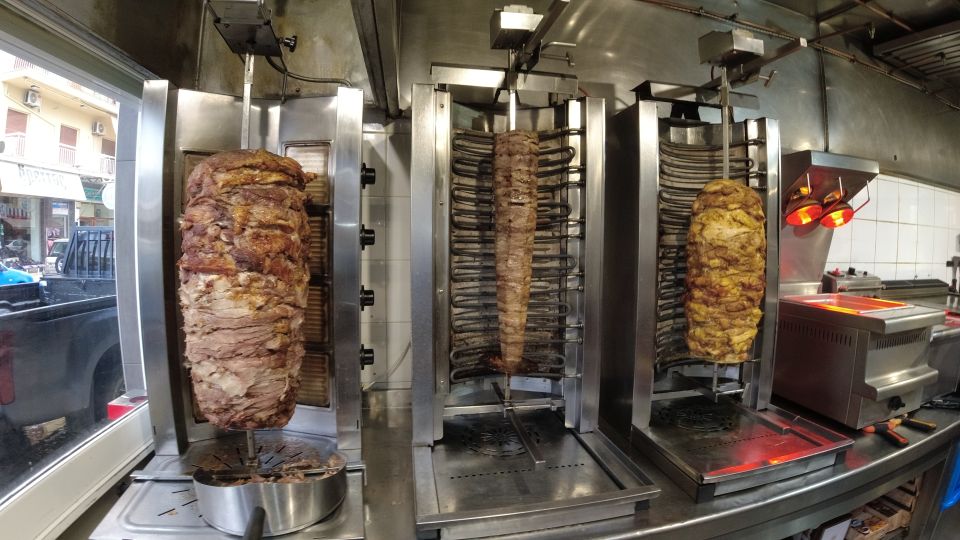
- Expect real portions: The gyros are full-sized, and the food adds up to a substantial meal.
- Keep the group small: A maximum of eight participants makes shop visits and food explanations easier.
- Finish with a sweet double act: Chocolate-filled loukoumades come with honey and sesame, followed by ice cream.
- Bring sun protection: Sunglasses, a hat, and weather-appropriate clothing are sensible for a walking tour.
Chania through a plate, not just a postcard
This tour works because it treats Chania as a working food town rather than a backdrop for a few famous dishes. You move through cafés, small food shops, a traditional preparation room, and picturesque lanes, with the old port providing a natural pause between tastings.
You begin at the provider’s office at Sfakion 33 in modern Chania. Look for the large green and white flag outside. Before setting off, the team provides a small backpack and a bottle of water, a useful touch when your hands are already occupied with pastry, coffee, and samples.
The experience is offered in English or Greek and is limited to eight people. That size matters here. A food tour can become awkward when a whole crowd crowds around a counter, but a group of eight should make it easier to see what is being prepared and ask questions without slowing every stop.
You can also read our reviews of more walking tours in Chania
Bougatsa and Greek coffee set the pace
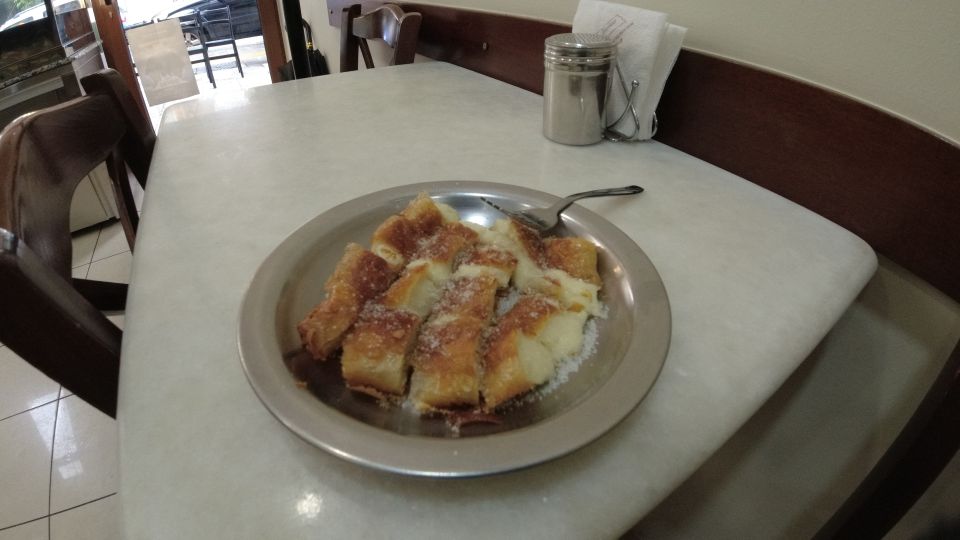
The first tasting is bougatsa, a Chania breakfast classic with a clever sweet-salty balance. Fresh cheese gives the filling a light salty note, while sugar adds sweetness. All of it sits inside extremely thin, crisp pastry.
This is a useful first bite because it tells you something about Cretan food right away. The dish is simple, but the contrast matters: creamy cheese, sugar, and delicate pastry do more work than a heavy filling would. The accompanying Greek coffee completes the traditional breakfast pairing.
If you eat lightly in the morning, do not assume this is the only substantial food you will receive. The tour keeps feeding you. Starting hungry is wise, but arriving without any appetite could make the later stops feel like work.
Mountain herbs and island-made pantry goods
Next comes a visit with a local herb specialist. You are introduced to herbs gathered from the mountains of Crete, including malotira, fliskouni, diktamo, and sage. The selection also includes cinnamon, honey, olive oil, and legumes, all described as organically produced and sourced from Crete.
This stop adds useful context to the meal. Cretan cooking is not only about grilled meat and pastry. Herbs play a large part in the island’s food traditions, drinks, and home remedies. Malotira, for example, is commonly associated with mountain tea, while dittany, known here as diktamo, has a long place in Cretan folk practice.
You can taste and smell the products, but remember that purchases are not included. Personal expenses and tourist shopping come out of your own pocket. That is helpful to know if you are tempted by a bag of herbs or a bottle of local oil.
Kaltsounia in a family-run preparation room
Near the mayor’s house, the route visits a traditional kaltsounadiko. The name refers to the place where kaltsounia are prepared, rather than simply to a restaurant. This family-run stop focuses on one of Crete’s most adaptable foods.
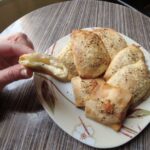
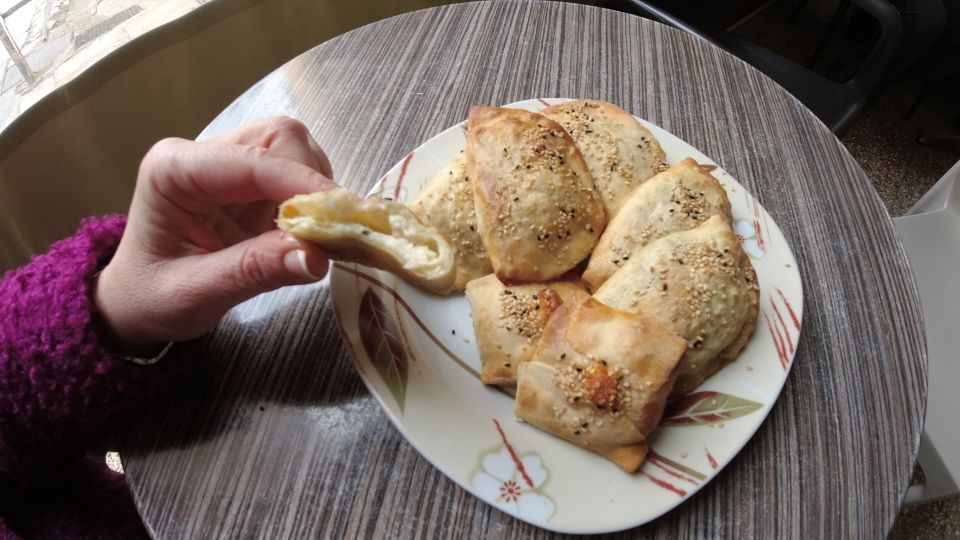
Kaltsounia are small pies made with traditional pastry. They may be filled with cheese, greens, or both, then baked or fried. The tour includes sweet and savory versions, so you can compare the soft filling, crisp shell, and different cooking methods.
I like this part of the walk because it shows how one basic format can change across a meal. A savory kaltsouni can work as a snack or side dish, while a sweet version moves closer to dessert. It is also a more personal food stop than simply ordering a famous plate at a large restaurant.
The drawback is that the food is not light. By this point, you have already had bougatsa and coffee, then sampled herbs and pantry goods. Pace yourself. You do not need to finish every bite immediately if you want room for the cheese, gyros, and sweets still ahead.
Cretan cheese from traditional and modern makers
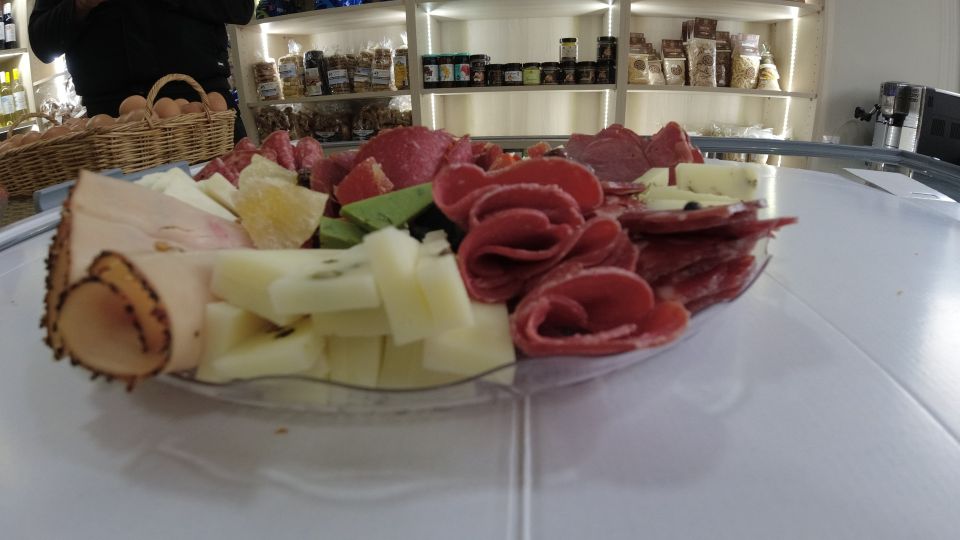
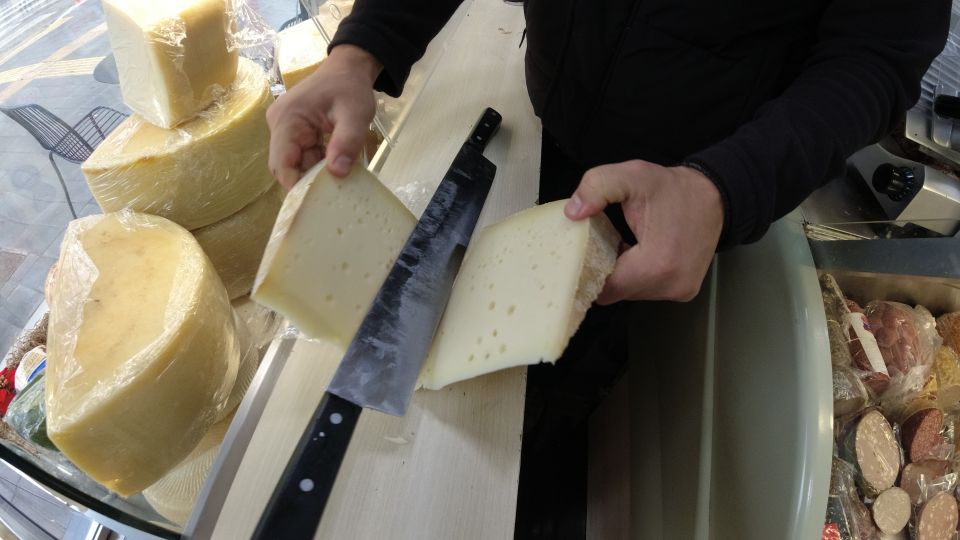
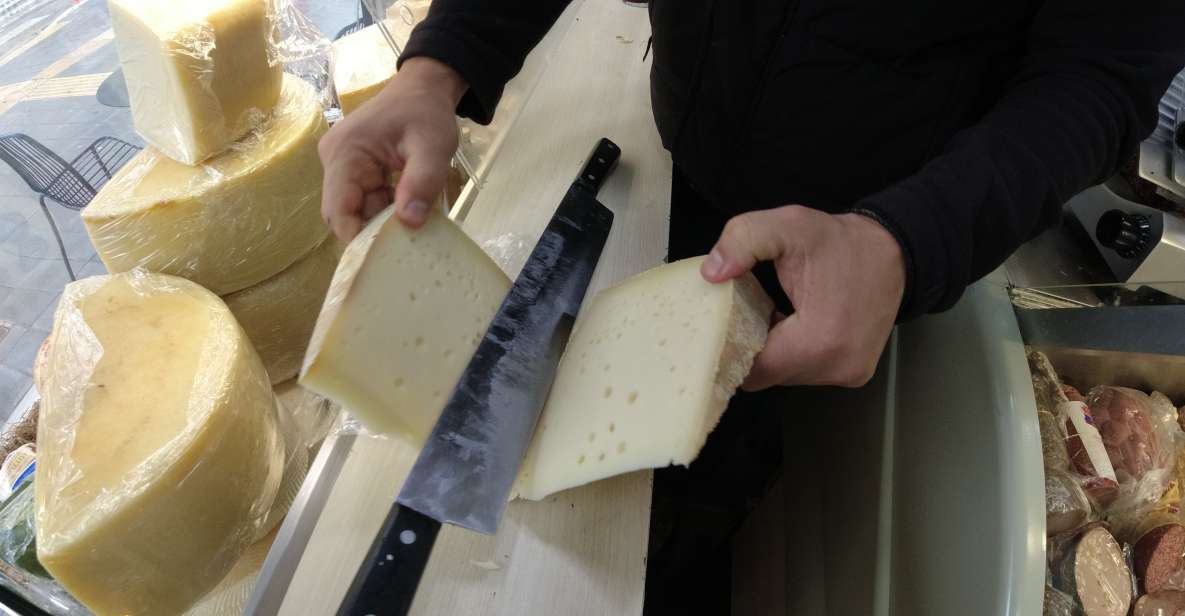
The next stop focuses entirely on cheese. You visit a small shop that serves as a branch of a well-known local cheese factory. The cheeses are made in modern facilities, while the production keeps to traditional Cretan methods.
This is one of the most valuable stops for food-minded visitors because Cretan cheese can be hard to understand from a single menu item. A tasting lets you compare several varieties side by side, including both traditional and contemporary styles.
The tour description does not name each cheese, so you should not expect a fixed list in advance. The important point is the range. You are tasting the island’s dairy culture as a group of related flavors rather than treating cheese as a garnish.
This stop also makes the $135 price easier to assess. The fee is high for a three-hour walking activity, but it includes a large number of tastings across several specialist food stops. If you would otherwise pay separately for breakfast, bakery items, cheese, a full gyros meal with beer, and dessert, the value improves. If you mainly want a quick orientation walk with a few nibbles, it may feel expensive.
You can also read our reviews of more food & drink experiences in Chania

A seaside walk toward the old port
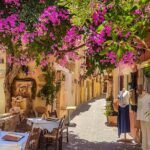
After the cheese tasting, the group walks toward Chania’s old port beside the sea. This is the tour’s breathing space, giving you time to let the food settle while the guide shares some of the city’s history.
The walk matters for more than digestion. Food is easier to remember when tied to places. Moving from the modern town toward the old port gives the route a clear sense of place, rather than keeping you inside cafés and shops all afternoon.
The exact walking pace and distance are not specified, so wear comfortable shoes. The activity is listed as wheelchair accessible, but the tour still takes place on city streets and through alleys. If you have particular mobility needs, confirm the route details before booking.
Sfakian pie and dakos under the plane trees
The next tasting brings food from the Sfakia area in southern Chania. You try Sfakian pie and dakos under the shade of plane trees.
Sfakian pie is a regional specialty, generally known for its thin pastry and cheese filling. Here, it forms a useful contrast with the smaller kaltsounia earlier in the route. Dakos is another Cretan staple: a crisp barley rusk topped with ingredients such as tomato and cheese. The result is crunchy, savory, and well suited to warm weather.
This is the point where the tour begins to feel like a full Cretan meal assembled in stages. The food is not presented as one formal lunch. Instead, you sample different regional habits as you walk, stopping often enough to keep the afternoon moving.
Gyros, beer, and a proper savory finish
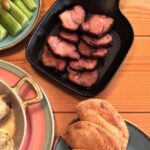
Through Chania’s picturesque alleys, you stop for gyros and beer. The gyros portion is full-sized, not merely a bite-sized demonstration, which is important when judging the overall value.
You should not leave Greece without trying souvlaki, and this stop gives you the familiar street-food experience in a practical setting. The menu uses both gyros and souvlaki language, so the exact preparation may depend on the food shop. Either way, expect a warm, filling meat-based snack or meal with beer.
This is also the clearest point to consider your dietary needs. The experience is not suitable for vegans, and the pastry, cheese, and dairy-heavy tastings make it unsuitable for people with gluten or lactose intolerance. The included drinks and dishes are set in advance, and other food or drinks cost extra.
Loukoumades and ice cream to close
The final major tasting is loukoumades, small golden balls of fried dough filled with chocolate and covered with honey and sesame. Ice cream follows.
The ending is deliberately sweet and rich. You get crisp fried dough, warm chocolate, sticky honey, sesame, and cold ice cream in quick succession. It is memorable, but it is not a restrained finish. If you prefer a simple coffee after a meal, this may be more dessert than you want.
Still, it gives the route a satisfying arc. You begin with pastry and coffee, move through savory pies and cheeses, eat a full gyros, and return to pastry in a different form. The food stops feel connected rather than randomly selected.
Is $135 a fair price for three hours?
At $135 per person, this is not a budget food walk. The price makes sense if you value a small group, a guide who organizes several stops, and a menu that can replace breakfast, lunch, and dessert.
The amount of food is the strongest argument in its favor. The tour includes:
- Bougatsa and Greek coffee
- Kaltsounia in sweet and savory styles
- Several Cretan cheeses
- Sfakian pie and dakos
- Gyros and beer
- Loukoumades and ice cream
That is a serious amount of food for a three-hour route. A verified booking from June 2025 specifically praised the quantity, noting the many cheeses and bakery items along with full-sized gyros. This is useful confirmation for anyone worried about paying a premium for tiny samples.
The price is less attractive if you are a selective eater, do not drink beer, avoid dairy, or would rather spend the afternoon ordering one meal at your own pace. Other dishes and drinks are not included, and personal purchases are separate.
The schedule deserves a small note. The headline duration is three hours, while the detailed activity description lists 3.5 hours for the Chania portion. I would plan for about three to three and a half hours and avoid booking a tight connection immediately afterward.
Who should book this Chania food walk?
I would recommend it most strongly to first-time visitors who want a fast introduction to Cretan food. You get a broad sample of local dishes without having to research which bakery, cheese shop, or street-food counter to choose.
It also suits people who prefer eating in small groups. With no more than eight participants, the route should feel more personal than a large bus-based food outing. The walking portions are short enough to connect the stops, while the old-port section adds a bit of city orientation.
This is a good choice for couples, friends, and families with adventurous eaters. The food is varied, but much of it is rich, pastry-based, cheese-based, fried, or sweet. Children may enjoy the gyros, chocolate loukoumades, and ice cream, though the full sequence could be a lot for a picky eater.
You should choose another activity if you need a vegan, gluten-free, or lactose-free menu. You should also think twice if you dislike fixed tasting menus or want a long, slow meal at one restaurant.
Booking is flexible: you can cancel up to 24 hours before the start for a full refund, and reserve now while paying later. That is useful when your Chania schedule depends on ferry, cruise, or weather plans.
Should you book it?
Book this tour if you want a generous, guided introduction to Cretan food and like the idea of eating your way through several small local businesses. The many cheeses, bakery items, full-sized gyros, and sweets make the price easier to defend than it would be for a simple snack walk.
Skip it if you have major dietary restrictions, want complete freedom over what you order, or need a firmly fixed three-hour schedule. For everyone else, this is a practical way to turn an afternoon in Chania into a meal, a neighborhood walk, and a useful first lesson in the island’s food traditions.
FAQ
Where does the Chania food tour meet?
The meeting point is the provider’s office at Sfakion 33 in Chania. Look for the large green and white flag outside the office. A small backpack and bottle of water are provided before the walk.
How long does the food tour last?
The activity is advertised as three hours. The detailed Chania schedule lists 3.5 hours, so allow roughly three to three and a half hours.
What food and drinks are included?
Included tastings are bougatsa with Greek coffee, sweet and savory kaltsounia, several Cretan cheeses, Sfakian pie, dakos, gyros with beer, loukoumades, and ice cream.
Is the tour suitable for vegans or people with food intolerances?
No. The tour is not suitable for vegans or people with gluten or lactose intolerance.
What languages are available?
The live guide can conduct the tour in English or Greek.
How many people are in the group?
The tour is limited to eight participants, making it a small-group walking experience.