REVIEW · DELPHI
Delphi: Archaeological Site & Museum Ticket with Audio Tour
Book on GetYourGuide →Operated by Clio Muse Tours · Bookable on GetYourGuide
A steep site with big stories—on your phone. Delphi is one of those places where the ruins feel like they’re still talking, and this ticket lets you hear the context with an offline audio guide at your own pace. You start with the museum, then head up to the hilltop archaeological area for the Temple of Apollo and the theater.
Two things I really like: first, you get an organized self-guided route without waiting in long lines, because your entry is pre-booked. Second, the audio format is practical—text, narration, and maps—so you’re not just wandering and hoping it clicks.
The main drawback to consider is physical and audio-related: the site climbs along a mountainside, so comfortable shoes matter, and if you want audio to land in the right order, you’ll need to be ready before you start walking.
In This Review
- Key Points You Should Know Before You Go
- Pre-Booked Delphi Entry Works Better Than You’d Think
- Museum First: Why Starting Inside Changes Everything
- Walking the Site: Roman Agora, Treasury of the Athenians, Temple of Apollo
- Amphitheater Time and the Mount Parnassus View Payoff
- The Smartphone Audio Guide: Offline, Multilingual, and Actually Helpful
- Price and Value: What $41 Covers (and What Doesn’t)
- What to Bring (So Your Day Doesn’t Get Annoying)
- Compatibility Check: Don’t Get Trapped by the Wrong Phone
- Timing and Pacing: How to Enjoy Delphi Without Feeling Rushed
- Accessibility Reality: Museum Is Easier Than the Ruins
- Who This Ticket Is Best For
- Should You Book This Delphi Ticket with Audio?
- FAQ
- Where does the audio guide start?
- Is the museum included in the same ticket?
- What languages are available for the audio guide?
- Do I need to bring headphones?
- Does the audio guide work offline?
- What phones are compatible with the audio guide?
- How much storage does my phone need?
- Is the ruins area wheelchair accessible?
- What should I bring for the visit?
Key Points You Should Know Before You Go

- Pre-booked entry helps you skip long lines and keep your day moving
- Offline audio with narration + maps makes it easier to follow what you’re seeing
- Museum first, then ruins gives you context before you climb
- Temple of Apollo, Treasury of the Athenians, and the Roman Agora are all covered in the guide
- The amphitheater + Mount Parnassus views are a standout payoff for your effort
- Smartphone compatibility matters (and you’ll want headphones since they aren’t included)
Pre-Booked Delphi Entry Works Better Than You’d Think
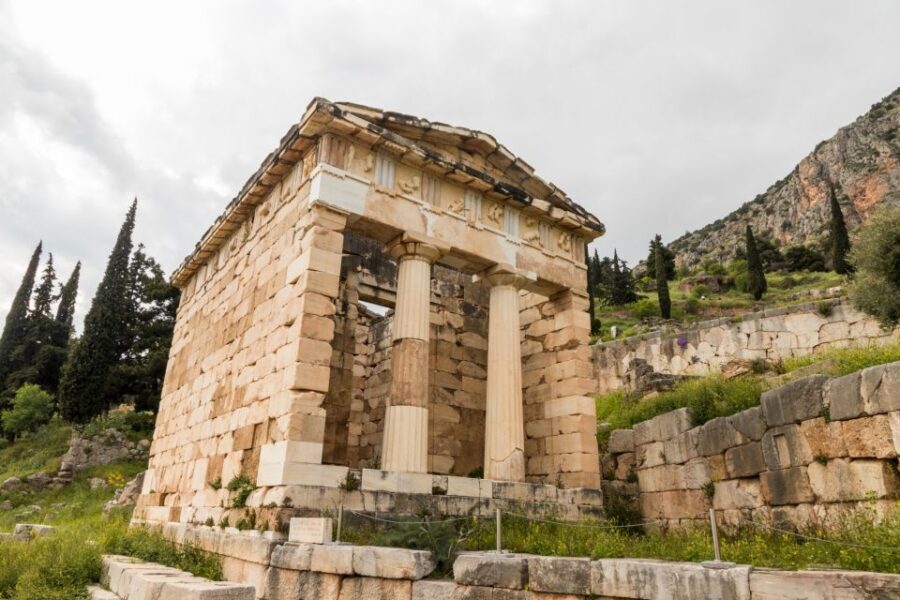
Delphi is famous for a reason, but the real trick is making sure your visit doesn’t turn into a waiting-and-herding exercise. With a pre-booked entry, you get to spend your energy where it counts: walking the ruins and listening while the views unfold.
This is also a smart setup for people who don’t love big group pressure. Instead of syncing to someone else’s pace, you control the rhythm—slow down for the Treasury of the Athenians, pause for the Temple of Apollo area, then take your time with the theater/amphitheater views.
One more practical thing: the audio guide is designed to start right at the entrance of the archaeological site of Delphi. That means you can get your bearings fast and stop guessing what you’re looking at.
And yes, the day is spread across an outdoor hillside. That means the walking is part of the experience, not something you can fully “skip.”
A few more Delphi tours and experiences worth a look


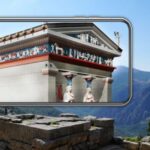
Museum First: Why Starting Inside Changes Everything

Your ticket includes two parts in a clear order: first the Delphi Archaeological Museum with your selected time slot, then the archaeological site of Delphi.
I like this order because it helps you stop treating the ruins like random stones on a slope. Even if you only catch the big ideas, the museum visit acts like a “setup” so the audio guide makes more sense when you’re outside.
Also, the museum has wheelchair access. If you’re bringing someone with limited mobility, this matters because it gives you at least one fully accessible stop in the same overall visit plan. Just keep in mind the ruins are spread up the side of a mountain, so the outdoor area isn’t suitable for pushing a wheelchair along rough tracks.
Walking the Site: Roman Agora, Treasury of the Athenians, Temple of Apollo

Once you enter the archaeological site, the audio guide becomes your main compass. You’ll use your smartphone with headphones (bring your own), and the guide combines audio narration, text, and maps so you can connect names to the actual space you’re standing in.
Here’s what you can expect to cover in the story-driven route:
- Roman Agora
- Treasury of the Athenians
- Temple of Apollo
- The amphitheater / theater
What I find valuable is that it’s not just “look here, read this.” The guide is built around storytelling. That means you’re hearing historical facts and anecdotes as you move between key areas—so the site feels more coherent.
A small but important mindset shift: treat your visit like following a path with stops, not like checking off landmarks. Use the map when you need to confirm where you are, then keep walking. That simple flow usually prevents that frustrating feeling of being lost even when you’re technically “at” the right place.
Amphitheater Time and the Mount Parnassus View Payoff

Delphi doesn’t reward rushing. The theater/amphitheater area is a big moment because it ties together the physical setting and the human scale of the place.
And then there’s the scenery. This ticket is timed for you to enjoy spectacular panoramic mountain scenery from the top of Mount Parnassus. That’s not just scenery for photos—it’s part of why Delphi was so compelling in antiquity. When you see the terrain from the high viewpoint, the site stops feeling like a history lesson and starts feeling like a real location with a real view and real importance.
If you’re heat-sensitive, plan your pace. You’ll be outside, walking on uneven ground, and you’ll want to protect yourself. The essentials listed here are hat and sunscreen, plus comfortable shoes. Trust me: your feet will tell you thank you later.
The Smartphone Audio Guide: Offline, Multilingual, and Actually Helpful

The audio guide is one of the core reasons this experience works. It’s available in English, Italian, French, German, and Spanish, and the content is designed for offline use. You download what you need ahead of time and then rely on your phone’s stored audio during your visit.
The included audio guide also has offline content, which is a big deal at archaeological sites where signal can be unreliable. No fighting with data or battery anxiety mid-walk.
I also like that the guide can be revisited after you leave. You can listen again once you’re out of the site area, which is a great way to reinforce what you saw—especially when your brain is tired and you want to “replay” the highlights without standing in the sun again.
One caution from real-life experience: audio guides are only as smooth as your setup. A couple of people found the sequence tricky to follow at times. So do this: before you start moving, give yourself a quiet minute to confirm the audio is queued correctly and the map is loading. If you start walking and then realize you skipped ahead, your pacing will feel off.
You can also read our reviews of more museum experiences in Delphi

Price and Value: What $41 Covers (and What Doesn’t)

At about $41 per person for a full-day entry with an audio guide, I’d call this a solid value—especially if you care about independence.
Why it’s worth it:
- You’re getting museum access plus the archaeological site visit as part of a single experience
- The audio guide includes multilingual narration and map support
- The pre-booked entry helps you avoid waiting, which saves time and energy
What to watch so you don’t feel sticker shock:
- Live guide is not included.
- Headphones are not included, so bring yours.
- Transport isn’t included, so you’ll need to plan your own way to Delphi.
And here’s the honest part: the only “price complaint” type note I’d flag is that some people felt the cost was high relative to what the audio guide adds. If you’re someone who never uses smartphone audio and you’d rather just wander, you might feel it more. But if you want context while you walk, the audio is the heart of what you’re paying for.
Also note: the experience is non-refundable. That’s not unique to this product, but it’s worth taking seriously if your plans are uncertain.
What to Bring (So Your Day Doesn’t Get Annoying)
This visit is straightforward, but it does ask for basic readiness. Here’s what you should bring:
- Comfortable shoes (the site is on a mountainside)
- Hat and sunscreen (outdoor time adds up fast)
- Headphones (smartphone audio isn’t useful without them)
- A charged smartphone
And for your phone, think ahead:
- You’ll need storage space on your device (about 100–150 MB)
- You must download the app and audio guide instructions beforehand
- The guide is designed to work with certain smartphones, not every device
Compatibility Check: Don’t Get Trapped by the Wrong Phone
This is an experience where tech hiccups can ruin the day. Here are the compatibility rules to follow:
- An Android (version 5.0 and later) or iOS smartphone is required
- It’s not compatible with Windows Phones
- It’s not compatible with iPhone 5/5C or older, iPod Touch 5th generation or older, or iPad 4th generation or older, or iPad Mini 1st generation
You’ll also receive an email with important ticket and audio guide instructions. Read that message before you go, and download everything early enough that you aren’t stuck at the entrance wrestling with your signal.
Timing and Pacing: How to Enjoy Delphi Without Feeling Rushed
Your ticket is valid for one day, and the museum part uses a selected time slot. After that, you explore the archaeological site at your own pace.
Here’s how I’d structure a visit day based on how this setup is designed:
- Start your museum visit with enough time to settle in and absorb the context
- At the archaeological entrance, start the audio guide before you walk too far
- Move between the Roman Agora, Treasury of the Athenians, and Temple of Apollo while the narration connects the dots
- Save the amphitheater/theater area for when your legs are ready for a payoff moment with big mountain views
One more smart move: leave buffer time so you can replay the audio after you exit the site. It turns your visit from a quick walk into something you can remember clearly.
Accessibility Reality: Museum Is Easier Than the Ruins
If accessibility is a key factor for you, here’s the clear picture from the information provided:
- The museum has wheelchair access
- The ruins are spread up a mountain side with rough tracks, so it would not be possible to push a wheelchair up to the areas you’d want to see
So the best use of this ticket for limited-mobility travelers is often: rely on the museum as your fully accessible anchor, and be realistic about which outdoor areas are feasible.
Who This Ticket Is Best For
You’ll probably love this Delphi ticket if you:
- Prefer a self-guided experience where you don’t need to match a group’s pace
- Like smartphone audio guides that include maps and structured narration
- Want to see multiple major highlights in one day: Roman Agora, Treasury of the Athenians, Temple of Apollo, and the amphitheater
- Enjoy the idea of taking in views from Mount Parnassus without rushing
You might want a different option if:
- You don’t like walking uneven outdoor ground
- You don’t plan to use headphones or won’t download offline content ahead of time
- Your phone model doesn’t meet the compatibility requirements
Should You Book This Delphi Ticket with Audio?
If you want the easiest way to experience Delphi’s top sites without getting stuck in line hassles or group logistics, this is a strong pick. The value comes from combining museum context with an organized self-guided walk, then reinforcing it with offline audio you can replay later.
I’d book it if you’re comfortable walking on uneven hillside terrain and you’re actually going to use the audio guide. If you’re hoping for minimal walking or you won’t use smartphone narration at all, you may feel like you’re paying for something you won’t fully tap.
FAQ
Where does the audio guide start?
The audio guide is designed to start at the entrance of the archaeological site of Delphi (33054, Delphi, Prefecture of Fokida).
Is the museum included in the same ticket?
Yes. You visit the Delphi Archaeological Museum first (with the selected time slot), and then you visit the archaeological site of Delphi.
What languages are available for the audio guide?
The audio guide is available in English, Italian, French, German, and Spanish.
Do I need to bring headphones?
Yes. Headphones are not included, so you’ll need your own.
Does the audio guide work offline?
Yes. Offline content is included.
What phones are compatible with the audio guide?
You need an Android device (version 5.0 and later) or an iOS smartphone. It is not compatible with Windows Phones, and it also doesn’t work with certain older iPhone/iPod/iPad models listed in the instructions.
How much storage does my phone need?
You’ll need storage space of about 100–150 MB.
Is the ruins area wheelchair accessible?
The museum has wheelchair access, but the ruins are spread up a mountain with rough tracks, and it would not be possible to push a wheelchair up the tracks.
What should I bring for the visit?
Wear comfortable shoes, and bring a hat and sunscreen. Also bring headphones and make sure your smartphone is charged.