REVIEW · FOLEGANDROS
Folegandros: Cultural and history walking tour
Book on GetYourGuide →Operated by Marina Kon. Rossiou · Bookable on GetYourGuide
Folegandros reveals itself best on foot, and this 2.5-hour Chora walk goes well beyond pretty lanes and postcard views. Poly, a local guide with a degree in cultural history, connects the island’s medieval past, Cycladic customs, pirate attacks, and modern tourism to the streets you are walking through.
I like the way the route combines major sights with family history, including stories tied to Poly’s grandfather and the surviving windmills. I also like the small-group format, which gives you room to ask questions and keep a steady pace. The main consideration is the uphill walking to Panagia Church, along with uneven paths and full sun, so this is not a good choice for wheelchair users or anyone unprepared for a walking tour.
In This Review
- Key Points
- Why This Folegandros Walking Tour Is Different
- Starting at Pounta, the First Square
- Through Chora and the Cycladic Story
- Castro, the Inhabited Medieval Quarter
- The 4th-Century BC Monument
- The Serpentine Path to Panagia Church
- The Kalderimi and Folegandros After Tourism
- A Local Guide With Family Ties to the Island
- Is $56 a Fair Price?
- Who Should Book This Walk?
- Practical Details Before You Go
- Should You Book the Folegandros Cultural Walk?
- FAQ
- How long does the Folegandros cultural walking tour last?
- Where does the tour begin?
- Where does the tour finish?
- Who guides the tour?
- What languages are available?
- How many people can join the group?
- Is the tour suitable for wheelchair users?
- What should I bring?
- Does the experience include food or wine tasting?
Key Points
- Walk through inhabited Castro: Explore the medieval fortified quarter, its narrow paths, structure, and connection to pirate attacks.
- Meet Poly, a Folegandros local: Her cultural history training is paired with family stories and long personal ties to the island.
- Climb to Panagia Church: Follow the winding path to the church at the top of Chora for a close look at one of the island’s key landmarks.
- See history from the 4th century BC: The route includes an impressive ancient monument and an explanation of its place in Folegandros’ past.
- Finish in the Kalderimi: See 20th-century architecture and learn how tourism changed island life.
- Small-group value: The group is limited to 10, with English and Greek guiding available, and the price is $56 per person.
Why This Folegandros Walking Tour Is Different
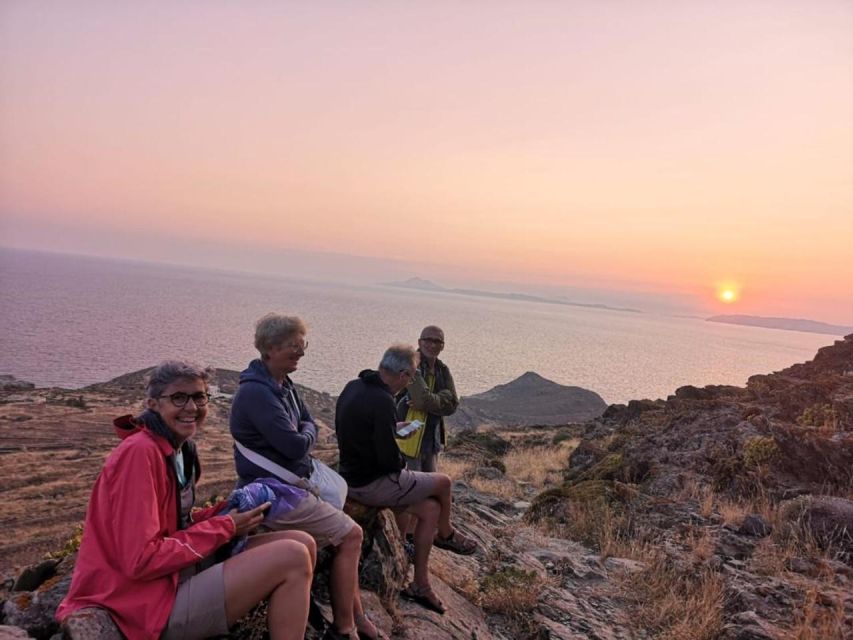
Many walks through a Greek island town give you a pleasant hour among whitewashed buildings, then send you on your way. This one has a stronger historical thread. You begin in Pounta, the first square of the island, and follow Folegandros through several eras, from the medieval period to the 21st century.
That broad time span matters. You are not simply collecting photographs of Chora. You are learning why the town developed as it did, how people protected themselves, what daily life was like inside the castle, and how tourism altered the island’s buildings and customs.
Poly is the central reason this works. She is university educated in cultural history, has family roots on Folegandros, and has spent many summers on the island. Her grandfather was a milliner and operated one of the three windmills still standing. She also runs two small homes for rent, so her connection to the island is personal as well as academic.
That combination gives the walk two useful points of view. You get researched history, but also stories about island life passed through a local family. The tone appears to be friendly and informal rather than stiff. Several comments describe Poly as warm, funny, energetic, and easy to listen to, which is useful when a tour covers several centuries in one afternoon.
You can also read our reviews of more tours and experiences in Folegandros.

Starting at Pounta, the First Square

The tour begins at Pounta, in front of the school. This is a practical meeting point in Chora, and it gives Poly a natural place to introduce the island before the walking begins.
Expect an orientation to Folegandros and the Cyclades, with attention to local traditions and the island’s place within wider Cycladic culture. The guide explains the route as you go, stopping for photographs and questions rather than rushing from one sight to the next.
The pace is described as an average walking speed. That sounds simple, but it is worth noting if you are traveling with children, older relatives, or anyone who needs frequent pauses. The route circles back roughly to where it starts, so you are not left at a distant location with no explanation of how to return.
The tour lasts 2.5 hours, which is long enough for context but short enough to fit around a meal, a beach outing, or an evening reservation. I would schedule it early in your stay. Once you understand the town’s history and layout, later walks through Chora become more rewarding.
Through Chora and the Cycladic Story
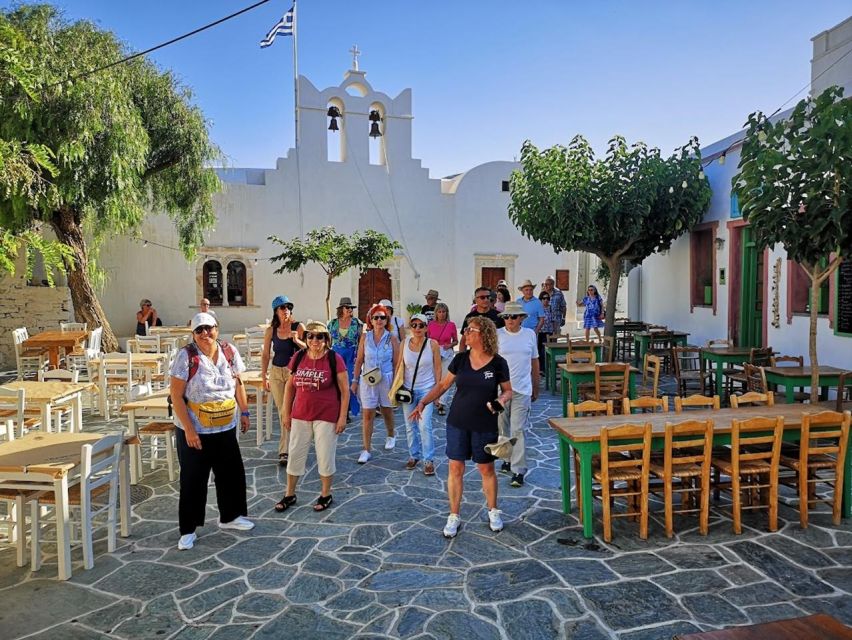
As you move through Chora, the tour places Folegandros within the Cyclades rather than treating it as an isolated island. You will hear about the island’s cultural character and the changes that carried it from earlier periods into the modern age.
This is one of the strongest reasons to choose the walk. Folegandros can seem quiet and visually simple at first glance. White buildings, narrow lanes, small squares, and stone paths are attractive, but their meaning is not always obvious. A local guide can show you how the built environment reflects security, family life, religious practice, and later economic change.
The stories also help separate Folegandros from a generic Greek island visit. The focus is on customs and people, not only on architecture. Poly’s own childhood memories and family background add a human scale to the historical material.
You should expect plenty of walking through streets and paths, along with photo stops. Comfortable shoes are essential. Bring sunglasses, a hat, and sunscreen, since the route includes an exposed climb and the information provided does not promise shaded sections.
Castro, the Inhabited Medieval Quarter
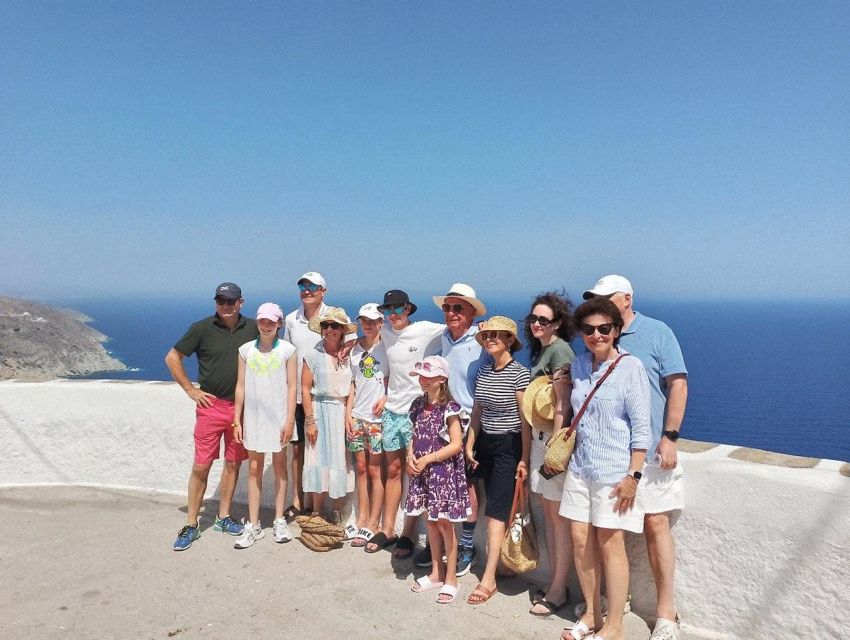
The visit to Castro is the historical heart of the experience. This medieval castle area is still inhabited, so you are not looking at a silent ruin. You walk through its paths while Poly explains the castle’s structure, purpose, and the lives of the people who lived there.
That living quality is important. A preserved fortress can be impressive, but an inhabited one gives you a clearer sense of how defensive architecture shaped ordinary routines. The narrow passages and compact arrangement are not just picturesque. They relate to safety, access, and the need to protect a community.
Poly also discusses pirate attacks and the wider threats that affected island life. These stories help explain why fortified settlements mattered in the Aegean. You can look at the walls and paths with a better sense of the fears and practical problems that shaped them.
The route includes time for photographs, but this is not simply a quick viewpoint stop. The value comes from pausing to understand what you are seeing. Ask questions here if you are curious about the castle’s structure or how its residents lived.
The walking surface is a consideration. Castro’s paths are historic rather than purpose-built for modern access, and the tour is specifically not suitable for wheelchair users. Anyone with balance or mobility concerns should think carefully before booking.
The 4th-Century BC Monument
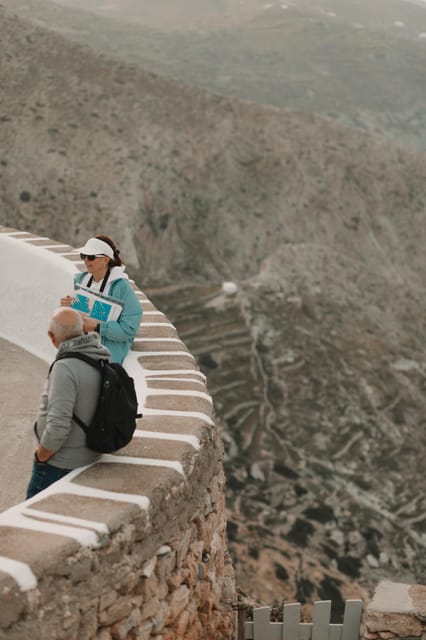
After Castro, the walk includes an impressive monument dating from the 4th century BC. The available information does not identify it by name, so you should not book this tour expecting a detailed archaeological site visit with a long formal excavation narrative.
What you can expect is a chance to place Folegandros within a much older past than the medieval castle. The monument provides a useful bridge between ancient island life and the later settlement you have been exploring.
This part of the walk is valuable because it prevents the island’s story from becoming too narrow. Folegandros is not only a medieval refuge or a modern holiday destination. The route shows how different layers of time sit close together, even when the remains are modest.
If ancient history is your main interest, ask Poly for more detail during the stop. Her background in cultural history makes questions especially worthwhile, and the small group should make conversation easier than on a large coach excursion.
The Serpentine Path to Panagia Church
The route then climbs the winding path to Panagia Church, located at the peak of Chora. The climb is one of the tour’s more physical sections, and the practical advice is straightforward: wear proper shoes, protect yourself from the sun, and allow for a steady pace.
Panagia Church is presented as an architectural highlight, not just a place to photograph from below. Reaching it gives the route a clear high point, both physically and visually. You follow the serpentine path rather than taking a vehicle, so the approach becomes part of the experience.
The church also helps explain the relationship between faith, settlement, and public life on a Cycladic island. The information supplied does not provide a detailed interior description or promise a religious service, so treat this as a guided exterior and architectural visit unless Poly advises otherwise on the day.
The uphill section may be tiring in hot weather. That is the chief physical drawback of the tour. The reward is the church itself and the feeling of understanding Chora’s layout from a higher position.
The Kalderimi and Folegandros After Tourism
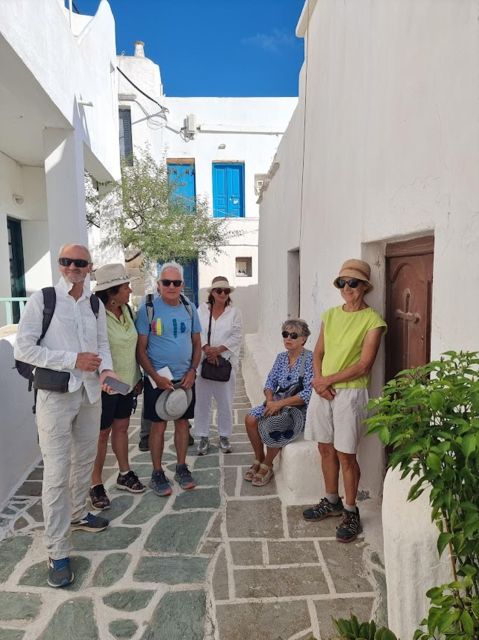
The walk concludes in the Kalderimi, where Poly turns to 20th-century architecture and the arrival of tourism. This is a smart ending because it brings the story into the period that most visitors are actively experiencing.
You will look at newer buildings and discuss how the island’s culture shifted as tourism became part of daily life. This gives you a more useful way to think about development. Instead of seeing every modern feature as either progress or damage, you can consider what changed for local families, buildings, work, and customs.
The Kalderimi section also gives the tour a balance that many history walks miss. Ancient monuments and medieval walls are compelling, but the recent past often explains the Folegandros you see today. The contrast between older paths and 20th-century architecture makes the change easier to grasp.
The itinerary also lists wine tasting and food tasting. The supplied details do not explain exactly where these tastings occur, what is served, or how long they last, so confirm the tasting arrangements before booking if food and wine are a major reason for choosing the tour.
A Local Guide With Family Ties to the Island
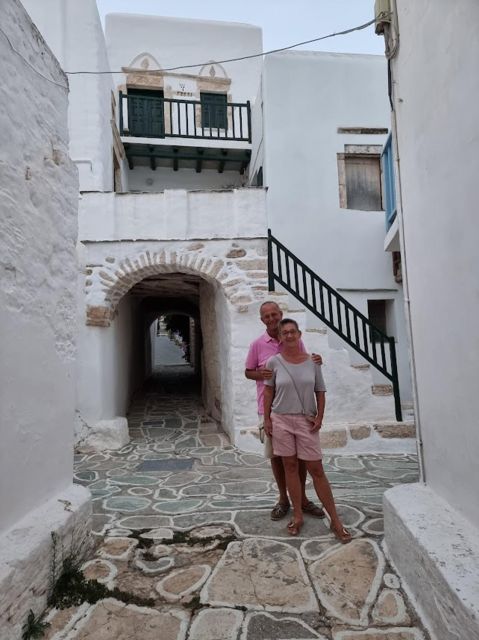
Poly’s personal connection is not a small detail. Her grandfather’s work as a milliner and windmill operator gives her a direct family link to older island trades. The reference to three windmills still standing adds a concrete detail to the story of Folegandros, rather than leaving the past as a list of dates.
She also operates two small rental homes on the island. That means her interest in Folegandros is tied to both its past and its present economy. She can speak as someone proud of the island while still showing how tourism has changed it.
The strongest praise directed at her focuses on three things: her command of local facts, her enthusiasm for telling them, and her ability to make the material funny and personal. People who want a quiet, detached lecture may find the personal style less formal than expected. Most visitors looking for local perspective will likely see that as an advantage.
English and Greek are offered. The small-group limit is 10 participants, which should make it easier to hear the guide and ask about details along the way. The particular booking option described is for up to three people, while a separate choice is available for larger groups through the same provider.
Is $56 a Fair Price?
At $56 per person, this is not the cheapest way to walk around Chora. You can wander the town without paying anything, and you can visit many of its streets and viewpoints independently.
The price makes more sense if you value explanation. You are paying for 2.5 hours with a local cultural historian, a planned route through Chora, Castro, the ancient monument, Panagia Church, and the Kalderimi, plus the chance to ask questions. The group limit of 10 also gives it a more personal feel than a large sightseeing group.
I consider it good value for a first visit, especially if you care about history, architecture, customs, or local stories. It is less compelling if you mainly want free time for photographs or already have a strong understanding of Folegandros and the Cyclades.
The walk can also save you from missing the significance of places you would otherwise pass quickly. On an island where the main sights are spread through streets and paths rather than arranged inside one major museum, a good guide adds real value.
Who Should Book This Walk?
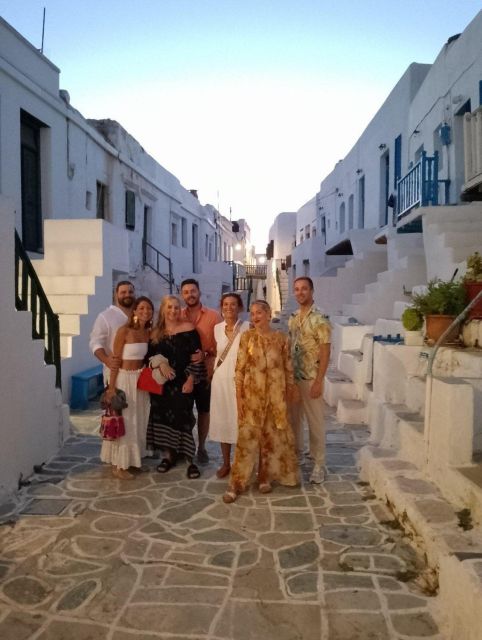
I would recommend this tour to first-time visitors who want to understand Folegandros beyond its appearance. It suits couples, solo visitors, families with older children, and small groups interested in local culture.
It is particularly useful for you if:
- You enjoy history presented through places rather than a classroom lecture.
- You want to hear local family stories alongside researched information.
- You are comfortable walking uphill on uneven paths.
- You prefer a small group to a large organized excursion.
- You want an introduction to Chora before exploring it on your own.
I would hesitate if you have limited mobility, dislike climbing, or need a fully accessible route. The tour is not suitable for wheelchair users, and the approach to Panagia Church is explicitly serpentine and uphill.
Book early in your stay if possible. The route will help you recognize details later, and you can return to Castro or the Kalderimi with a clearer idea of what you are seeing.
Practical Details Before You Go
The meeting point is Pounta, the first square of the island, directly in front of the school. The finish is in Chora, at Χώρα Φολεγάνδρου, Folegandros 840 11, Greece, roughly near the starting area.
The tour is offered in English and Greek. It is a walking experience, not a vehicle tour, and it includes sightseeing and photo stops. The advertised group type is small, with up to 10 participants.
Wear comfortable shoes rather than sandals with weak straps. Bring sunglasses, a sun hat, and sunscreen. The uphill portion to Panagia Church makes these basic items more important, especially during the warmer months.
You can cancel for a full refund up to 24 hours before the tour. A reserve-now, pay-later option is also offered, which is useful if your ferry plans or island schedule are still shifting. Starting times depend on availability.
Should You Book the Folegandros Cultural Walk?
Book it if you want Folegandros to become more than a collection of attractive lanes. Poly’s local roots, cultural history training, and family stories give the walk a clear sense of place. The route also covers a good range: medieval Castro, an ancient monument, Panagia Church, and the modern Kalderimi.
The main tradeoff is physical rather than intellectual. You will walk for 2.5 hours and climb to the church, with no wheelchair access. If you are comfortable with that, $56 buys a focused introduction to Folegandros that is difficult to reproduce from a guidebook alone.
FAQ
How long does the Folegandros cultural walking tour last?
The tour lasts 2.5 hours, including the walk through Chora, photo stops, the visit to Castro, the ancient monument, Panagia Church, and the Kalderimi.
Where does the tour begin?
It begins at Pounta, the first square of the island, directly in front of the school.
Where does the tour finish?
The walk finishes in Chora at Χώρα Φολεγάνδρου, Folegandros 840 11, Greece.
Who guides the tour?
The tour is led by Poly, a local guide with a university degree in cultural history and family roots on Folegandros. Marina Kon. Rossiou is listed as the experience provider.
What languages are available?
The tour is available in English and Greek.
How many people can join the group?
The small-group tour is limited to 10 participants. The booking option described here is for up to three people, with another option available for groups of 1 to 20.
Is the tour suitable for wheelchair users?
No. The tour is not suitable for wheelchair users and includes historic paths and an uphill walk to Panagia Church.
What should I bring?
Bring comfortable shoes, sunglasses, a sun hat, and sunscreen.
Does the experience include food or wine tasting?
Wine tasting and food tasting appear in the itinerary. The supplied details do not specify the tasting location, menu, or duration, so confirm those details before booking if they are important to you.