REVIEW · ATHENS
Athens: Guided Tour of Acropolis & Parthenon with Tickets
Book on GetYourGuide →Operated by Walks In Europe · Bookable on GetYourGuide
Ancient Athens is waiting on a hill, not a page. This guided Acropolis and Parthenon walk turns big monuments into a clear, human story, with pre-reserved entry that helps you move past the worst crowd moments. I especially like the way an expert guide ties what you see on the ground to myths, politics, and the way later empires reshaped the site.
The second thing I love is the practical setup: you get headsets so you can actually hear the guide, even in busy zones, plus a small-group pace that leaves room for questions and photos. A lot of the best moments come from that mix of tight timing and real narration, not just standing near stones.
One consideration: this is a real climb. Expect steps and sun, and the tour is not for people who struggle with hills or have certain medical limits, including heart problems.
In This Review
- Key things I’d bet on
- Finding the tour fast: outside Acropolis Metro
- Skip-the-line entry that actually saves time
- The climb: steps, heat, and how the guides manage the pace
- Acropolis entry to Parthenon: how the story gets built
- Why this works for your visit
- Parthenon: the icon, explained in plain human terms
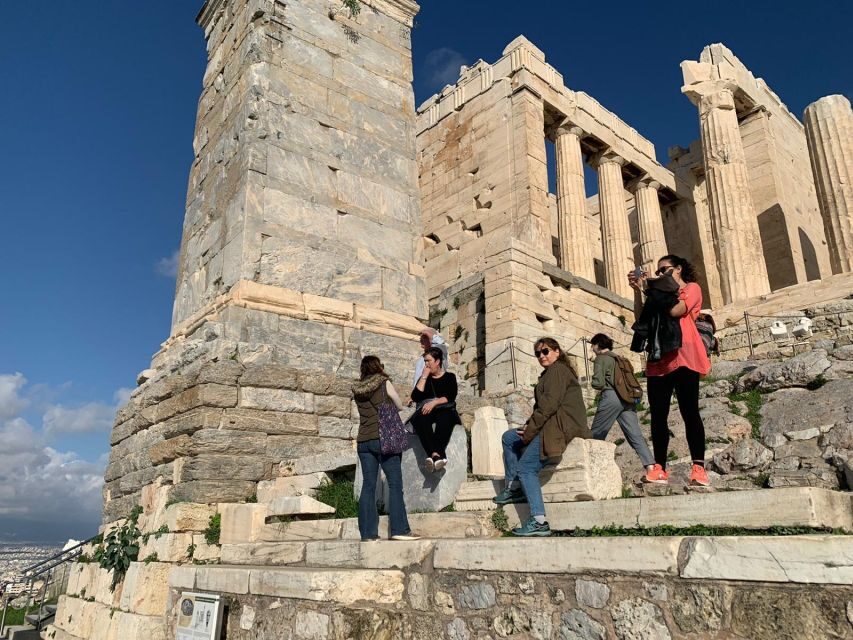
- Propylaea: the ceremonial gateway you’ll start to notice
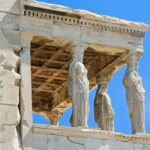
- Erechtheion: complicated, detailed, and easier with guidance
- Temple of Athena Nike: the viewpoint stop that rewards patience
- Theatre of Dionysus and the south-slope add-on
- Guides, headsets, and what makes the small-group feel worthwhile
- Price check: what $35 gets you (and when it’s a smart buy)
- Who this tour suits best (and who should think twice)
- Should you book this Acropolis guided tour?
- FAQ
- How long is the Acropolis and Parthenon guided tour?
- Where do we meet for the tour?
- Does the tour include skip-the-line tickets?
- What languages are available for the guide?
- What should I bring, and what can’t I bring?
- What if I book an option without tickets?
- Is the tour suitable for people with mobility or health limitations?
Key things I’d bet on
- Skip-the-line entry with timed access so you’re not stuck guessing when you’ll get inside
- Licensed, professional guides who narrate mythology, architecture, and later Greek eras
- Headsets that make the tour easier to follow in crowded spots
- Big monuments in sequence: Parthenon, Propylaea, Erechtheion, Athena Nike, and the Theatre of Dionysus
- A steep, sun-exposed walk where good shoes and water matter more than souvenirs
Finding the tour fast: outside Acropolis Metro
You meet outside the Acropolis Metro Station at Makrigianni 7. If you’re coming by metro, use the Makrygianni / Dionysiou Arepaghitou exit, go up to street level, and look for the sign for Akropoli. Your guide waits with a sign showing your names.
This matters because the whole tour runs on reserved timing. Tours depart punctually since entry times are booked, and you can’t jump in once the group starts moving.
A few more Athens tours and experiences worth a look


Skip-the-line entry that actually saves time

This tour’s biggest value is not just the title skip-the-line. It’s that you’re entering with pre-reserved Acropolis tickets (when you choose the ticket option), which helps you get onto the site route without losing precious time to standard ticket queues.
Timing is tight: your tickets are timed and can expire within 5 to 10 minutes, so arriving late can turn a good day into a scramble. In high season, even pre-reserved ticket holders can queue—so the best move is to be early and ready to go.
The climb: steps, heat, and how the guides manage the pace
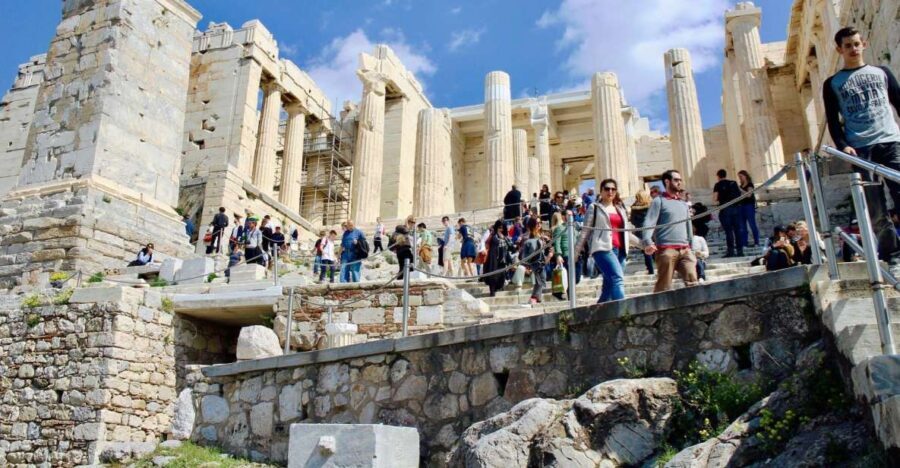
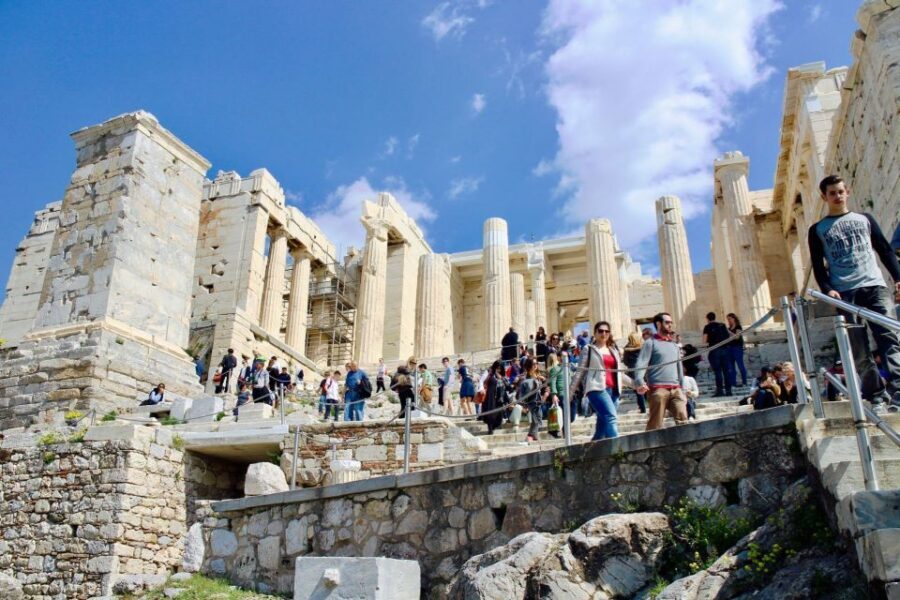
You’re walking uphill on a sacred hill, with stretches that feel long in the sun. Reviews flag it clearly: if it’s very hot, or if hills tire you out, you’ll feel it. One common theme in the feedback is that guides keep people together and try to find shady pauses when needed.
What you wear matters here. Bring comfortable shoes (no sandals or flip-flops), plus water, sunscreen, and a sun hat. Also note what’s not allowed on site: no baby strollers and no luggage or large bags.
If you’re smart about timing, the experience gets easier. Multiple guide-and-time comments point to early starts as calmer—one reviewer said going early meant fewer crowds. Another said 8 a.m. can be very busy, while 10 a.m. feels a little quieter.
Acropolis entry to Parthenon: how the story gets built
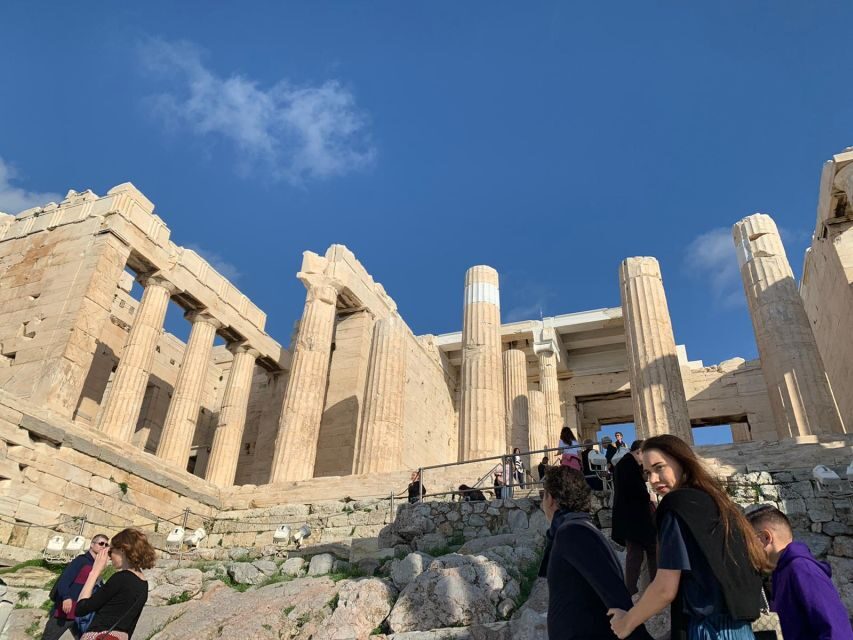
Once you’re inside, the guide’s job is to make the site make sense. The best tours here don’t just point at buildings; they layer the eras. Expect your guide to explain the rise of classical Athens and then how later periods—Roman, Byzantine, and Ottoman—left their marks, plus what modern Athens does with this space today.
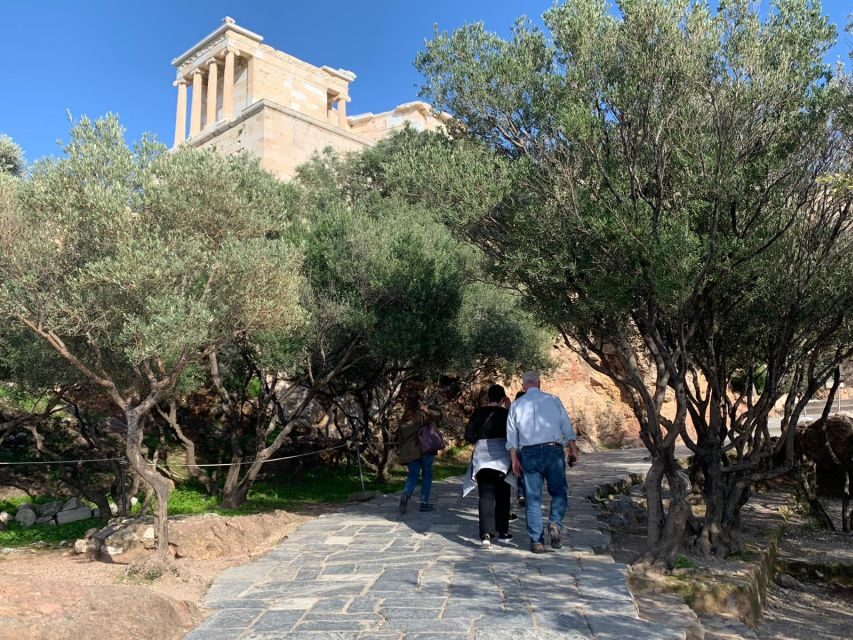
As you ascend beneath olive trees, you’ll hear the why behind the where. The Acropolis wasn’t only a viewpoint. It was a religious center with rituals and festivals, and you’ll get the context for the gods of Athens and the cults tied to this hill.
Why this works for your visit
If you show up with only a guidebook, the monuments can feel like disconnected snapshots. With a live guide, the sequence becomes a map: where you are, what it meant, and what it replaced.
You can also read our reviews of more guided tours in Athens




Parthenon: the icon, explained in plain human terms
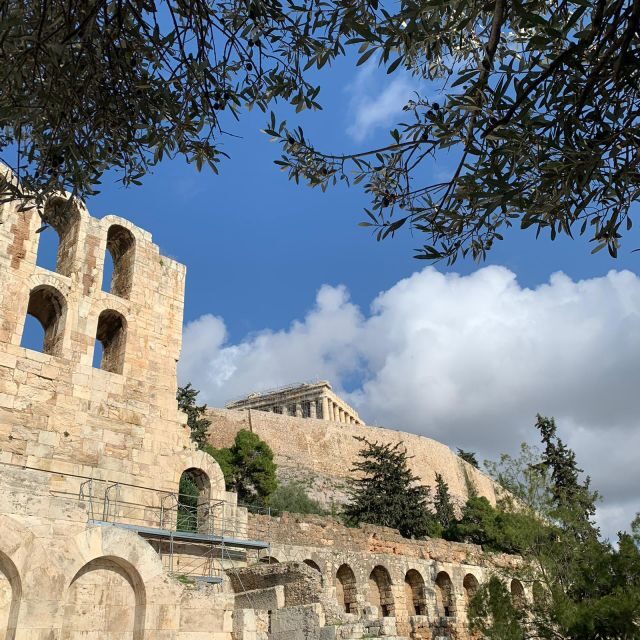
The tour hits the Parthenon as a centerpiece stop. You’ll see it described not only as a masterpiece of stonework, but as a statement—political, religious, and artistic at the same time.
The best part is what your guide does while you’re standing there. They connect architectural choices to the beliefs and ambitions of the people who built it, then help you understand why the Parthenon still dominates the skyline today.
Practical note: the top viewpoints are photo gold, but also crowded. With headsets, you can keep moving without constantly turning your head to hear directions.
Propylaea: the ceremonial gateway you’ll start to notice
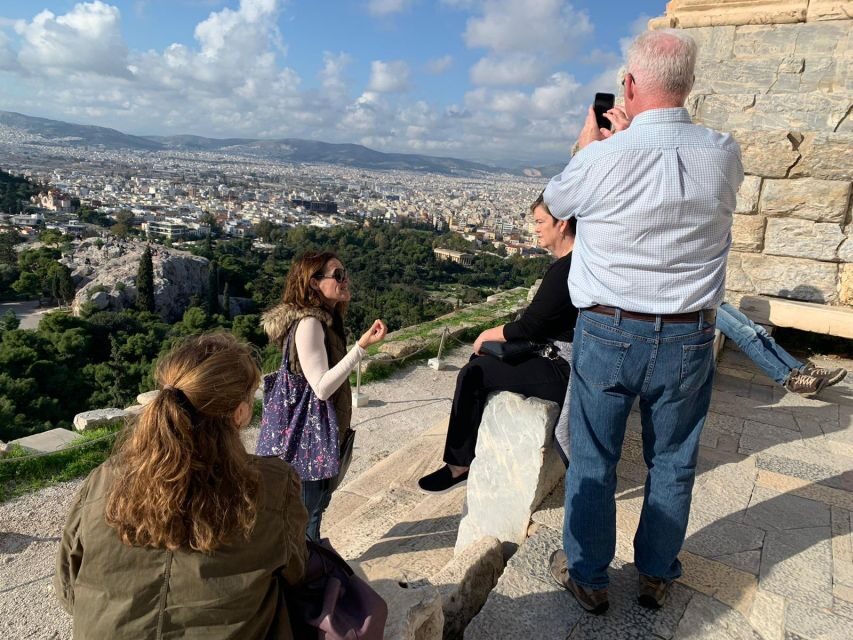
Next is the Propylaea, which works like the monument’s “front door.” It’s easy to walk past in a self-guided visit, but with a guide you learn how it functions as a threshold—your transition from the everyday world toward a sacred zone.
This stop is also where you start appreciating how the Acropolis is designed to control movement and attention. Your guide helps you look beyond the surface and see the building’s role in the overall plan.
Erechtheion: complicated, detailed, and easier with guidance
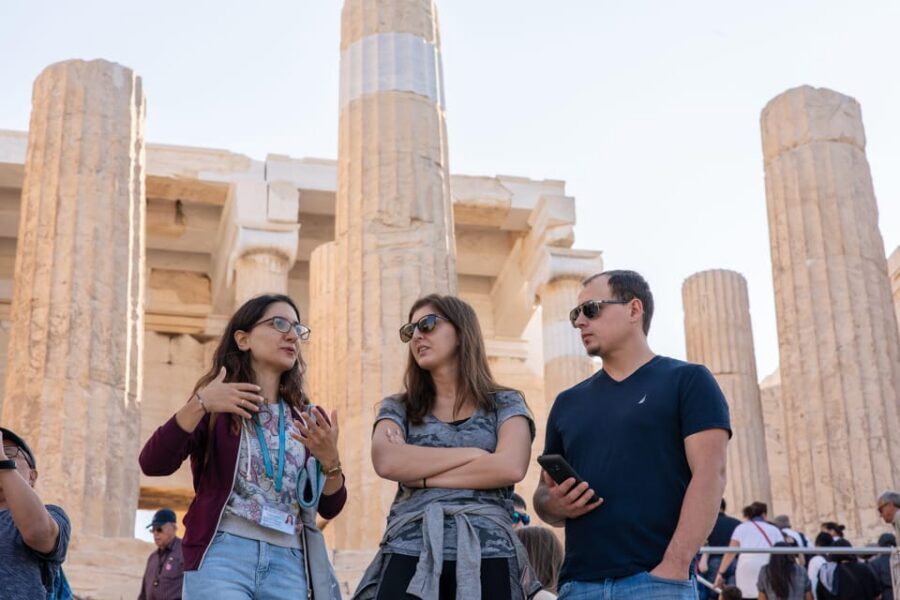
The Erechtheion can feel like a puzzle without explanation. It’s ornate and distinctive, and the story around it is tightly connected to myth and worship.
With a guide at your side, you don’t just notice details—you understand why those details matter. You’ll likely spend time orienting yourself so the site feels navigable, not chaotic.
If you’re the type who likes to ask questions, this is a good place to do it. The guide-friendly pace usually makes room for quick clarifications before you move on.
Temple of Athena Nike: the viewpoint stop that rewards patience
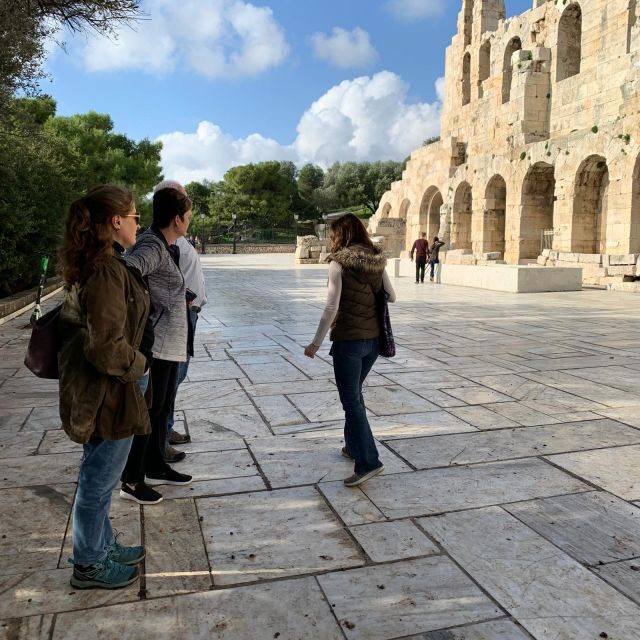
Then you get to the Temple of Athena Nike, which sits above Athens with a sense of drama. This is one of those spots where the guide’s narration and the view team up: architecture meets city panorama.
Expect photos, but also expect the guide to connect the temple to Athena and to the symbolic language of victory and civic identity. Even if you know the basics, the guide’s framing helps you see the building as part of a larger message, not just a pretty stop.
Theatre of Dionysus and the south-slope add-on
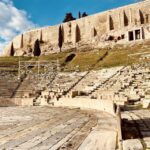
The tour includes the Theatre of Dionysus, often described as a birthplace of drama. Standing in the area and hearing the context helps you connect theater to the wider festival life of Athens.
In the broader experience, there’s also the chance to follow your guide toward the south slope, passing by places such as the Sanctuary of Asclepius and continuing toward the Theatre area. That post-walk stretch can be a nice way to keep exploring without feeling stuck.
When the guided walk ends, you may also linger at your own pace. That freedom is useful if you want extra time on viewpoints or want to re-take photos once the crowd flow shifts.
Guides, headsets, and what makes the small-group feel worthwhile
The tours use headsets, and that’s not a small detail. Headsets help you hear clear explanations in crowded spots and reduces the stop-and-start friction that ruins lots of “group tours.”
In feedback, guides named Lisa, Vicki, Maria, Elina, Eva, Ria, Andi, and Frosso come up often. The common thread isn’t just facts—it’s calm organization. People praised how guides kept groups safe, moved efficiently without feeling rushed, and made time for shade and questions.
One practical perk: good guides point out photo angles. Even a quick suggestion can change your whole set of pictures.
Price check: what $35 gets you (and when it’s a smart buy)
At around $35 per person for a 2-hour guided experience, the price can feel high if you’re thinking only in terms of monuments. But you’re paying for three things that are hard to DIY well on a short visit:
- Pre-reserved entry (when you pick the ticket option), which reduces time lost in queues
- Licensed, professional guiding, which turns stones into a story you can remember
- Headsets, which make the experience easier to follow without constant crowd-shouldering
Is it worth it? It’s worth it if this is your first time in Athens and you want the fastest path to understanding what you’re looking at. If you already know a lot and hate climbing with a group, you might prefer a self-guided approach. But if you want a guided framework for the Parthenon complex, this is a strong deal.
Who this tour suits best (and who should think twice)
This experience is best for you if:
- You want an expert narrative while you walk the Acropolis highlights
- You’re okay with a climb and some stairs
- You value efficiency and would rather spend time understanding than figuring out logistics
It’s a poor fit if:
- You’re not comfortable with steep walking in heat (multiple notes underline the climb and sun)
- You have limits related to heart problems, mobility concerns, or conditions the tour lists as not suitable
- You need a wheelchair, walker, elevator access, or are traveling with a baby stroller (strollers aren’t permitted)
One note for families: children under 6 aren’t suitable, and the tour doesn’t allow strollers. The site advice is to use a baby pouch instead of a stroller.
Should you book this Acropolis guided tour?
Book it if you want the Acropolis highlights explained in a tight time window, and you’re willing to handle steps and sun. I’d treat it as your best “first Athens morning” plan—especially if you pick an earlier time slot to reduce the crowd crush.
Skip it if you know you won’t be able to manage the hill, or if you’d rather explore at a slow, self-paced rhythm. In that case, consider a different approach that matches your pace and comfort level.
If you do book, do two things: wear supportive shoes and arrive early at the meeting point. That small move makes the timed entry work for you instead of against you—and that’s when the tour really feels smooth.
FAQ
How long is the Acropolis and Parthenon guided tour?
The tour runs for 2 hours.
Where do we meet for the tour?
You meet outside Acropolis Metro Station (Makrygianni / Dionysiou Areopaghitou exit). Look for the street-level sign for Akropoli, and your guide will be holding a sign with your names.
Does the tour include skip-the-line tickets?
Yes, the experience includes Acropolis pre-reserved entry tickets if you choose the ticket option.
What languages are available for the guide?
Guides are available in German and English.
What should I bring, and what can’t I bring?
Bring comfortable shoes, a sun hat, sunscreen, and water. Not allowed: sandals or flip-flops, baby strollers, and luggage or large bags.
What if I book an option without tickets?
If you choose the option without tickets, you must bring the exact cash amount for the Acropolis entry fee, and payment is required at the meeting point. Other passes or tickets are not accepted.
Is the tour suitable for people with mobility or health limitations?
It is not suitable for wheelchair users and people with certain pre-existing medical conditions. It also notes no wheelchair access, and it mentions limitations for people with mobility impairments.