REVIEW · ATHENS
Parthenon & Acropolis Guided Tour in Spanish -Option Tickets
Book on GetYourGuide →Operated by TOP TOURS GREECE · Bookable on GetYourGuide
Parthenon stories start early, and that helps. This Spanish guided walk gives you the key Acropolis monuments with an official certified guide and headphones so you don’t miss the explanations. I also love the way the myths and architecture get connected stop by stop, so the site feels like one big story instead of scattered ruins.
You’ll begin on the southern slope at a moderate pace, with a plan that hits the Theatre of Dionysus, the Parthenon, and the Erechtheion without rushing you off to the next selfie spot. If you’re lucky with your guide, you’ll get that extra storytelling energy some guides bring, like Efi and Simon, who are specifically praised for making the place click.
One thing to consider: the rules are strict. Bags and baby strollers aren’t allowed, and you’ll also need to leave food and drinks behind, so travel light.
In This Review
- Key highlights you’ll actually feel on the ground
- Early entrance in Spanish: why this tour feels easier than DIY
- Where you meet and how to show up ready
- From Dionysus to the Parthenon: what each stop adds to the story
- Theatre of Dionysus: where Greek theatre energy began
- Asklepieion of Athens: medicine and sanctuaries
- Odeon of Herodes Atticus: an ancient venue still in use
- Propylaea gateway: architecture lessons in real size
- Temple of Athena Nike: a quick but meaningful stop
- Parthenon: the main event, with time to notice harmony
- Erechtheion: where myth and place overlap
- Porch of the Caryatids: famous feminine columns up close
- The legends you’ll hear: Athena, Poseidon, and why it’s told at the buildings
- Views from the top: where the 360-degree photo time really helps
- Price, value, and the pacing fit for real people
- Should you book this Parthenon and Acropolis Spanish tour?
- FAQ
- Is the guide on this Acropolis tour in Spanish?
- How long is the tour of the Parthenon and Acropolis?
- Where do I meet the tour?
- Does this tour include Acropolis entrance tickets?
- What’s included besides the guided tour?
- Are there restrictions on what I can bring or who can attend?
Key highlights you’ll actually feel on the ground
- Early entrance from the southern slope helps you beat the worst heat and crowd crush.
- Official Spanish guide + headphones keeps the narration clear the whole way up.
- Parthenon focus with time to notice harmony, design, and details instead of just passing through.
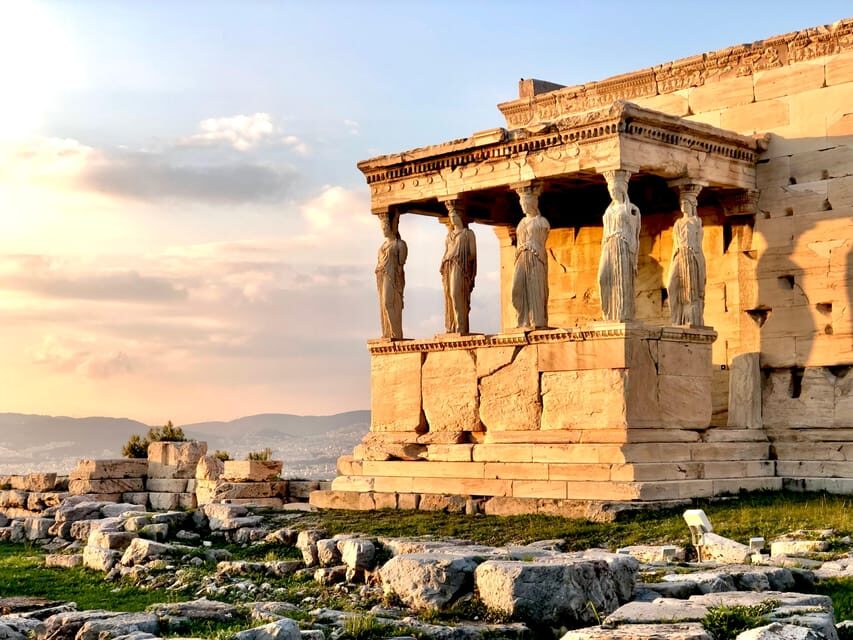
- Caryatids at the Erechtheion explained as famous feminine columns, not just a photo backdrop.
- Athena vs Poseidon legend tied directly to the key myths connected to the buildings.
- Odeon of Herodes Atticus still used for major concerts, so you’re looking at a living monument.
Early entrance in Spanish: why this tour feels easier than DIY
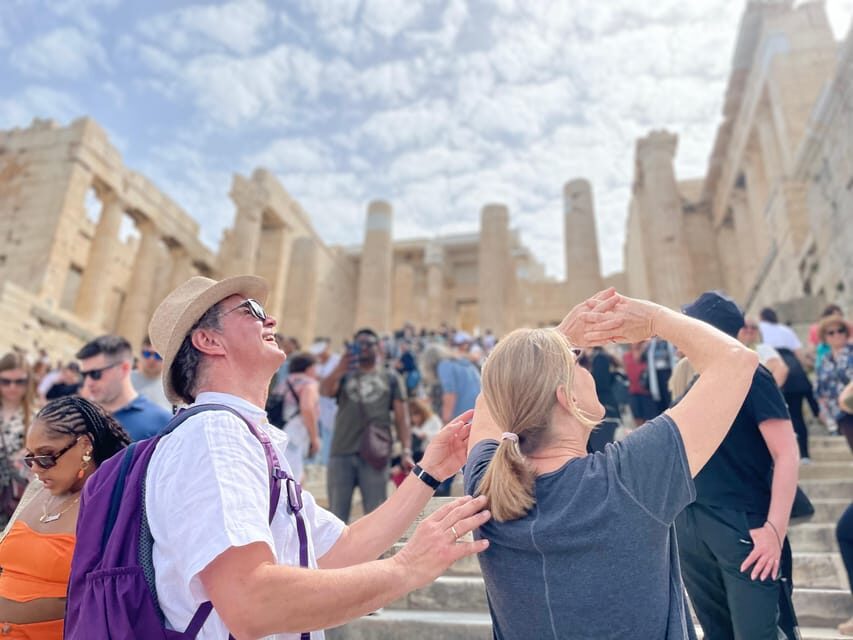
The Acropolis is one of those places where your brain needs a map. Even with good apps, it’s easy to wander and miss what matters most. This tour is built around a simple idea: start early, walk at a moderate pace, and use an expert guide to connect what you’re seeing to the stories that made it important in the first place.
The biggest practical win is timing. The tour begins early in the morning from the southern slope. That matters because the hill gets hot, and visibility changes quickly with sun and crowds. When I’m choosing between a do-it-yourself plan and a guided one here, I always pick the option that saves my energy and helps me avoid the midday squeeze—and this one is designed to do that.
Language is the other big difference. A Spanish-only live guide means you’re not playing catch-up with translations. You hear the historical and mythological explanations for the monuments as you stand in front of them. And the headphones are not a small detail—on a windy hill with background noise, hearing the guide clearly is what keeps the experience from turning into random facts shouted across a group.
Finally, the pacing is “moderate.” That sounds vague, but it shows up in your actual time at each stop. You get brief segments to orient yourself, then longer time for the stars of the show like the Parthenon and the Erechtheion/Caryatids area.
If your goal is meaning, not just stamps in your photo roll, this tour’s structure is the right kind of organized.
A few more Athens tours and experiences worth a look

Where you meet and how to show up ready
You meet at the Tourist Information Center Athens, right next to the southern entrance of the Acropolis. It’s across from the Acropolis Museum and a few meters from the metro stop named Acropolis. The guide holds an office sign that reads TOP TOURS GREECE, which makes it easier to find the right group without frantic texting.
Bring practical shoes. You’re walking uphill on stone, and the tour is only 2 hours, which usually means the route is efficient. Also plan around the rules:
- No bags
- No baby strollers
- No food or drinks
- Non-folding wheelchairs and electric wheelchairs are not allowed
If you normally travel with a tote bag, leave it behind or rethink what you carry. A small day bag is still a bag, and the rules are clear that bags aren’t permitted.
If you’re traveling light and comfortable walking, you’ll get more out of the time on the hill. If you’re not, you’ll spend energy fighting logistics instead of listening to the guide.
From Dionysus to the Parthenon: what each stop adds to the story
This tour moves through the Acropolis in a sequence that builds your understanding. You start lower, with performance, medicine, and civic life, then climb toward the most famous religious monuments at the top.
Here’s what you can expect at each major stop, and why it’s worth the time.
Theatre of Dionysus: where Greek theatre energy began
Your first guided stop is the Theatre of Dionysus, about 10 minutes. You’ll get context about its scale—built in the 5th century BC and said to have a capacity of 17,000 spectators. It’s also tied to Dionysus, the god associated with wine and theatre.
Why this matters: theatre wasn’t just entertainment. On the Acropolis, it reflects how public life worked—citizens came together, stories mattered, and performance was part of culture. Even though you’re seeing ruins, the guide’s explanation helps you remember this was once a full social machine.
A small time at the theatre is normal in a 2-hour plan. The goal isn’t to linger; it’s to frame what you’ll see as you move upward.
Asklepieion of Athens: medicine and sanctuaries
Next is the Asklepieion of Athens area, also about 10 minutes. This is the sanctuary dedicated to the god of medicine, Asclepius. You’ll hear about significant findings related to health.
Why it’s worth it: the Acropolis wasn’t only temples and politics. It also included places connected to healing and belief. When a guide links those ideas to what you’re about to see near the top, it changes how you interpret the religious architecture.
You can also read our reviews of more guided tours in Athens
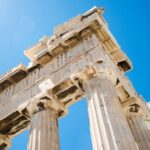
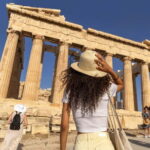

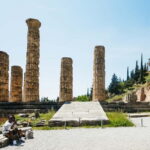

Odeon of Herodes Atticus: an ancient venue still in use
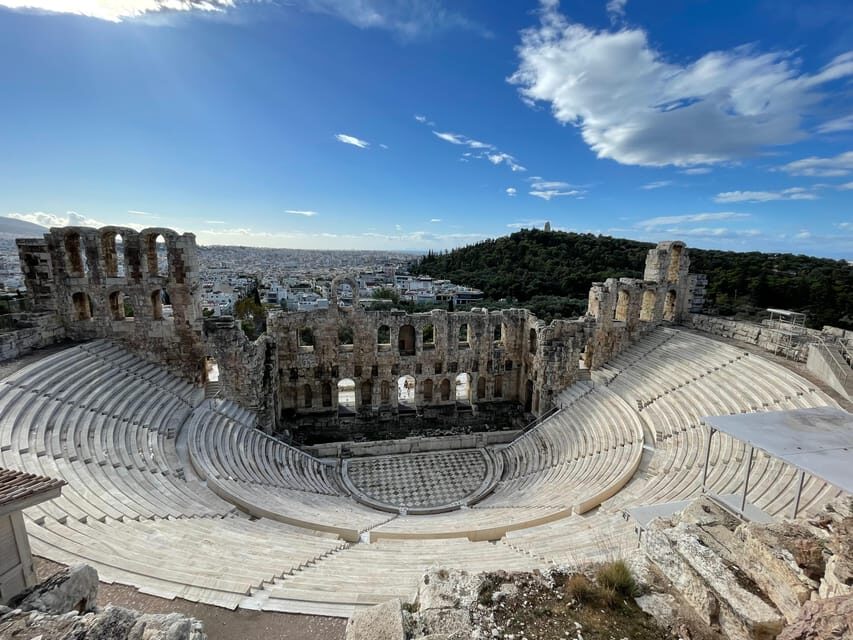
Then comes the Odeon of Herodes Atticus for about 10 minutes. This monument is described as still hosting major concerts in Greece today. You’ll hear that it once had a roof, and now functions as an open-air space.
Why I like this stop: it reminds you that these sites aren’t frozen in time. People still gather here. Even if you’re not there for a concert, the idea of continuity makes the hill feel less like a museum and more like a place with ongoing life.
Propylaea gateway: architecture lessons in real size
The tour reaches the Propylaea, the grand ancient gateway, for about 10 minutes. This is where you’ll get a clear explanation of Doric and Ionic architectural styles.
This is a smart stop in a short tour. Gateways and entry points are where architecture teaches you its logic. Once you see the design language here, the later monuments like the Parthenon and the Erechtheion start to make more sense visually.
Temple of Athena Nike: a quick but meaningful stop
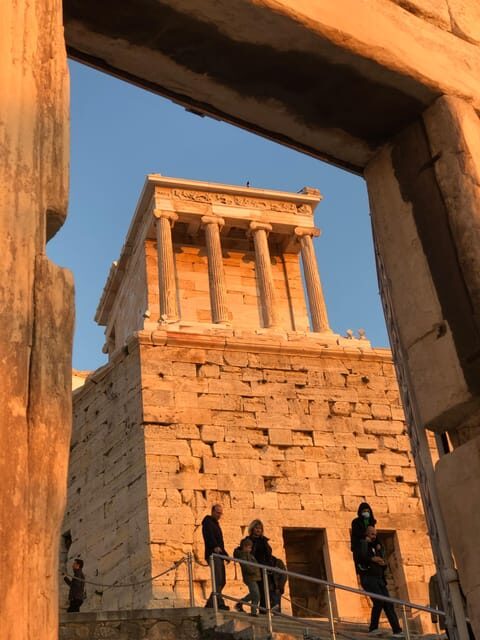
You’ll visit the Temple of Athena Nike for about 5 minutes. The time is short, but it’s positioned well because it keeps you focused on Athena as the city’s protective goddess while you approach the Parthenon area.
Even at a brief stop, the guide’s narration helps you connect the temple to the larger religious story of the Acropolis.
Parthenon: the main event, with time to notice harmony
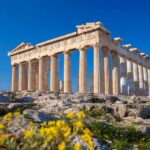
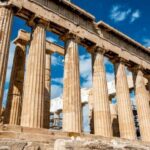
The Parthenon is your big guided segment, about 20 minutes. The guide explains it as the most harmonious and perfect temple of the ancient world, built in honor of Athena. It’s also presented as Greece’s key monument recognized by UNESCO.
This is the part where a guide makes the biggest difference. Without guidance, you can end up scanning columns and friezes like you’re hunting for facts. With a story-driven explanation, you start seeing patterns: how the design reinforces meaning, how the temple fits its role, and why people cared so much about making it look the way it does.
The 20 minutes feels like the sweet spot for a highlights tour: enough time to absorb the guide’s points and still stay fresh for the walk to the Erechtheion.
Erechtheion: where myth and place overlap
Next is the Erechtheion for about 10 minutes. You’ll hear that the building bears marks connected to the gods who fought over the city, and you’ll learn about gifts like the water source and the famous olive tree for Athenians.
This is where the tour’s myth element becomes more than a fun add-on. It connects the physical site to the legend of the city’s identity—who won, what was given, and why Athena mattered.
Porch of the Caryatids: famous feminine columns up close
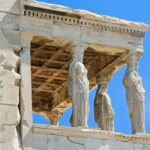
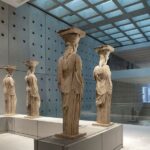
Finally, you reach the Porch of the Caryatids for about 10 minutes. These are the feminine-shaped columns decorating the porch of the Erechtheion. The guide’s explanation typically makes you look differently: you’re not just seeing statues, you’re seeing the symbolism in how the architecture carries meaning.
Photo tip: go slow here. Don’t rush the first angle. The guide’s explanation gives you a reason to pause, and you’ll get better photos when you stop treating it like a quick backdrop.
The legends you’ll hear: Athena, Poseidon, and why it’s told at the buildings
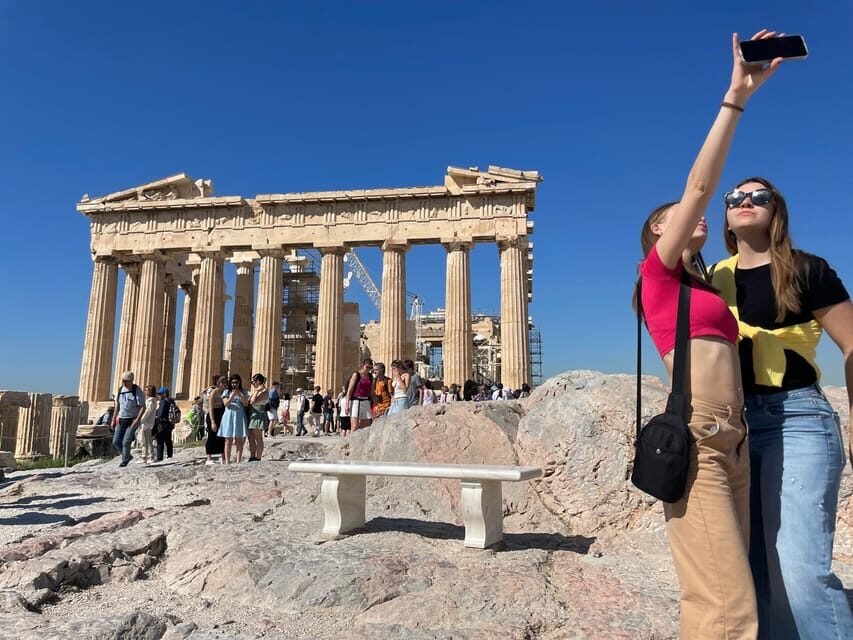
The tour specifically calls out the legend of Athena and Poseidon. The myth is tied into the story of the city, and you’ll hear it as you move through the monuments associated with those competing divine claims.
The practical value of hearing the legend on-site is that it turns abstract myth into spatial memory. When the guide explains the fight over the city and points you toward the places connected to water and the olive tree, you remember the story because it’s attached to a physical location. It’s the difference between reading about a myth and standing where people once performed their civic and religious lives.
This is also why the Erechtheion and Caryatids area feels like a highlight. The buildings aren’t just pretty. They’re part of a narrative the city used to explain itself.
Views from the top: where the 360-degree photo time really helps
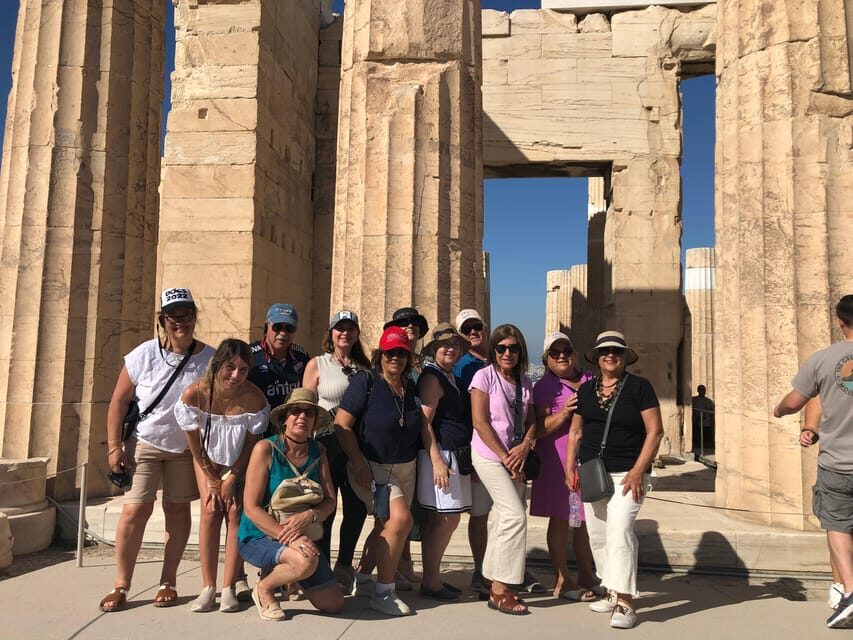
The tour concludes at the top of the hill, where you can stay as long as you like for photos and the 360-degree views. That last part is important. A guided tour can sometimes dump you out and disappear before you’ve had time to slow down. Here, you’re given time to shift from listening to looking.
What you should do with this free time:
- Take a few wide shots first, while the whole hill is in view.
- Then go back for close details once you’ve decided what angle makes sense for your photos.
- If you’re there in hot weather, prioritize shade breaks. The guide often times stops to help with sun and crowd avoidance, which makes this ending window more comfortable.
If you like photographing architectural lines, the top-of-hill finish gives you the best payoff. You get the “oh wow” moment, then you get to collect images without feeling rushed.
Price, value, and the pacing fit for real people
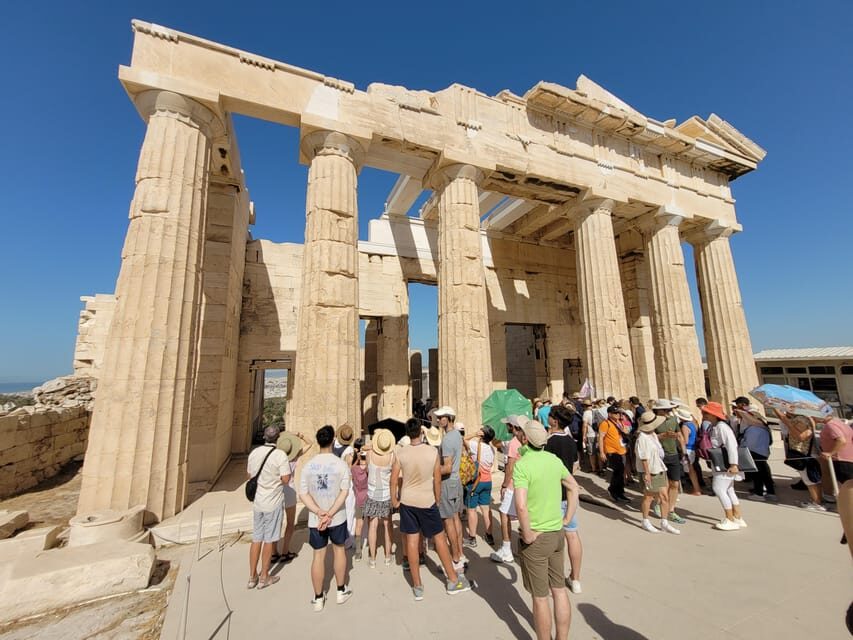
The price is $33 per person for a 2-hour guided tour. That’s not “cheap” in the sense of ignoring the cost. But it’s also not priced like a private guide. The value comes from what’s included and how it reduces friction:
- An official, certified guide in Spanish
- Headphones to hear clearly
- Early entrance to the Acropolis
- Access to the main monuments on the hill in a structured order
- Skip the ticket line
- On-foot walking route with a moderate pace
If you’re thinking about doing it alone, the hidden cost is your time: ticket lines, figuring out which ruin matters, and missing the stories that connect the site together. This tour pays you back with orientation and context while you’re physically in front of the monuments.
One more value angle: the guide’s explanations help you avoid “ruin fatigue.” When you’re armed with what you’re looking at—Theatre of Dionysus for culture, Asclepius for medicine, Odeon for civic gatherings, gateways and temple styles for design—you keep processing instead of just looking.
Who this tour is best for:
- You want a Spanish guided experience, not a vague English tour system
- You enjoy myths and architecture side by side
- You want the top Acropolis highlights without spending a whole day planning
- You’re comfortable walking uphill for 2 hours
It may be less ideal if you hate strict site rules or need to carry items like bags, since those are explicitly not allowed.
Should you book this Parthenon and Acropolis Spanish tour?
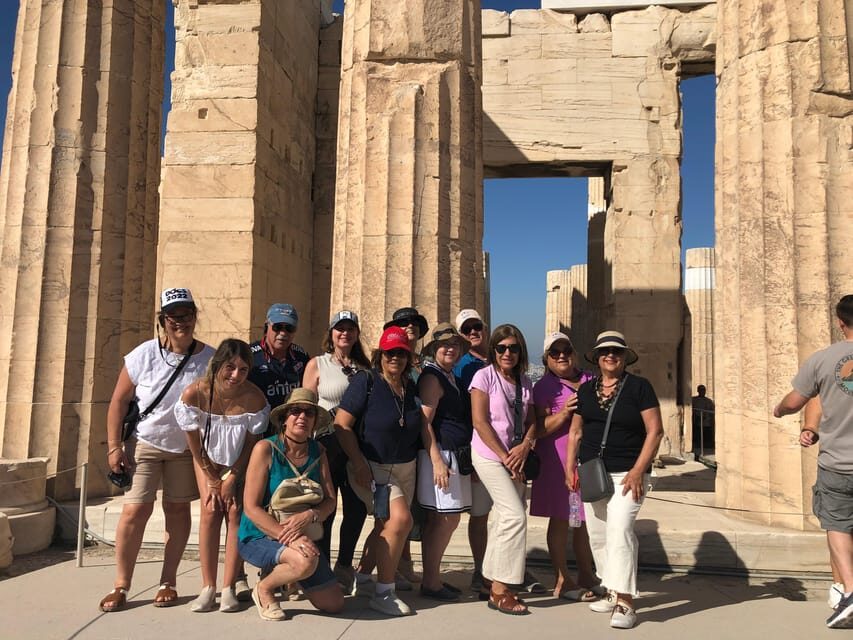
Book it if you want the Acropolis to make sense fast. This is a well-structured way to see the Parthenon, Erechtheion, Caryatids, and other key monuments with an expert Spanish guide, and the early start makes the day feel more manageable.
Skip it if you’re carrying items you won’t be able to leave behind. The no-bags rule is real, and the tour is also not suitable for wheelchair users.
If you fit the sweet spot—Spanish language, walking comfort, and a desire for stories—you’ll likely come away with the kind of understanding that lasts longer than a set of photos.
FAQ
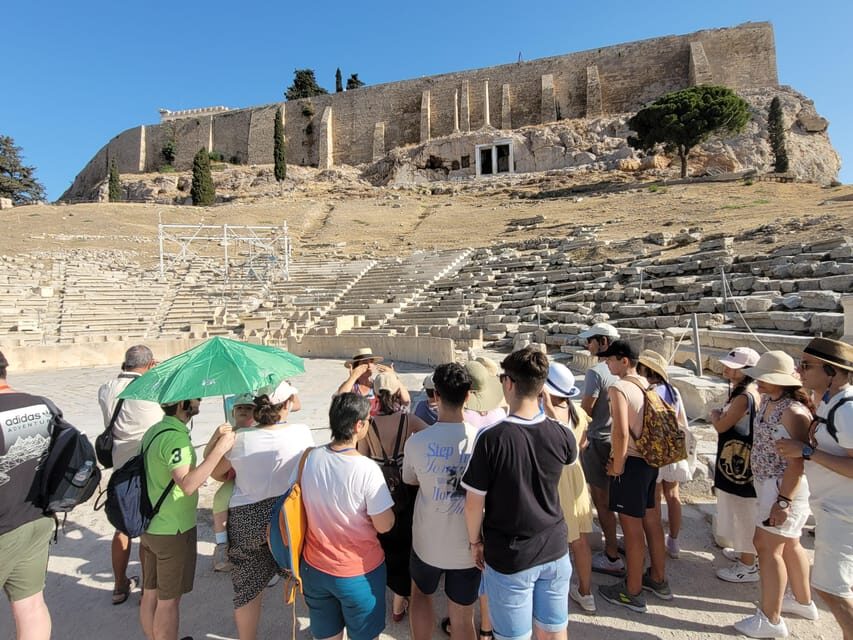
Is the guide on this Acropolis tour in Spanish?
Yes. The tour is described as having a live Spanish guide, and headphones are included so you can hear clearly.
How long is the tour of the Parthenon and Acropolis?
The duration is listed as 2 hours.
Where do I meet the tour?
You meet at the Tourist Information Center Athens, right next to the southern entrance of the Acropolis, across from the Acropolis museum. The guide holds a sign reading TOP TOURS GREECE.
Does this tour include Acropolis entrance tickets?
It includes an entrance ticket if you choose the option that includes tickets. The ticket is listed as included for that chosen option.
What’s included besides the guided tour?
Included items are the visit of all monuments of the Acropolis, an official Spanish tour guide, a walking tour, early entrance, entrance ticket (if chosen), and headphones to hear the guide clearly.
Are there restrictions on what I can bring or who can attend?
Yes. Baby strollers, bags, food and drinks, and non-folding wheelchairs are listed as not allowed. The tour is also listed as not suitable for wheelchair users.