REVIEW · ANCIENT CORINTH
From Athens: Half-Day Ancient Corinth Evening Private Tour
Book on GetYourGuide →Operated by Olive Sea_Travel · Bookable on GetYourGuide
Ancient Corinth gives you a compact lesson in Greek religion, Roman power, and early Christianity, all beneath the massive hill of Acrocorinth. The evening departure is the smart choice: you get softer light, cooler air, and fewer tour buses at the ruins.
I like the private hotel pickup, which removes the fuss of reaching a departure point, and I like the mix of big views and serious archaeology. The Corinth Canal is a quick but memorable stop, while the Agora and Temple of Apollo give you real stones to walk among, not just a distant photo opportunity.
The main drawback is important: your driver can explain the sites from the vehicle and outside, but is not licensed to accompany you inside. You explore Ancient Corinth on your own unless you add a licensed guide for €280, so this tour suits independent sightseers more than visitors wanting a full archaeological lecture.
In This Review
- Key points to know before booking
- Why the evening drive from Athens makes sense
- The Corinth Canal in a 20-minute stop
- Ancient Corinth and the Roman Agora
- The Temple of Apollo and Corinth’s earliest monumental remains
- The Apostle Paul’s connection to Corinth
- Acrocorinth: a fortress above the Gulf
- Greek lunch beside the sea
- What the private format is worth at $465 per person
- Who will enjoy this Corinth trip most
- Should you book this Ancient Corinth tour?
- FAQ
- How long does the Ancient Corinth tour last?
- Is hotel pickup included?
- Is airport pickup included?
- Is the tour private?
- Can the driver guide me inside Ancient Corinth?
- Is a licensed guide included?
- What can I see at Ancient Corinth?
- How long is the Corinth Canal stop?
- Is the entrance fee included?
- Is the tour wheelchair accessible?
- Can I cancel for a refund?
Key points to know before booking
- Evening timing works especially well: A 5 p.m. departure can mean cooler weather, sunset light, and fewer buses at Ancient Corinth.
- The Corinth Canal is a walking stop: You have about 20 minutes to cross a pedestrian bridge and look into the dramatic cut between the mainland and Peloponnese.
- Ancient Corinth combines several stories: You see the Roman Agora, Temple of Apollo, museum, and places linked with the Apostle Paul.
- Acrocorinth is mainly a photo stop: The drive up gives you striking views of the Corinthian Gulf and the old castle, but the visit is limited to about 20 minutes.
- This is private transport, not a fully guided archaeological tour: Your English-speaking driver has historical knowledge, but site entry is self-guided.
- Lunch is part of the rhythm: After the ruins, you stop for traditional Greek food with a relaxing sea view, though personal expenses are not included.
Why the evening drive from Athens makes sense
The trip begins with pickup outside your Athens hotel or accommodation in private luxury transportation. You have bottled water, and the five-hour schedule gives you a direct outing without the slower pace of a large group.
The road follows the Saronic Gulf. Along the way, you see Greek seaside villages and the island of Salamis, known for the historic naval battle between the Athenians and Persians. This portion is more than dead time in a car. It gives you a look at the coastal setting that connects Athens with the Peloponnese.
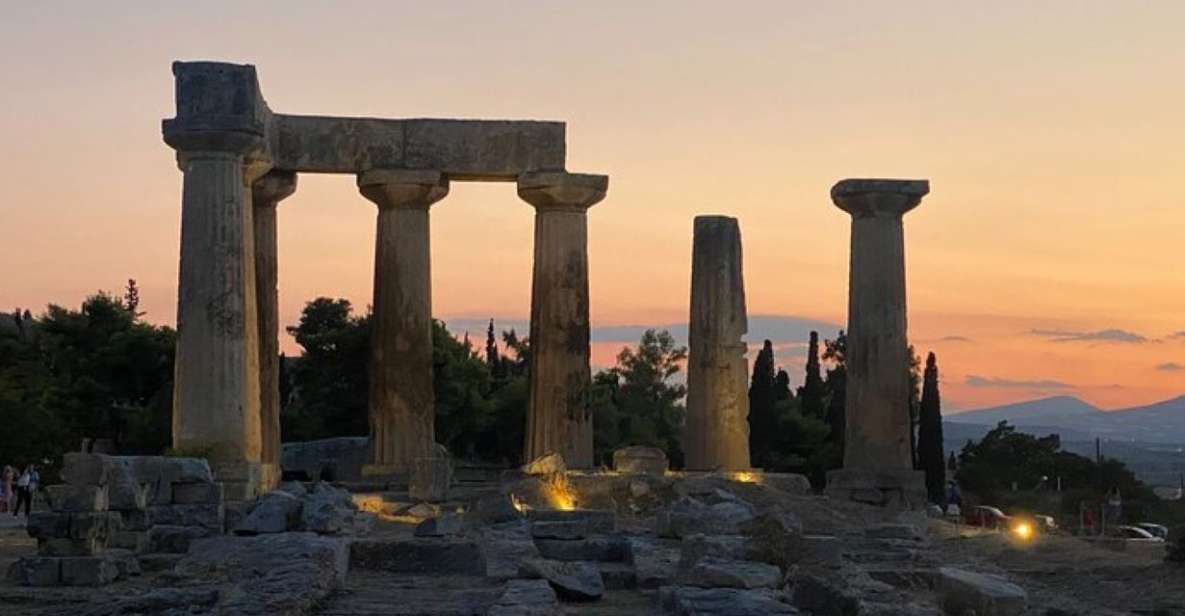
I would choose the 5 p.m. departure if it is available. The June visit began at that hour, when the tour buses had left Ancient Corinth and the evening air was cooler. The lower light also helped make the ruins and Acrocorinth more photogenic.
The schedule is still fairly brisk. You have only five hours for the round trip, the canal, the archaeological site, Acrocorinth, and lunch. If you want a long museum visit or time to inspect every wall and inscription, this is not the right format. It is designed to give you the main sights in one private outing.
The Corinth Canal in a 20-minute stop
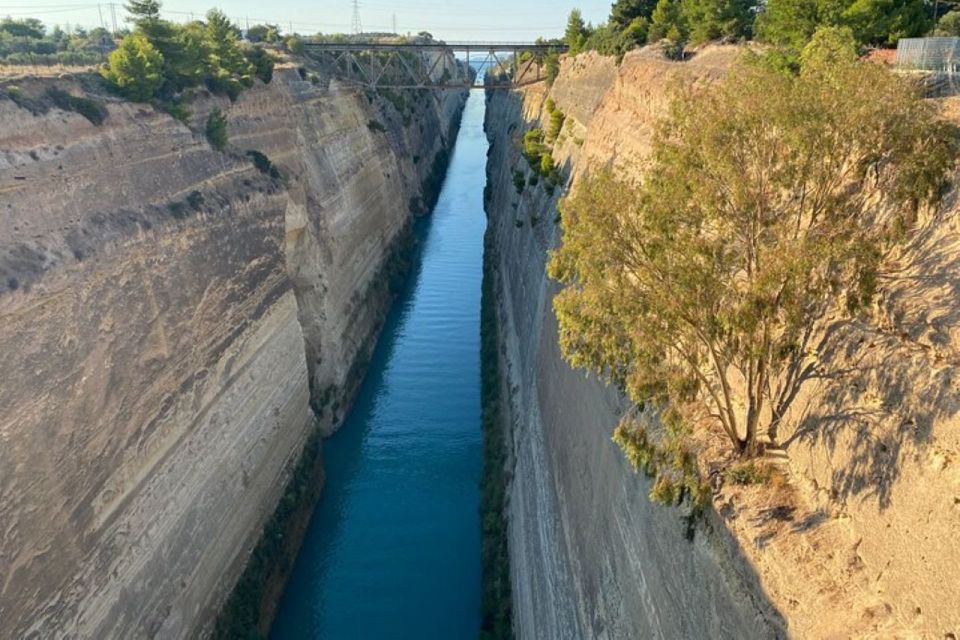
The first major stop is the Corinth Canal, opened in 1892. It cuts through the Isthmus of Corinth, separating the Peloponnese from the rest of mainland Greece and linking the Saronic Gulf with the Corinthian Gulf.
You walk across a pedestrian bridge for a closer look. From above, the canal appears narrow compared with the tall rock walls on either side. Twenty minutes is enough for photographs and a quick sense of the engineering, but not for a long pause.
Bungee jumping is available on some days for the adventurous. It is an optional activity, not a promised part of the tour, so do not book this outing expecting a guaranteed jump. The useful feature here is the short stop itself. You get a strong visual break from the drive and an easy introduction to the geography of Corinth.
The canal can be busy with passing traffic and people taking pictures. Your time is limited, so have your camera ready and stay aware of the meeting point. This is a photo stop, not a guided presentation or a long visit.
Ancient Corinth and the Roman Agora
From the canal, you continue to Ancient Corinth, located at the foot of Acrocorinth. The ancient city was controlled by the hill above it, and that relationship is clear as soon as you arrive. The open archaeological site feels exposed beneath the fortress, with the remains spread across a broad area.
The main visit lasts about an hour and is self-guided. Your driver can provide historical background, but cannot enter the site as your licensed guide. You receive the freedom to move at your own pace, yet you also need to read the signs and make sense of the ruins yourself.
The Roman Agora is the heart of the visit. This public square once served as a major center of civic life, and the surviving columns, foundations, and paved areas help you picture Corinth as a working city rather than a collection of broken stones.
The setting also gives the site its special character. Acrocorinth rises behind the ruins, while the surrounding area opens toward the Gulf. You can pause often for photographs, but the ground may require careful walking, and one hour passes quickly if you stop at every feature.
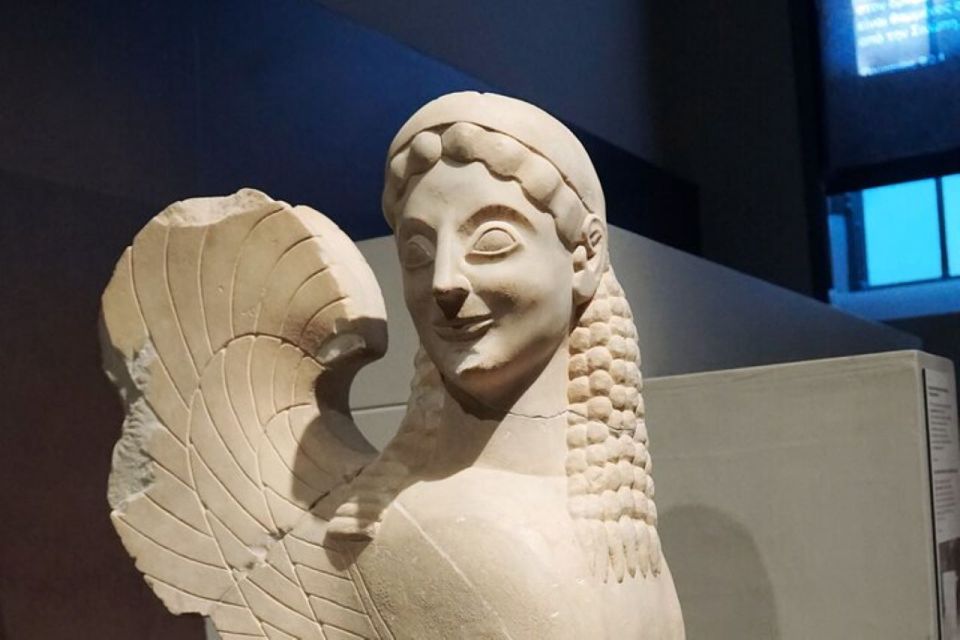
The small museum adds context to the outdoor remains. Since the visit is short, you may need to choose between spending longer inside the museum and giving more time to the Agora. I would first get a clear look at the main ruins, then use the museum to fill in details if time allows.
Entrance fees to Ancient Corinth are included for bookings made after January 27, 2025. The tour also includes skip-the-ticket-line access, which can save useful time on a half-day schedule.
The Temple of Apollo and Corinth’s earliest monumental remains
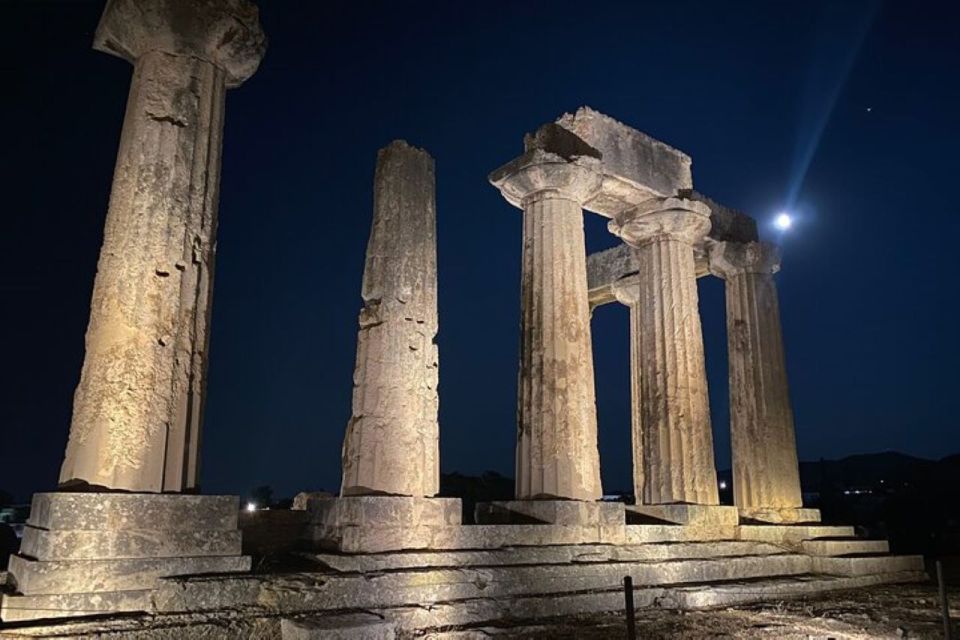
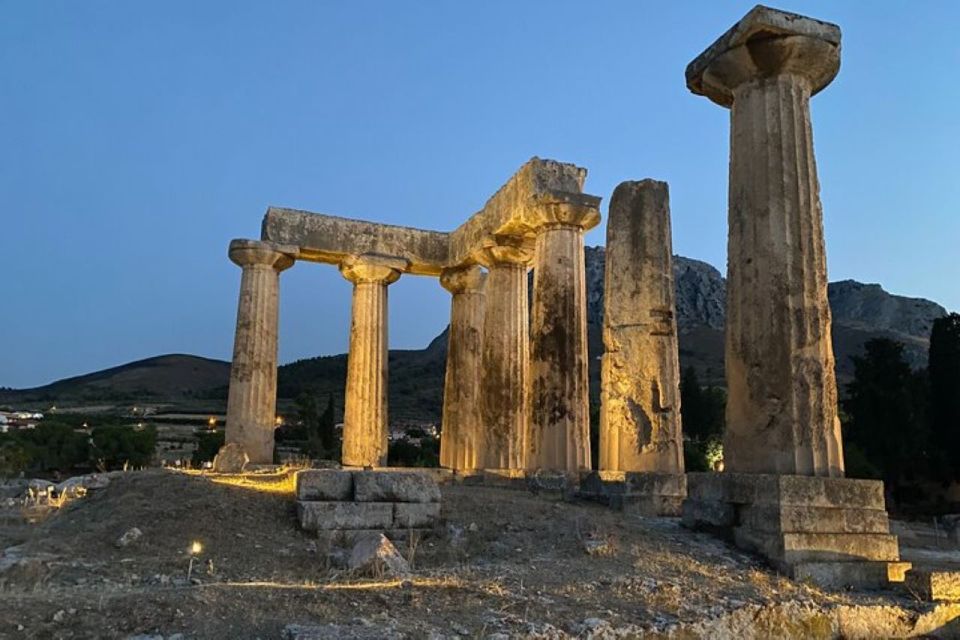
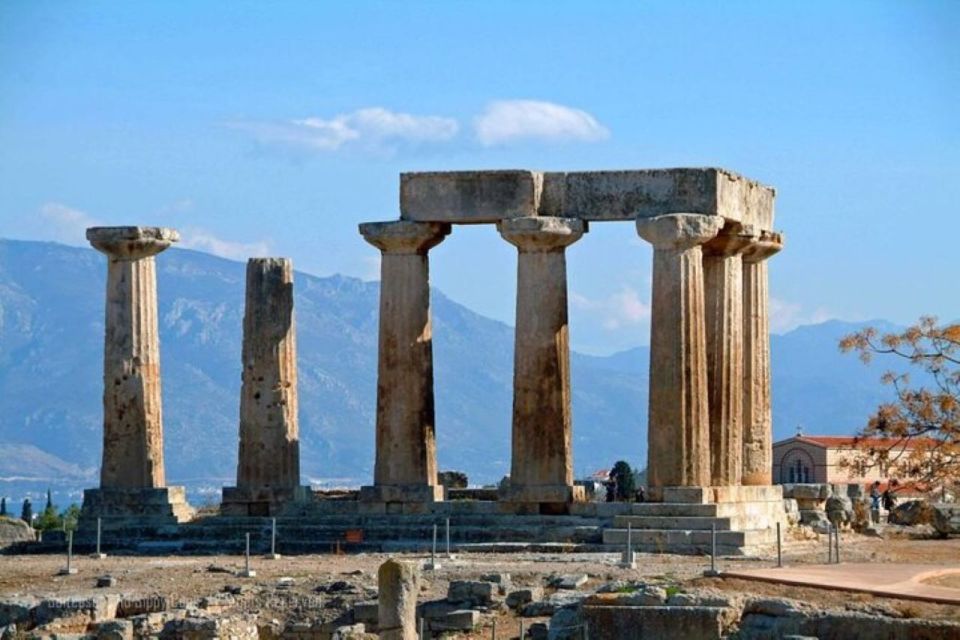
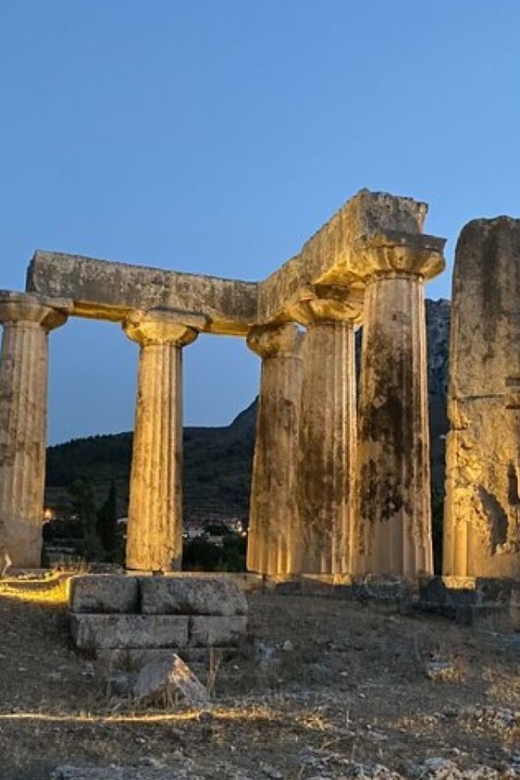
The Temple of Apollo is one of Corinth’s most important sights. It is described as one of the earliest Doric temples, and its surviving columns give you a direct look at an architectural style that shaped Greek temple design.
The temple visit has a listed duration of about 15 minutes, although it forms part of the larger Ancient Corinth stop. That short period is enough to appreciate the columns, take photographs, and hear the basic story. It is not enough for an extended architectural study.
The temple also helps you see the layers of Corinth. The site is not only about classical Greece. Roman public buildings, Greek religious architecture, and early Christian history all meet in the same place. You are looking at a city that changed under different rulers and religious traditions.
Because there is no licensed site guide included, I would read a little about the Temple of Apollo before leaving Athens if ancient architecture matters to you. The driver can add useful background, but the details inside the site are yours to discover.
The Apostle Paul’s connection to Corinth
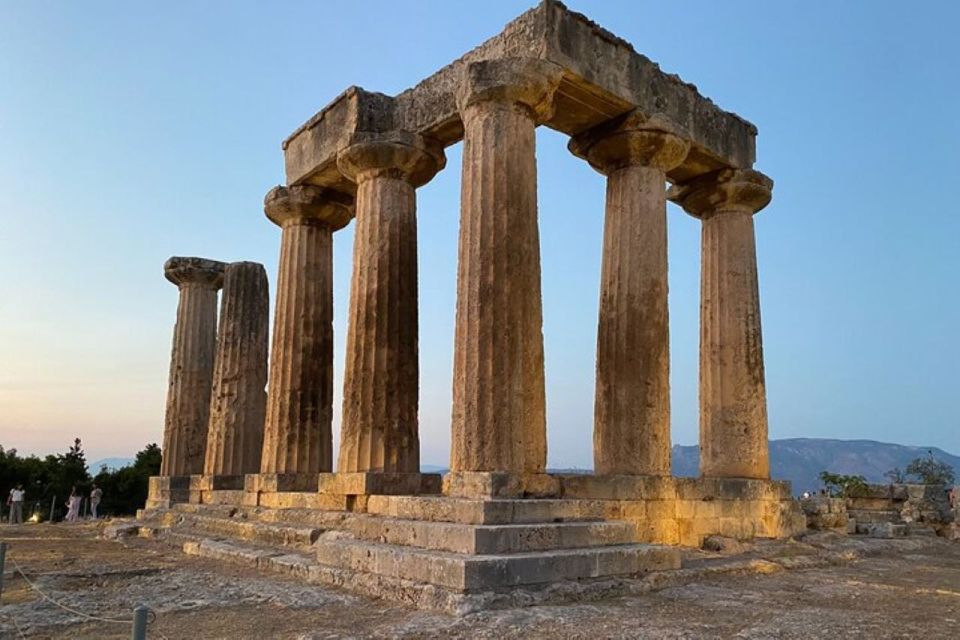
Ancient Corinth is also one of Greece’s major religious destinations because the Apostle Paul preached Christianity here. He was judged by the tribunal in the Agora and established what is described as the best-organized Christian church of the time.
That connection changes how you read the ruins. The Agora is not only a Roman civic space. It is also linked to a major episode in early Christian history. You can stand among the remains and picture Corinth as the place where Paul addressed people in the center of public life.
The tour does not include a licensed religious or archaeological guide, so the exact historical details will depend on the explanation your driver provides and the information available at the site. If Paul’s story is your main reason for visiting, the extra €280 licensed guide option may be worth considering, subject to availability.
For many people, this is the most memorable part of the visit. The archaeology gives you physical remains, while Paul’s connection gives the site a personal and spiritual dimension.
Acrocorinth: a fortress above the Gulf
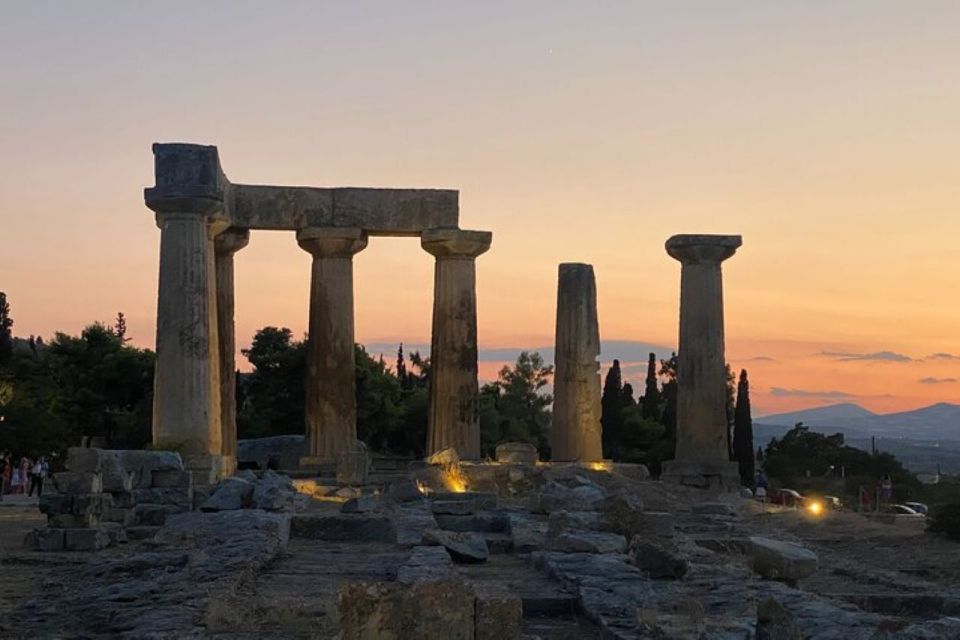
After Ancient Corinth, the vehicle climbs toward Acrocorinth. The hill was the old city’s defensive center, and the castle is described as the oldest and largest castle in southern Greece.
The scheduled stop lasts about 20 minutes and is mainly for photographs. You can look across the Corinthian Gulf and take in the scale of the fortress walls. The hilltop setting makes it easy to understand why Corinth was dominated by this strong position.
Do not confuse this stop with a full castle tour. The available time is short, and the plan emphasizes views and photographs rather than an extended walk through the fortifications. The road up is valuable because it lets you see Acrocorinth from a higher viewpoint without committing to a long independent visit.
Bring a phone or camera with enough battery. The fortress, Gulf, and evening light create some of the best photo opportunities on the trip. If you want to explore the castle in depth, ask before booking how much additional time may be possible, since the published schedule allows only a brief stop.
Greek lunch beside the sea
After leaving the archaeological area, you stop for traditional Greek lunch with a sea view. This gives the tour a welcome change of pace after the exposed ruins and the climb toward Acrocorinth.
The meal is not listed as included, so plan to pay for your own food and drinks. The restaurant is not specified in the available details, and the exact menu may vary. Still, the timing makes sense. You have spent the afternoon or early evening looking at stones and fortifications, and a relaxed meal lets you enjoy the coastal setting without rushing through another monument.
This stop also makes the experience feel more like a private outing than a basic transfer to an archaeological site. You can ask your driver for local suggestions and take a break before returning to Athens. If you have strict dietary needs, raise them when arranging the tour, since no special meal details are provided.
What the private format is worth at $465 per person
At $465 per person, this is an expensive half-day excursion. The price reflects private luxury transportation, hotel pickup and drop-off, entrance fees to Ancient Corinth for qualifying bookings, bottled water, and a flexible private schedule. It does not include the licensed guide, lunch, personal expenses, or airport transfers.
The value depends on what you want from Corinth. If you are traveling with several people, private transport can make more sense because the vehicle and schedule are reserved for your group. You avoid organizing buses, finding the canal, and arranging a return journey from a site outside Athens.
The price is harder to justify if you mainly want a quick photo at the canal and a short look at ruins. A standard group excursion may cost less, though it would not offer the same privacy or pickup convenience. This tour earns its price best when you value comfort, a direct route, an evening departure, and the ability to ask your driver questions along the way.
The optional licensed guide changes the calculation. Adding €280 gives you a professional guide if one is available, but it raises the total substantially. I would consider it for visitors who care deeply about classical architecture, early Christianity, or detailed archaeological interpretation. If you are happy to read signs and explore at your own pace, the driver-only arrangement may be enough.
Who will enjoy this Corinth trip most
I recommend this outing for you if you are staying in Athens and want to see a major Peloponnese site without arranging a rental car. It is also a good fit for families or private groups that prefer their own vehicle and a short, focused day away from the city.
The evening format suits photographers and anyone sensitive to heat. The 5 p.m. visit can bring cooler conditions and fewer buses, based on the June timing. Sunset light around Ancient Corinth and Acrocorinth is another reason to favor the later departure.
History fans should understand the limits. You will see important remains, including the Agora and Temple of Apollo, but the main archaeological visit is only an hour and is self-guided. For a full explanation, pay for the licensed guide if available or choose a longer archaeological tour.
The tour is wheelchair accessible, and pickup is included outside your hotel or accommodation. Airport pickup and drop-off are not included. English is the listed language, and the private group format keeps the experience limited to your party.
Should you book this Ancient Corinth tour?
Book it if you want a comfortable private ride from Athens, a cool evening visit, and a well-chosen set of Corinth highlights. The strongest parts are the quiet timing, the contrast between the canal and the ruins, the view from Acrocorinth, and the link to the Apostle Paul.
Think twice if you expect a licensed guide to walk through every site with you. That service costs an additional €280 and depends on availability. Without it, you have a historically informed driver and a self-guided archaeological visit.
For the best experience, choose the 5 p.m. departure when possible, wear practical shoes, keep lunch money handy, and allow extra attention for the Temple of Apollo and Agora. If those conditions suit you, this is a useful and memorable way to see Corinth without giving up the convenience of an Athens hotel pickup.
FAQ
How long does the Ancient Corinth tour last?
The tour lasts five hours, including the drive from Athens, the Corinth Canal stop, Ancient Corinth, Acrocorinth, lunch, and the return to Athens.
Is hotel pickup included?
Yes. Your driver waits outside your hotel or accommodation in Athens and returns you there after the tour.
Is airport pickup included?
No. Airport pickup and drop-off are not included in this activity.
Is the tour private?
Yes. The experience uses private luxury transportation and is arranged for a private group.
Can the driver guide me inside Ancient Corinth?
No. The driver is not licensed to accompany you inside any site. You explore Ancient Corinth on your own unless you request a licensed guide for an additional €280, subject to availability.
Is a licensed guide included?
No. A licensed guide can be requested at an additional cost of €280, depending on availability.
What can I see at Ancient Corinth?
The site includes the Roman Agora, the Temple of Apollo, and a small museum. It is also connected with the Apostle Paul, who preached Christianity in Corinth.
How long is the Corinth Canal stop?
The canal stop is scheduled for about 20 minutes. You can walk across a pedestrian bridge and take photographs.
Is the entrance fee included?
Entrance fees to Ancient Corinth are included for bookings made after January 27, 2025. Personal expenses and lunch are not included.
Is the tour wheelchair accessible?
Yes. The activity is listed as wheelchair accessible.
Can I cancel for a refund?
Yes. You can cancel up to 24 hours in advance for a full refund. You can also reserve now and pay later, according to the booking terms.