REVIEW · ATHENS
Aristotle’s Philosophy Experiential Workshop, Lyceum, Athens
Book on GetYourGuide →Operated by Hellas Revival · Bookable on GetYourGuide
Aristotle’s Lyceum is not just a pile of old stones. It is the setting for a lively, hands-on lesson in how the philosopher thought people could live well. You begin under the trees of Rizari Park, then move into the archaeological site where Aristotle taught and walked with his students.
I like the interactive card game, which gives Aristotle’s ideas about virtue a practical shape. I also like the short reading of ancient Greek phrases, followed by modern examples of the Golden Mean. The main drawback is that this is not a conventional guided tour, so you should book it for discussion and participation rather than a long lecture on the ruins.
In This Review
- Key points about the Lyceum philosophy workshop
- What this Aristotle experience is really about
- Starting beneath the trees in Rizari Park
- Walking through Aristotle’s Lyceum
- The virtue card game and Aristotle’s ethics
- Sitting in the amphitheater with the ruins below
- How much the $90 price gives you
- Who should book this activity
- Practical details before you go
- Is Aristotle’s Lyceum workshop worth booking?
- FAQ
- Is this a guided tour of the Lyceum?
- How long does the workshop last?
- What is included in the $90 price?
- How much is admission to the Lyceum?
- Is the experience conducted in English?
- Is the workshop suitable for children?
Key points about the Lyceum philosophy workshop
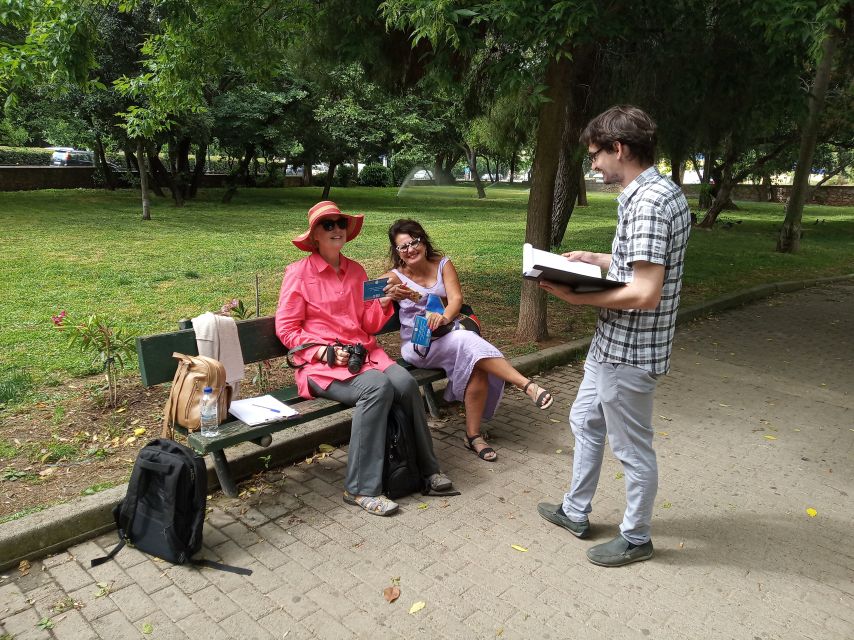
- Aristotle’s actual school: Walk through the archaeological site of the Lyceum, the place linked to Aristotle and his students.
- Designed for beginners: You need no previous study of philosophy to take part.
- A practical ethics lesson: Use a card game and daily-life examples to examine virtues and the Golden Mean.
- Ancient Greek included: Read selected phrases aloud, with guidance from the facilitator.
- Small-group format: Private and small-group options are available, making discussion easier.
- Outdoor setting: Most of the 100 to 101 minute experience takes place outside, with a nearby café available as a rain alternative.
What this Aristotle experience is really about
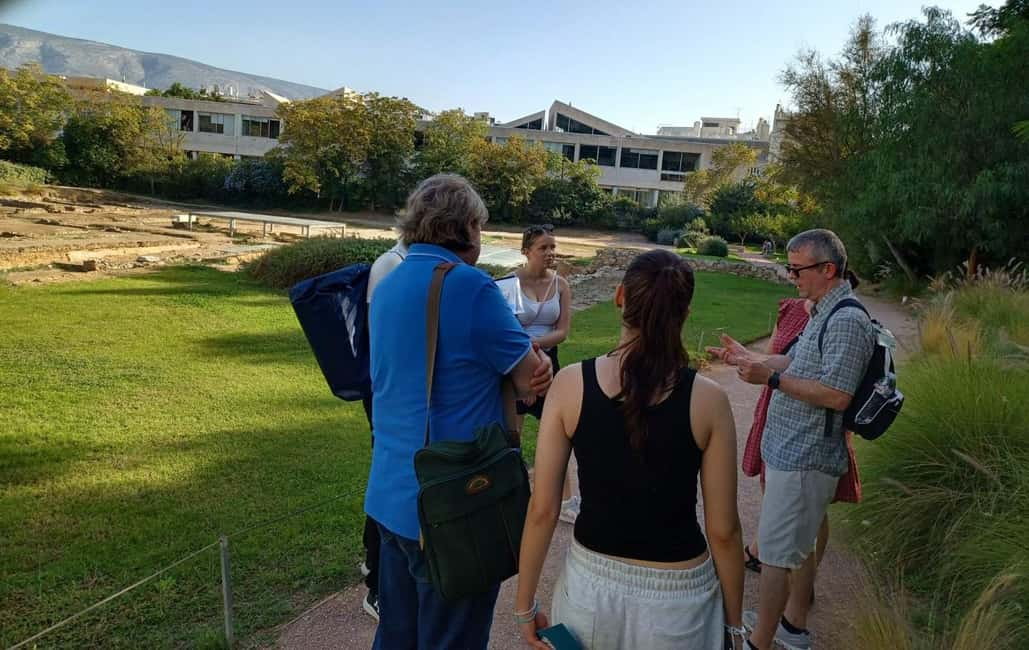
This is a philosophy workshop held in and around the Lyceum, not a standard sightseeing walk. You are not simply told who Aristotle was, shown a few ruins, and sent on your way. Instead, the facilitator uses the site as a classroom and asks you to think through Aristotle’s ideas with the people around you.
That difference matters. If you want dates, architectural details, and a tightly scripted account of ancient Athens, a formal archaeological tour may suit you better. If you want to understand how Aristotle’s ethics can apply to choices, habits, and relationships today, this activity offers a more active route.
The workshop is intended for beginners. You do not need to know the difference between Plato and Aristotle, or have read the Nicomachean Ethics, to follow along. The discussion begins with the basic chain of influence: Socrates taught Plato, and Plato taught Aristotle. That short introduction gives you enough context for the rest of the session.
The focus is self-excellence, or the effort to become a better person through repeated choices and habits. The language can sound grand at first, but the workshop brings it down to daily life. You look at how a person acts with courage, fairness, self-control, and good judgment, rather than treating virtue as an abstract museum label.
A few more Athens tours and experiences worth a look



Starting beneath the trees in Rizari Park
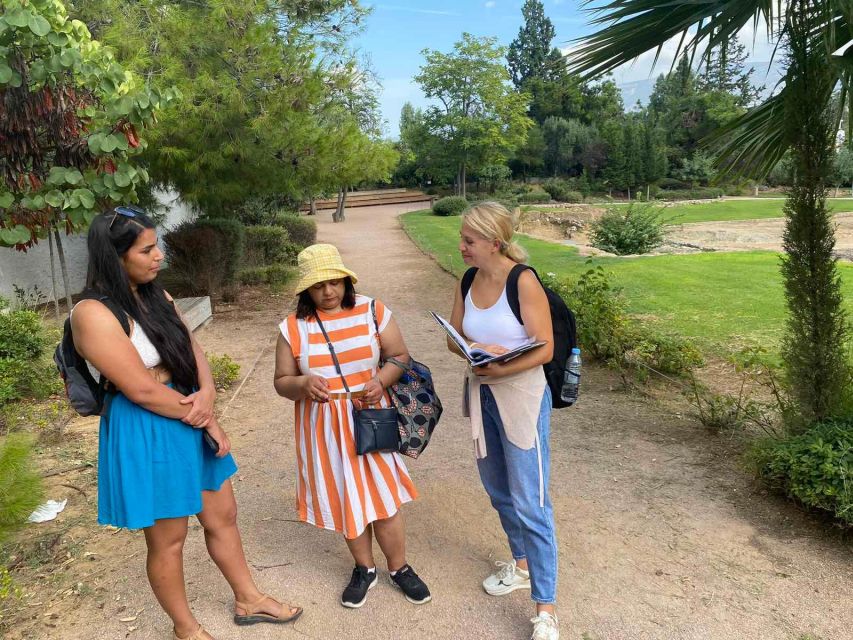
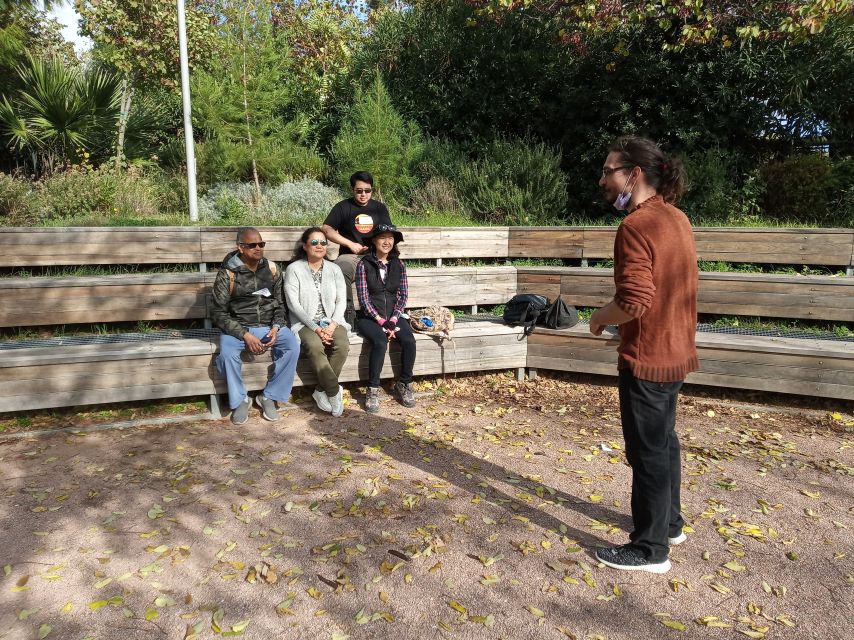
The experience begins in Rizari Park, under shaded trees. This is a sensible place to start because you can settle into the subject before entering the archaeological site. You meet the English-speaking facilitator and the other members of your group, then spend a short time establishing the historical setting.
The park also gives the workshop a relaxed opening. Philosophy can feel intimidating when presented in a classroom or lecture hall. Here, the first conversation takes place outdoors, with the facilitator guiding you into the subject at an easy pace.
One especially appealing touch is the chance to read some of Aristotle’s phrases aloud in ancient Greek. You are not expected to speak the language fluently. The point is to hear the sounds and encounter Aristotle’s words in their original form before discussing what they mean.
I would treat this part as a warm-up rather than a language lesson. The value lies in slowing down and giving the text some physical presence. You hear the words, say them yourself, and then consider how the ideas connect with the discussion that follows.
The historical introduction is brief, so it should not overwhelm you with background. That is useful if you are new to classical philosophy. The facilitator’s job is to provide just enough context to make the place and the ideas clear.
Walking through Aristotle’s Lyceum
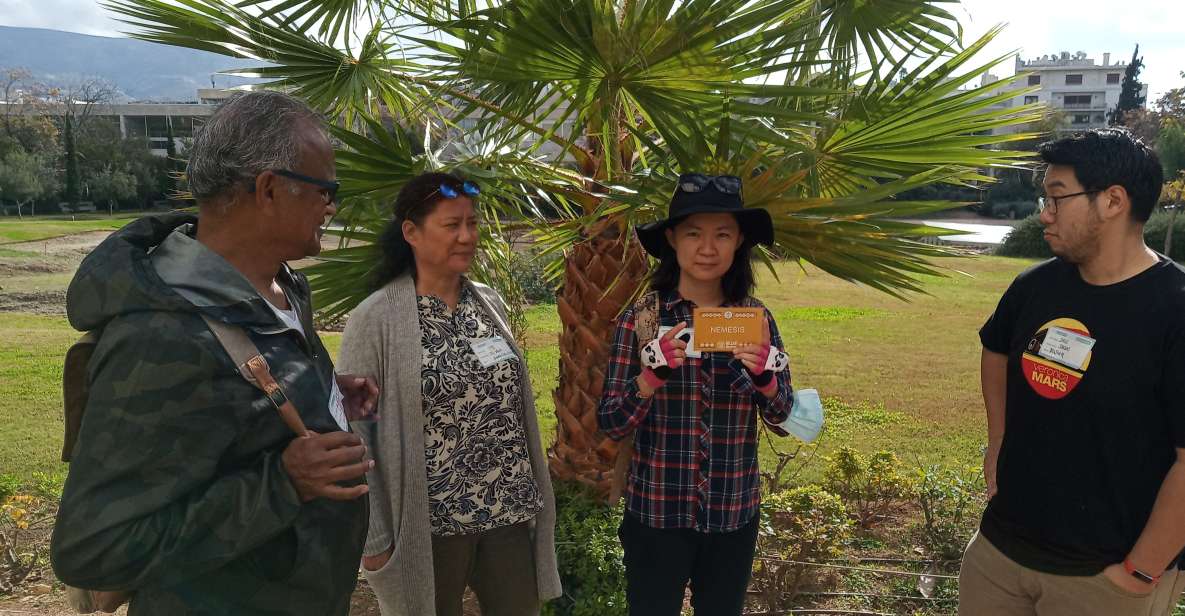
From Rizari Park, you visit the nearby archaeological site of the Lyceum. This was Aristotle’s school, and the workshop places you in the same broad setting where he walked and taught with his students. The physical connection is the heart of the experience.
The ruins are not presented as a backdrop for a normal sightseeing circuit. You walk around the excavations while taking part in the philosophy activity. That combination helps connect the ancient setting with the main subject: how people build a good life through their actions.
Keep your expectations realistic. The supplied information does not promise a full archaeological explanation of every visible feature, and this is specifically described as not being a guided tour. You will not receive the same type of detailed site commentary you might get from an archaeology specialist.
Instead, the site gives the conversation a strong sense of place. Aristotle’s ideas are discussed where his school once operated, not in a hotel meeting room. For many people, that physical setting will make the workshop more memorable than a purely indoor class.
The walk also breaks up the discussion. You are not seated for the full 100 to 101 minutes. Moving through the ruins while talking and playing the card game gives the session a useful rhythm. It feels closer to a shared exercise than a formal lecture.
Since the activity takes place outdoors, wear clothing suited to the weather and be ready for sun or rain. The shaded start in Rizari Park is helpful, but the session remains an outdoor experience overall.
The virtue card game and Aristotle’s ethics
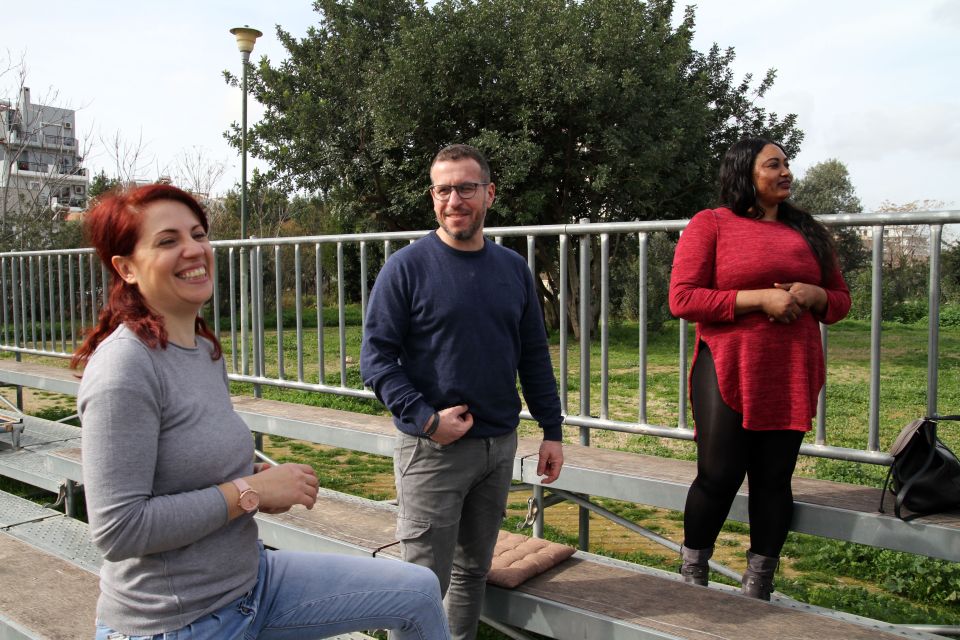
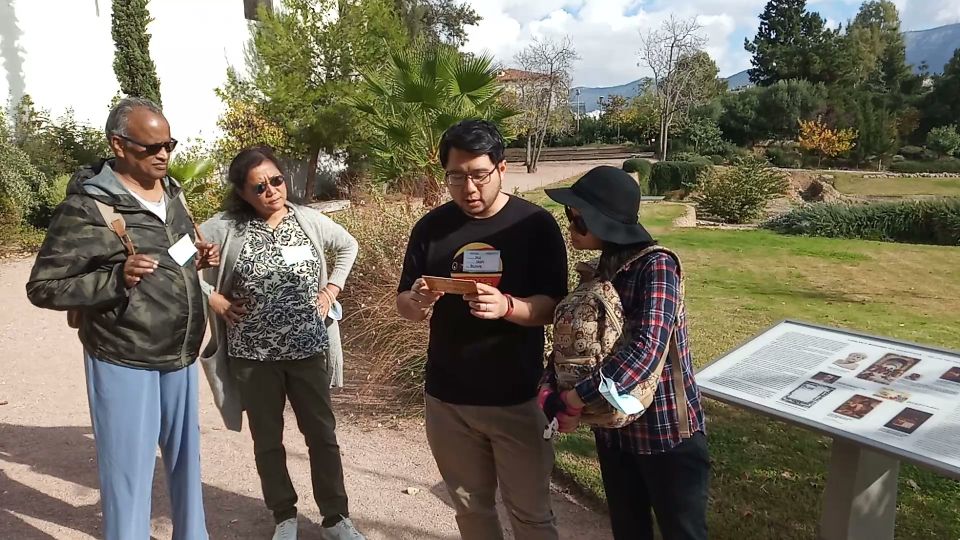
The card game is the most unusual part of the program. While walking through the Lyceum, you use cards to explore Aristotle’s theory of ethics, especially the idea of virtues.
This format matters because Aristotle’s ethics is about practice. Virtue is not simply something you define once and remember for an exam. It develops through repeated behavior, judgment, and choices. A game gives the group a way to examine those ideas without turning the session into a dense academic talk.
The activity is designed for interaction, so you should expect to contribute. You may be asked to consider examples, compare responses, or discuss how a virtue might appear in ordinary life. The exact prompts can vary with the facilitator and the group, but the central aim is clear: take Aristotle’s ideas off the page and test them against real situations.
That makes this a good choice for people who enjoy conversation. If you prefer to listen quietly, you may find the format more demanding than a standard tour. The session works best when participants are willing to speak, think aloud, and hear other points of view.
The card game also gives beginners a useful entry point. You do not need to remember technical terms or understand every part of Aristotle’s work. You can begin with familiar human problems and then see how the philosophical framework helps organize them.
The activity has received its strongest praise for being interactive, and that is the right quality to emphasize. The workshop is not trying to make you an expert in Aristotle in under two hours. It is trying to make his approach to character and conduct easier to grasp.
Sitting in the amphitheater with the ruins below
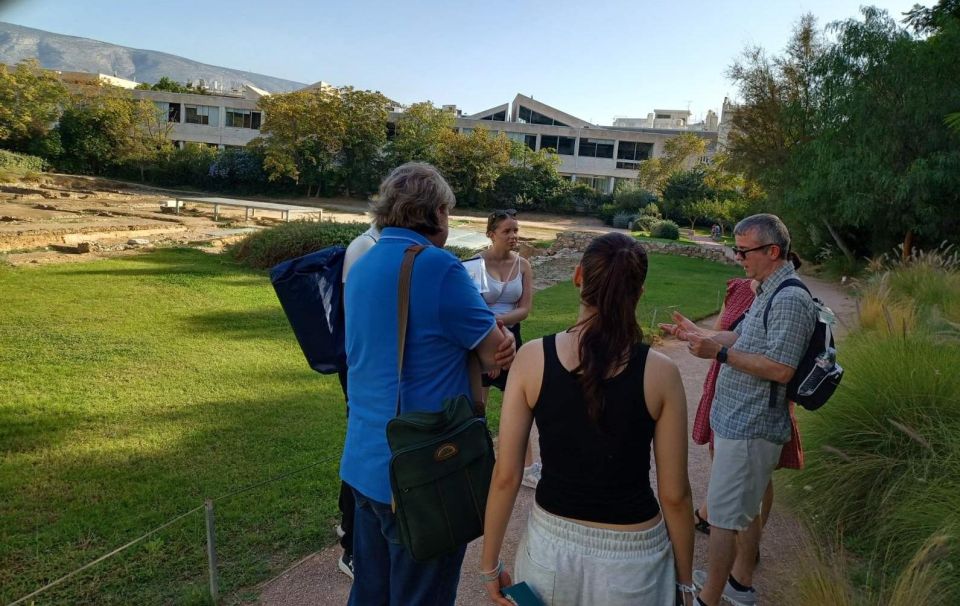
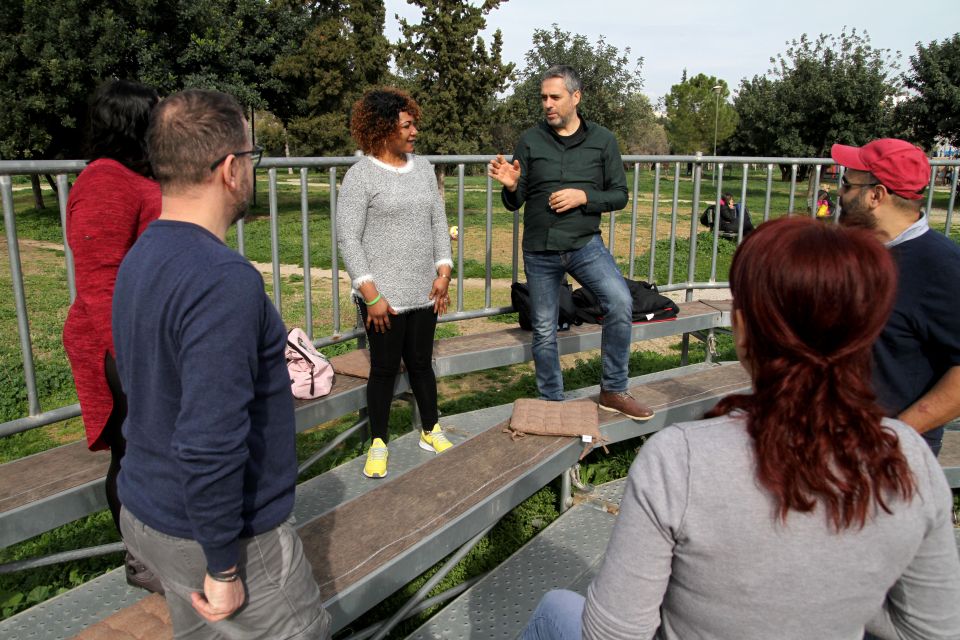
The final part takes place in a small amphitheater with a direct view of the excavations. After walking and playing the card game, you sit down for a more focused discussion of the Aristotelian Golden Mean.
The Golden Mean is often misunderstood as simply splitting the difference between two choices. The workshop uses examples from modern daily life to show a more careful idea: finding the appropriate response between excess and deficiency. The right balance is not always the mathematical middle. It depends on the situation, the person, and the judgment involved.
That discussion is where the workshop’s practical side comes together. You consider how Aristotle’s ideas might relate to self-control, courage, social behavior, and other choices you make around other people. The stated goal is eudaimonia, the ultimate human goal in Aristotelian thought.
Eudaimonia is commonly connected with living well or flourishing. Here, you explore the idea as a result of developing good habits and acting with sound judgment. The workshop does not promise a quick formula for happiness. Instead, it presents Aristotle’s view that a good life is built through the way you live day after day.
The amphitheater setting helps the final discussion feel distinct from the earlier walking section. You have a direct view of the site while considering the ideas that have been introduced. It is a calm ending, and it gives you time to connect the ancient setting with your own modern examples.
- All Day Cruise -3 Islands to Agistri,Moni, Aegina with lunch and drinks included
★ 5.0 · 4,958 reviews






How much the $90 price gives you
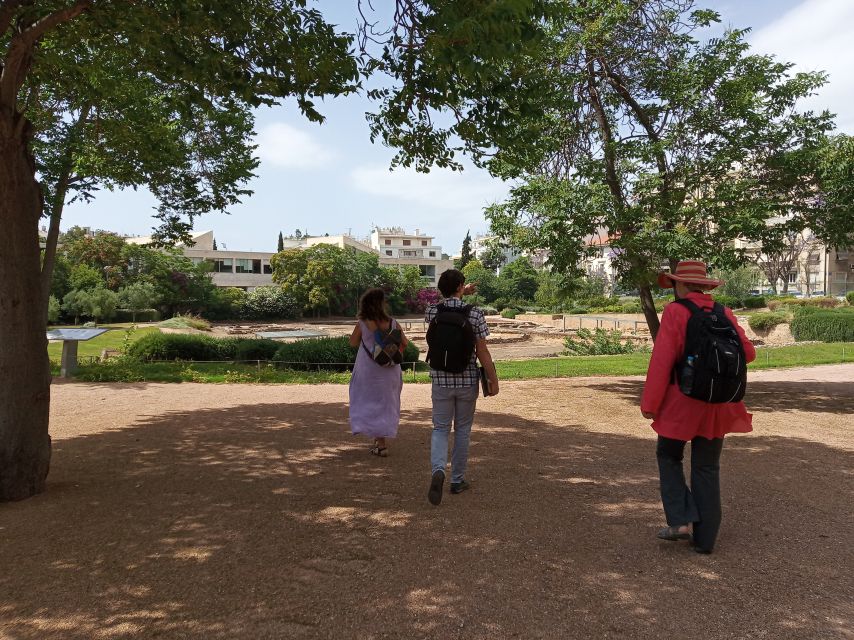
The price is $90 per person. The fee includes the expert facilitator, all workshop materials, and 24 percent local taxes. You must also pay the Lyceum entrance fee separately, listed as €5 for the full rate and €3 for the reduced rate.
That makes the total cost higher than the headline price, so include the site admission when planning your budget. Still, the value depends on what you want from the visit. You are paying for a specialized, small-group philosophy activity with a facilitator and materials, not just admission to an archaeological site.
For someone already planning to visit the Lyceum only to look at the ruins, the workshop adds structure and purpose. You receive a guided philosophical process, an ancient Greek reading, a card-based activity, and a closing discussion in the amphitheater. Those extras are the reason to choose this experience.
For a visitor who wants the cheapest possible introduction to Aristotle, $90 may feel steep. The archaeological entrance fee is modest, but the workshop price reflects the instruction and the small-group format. I would compare it with the cost of other specialist activities in Athens rather than with a basic museum ticket.
Private or small-group options are available. A smaller group can be especially useful here because the experience depends on conversation. You will have more room to ask questions and work through examples without waiting for a large crowd to have its say.
Who should book this activity
This workshop is best for adults and older teenagers who enjoy ideas, conversation, and unusual cultural activities. It is not suitable for children under 15. You do not need a university background in philosophy, but you should be comfortable taking part in a group discussion in English.
I would recommend it to you if you want to connect an ancient site with a question that still matters: how should I act, and what kind of person am I becoming? It is also a good fit if you have already seen Athens’ major monuments and want an activity with a different pace and subject.
The workshop may suit couples, friends, private groups, and solo visitors who like meeting others through a shared activity. The interactive format gives people something specific to discuss, rather than leaving everyone to make small talk.
You may want to skip it if your priority is a detailed archaeological tour. You may also find it less satisfying if you dislike speaking in front of other people or prefer a passive sightseeing experience. The facilitator is there to lead a workshop, not to provide a long, uninterrupted lecture.
Practical details before you go
The session lasts about 100 to 101 minutes. Starting times vary, so check availability when you book. The meeting point may vary depending on the option you select, and the activity ends back at the meeting point.
The workshop is conducted in English. It is wheelchair accessible, though the activity takes place outdoors at a historical site, so you may want to confirm that the specific meeting arrangement suits your needs.
Smoking, food, drinks, luggage, and large bags are not allowed during the experience. Bring only what you need for the session. Respectful conduct is required because the workshop takes place at a heritage site. That includes appropriate behavior, cleanliness, dress, volume, and care with photographs and video.
The experience is held outdoors. If rain makes the planned session impossible, the workshop may move to the café at the Byzantine Museum next door. That gives the activity a possible shelter option, but you should still check the weather and dress sensibly.
The facilitators are trained and certified in first aid, though they are not legally allowed to provide medicines. Free cancellation is available up to 24 hours before the activity for a full refund, and you can reserve now and pay later.
Is Aristotle’s Lyceum workshop worth booking?
Book this if you want more than a quick look at ancient ruins. The strongest reason to go is the way the workshop turns Aristotle’s ethics into a shared, practical activity. The card game, ancient Greek reading, and Golden Mean discussion give the visit a clear shape and keep the subject approachable.
At $90 per person, plus the €5 or €3 site admission, it is not a bargain archaeological visit. It is a specialist experience for people who value guided discussion and a small-group setting. You should choose it for the quality of the encounter, not simply for the number of minutes or the amount of information delivered.
I would make this a strong pick for curious adults, philosophy beginners, and repeat visitors to Athens. If you want a conventional tour with extensive ruins commentary, choose something else. If you want to walk where Aristotle taught while thinking about how to live well today, this is a thoughtful and genuinely interactive way to spend an hour and forty minutes.
FAQ
Is this a guided tour of the Lyceum?
No. It is a philosophy workshop led by an expert facilitator, using the archaeological site as part of the experience. It is suitable for people without previous knowledge of philosophy.
How long does the workshop last?
The activity lasts approximately 100 to 101 minutes. Starting times vary, so check availability for the date you want.
What is included in the $90 price?
The price includes the expert facilitator, all workshop materials, and 24 percent local taxes. Admission to the archaeological site is not included.
How much is admission to the Lyceum?
The entrance fee is listed as €5 for the full rate and €3 for the reduced rate.
Is the experience conducted in English?
Yes. The facilitator conducts the workshop in English, and the activity includes the chance to read some of Aristotle’s phrases in ancient Greek.
Is the workshop suitable for children?
It is not suitable for children under 15 years old. Participants should also be ready to take part in an interactive discussion.