REVIEW · EPIDAURUS
From Athens Sea Kayak Sunken City of Epidaurus
Book on GetYourGuide →Operated by NomadsPath · Bookable on GetYourGuide
The best part of this day is the sunken Roman villa at Epidaurus, where clear, shallow water lets you look down at mosaic floors, house foundations, pottery, and a partly intact wall. You kayak across the bay, then use a mask and snorkel to see the ruins from above. I like the close look at an ancient site, and I like that the day includes a small group limited to six people. The main drawback is the long 12-hour schedule, with much of the day spent traveling between Athens and the Peloponnese.
I also like the human touch: Michalis handles the drive and answers questions about Greek language, culture, and the countryside, while Yanos leads the kayaking. You get a family-style lunch, time to shower and relax at the beach, and a stop at the Corinth Canal. Bring water, a towel, sunscreen, swimwear, and dry clothes, since this is an active beach day rather than a simple sightseeing trip.
In This Review
- Key points to know before booking
- Why the Sunken City of Epidaurus is the main event
- The ride from Athens to the Peloponnese
- Getting started at Kalymnios Beach
- A cave, a theater, and the open bay
- Snorkeling above the Roman villa
- A family lunch and time to slow down
- The Corinth Canal stop on the return
- What the $233 price includes
- Who should choose this outing
- Practical preparation for the water
- Should you book the Sunken City of Epidaurus?
- FAQ
- How long does the Sunken City of Epidaurus tour take?
- What is included in the price?
- Is snorkeling equipment included?
- How deep is the Sunken City of Epidaurus?
- How many people are in the group?
- What should I bring?
Key points to know before booking
- The Roman villa sits in less than three meters of water, making the ruins visible with a mask and snorkel.
- The group is limited to six people, so the guides can give close attention on the water.
- The route includes more than the sunken city, with a small ancient theater, a cave, swimming, lunch, and the Corinth Canal.
- Michalis and Yanos have different jobs, with Michalis driving from Athens and Yanos giving the kayak instruction.
- Lunch is family-style, prepared locally, but bottled water and alcoholic drinks are not included.
- You need a full day, roughly 12 hours including transport from and back to your Athens hotel.
Why the Sunken City of Epidaurus is the main event
Epidaurus is best known for its ancient sanctuary and theater, but this outing takes you to a less usual site: a Roman villa beneath the water near Kalymnios Beach. The remains date to the second century AD and were located close to the ancient Agora, opposite the old port and below the Acropolis of ancient Epidaurus.
This is not a visit to a large underwater archaeological park with marked paths and display cases. You see the remains in their natural setting, from a kayak and while snorkeling in shallow water. The site includes house foundations, mosaic floor sections, pottery, structural supports, and an intact section of debris wall. Clear water makes the view possible, though visibility can still depend on the sea and weather conditions on your day.
I find this kind of archaeology especially rewarding because the ruins are tied to ordinary life. A villa gives you a sense of rooms, floors, walls, and domestic space, rather than only grand monuments. You are looking at a place where people lived near a port and near the routes used by pilgrims and visitors to Epidaurus.
The area also had a strong connection with healing. In ancient Greek times, people came to Epidaurus seeking physical and spiritual health. You will not be taking part in an ancient healing ritual, of course, but the combination of sea, ruins, and the old pilgrimage setting gives the outing a clear sense of place.
You can also read our reviews of more tours and experiences in Epidaurus.

The ride from Athens to the Peloponnese
Hotel pickup and drop-off are included, which matters on a day that lasts 12 hours. You do not need to arrange a separate bus, rental car, or meeting point outside Athens. The drive also gives the day a useful introduction to the region.
Michalis is the driver and guide for the road portion. He answers questions about the language, culture, and scenery along the way, so the transport is more than a silent transfer. Still, be realistic about the distance: the trip from Athens to Epidaurus and back takes a large part of the day.
That travel time is the price of reaching a coastal archaeological site outside the capital. If you have only a short stay in Athens, you will need to decide if the kayaking and snorkeling are worth giving up a full day in the city. If you enjoy outdoor outings and want to see more of the Peloponnese, the included transport makes the choice easier.
The day begins at the beach, not at a city museum or formal archaeological entrance. Wear clothes that are easy to change out of, and pack a towel, sunglasses, a sun hat, sunscreen, water, swimwear, and flip-flops. A change of clothes is particularly useful after the kayak and snorkeling portion.
Getting started at Kalymnios Beach
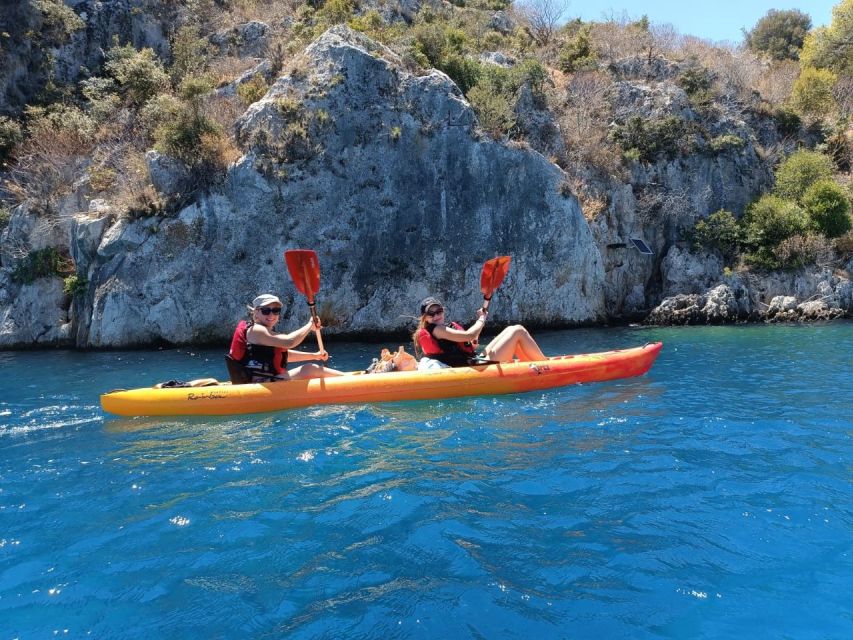
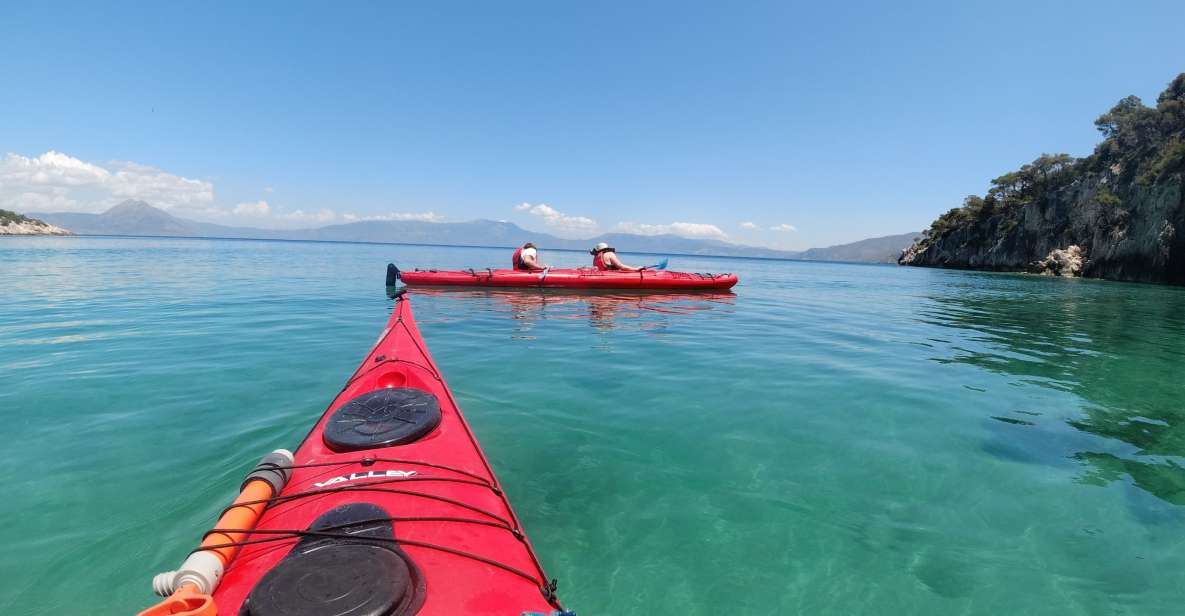
At Kalymnios Beach, Yanos gives you a sea kayak tutorial before you set off. This is important even if you have paddled before, since a short briefing helps you understand how to handle the kayak, move with the group, and stay comfortable on the water.
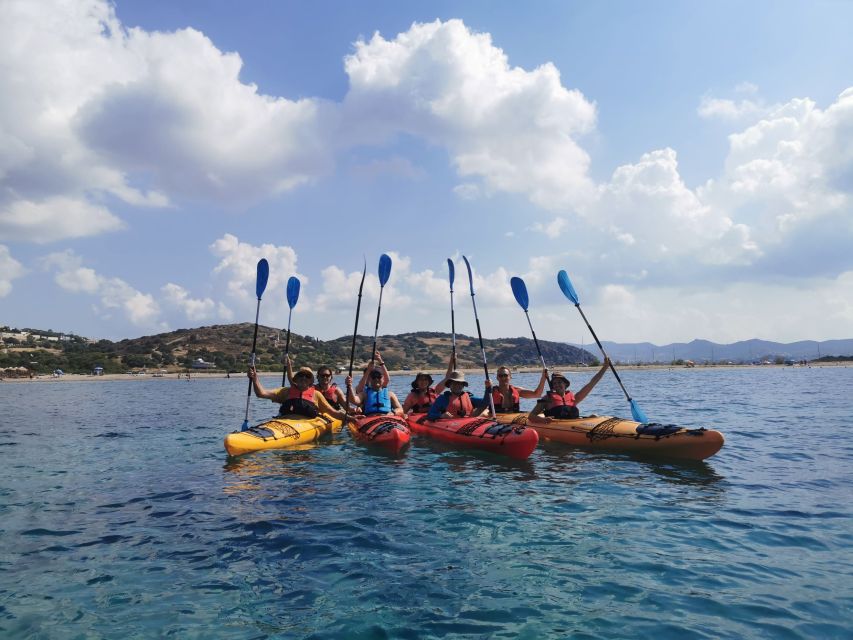
The group size is limited to six participants. That is a real advantage here. A guide can keep a closer eye on the group, answer questions as you go, and help you feel less rushed at the archaeological site. The small-group format also suits anyone who prefers a quieter day over a large outing with many kayaks.
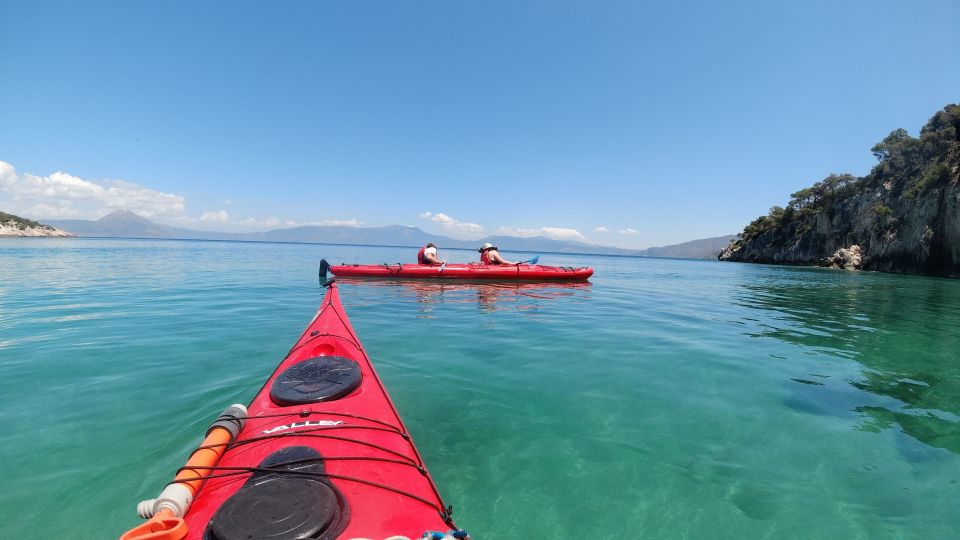
You paddle across the bay, with stops along the way. The route is not only a straight trip to the sunken villa. There is time for a swim, a short walk to a small ancient theater, another dip in the sea, and a paddle to a small cave.
These pauses break up the physical work. Sea kayaking is not a passive sightseeing activity, but the schedule gives you chances to get out of the boat and cool off. The exact amount of effort will depend on weather, sea conditions, and your own fitness, so this is best for people who are comfortable with an active day around water.
A cave, a theater, and the open bay
The small theater adds a useful land-based stop to a water-focused excursion. After crossing the bay, you take a short walk to see it, then return to the water. It is a modest site compared with the famous theater at Epidaurus, but it helps connect the coastal setting with the ancient town.
The guides point out features of interest during the route, so you are not left to paddle without context. That guidance matters because underwater ruins can be difficult to read. A wall section or floor pattern may look like a random shape until someone explains what you are seeing.
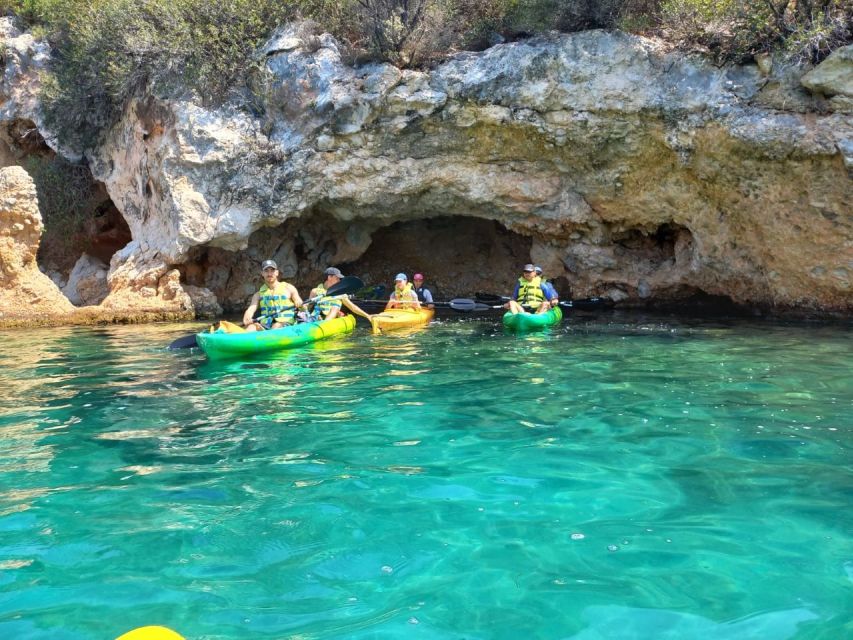
The small cave is another change of scene. You paddle out to it before reaching the sunken villa, adding a natural feature to the archaeological focus. There is also more swimming before the snorkeling portion, so you can treat the day as a mix of paddling, short walks, swimming, and looking at ruins.
Do not expect a high-speed adventure or a long-distance kayak expedition. The appeal is the variety and the chance to reach a site that would be hard to appreciate from shore. You are moving at a pace that allows the guides to point things out and keep the outing social.
Snorkeling above the Roman villa
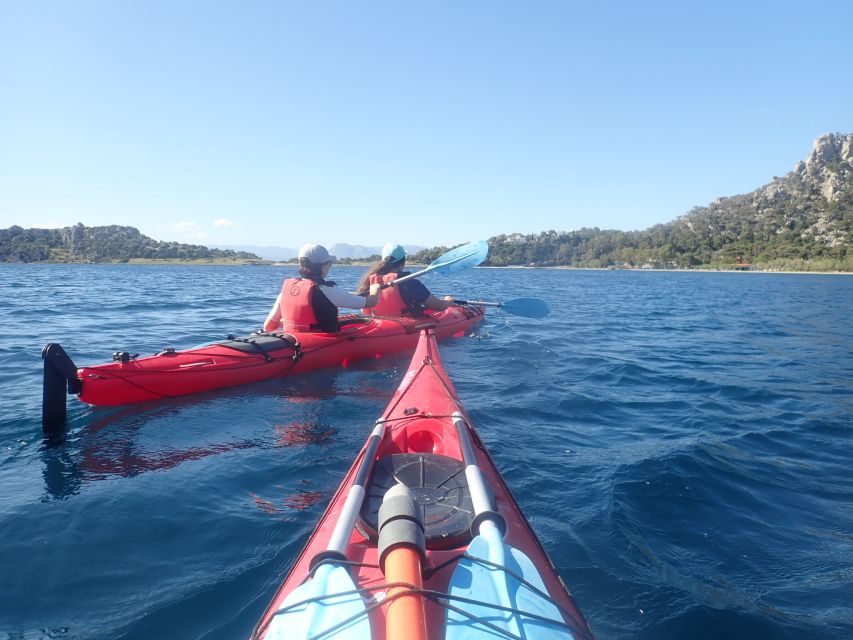
At the sunken city, you leave the kayak area and receive sea masks and snorkels. The villa is located at a depth of less than three meters, so you do not need scuba equipment or advanced underwater skills to view it.
The guides lead you along a path free of sea urchins. That detail is useful because the ruins are reached from the shore and you will want to watch your footing while entering the water. Even with the guided route, water shoes are not listed among the required items, so flip-flops are the closest suggested footwear. Follow the guide’s instructions rather than walking freely over the archaeological remains.
From the surface, you can see mosaic floors, house foundations, pottery, structural supports, and an intact debris wall. Fish move around the ruins, adding a living layer to the ancient site. The result is less like looking at a single monument and more like seeing traces of a whole building beneath the sea.
I would keep expectations sensible. Clear water is central to the experience, but underwater visibility is never something you can fully control. You may see the ruins well, yet the view will not have the same sharpness as a museum display. The reward is the setting: ancient building remains, shallow seawater, and fish all in the same frame.
This is also a good place to remember that the water is shallow, not dry. You are observing the villa from above, not walking through its rooms. The guide’s explanation helps you make sense of what you see, so listen before swimming off to inspect details on your own.

A family lunch and time to slow down
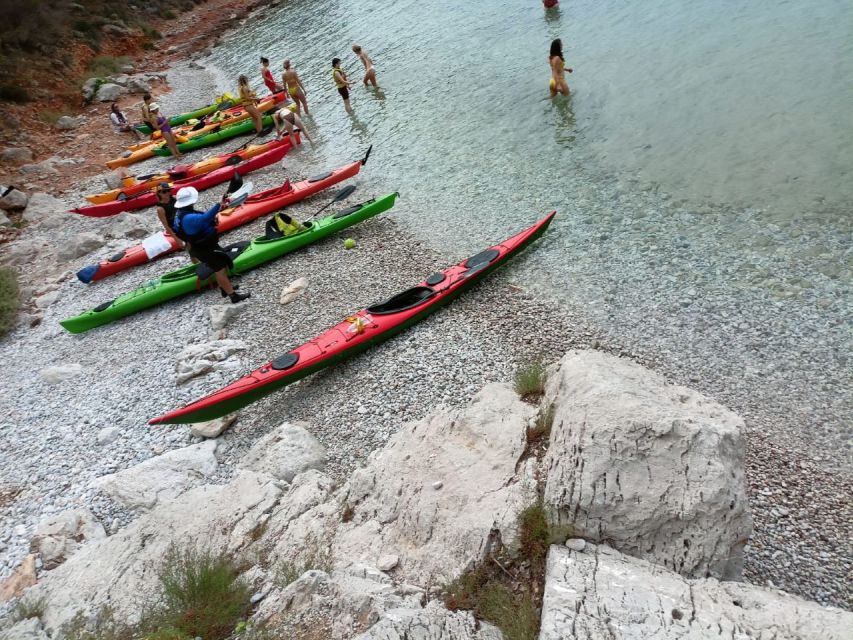
After the snorkeling, you return to shore for a family-style lunch. Food is included, which improves the value of the trip, especially since you are away from Athens for the entire day. The meal is prepared by Georgios’ mother, giving the break a local, home-style character rather than the feel of a standard packed lunch.
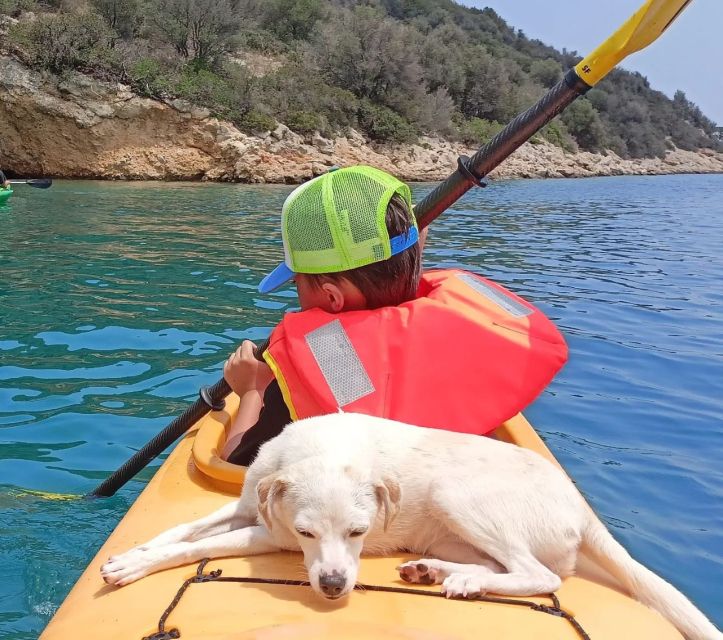
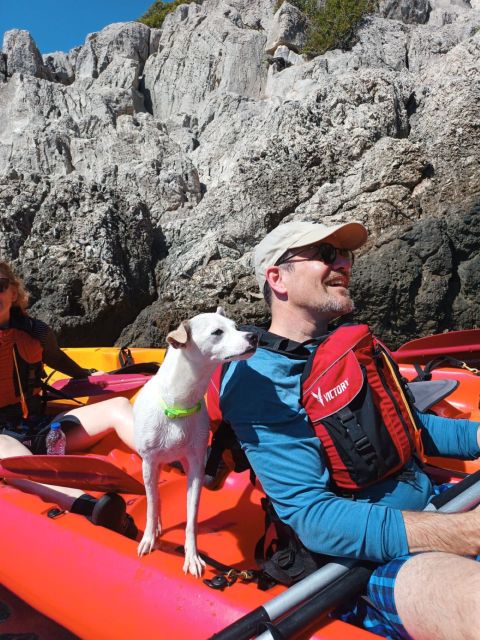
The schedule also includes time to relax at the beach. You can meet Georgios and his dog, Lucy, and enjoy a drink, ice cream, and a shower before the final paddle. Those small comforts matter after several hours in the sun and salt water.
Bottled water is not included, so bring your own supply. Alcoholic drinks are also excluded, and alcohol and drugs are not allowed on the activity. The safest plan is to treat this as a sober, well-hydrated outdoor day, with water packed before departure.
The lunch and rest period are particularly helpful for anyone concerned about the long duration. Without a proper break, 12 hours of driving, paddling, swimming, and sightseeing could feel relentless. Here, the beach stop gives you a chance to dry off, eat, and reset.
The Corinth Canal stop on the return
On the way back to Athens, the group makes a short stop at the Corinth Canal. This man-made canal dates from the nineteenth century and connects the Ionian and Aegean seas. It is a quick viewing stop rather than a second major excursion, but it breaks up the return drive and adds an important piece of modern Greek engineering to the day.
The canal also gives the itinerary some variety. The sunken villa connects you with ancient coastal life, while the canal represents a much later effort to reshape the route between two seas. You will not spend hours here, so think of it as a worthwhile pause and photo opportunity, not a full canal tour.
By this point, you will likely be ready for the ride back. The canal stop is useful because it prevents the return journey from being only transport, but it does not shorten the day. If you prefer compact excursions with little time in a vehicle, this outing may feel too long.
What the $233 price includes
At $233 per person, this is not a budget beach activity. The value comes from the number of services combined in one day: hotel pickup and drop-off, transport to Epidaurus, certified sea kayak guides, kayak equipment, snorkeling at the ruins, lunch, and the Corinth Canal stop.
A separate comparison would need to account for transport, guide services, equipment, and meals. The small group, limited to six people, also helps explain the price. You are not simply renting a kayak for an hour. You are paying for a guided route to an archaeological site, with road transport from Athens and support throughout the day.
The price will make the most sense if you want an active excursion and would otherwise need to arrange a car or several separate bookings. It is less attractive if your main goal is the ancient theater of Epidaurus, since this experience focuses on the coast, the underwater villa, and the kayak route.
Reserve and pay later is available, and you can cancel up to 24 hours in advance for a full refund. These terms are useful when your Greek itinerary is still changing, but you should still check the current starting time and availability before booking.
Who should choose this outing
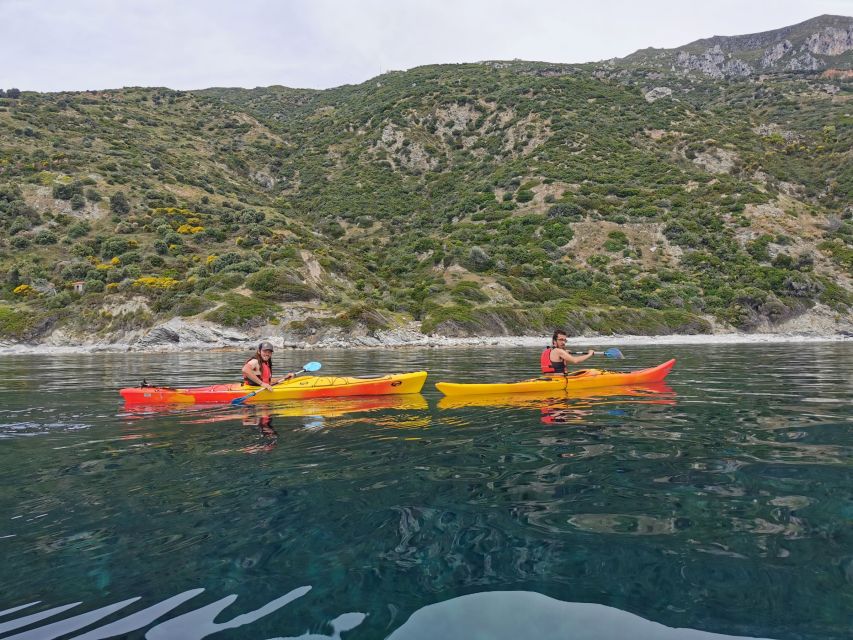
I would recommend it to you if you enjoy water activities, archaeological sites, and small-group trips. You should be comfortable with kayaking, swimming, snorkeling, and spending time outdoors in the sun. You do not need scuba gear, since the villa is shallow, but you do need to be happy in the water.
The trip also works well for anyone who wants to see a different side of Epidaurus. It is not the standard stop-and-photograph ancient theater visit. You get the theater, cave, bay, beach, underwater ruins, local lunch, and Corinth Canal in one long day.
Families and mixed groups should pay attention to the physical requirements. People over 6 feet 6 inches, or 200 centimeters, and people over 264 pounds, or 120 kilograms, are not considered suitable for the activity. The information provided does not give a minimum age, so ask the provider directly if you are booking for a child.
You should probably skip this experience if you dislike boats, cannot swim comfortably, or want a short cultural tour with little exertion. The outing includes rest, but it remains a full day of movement and travel.
Practical preparation for the water
Pack more than you would for a normal sightseeing tour. Your sun hat, sunglasses, sunscreen, swimwear, towel, flip-flops, water, and dry clothes all have a clear purpose.
Keep your belongings simple. You will be moving between a vehicle, kayaks, the beach, and the water. Anything you bring should be easy to manage and safe around salt water.
English is the activity language. Yanos leads the kayak instruction, and Michalis handles the road transfer and conversation during the drive. Certified sea kayak guides are included, which is reassuring for a route that combines open water, a cave, swimming, and snorkeling near archaeological remains.
Weather and sea conditions can affect how comfortable the day feels. The schedule is built around outdoor activities, so avoid booking it as your only plan if you need a guaranteed indoor alternative. The free cancellation period gives you some flexibility, provided you cancel at least 24 hours ahead.
Should you book the Sunken City of Epidaurus?
Book this tour if you want a small-group water adventure with archaeology at its center, and if a 12-hour day from Athens fits your plans. The shallow Roman villa, mosaic floors, fish, family lunch, and personal guidance from Michalis and Yanos give the outing more character than a basic kayak rental.
Think twice if you want a fast, inexpensive visit to one monument. At $233, the trip costs more than a simple beach activity, and the long drive takes commitment. For the right person, though, the price buys a full experience: transport, instruction, equipment, food, swimming, snorkeling, ancient remains, and a Corinth Canal stop. Bring water and dry clothes, accept the long day, and this can be one of the more memorable ways to see Epidaurus.
FAQ
How long does the Sunken City of Epidaurus tour take?
The experience lasts 12 hours, including transport from your Athens hotel to Epidaurus and back.
What is included in the price?
The price includes hotel pickup and drop-off, transport from Athens, a family-style lunch, sea kayaking at the Sunken City of Epidaurus, certified sea kayak guides, and a visit to the Corinth Canal.
Is snorkeling equipment included?
Sea masks and snorkels are provided for viewing the underwater Roman villa.
How deep is the Sunken City of Epidaurus?
The ruins are located in water less than three meters deep.
How many people are in the group?
The group is limited to six participants.
What should I bring?
Bring a sun hat, towel, change of clothes, sunglasses, sunscreen, water, swimwear, and flip-flops. Bottled water is not included, so bring your own.