REVIEW · ATHENS
Athens Panoramic Tour with Guided Acropolis & Museum Visit
Book on Viator →Operated by Keytours - Greece · Bookable on Viator
Athens saves its biggest surprise for the hilltop: the Acropolis brings the Parthenon, Erechtheion, and Temple of Athena Nike together above the modern city. This tour gives you that famous climb, a city drive-by, and the Acropolis Museum in one morning, a useful first look when your time in Athens is short.
I like the Panathenaic Stadium photo stop, where white marble turns an Olympic site into a quick, memorable introduction. I also like the museum visit, especially the Caryatids and the Parthenon gallery, because it helps you understand what you saw on the hill rather than leaving the monuments as disconnected stones.
The main concern is organization. Hotel pickup is not provided, the group may include up to 42 people, and slow transfers between buses can eat into a five-hour schedule. If you want a quiet, flexible Acropolis visit, this may feel too managed.
In This Review
- Key points to know before booking
- A useful first morning in Athens
- The Panathenaic Stadium in 15 minutes
- The panoramic bus route through central Athens
- Climbing the Acropolis for two hours
- Walking from the Acropolis to its museum
- What the $127.45 price really buys
- Timing, comfort, and the main risk
- Who will get the most from this tour
- Should you book it?
- FAQ
- How long does the Athens Panoramic Tour last?
- What time does the tour begin?
- Where does the tour meet?
- Does the tour provide hotel pickup?
- Where does the tour end?
- Is admission to the Acropolis included?
- Is admission to the Acropolis Museum included?
- How much time is spent at the main sights?
- How large can the group be?
- Can I cancel for a full refund?
Key points to know before booking
- The morning begins at 8:15 am: Meet at Athanasiou Diakou 26, near public transportation, rather than waiting for hotel pickup.
- The Panathenaic Stadium is a 15-minute photo stop: You see the only stadium built entirely from white marble, with no admission included for this brief stop.
- The Acropolis gets about two hours: Expect the Areopagus, Propylaea, Temple of Athena Nike, Parthenon, and Erechtheion with its Porch of Maidens.
- The museum adds 90 minutes: Votives, everyday objects, archaic statues, Caryatids, and the Parthenon Hall give useful context.
- A bus handles the city overview: You pass major sights such as the Parliament, National Garden, Hadrian’s Arch, and the Athens Trilogy without stopping at each one.
- The group may reach 42 people: Audio devices help you hear the licensed guide, but this is not a small-group experience.
A useful first morning in Athens
This tour packs three different Athens experiences into roughly five hours. You get a quick city orientation, time at the Acropolis, and a guided museum visit. That combination makes sense if you have just arrived and want the major ancient sights explained before exploring on your own.
The order also works well. The city drive gives you a rough map of central Athens, the Acropolis supplies the grand setting, and the museum lets you inspect smaller objects and sculpture after seeing the ruins outdoors. I prefer this progression to visiting the hill alone, then trying to make sense of the museum later.
Still, the format is firmly group-tour territory. You follow a set schedule, listen through an audio device, and move with the group. The bus is air-conditioned, which matters on a hot Greek morning, but the vehicle cannot remove the city’s traffic or the delays caused by assembling a large group.
The meeting point is Athanasiou Diakou 26, and the start time is 8:15 am. You need to make your own way there because hotel pickup is not part of the service. The activity ends back at the same meeting point, so it is easy to plan another central Athens activity afterward.
You can also read our reviews of more guided tours in Athens


The Panathenaic Stadium in 15 minutes
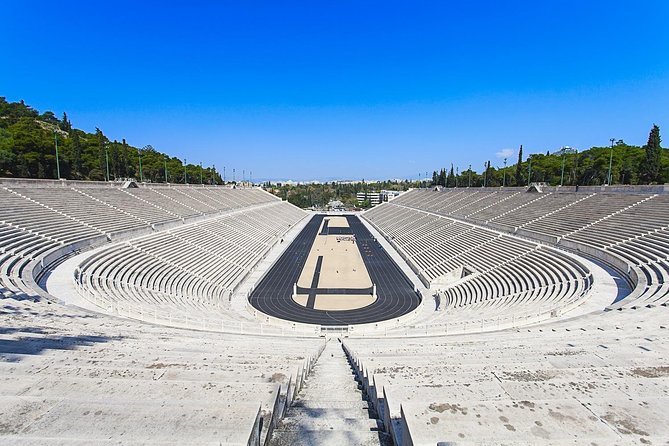
The first stop is the Panathenaic Stadium, also called the Kallimarmaro. You have about 15 minutes for a photo stop, enough to appreciate its long white-marble seating bowl and take a few pictures.
The important detail here is the material. This is the only stadium built entirely from white marble, and it hosted the first modern Olympic Games in 1896. You will not have time for a full stadium visit, so think of this as an orientation stop rather than a major attraction on its own.
That short visit keeps the tour moving toward the Acropolis, but it also means you should not expect a detailed look at the stadium’s interior. If the Olympics are your main interest, you may want to return independently. For this tour, the stop works best as a striking introduction to Athens’ ancient and modern identity.
The panoramic bus route through central Athens

After the stadium, the bus passes the Zappeion and the Temple of Olympian Zeus. The temple is one of Athens’ most visible ancient reminders, with its remaining columns showing the scale of a project that took centuries to complete. You see it from the route rather than making a dedicated stop.
The drive continues past the Athens Trilogy: the University of Athens, the Academy of Athens, and the National Library. These buildings help you see the city beyond its ancient monuments, with grand 19th-century architecture forming part of modern Athens’ civic center.
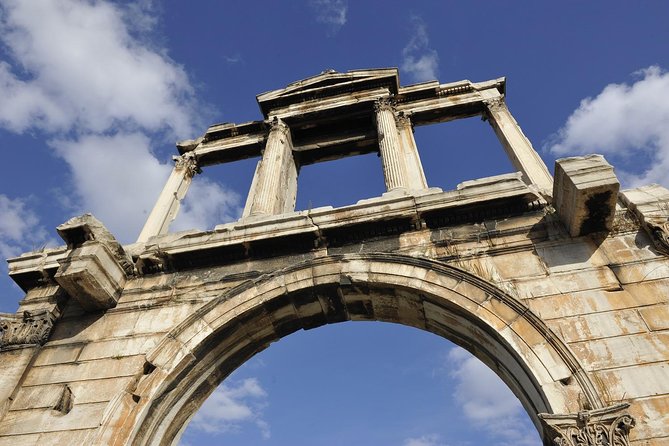
The route also includes the National Garden, Hadrian’s Arch, St. Paul’s Church, Parliament, and the Tomb of the Unknown Soldier. You pass Schliemann’s House, now the Numismatic Museum, along with the Catholic Cathedral, Old Parliament, Constitution Square, and the Russian Orthodox Church.
This portion is valuable for one reason: it gives you a mental map. You will not get out at every landmark, and the guide cannot give each one the same attention. But you will see how the ancient, royal, religious, political, and academic parts of Athens fit together.
Keep your expectations realistic. A panoramic tour is a moving overview, not a collection of long visits. Sit where you can see outside, listen for the commentary, and note the places you may want to revisit. The audio devices are meant to keep the guide’s explanation clear, which is especially helpful when the bus is full or city noise rises around the group.
Climbing the Acropolis for two hours
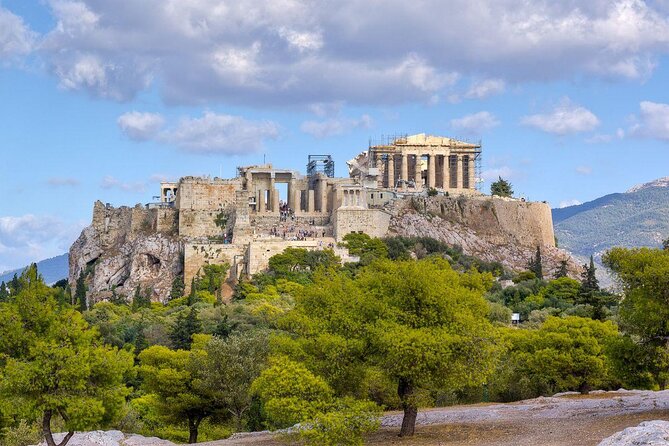
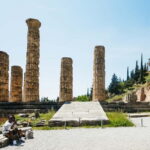
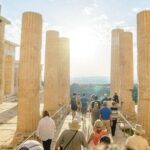
The Acropolis is the heart of the tour. You walk up to the UNESCO-listed ancient citadel, where the buildings reflect Athens’ power and wealth in the 5th century BC. Two hours gives you time to see the principal monuments, but it is not a leisurely archaeological study.
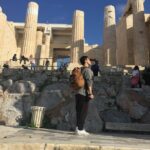
The approach begins around the Areopagus, the rocky hill near the Acropolis. From here, the setting becomes clear: the monuments sit above the city, with Athens spreading out below. The climb is part of the experience, not a minor detail. Wear comfortable shoes, use sunscreen, and bring bottled water.
You then reach the Propylaea, the monumental gateway into the Acropolis. From there, the Temple of Athena Nike appears near the entrance, a small but finely placed temple that can be easy to overlook when the Parthenon commands your attention.
The Parthenon is the main event, but the guide should help you read more than its famous outline. Look at its scale, columns, and surviving decorative elements, while remembering that the building has suffered damage and loss over time. The point of a guided visit is to connect the stones to the city’s political and religious ambitions in the 5th century BC.
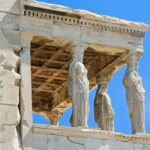
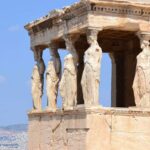
The Erechtheion offers a different kind of beauty. Its Porch of Maidens, with the Caryatids acting as architectural supports, is one of the Acropolis’ most recognizable details. You will see the original sculptures represented in the museum, while the hilltop monument gives you the setting and architectural context.
The two-hour window can feel tight if the group is slow to assemble or if the site is crowded. You may have to choose between lingering for photographs and staying close to the guide. This is where the tour’s audio equipment helps, but a group of up to 42 people will not move with the ease of a private visit.
The views are a major reward. From the Acropolis, you see Athens from above, and the contrast between ancient marble and the modern city is hard to miss. Bring water, and take advantage of the drinking fountain at the Acropolis if it is available during your visit.
Walking from the Acropolis to its museum
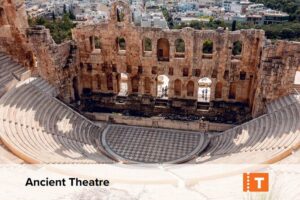
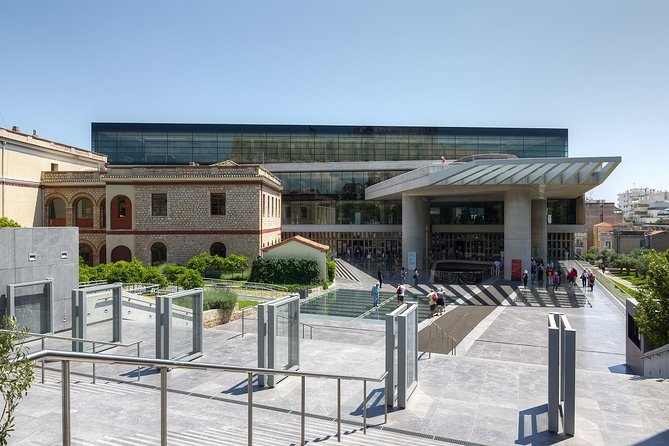
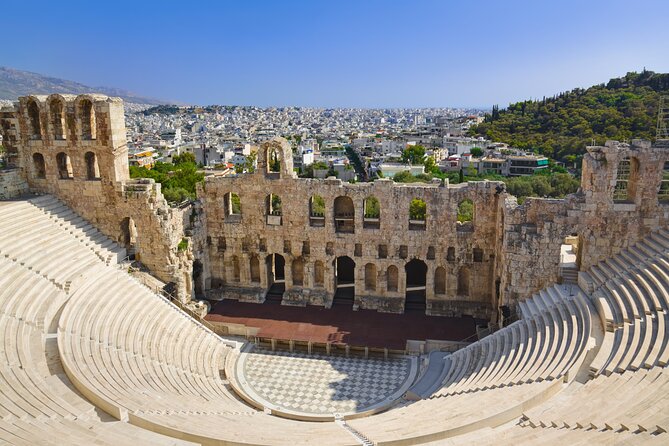
The route continues with a short walk past the Herodion and the Theater of Dionysus before reaching the Acropolis Museum. This link between the outdoor site and the museum is one of the tour’s strongest features.
The Herodion, or Odeon of Herodes Atticus, is a dramatic reminder that the Acropolis was part of a wider cultural center. The Theater of Dionysus adds another layer, since theater was central to ancient Athenian life. You see these places on the way rather than receiving a separate long stop, but the walk helps extend the story beyond the Parthenon.
The museum visit lasts about 90 minutes. That is enough time for a guided look at the main displays, though not enough to inspect every case. The tour is designed to show you the highlights and explain why they matter.
Start with the votives and objects from everyday life. These smaller pieces help balance the grand monuments. They show religious practice and ordinary activity, giving you something more human than a row of temples.
The archaic-period statues are another important section. Their formal poses and early style show how Greek sculpture changed over time. The Caryatids are especially useful after seeing the Erechtheion above, because you can examine them at close range and understand details that are easy to miss outdoors.
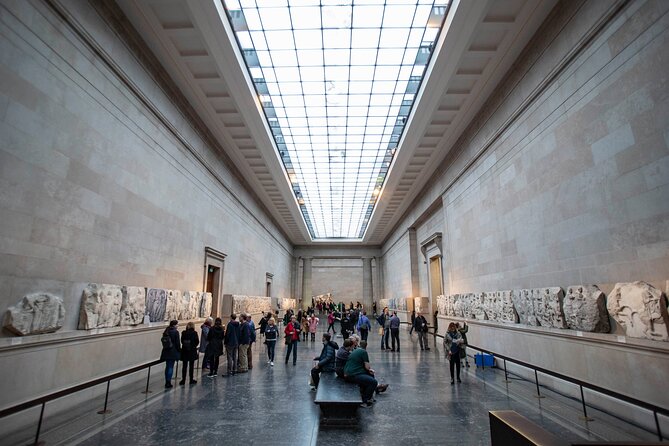
The Parthenon Hall brings the visit together. Here you see the metopes, pediments, and frieze, the sculptural elements that once formed part of the temple’s decoration. After standing beside the Parthenon, the museum’s displays let you look closely at the art rather than trying to make out every detail from ground level.
The tour includes admission to the Acropolis and the Acropolis Museum, and the museum portion is intended to avoid the usual ticket lines. The practical value is clear: you do not need to arrange two major admissions yourself. Even so, line-free entry cannot guarantee a relaxed visit if the group takes time to gather or move through security.
You can also read our reviews of more museum experiences in Athens


What the $127.45 price really buys

At $127.45 per person, this is not the cheapest way to see the Acropolis. The price makes more sense if you value a licensed guide, bus transportation, audio equipment, and admission to both the Acropolis and the Acropolis Museum.
You are also paying for structure. The tour brings together sights that could take careful planning to combine: the stadium, central Athens, the Acropolis, and the museum. For a first day in the city, that can save time and reduce the chance of missing an important site.
The value drops if you already know Athens well or prefer to set your own pace. The panoramic stops are brief, the Acropolis visit follows the group’s timetable, and the museum is limited to about 90 minutes. You may find better value in independent visits if you are comfortable arranging transport, tickets, and explanations yourself.
The group limit of 42 is worth weighing carefully. Audio devices are a practical touch, and they should make the guide easier to hear. But the tour will still feel less personal than a small-group or private visit, particularly during transitions.
Timing, comfort, and the main risk
The early start is sensible. An 8:15 am meeting gives you a chance to reach the Acropolis before the hottest part of the day, though the exact feel of the visit will depend on the season and the crowds. Morning light also works well for photographs at the stadium and on the hill.
The five-hour length is efficient but tightly planned. The listed times add up to about three hours and 45 minutes of sightseeing, leaving the rest for transportation, walking, ticket handling, and gathering the group. That leaves little spare time if the bus route runs late.
The main practical weakness is group organization. Hotel pickups are not included, but the tour can still involve moving people between vehicles or waiting for others to assemble. Such delays can consume time and energy before you even reach the main site.
You can reduce the risk by arriving early at the meeting point, keeping your ticket confirmation ready on your mobile device, and bringing only what you need. Stay close to the guide during transitions. If you wander off for a photograph, you may lose more time than you expect.
Free cancellation is available up to 24 hours before the 8:15 am start time. Changes or cancellations made less than 24 hours ahead are not accepted for a refund, and the cut-off uses local Athens time.
Who will get the most from this tour
I would choose this tour if you have about half a day, want the major ancient sights explained, and prefer someone else to handle the route. It is especially useful for a first visit, since the bus circuit gives you a broad look at central Athens before the Acropolis and museum supply the detail.
It also suits you if museums are part of your sightseeing style. Some Acropolis visits stop after the hilltop monuments, but this one gives the Caryatids, archaic sculpture, and Parthenon decoration their proper place in the story.
I would hesitate if you dislike fixed schedules, large groups, or short photo stops. You may also want another option if your main aim is extensive time at the Acropolis, since two hours can pass quickly once you account for walking and group movement.
The tour is physically manageable for most people according to the stated participation information, but you still need to walk uphill at the Acropolis. Comfortable shoes, sunscreen, and water are not optional extras here. They make the difference between enjoying the site and spending the visit thinking about your feet.
Should you book it?
Book this Athens tour if you want an efficient introduction that combines the Acropolis and Acropolis Museum with a central-city overview. The included admissions, licensed guide, air-conditioned bus, and audio devices give the $127.45 price a reasonable basis for a first visit.
Skip it if you want independence or a small, quiet group. The potential delays, the maximum group size of 42, and the fixed timing are real drawbacks. Arrive early, pack water, wear good shoes, and treat the panoramic drive as an orientation rather than a full tour of every landmark. With those expectations, this can be a useful, information-filled half-day.
FAQ
How long does the Athens Panoramic Tour last?
The experience lasts approximately five hours.
What time does the tour begin?
The tour starts at 8:15 am.
Where does the tour meet?
Meet at Athanasiou Diakou 26, Athina 117 43, Greece.
Does the tour provide hotel pickup?
No. Pick-up service is not included. You need to reach the meeting point yourself.
Where does the tour end?
The activity ends back at the meeting point.
Is admission to the Acropolis included?
Yes. Admission to the Acropolis is included in the tour.
Is admission to the Acropolis Museum included?
Yes. Admission to the Acropolis Museum is included.
How much time is spent at the main sights?
The Panathenaic Stadium stop lasts about 15 minutes, the Acropolis visit about two hours, and the Acropolis Museum visit about one hour and 30 minutes.
How large can the group be?
The activity can have a maximum of 42 participants. Audio devices are provided for clearer commentary.
Can I cancel for a full refund?
Yes, if you cancel at least 24 hours before the experience start time. Cancellations or changes made less than 24 hours in advance are not refunded.