REVIEW · ARGOS
From Nafplio: pyramid, castles, major attractions of Argolis
Book on GetYourGuide →Operated by Choice Greece · Bookable on GetYourGuide
The oldest bridge in Europe, a disputed stone pyramid, and the marsh where Hercules fought the Hydra all fit into one four-hour private tour from Nafplio. This is not a standard sweep of the Peloponnese’s famous ruins. It takes you to smaller places where myth, archaeology, and local life overlap.
I like the way the tour reaches sites that are hard to combine without a car, and I like the personal scale. Guides Yannis and John have led this experience with local family connections and a clear affection for Argolis. The main drawback is physical: narrow roads, uphill walking, uneven ground, and summer heat make this a poor choice for anyone with mobility limits.
In This Review
- Five overlooked stops worth your time
- Why this Argolis tour feels different
- Climbing Argos Castle above one of Europe’s oldest cities
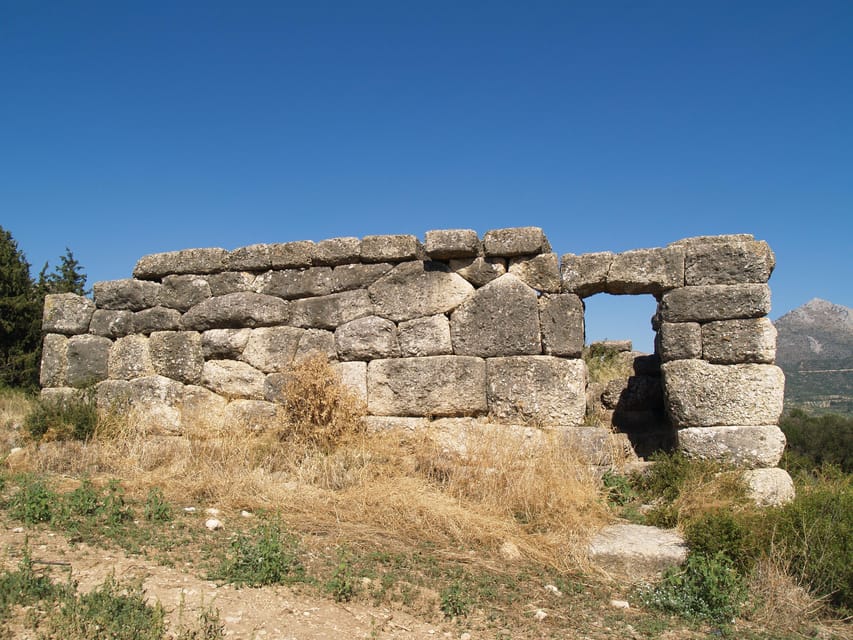
- Elliniko’s puzzling stone pyramid
- Lerna, the marsh of Hercules’ Hydra
- The quiet royal tomb near ancient Tiryns
- Crossing the Mycenaean Kazarma Bridge
- What the private car adds to the experience
- Timing, seasons, and what to carry
- Is $106 per person good value?
- Who should book this route?
- Should you book this Nafplio pyramid and castle tour?
- FAQ
- Where does the tour start and finish?
- How long does the experience last?
- Which sites are included?
- Is transportation included?
- Is an entrance ticket required at the attractions?
- Is the tour suitable for people with mobility impairments?
- What language is the tour conducted in?
Five overlooked stops worth your time
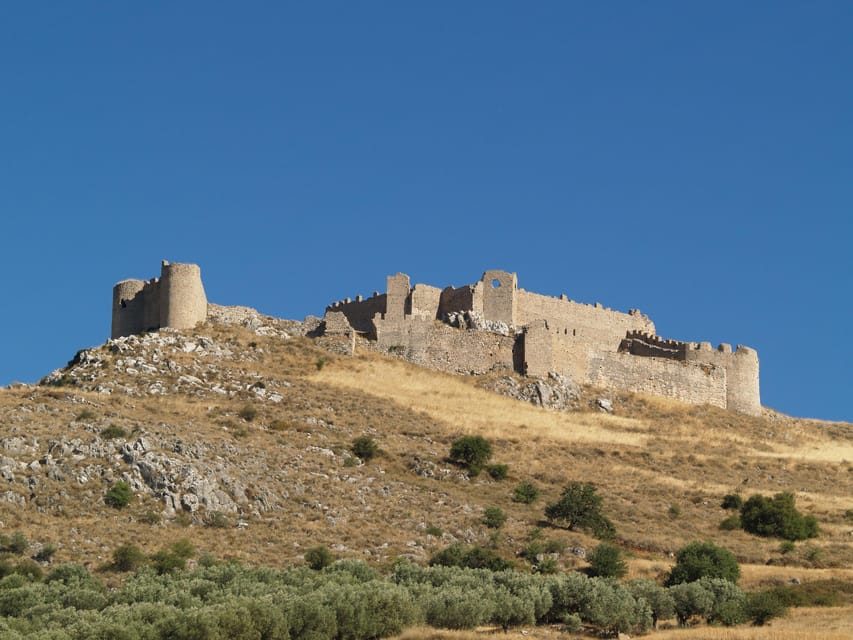
- Argos Castle: Climb to a hilltop fortress built over layers of Mycenaean, ancient, and medieval history.
- Elliniko pyramid: See Europe’s only ancient pyramid, though its age and original purpose remain disputed.
- Lerna and the Hydra: Visit the marsh and river mouth linked to Hercules’ second labor.
- Tiryns royal tomb: Step into a vaulted tholos tomb set among orange groves.
- Kazarma Bridge: Walk across a Mycenaean bridge from the 13th century BC that is still functional today.
Why this Argolis tour feels different
Most day trips from Nafplio focus on Mycenae, Epidaurus, or both. Those major sites deserve their place, but this outing takes another route. You get a closer look at the scattered remains that give the Argolic plain its unusual character.
The appeal is not polished presentation. Some stops are modest, partly overgrown, or difficult to interpret without a guide. That is exactly where the private format helps. You can ask what is known, what is guessed, and how the ancient roads and settlements fit together.
Your transport is a private car, with pickup outside Droges pharmacy at Mpoumpoulinas 37 in Nafplio. The price is $106 per person, and the attractions themselves do not charge an entry ticket. I see the value in that price mainly for couples or small groups who want a guide, transport, and a custom-feeling route without driving unfamiliar rural roads themselves.
This is not a four-hour museum lesson with long stops at each monument. The listed visits add up to about two hours and five minutes, leaving the rest for driving between sites and moving through the countryside. You see a lot, but you do not linger for long stretches.
You can also read our reviews of more tours and experiences in Argos.
Climbing Argos Castle above one of Europe’s oldest cities
The first stop is Argos, often described as one of Europe’s oldest cities. The car takes you up a narrow road toward the castle, then you climb the hill to reach the fortifications.
The castle is valuable because it is not a single-period monument. Parts of the defensive walls connect to Mycenaean and ancient remains, while the medieval fortress gives the hill its most obvious form. You are looking at civilizations built one over another, not at a site frozen in one neat chapter.
That layering is easier to understand with a guide. Without context, a rough wall can look like just another pile of old stone. With Yannis or John explaining the different building phases, the hill becomes a record of Argos changing through the ages.
Allow about 45 minutes here. The reward is a broad view toward the Argolic plain and the surrounding mountains. The cost is effort. The road is narrow, the climb is real, and the footing is not designed for easy access. Bring sturdy shoes rather than loose sandals.
Elliniko’s puzzling stone pyramid
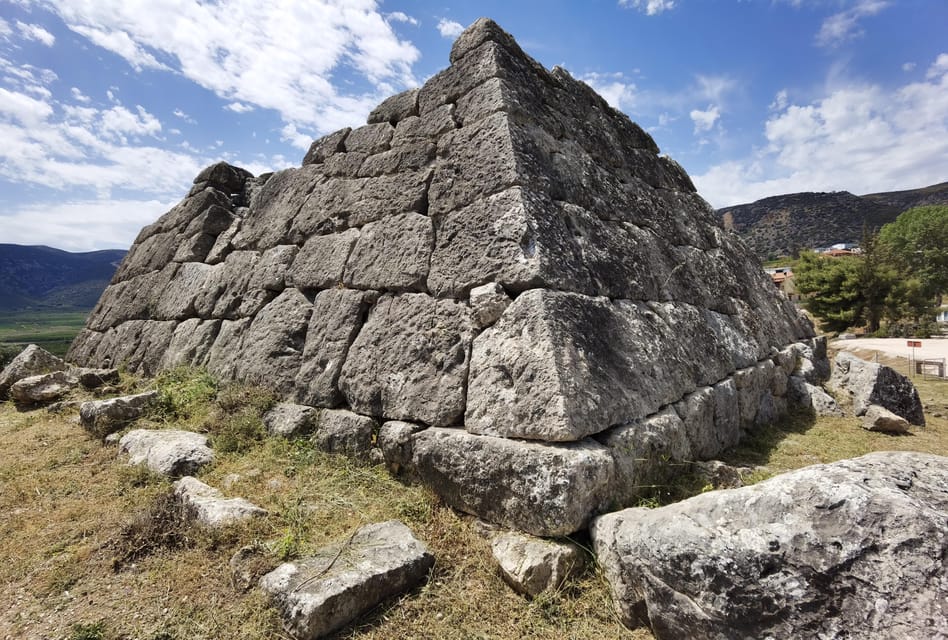
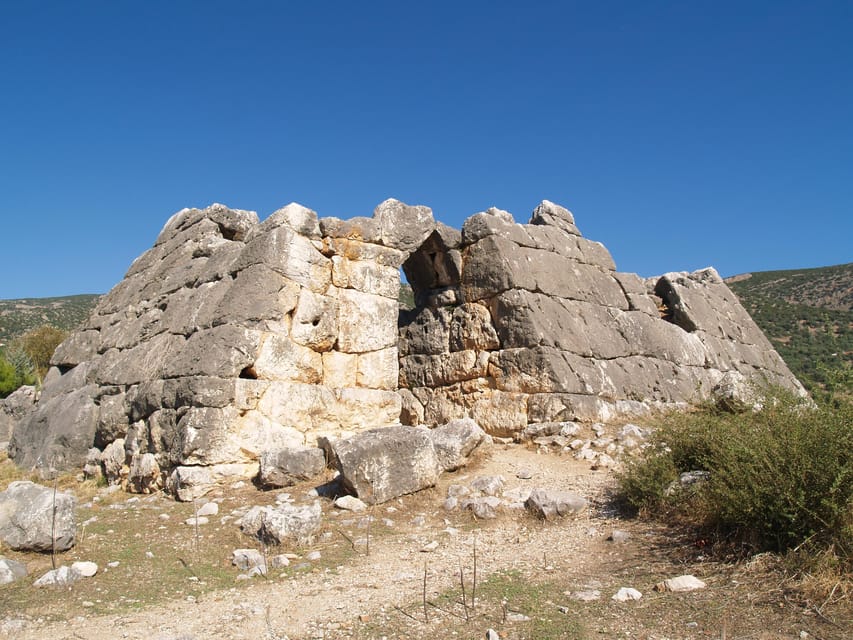
The next stop is near the village of Elliniko, where a low stone pyramid sits at a striking location. The site has an open view toward the sea, and mountain routes from Arcadia reach the Argolic plain nearby.
Its shape catches your attention first. Then the questions begin. When was it built? Was it a defensive post, a tomb, a marker, or something else? The date and purpose are disputed, so the honest pleasure here is not receiving a final answer. It is seeing a structure that refuses to fit neatly into the usual categories.
The claim that this is the only ancient pyramid in Europe gives the stop extra appeal, but you should treat the label as part of an ongoing archaeological discussion rather than a settled fact about every pyramid-like structure on the continent. The guide can help separate the physical evidence from the more imaginative theories.
The visit lasts about 20 minutes. That is enough to examine the stonework, take photographs, and hear the main explanations. Do not expect a large complex with multiple buildings. The pyramid is a compact stop, and its value comes from the mystery and setting.
Lerna, the marsh of Hercules’ Hydra
At Myloi, the route reaches the shore of the Argolic Gulf and the area once associated with ancient Lerna. In Greek myth, this was the marsh where Hercules performed his second labor, killing the many-headed Lernean Hydra with help from Iolaus.
You see the marsh and the mouth of the river, rather than a grand ruin. That distinction matters. This is a place where geography carries much of the story. Wet ground, water channels, and the meeting of river and gulf help explain why an ancient myth might place a dangerous creature here.
The stop also includes a German military facility from the Second World War. It is an unexpected modern layer beside the mythic and ancient setting. The contrast gives you a better sense of how the same shore has served different purposes over time.
Plan on about 25 minutes. You will want sun protection, especially because the open shoreline offers little shelter. Bring water, a hat, sunglasses, and sunscreen. Food and drinks are restricted at certain sites, so this is not the place to plan a casual picnic.
The quiet royal tomb near ancient Tiryns
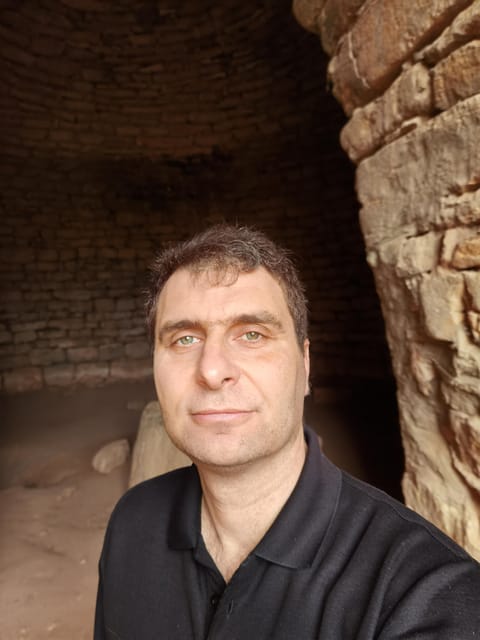
The fourth stop is a vaulted tomb connected with ancient Tiryns. It sits in an orange grove, which makes the approach feel more rural than monumental.
A tholos tomb is built with stones arranged in a circular, beehive-like vault. This one has been looted since antiquity, and no reliable information identifies the person buried there. That missing evidence is part of the story. You are seeing an impressive burial structure without the name, treasure, or royal biography that would normally make it famous.
The tomb itself is a reminder that the Mycenaean world was not limited to the major citadels. Wealth and power extended into the surrounding countryside, where burial places could be substantial even when the identity of the occupant has vanished.
The visit takes about 15 minutes. That sounds brief, but it suits the site. You have time to see the vault and understand its role without turning the stop into a long archaeological lecture. The orange grove also offers a glimpse of the working countryside around Nafplio. One tour participant was offered freshly picked oranges by local farmers, a small encounter that captures the informal, local character this route can provide, though it should not be treated as a guaranteed part of every departure.
Crossing the Mycenaean Kazarma Bridge
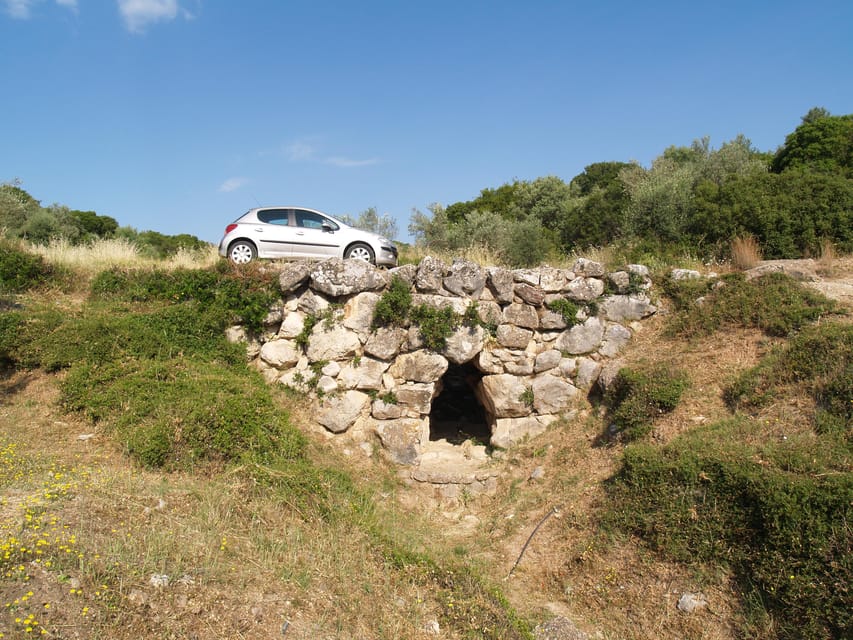
The final attraction is the tour’s strongest archaeological surprise: the Kazarma Bridge. It dates to the 13th century BC and is described as the oldest bridge in Europe, perhaps the oldest in the world.
The bridge once formed part of the road linking Mycenae with Epidaurus. It was not built as a grand public monument. It served a practical purpose, allowing people and goods to cross difficult ground along an important route. That practical design helps explain why it has survived.
The bridge remains untouched by time and is still functional. It was the largest bridge on this route, with other bridges in the area now inaccessible. Standing on a structure that is more than 3,000 years old and still usable gives the stop real force. You are not just looking at a ruin. You are seeing ancient engineering that still does its job.
The scheduled visit is about 20 minutes. Wear shoes with a firm sole and watch your footing. The setting is not arranged like a modern attraction, and the surfaces can be uneven. This is also a good place for your camera, especially if you enjoy details of stone construction more than posed monument photographs.
What the private car adds to the experience
The private car matters here because these sites are spread across the Argolic plain. Public transport would not be a practical way to connect them in four hours, and a rental car would leave you responsible for finding narrow roads, rural landmarks, and parking near minor archaeological remains.
A private group also gives the outing a more conversational pace. You can ask why the pyramid’s dating is disputed, how the bridge was used, or what part of Argos Castle belongs to which period. That flexibility is particularly useful at the smaller stops, where a signboard cannot tell the full story.
The guide speaks English. The experience has been led by guides named Yannis and John, both described through their guiding work as closely connected to the region. John in particular has been able to add family-based local information to the archaeological explanations. That local connection is one reason the tour feels more personal than a standard transfer with commentary.
The car does not remove every physical demand. You still walk on uneven surfaces and climb at Argos Castle. The activity is not suitable for people with mobility impairments, and the summer sun can make the short walks feel harder than the timetable suggests.
Timing, seasons, and what to carry
The tour lasts four hours, with several short visits rather than one long stop. That makes it easy to fit into a Nafplio stay, especially if you want an outing that leaves room for an afternoon in town.
Spring and fall are the most comfortable times for this route. The sites are exposed, and the combination of heat, stone, and walking can wear you down in summer. If you go during a hot period, start with water already in hand rather than waiting until the first stop.
Pack:
- Comfortable walking shoes
- A sun hat and sunglasses
- Sunscreen
- Water
- A camera
Sandals are listed among the useful items, but I would use them only if they are secure and suited to rough ground. Loose footwear is a bad match for the hill at Argos and the old bridge.
Smoking and eating or drinking are restricted at certain sites. Carrying water is sensible, but follow the guide’s instructions about where you can use it.
Is $106 per person good value?
At $106 per person, this is not the cheapest way to spend half a day around Nafplio. You are paying for a private car, an English-speaking guide, pickup and return in Nafplio, and access to five places that are awkward to connect independently.
The lack of ticket fees is helpful, but it is not the main reason to book. The value lies in the route and the interpretation. If you are comfortable driving, researching rural sites, and working out the stops yourself, you could spend less. You would also risk missing the small roads, the exact locations, and the links between myth, ancient engineering, and local geography.
For a private group, the price becomes easier to justify. You are not paying for a large bus excursion that spends most of its time at famous ticketed monuments. You are paying for access to a focused set of lesser-known places with a guide who can explain why they matter.
Lunch is not included. Since the tour is only four hours, that is not a serious problem, but plan your meal around the departure time rather than expecting food along the route.
Who should book this route?
I would choose this tour if you have already seen, or plan to see, the major sites near Nafplio and want something less predictable. It suits people who enjoy archaeological puzzles, old roads, local myths, and modest ruins that need explanation.
It is also a good fit if you do not want to rent a car. The private transport lets you reach Argos, Elliniko, Myloi, Tiryns, and the Kazarma Bridge without building your own route.
I would think twice if you want grand monuments, long time at each stop, or completely level access. The pyramid and tomb are compact, Lerna is more about place and story than visible ruins, and the castle requires a climb. This is a curiosity-driven outing, not a polished archaeological park.
The tour has a five-star rating from two verified bookings, with praise focused on the overlooked locations, the cultural context, and the guides’ personal connection to Argolis. Those strengths are most useful if you approach the day with the right expectations: you are coming for stories, settings, and ancient traces, not a parade of intact temples.
Should you book this Nafplio pyramid and castle tour?
Book it if you want to see the Argolis beyond its headline attractions. The Kazarma Bridge alone is a strong reason to go, while the pyramid and Lerna add the sort of unanswered questions that make a short excursion memorable.
Choose spring or fall if possible, wear proper shoes, and be ready for sun and uneven ground. If those conditions suit you, this private tour offers an unusually personal look at the old roads, myths, fortifications, and burial places scattered around Nafplio.
FAQ
Where does the tour start and finish?
It starts outside Droges pharmacy at Mpoumpoulinas 37 in Nafplio and returns to the same location.
How long does the experience last?
The tour lasts four hours, including transport between the sites and the visits.
Which sites are included?
The route includes Argos Castle, the ancient pyramid near Elliniko, Lerna at Myloi, a royal tholos tomb near ancient Tiryns, and the Mycenaean Kazarma Bridge.
Is transportation included?
Yes. Pickup from the meeting point, sightseeing by private car, and return to Nafplio are included.
Is an entrance ticket required at the attractions?
The attractions do not have a ticket, according to the activity details.
Is the tour suitable for people with mobility impairments?
No. The tour includes uphill walking and uneven surfaces, and it is not suitable for people with mobility impairments.
What language is the tour conducted in?
The live tour guide speaks English.