REVIEW · RETHYMNO
From Rethymno: Arkadi, Melidoni, and Margarites Tour
Book on GetYourGuide →Operated by Markidis Travel · Bookable on GetYourGuide
Cave, monastery, taverna dance in one long day. This Rethymno-area tour strings together standout sights across rural Crete: Melidoni Cave and Arkadi Monastery are the big anchors, with time for small-village wandering and photo stops along the way. If you get a guide like Anastasia and a driver such as Costas, the day often feels like a friendly story tour with great pacing.
I also like how the itinerary turns practical visits into something you can feel. Lunch time at a family-run tavern comes with live Cretan folk music, and people in the group often end up watching dancing or joining in when the mood hits. It is the kind of stop that makes the bus ride between sights feel worth it.
The main drawback is timing. It is a long day, and one of the usual trade-offs on a packed 10-hour route is how long you get in each place, since Margarites and the taverna section can eat more minutes than the caves and monastery for some schedules.
In This Review
- Key Things I’d Pay Attention To
- Value and the Real Shape of the Day From Rethymno
- Getting Picked Up Correctly (and What to Bring)
- Melidoni Cave: Neolithic Big-Deal Time in a Small Package
- Arkadi Monastery: Crete’s Oldest and a 16th-Century Anchor
- Margarites Village and Pottery: Craft Where You Can Actually Look
- Apostoli Olive Oil Factory: The Production Side of Crete
- Family-Run Tavern Lunch With Live Folk Music (and Dancing)
- St. Antonios Gorge and Fragma Potamon Dam: The Scenic Finish With Time Constraints
- How the 10-Hour Timing Actually Feels in Motion
- Who Should Book This Tour (and Who Might Not Love It)
- Should You Book the Arkadi, Melidoni, and Margarites Tour?
- FAQ
- How long is the Rethymno: Arkadi, Melidoni, and Margarites Tour?
- What’s included in the price?
- Is lunch included?
- Are entrance fees included?
- What languages is the tour guide available in?
- Does the tour use double-decker buses?
- Where are the pick-up points in the Rethymno area?
- Is pick-up available from Georgioupolis, Kavros, or Gerani?
Key Things I’d Pay Attention To
- Melidoni Cave first: a Neolithic setting and a famous myth thread tied to Talos
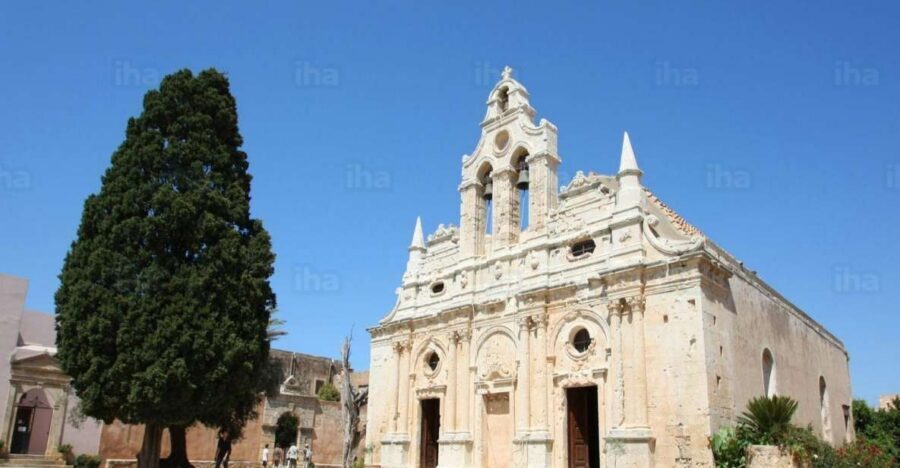
- Arkadi Monastery is the oldest on Crete: a 16th-century stop with major historical weight
- Margarites pottery village: you get time to see the craft tradition up close
- Apostoli olive oil factory guidance: a real production-focused stop, not just a pass-by photo stop
- Taverna lunch with live folk music: the day’s most human, noisy moment
- A/C transport, not double deckers: easier comfort for a full 10-hour circle
Value and the Real Shape of the Day From Rethymno
This tour is built for people who want more than beach time but still do not want to rent a car. For about $41 per person and a 10-hour duration, you get transportation by air-conditioned bus plus hotel pickup and drop-off. Entrance fees and lunch are extra, but the structure still feels like solid value because you are being guided through multiple major stops instead of just hopping from one attraction to another.
What I like about the pacing is that it mixes the senses. You have caves and monastery history, a working-life detour at an olive oil factory, then a genuinely Cretan table moment with live music and dancing. It is not one theme day; it is a “see how Crete lives and remembers” day.
If you are the type who gets bored when a tour turns into a checklist, this one works better because you slow down at villages. Margarites is the obvious example, but even the stops like St. Antonios Gorge and the Fragma Potamon dam feel like breathing points before you return to Rethymno.
You can also read our reviews of more tours and experiences in Rethymno.


Getting Picked Up Correctly (and What to Bring)
Logistics can make or break a long excursion, so read the pickup rules carefully. Your pickup is in the Rethymno area, with specific call-outs: Grand Rimondi pickup is available only from the Opap shop in Stavromenos, and Hotel IDEON pickup is from the national garden bus stop. There is no pickup from Georgioupolis–Kavros–Gerani.
The bus is air-conditioned, and one important note: this tour explicitly says they never use double-decker buses. You will want comfortable shoes because you will be walking around villages and in and around natural areas. A sun hat and sunglasses are smart too, since Crete sun can be relentless even when you think you’re staying mostly near shade.
Bring extra small money if you want the smoothest lunch experience. Several guides-to-table stories mention needing cash and coins, so plan ahead. Also remember what is not allowed: pets, oversize luggage, and smoking.
Melidoni Cave: Neolithic Big-Deal Time in a Small Package
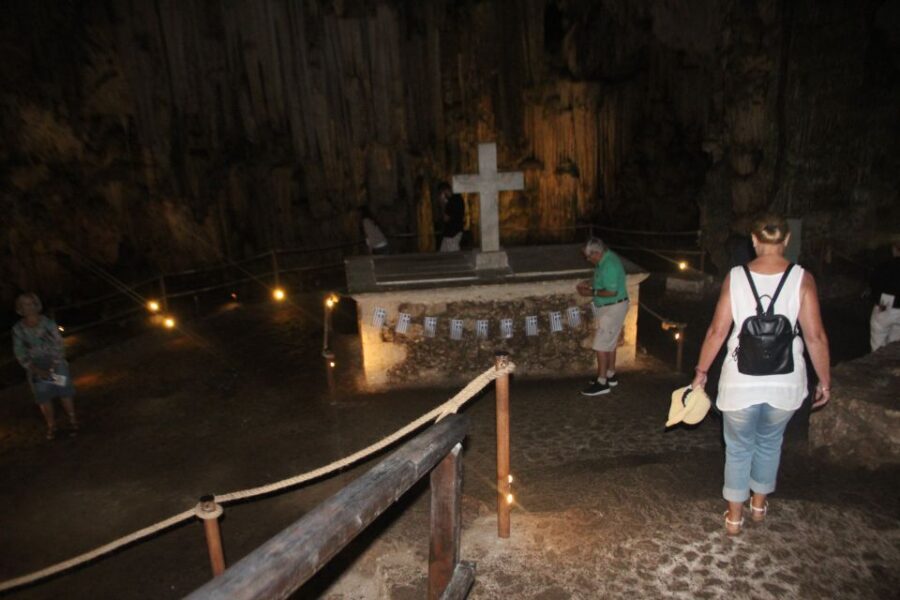
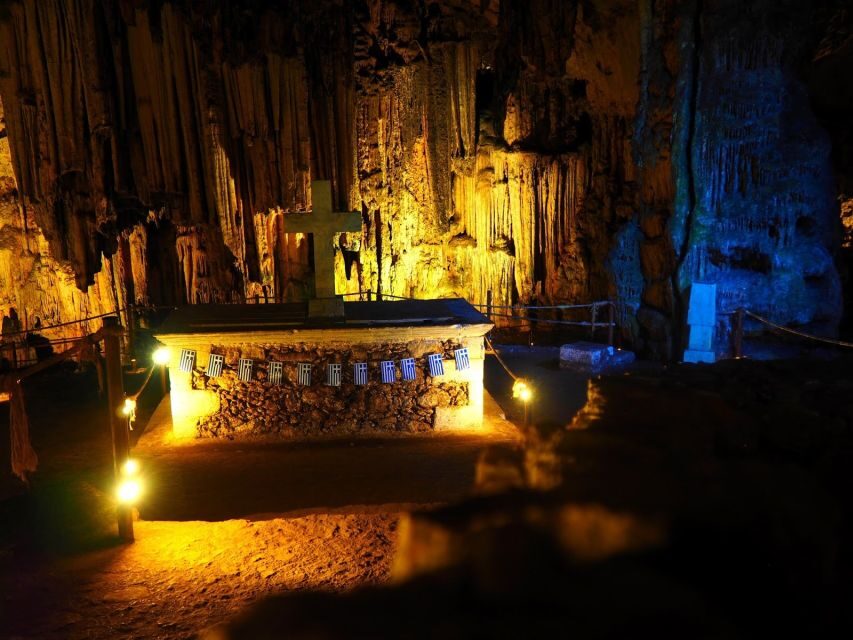
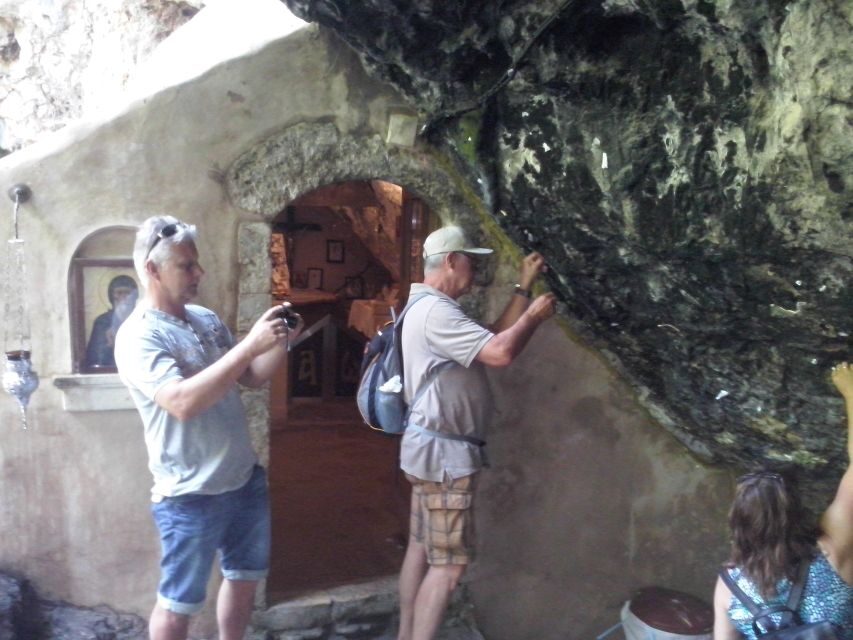
Melidoni Cave is the early stop that sets the tone: underground, historical, and photogenic. The tour frames it as a place with Neolithic history, which gives the cave more meaning than just geology or a quick walk-through. Your guide ties it into the wider story of human life in Crete long before modern tourism.
One detail that pops up in trip accounts is the myth connection to Talos, the bronze giant. That blend matters because it gives you two ways to appreciate the cave: as a real historical site and as a place wrapped in Greek storytelling. If you like your tours to have both facts and folklore, Melidoni is where you get it.
Practical tip: wear shoes you trust on uneven cave paths and keep your expectations realistic. Even with guided time, caves are still limited by time schedules and the physical space. If you are hoping for a long, leisurely wander, accept that this is a scheduled day trip and you’ll get a guided visit with enough time for photos, not a slow expedition.
Arkadi Monastery: Crete’s Oldest and a 16th-Century Anchor
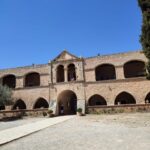
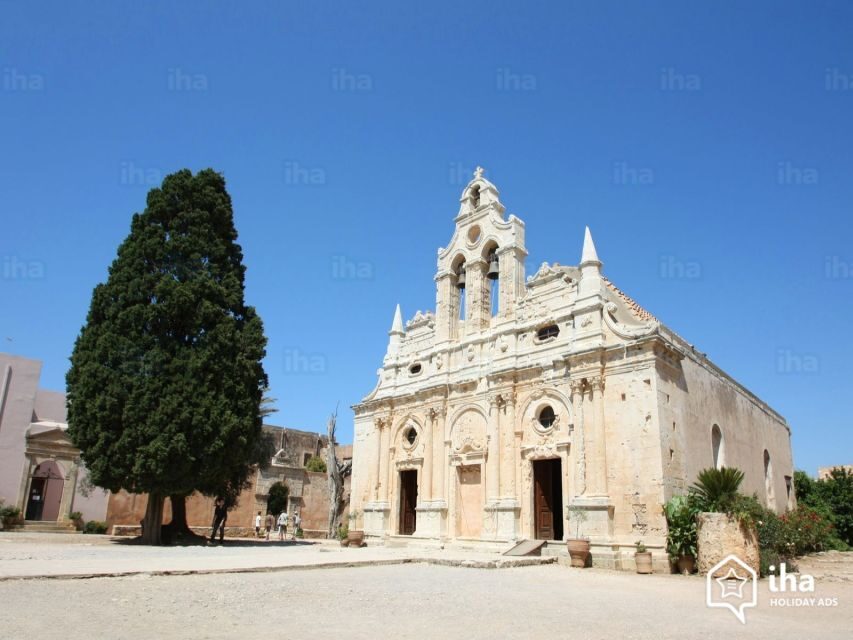
After the cave, you move from underground ages to a landmark that feels like it has been watching over Crete for centuries. Arkadi Monastery is described as the island’s oldest monastery, and it dates to the 16th century. Even if you come in with only casual knowledge, the stop’s age gives you instant context for why Cretans treat it as more than just architecture.
This is the kind of place where your guide’s storytelling makes a difference. The tour is designed to show the historical legacy of Crete, and Arkadi is where that theme becomes concrete. Expect a guided visit with time to look closely and take in the viewpoints people usually aim for on monastery stops.
One consideration: because the day is packed, the monastery visit still competes with other priorities later. Many visitors love Arkadi, but a few notes mention wanting a bit more time at the cave and monastery and less time elsewhere. If you are obsessed with religious architecture and want extra time for photos and slow reading, keep that in mind before you book.
Margarites Village and Pottery: Craft Where You Can Actually Look
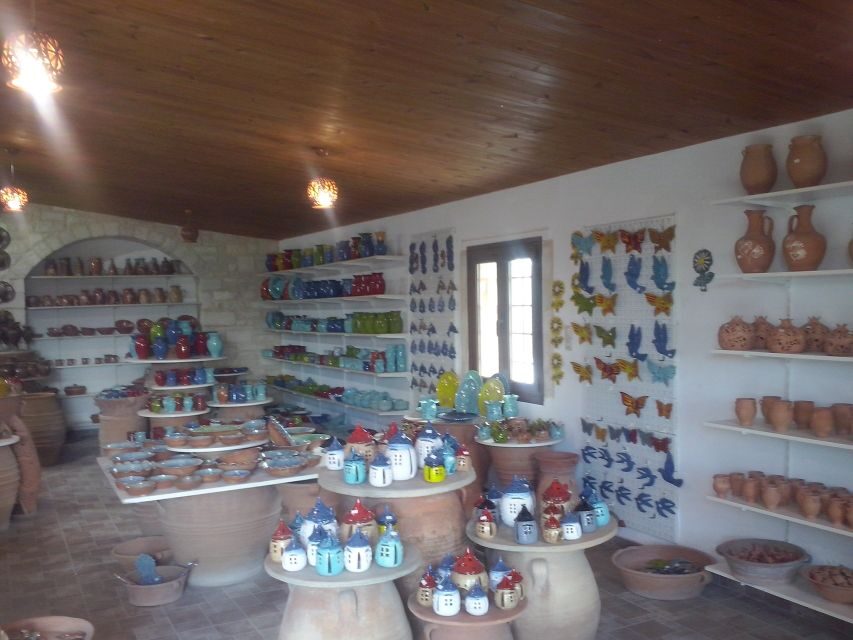
Margarites is the village stop that turns the tour into something tactile. You explore the town and you get time to admire local pottery, with an emphasis on pottery traditions rather than quick window-shopping. This is a good place for souvenirs that actually have a story: locally made pieces and a glimpse of how craft connects to everyday life.
What makes Margarites feel worthwhile is that it is not staged like an attraction town. It is a real village stop where you can browse, ask questions, and see what people make.
Time split reality check: some people felt Margarites had generous minutes compared with other stops like the cave or monastery. If you are traveling in a hurry, you may want to treat Margarites as your “slow meander” hour and decide ahead of time what you want—pottery browsing, photos, or just a break from sitting on the bus.
Apostoli Olive Oil Factory: The Production Side of Crete
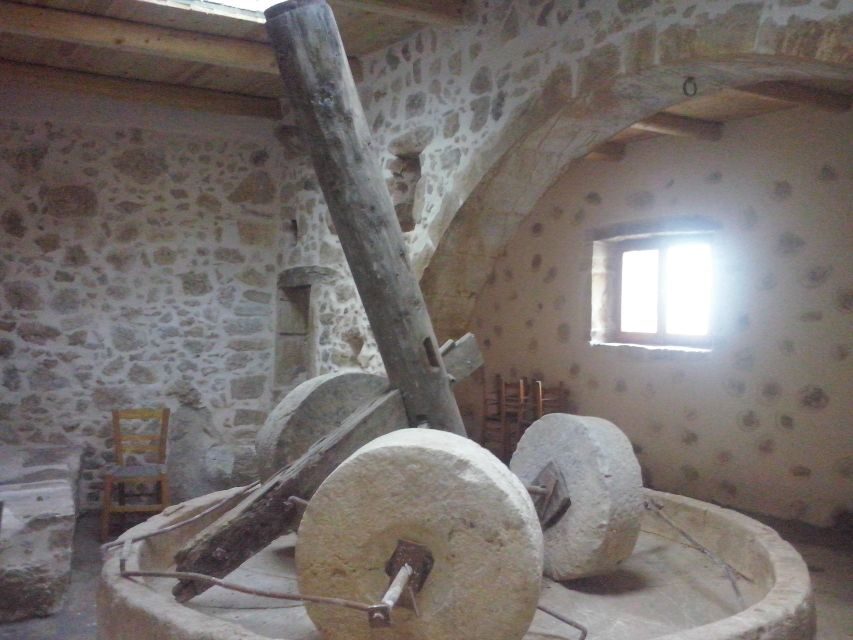
Cretan life has an engine, and olive oil is one of the big ones. The tour takes you to the village of Apostoli to visit an old olive oil factory. The itinerary includes guiding in the olive oil factory, which is the key: you are not just looking at machinery in silence.
This stop is valuable because it turns olive oil from a bottle you buy into a process you can picture. Even if you are not an olive-oil nerd, your guide can help connect the dots between rural work, seasonal rhythms, and why the product matters so much here.
A practical note: factory visits can be a little time-compressed on tours like this, since everyone has to fit into one bus schedule. Still, the advantage is that you learn enough to make your next olive oil purchase make sense.
Family-Run Tavern Lunch With Live Folk Music (and Dancing)
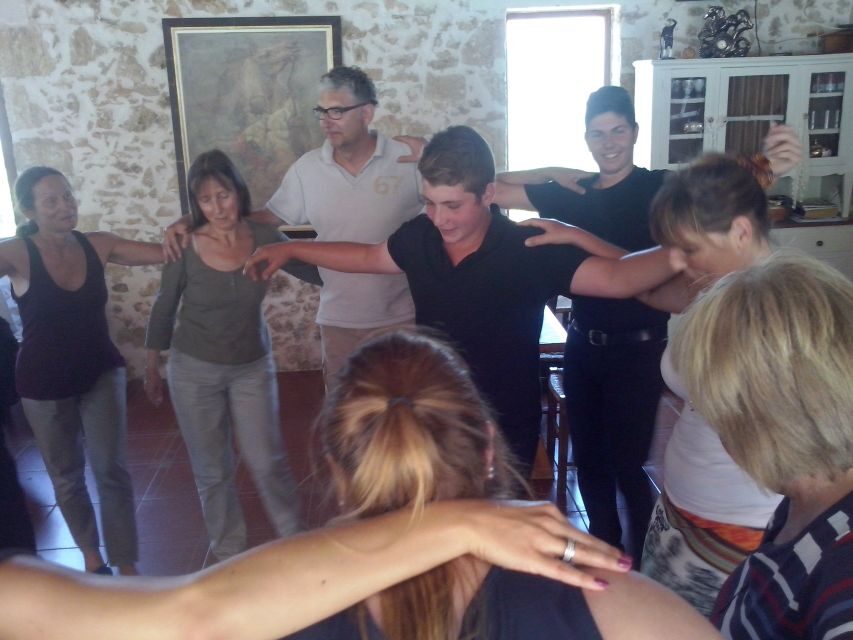
Lunch is where this tour becomes memorable for a lot of people. You stop at a traditional, family-run tavern, and the day often includes live music typical of Crete, plus chances to watch dancing. This is not background music. It is part of the experience and often part of the fun.
One reason this matters: it is the rare tour moment where you feel less like a spectator at a site and more like you’re sitting down in someone’s routine. If you get a driver who plays the lyra (several trip accounts specifically mention Costas stepping into music at the taverna), you’ll feel the day’s energy jump even more.
Two practical tips keep lunch smooth:
- Lunch and drinks are not included in the price, so expect to pay for your meal and extras.
- Bring cash and coins, since multiple accounts note it can be needed.
Also, since this is a long day, decide how you want to handle the post-lunch energy. Some people love staying for the music and dancing; others prefer to eat quickly and use the moment to reset before the gorge and dam stops.
St. Antonios Gorge and Fragma Potamon Dam: The Scenic Finish With Time Constraints
After lunch, you head to St. Antonios Gorge, followed by a stop at Fragma Potamon dam before returning to Rethymno. These are the kinds of stops that add variety and give your eyes a break from villages and stone buildings.
Even when you like the scenery, remember the schedule trade-off: on a 10-hour group tour, your time at each natural stop still depends on bus timing and the day’s flow. If you want a long hike, this is not designed to be a hiking expedition. Think of it as a guided sightseeing walk and viewpoint time.
I also like that the dam stop is included because it anchors the day in something practical, not just pretty. You finish seeing how Crete’s land and water management connect to rural life.
How the 10-Hour Timing Actually Feels in Motion
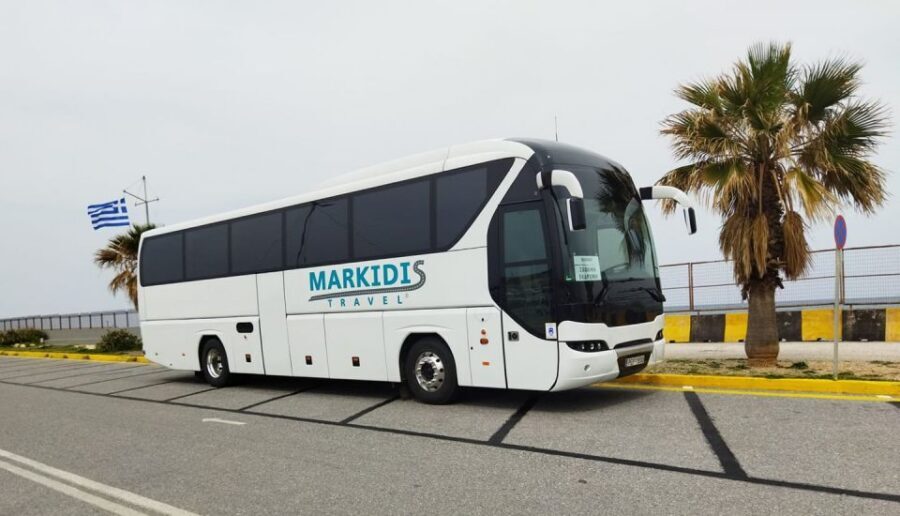
This is a whole-day excursion, and the rhythm is simple: bus, guided stop, bus again, then villages and lunch, then natural stops, then return. That sounds basic, but it matters because travel time is real time.
Most reviews land on the same idea: the day is well-paced for the variety you get, with air-conditioned coach breaks between experiences. Still, there is one repeated consideration about time allocation, especially around Margarites versus the cave and monastery. If you feel strongly about one type of experience—like caves and monasteries over village browsing—plan your priorities accordingly.
My best practical advice: set expectations that this is a guided sampler of Crete’s north-country culture. You’ll come away with memories and context, but you will not max out every stop with extra free time.
Who Should Book This Tour (and Who Might Not Love It)
This tour is a great fit if you want:
- History and culture without doing everything on your own
- A craft and rural-life stop (Margarites pottery plus olive oil in Apostoli)
- A real-feeling lunch with live music and dancing, not just a meal on the road
You might want to skip it if:
- You hate long bus days and prefer slower travel with fewer stops
- You want lots of unstructured time at a single attraction
- You are hoping lunch is included in the price (it is not)
If you come from a beach-heavy itinerary around Rethymno, this day trip is a strong reset. It gives you stories, textures, and music—things you cannot get from a chair under an umbrella.
Should You Book the Arkadi, Melidoni, and Margarites Tour?
Yes, I’d book it if your goal is a high-value Crete day that hits caves, the island’s oldest monastery, a pottery village, an olive oil factory, and a live-music tavern lunch. At $41 with transport and a local guide included, the value comes from variety plus guided context, not from luxury.
Before you go, do two things:
- Plan for extra costs: entrance fees and lunch/drinks are not included.
- Bring the essentials and a bit of cash: comfortable shoes, sun hat, and money for the tavern experience.
If your must-have is maximum time inside each major site, you may feel the squeeze. But if you want a full sampler of rural Crete with the kind of taverna atmosphere that makes the day stick in your memory, this one is an easy choice.
FAQ
How long is the Rethymno: Arkadi, Melidoni, and Margarites Tour?
It lasts 10 hours.
What’s included in the price?
The tour includes air-conditioned transportation, hotel pick-up and drop-off, and a local guide.
Is lunch included?
No. Lunch and drinks are not included in the tour price.
Are entrance fees included?
No. Entrance fees are not included.
What languages is the tour guide available in?
The tour guide speaks English and German.
Does the tour use double-decker buses?
No. The tour states that they never use double-decker buses.
Where are the pick-up points in the Rethymno area?
Grand Rimondi pickup is available only from the Opap shop in Stavromenos, and Hotel IDEON pickup is from the national garden bus stop.
Is pick-up available from Georgioupolis, Kavros, or Gerani?
No. There is no pick up from Georgioupolis – Kavros – Gerani.