REVIEW · ATHENS
Full-Day Private Tour Corinth and Olive Oil Tasting from Athens
Book on Viator →Operated by CRISPY LOCAL MONOPROSOΡΙ Ι.Κ.Ε. · Bookable on Viator
The most unusual part of this Athens day trip comes at the end: an olive oil tasting inside a family-run mill dating from 1932. Before that, you’ll cross the Corinth Canal, walk among the ruins of ancient Corinth, and stop below Acrocorinth for wide views across the Peloponnese.
I like the private transport, which keeps a long day simple, and the chance to hear local stories from drivers such as Anthony, Georgios, and Giorgos. The olive farm adds a real working side of Greece that you won’t get from ruins alone. The main drawback is time: the Acrocorinth stop is only about 20 minutes, and the ancient site entrance fee and lunch are extra.
In This Review
- Key points at a glance
- Why this Corinth day trip works from Athens
- Looking over the Corinth Canal
- Ancient Corinth and the world of Saint Paul
- Acrocorinth, a fortress above the isthmus
- Inside a four-generation olive oil business
- How the timing shapes the day
- Is $234.57 per person a fair price?
- Who should book this private tour?
- Should you book the Corinth and olive oil tour?
- FAQ
- How long does the full-day Corinth tour last?
- Where can I be picked up?
- Is the tour private?
- What transportation is provided?
- Is a tour guide included?
- Is Ancient Corinth admission included?
- How long do you spend at each stop?
- Is lunch included?
- What happens if the weather is poor?
Key points at a glance
- The Corinth Canal is a quick but striking stop: You’ll look down at steep limestone walls and watch boats pass through a waterway only 21.4 meters wide at its base.
- Ancient Corinth brings together Greek, Roman, and Christian history: The ruins are the main historical stop, with an €8 entrance fee not included.
- Acrocorinth is mostly a photo stop: Its fortress hill shaped control of the isthmus, but 20 minutes gives you only a taste of the site.
- The olive mill is the tour’s most distinctive stop: You’ll see a family business founded in 1932, walk through old groves, and taste extra virgin olive oil, Kalamon olives, and olive paste.
- The driver is not a licensed site guide: Your driver can explain the region and help with the day, while a licensed guide may be added for an extra charge.
- This suits a private group with limited time: Pickup and drop-off in Athens, bottled water, and air-conditioned transport are included, but airport-area transfers cost more.
Why this Corinth day trip works from Athens

Corinth is one of the easiest major sights outside Athens to reach, yet it feels like a proper change of scene. The road takes you from the capital toward the narrow Isthmus of Corinth, where the mainland meets the Peloponnese. In six to seven hours, you get engineering, archaeology, fortress ruins, and food culture without arranging several separate outings.
I like the mix. Many day trips from Athens focus on one ancient site and then turn into a long ride home. This one gives you a clear sequence: see the canal, explore ancient Corinth, look toward Acrocorinth, then spend time at an olive farm with a working mill.
The private format matters here. You travel only with your own group in an air-conditioned executive car or van, and pickup is available from hotels and other accommodations in Athens. That means you do not have to find a city meeting point or wait for a large coach to fill. It also gives you more room to ask questions and adjust the pace within the fixed stops.
The tradeoff is that the driver is not licensed to accompany you inside each archaeological site. Drivers such as Anthony, Georgios, and Giorgos have been praised for sharing local information and helping make the day engaging, but this is not the same as having a licensed archaeologist lead you through ancient Corinth. You can request a licensed guide, subject to availability, for an added cost.
You can also read our reviews of more food & drink experiences in Athens



Looking over the Corinth Canal

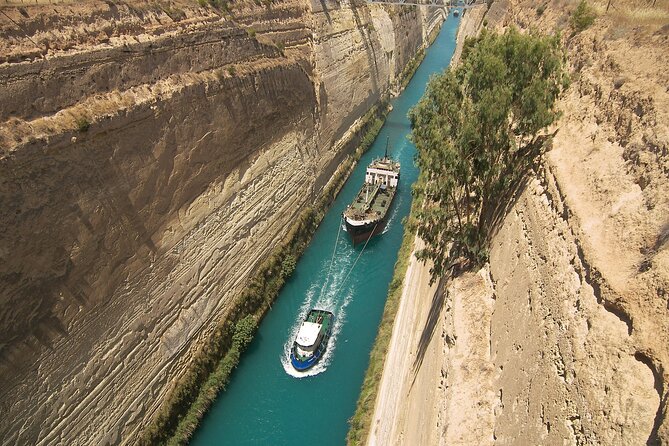
Your first stop is the Corinth Canal, cut through the narrow isthmus that separates the Peloponnese from mainland Greece. The canal links the Gulf of Corinth, part of the Ionian Sea, with the Saronic Gulf in the Aegean. In practical terms, it makes the Peloponnese appear almost like an island.
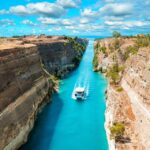
You get about 10 minutes here, with no admission charge. That sounds brief, but the canal is a visual stop rather than a site that needs a long walk. From high above, you can see the steep limestone walls drop toward the water and watch vessels work their way through the narrow channel.
The canal is 6.4 kilometers long and only 21.4 meters wide at its base. It has no locks because it was dug at sea level. Modern ships can find it too narrow, which helps explain why the stop is best understood as a remarkable piece of engineering rather than a busy shipping route.
Bring your camera and use the short visit well. The view down into the cut is the point. If you need a slow, detailed stop with time to read signs and wander, this will feel rushed. If you want a strong opening image and a sense of the geography, 10 minutes is enough.
Ancient Corinth and the world of Saint Paul
The main historical visit lasts about one hour and 20 minutes. Admission to Ancient Corinth is not included, so plan on paying the stated €8 entrance fee per person.
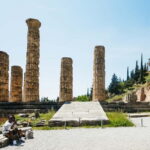
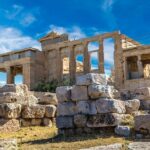
Ancient Corinth occupied a key position on the isthmus between Athens and Sparta. That location made it a commercial and military power, and the city was once among the largest in Greece. The ancient city had about 90,000 people in 400 BC, an impressive figure for the period.
The site also has a clear Roman chapter. Rome destroyed Corinth in 146 BC, then rebuilt it in 44 BC. The new Roman city later became the provincial capital of Greece. As you walk through the remains, you are not looking at one untouched Greek settlement, but at a place reshaped by conquest, rebuilding, and changing power.
For Christian history, Corinth is tied to Saint Paul’s missionary work and to the First and Second Letters to the Corinthians. That connection gives the ruins another layer of meaning, especially if you have read those letters or want to understand where they were written and preached.
With roughly 80 minutes, you can get a useful look at the site, but you will need to keep moving. The driver can provide background and point out places of interest, yet you should not expect a formal guided lecture at every monument. If ancient sites are your main reason for booking, the optional licensed guide is worth considering.
One practical point: the tour description gives more time to ancient Corinth than to Acrocorinth. That is sensible because Ancient Corinth is the principal archaeological site, but the balance may not suit everyone. If you prefer high ruins, fortress walls, and grand views, you may wish the schedule gave more time to the hilltop.
Acrocorinth, a fortress above the isthmus
Acrocorinth rises above ancient Corinth and is described as the oldest and largest castle in southern Greece. Its position explains its importance. From the hill, defenders could control the narrow route into the Peloponnese and use the fortress as a last line of defense.
The settlement was occupied from archaic times through the early 19th century. A secure water supply helped the fortress survive repeated changes in power, and its height gave defenders a commanding view of the approach from the mainland.
The scheduled visit is about 20 minutes and has no listed admission charge. Treat it as a brief stop for ruins and photographs, not a full fortress visit. You’ll have time to appreciate the hill and the broad Peloponnesian scenery, but not enough for an extended exploration of the entire complex.
This is the clearest scheduling weakness of the day. A short Acrocorinth stop may leave history-minded visitors wanting more, while the longer visit at Ancient Corinth provides the fuller archaeological experience. If you have already seen several classical ruins in Athens, Acrocorinth’s setting may be the more memorable part. If you want detailed study of the fortress, this tour will feel like an introduction.
Inside a four-generation olive oil business
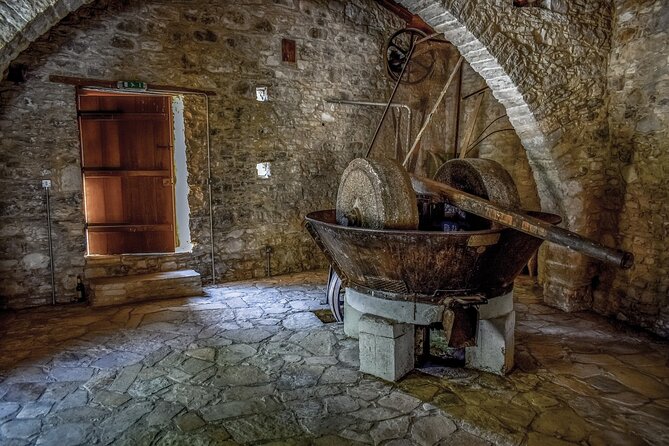
The olive farm at Loutra Elenis changes the mood of the day. Instead of looking only at what remains from the past, you see a family business still producing food today.
The mill dates from 1932, and four generations of the family have worked in extra virgin olive oil production. You’ll walk through old olive groves, including the area where the family’s first olive tree was planted by the great-grandfather. The setting includes views toward the Saronic Gulf and the surrounding hills.
The one-hour visit includes a guided look at the mill facilities and an interactive olive oil seminar. You taste different extra virgin olive oils along with Kalamon olives and Kalamon olive paste. This is a useful distinction from a simple shop tasting. You are shown how to pay attention to the oil and compare what you are tasting.
A virtual reality presentation covers the stages of olive cultivation, production, and bottling. The headset is a modern touch in an old family setting, and it gives you a visual explanation of work that may otherwise be hard to follow during a short visit.
You also receive a culinary gift. The exact item is not specified, so think of it as a small food-related extra rather than a guaranteed bottle or product of a particular size.
The olive stop is especially valuable because it connects the countryside, agriculture, and daily Greek food habits. You can buy olive oil in many places, but seeing groves and production equipment gives you a better sense of what you are taking home. The broad views also make this more than a commercial stop.
You can also read our reviews of more private tours in Athens





How the timing shapes the day
The listed stops add up to about two hours and 50 minutes, so the rest of the six to seven-hour outing is spent driving between Athens and the Corinth area. That is normal for this route, but it helps set expectations. This is a full excursion with several short experiences, not a slow day spent at one estate.
The order makes sense. The canal gives you the geography first. Ancient Corinth provides the main historical visit. Acrocorinth adds the defensive setting above the city. The olive farm then gives you a relaxed, hands-on finish.
I would keep water with you even though bottled water is included. Wear shoes you can use comfortably around uneven archaeological ground, and bring sun protection for open ruins and olive groves. The information provided does not promise shade or a specific meal stop.
Lunch and drinks are not included. One booking party had an optional lunch by the sea and found it a memorable surprise, but you should treat that as an extra arrangement, not a guaranteed part of the tour. Ask about it when booking if a seaside meal matters to you, and budget separately.
Is $234.57 per person a fair price?
At $234.57 per person, this is not the cheapest way to see Corinth. The price makes more sense if you value a private vehicle, hotel pickup and drop-off in Athens, bottled water, local driving, and the olive farm visit in one package.
A private group can also make the cost easier to justify. You are not paying only for entrance to ruins. You are paying for transport, time saved, a flexible private setting, and a food experience that would take extra planning to arrange on your own. Group discounts are offered, so check the total for your party rather than judging the per-person figure alone.
The €8 Ancient Corinth admission fee is extra, as are meals and drinks. Pickup or drop-off at the airport or airport area also carries an additional charge. Those costs are easy to overlook, so include them when comparing this outing with a shared bus tour.
The value drops if your main goal is an in-depth archaeological lesson. Since the driver is not licensed to guide inside the sites, a person who wants detailed interpretation may need to pay for the optional licensed guide. The value rises if you want a simple, private day with several different stops and no need to manage the driving.
Who should book this private tour?

I would choose this for a first visit to Athens when you have one free day and want to see beyond the city. It is also a good fit for families or small groups who prefer their own vehicle and do not want to coordinate trains, buses, taxis, and the olive farm separately.
The tour suits you if you enjoy variety. You get an engineering landmark, Greek and Roman archaeology, a fortress setting, rural scenery, and an olive oil tasting. It also suits people who want local food context rather than another day made up only of stones and monuments.
It may not suit you if you want a long, quiet visit to Acrocorinth or a full day at Ancient Corinth. The 20-minute fortress stop is short, and the driver’s commentary is not a substitute for a licensed site guide. The tour also requires good weather, so a poor-weather cancellation may lead to a new date or a full refund.
Cancellation is free up to 24 hours before the start time. Changes or cancellations inside that window are not refunded, and the stated cut-off uses local time.
Should you book the Corinth and olive oil tour?
Book it if you want an efficient private outing from Athens that combines major sights with a genuine working food business. The olive mill, old groves, tasting, and family history give the day a clear identity, while drivers such as Anthony, Georgios, and Giorgos add useful local context on the road.
Skip it if you want a specialist archaeological tour or a long climb through Acrocorinth. For everyone else, this is a well-balanced choice for seeing Corinth without giving up the comfort of private transport. Just budget for the €8 site fee, ask about any optional lunch, and consider adding a licensed guide if detailed ancient history is your priority.
FAQ
How long does the full-day Corinth tour last?
The tour lasts approximately six to seven hours, including travel from Athens and the scheduled visits.
Where can I be picked up?
Pickup and drop-off are available from hotels and accommodations in Athens. Airport and airport-area pickup or drop-off costs extra.
Is the tour private?
Yes. Only your own group participates in the activity.
What transportation is provided?
You travel in a private, air-conditioned executive car or van. Bottled water is included.
Is a tour guide included?
Professional drivers with local knowledge are included, but they are not licensed to accompany you inside the archaeological sites. A licensed tour guide can be requested for an additional cost, subject to availability.
Is Ancient Corinth admission included?
No. The entrance fee for Ancient Corinth is €8 per person and is paid separately.
How long do you spend at each stop?
You spend about 10 minutes at the Corinth Canal, one hour and 20 minutes at Ancient Corinth, 20 minutes at Acrocorinth, and one hour at the olive mill and farm.
Is lunch included?
No. Meals and drinks are not included. An optional seaside lunch may be possible, but it is not part of the included tour.
What happens if the weather is poor?
The experience requires good weather. If it is canceled because of poor weather, you will be offered another date or a full refund.