REVIEW · HALKIDIKI
Greek Olive Oil Tasting Experience in Halkidiki
Book on Viator →Operated by Extra Virgin Olive Oil Sensory Experience · Bookable on Viator
Greek olive oil makes more sense once you taste it on its own. In Afitos, host Harry guides you through Greek extra virgin oils from different regions, showing how aroma, bitterness, and peppery heat reveal quality. The setting is a private terrace above Thea Thalassa restaurant, with sea views and a calm, personal feel.
I like two things right away: you taste four oils side by side, so the differences become clear, and you learn how to spot a faulty oil rather than simply being told which bottle is best. I also like the food pairings, which show how oil changes once it meets a meal.
The main drawback is the short running time. At about one hour, this is an introduction, not a full agricultural tour or cooking class. At $71.01 per person, it offers good value if you care about Greek food, but it may feel costly if you only want a quick sample and a snack.
In This Review
- Key points to know before booking
- Why tasting oil alone changes your view of Greek food
- Four oils, four different flavor profiles
- Spotting a good oil from a defective one
- Food pairings on the Thea Thalassa terrace
- Harry’s teaching style and the private format
- Location, timing, and what is included
- Who will get the most from this experience
- Is $71.01 a fair price?
- Cancellation and practical planning
- Should you book the Greek Olive Oil Tasting Experience?
- FAQ
- Where does the olive oil tasting take place?
- How long does the experience last?
- How much does the experience cost?
- Is transportation included?
- What is included in the basic price?
- Is the activity private?
- What happens if I need to cancel?
Key points to know before booking
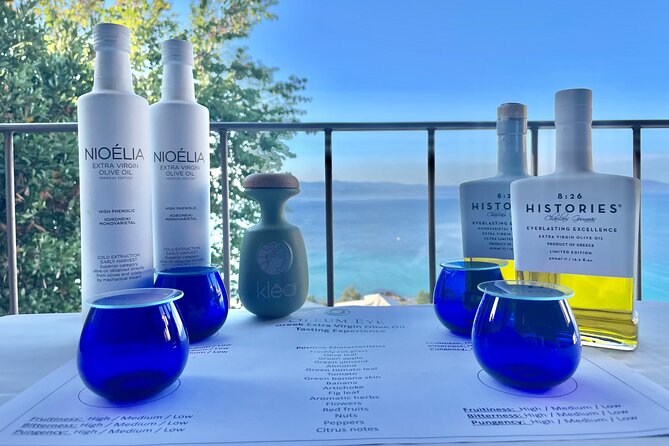
- Four Greek oils to compare: Taste oils from different parts of Greece and notice how smooth, sweet, bitter, or peppery each one can be.
- A lesson you can use at home: Learn what extra virgin really means and how to recognize common faults in olive oil.
- Private terrace setting: Only your group takes part, with the tasting held above Thea Thalassa restaurant in Afitos.
- Food pairings may be added: A special menu lets you see how the oils work with food, rather than tasting them only from a spoon.
- Harry leads the session: His enthusiasm for olive oil is a major part of the experience, especially if you enjoy asking questions.
- Simple logistics: The tour starts and ends at Thea ThalassaGreece, lasts about an hour, and includes bottled water but no private transport.
Why tasting oil alone changes your view of Greek food
Most people use olive oil as a background ingredient. You pour it into a pan, drizzle it over salad, or dip bread into it without giving the oil much thought. This session turns that everyday habit into a small lesson in taste.
Harry begins with the basics. You learn how olives are harvested and what happens during the production process. That context matters because the label extra virgin is not just a flattering description. It refers to a quality level, and the tasting helps you understand what that quality should smell and taste like.
The session is made for beginners. You do not need a trained palate or a working knowledge of Greek olive varieties. Harry explains the terms in plain language, then gives you a chance to test them for yourself.
You might notice a fresh, grassy or fruity smell in one oil. Another may seem softer and sweeter. A third may have a stronger bitter note or a peppery sensation at the back of your throat. Those sensations are not automatically faults. In a good extra virgin oil, bitterness and spicy heat can be signs of character.
That is the useful part of the lesson. Instead of treating olive oil as one bland product, you begin to see it as a food with regional differences and a range of flavors.
You can also read our reviews of more tours and experiences in Halkidiki.



Four oils, four different flavor profiles
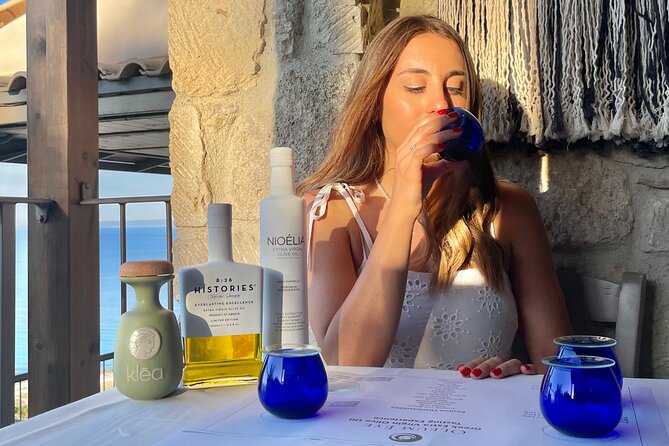
The tasting centers on four extra virgin olive oils from different regions of Greece. The exact producers and varieties are not specified, but the comparison is the point. You are not judging one oil in isolation. You are learning how to notice contrast.
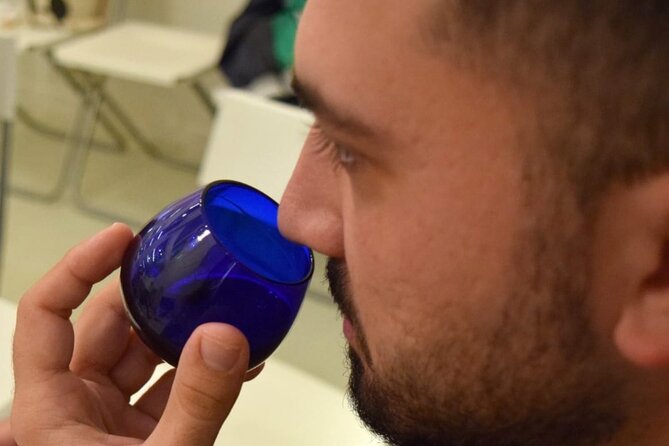
The oils are tasted on their own first. This gives you a clean look at each one before bread, vegetables, or other foods change the flavor. If you have never tasted oil without putting it on a salad or into a dish, the first sample may seem surprisingly strong.
Pay attention to three words used throughout the session:
- Fruity describes the fresh olive aroma and flavor. It can suggest green or ripe fruit notes, depending on the oil.
- Bitter is a sharp taste on the tongue. It is not always a problem and can be part of a well-made oil.
- Spicy describes the warm, peppery feeling that may appear in the throat.
The value comes from using these words yourself. You are encouraged to smell, taste, compare, and ask questions rather than simply listen to a lecture.
This kind of tasting can also help when you shop. A low price does not tell you enough, and a dark bottle or attractive label is no guarantee of quality. By learning to identify pleasant aromas and signs of a defective oil, you leave with a practical tool for the supermarket or Greek food shop.
Spotting a good oil from a defective one
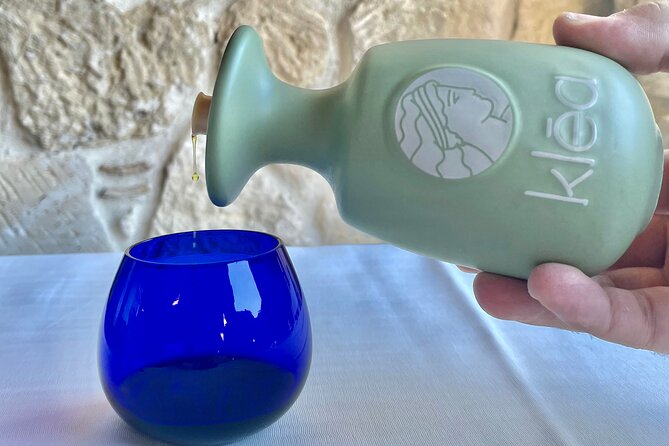
One of the strongest reasons to book this experience is the lesson on defects. Many people know that extra virgin is supposed to be the best grade, but few know how to tell if an oil actually tastes fresh and sound.
The session explains the difference between a good oil and one with unwanted faults. You learn to smell and taste with purpose, looking for clean fruit character instead of stale, flat, or otherwise unpleasant notes.
This does not turn you into a certified taster in an hour. It does give you a useful framework. If an oil smells dull or unpleasant, you can ask why. If it has bitterness and peppery heat, you can consider whether those qualities work together with its fruitiness.
The comparison with seed oils is also helpful. The goal is not to claim that every seed oil is poor, but to understand that different oils have different ingredients, methods, and flavor profiles. Greek extra virgin olive oil is treated as its own food, not just a generic cooking fat.
For a food-minded visitor, this is more useful than a simple sampling session. You are learning how to assess what you buy and how you use it.
Food pairings on the Thea Thalassa terrace
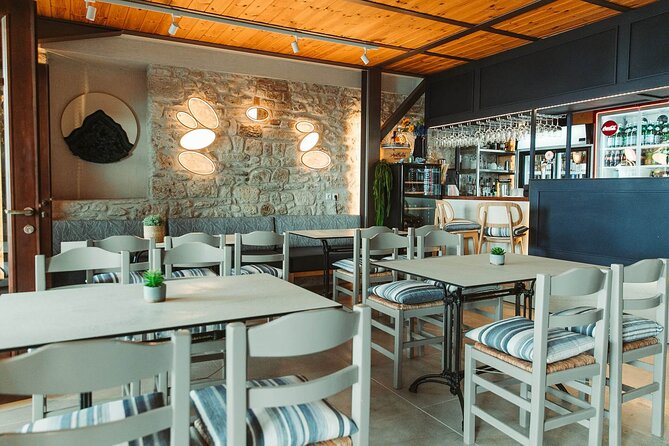
After the oil tasting, you may choose a special menu. This gives you a second stage of the experience: first you taste the oil by itself, then you see what happens when it is paired with food.
That change is important. An oil that tastes sharp on its own may work well with a dish that needs lift. A mild oil may suit food where you do not want the olive flavor to take over. Pairing helps you understand that there is no single best oil for every meal.
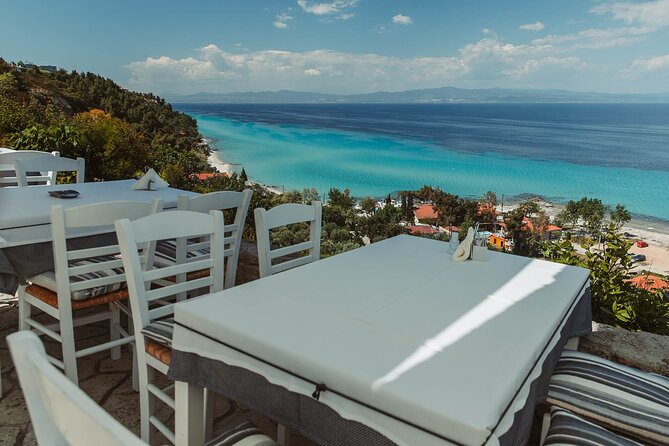
The setting adds to the occasion. The tasting takes place on a private terrace above Thea Thalassa restaurant in Afitos, with a sea view. The table is arranged for the session, and the atmosphere is more intimate than a large group demonstration.
If you choose the menu, allow for more than the advertised one-hour tasting. The stated duration is about one hour, while the meal is an optional addition. The supplied details do not set out the menu price or every dish, so confirm those points before booking if you need to plan your budget closely.
The restaurant itself may also be useful to you if you want to turn the tasting into a meal. The experience and restaurant setting work naturally together, but the restaurant portion should be treated as an add-on rather than part of the basic $71.01 ticket.
Harry’s teaching style and the private format
Harry is central to the experience. His enthusiasm for olive oil comes through in the way the session is described, and that matters in a subject that could otherwise become dry. He explains the process, guides the tasting, and gives you room to ask questions.
The activity is private, meaning only your group participates. That is a real advantage for couples, families, and small groups who want to set their own pace. You can ask basic questions without feeling self-conscious, or spend more time comparing two oils that interest you.
A private format can also make the $71.01 price easier to understand. You are not paying only for four tastes. You are paying for a dedicated guide, a structured sensory lesson, a private setting, bottled water, and the chance to focus on a food that is central to Greek cooking.
Still, value depends on your interests. If your group has no special interest in food or local products, the price may be hard to justify for a one-hour activity. If you enjoy cooking, shopping for ingredients, or finding a thoughtful holiday gift, the lesson has lasting use.
You may also buy the oils at the end. There is no pressure to purchase, which is worth noting. The option is convenient if you find a favorite, but you should not feel that buying a bottle is part of the experience cost. Bottles taken home have survived suitcase travel according to the practical experience shared about the activity, though you should pack any purchase carefully.


Location, timing, and what is included
The meeting point is Thea ThalassaGreece, Afitos 630 77, Greece. The activity ends back at the same place, so you do not need to arrange a second pickup point.
Private transportation is not included. You need to make your own way to the meeting point, and the location is near public transportation. That makes this easier if you are already staying in or visiting Afitos, but it is not a door-to-door excursion from another part of Halkidiki.
The session is offered in English. Confirmation is received at booking, and group discounts are available. Since the activity is private, the group discount may matter most when several people are booking together.
Bottled water and the olive oil tasting guide are included. The optional special menu is not part of the basic inclusions, and food or drink beyond the tasting should be checked before you reserve.
The activity depends on good weather. If poor weather causes cancellation, you are offered another date or a full refund. It also requires a minimum number of participants, despite being private for the group that books. If that minimum is not met, you are offered another date or experience, or a full refund.
You should also note the health restriction. This is a sensory activity, so it is not suitable for someone with a condition that prevents tasting or smelling.
Who will get the most from this experience
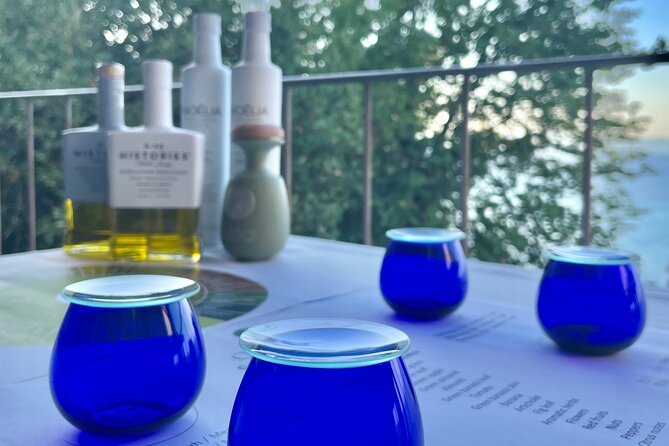
I would recommend this to anyone who enjoys Greek food beyond the usual restaurant meal. It suits a couple looking for a different holiday activity, a family with older children who can take part in tasting, or a small group of friends who like cooking and local products.
It is particularly good for a food hobbyist. The session gives you vocabulary, comparison skills, and a way to think about matching oils to food. It can also make a thoughtful surprise for someone who enjoys culinary experiences more than standard sightseeing.
The terrace setting makes it appealing for a relaxed date or special occasion. The optional menu can turn the lesson into a longer meal, and the sea view gives the hour a sense of place without requiring a large tour.
You may want to skip it if you are looking for an olive farm visit, a harvest demonstration, or a full production tour. None of those is promised here. You also should not book it if you cannot smell or taste, since those senses are the center of the activity.
Is $71.01 a fair price?
At $71.01 per person, this is not a bargain tasting in the casual sense. You are paying more than you would for a bottle of oil and a few samples at a market. The better question is what you want from the hour.
The price makes sense if you value private instruction and want to learn something you can use after the holiday. You taste four Greek oils, receive guidance from a professional olive oil taster, learn how to identify defects, and compare oils with food. A private terrace and a dedicated host add to the experience.
The price is less attractive if you only want to sample olive oil without explanation. The short duration also means the session has to move at a good pace. You receive an introduction, tasting, comparison, and possibly food pairing, but not a long visit to an olive grove.
The optional menu changes the value calculation. If the meal is important to you, ask for the extra cost before booking. If you want to keep spending under control, book the tasting alone and treat the restaurant meal as optional.
Cancellation and practical planning
You can cancel for a full refund up to 24 hours before the local start time. Changes or cancellations made less than 24 hours before the experience are not accepted for a refund.
Because weather can affect the terrace setting, keep some flexibility in your Halkidiki plans. A weather cancellation brings an offer of another date or a full refund.
Plan to arrive at the named meeting point rather than expecting private transport. Since the session ends there, you can pair it with time in Afitos or a meal at Thea Thalassa, but leave enough time to find the location without rushing.
Should you book the Greek Olive Oil Tasting Experience?
Book it if you want a small, personal food lesson rather than another standard sightseeing stop. The four-oil comparison and defect-spotting lesson give you practical knowledge, while Harry’s enthusiasm and the private sea-view terrace keep the experience warm and social.
Think twice if you dislike tasting strong flavors, cannot smell or taste, or expect a farm and factory visit. Also check the price of the optional menu before you decide how much time and money to set aside.
For food lovers, couples, and curious small groups staying near Afitos, this is a smart way to understand one of Greece’s most important ingredients. You leave with a sharper palate, better shopping instincts, and perhaps a bottle for your kitchen.
FAQ
Where does the olive oil tasting take place?
The experience starts and ends at Thea ThalassaGreece, Afitos 630 77, Greece. The tasting takes place on a private terrace above Thea Thalassa restaurant.
How long does the experience last?
The tasting lasts approximately one hour. An optional special menu after the tasting may make your visit longer.
How much does the experience cost?
The listed price is $71.01 per person. Group discounts are available.
Is transportation included?
No. Private transportation is not included. The meeting point is near public transportation, and you make your own way there.
What is included in the basic price?
The basic experience includes guidance from an olive oil taster and bottled water. The optional special menu is separate.
Is the activity private?
Yes. Only your group participates in the private tour or activity.
What happens if I need to cancel?
You can cancel at least 24 hours before the local start time for a full refund. Cancellations or changes made less than 24 hours before the start are not refunded. Weather or minimum-participant cancellations may result in another date, another experience, or a full refund.