REVIEW · OLYMPIA GREECE
Half Day Private tour from Katakolon to Olympia and Beach
Book on GetYourGuide →Operated by Nassos Tours · Bookable on GetYourGuide
Ancient Olympia hits you fast. This private half-day trip mixes the big ruins with an efficient museum visit and a relaxed beach break. I especially like how the driver handles the entry flow and provides a booklet, and I also like the extra time you get to wander Olympia’s village at your own pace. One thing to consider: the site is spread out, so you’ll want comfortable walking shoes and a plan for heat and sun.
You’re also in good hands with Nassos Tours. In real-world examples, drivers like Irene and Nico made sure a passenger using a mobility scooter was comfortable and safe, even helping with loading and unloading multiple times. The main drawback is that you don’t get a licensed guide inside the ruins or museum unless you request one ahead of time, so you’ll rely on the booklet and your own curiosity.
In This Review
- Key highlights worth planning around
- Katakolon to Olympia: the easiest way to get there
- The part I appreciate most: entry without stress
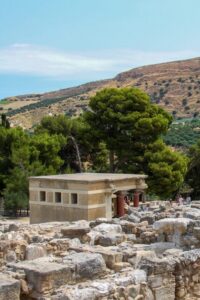
- Ancient Olympia in 2 hours of ruins and landmarks
- What you should aim to see first
- A self-guided visit can work well here
- Museum of Ancient Olympic Games: where the art and symbols land
- The museum pieces you’ll want to spot
- Why this museum stop feels like real value
- Olympia village free time: coffee, local shops, and a slower pace
- What I like about this portion
- A note on lunch add-ons
- The Agios Andreas beach stop: a smart cooldown before you head back
- Who this beach break is best for
- Price and value: private up to 4 people from Katakolon
- When this price makes the most sense
- Mobility, comfort, and what to expect physically
- What to bring for an easier day
- How to get the best experience out of self-guided ruins
- Should you book this Olympia and Agios Andreas tour?
- FAQ
- How long is the tour?
- Where does the tour start in Katakolon?
- Is the ancient site and museum visit self-guided?
- Are tickets included in the price?
- Is there a licensed guide included?
- What’s included in the tour besides transport?
- Is there a beach stop, and where?
- What should I wear and bring?
Key highlights worth planning around
- Skip-the-line entry help so you spend more time seeing and less time waiting
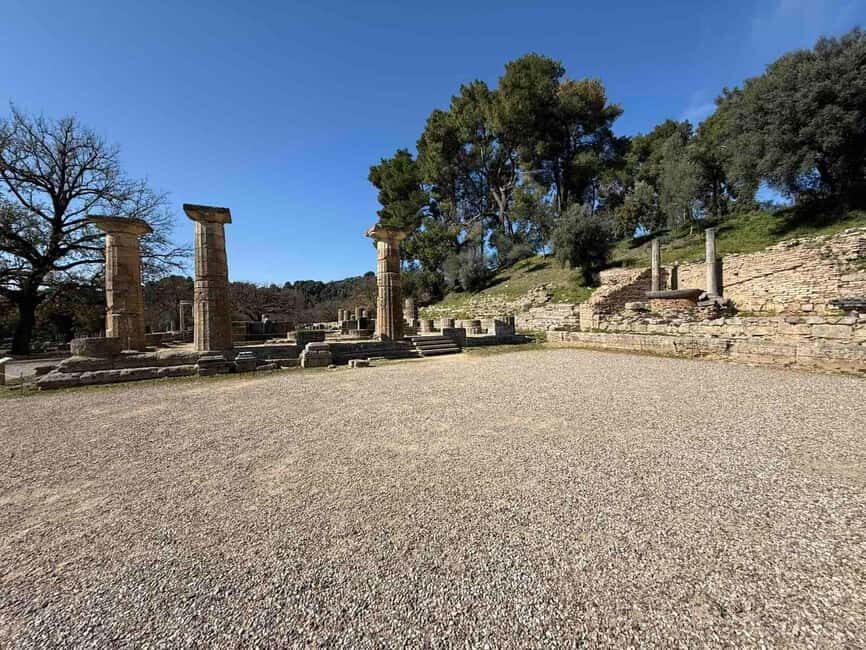
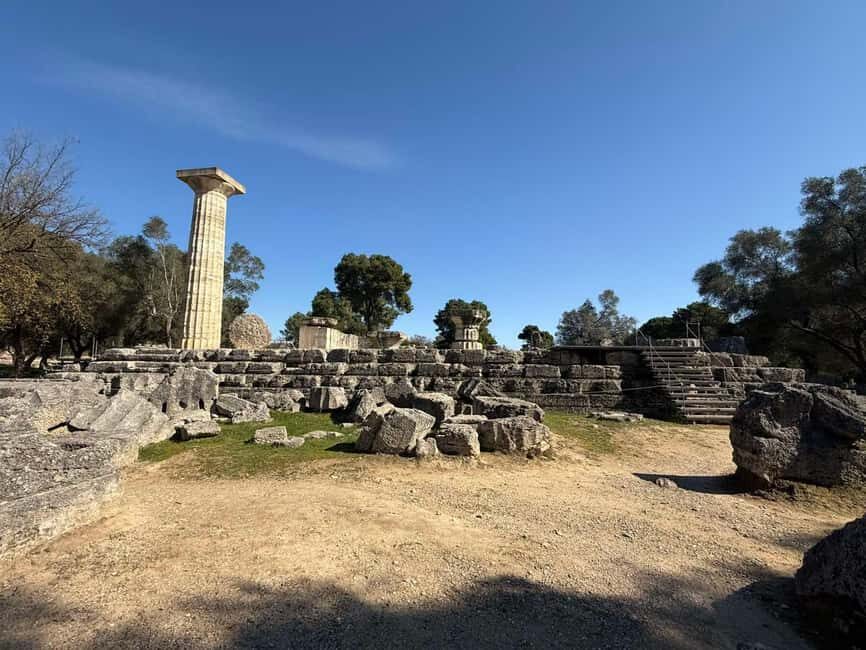
- Temple of Zeus, Heraion, and the stadium—the core Olympia landmarks in one stretch
- Museum stars like Hermes with the infant Dionysus and the Nike of Paionios
- Free time in Olympia town with room to eat, browse, and learn from locals
- Agios Andreas beach stop with free sunbeds and umbrellas for a real cooldown
Katakolon to Olympia: the easiest way to get there
Olympia is one of those places where it’s easy to waste time if you’re winging it. You’re coming from Katakolon port, and timing matters—ships don’t wait, and the sun in the Peloponnese can go from pleasant to intense quickly.
This tour keeps the start simple. You meet your driver at the port area, at the large port authority building with the big blue John Latsis sign. Your driver will have a card with your name, so you can find them without hunting.
Then you’re off in an air-conditioned vehicle. Depending on your group size, you may ride in a taxi, a mini van, or a larger bus, but the goal is the same: comfortable transport plus a driver who stays with you throughout the key moments. If you care about practical details—like knowing where to go next—this is the real value.
You can also read our reviews of more private tours in Olympia Greece
The part I appreciate most: entry without stress
The team helps with the entrance process and ticket purchase so you can skip the ticket line. That matters because the Olympia site can get crowded at peak times, and line time is time you can’t get back. You also get a booklet in your language, which helps you navigate at your own pace once you’re inside.
Ancient Olympia in 2 hours of ruins and landmarks

Once you’re on site, you get about two hours for the archaeological area and the museum combined, with an emphasis on self-guided exploring. That’s a good setup for most people because it lets you move faster through what you already know, and slow down where something grabs you.
What you should aim to see first
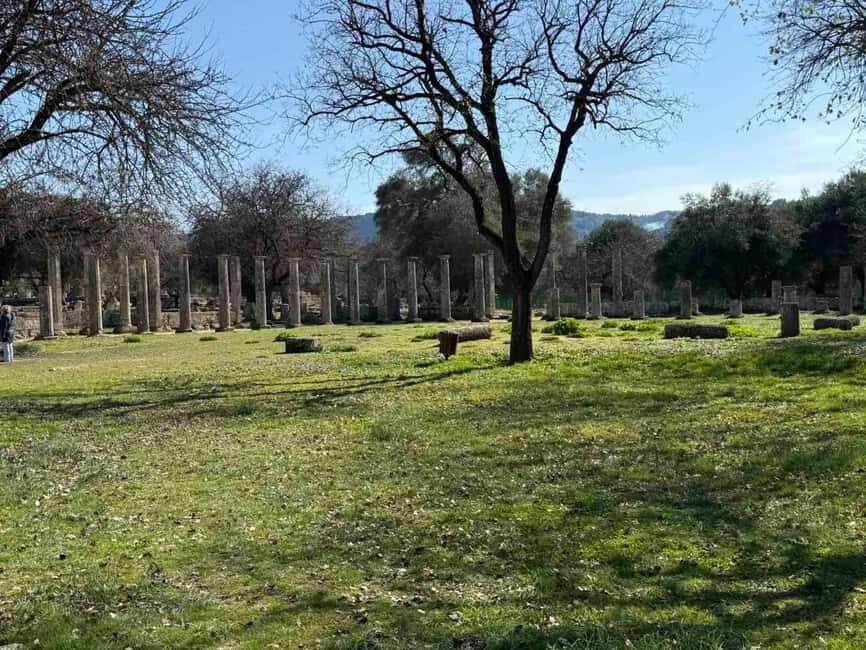
Ancient Olympia isn’t one single monument. It’s a sacred complex, and the most meaningful landmarks are close enough that you can hit the highlights without turning the day into a marathon.
Plan your mental checklist around these big names:
- The stadium, where the Olympic Games took place
- The Heraion, associated with Hera
- The Temple of Zeus, the major centerpiece
The Temple of Zeus is special even beyond the obvious size. It was a sanctuary and once tied to the ancient Seven Wonders of the world. You’ll feel the scale when you’re walking in the open space where that centerpiece once stood. It’s not about staring at one pillar—it’s about understanding how this whole area functioned as a religious and cultural site.
A self-guided visit can work well here
You might think a museum or ruins visit needs constant commentary. In Olympia, though, self-guided works nicely because the booklet gives you the context you need, and the site gives you the time to look closely.
That said, you should be honest with yourself: if you want a deep, story-by-story explanation of every structure, you’ll probably prefer to request a licensed tour guide in advance. The tour can arrange that if you ask before you go.
Museum of Ancient Olympic Games: where the art and symbols land
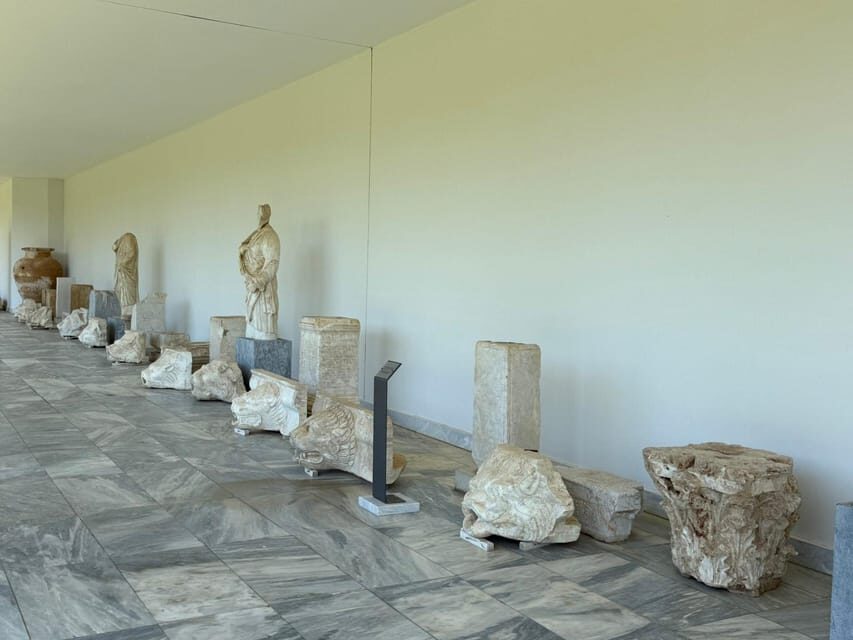
After the open-air ruins, the museum is where Olympia’s meaning becomes clearer. The displays connect the dots between the games, the religious setting, and the famous artworks tied to the sanctuary.
Expect to spend roughly the same two-hour window total for the ruins and museum experience, with the museum as the place to slow down and read. If you like classical sculpture, this is where you’ll feel the payoff.
The museum pieces you’ll want to spot
The highlights listed for this visit include two major standouts:
Hermes with the infant Dionysus (attributed to Praxiteles)
This sculpture is known for its calm, human presence. Instead of a dramatic pose, it’s serene—Hermes holding the infant Dionysus. If you’ve only seen Greek art as stiff and formal, this one can reset that idea.
Nike of Paionios
Nike is motion here—her garments shown as if they’re moving in wind. It’s a powerful example of how Greek art could blend realism with emotion. Even if you’re not a serious art person, it tends to register fast because it looks dynamic rather than static.
You’ll also see other major works tied to Olympia’s identity:
- Sculptures connected to the Temple of Zeus
- Bronze votive offerings
- Armor and helmets, including the helmet associated with Miltiades
Why this museum stop feels like real value
A lot of half-day tours rush the museum and then leave you with a blur. Here, you get enough time to actually notice details—faces, posture, material, and symbolism—without needing to keep track of a strict script. It’s also where the booklet can do its best work, turning your walk through the galleries into something you can remember.
Olympia village free time: coffee, local shops, and a slower pace
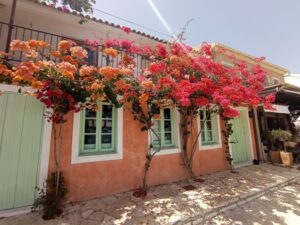
After the ruins and museum, you get free time in the traditional village of Olympia. This is where the day stops feeling like an assignment and starts feeling like a break.
You can stroll at your own tempo, browse shops, and eat whenever you feel ready. The tour notes that you can enjoy a meal or coffee at Nassos’ establishments, owned by the proprietor connected with the company. That’s a practical bonus because you’re more likely to find a place that’s relaxed and easy to navigate when you’re not hunting on your own.
What I like about this portion
People tend to think Olympia is only about the ancient site. But the village time helps you get the local texture: everyday life, normal conversations, and food that doesn’t feel like a tourist trap.
If you want to plan your energy, treat the village as your reset. You’ve walked among stone and history—now it’s okay to shift to something simpler: a drink, a snack, and some wandering.
A note on lunch add-ons
In some cases, drivers have offered extra cultural stops tied to local food and production, like olive oil experiences. Since these aren’t guaranteed in the core plan, you’ll want to treat that as an optional bonus if your driver suggests it and if it fits your schedule.
The Agios Andreas beach stop: a smart cooldown before you head back
By late in the day, you’ll have that familiar post-ruins feeling: you’re impressed, you’re tired, and you want a clean reset.
That’s why the Agios Andreas beach stop works so well. It’s a short break on the way back to Katakolon where you can:
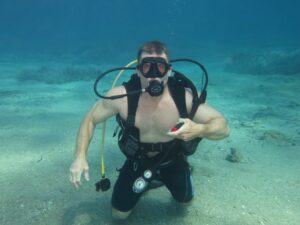
- swim
- relax by the water
- grab photos with a sea backdrop
The tour also mentions that sunbeds and umbrellas are provided free of charge at Agios Andreas. That’s a small detail, but it changes the math of the stop. You can sit comfortably without paying extra for basic shade.
Who this beach break is best for
If you’re traveling with kids, or if you’re with older family members, the beach pause adds balance. It turns the day from “all monuments” into “monuments plus recovery.”
If you’re the type who only wants ruins and zero free time, you might find this stop a little soft. But most people appreciate having an easy win at the end of a historical outing.
Price and value: private up to 4 people from Katakolon
At $246 per group for up to 4 people, this is priced like a true private outing, not a per-person bus tour. That matters because Olympia isn’t just a place—it’s a logistics problem. Getting from Katakolon, timing your entrance, and managing ticket lines can eat up your day if you’re doing it on your own.
Let’s break down what you’re paying for:
- private transportation from the port area
- air-conditioned comfort
- mineral water
- Wi-Fi in the vehicle
- help with entry so you can skip the ticket line
- a language booklet for the ruins/museum self-guided time
- flexibility to stop briefly where you need within the overall plan
Tickets are not included: €20 for adults, and children are free. Add that in and you’ll still likely find this is good value compared with piecing together transport, tickets, and time management yourself—especially when you factor in the time saved at the entrance.
When this price makes the most sense
This price is best if:
- you have a small group (up to four)
- you care about avoiding line stress
- you want a driver who stays with you from Katakolon and back
- you’d rather self-guide at the site with helpful context than follow a rigid script
Mobility, comfort, and what to expect physically
This tour is listed as wheelchair accessible. And beyond that label, the real-world service style seems practical: there are accounts of drivers helping with mobility scooters, including loading and unloading them multiple times.
Still, be realistic. Even with accessibility help, Olympia’s archaeological paths are not like a city sidewalk. Bring patience and plan for some uneven ground.
What to bring for an easier day
The basics matter a lot here:
- comfortable shoes
- hat and sunscreen
- camera
- water
- comfortable clothes
Also note that high-heeled shoes are not allowed. If you’re going to Agios Andreas, you’ll want footwear that’s safe both on land and near the water.
How to get the best experience out of self-guided ruins
If you do self-guided at Olympia, your experience rises or falls on how you choose your focus. Here’s a simple way to make it work.
First, decide what you want most:
- stadium and games atmosphere
- Zeus and the sacred setting
- sculpture and museum art
Then use the booklet as your pacing tool. Don’t try to read every label like a textbook. Pick the 4 or 5 things that pull you in, and let the rest become background.
A helpful strategy is to take photos, then circle back to one exhibit or structure you can’t stop thinking about. The museum sculptures and bronzes are the kind of details that reward a second look.
Should you book this Olympia and Agios Andreas tour?
Yes—if you want a smooth, private half-day that balances ancient monuments with real time to relax. The best reason to book is the combination of practical entry help, a self-guided setup that doesn’t waste time, and a beach cooldown at the end.
You might skip it only if you strongly prefer a fully licensed, live guide throughout the ruins and museum, because the standard experience is built around a booklet rather than constant narration. Or if you’re the type who hates any downtime, the village and beach stops may feel too relaxed.
If your priority is: see the key Olympia landmarks, understand the major museum works, and get back to Katakolon feeling like you didn’t rush—this is a solid choice.
FAQ
How long is the tour?
It runs for about 5 hours total.
Where does the tour start in Katakolon?
You meet at the port area at a large building of the Port Authority, near a big blue sign that says John Latsis. The driver will have a sign with your name.
Is the ancient site and museum visit self-guided?
Yes. You’ll explore the archaeological site and museum with the help of an information booklet provided by your driver.
Are tickets included in the price?
No. Tickets for the archaeological site and museum are not included. Adult tickets are listed as €20, and children are free.
Is there a licensed guide included?
A licensed tour guide is not included by default. If you request a specialized licensed guide, the company can arrange it in advance.
What’s included in the tour besides transport?
The tour includes mineral water, an air-conditioned vehicle, Wi-Fi, and fuel, plus the driver-provided information booklet.
Is there a beach stop, and where?
Yes. There’s a stop at Agios Andreas beach on the way back to Katakolon, with time to swim and relax. Sunbeds and umbrellas are provided free of charge there.
What should I wear and bring?
Bring comfortable walking shoes, a hat, sunscreen, water, and a camera. High-heeled shoes are not allowed.