REVIEW · OLYMPIA GREECE
Olympic site all-inclusive private tour with a local expert
Book on GetYourGuide →Operated by Olympia Insider · Bookable on GetYourGuide
Ancient Olympia is more than a set of broken columns. It is the place where athletes trained, competed, prayed, and chased glory long before the modern Games. This private tour with a local archaeologist gives you the useful context that ruins alone cannot provide, from the training grounds to the track where you can run a short victory lap.
I like the skip-the-line admission, especially in the hot Peloponnese sun, and I like having a guide who can adjust the pace to your group. Guides such as Elena, also identified as Eleni Angeli, are praised for clear English, warm conversation, strong storytelling, and thoughtful touches such as finding shade or helping during a sudden rainstorm.
The main point to check before booking is the museum portion. The tour description includes a guided museum visit in the schedule, but the included-services section says museum guiding is not included. Ask for clarification when you book. The site itself is included, while hotel transportation is not.
In This Review
- Key points at a glance
- Why ancient Olympia works best with a guide
- Starting at the Kladeos Bridge
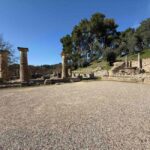
- The gymnasiums and training grounds
- The Temple of Zeus and its lost statue
- The Temple of Hera and the Olympic flame
- The original stadium and your Olympic moment
- The Archaeological Museum of Olympia
- What $113 per person buys you
- Timing, comfort, and group size
- Who will get the most from this tour
- Booking details worth checking
- Should you book the Olympia private tour?
- FAQ
- How long does the tour last?
- What is included in the price?
- Is the museum guided tour included?
- Is hotel pickup and drop-off provided?
- Where does the tour meet?
- What languages are available?
- Is the tour private?
- Is the archaeological site wheelchair accessible?
Key points at a glance
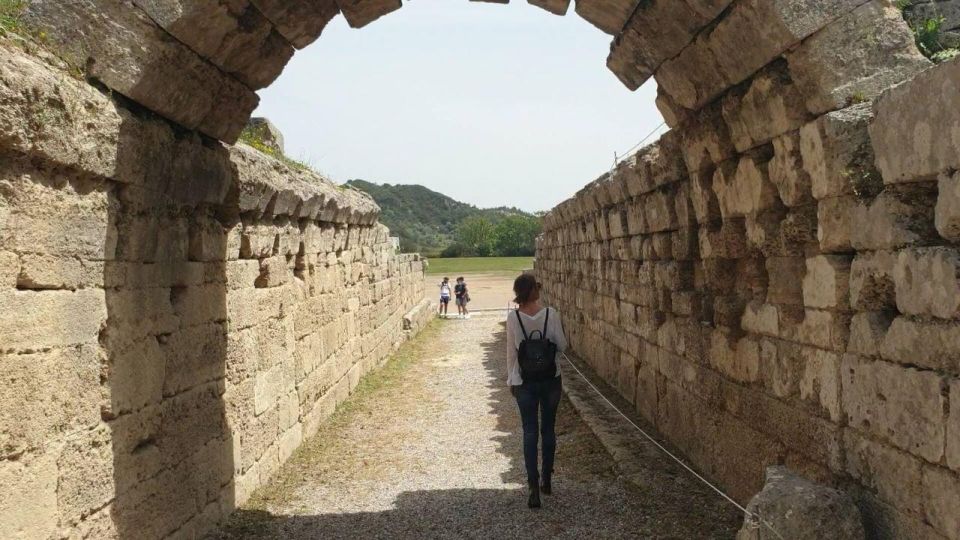
- Run on the original Olympic stadium track: You can crown yourself champion with a simple sprint or walk across the ancient field.
- Meet the temples that shaped the Games: See the Temple of Hera, where the Olympic flame is lit for each modern Olympiad, and the Temple of Zeus.
- Get a private guide, not a set script: The tour is designed for one private group, so you can ask questions and adjust the pace.
- Learn from a trained local archaeologist: English and Spanish guiding is available, with Elena receiving especially strong praise for her clear and lively explanations.
- Pay one price for the site ticket and guide: At $113 per person, the value is strongest for couples, families, or small groups who want focused attention.
- Plan for sun and uneven ground: Most of the route is flat, but gravel and a few uneven spots require sensible shoes.
Why ancient Olympia works best with a guide
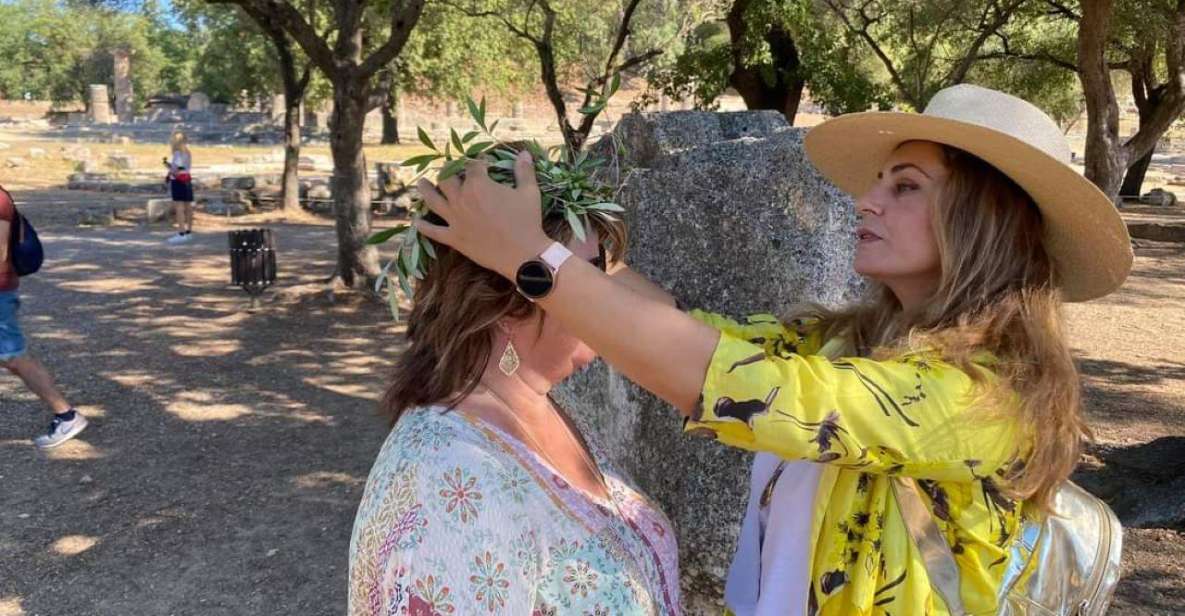
Olympia can look deceptively easy to understand. You walk among stone foundations, fallen columns, and open grass, but the original purpose of each area is not always clear. A good guide turns those remains into a working sanctuary and sports center rather than a collection of old stones.
This tour begins with the ancient training facilities and gymnasiums. These spaces are important because the Games were not simply a one-day athletic event. Competitors trained, prepared their bodies, and took part in a wider religious setting dedicated to Zeus.
With a private guide, you can stop when something catches your attention. You might want a longer explanation of ancient sports, the role of religion, or the political importance of the Games. You can also keep moving if younger members of your group lose patience. That flexibility is one of the clearest reasons to choose a private tour instead of a large scheduled group.
The guide’s role matters here. Elena is repeatedly described as personable, interactive, and easy to understand in English. Her explanations connect sports with the political and social setting of ancient Greece, which gives the visit more shape than a list of dates and names.
You can also read our reviews of more private tours in Olympia Greece
Starting at the Kladeos Bridge
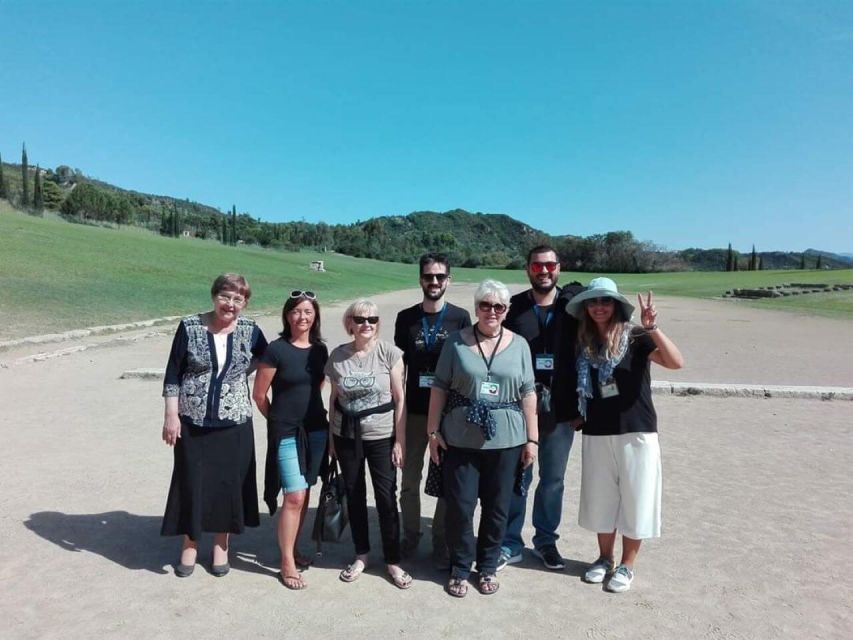
The listed meeting point is by the Kladeos Bridge, at the location marked J8W9+74. There are two starting options, and the exact meeting point can vary according to the option you choose, so check your booking details rather than assuming every group begins at the same spot.
The tour ends at one of the same two drop-off points. This is useful if you are arranging your own transport, but hotel pickup and drop-off are not included. You will need to reach the meeting point independently.
The practical advantage of meeting near the site is that you avoid spending part of a short tour on transportation. The experience lasts about two to two and a half hours, so every minute inside Olympia matters. Allow extra time around the scheduled start if you need to find the bridge or purchase anything before entering.
The gymnasiums and training grounds
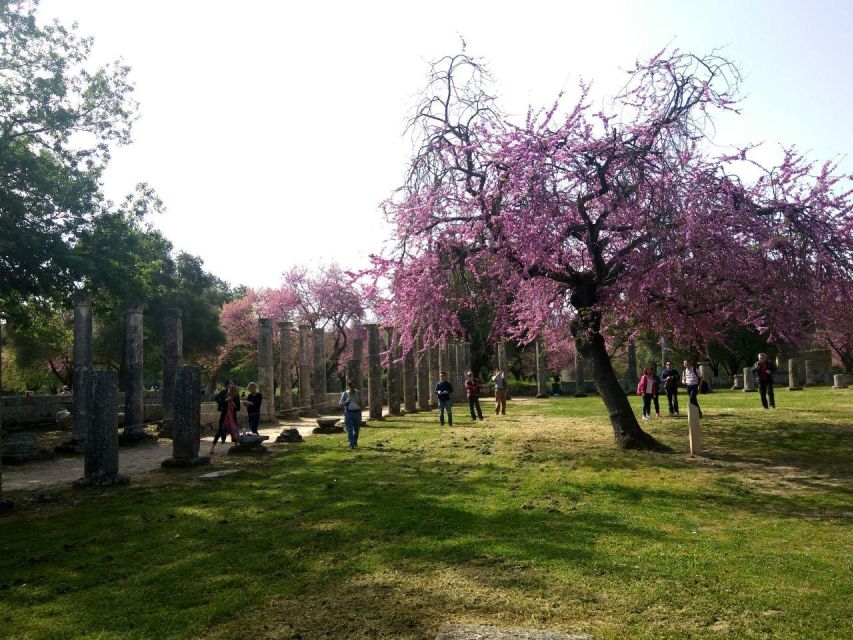
The first part of the visit introduces the athletic side of Olympia. The gymnasiums and training facilities help you picture the preparation behind the competitions. Athletes did not simply arrive, race, and leave. Training was a central part of the culture surrounding the Games.
This is a good place to ask your guide to explain how the ancient events differed from modern Olympic competition. The tour focuses on the site itself, but its private format gives you room to steer the conversation toward sports, daily life, religion, or the wider setting.
The remains are open-air, and much of the ground is flat. Still, the surface includes gravel and uneven patches. Wear stable shoes, especially if you want to move comfortably between the ruins and the stadium.
Do not expect a fully reconstructed sports complex. Olympia is an archaeological park, and the experience depends on seeing foundations and surviving architectural pieces in their setting. The guide supplies the missing connections.
The Temple of Zeus and its lost statue
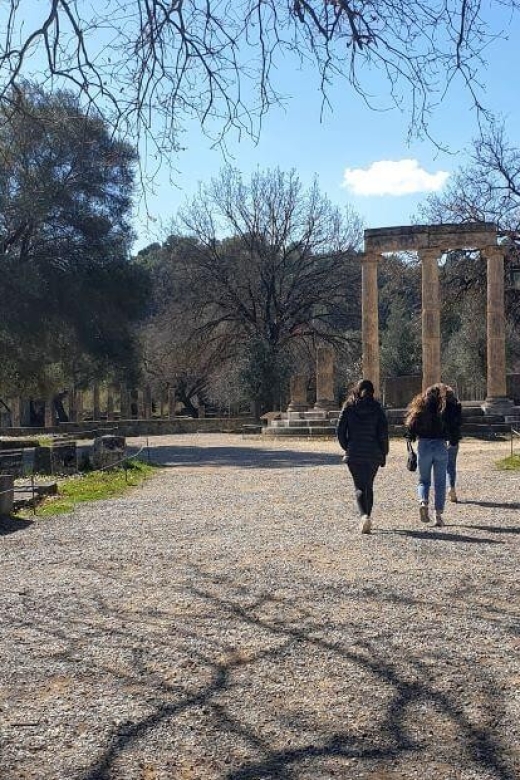
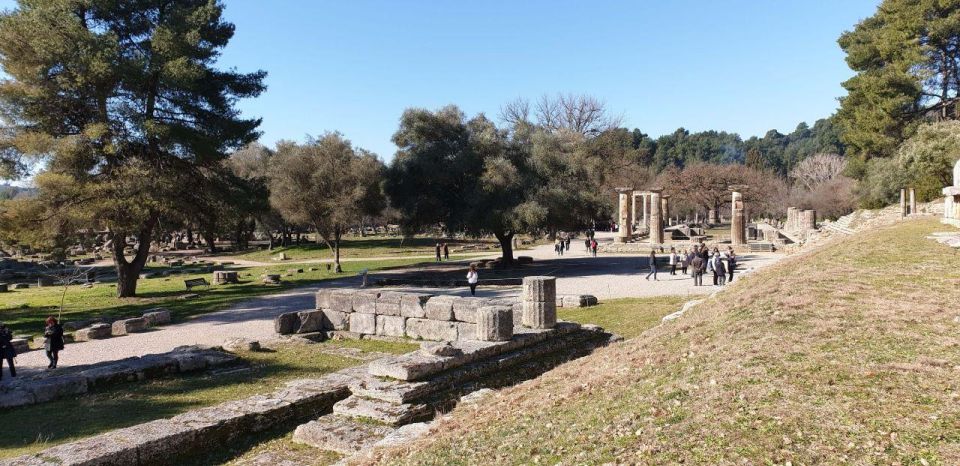
The Temple of Zeus is one of the central stops. It once held the colossal gold and ivory statue of Zeus, one of the most famous works of the ancient world. The statue no longer survives at Olympia, but the temple site gives you a sense of the scale and importance of the sanctuary.
This stop also helps explain why Olympia was not merely a sports venue. The competitions took place within a religious center, and the athletes’ achievements were tied to worship, ceremony, and public honor.
Expect a guided visit of about 15 minutes at the Temple of Zeus. That is enough time for a focused explanation, but not an extended archaeological lecture. If the temple interests you most, tell your guide. On a private tour, your questions can shape the amount of time spent at each location.
The site has little protection from the sun, so an umbrella, hat, and water are sensible. One guide took the trouble to locate shady spots for the group, but shade cannot be guaranteed everywhere.
The Temple of Hera and the Olympic flame
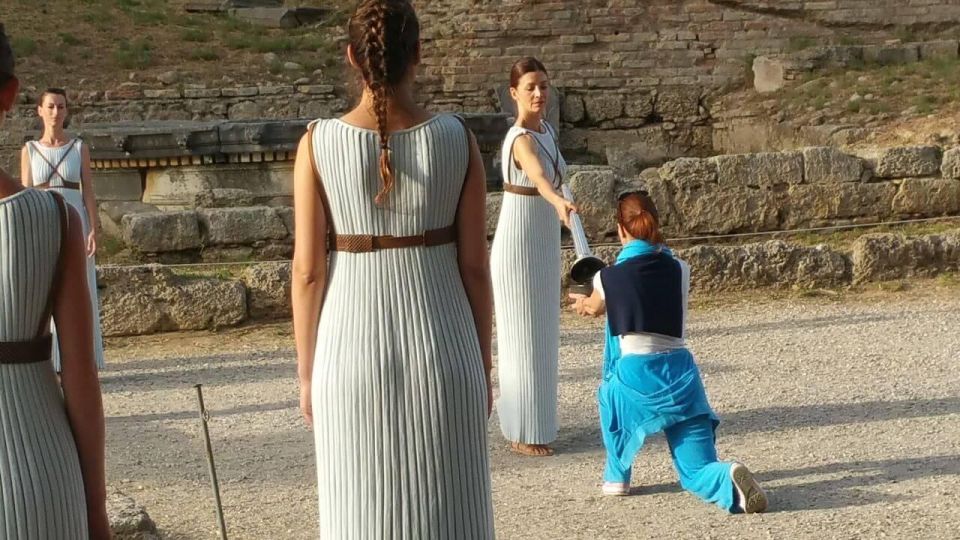
The Temple of Hera has a special link with the modern Games. It is the place where the Olympic flame is lit for each Olympiad, connecting contemporary ceremonies with the ancient sanctuary.
That link gives this stop a stronger present-day meaning than you might expect from the remains alone. You are not just looking at an old temple. You are standing at the symbolic starting point for a ritual still used by the modern Olympic movement.
The guided visit here is also listed at about 15 minutes. The stop is brief, but the guide can explain the temple’s place within Olympia and why the flame ceremony takes place here.
I would pay close attention to how your guide connects the ancient sanctuary with modern Olympic symbolism. That is the kind of detail easy to miss if you walk through the site without help.
The original stadium and your Olympic moment
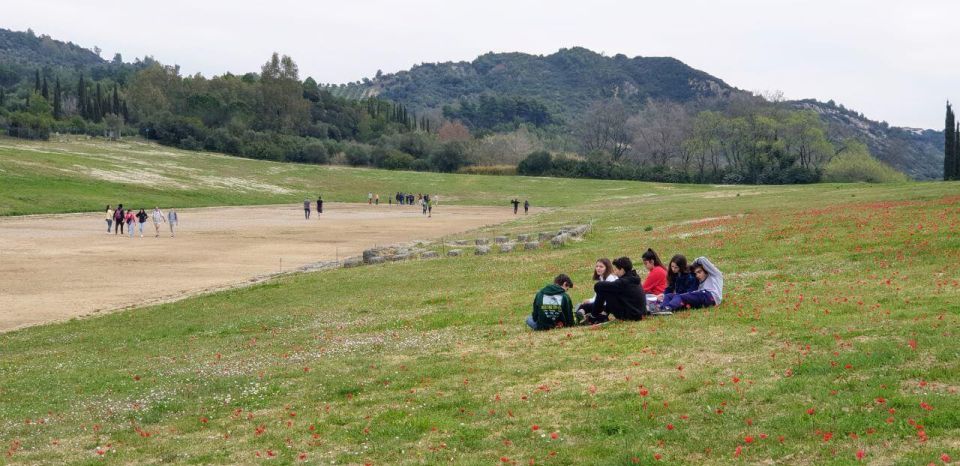
The stadium is likely to be the most playful stop. It was the largest ancient stadium in Greece, and you can step onto the original track. You do not need athletic ability to enjoy this part. A short run, brisk walk, or group photo gives the place a physical sense that no explanation can match.
The route includes about 20 minutes at the stadium. That should give you time to look across the field, imagine the scale of the crowds, and try the track yourself without rushing.
The stadium is also where the tour moves from abstract history to personal experience. You can hear about ancient competition, then stand where competitors actually raced. For families, this may be the moment that keeps children interested. For adults, it is a welcome excuse to be slightly silly at an important archaeological site.
Climbing is not allowed, so keep your Olympic victory to the track. Swimwear and food are also prohibited at the site. Assistance dogs are allowed, but other pets are not.
The Archaeological Museum of Olympia
The Archaeological Museum is scheduled as a one-hour visit in the stated route. It can add useful detail because artifacts and sculptures help fill in what the open-air ruins cannot show.
However, the service details are not fully consistent. The schedule describes a guided museum visit, while the included section specifically excludes the museum guided tour. The safest reading is that museum entry or access may be part of the planned experience, but dedicated museum guiding may cost extra or require a separate arrangement.
Confirm this before paying. If the museum guide is included for your booking, one hour gives you a worthwhile extension of the site visit. If it is not, you can still ask exactly what is covered and decide if you want to visit independently.
One strong point is that the guide may be able to link the objects in the museum to the places you have just seen outside. That connection makes the museum more useful than visiting it without first understanding the sanctuary.
What $113 per person buys you
The price is $113 per person. It includes the Olympia admission ticket and guiding within the archaeological site by an English-speaking certified tourist guide licensed by the Greek Ministry of Tourism, described as a field archaeologist or archaeologist.
That is not budget pricing for a simple walk through ruins. The value comes from privacy, a specialist guide, skip-the-line access, and the ability to set the pace around your own group. For two people, the total can feel high. For a family or small group that would otherwise hire separate guiding, the price becomes easier to justify.
Admission is handled through a separate entrance, so you avoid waiting to buy a ticket. This matters in summer, when standing outdoors before a two-hour visit can drain your energy before the tour even begins.
The museum guiding question affects the value. If you want a fully guided site and museum visit, verify the exact inclusions. Do not assume the one-hour museum entry in the route automatically means a museum guide is included.
Timing, comfort, and group size
The advertised duration is two to two and a half hours. The core archaeological-site route includes the gymnasiums, Temple of Zeus, Temple of Hera, and stadium. Adding the museum may bring the visit closer to the longer end of that range or require a separate timing arrangement.
Because this is a private group, you are not sharing the experience with strangers. That helps if your group has mixed interests or needs a slower pace. It also lets you ask follow-up questions without feeling that you are holding up a large crowd.
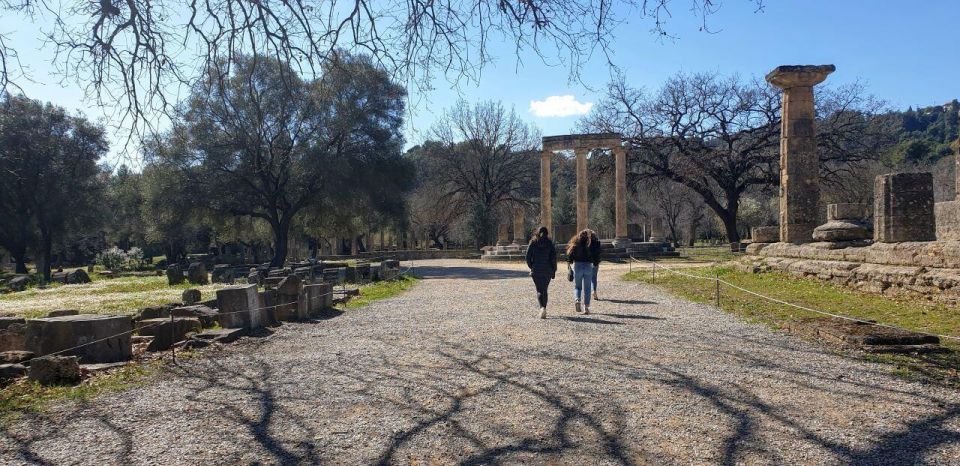
The ground is mostly flat, with some gravel and uneven areas and only a minimum number of stairs. The site is wheelchair accessible, although anyone using a wheelchair should still account for the outdoor surfaces.
Bring sun protection and comfortable shoes. Food is not allowed inside, so plan around the site rules. A sudden rain shower is possible, and an umbrella can help. One guide was praised for bringing an extra umbrella, but you should not rely on that as standard equipment.
Who will get the most from this tour
I would choose this experience if you care about context and want to ask questions. It suits couples, families, and small groups who prefer a conversation over a fixed lecture.
It is especially useful if Olympia is a major reason for your visit to the Peloponnese. Reaching the site can take planning, so a private guide helps you make the most of your time once you arrive.
Families may appreciate the chance to run the track and keep the visit active. History fans will value the archaeological and political background. First-time visitors benefit from having the temples, training spaces, stadium, and museum explained as parts of one place.
You may want a different option if you only want a quick look at the ruins, dislike guided touring, or already have a strong understanding of ancient Olympia. The price pays for personal attention, not transportation or a short self-guided stroll.
Booking details worth checking
The experience offers free cancellation up to 24 hours before the start time, with a full refund under that policy. You can also reserve now and pay later, which helps if your Peloponnese schedule is still moving around.
Guiding is available in English and Spanish. The advertised guide is a certified tourist guide and archaeologist, but the exact person can depend on availability. Elena, also named Eleni Angeli, is specifically associated with the tour and is praised for clear English, lively explanations, careful pacing, and genuine care for group comfort.
The meeting point may vary by booking option. Confirm the exact location, the museum arrangement, and whether the full two and a half hours includes museum guiding before you set your transport schedule.
Should you book the Olympia private tour?
Book it if you want the ancient Games explained by a local specialist, prefer a private group, and value skip-the-line entry. The Temple of Hera, Temple of Zeus, training grounds, and stadium are far more meaningful when someone connects them to sport, worship, and public life.
At $113 per person, this is best viewed as a focused private guide service rather than a low-cost admission ticket. The strongest reasons to choose it are the guide quality, the flexible pace, and the chance to run on the original track.
Before booking, settle the museum question and arrange your own transport to the Kladeos Bridge. If those details work for you, this is a strong way to experience Olympia without wandering through the ruins wondering what you are looking at.
FAQ
How long does the tour last?
The experience lasts about two to two and a half hours. Starting times vary, so check availability for your chosen date.
What is included in the price?
The price includes guiding within the Olympic archaeological site and the Olympia admission ticket. The guide is an English or Spanish speaking certified tourist guide and archaeologist.
Is the museum guided tour included?
The route describes a one-hour guided visit to the Archaeological Museum of Olympia, but the included-services details say the museum guided tour is not included. Confirm this point before booking.
Is hotel pickup and drop-off provided?
No. Hotel transportation is not included. The listed meeting and drop-off points are at or near the Kladeos Bridge, with the exact option depending on your booking.
Where does the tour meet?
The meeting point may vary according to the option selected. The listed location is Γέφυρα Κλαδέου, marked J8W9+74.
What languages are available?
The live guide is available in English and Spanish.
Is the tour private?
Yes. This is a private-group experience, so your group does not join a larger shared tour.
Is the archaeological site wheelchair accessible?
Yes. The surface is generally flat, but some sections have gravel and uneven ground. There are only minimal stairs.