REVIEW · NAXOS
Half-Day Tour of Naxos Island (up to 7 pax)
Book on Viator →Operated by Naxos Sun Holidays · Bookable on Viator
One rugged island detail at a time. This half-day tour threads together Naxos interior culture—temples, villages, and two food-and-drink stops—without wasting your day in long transfers. If you get guides like Dimitri or Alex, you’ll also get a running commentary as you move through the island.
I especially like how this is built around small-group pacing (up to 7 people) with door-to-door pickup limited to Naxos. And the tastings are practical, not a rushed sales pitch: Kitron at a century-old distillery plus a stop at a restored olive mill.
One consideration: the Temple of Demeter is closed on Tuesdays, so you’ll get a pottery workshop instead. If you’re set on seeing the temple itself, pick your day carefully.
In This Review
- Key Points You’ll Care About
- Why This Half-Day Works So Well on Naxos
- The Temple of Demeter in Sagri: Marble, Agriculture, and Timing
- Chalki and the Century-Old Kitron Distillery Stop
- The Drive Toward Zeus Mount Through Olive Country
- Filoti: Panagia Filotitissa, the Museum, and the Big Plane Tree
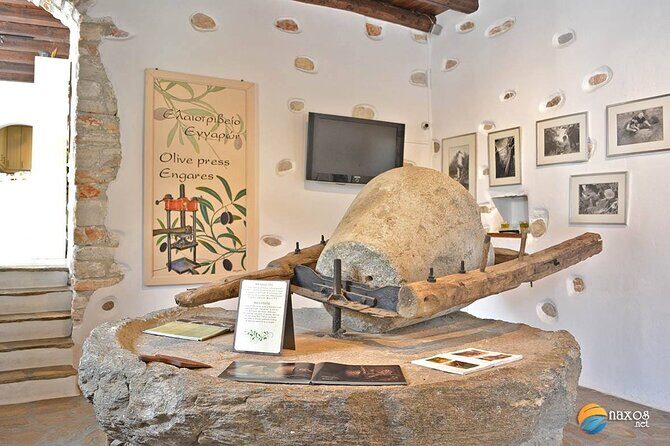
- The Restored Olive Mill: How Liquid Gold Used to Be Made
- Private 2-Way Transfers and the 7-Person Limit
- Language, Tickets, and the Pace You’ll Likely Prefer
- Who This Tour Fits Best (and Who Might Skip It)
- Should You Book Half-Day Tour of Naxos Interior?
- FAQ
- What’s the duration of the Half-Day Tour of Naxos Island?
- How big is the group?
- Is pickup included, and where does it happen?
- What stops are included on the tour?
- Is the Temple of Demeter open every day?
- Are tastings or admissions included?
- What’s the cancellation rule if weather is bad?
Key Points You’ll Care About
- Up to 7 people keeps the tour feeling personal, not like a bus ride.
- Private-style transfers save time and stress, since pickup is only on Naxos.
- Kitron distillery visit and tasting at a family-run place in Chalki.
- Temple of Demeter (Sagri) is the real anchor, dated to 530 BC, with a Tuesday alternative.
- Filoti’s church and museum add more than “pretty views.”
- Olive mill stop connects Naxos agriculture to what you’ll taste and buy.
Why This Half-Day Works So Well on Naxos
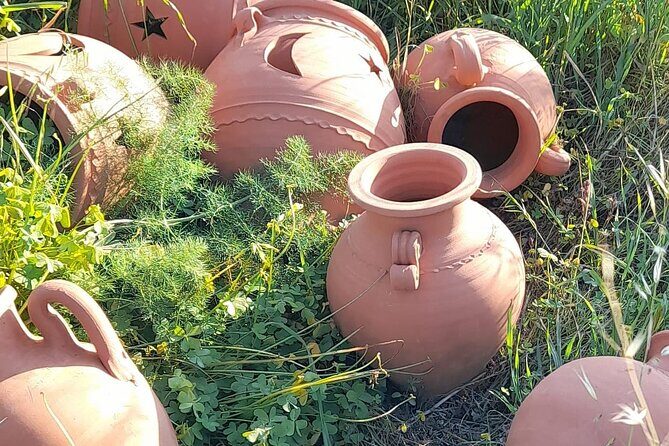
Naxos isn’t just beaches. The island’s interior is where you feel its logic: terraced fields, village life, and old ways of making food and drink. This tour is short enough to fit into a busy trip, but structured enough that you leave with more than photos—you get a sense of how Naxos actually works.
The value is in the balance. You get one major ancient site (Temple of Demeter), two village stops that show how people live, and two hands-on production stops tied to island staples: Kitron and olive oil. It’s also surprisingly flexible in practice. Many groups note that pace and focus can be adjusted to what they care about, which matters when you’ve got kids, grandparents, or just different interests.
And you’re not spending your half day hunting down logistics. Pickup and return are part of the experience, and the vehicle is meant for your group size. That’s big on Naxos, where the “best route” can change with traffic and the time of day.
A few more Naxos tours and experiences worth a look

The Temple of Demeter in Sagri: Marble, Agriculture, and Timing
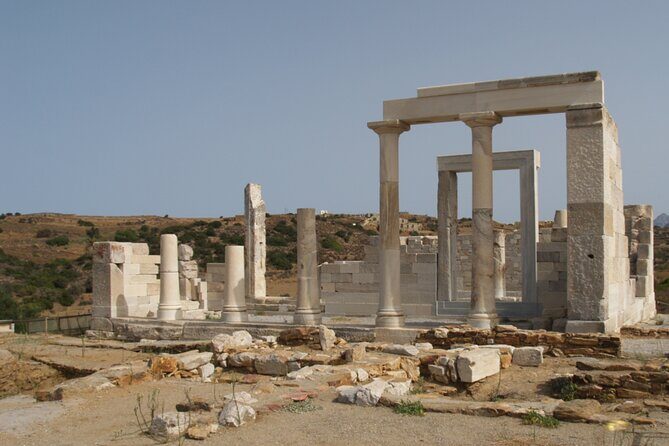
Your day starts at the Temple of Demeter in Sagri Village, tied to the goddess of agriculture. The site is dated to 530 BC and built on the edge of a fertile valley—an intentional placement, because farming is the story the temple is built around.
Here’s what makes this stop worthwhile beyond the name. This temple is noted for being the first Greek temple constructed entirely of marble, including the roof. In other words, you’re seeing a statement of craft and belief, not just ruins in the abstract. It gives you a clearer mental picture of what marble meant to ancient builders: permanence, status, and sacred space.
Practical timing note: the temple is closed on Tuesdays. On those days, you won’t “lose” the slot—you’ll swap in a traditional pottery workshop instead. If you can choose, I’d treat Tuesday like a pottery-and-crafts day rather than an archaeology day.
You’ll also have admission included for this stop, so you don’t need to juggle tickets mid-route. Budgeting time is easier when the first stop is already handled.
Chalki and the Century-Old Kitron Distillery Stop
After Sagri, the tour moves to Chalki Village. This is a classic Naxos rhythm: a pleasant stroll through a village setting and then a production visit where you can connect the name on a bottle to what actually happens behind the scenes.
The highlight here is a hundred-year-old, family-owned distillery that still produces Kitron liqueur using traditional methods. This isn’t just watching something from behind a counter. You get to understand the process and then taste what the work becomes.
Why I like this stop for first-timers: Kitron is one of those island products that sounds simple, but the flavor and personality can surprise you. A tasting gives you a real reference point, and it also helps you decide if you want to buy a bottle later—or if you want something else when you see similar bottles around the island.
Another nice detail: the distillery stop time is set (around 30 minutes), and admission is listed as free. That usually means fewer little surprises and a smoother run into the next stretch.
The Drive Toward Zeus Mount Through Olive Country
Between villages, you’ll get the scenic engine of the tour: the drive up toward Zeus Mount, the highest peak of the Cyclades. You’re not just climbing for views. The route runs within the Tragea valley area, and you’ll pass olive trees along the way.
This is a smart middle portion of the tour because it resets your brain. After concentrated stops (temple + distillery), you get time to look up at what the island looks like when it’s not “a stop.” Olive groves are a clue to what you’ll taste later, so the drive isn’t filler. It’s story-building.
What to expect: short stretches of conversation from your guide as you move, plus visual moments where you can see why the island’s agriculture shaped its culture. If your guide points out changes in terrain or cultivation patterns, pay attention—you’ll feel it more once you reach the olive mill.
If you’re prone to motion sickness, you’ll want to sit where you feel most stable, since you’ll be climbing roads. Nothing extreme is promised, but mountain roads can be twisty.
Filoti: Panagia Filotitissa, the Museum, and the Big Plane Tree
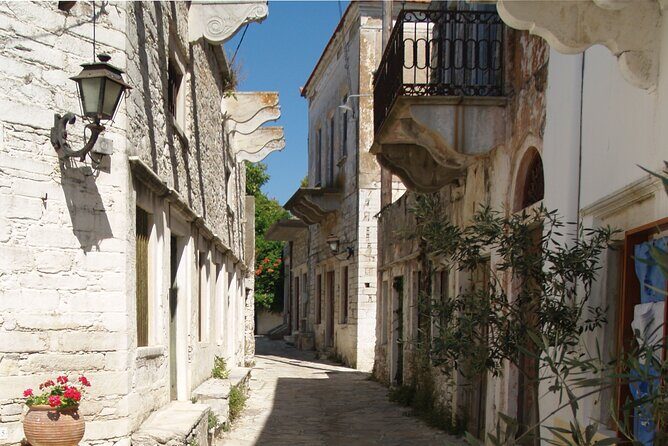
Filoti is the island’s largest settlement, built amphitheatrically on the foothills of Zeus Mount. That wording matters because the village feels layered—more like a hillside bowl than a flat square. You’ll also notice shade from a massive plane tree that spreads overhead, so it’s a good stop even when the sun is intense.
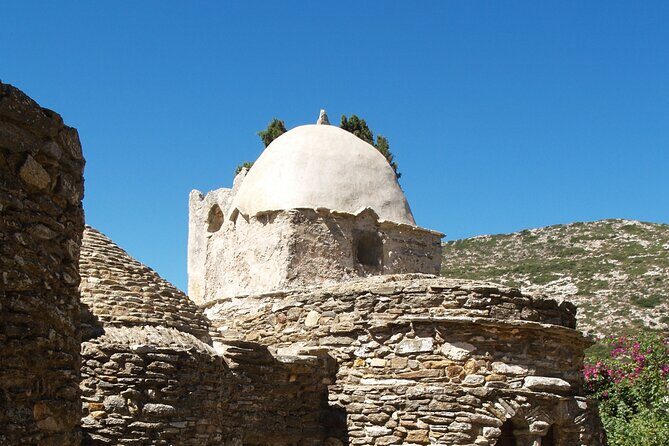
You’ll visit Panagia Filotitissa, the most renowned church in the district. The current building dates to the 18th century and includes a three-bell tower with carved details. Even if you’re not the type who stops for every church, this one is worth it because the structure is specific and the details are visible in person.
Right in front is the Ecclesiastic and Folklore Museum of Filoti. This is the part that adds depth without turning the tour into a museum marathon. You can see a traditional house concept and view relics and icons connected to the church.
Why this matters on a half-day: people often treat villages as photo stops. Filoti gives you a chance to understand village identity—religion, domestic life, and local memory—in a way that fits into limited time.
This stop runs about 30 minutes, and admission is listed as free, so it’s easy to justify even if you’re trying to keep the day moving.


The Restored Olive Mill: How Liquid Gold Used to Be Made
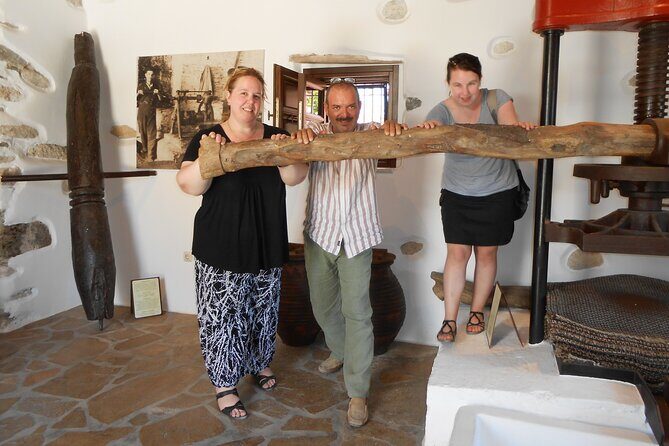
The last practical anchor is a stop at a restored olive mill. Olive oil isn’t a side dish on Naxos—it’s part of the island’s routine, culture, and economy. This stop is designed to show how olive oil was prepared carefully, step by step.
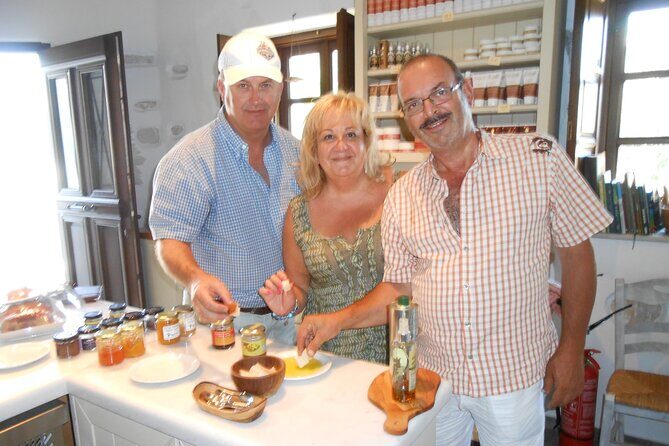
You’ll watch the process and then sample olive oil products. That tasting is where the “information” becomes real. When you taste an olive oil that’s produced locally (and in a context that explains the work), you understand what people mean when they call it liquid gold. You also get a feel for flavor differences that you might miss if you only ever buy bottles at a supermarket.
Admission for this stop is listed as free, and the time is around 30 minutes. That means you can keep your energy for the drive back without ending up worn out.
If you’re buying anything, this olive mill stop is the most logical place to do it. It ties your purchase to what you actually saw and tasted.
Private 2-Way Transfers and the 7-Person Limit
This is where the tour earns its money, in my view. At $145.12 per person for about 4 hours, it’s not cheap. But you’re paying for two things that reduce friction:
- Pickup and return are handled as part of the experience on Naxos only. That cuts down on coordinating taxis, meeting points, and waiting around.
- The group size is capped at 7 people, which makes conversations and timing more manageable than larger group tours.
Many guide/driver experiences on Naxos can blur into “someone drives you” instead of true guidance. The best versions of this tour include more narration as you travel and more involvement at the sites (not only at tastings). Some people highlight guides and drivers like Dimitri or Alex for exactly that: clear explanations and being attentive to what the group wants to see next.
Still, be honest about expectations. If what you want is hands-on interpretation at every stop, you should confirm the guide will join at the key sites—not just at the tasting-related moments. That’s the one potential downside you might want to protect against.
Language, Tickets, and the Pace You’ll Likely Prefer
The tour is offered in English, and you receive a mobile ticket. That combination is helpful if you’re moving quickly between activities, because you don’t want to waste time with paperwork.
The pacing is also designed to feel doable: short, focused stops (many around 30 minutes) plus driving time between locations. That’s perfect for a half-day when you still want energy left to eat well, swim, or wander independently afterward.
If you’re traveling with kids, this style of short segments usually works well. It’s also a good choice for adults who like variety—history plus food production—without committing to a full day.
One smart tip from real-world experience on islands: plan the half-day earlier rather than later. Heat can build as the day goes on, especially in open village settings. If you get a choice of start time, I’d lean morning.
Who This Tour Fits Best (and Who Might Skip It)
This tour is a great fit if you want:
- A fast orientation to Naxos interior beyond beaches
- A mix of ancient site + living culture + food tastings
- A small-group feel where you can ask questions
- Production stops (Kitron and olive oil) that connect stories to what you taste
You might skip it if:
- You only care about beaches and don’t want a village-and-production day
- You want a long archaeological deep dive (this is half-day pacing)
- You’re traveling on a Tuesday and the Temple of Demeter is your only must-see
Also keep in mind that this experience requires good weather. If weather turns, you’ll be offered a different date or a full refund.
Should You Book Half-Day Tour of Naxos Interior?
My take: book it if you’re trying to make your limited time on Naxos count. The tour does a nice job of connecting three themes—religion/history, village life, and agriculture—without burying you in logistics.
The biggest reasons to say yes are the small group size, the practical door-to-door transfers, and the two tastings that make Naxos feel tangible: Kitron from a century-old distillery and olive oil from a restored olive mill.
The only real “pause” is the Temple of Demeter closure on Tuesdays. If your schedule includes Tuesday, decide whether you’re okay swapping your temple visit for the pottery workshop.
If you like variety, short stops, and learning as you go, this one is an efficient way to understand the island fast.
FAQ
What’s the duration of the Half-Day Tour of Naxos Island?
The tour runs for about 4 hours.
How big is the group?
The maximum group size is 7 travelers.
Is pickup included, and where does it happen?
Pickup and door-to-door transfers are offered, but pickup points are only on Naxos island. The experience provider can assist clients located only on Naxos.
What stops are included on the tour?
The tour includes the Temple of Demeter (Sagri), a distillery visit in Chalki for Kitron, a drive up toward Zeus Mount, a visit to Filoti (Panagia Filotitissa and the Folklore Museum), and a stop at a restored olive mill.
Is the Temple of Demeter open every day?
No. The Temple of Demeter is closed on Tuesdays. On Tuesdays, a traditional pottery workshop is added instead.
Are tastings or admissions included?
Admission is included for the Temple of Demeter, while the Chalki distillery stop, Filoti church/museum stop, and olive mill stop list free admission. Tastings are part of both the Kitron distillery and the olive mill experience.
What’s the cancellation rule if weather is bad?
You can cancel up to 24 hours in advance for a full refund. The tour requires good weather, and if it’s canceled due to poor weather, you’ll be offered a different date or a full refund.