REVIEW · RHODES
Honey production &Tasting experience ” Areti Honey “
Book on Viator →Bookable on Viator
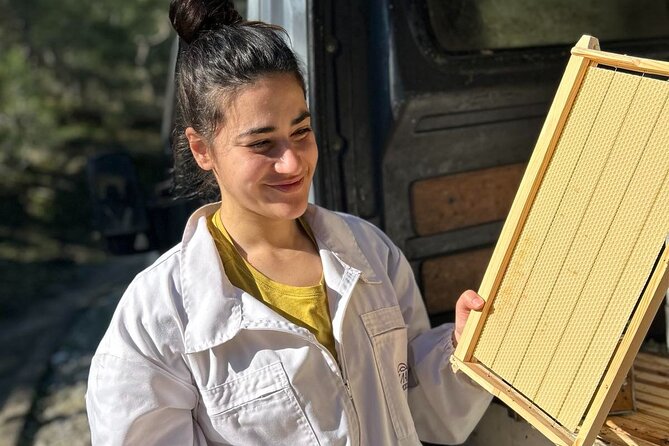
Rhodesian honey is more than a souvenir here. At Areti Honey, you can see how honey moves from the work of bees to the final jar, then taste it straight from the comb. Areti, an agronomist and third-generation beekeeper, leads the visit with help from her mother and brother.
I like two things right away: the family connection gives the visit a personal feel, and the tasting compares honey from several floral sources across Rhodes rather than offering one anonymous sample. You also get a close look at the apiculture workshop and a chance to ask how the product is prepared.
The main point to check is timing. The official visit lasts about 1 hour and 30 minutes, but some accounts describe a longer outing that included time at the beehives. Ask ahead if seeing the hives outdoors is essential to your plans.
In This Review
- Key points about Areti Honey
- A family beekeeping story in Archipoli
- Inside the apiculture workshop
- Meeting the bees and understanding their role
- Tasting thyme, pine, and flower honey
- Tea, coffee, and honey delicacies
- Why the family setting matters
- What the $68.64 price includes in value
- Timing, meeting point, and practical planning
- Who will enjoy this honey visit most
- Should you book Areti Honey?
- FAQ
- Where does the Areti Honey experience take place?
- What time does the experience start?
- How long does the honey experience last?
- What types of honey can I taste?
- Is the experience private and offered in English?
- What is the cancellation policy?
Key points about Areti Honey
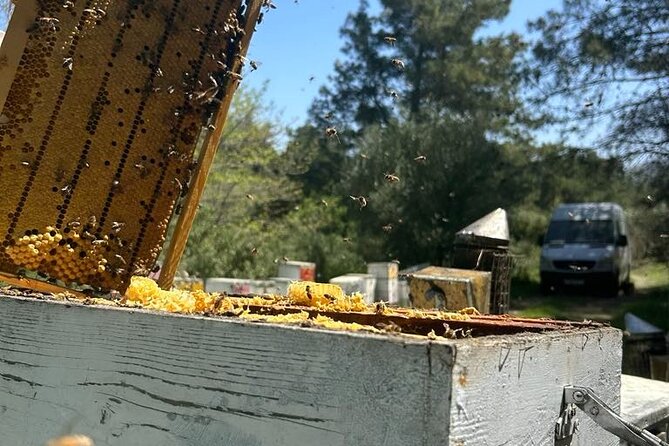
- Meet Areti, an agronomist and third-generation beekeeper carrying on work begun by her grandparents, parents, and family.
- Follow honey from production to packaging, with a tour inside the apiculture workshop.
- Taste several Rhodes honey varieties, including thyme, forest, flower, pine, and heather honey.
- Try fresh honey directly from the honeycomb, a simple treat that makes the process feel real.
- Enjoy tea or coffee with honey delicacies while discussing beekeeping on Rhodes.
- Join a private English-language visit at Archipoli, with only your own group taking part.
A family beekeeping story in Archipoli
Areti Honey is in Archipoli, at postal code 851 06, in the interior of Rhodes. This is not a large commercial attraction with a polished show floor and a fixed crowd moving from station to station. It is a family-run apiculture center where the people explaining the work are also closely tied to the work itself.
Areti is an agronomist and producer. Her mother and brother are part of the family team, and the business continues a beekeeping tradition that began with earlier generations. That detail matters because it places the tasting in a working family setting, not just a shop built around packaged souvenirs.
I like this kind of visit for the context it gives to a local product. A jar of honey can look simple on a shelf. Here, you get a better sense of the care behind it, from the bees and their surroundings to the handling and final packaging.
The tone is meant to be friendly and relaxed. You are not signing up for a formal lecture packed with technical terms. You are meeting the people behind the product and learning how their work fits into island life.
You can also read our reviews of more food & drink experiences in Rhodes


Inside the apiculture workshop
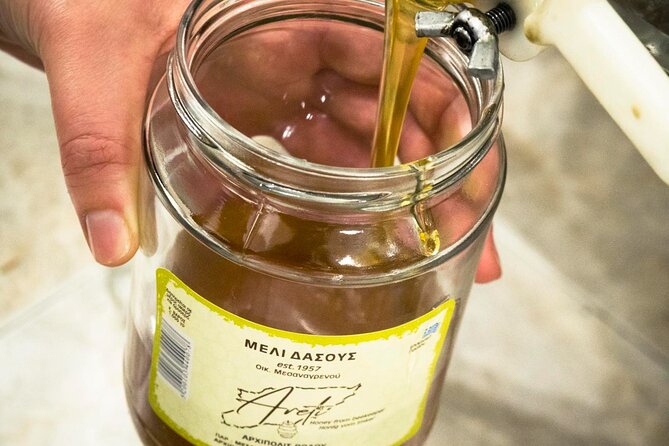
The visit begins at the center in Archipoli, with the focus on how honey is produced. Areti explains the process from the beginning through the final stage, when the honey is placed in jars.
That step-by-step approach is useful for first-time visitors. Instead of only tasting the finished product, you can connect the flavor in your spoon with the work that came before it. The workshop also gives you a look at the practical side of beekeeping, including the handling and preparation of honey products.
The exact equipment and sequence are not listed in detail, so I would not expect a full technical demonstration of every machine or a complete working shift. The value is in seeing the production setting and hearing the process explained by the producer herself.
This is also a good stop for families and curious children, provided they are comfortable around bees and follow the host’s instructions. The center offers a close look at the bee world, but it is still a working apiculture environment, not a hands-on play area.
Meeting the bees and understanding their role
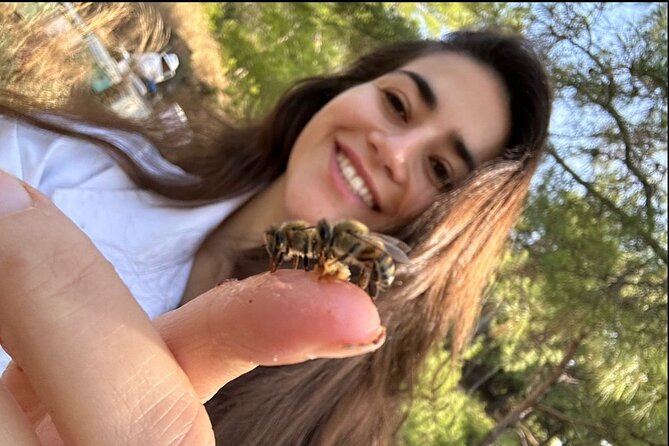
The activity is built around the bee, not simply around dessert. Areti presents beekeeping as work that depends on respect for nature and the bee ecosystem. That gives the tasting a wider purpose: you learn why the product changes and why the health of the bees matters.
Some descriptions of the visit include a trip to the beehives, with Areti, her mother, and her brother explaining their work outdoors. The main tour description emphasizes the apiculture center and the chance to learn about bees up close. Since the advertised duration is about 90 minutes, I would confirm the outdoor hive portion before booking if that is your top priority.
That small bit of planning is worthwhile. A visit inside the workshop and a tasting may suit you perfectly. If you want more time near the hives, you should ask how the current schedule is arranged and how long the outdoor part lasts.
You should also take the allergy information seriously. Bee allergies are specifically noted, so tell the operator about any concern before you arrive. Service animals are allowed, and the center is near public transportation, but the supplied details do not give a specific route or transfer arrangement.
Tasting thyme, pine, and flower honey
The tasting is the sweet center of the visit. The sample menu includes organic honey in several styles:
- Thyme honey
- Forest honey
- Flower honey
- Pine honey
- Heather honey
The selection changes with the season. That is an important detail for anyone arriving with one particular variety in mind. You may taste the listed types, but you should not assume every one will be available on every date.
The point is comparison. Different floral sources give honey different aromas, colors, and flavors. Thyme honey is especially associated with the island’s wild plant life, while forest, flower, pine, and heather honeys offer other expressions of the area and season. The visit lets you decide what you actually like rather than buying based only on a label.
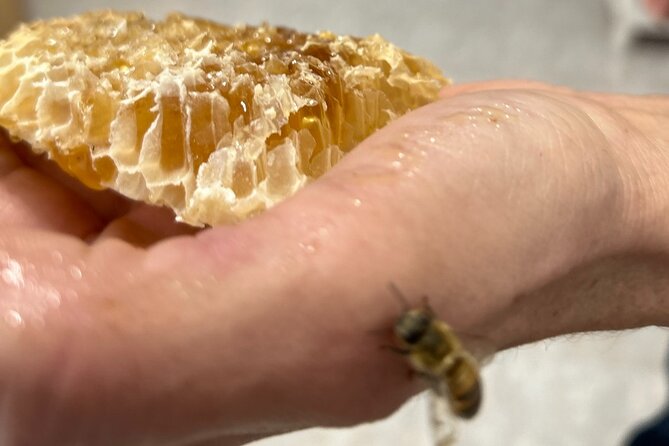
You can also taste honey straight from the honeycomb. This is one of the most memorable details in the program because it strips the product back to its most direct form. You are not only sampling a finished jar. You are tasting honey in the form in which it has been stored by the bees.
I would approach the tasting slowly. Try each sample on its own before adding it to tea or a sweet. That makes it easier to notice the differences between varieties. If you find a favorite, the center sells honey and other bee products, so the tasting can guide your purchase.
Tea, coffee, and honey delicacies
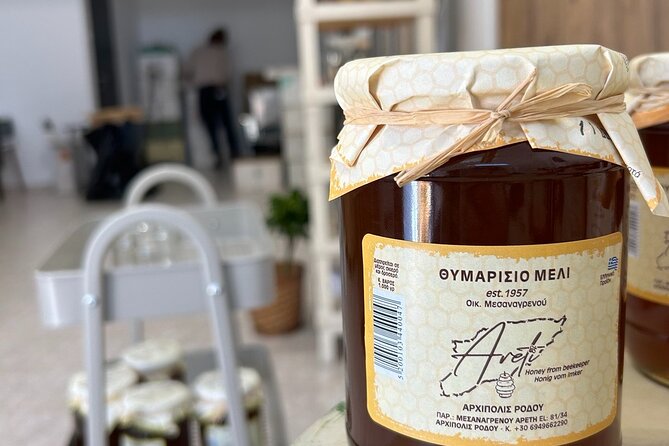
After the production explanation and samples, the visit includes tea or coffee with honey delicacies. This adds an easy social pause to the program. You can ask questions, discuss the history of beekeeping on Rhodes, and talk with the family rather than rushing from one display to the next.
I like this part because it turns the activity into a conversation. You learn about the product while using it in an ordinary way, stirred into a hot drink or paired with a small sweet. It also gives you time to decide what you want to take home.
Do not expect a full meal. The information describes tea or coffee and honey-based treats, not lunch. If you are planning this as a midday stop, eat beforehand or arrange another meal around it.






Why the family setting matters
The strongest feature of Areti Honey is the people. Areti, her mother, and her brother are presented as the working family team, with three generations of beekeeping behind them. That background gives the visit a sense of continuity that a basic honey shop cannot easily reproduce.
You can ask about the family business, the island’s beekeeping tradition, and the way honey reaches the jar. The atmosphere is described as warm and hospitable, with the family’s care for the bees and the company plainly visible.
That does not mean the visit will suit everyone. If you want a large museum, a highly staged demonstration, or a long list of formal exhibits, this is probably not the right choice. The appeal is the direct contact with a producer and the chance to see a small family operation.
The private format helps. Only your group participates, so you can ask questions at your own pace instead of waiting for a large crowd to catch up. It also makes the visit a better fit for couples, families, or small groups who prefer personal contact.
What the $68.64 price includes in value
The listed price is $68.64 per person. That is not a bargain if you judge the activity only by the amount of food served or the number of hours. You are paying for a private visit, an English-language explanation, access to the family’s apiculture center, production information, several tastings, and time with the producer’s family.
The value improves if you care about local food and small-scale production. You are not simply buying a jar and leaving. You can taste different honey sources, see the process behind the product, and make a more informed choice about what to buy.
The price may feel high for a short activity, especially since the official duration is approximately 90 minutes. This is the main value question to consider. If your schedule is tight and you want a quick commercial tasting, a shop visit would cost less time and likely less money.
If you enjoy food-focused activities and prefer private, personal encounters, the fee makes more sense. I would also factor in the cost of getting to Archipoli if you are not already nearby. Transportation details are not specified, so check how you will reach the meeting point before booking.
Timing, meeting point, and practical planning
The meeting point is Archipoli 851 06, Greece. The stated start time is 1:00 pm, and the activity returns to the same meeting point. The official duration is about 1 hour and 30 minutes.
That afternoon schedule can work well as part of a day exploring inland Rhodes. It is less convenient if you are planning a packed beach day or need to reach another appointment soon afterward. Give yourself extra time around the start because the visit is at a specific local meeting point, not a general city-center pickup.
A mobile ticket is accepted, and the experience is offered in English. Confirmation is received when you book. Since the tour is private, check that the date and number in your group are correct before you finalize the reservation.
The cancellation policy is forgiving if your plans change early. You can cancel for a full refund up to 24 hours before the start time. Cancellations or changes made less than 24 hours in advance are not accepted for a refund, and the cut-off follows local time.
Who will enjoy this honey visit most
I would recommend Areti Honey to you if you like local food, family businesses, and experiences that explain how a product is made. It is especially suitable for people who want to meet a producer rather than only browse a souvenir shop.
It also suits visitors who enjoy tastings with a clear sense of place. The honey comes from different floral sources across Rhodes, and seasonal changes mean the selection has a connection to the time of year.
Families may enjoy the bee theme, and the private format allows your group to ask questions without competing with a large tour. Children should be supervised and prepared to treat the bees and workshop with care.
This may not suit you if you have a serious bee allergy, dislike sweet foods, or want a long outdoor beekeeping session guaranteed as part of a 90-minute booking. Ask about the hive visit before committing if that is the part you most want.
Should you book Areti Honey?
Book it if you want a warm, small-scale food experience with a real family story behind it. The best parts are the chance to meet Areti, her mother, and her brother, taste several kinds of Rhodes honey, and see the product’s path from production to jar.
Before paying $68.64, confirm the current duration and whether your visit includes time at the outdoor hives. That one question will help you match the activity to your expectations.
For an authentic introduction to Rhodes beekeeping, with fresh honey, a private setting, and a welcoming family team, Areti Honey is a strong choice. It is a focused visit rather than a full-day tour, but it offers more meaning than a quick purchase at a shop.
FAQ
Where does the Areti Honey experience take place?
The meeting point is Archipoli 851 06, Greece. The activity ends back at the same meeting point.
What time does the experience start?
The stated start time is 1:00 pm.
How long does the honey experience last?
The advertised duration is approximately 1 hour and 30 minutes. Some descriptions of the family visit refer to a longer outing, so ask Areti to confirm the expected schedule if timing matters to you.
What types of honey can I taste?
The seasonal menu may include thyme, forest, flower, pine, and heather honey. The selection changes with the season.
Is the experience private and offered in English?
Yes. Only your group participates, and the experience is offered in English. A mobile ticket is available.
What is the cancellation policy?
You can cancel at least 24 hours before the local start time for a full refund. Cancellations or changes made less than 24 hours before the experience are not accepted for a refund.