REVIEW · MILOS
Milos island:Step Back in Time
Book on Viator →Operated by MTM Experiences · Bookable on Viator
Milos feels like it time-warped. This half-day route strings volcanic caves, a Neolithic site, and a Roman amphitheatre into one efficient ride, so you can see a lot without planning a whole day. I especially love the geology—Papafragas’ sea caves and Sarakiniko’s white-rock shapes are the kind of places your camera won’t stop loving.
You’ll also get a practical “get your bearings” circuit. Pickup is offered around Milos in an air-conditioned vehicle, water is included, and the stops are spread so you see both the coastline drama and the higher village viewpoints. If you’re lucky enough to be guided by Marios or Yianni, you’ll get history talk with personality and a lot of local pride in plain language.
The main trade-off is time. Expect roughly 30–45 minutes per stop, so if you want to linger at Sarakiniko or spend extra time around the theatre area (including catacombs), you’ll need to accept a tight schedule.
In This Review
- Key takeaways before you go
- Why this Milos half-day can feel like time travel
- Getting picked up across Milos (and where it won’t reach)
- Stop 1: Papafragas Cave and the geology you can feel
- Stop 2: Phylakopi and the obsidian connection
- Stop 3: Sarakiniko Beach, white rock, and a real photo stop
- Stop 4: Plaka at about 250m up—Cycladic houses and a viewpoint mood
- Stop 5: The Ancient Roman Theatre under Tripiti
- Value check: what you get for $105.72 in about four hours
- Who this tour suits best (and who should look elsewhere)
- What to bring for a smooth morning
- Should you book Milos: Step Back in Time?
- FAQ
- What time does the tour start?
- How long is the tour?
- Is pickup available?
- Does the tour offer pickup for Milos Cove Hotel?
- What language is the tour conducted in?
- How big is the group?
- Is the ticket mobile-friendly?
- What’s included in the price?
- Are entrance fees included?
- What is the cancellation policy?
Key takeaways before you go
- Volcanic caves + white-rock photo stops in one morning
- Phylakopi’s Neolithic layers, including the Lady of Phylakopi
- Plaka on the hill (about 250m up) for classic Cycladic views
- A well-preserved Roman amphitheatre below Tripiti with Aegean sea views
- Small-group experience (max 20) with pickup and air-conditioned comfort
- Bring a swimsuit if you want to cool off at Sarakiniko
Why this Milos half-day can feel like time travel
This tour is built for a simple goal: you step from one “era” into the next without needing a car or a day of bus-hopping. One stop is all about volcanic activity shaping caves and ravines. Another is tied to the Neolithic world—right down to tools made from obsidian, the dark volcanic glass. Then you shift again to classical Greece and the Roman period, capped by an amphitheatre sitting under Tripiti.
What makes it work for most people is pacing with variety. You’re not stuck in one type of place. You’ll mix ocean-side geology, archaeology, and hilltop village views. And because it’s a half-day, you still have energy (and daylight) left to explore further on your own after the tour.
You can also read our reviews of more tours and experiences in Milos.

Getting picked up across Milos (and where it won’t reach)

Pickup is one of the biggest “value multipliers” here. If you’re staying around Milos, the tour offers pickup from key points across the island. You’ll get an email with your exact pickup point and time, and the start is listed at 9:00 am (with the note that the time may change, and you’ll be notified).
Two logistics details matter for planning:
- It’s not available for Milos Cove Hotel (pickup/drop-off service isn’t provided there).
- It’s designed to be easy to join even if you’re using public transport nearby.
In other words, this is a strong choice if you want a structured route but don’t want to commit to renting a car—especially on a half-day where you’ll feel the fatigue sooner than you expect.
Stop 1: Papafragas Cave and the geology you can feel
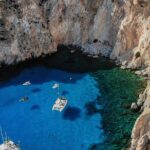
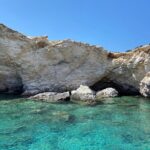
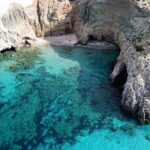
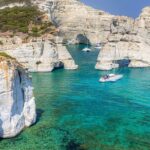
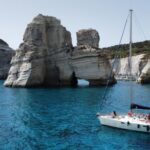
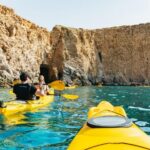
Papafragas is a cluster of deep-sea inlets and sea caves. The setting is dramatic: it sits at the base of a ravine shaped by volcanic activity. Even if you’re not a geology person, you’ll get the idea fast—rock, water, and shape work together here like nature did the blueprint.
You’ll have about 40 minutes at this stop, and that’s a good window for two things:
- Slow looking: taking in how the caves meet the sea.
- Photos without rushing: the light around coastal rock can change quickly, and you’ll want a few angles.
Practical tip: bring a swim layer or water shoes only if you’re comfortable doing so in natural coastal spots. The tour itself doesn’t promise swimming here—it’s more about the caves and the views.
Stop 2: Phylakopi and the obsidian connection
Phylakopi is a Neolithic settlement site, and the story attached to it is specific. During excavation, archaeologists found tools made from obsidian, a volcanic glass that’s often described as similar to granite in its mineral look.
There’s also a named discovery tied to the site: the Lady of Phylakopi. That detail matters because it moves the stop from generic “ancient ruins” to something with a human anchor. You can picture real craft and everyday life rather than just stone and dates.
Plan on about 30 minutes here. At this length, you’ll get enough time to understand what you’re looking at and why it mattered—without turning it into a museum-style marathon.
Stop 3: Sarakiniko Beach, white rock, and a real photo stop
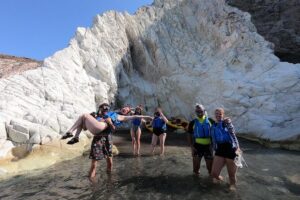
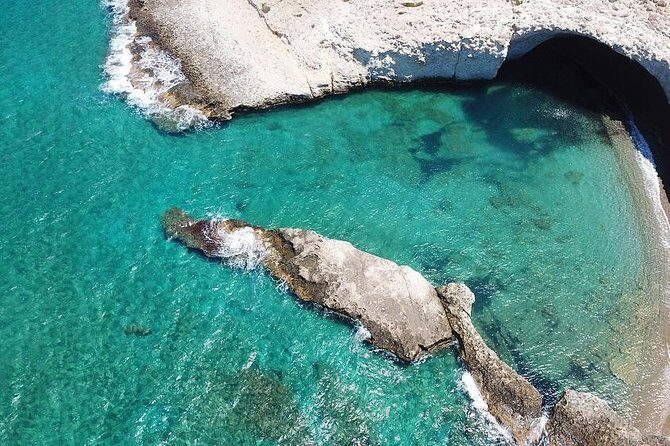
Sarakiniko is famous for a reason: pure white rock formations shaped by volcanic eruptions. It’s the kind of place where the ground looks like it belongs on another planet, and the sea gives it that high-contrast drama.
You’ll have about 45 minutes at Sarakiniko. That time works well if you want to:
- Take photos from multiple viewpoints.
- Walk around and find angles that match the way the light hits the rock.
- If you’re up for it, slip into the water—several people recommend bringing a swimsuit.
What to watch for: since this is one of the most photographed spots, plan to slow down. It’s easy to do the “quick take” photo and miss the best angles. Give yourself a couple minutes to just look before you start shooting.

Stop 4: Plaka at about 250m up—Cycladic houses and a viewpoint mood
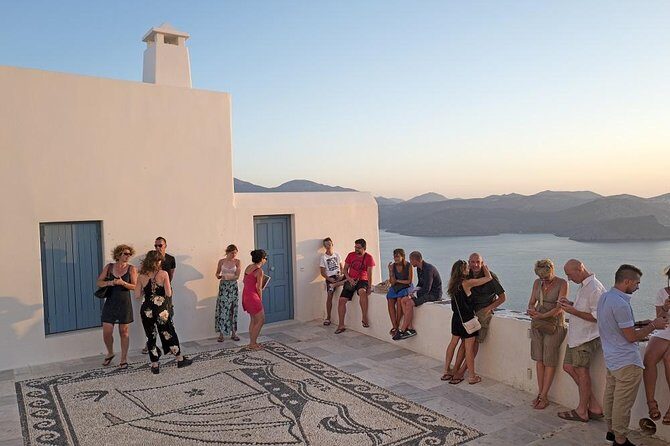
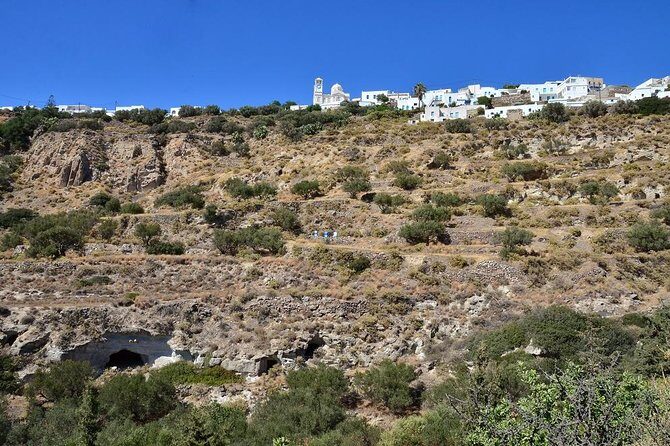
Plaka is the classic Cycladic chora experience: white stone houses, bougainvillea, and that hillside feel where streets climb and open into views.
The tour schedules about 45 minutes here. That’s a helpful amount of time if you want a mix of strolling and quick stops for a drink or snack—without needing a whole afternoon.
Because Plaka sits about 250 meters above sea level, the viewpoint effect is real. Even if you don’t linger, you’ll likely get that sense of Milos opening up around you: coastline turns into a patchwork, and the village sits above it like an observatory.
Small choice that helps: if you love villages, use this stop to explore a little deeper. If you’re more into beaches and rocks, treat Plaka as your “walk + views” reset before returning to seaside scenery.
Stop 5: The Ancient Roman Theatre under Tripiti
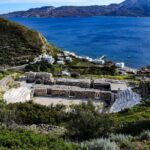
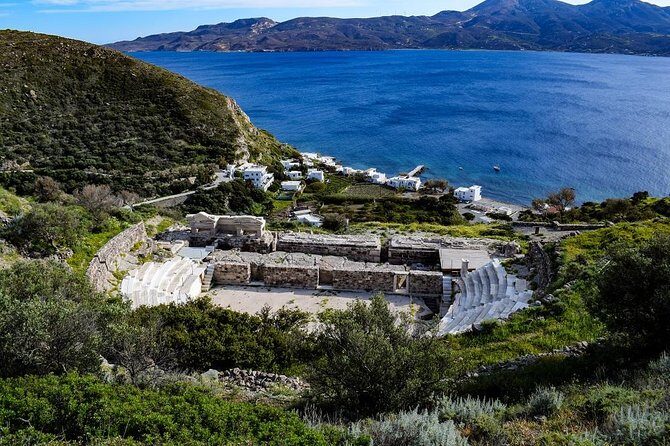
The Roman theatre sits on a slope below the village of Tripiti. It’s an open-air marble theatre that’s still in good shape, even though it’s slightly ruined from years of wear. The theatre’s roots go back to the Hellenistic period, so you’re standing in a space that bridges eras.
This stop gives you about 30 minutes. With that limited time, the best approach is to focus on what makes it worth the visit:
- The theatre itself: shape, stone, and scale.
- The setting: you’ll get views toward the Aegean Sea and the harbor of Klima village.
- The nearby historical catacombs area, if you have time and energy to walk around a bit.
A quick caution: because the theatre stop is short, don’t plan on a long deep exploration of every nearby feature. If the catacombs are a top priority for you, set expectations for shorter time on-site.
Value check: what you get for $105.72 in about four hours
At $105.72 per person for a roughly 4-hour experience, the value comes from the bundle:
- Air-conditioned vehicle
- Guide
- Map
- Water
- Pickup and drop-off (with island-wide pickup points)
The big “silent value” here is decision-making help. Milos can be a lot if you’re driving or trying to time bus routes, especially in a short trip. This tour gives you a ready-made route with stops that represent major sides of the island—volcanic geology, archaeology, and village viewpoints.
One note on costs: entrance fees are listed as not included, with 4 euro mentioned. Some stops are described as ticket-free, so it may be that only one site involves a small fee. Either way, plan for a small extra cost and keep some cash or a card handy.
Who this tour suits best (and who should look elsewhere)
This tour is a strong match if you:
- Don’t want to rent a car but still want an organized overview.
- Want a history-and-landforms mix rather than only beaches or only villages.
- Prefer guided context so the geology and ruins make sense fast.
It’s also a good way to decide where you’ll want extra time later. Many people leave this kind of tour wanting a second visit to the places that grabbed them most—especially Sarakiniko for photos, or Plaka for slower wandering and possible sunset timing.
Consider choosing something else if you’re the type who needs long stops to enjoy a place fully. With 30–45 minutes per location, you’ll feel the pressure if you want to linger, swim for a long while, or explore every nearby ruin in depth.
What to bring for a smooth morning
Since you’re bouncing between caves, rock formations, and village areas, pack for comfort:
- Sun protection (you’ll be outside a lot)
- Water (you get water, but having your own can help)
- A swimsuit if you want the option to swim at Sarakiniko
- Comfortable shoes for uneven or rocky ground in natural areas
If you’re sensitive to heat, take advantage of the air-conditioned vehicle between stops. That break is part of why the half-day format works.
Should you book Milos: Step Back in Time?
If you want an easy, structured Milos morning, I think this is a solid booking. It hits the big visual Milos moments—Papafragas, Sarakiniko, Plaka—and adds meaningful archaeology and an amphitheatre setting where you can see the Aegean at the same time. The small-group size (max 20) keeps it from feeling like a factory tour.
Book it when you:
- Want the fastest path to understanding Milos
- Don’t want to manage driving or bus timing yourself
- Enjoy guided stories that connect places across eras
Skip or adjust your expectations if you:
- Need lots of time at the beach or in archaeological areas
- Want a slow, all-day pace with long wandering time
Bottom line: this is a high-effort sampler that leaves you with a clearer plan for the rest of your Milos trip.
FAQ
What time does the tour start?
The start time is listed as 9:00 am. Pickup details (point and time) are sent by email, and the start time may be amended.
How long is the tour?
The duration is approximately 4 hours.
Is pickup available?
Yes. Pickup is offered from key points all over Milos. Your exact pickup point and time are sent by email.
Does the tour offer pickup for Milos Cove Hotel?
No. Pickup and drop-off service is not provided for Milos Cove Hotel.
What language is the tour conducted in?
The tour is offered in English.
How big is the group?
The tour has a maximum of 20 travelers.
Is the ticket mobile-friendly?
Yes. A mobile ticket is included.
What’s included in the price?
Included are an air-conditioned vehicle, a guide, a map, water, and pickup/drop-off.
Are entrance fees included?
Entrance fees are not included. The experience notes an entrance fee of 4 euro.
What is the cancellation policy?
Free cancellation is available up to 24 hours in advance for a full refund. If you cancel less than 24 hours before the start time, the amount paid is not refunded.