REVIEW · ATHENS
Steps to tradition: Greek Traditional Dances in Athens
Book on Viator →Operated by Hidden Greece · Bookable on Viator
Greek dancing makes far more sense once you stop watching from the edge of the taverna and join the circle. On Philopappos Hill, Tania and Kostas teach you traditional dances in an outdoor setting with the Acropolis in view, turning a sightseeing stop into a hands-on lesson in Greek life.
I like two things right away: the setting feels genuinely Athenian, with trees, ancient remains, and a quiet church or park area instead of a studio; and the teaching is built for beginners, with steps shown clearly, repeated often, and adjusted to the group. The chance to learn dances from Crete, the islands, and other Greek regions gives the class real cultural weight.
The main drawback is practical rather than artistic: this is an outdoor activity, so heat, rain, uneven ground, or an early 6:00 am start could affect your enjoyment. You also walk uphill for about 10 minutes before dancing, so comfortable shoes matter.
In This Review
- Key points at a glance
- Beginning at the Philopappos Hill entrance
- Why the hill makes the lesson special
- Learning the first steps with Tania and Kostas
- From simple circles to lively Cretan footwork
- The meaning behind the music and movement
- A small group with room to learn
- What may come after the class
- Is $41.52 a fair price?
- Who should book this Greek dance class?
- Booking and cancellation details
- Should you book Steps to Tradition?
- FAQ
- Where does the Greek traditional dance experience begin?
- What time does the activity start?
- How long does the dance class last?
- Where does the dancing take place?
- How many people can join the activity?
- Do I need previous dance experience?
- Can I cancel for a full refund?
Key points at a glance
- Dance beside the Acropolis: The class takes place on Philopappos Hill, with views toward Athens’ most famous monument.
- Learn six or more dances: The program can include dances from several Greek regions and islands, including quicker Cretan steps and kicks.
- Tania leads a friendly lesson: Her instruction combines simple demonstrations, repetition, cultural stories, and encouragement.
- Small groups make a difference: The maximum group size is 12, and some sessions may be much smaller.
- A cultural activity with a physical side: You learn music, customs, and regional identity while getting a worthwhile workout.
- Useful extras may be included: Depending on the session, you may receive water, photographs or video, food, ouzo, and a participation certificate with a traditional music playlist.
Beginning at the Philopappos Hill entrance
The meeting point is at the entrance to Philopappos Hill, near the junction of Dionysiou Areopagitou and Apostolou Pavlou in Athens. You meet Tania there, and once the group is together, she leads you on a roughly 10-minute walk to the class location.
That short walk is part of the appeal. You are not being dropped beside a dance floor with no sense of place. You enter the hill on foot, with views of the Acropolis along the way, and begin to see how close Athens’ ancient sights are to ordinary green spaces and neighborhood life.
The route also passes noteworthy places connected with the hill, including Socrates’ Prison. The walk is not presented as a full archaeological tour, but Tania uses the surroundings to explain the area and to introduce the role of traditional dance festivals in Greece.
The hill is not a flat city plaza. You should expect a short uphill walk and natural ground. Most people can take part, and service animals are allowed, but anyone with mobility concerns should consider the walk and the outdoor surface before booking.
You can also read our reviews of more tours and experiences in Athens.

Why the hill makes the lesson special
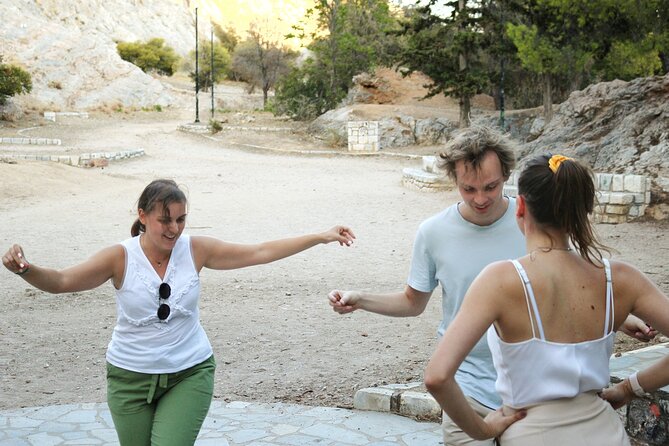
The class is held in a peaceful spot among the nature of Philopappos Hill, sometimes described as a quiet church and park area with few people around. That setting changes the mood. You are learning the steps in open air, with Athens spread around you and ancient stone nearby.
The Acropolis view is not a minor backdrop. It gives the lesson a strong sense of place, especially when the group joins hands and moves as one circle. Greek folk dance is social by design, and the open setting helps you understand that these dances are not meant to be performed only by trained dancers on a stage.
The outdoor location does bring trade-offs. Sun and temperature matter, and the activity can be canceled in poor weather. The information provided describes the experience as taking place under the sun, while the listed start time is 6:00 am, so check the exact schedule when you book. The early hour may offer cooler conditions and softer light, but it will not suit everyone.
Learning the first steps with Tania and Kostas
Tania is an experienced traditional dance teacher, and her teaching style focuses on getting you moving rather than making you feel tested. She demonstrates the footwork, breaks it into manageable parts, and repeats the pattern until the group can follow.
That approach is important because Greek dances can look simple from a distance. Many use a repeated sequence, but the rhythm, hand position, foot placement, and tempo vary from region to region. A good beginner class must make those changes clear without turning the lesson into a technical lecture.
Kostas also helps lead sessions, and the pair create a warm, relaxed atmosphere. The instruction includes stories about the music and the places where dances are performed. You are not simply memorizing steps. You are learning why one dance may belong to an island, a mainland region, or Crete, and how movement helps carry local identity from one generation to the next.
The class is welcoming to families as well as adults. One family took part with children aged 11 and 13 and learned several dances together. You do not need previous dance experience, and the teaching is paced so beginners can feel successful quickly.
From simple circles to lively Cretan footwork
The exact selection can vary, but you may learn five, six, or seven dances during the session. The dances represent different parts of Greece, including island traditions and Cretan styles.
The progression is one of the strongest parts of the experience. You begin with easier patterns that help you understand the circle, the rhythm, and the way dancers connect by hand or shoulder. Once the group has found its footing, the class can move to faster combinations, including Cretan dances with kicks and quick steps.
This regional variety gives you a useful introduction to Greece. The country is not one single dance culture. Each area has its own music, movement, pace, and social setting. Learning several forms in one lesson helps you see those differences in your body rather than only reading about them.
You should also expect some exercise. One participant described the class as a good workout, and that is a fair warning. The activity is fun, but you will be on your feet and repeating steps for much of the two and a half hours. Wear shoes that stay secure and clothing that allows easy movement.
The class is not about perfect performance. Tania’s job is to keep the group together, answer questions, and adjust the level when needed. If the circle breaks down, you simply start again. That forgiving approach is especially valuable if you are not naturally comfortable with dance.
The meaning behind the music and movement
The cultural explanation gives the lesson more substance than a standard activity class. Circular dances in Greece are connected to a very old tradition, with origins traced back roughly 2,000 years before Christ in Minoan Crete. Over time, these dances continued to change as they passed through families, villages, and regions.
That long development is worth keeping in mind. Traditional dance is not a museum object frozen in one period. It has stayed alive by being used, taught, adapted, and performed at community gatherings and festivals.
The circle itself also helps explain the social purpose. You are not dancing alone under a spotlight. You hold the chain together, watch the person beside you, and adjust to the rhythm of the group. It is a physical lesson in cooperation, and you can feel the difference between learning a routine and taking part in a shared custom.
Tania’s stories, explanations, and demonstrations help connect the steps to that larger idea. The class also introduces Greek music, so you gain a better ear for the sounds that accompany dancing in a taverna or festival.
- All Day Cruise -3 Islands to Agistri,Moni, Aegina with lunch and drinks included
★ 5.0 · 4,958 reviews


A small group with room to learn
The maximum group size is 12. That is small enough for an instructor to see what is happening in the circle and offer help when someone loses the pattern.
Group size can shape the experience. A full group should feel social and lively, while a smaller group allows more direct attention. One session became a private lesson for two people, with Tania, Alexandra, and Konstantinos adapting the dances to the pair’s ability and later travel plans.
That kind of flexibility is a real benefit. If you are heading to Crete or one of the Greek islands later in your trip, you may be able to focus on dances connected with those places. The available information does not promise a custom program for every booking, so treat it as a possibility rather than a guarantee.
The social side is just as important as the instructor’s attention. As the class continues, a group of strangers can begin to move like a little community. That is exactly the point of a circle dance, and it gives the experience a warmer feel than a private lesson alone.
What may come after the class
The formal activity lasts about two hours and 30 minutes, and it ends back at the original meeting point. During the walk back, you may have more views toward the Acropolis and the Pantheon.
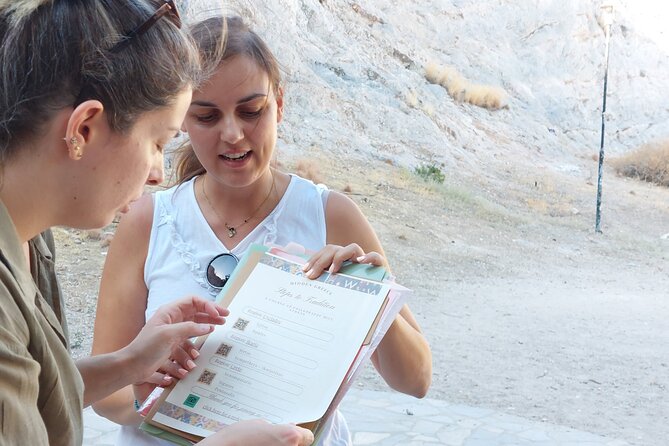
Some sessions have included water, photographs, video, food, and ouzo. Photos and recordings can be a nice bonus because dancing is hard to document when both of your hands are busy. A participation certificate has also been provided on some occasions, along with a QR code for a Greek traditional playlist and an outline of the dances learned and the regions where they are commonly performed.
These extras should not be the main reason you book. They can vary, and the central value is the lesson itself. Still, the playlist is particularly useful. It gives you a way to keep listening after the class and perhaps recognize a rhythm later in a Greek taverna.
The instruction may also leave you ready to join a dance circle during the rest of your trip. That is one of the best practical outcomes here. You are not only watching Greek culture, you are gaining enough confidence to take part.
Is $41.52 a fair price?
At $41.52 per person, this is priced above a simple sightseeing walk but below many private cultural lessons. I think the value is good if you want an active experience rather than another hour of looking at monuments.
The price covers about two and a half hours with an experienced teacher, a small group capped at 12, a walk through Philopappos Hill, cultural explanations, and instruction in several regional dances. The Acropolis view and historic setting add atmosphere without turning the activity into a staged show.
The value is strongest for someone who would otherwise spend the evening only visiting restaurants or taking photographs. You get a story to carry with you, a physical memory of Athens, and skills you can use later in the trip.
It is less compelling if you dislike group activities, do not want to exercise, or are looking for a formal archaeological tour. This is a participatory class. The ancient setting supports the lesson, but the focus is dance, music, and community rather than detailed monument interpretation.
The activity is usually booked about 31 days ahead, so planning early is sensible if your Athens dates are fixed. Confirmation is sent within 48 hours, subject to availability.
Who should book this Greek dance class?
I would recommend it to:
- Couples who want a shared activity beyond standard sightseeing
- Families with older children who enjoy learning by doing
- Solo visitors who like meeting people through a group activity
- Anyone interested in Greek music, festivals, and regional customs
- People planning to visit Greek islands or Crete who want a little cultural context first
- Beginners who feel nervous about dancing but are willing to try
I would think twice if you have difficulty with short uphill walks, need a fully indoor venue, or want a quiet activity with little physical effort. The class is friendly, but friendly does not mean passive. You will be moving, repeating, and keeping time.
Bring water unless the provider confirms it will be supplied, wear comfortable footwear, and plan for the weather. Because the activity depends on good conditions, keep some flexibility in your Athens schedule.
Booking and cancellation details
You receive a mobile ticket, and the activity ends at the same place where it begins. Public transportation is nearby, and most people can participate.
You can cancel for a full refund up to 24 hours before the local start time. Changes or cancellations made less than 24 hours before the activity are not accepted for a refund. If bad weather or an insufficient number of bookings causes cancellation, you are offered another date or experience, or a full refund.
Should you book Steps to Tradition?
Yes, if you want Athens to feel like more than a collection of ancient stones and photo stops. The setting, the hands-on teaching, and the chance to learn several dances from across Greece make this a memorable cultural activity.
Book it for Tania’s patient instruction, the Acropolis views, and the chance to understand Greek social dance from inside the circle. Just allow for the uphill walk, the physical effort, and the outdoor conditions. For the right kind of visitor, $41.52 buys much more than dance steps. It gives you a small, useful connection to the living traditions of Greece.
FAQ
Where does the Greek traditional dance experience begin?
It begins at the main entrance of Philopappos Hill, at Dionysiou Areopagitou and Apostolou Pavlou in Athens, Greece.
What time does the activity start?
The listed start time is 6:00 am. Check the confirmed details when booking, since the exact schedule matters for planning your morning.
How long does the dance class last?
The experience lasts approximately two hours and 30 minutes, including the walk to the class location and the return to the meeting point.
Where does the dancing take place?
The class takes place in a natural setting inside Philopappos Hill, near ancient ruins and a spot with views of the Acropolis.
How many people can join the activity?
The maximum group size is 12 people.
Do I need previous dance experience?
No previous experience is stated as a requirement. Most people can participate, and the teaching includes clear demonstrations, repetition, encouragement, and adjustments to the group’s level.
Can I cancel for a full refund?
Yes. You can cancel at least 24 hours before the local start time for a full refund. Poor weather or failure to meet the minimum number of participants may also lead to a choice of another date or a full refund.