REVIEW · NAFPLIO
Nafplion: Mycenae-Epidavros
Book on Viator →Operated by Unique Greek Tours · Bookable on Viator
Mycenae and Epidaurus, no car required. This short day trip connects two UNESCO sites from Nafplio with pickup/drop-off and onboard Wi‑Fi, so you get out into the ruins without the hassle. I especially like that it’s structured for people who want to move at their own pace, not herd-style touring. One thing to consider: this is mainly a transport + self-guided visit setup, not a professional licensed archaeological guide unless you request one for an extra cost.
What I liked most was how smooth the logistics feel. You’re collected in and around Nafplio, driven between the highlights, and then left to explore while the driver is there waiting. I also like the practical touch of Wi‑Fi on board, which matters more than you’d think when you want to check opening times, maps, or quickly translate signage without paying for roaming.
The only real drawback is timing. Several key stops are about 30 minutes each, so if you’re the type who reads every inscription and wants a long, slow walk, you may feel a bit rushed—especially if you arrive late or linger too long at one spot.
In This Review
- Key highlights in plain terms
- How this Nafplio trip really works (and who it fits)
- The value in the price: what you’re paying for
- Stop 1: Agamemnon Pallas and the Mycenaean story starter
- Stop 2: Lion Gate, the monumental entrance of the palaces
- Stop 3: Cyclopean Walls plus tombs tied to Atreus and Clytemnestra
- Stop 4: Epidaurus ancient theatre and the Asclepieion of healing
- Driver-led logistics: getting there fast, exploring on your own
- Wi‑Fi on board: small comfort, real impact
- What to bring so the timing doesn’t bite
- Mycenae + Epidaurus as a pairing: what the day teaches
- So, should you book this Nafplion-to-Mycenae-and-Epidaurus trip?
- FAQ
- How long is the Mycenae–Epidaurus trip from Nafplio?
- What’s included in the price?
- Are archaeological site tickets included?
- Is there an audio guide or guide narration included?
- Is a professional licensed guide included?
- Where does the tour start and end?
- How big is the group?
- Are service animals allowed?
Key highlights in plain terms
- Hotel pickup in Nafplio saves you from parking and navigation stress
- Onboard Wi‑Fi helps you plan on the go without roaming headaches
- Self-guided time at Mycenae and Epidaurus means you can set your own pace
- UNESCO-listed Mycenae + Epidaurus in one compact trip
- Small group size (max 18) keeps the experience calmer than big buses
- Licensed archaeological guide available by request for an added fee
How this Nafplio trip really works (and who it fits)
This is a private transportation day trip that runs on a simple rhythm: you get picked up in Nafplio (or meet at the Land Gate area), you ride to each site, you spend time inside the archaeological areas on your own, and then you’re brought back.
That matters, because people sometimes book expecting a full-on guided history lecture every minute. Here, the driver is there to get you there and back, and most of the explaining happens through what you read and what you notice. If you want the kind of expert talk you can’t get from a phone screen, you can request a professional licensed guided tour at the archaeological sites for an extra cost.
This setup is ideal if you:
- enjoy walking ruins without a strict script
- don’t want to drive to Mycenae and Epidaurus yourself
- want to spend your energy actually looking instead of juggling logistics
It’s less ideal if you:
- want a guided tour as the main product
- plan to rely on an audio tour (audio isn’t included in this booking)
- need lots of time at each stop to fully absorb every detail
You can also read our reviews of more tours and experiences in Nafplio.



The value in the price: what you’re paying for
At about $108.43 per person for roughly 4 to 5 hours, the big value isn’t the entry tickets (those are not included). The value is transportation that’s door-to-door from Nafplio plus convenience extras.
Here’s what you get built in:
- Pickup from your hotel or the meeting point
- Return transportation from Nafplion to the ancient sites
- Onboard Wi‑Fi
- Liability and taxes
That can easily beat the “I’ll just rent a car and DIY it” option for a lot of travelers, once you factor in parking, stress, and the time cost of getting in and out of multiple sites. And since it’s limited to a maximum of 18 travelers, it stays more relaxed than huge group tours.
If you’re traveling as a couple or small group, I’d look at it this way: you’re paying to remove the driving burden, while keeping time in the ruins. That’s a good deal for a half-day format.
Stop 1: Agamemnon Pallas and the Mycenaean story starter
Your first site is Agamemnon Pallas, with about 30 minutes on the clock. Admission isn’t included here, and the time is short—so think of it as a quick “get oriented” stop for the Mycenaean civilization connected to Agamemnon’s legendary kingdom.
What to expect in practice:
- You’ll likely spend most of your time reading context and getting your bearings before you hit the stone-and-sand classics of Mycenae.
- Because the visit window is brief, I’d treat this as your warm-up. If you want deeper background, take notes now so you can recognize patterns later when you see gates, walls, and tomb structures.
Why this stop is useful: it frames what you’re about to see at Mycenae so the later structures don’t feel like random piles of rock. You’ll have a clearer mental picture of what the site was and why it mattered.
Potential drawback: 30 minutes can feel tight if the area is busy or if you stop to read everything. If you like to slow down, be selective—skim first, then circle back only if you spot something that really grabs you.
Stop 2: Lion Gate, the monumental entrance of the palaces
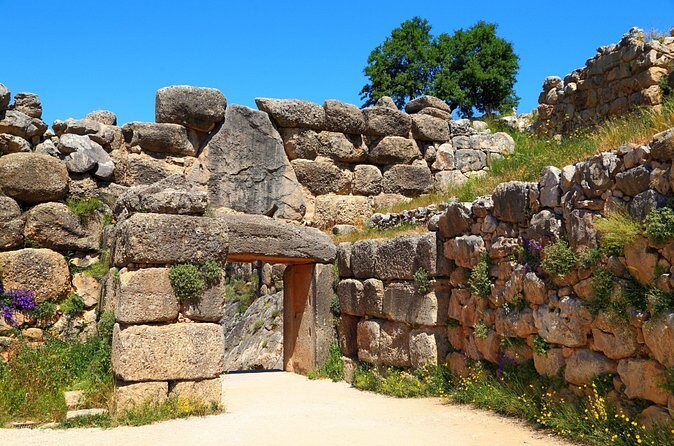
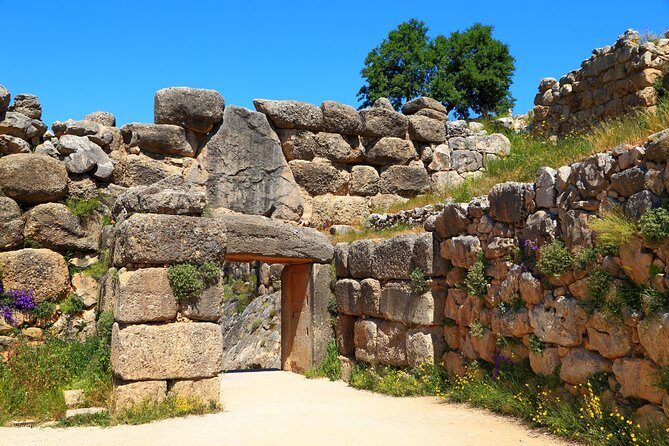
Next up is Lion Gate, also about 30 minutes, and in this case admission is free. This is the monumental entrance of the palaces—one of the iconic images most people associate with Mycenae.
This stop works because it’s visually immediate. You don’t need expert background to appreciate what you’re looking at: a massive, crafted gateway meant to project power. Standing here, you can quickly connect the word monumental to real scale.
How to get the most from 30 minutes:
- Arrive ready to look before you read.
- Take a couple of wide photos, then move closer for texture and stonework details.
Consideration: since admission is free, you can still spend your time well—but it can also attract the “photo and sprint” crowd. If you want a calmer moment, step slightly to the side and let the flow pass.
Stop 3: Cyclopean Walls plus tombs tied to Atreus and Clytemnestra
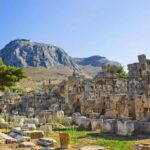
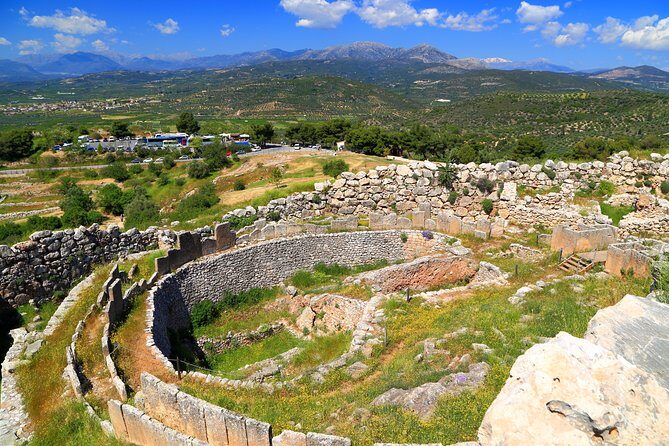
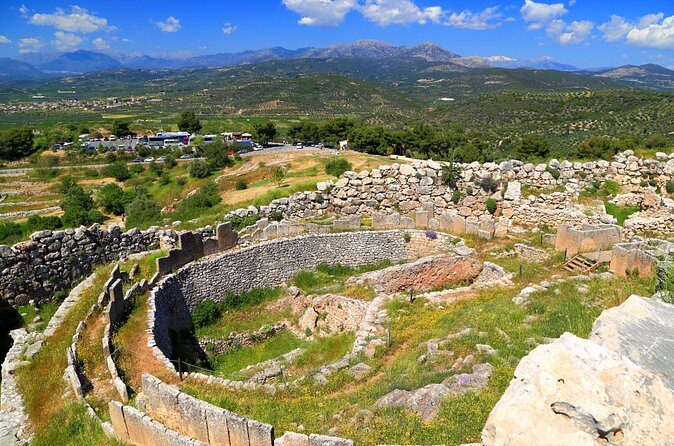
After Lion Gate, you move to the Cyclopean walls around the Acropolis area, plus the tholos tombs of Atreus and Clytemnestra. Again, plan on around 30 minutes, and admission isn’t included.
If you’ve never seen Cyclopean masonry in person, this is where the site starts feeling real. These walls are called Cyclopean for a reason: they look too big and too heavy for average hands. The tombs are equally important because they point to how the Mycenaeans thought about status and afterlife—this wasn’t just about living in a fortress, it was about building for eternity.
How this stop can feel, depending on your style:
- If you like geometry, walls, and structure, you’ll likely enjoy the short, focused time.
- If you want to linger and do deep reading, you may feel you’re moving too fast.
Quick practical tip: wear shoes you trust. This is archaeological ground. You’re going to walk more than you think between viewpoints, even in a short stop.





Stop 4: Epidaurus ancient theatre and the Asclepieion of healing
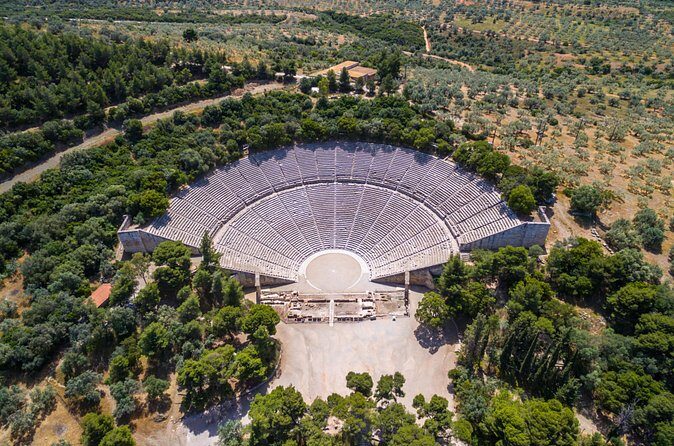
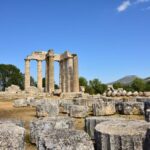
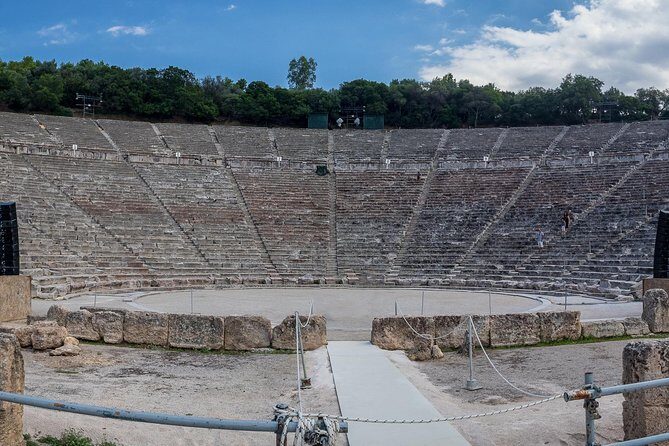
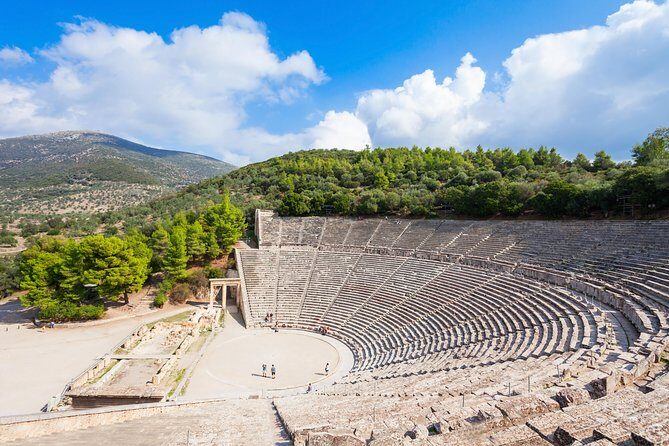
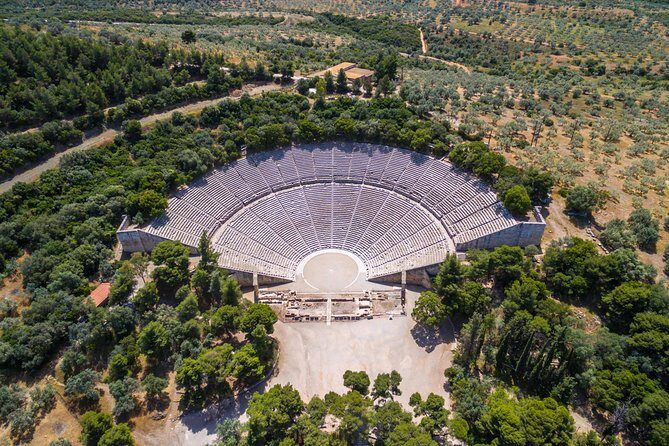
Your final stretch is the big one: about 2 hours at Epidaurus, including the Ancient Theatre of Epidaurus and the Asclepieion of Epidaurus (the healing center associated with serious diseases across ancient Greece). Admission isn’t included.
This is the stop most people remember. The theatre is the kind of structure that changes how you think about sound, space, and design. You can stand in different places and feel how the architecture guides your attention. Even if you’re not a theatre person, it’s hard not to get pulled in.
Then there’s the Asclepieion. It adds a completely different angle to the day: Mycenaean power and tombs lead into ideas of healing and pilgrimage. It’s a strong contrast in themes, all within one place.
How to use your time wisely in 2 hours:
- Give yourself a moment in the theatre to absorb scale before you start moving around too quickly.
- After that, shift your mindset for the Asclepieion. Look for the layout and how people would have experienced the space.
Possible drawback: while 2 hours is generous compared to the Mycenae stops, Epidaurus can still feel like a lot if you move fast. If you care most about the theatre, don’t feel guilty spending extra time there and trimming your time elsewhere.
Driver-led logistics: getting there fast, exploring on your own
A key part of this experience is the role of the driver. The best version of this trip feels like a friendly chauffeur who gets you to the right places and then keeps things running smoothly while you explore independently.
From past experiences with this style of tour, drivers have been described as:
- friendly and prompt
- helpful with practical on-the-ground questions
- safe and efficient on the road
A really useful pattern I’d plan for: treat the driver like your safety net. Ask a quick question at pickup, like the best lunch spot, or how to time your walk inside a site so you don’t feel rushed. In at least one instance, a driver recommended a great lunch option outside of Mycenae, which is exactly the kind of local advice that improves the day without turning it into a lecture.
One note on the guide aspect: some bookings get mixed up with the idea of audio or a guided commentary. For this specific experience, a professional licensed guided tour is not included in the base package. You explore on your own, and if you want a guide, you’ll arrange it as an extra request where available.
Wi‑Fi on board: small comfort, real impact
On most day trips, you lose your phone connection the moment you step away from the city. Here, Wi‑Fi on board helps you stay connected during transit. That can make your self-guided time easier.
I like it because you can:
- double-check directions within the sites
- pull up maps without burning through roaming data
- translate key signs faster
This is especially helpful on a tight schedule, where you don’t want to waste 15 minutes hunting down the next viewpoint.
What to bring so the timing doesn’t bite
With a structure like this, the best preparation is simple:
- Comfortable shoes for uneven archaeological ground
- A water bottle (and plan for limited shade depending on weather)
- Offline maps just in case the signal drops inside certain areas
- Sunscreen and a hat if it’s warm
The stop times are not long, so anything that slows you down can steal time. If you arrive organized, you’ll enjoy the day a lot more.
Mycenae + Epidaurus as a pairing: what the day teaches
The combination is strong because it tells two different chapters of ancient Greece in one compact route.
- Mycenae gives you power and permanence: gates, walls, and tombs that shout status and engineering.
- Epidaurus shifts into performance and healing: a theatre space built for attention and a healing center tied to spiritual and medical hope.
If you’re the kind of traveler who likes connecting themes, this pairing makes sense. You leave with more than a list of ruins—you get a sense of how priorities changed across time and culture.
So, should you book this Nafplion-to-Mycenae-and-Epidaurus trip?
I think you should book if:
- you want UNESCO-level sites without renting a car
- you like self-guided exploring with transportation handled
- you value hotel pickup and onboard Wi‑Fi
- you’re okay spending 30 minutes at several Mycenae stops and using the longer time mainly at Epidaurus
I’d skip (or modify expectations) if:
- you truly want a full guided lecture experience throughout
- you were hoping an audio guide would be included with the ride
- you prefer long, slow visits at every stop and hate feeling time pressure
If you’re flexible and you come with the right pace, this is one of those practical half-day tours that feels like it respects your time—and still delivers major ancient sights.
FAQ
How long is the Mycenae–Epidaurus trip from Nafplio?
It runs about 4 to 5 hours total, with short stops at Mycenae and a longer visit at Epidaurus.
What’s included in the price?
The price includes Wi‑Fi on board, return private transportation from Nafplion to the ancient sites, pickup from your hotel or a meeting point, plus liability and taxes.
Are archaeological site tickets included?
No. Tickets to archaeological sites are not included, so you’ll need to budget for admissions.
Is there an audio guide or guide narration included?
This experience does not include an audio guide. It’s mainly transport with self-guided time at the sites.
Is a professional licensed guide included?
A professional licensed guided tour of the archaeological site is not included by default. You can request a licensed guide upon request for an extra cost.
Where does the tour start and end?
It starts at the meeting point near the Land Gate (Unnamed Road, Nafplio 211 00, Greece) and ends back at the meeting point.
How big is the group?
The tour has a maximum size of 18 travelers.
Are service animals allowed?
Yes, service animals are allowed.
If you want, tell me when you’re going (month) and whether you prefer the theatre or the Mycenae tombs more. I’ll suggest how to pace the day so you don’t feel rushed.