REVIEW · CRETE
Olive Oil Tasting in Crete
Book on Viator →Operated by Savouidakis Olive Oil Tasting · Bookable on Viator
The most useful part of this one-hour Cretan olive oil seminar is the side-by-side comparison. You taste four premium oils and one defective sample, so quality is not left as a vague idea. You learn to notice the difference with your own senses.
I like the personal welcome from Maria and Jannis, and I like that the session covers practical matters such as labels and storage, not just flavor. The main consideration is the price, $72.10 per person, for a short activity, and you must arrange your own transportation to Agia Varvara.
In This Review
- Key Points Before You Book
- Why This Tasting Is More Than a Sample Table
- Arriving at Savouidakis in Agia Varvara
- The Wellbeing Icebreaker Sets the Tone
- Four Premium Oils and One Defective Sample
- Learning What Labels and Storage Really Tell You
- A Family Business With a Personal Touch
- Is $72.10 a Fair Price for One Hour?
- How to Get the Most From the Hour
- Who Will Enjoy This Most?
- Booking Details That Matter
- Should You Book the Savouidakis Tasting?
- FAQ
- Where does the olive oil tasting take place?
- How long does the tasting last?
- How many olive oils will I taste?
- Is food included with the tasting?
- Is transportation included?
- What is the cancellation policy?
Key Points Before You Book
- Five oils, including one defective sample: The contrast helps you recognize faults instead of judging quality by packaging alone.
- A guided tasting with a wellbeing opening: The session starts with a short ice-breaking activity designed to help the group relax and connect.
- A family-run setting: Savouidakis presents its own olive oils and local specialties in a warm, personal setting.
- Useful buying advice: You learn how labeling and storage affect the oil you take home and use every day.
- Simple palate cleansers included: Apple or bread and bottled water are provided between tastings.
- Easy to fit into a day trip: The activity lasts about one hour and finishes at the same meeting point.
Why This Tasting Is More Than a Sample Table
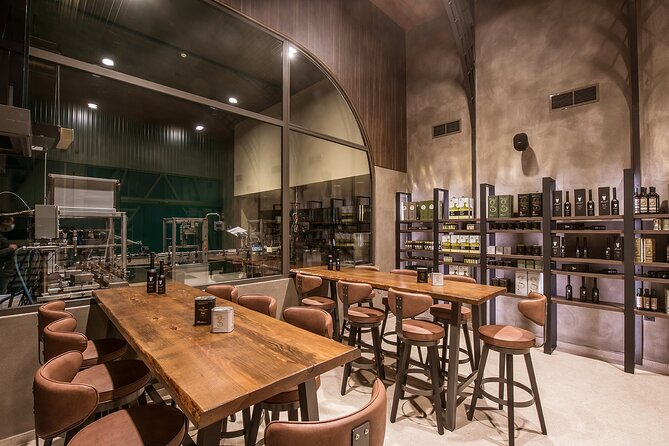
Crete is closely tied to olive oil, but seeing rows of olive trees or buying a bottle at a shop does not tell you much about what is inside. This session gives you a short lesson in how to judge the oil itself.
The format is practical. You do not simply receive four pours and pick a favorite. A trained olive oil taster guides you through the aromas and flavors, then adds a defective sample for contrast. That fifth taste may be the most useful one, since it gives you a reference for what to avoid.
The session also includes a wellbeing-focused icebreaker at the beginning. That may sound unusual for a food tasting, but it has a clear purpose: it helps the small group get comfortable before everyone starts describing what they smell and taste. If you are not used to talking about food in front of strangers, this gentle start should make the process easier.
You can also read our reviews of more food & drink experiences in Crete



Arriving at Savouidakis in Agia Varvara
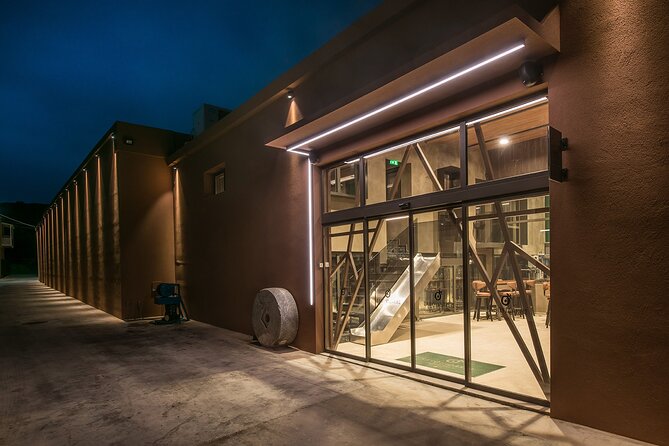
The meeting point is SAVOUIDAKIS, Cretan Products, in Agia Varvara, Crete. This is not a hotel pickup or a coach excursion. Transportation is not included, so you need to plan your route to the address before booking.
That detail matters more than it first appears. A one-hour tasting can fit neatly into a driving day, but it is only good value if you are already heading through the area or have a practical way to reach Agia Varvara. The activity ends back at the meeting point, so you are free to continue your day from there.
Confirmation is provided when you book, and the group is limited to a maximum of 15 people. That is large enough to create a little energy but small enough for a guided tasting to remain personal. With a tasting like this, group size affects the experience: you want room to ask questions and time to notice each sample.
The Wellbeing Icebreaker Sets the Tone
The tasting begins with a short activity centered on wellbeing. It is meant to help the group get to know one another and prepare for a more relaxed session.
This is not a long workshop added on top of the food experience. Think of it as a brief opening that moves the group away from a hurried retail stop and toward a more attentive tasting. Olive oil has subtle aromas, and you will get more from the session if you slow down and concentrate.
I also see a practical benefit here. A tasting can feel formal when everyone is expected to identify aromas on command. The opening gives you permission to participate at your own level. You do not need professional vocabulary to enjoy the session. You only need to pay attention and describe what you notice.
Four Premium Oils and One Defective Sample
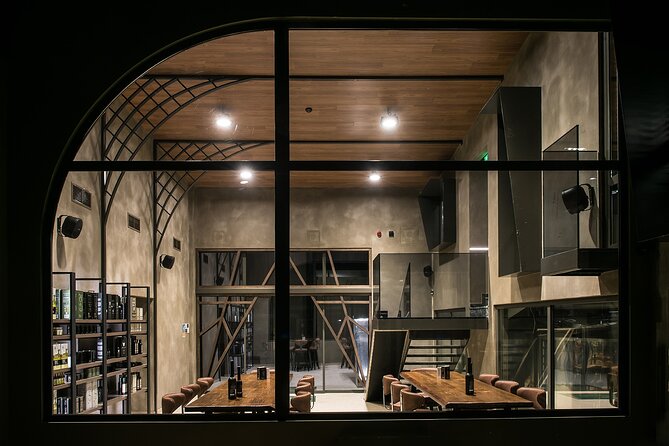
The main part of the activity is the tasting itself. You sample four premium olive oils from the Savouidakis selection, followed by one defective sample. The exact brands and varieties are not specified, so you should not expect a set menu of named cultivars in advance.
The four quality samples let you compare oils rather than treat olive oil as one uniform product. You may notice differences in aroma, texture, bitterness, or the peppery sensation that can appear in good oil. The point is not to decide that one style is universally best. The point is to understand what freshness and sound production can taste like.
The defective sample is a smart teaching tool. Many people know they like olive oil but have never tasted a clear fault. Once you have that comparison, you can approach supermarket shelves and restaurant bottles with a more critical palate.
This part is also useful for home cooking. You learn to consider olive oil as an ingredient with its own character, not merely a liquid used for frying or dressing. The session explains the right associations in the kitchen, helping you think about how oil and food work together.
Apple or bread is provided to cleanse your palate between tastings, and bottled water is included. These are modest details, but they help you reset your senses and keep the tasting comfortable. You will not need to arrive with special equipment or bring your own food.
Learning What Labels and Storage Really Tell You
A good tasting should answer the question many people have after the final sample: how do I choose a bottle at home? This session addresses that by covering olive oil labeling and storage.
Labels can be confusing, especially when attractive packaging suggests more than the wording actually guarantees. The lesson gives you a better basis for reading a bottle and thinking about quality before you buy it. The available details do not specify every label term covered, so you should treat this as a general buying lesson rather than a formal certification course.
Storage is just as important. Heat, light, and poor handling can damage olive oil over time. Learning how to keep a bottle in better condition makes the tasting useful long after you leave Crete. You can apply the advice to oil bought in Greece or to the bottles you already have at home.
This is one reason I think the session has more value than a standard shop tasting. You are not only sampling products for a possible purchase. You are learning how to make better choices for everyday cooking and nutrition.




A Family Business With a Personal Touch
Savouidakis is presented as a family business, and the tone of the experience reflects that. Maria and Jannis are associated with the olive oil presentation, and the setting is described as warm and welcoming rather than corporate.
That personal element is important in a food experience. You get a clearer connection between the bottle and the people involved in making and presenting it. The family also works with the olive harvest, and the discussion can extend into details about harvesting and preparation when time and interest allow.
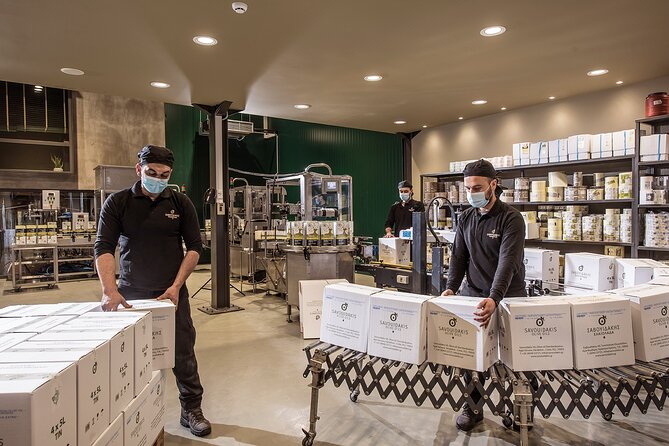
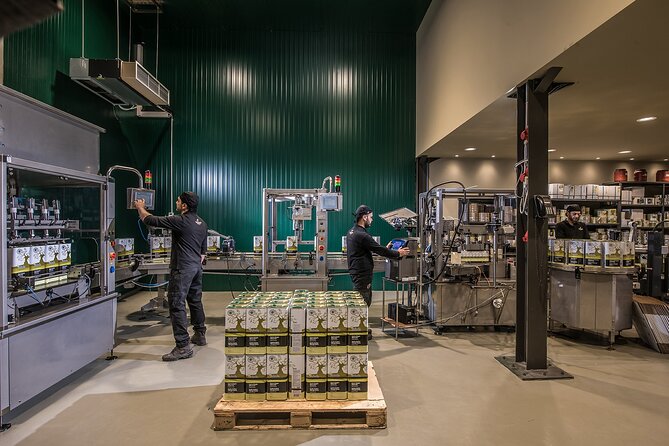
The company handles bottling with care, too. That matters because packaging is part of protecting the oil, not only a matter of appearance. The combination of production, bottling, and tasting gives you a fuller picture of the work behind the product.
You may also find other local specialties at the business. The tasting itself focuses on olive oil, but the setting can give you a chance to see more of the local food side of Crete. Do not confuse this with a full food tour, though. The supplied food is limited to apple or bread for palate cleansing.
Is $72.10 a Fair Price for One Hour?
At $72.10 per person, this is not a cheap stop if you judge it only by the amount of oil and food on the table. You receive five samples, bread or apple, and water, but the real product is the instruction.
The price makes more sense if you want a focused lesson and plan to use what you learn. A person who cooks with olive oil often, buys bottles for home, or wants to understand Cretan food culture may find the session worthwhile. The defective sample, label advice, and storage guidance give the hour practical value beyond a souvenir purchase.
It is less compelling for someone looking for a full farm visit, a long meal, or transportation from a resort. None of those are included. You are paying for a compact seminar at a specific location, not a half-day countryside outing.
The maximum group size of 15 helps the value. You should have a reasonable chance to follow the explanation and ask questions, though the experience will naturally feel less private than a one-on-one consultation. If you prefer a small family setting over a large commercial tasting room, this format should suit you.
How to Get the Most From the Hour
You will get more from the tasting if you arrive ready to focus on your senses. Avoid treating the event as a quick sip-and-shop stop. Notice the smell before tasting, then pay attention to how the oil feels and finishes in your mouth.
Do not worry about finding the perfect words. You can describe an oil as mild, bitter, fresh, grassy, peppery, or simply pleasant. The guide’s job is to explain the differences and help you connect those sensations to quality.
Use the defective sample as your reference point. It may be tempting to spend all your attention choosing a favorite among the premium oils, but the contrast with the flawed sample is what can change your buying habits.
Take the label and storage advice seriously. A good bottle can lose some of its character if it is kept badly, so the lesson is not finished when you leave the meeting point. Think about where you store olive oil at home and how quickly you use an opened bottle.
If you are visiting the nearby archaeological site of Phaistos, the tasting can work as a useful stop on the same day, provided your transport plan allows enough time. The activity itself is only about an hour, but you should allow extra time for getting to Agia Varvara and continuing afterward.
Who Will Enjoy This Most?
I would recommend this experience to food-focused visitors, home cooks, and anyone who wants to buy Cretan olive oil with more confidence. It also suits couples and small groups looking for a quiet cultural activity rather than another major sightseeing stop.
The session is offered in English, and most people can participate. No special skill is required. You do not need to know how to taste olive oil before arriving, since the structure is designed to teach you the basics through comparison.
It is also a good choice for people who enjoy meeting producers and hearing how a family business works. The warm setting and personal presentation are central to the experience.
I would think twice if you have only a short stop in Crete and no transport to Agia Varvara. I would also look elsewhere if your main goal is to visit olive groves, see pressing machinery, eat a full meal, or join a longer countryside tour. Those features are not part of the stated activity.
Booking Details That Matter
You can cancel for a full refund if you do so at least 24 hours before the local start time. Cancellations made less than 24 hours before the activity are not refunded, and changes inside that period are not accepted.
The mobile ticket is convenient, particularly if you are moving between several stops during your day. Still, save the meeting address and confirmation before setting out, since transportation is your responsibility.
The activity returns to the starting point. That makes it easier to combine with your own plans, but it also means you should not expect a drop-off at a hotel or a second destination.
Should You Book the Savouidakis Tasting?
Book it if you want a useful lesson in choosing olive oil, not just a few free samples. The strongest features are the four premium oils, the defective comparison, the label and storage advice, and the friendly family setting associated with Maria and Jannis.
The $72.10 cost is reasonable for a focused, guided seminar if you value food education and can reach Agia Varvara easily. It is harder to justify if you are measuring value by duration alone or expecting transportation and a full farm tour.
For many visitors, the best souvenir will not be another bottle chosen by attractive packaging. It will be the ability to smell, taste, and judge that bottle more wisely when you return home.
FAQ
Where does the olive oil tasting take place?
The activity starts and ends at SAVOUIDAKIS, Cretan Products, Agia Varvara 700 03, Greece.
How long does the tasting last?
The experience lasts approximately one hour.
How many olive oils will I taste?
You will taste four premium olive oil samples from the company’s brands and one defective sample.
Is food included with the tasting?
Apple or bread is provided to cleanse your palate between tastings. Bottled water is also included.
Is transportation included?
No. You must make your own way to the meeting point, and transportation is not included.
What is the cancellation policy?
You can cancel up to 24 hours before the local start time for a full refund. Cancellations or changes made less than 24 hours before the start are not accepted for a refund.