REVIEW · AGIOS NIKOLAOS CRETE
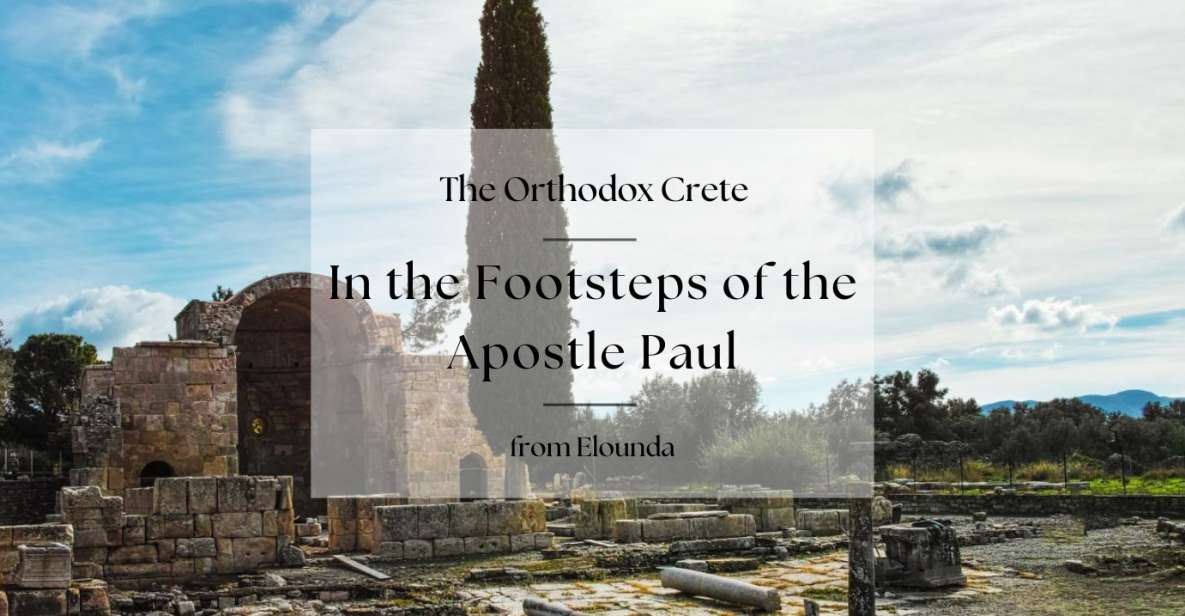
Orthodox Crete: In the Footsteps of the Apostle Paul
Book on GetYourGuide →Operated by Crete Private & Luxury Tours by Snami Travel · Bookable on GetYourGuide
The most unusual part of this Crete day trip is the way it joins early Christian sites with Minoan ruins and a swim-and-seafood finish at Matala. You move from the holy cave of Agios Myronas to ancient Phaistos, then down to the south coast.
I like the private format, since your guide can set the pace and explain the island’s religious past without a large group slowing things down. I also like the route itself: Paliani and Odigitria Monasteries give the day a strong spiritual focus, while Matala adds an easygoing seaside break. The drawback is distance. Eight hours covers a lot of ground, so this is not a slow monastery retreat or a beach day with a few stops added.
In This Review
- Key points to know before booking
- Why this route feels different from a standard Crete day trip
- Agios Myronas and the saint’s ascetic cave
- Paliani Monastery and Crete’s living religious tradition
- The Messara Plain, vineyards, and olive groves
- Phaistos Palace and the Bronze Age past
- Odigitria Monastery and the southern road
- Matala Beach and the fish tavernas
- What the private format is worth
- Who should book this Crete experience
- My verdict: book it for variety and context
- FAQ
- How long does the Orthodox Crete tour last?
- Where does pickup take place?
- Is this a private tour?
- Which languages are available for the live guide?
- Which places are visited during the tour?
- Can I cancel the tour or pay later?
Key points to know before booking
- Agios Myronas brings the story close to the rock: Visit the village and the ascetic holy cave linked with Saint Myron.
- Paliani and Odigitria offer the religious heart of the day: See two historic monasteries and their sacred relics.
- The Messara Plain connects faith with farming: Look across vineyards, olive groves, and the broad southern interior of Crete.
- Phaistos adds Bronze Age drama: View one of Crete’s major Minoan palace sites from the Messara area.
- Matala changes the mood: Finish at the coast with time to relax and eat at waterfront fish tavernas.
- Private pickup keeps the route simple: Pickup and drop-off are available from hotels, villas, cruise points, or another agreed location on Crete.
Why this route feels different from a standard Crete day trip
Many day trips from eastern Crete focus on beaches, boat rides, or the most famous archaeological sites. This one takes a more unusual path across the island, following a thread of Christian tradition associated with Apostle Paul while also showing you the older world of the Minoans.
That combination matters. Crete is not just a collection of sunny coves and ancient stones. Its inland villages, monasteries, olive groves, and religious sites explain how people lived and worshipped long after the Bronze Age palaces had faded.
You leave the northern coast and head toward central and southern Crete. The trip is designed as a private experience, so the vehicle, guide, pickup, and route are arranged for your party rather than a large bus group. The available guide languages are English, French, German, Russian, and Greek.
The day lasts about eight hours. That is long enough to reach the Messara Plain and Matala from Agios Nikolaos or Elounda, but it also means you should expect a full day on the road. If you prefer to spend hours at one beach, choose a coastal excursion instead.
You can also read our reviews of more tours and experiences in Agios Nikolaos Crete.


Agios Myronas and the saint’s ascetic cave

Agios Myronas gives the day its first strong religious stop. The village is tied to Saint Myron, and the visit includes his holy cave, described as an ascetic place of worship.
This is not the sort of site that works through grand scale. The appeal is its closeness and simplicity. A cave lets you picture religious life in a more direct way than a large church or formal museum. Your guide can place the site in the wider Christian story of Crete and explain why Apostle Paul’s connection matters to the route.
Expect the cave to be a quiet, reflective stop rather than a long sightseeing session. The information supplied for the tour does not give exact visiting hours, walking distances, or the length of the stop, so your guide will be the best source for the day’s timing.
The village also helps you move beyond the better-known coastal resorts. You are seeing a part of Crete where faith, village life, and the countryside still shape the character of the place.
Paliani Monastery and Crete’s living religious tradition

Paliani Monastery is one of the day’s two major monastic visits. The route highlights its sacred relics, making this more than a quick photo stop.
For you, the value is in seeing how Orthodox Christianity remains part of Crete’s cultural identity. A monastery is not simply an old building. It can be a place of prayer, memory, art, and local tradition. The guide’s role matters here, because the meaning of relics and religious spaces is not always clear if you only walk through on your own.
The tour information also uses the spelling Pailani in one place, so you may see both versions when checking maps or discussing the route. Either way, it refers to the monastery included in this experience.
Dress and behavior should be respectful at religious sites. The supplied details do not state a formal dress code, but modest clothing is a sensible choice for Orthodox monasteries. It also saves you from feeling underprepared when entering a sacred space.
Paliani is likely to appeal most to people who want more than architecture. If your interest is mainly ancient temples and palace ruins, the monastery visits may feel slower. If you want to understand Crete through its faith and traditions, they are central to the day.
The Messara Plain, vineyards, and olive groves
After the religious sites, the route opens into the Minoan Messara Plain. This is one of the most useful parts of the trip because it gives you scale.
The plain stretches across central Crete, with vineyards and olive groves reaching toward the horizon. The scenery helps explain why this region supported important settlements in ancient times. Instead of seeing a ruin in isolation, you see the farmland and open ground around it.
I like this part of the journey because it slows the story down. You are not just hopping between monuments. You are crossing the setting that made those monuments possible. The guide can connect the fertile soil with the people, crops, trade, and settlements that shaped the area over many centuries.
The word plain is important here. Do not expect dramatic mountain views at every turn. The appeal is the broad sweep of the countryside, the agricultural patterns, and the contrast with the built-up northern resort areas.
The trip’s religious theme also gains depth in this setting. The route presents Crete as a place where Christian communities developed among older Minoan sites, villages, farms, and roads. You get a sense of the island as a long human story rather than a single historical period.
Phaistos Palace and the Bronze Age past
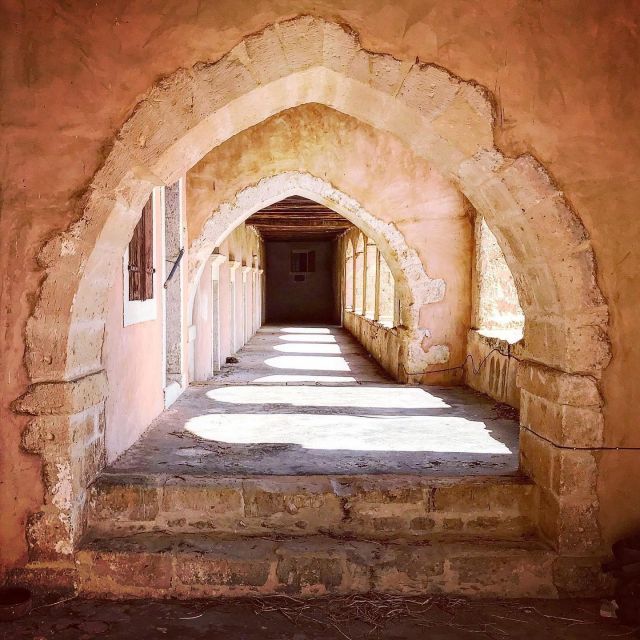
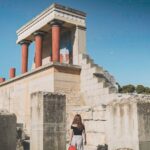
Phaistos Palace gives the day its major archaeological chapter. The palace is one of the Minoan sites connected with the Messara region, and the tour provides views of the Bronze Age ruins.
The supplied details do not say that an admission ticket is included, nor do they provide a set amount of time inside the archaeological site. They describe magnificent views of Phaistos Palace, so you should confirm with the provider whether your visit is a full entry or a viewing stop and whether entrance fees are separate.
That distinction matters. If you are eager to explore every corner of the ruins, you will want to know exactly how much time is planned. If you mainly want to understand the setting and see the palace from the Messara area, the stop may fit the day well.
Phaistos is valuable even when viewed as part of the wider plain. The site shows how the Minoans placed major centers within a productive region, while the surrounding countryside makes the old settlement feel less abstract.
You will also appreciate the contrast between Phaistos and the monasteries. At one stop, you are considering Bronze Age power and palace life. At another, you are looking at Christian devotion and sacred objects. The route makes those layers sit beside each other without pretending they belong to the same era.



Odigitria Monastery and the southern road
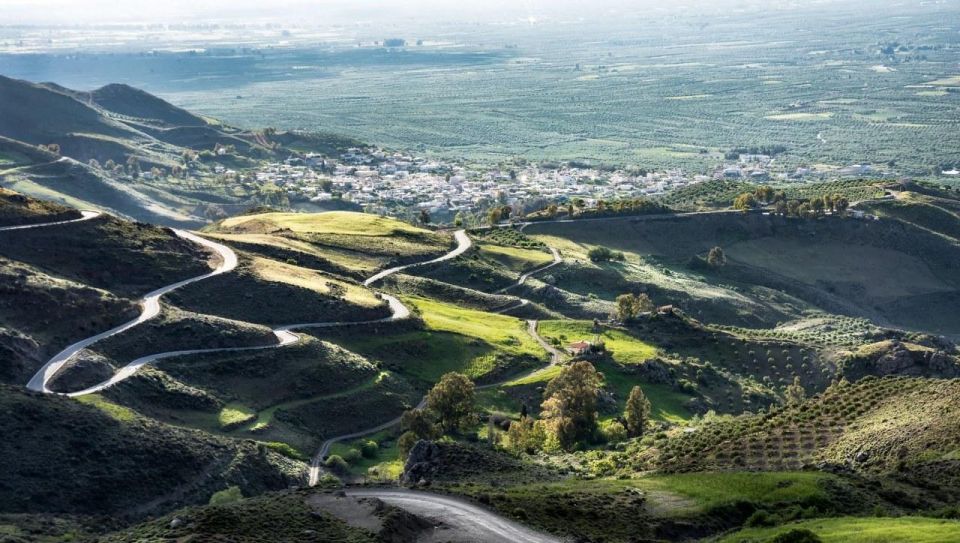
Odigitria Monastery is the second major monastery on the route. Like Paliani, it is included for its religious importance and sacred relics.
Its position helps make the journey toward southern Crete feel purposeful. You are not simply driving to Matala and adding a church along the way. The monastery forms part of the main theme, linking the inland route with the Christian traditions that the tour sets out to explore.
As with Paliani, this stop will suit you best if you enjoy places with a sense of worship and continuity. The experience is less about ticking off a famous monument and more about hearing the stories attached to the buildings and relics.
The tour description does not provide detailed architectural notes, opening hours, or a fixed schedule for the monastery. Keep your timing flexible. On a private trip, that flexibility is useful, but the full route still has several major stops, so you should not assume unlimited time at each one.
This is one reason the private format offers better value than a large coach trip for the right group. You are paying for a dedicated vehicle and guide, but you also get a route that would be difficult to handle comfortably with public transport in one day.
Matala Beach and the fish tavernas
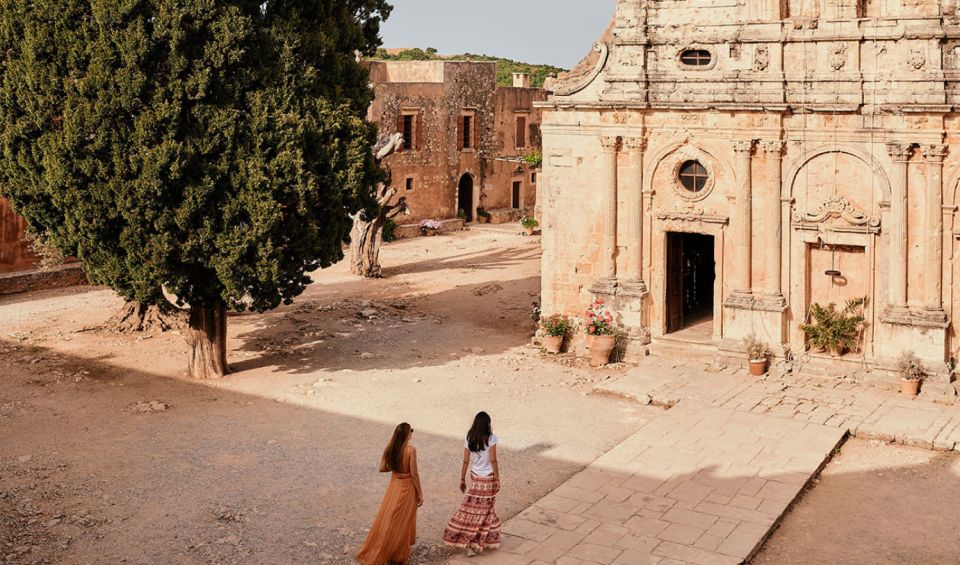
Matala changes the rhythm. After caves, monasteries, farmland, and ruins, you reach a south-coast village known for its beach and waterfront fish tavernas.
The plan is to unwind here, and that makes sense. You can take a break by the water and choose a seafood meal at one of the local restaurants. Food is not stated as included, so budget separately for lunch or any dishes you order.
Matala is a good finish because it gives the day a relaxed final note. You are not ending at another archaeological site when your attention is already tired. Instead, you get a chance to sit, eat, and enjoy the coast before returning north.
Do not book this tour expecting a full beach holiday. Matala is one part of a packed eight-hour route. The information provided does not promise a fixed amount of swimming time, beach equipment, or a meal reservation. Ask your guide how long you will have there on your chosen date.
For many people, that balance will be just right. You get a taste of southern Crete without giving up the main religious and historical stops. If Matala is your top priority, a dedicated Matala excursion will give you more time.
What the private format is worth
A private trip costs more than a shared coach outing, though no price is provided here. The value depends on your group and your priorities.
I see the strongest value in the route design. Reaching Agios Myronas, two monasteries, the Messara Plain, Phaistos, and Matala from Agios Nikolaos or Elounda in one day requires planning. A private vehicle removes the need to coordinate several buses or accept a fixed group pace.
Pickup and drop-off are included from a hotel, villa, cruise point, or another agreed point on Crete. The pickup time is flexible and confirmed after booking. That is useful if you are staying outside the main resort center or arriving by cruise ship.
You also get a live guide in English, French, German, Russian, or Greek. No guide’s personal name is provided, so do not book expecting a particular guide. Instead, confirm your preferred language and the pickup details before the day.
The skip-the-ticket-line feature may save time at included ticketed attractions, but the supplied information does not specify which entrance this applies to or whether admission is part of the price. Ask before booking if Phaistos entry is important to you.
Free cancellation up to 24 hours before the activity and reserve-now, pay-later booking add useful flexibility. These policies matter if your Crete plans depend on weather, cruise timing, or a changing schedule.
Who should book this Crete experience
You should consider this tour if you want:
- A private day from Agios Nikolaos or Elounda
- Orthodox monasteries and Christian sites alongside ancient ruins
- A guide who can explain the route in your chosen language
- A broad view of central and southern Crete
- A final stop with beach time and seafood options
- Hotel, villa, cruise, or agreed-location pickup
It is especially suitable for couples, families, or small groups with different interests. One person can enjoy religious history, another can focus on Minoan archaeology, and everyone gets Matala at the end.
You may want another tour if you dislike long drives, want a serious archaeological study of Phaistos, or prefer a whole day at the beach. The route covers many themes, so it favors variety over deep time at one site.
My verdict: book it for variety and context
I would choose Orthodox Crete: In the Footsteps of the Apostle Paul if I wanted to see a side of Crete that standard coastal trips often skip. Agios Myronas, Paliani, and Odigitria give the day a clear purpose, while the Messara Plain and Phaistos show the older world beneath the island’s Christian story.
Book it if you value a private guide, flexible pickup, and a full route with religious sites, countryside, archaeology, and the sea. Skip it if your ideal day means minimal driving or long, unhurried time at Matala.
Before confirming, ask two practical questions: how much time is planned at Phaistos and Matala, and which entrance fees, if any, are included. With those details clear, this is a thoughtful way to connect central Crete’s sacred places with its Minoan past and southern coast.
FAQ
How long does the Orthodox Crete tour last?
The experience lasts 8 hours.
Where does pickup take place?
Pickup and drop-off are available from your hotel, villa, cruise point, or another agreed location on Crete. The main departure areas given are Agios Nikolaos and Elounda, and the final pickup time is confirmed after booking.
Is this a private tour?
Yes. The experience is arranged for a private group.
Which languages are available for the live guide?
Guides are available in English, French, German, Russian, and Greek.
Which places are visited during the tour?
The route includes Agios Myronas and its holy cave, Paliani Monastery, Odigitria Monastery, the Messara Plain, views of Phaistos Palace, and Matala Beach.
Can I cancel the tour or pay later?
You can cancel up to 24 hours in advance for a full refund. Reserve-now, pay-later booking is also available.