REVIEW · MACEDONIA
Orthodox Heritage Kavala Private Tour
Book on Viator →Operated by Xplora · Bookable on Viator
Kavala’s Orthodox Heritage Private Tour follows a powerful Christian trail: Saint Gregory’s relics in New Karvali, the Apostle Silas monastery, the baptism site of Saint Lydia, and Panagia Ikosifoinissa, one of Macedonia’s major pilgrimages. The day links early Christianity with the living religious traditions of northern Greece.
I like the private format, since your group can set the pace and ask questions without sharing the day with strangers. I also like the mix of famous Christian sites and lesser-known local stories, especially the relic of Saint Gregory the Theologian and the account of Saint Lydia as the first woman baptized in Europe. The main consideration is the six-hour length, with three hours reserved for the final monastery, so this is best for visitors who want a focused religious and cultural day rather than a broad tour of Kavala.
In This Review
- Key points to know before booking
- Why this Kavala tour has more weight than a simple church visit
- New Karvali and the relic of Saint Gregory
- Saint Silas and the arrival of Christianity
- Saint Lydia’s baptistery beside the Zygaktis
- Three hours at Panagia Ikosifoinissa
- What the six-hour schedule feels like
- Is $162.90 per person a fair price?
- Who should book this private experience?
- Cancellation and weather planning
- My call: book it for the story, not just the sights
- FAQ
- How long does the Orthodox Heritage Kavala Private Tour last?
- What time does the tour begin?
- Where does the tour start?
- Where does the tour end?
- Is this a private tour?
- What sites does the tour visit?
- How much time is spent at each stop?
- Are admission tickets included?
- Can I cancel for a full refund?
- What happens if bad weather cancels the tour?
Key points to know before booking
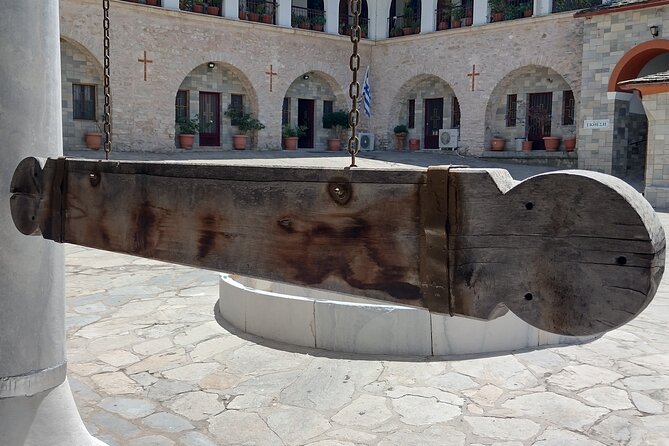
- Saint Gregory’s relic has a long journey: It was kept in Cappadocia from 390 AD before reaching Greece in 1924.
- The tour connects Kavala with Apostle Paul: Saint Silas traveled with Paul when Christianity first reached European territory.
- Saint Lydia’s baptistery is tied to a major Christian milestone: It marks the place associated with the first woman baptized in Europe.
- Panagia Ikosifoinissa receives the most time: You spend about three hours learning about its icon and monastic life.
- The experience is private: Only your own group participates, with group discounts available.
- Plan for a full morning and afternoon: The tour starts at 9:00 am and lasts about six hours.
Why this Kavala tour has more weight than a simple church visit
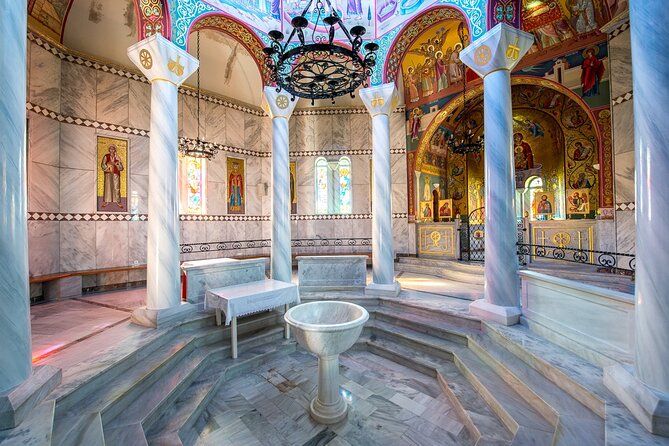
This experience is not just a circuit of attractive religious buildings. It gives you a way to follow Christianity through several periods: the Cappadocian Greek past, the journeys of the apostles, the first Christian communities in Europe, and the continuing life of Orthodox monasteries.
That makes the route especially useful if you want context. A church visit on its own can feel brief and hard to place. Here, each stop answers a different question. Where did a revered relic come from? How did Christianity reach this part of Europe? What did early baptism look like? How does monastic life continue today?
The private arrangement matters. Your party is the only group on the activity, so you can ask for explanations and spend more time on the parts that interest you. A family with mixed ages can keep the pace together, while a group with a strong religious interest can focus more closely on relics, saints, and pilgrimage traditions.
The tour begins at 9:00 am at Gallikis Dimokratias 13 in Kavala and ends back at that same meeting point. The total duration is about six hours. Admission to the listed stops is free, but the price is $162.90 per person, so the value depends heavily on your group size and your interest in Orthodox heritage.
You can also read our reviews of more private tours in Macedonia
New Karvali and the relic of Saint Gregory
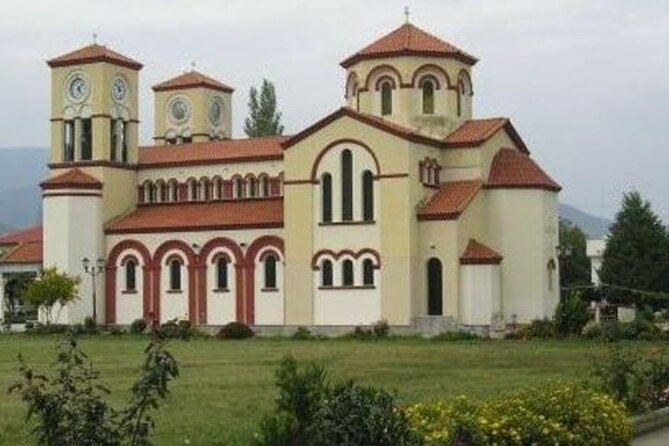
The first stop is the Church of Saint Gregory the Theologian in New Karvali. The town has a direct connection to the old Cappadocian Karvali, also known as Gelveri. Its story took a new turn in 1924, when population exchange brought Greek communities from Cappadocia to Greece.
That background gives the visit more meaning than a quick stop at a village church. New Karvali carries a memory of migration, displacement, and continuity. The community did not simply leave its past behind. It brought its religious traditions and sacred objects to a new home.
The focal point is the holy relic of Saint Gregory the Theologian. According to the historical account presented during the visit, the relic had been kept in Cappadocian Karvali since 390 AD before coming to Greece in 1924. You have the opportunity to venerate it and hear how the relic’s journey reflects the movement of Greek Orthodox communities in the modern era.
You spend about one hour here, and admission is free. That is enough time for an explanation of the church and its history without making the opening stop feel rushed.
I would pay close attention here if you have an interest in Cappadocian Greek culture. The stop is not only about a saint. It also helps explain why New Karvali exists as it does and how religious identity survived a major population transfer.
Saint Silas and the arrival of Christianity
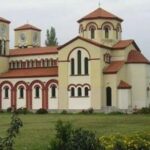
The next hour is devoted to the Holy Monastery of Saint Apostle Silas. The monastery was built in 1926, after the liberation of Kavala, in honor of Silas, who traveled with Apostle Paul.
This stop links the modern religious site to one of the central stories of Christianity in Europe. Paul and Silas came to Kavala, described here as the first European territory where they preached Christianity. The connection gives Kavala a place in the early Christian story that is easy to miss when you are focused only on its harbor, old town, and Ottoman-era aqueduct.
The monastery itself is a relatively modern foundation compared with the apostolic events it commemorates. That contrast is useful. You are not looking at a building from the time of Paul and Silas, but at a later Orthodox response to that much older tradition.
Expect about one hour at the monastery, with free admission. The visit is best for understanding the local meaning of Saint Silas rather than for a long architectural inspection.
If you are traveling with children or younger adults, this stop may help keep the historical thread clear. The story is direct: two apostles, a journey into Europe, and a monastery created to honor that connection. One family with members ranging from age 14 to over 40 found the six-hour program held everyone’s attention, which suggests the subject can work well for a mixed-age private group.
Saint Lydia’s baptistery beside the Zygaktis
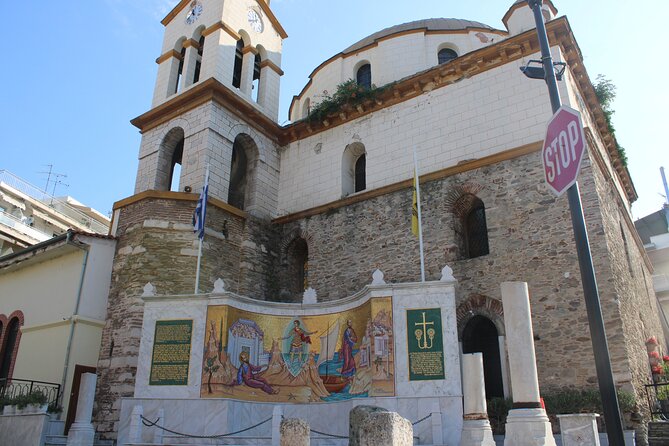
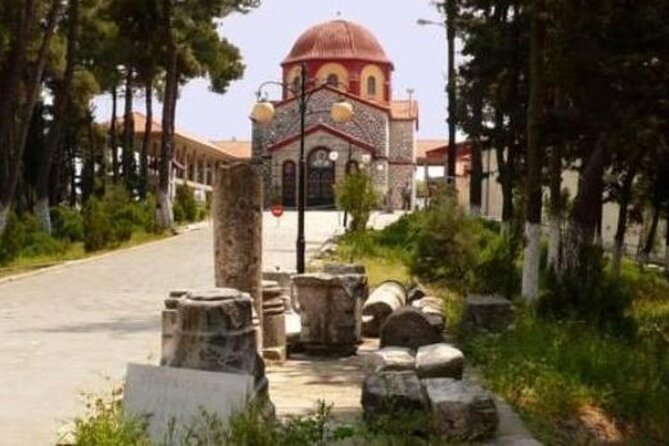
The third stop takes you to the banks of the Zygaktis and the Baptistery of Saint Lydia of Thyatira. The site is associated with Lydia, described as the first woman baptized as a Christian in Europe.
This is one of the most meaningful stops for anyone interested in the earliest Christian communities. The focus is not only on a named saint, but on the role of a woman at the beginning of Christianity in Europe. The story gives a human scale to a major religious change.
You spend about one hour here. The waterway setting helps connect the place to the act of baptism, though you should think of the visit as a religious and historical stop rather than a recreational riverside outing.
The site may be especially important to Orthodox Christians, but you do not need to be on a pilgrimage to appreciate its place in European history. I find that locations tied to a specific event are often easier to remember than a general church tour, and Saint Lydia’s story gives this stop a clear purpose.
A practical point: the day includes several places of worship, so modest clothing and respectful behavior are sensible. The supplied details do not specify a formal dress code, but religious sites generally call for quiet conduct and appropriate attire.
Three hours at Panagia Ikosifoinissa
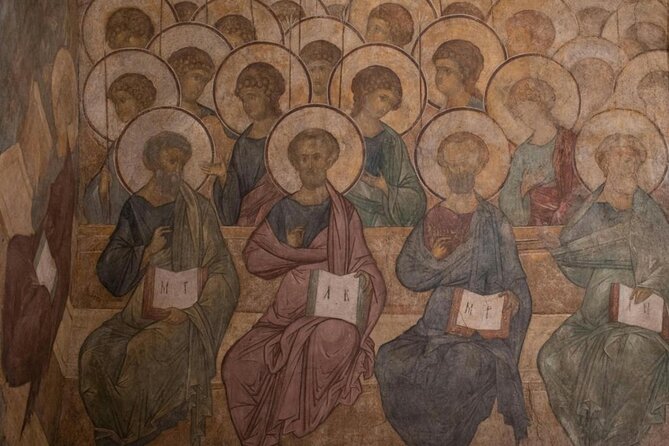
The final and longest stop is the Monastery of Panagia Ikosifoinissa, also written as Eikosifoinissa or Ikosifinissis. You spend about three hours here, making it the main destination of the day.
The monastery is described as one of the largest pilgrimages in Macedonia and the oldest active monastery in Greece and Europe, with a legacy dating to the eighth century. Its miraculous icon is the central focus of the visit. You have time to see the icon, learn about the monastery, and consider the ascetic life connected with the community.
Three hours is generous compared with the one-hour visits earlier in the day. That is a benefit if you want to understand how an Orthodox monastery functions as a place of prayer, pilgrimage, and spiritual discipline. It also prevents the final stop from becoming a hurried photo break at the end of a long route.
The same length may feel slow if your interest in religious sites is casual. You should book this experience because you want time for reflection and explanation, not because you want to tick off four sights as quickly as possible.
The monastery’s long history also gives the tour a strong ending. New Karvali shows a transplanted Cappadocian tradition. Saint Silas recalls the first Christian preaching in Europe. Saint Lydia points to an early baptism. Panagia Ikosifoinissa brings you into the continuing life of Orthodox pilgrimage.



What the six-hour schedule feels like
The timing is easy to understand: three stops of about one hour each, followed by three hours at Panagia Ikosifoinissa. That structure gives the day a clear rhythm and lets you settle into each place before moving on.
The schedule is also fairly concentrated. You are visiting four religious sites in one day, so the experience will feel full even though it lasts only about six hours. The positive side is that you gain a connected picture of Kavala’s Christian heritage in a single outing. The drawback is that there is little room for unrelated sightseeing.
The tour ends at the starting point, which is useful if you have plans in Kavala later. The supplied details do not state the exact transport arrangement, driving times, meal plans, or whether refreshments are included, so you should confirm those points with Xplora before booking if they matter to you.
The start time is fixed at 9:00 am. I would arrive early at Gallikis Dimokratias 13 rather than risk beginning a private tour late. Confirmation is provided when you book.
Is $162.90 per person a fair price?
At $162.90 per person, this is not a cheap way to fill a morning. The price makes more sense if you are traveling as a family or private group and place real value on a dedicated guide, a set route, and explanations at each religious site.
The tour includes four significant stops, a six-hour program, and a private format. Admission to each listed stop is free, so the cost is paying for the organized experience, guiding, and private access to the day rather than entrance tickets.
Group discounts may improve the value. If you are traveling with several people, compare the total cost of this private outing with what a shared tour would cost, keeping in mind that a shared option may not offer the same pace or personal attention.
I would find the price easier to justify if you are staying in Kavala and want a single, well-organized day focused on Orthodox heritage. I would be less likely to recommend it to someone who only wants a general introduction to the city or who would rather spend the day exploring Kavala’s secular sights.
The fact that it is booked an average of 35 days ahead suggests you should not leave planning until the last moment, especially if your visit falls during a busy period. The rating information available for the activity is five out of five from three published reviews, with repeated praise for the organization, friendly manner, and useful explanations. That is a small sample, so treat it as encouraging rather than definitive.
Who should book this private experience?
This tour suits you best if you fall into one of these groups:
- You are interested in Orthodox Christianity, saints, relics, and pilgrimage.
- You want to connect Kavala with the journeys of Apostle Paul and Saint Silas.
- You are traveling with family and want a private pace.
- You appreciate historical explanations more than a quick sightseeing loop.
- You want to see major religious sites outside the city center.
- You are comfortable spending several hours at monasteries and churches.
It may not suit you if you want beaches, food stops, museums, shopping, or a broad city tour. The route has a clear religious focus, and the three-hour visit to Panagia Ikosifoinissa is a major part of the experience.
Most people can participate, and service animals are allowed. The activity is near public transportation, though the supplied details do not explain the exact transport used during the tour. Tell Xplora about allergies, medical conditions, or physical limitations before taking part so the staff can arrange suitable support.
Cancellation and weather planning
You can cancel up to 24 hours before the 9:00 am start time for a full refund. Changes made within 24 hours are not accepted, and cancellations inside that window are not refunded.
The experience requires good weather. If poor weather causes cancellation, you are offered another date or a full refund. Since several stops are connected to outdoor movement and a monastery visit, it is sensible to check the forecast and keep some flexibility in your schedule.
My call: book it for the story, not just the sights
I recommend the Orthodox Heritage Kavala Private Tour if you want a focused day built around Christian history, Orthodox practice, and local memory. Its strongest feature is the way the stops connect: a Cappadocian relic, the apostolic mission of Saint Silas, Saint Lydia’s baptism, and a living monastery with centuries of tradition.
The tour is less compelling if you want a standard Kavala sightseeing experience. The $162.90 price per person also requires thought, especially for solo visitors or small groups, though group discounts may help.
Book it when the subject itself interests you. If it does, the private format, clear six-hour plan, and long final visit to Panagia Ikosifoinissa offer a rewarding way to see a side of Macedonia that is easy to miss.
FAQ
How long does the Orthodox Heritage Kavala Private Tour last?
The tour lasts approximately six hours.
What time does the tour begin?
It begins at 9:00 am.
Where does the tour start?
The meeting point is Gallikis Dimokratias 13, Kavala 652 01, Greece.
Where does the tour end?
The activity ends back at the meeting point in Kavala.
Is this a private tour?
Yes. Only your own group participates in the activity.
What sites does the tour visit?
The route includes the Church of Saint Gregory the Theologian in New Karvali, the Monastery of Saint Silas, the Baptistery of Saint Lydia, and the Monastery of Panagia Ikosifoinissa.
How much time is spent at each stop?
About one hour is planned at Saint Gregory’s church, one hour at Saint Silas, one hour at Saint Lydia’s baptistery, and three hours at Panagia Ikosifoinissa.
Are admission tickets included?
Admission is listed as free at all four stops.
Can I cancel for a full refund?
Yes. You can cancel at least 24 hours before the experience starts for a full refund. Cancellations made less than 24 hours before the start time are not refunded.
What happens if bad weather cancels the tour?
If poor weather causes cancellation, you are offered a different date or a full refund.