REVIEW · CHANIA
Pottery – Honey & Olive Oil experience
Book on Viator →Operated by CRETE LUXURIOUS TOURS & TRANSFERS · Bookable on Viator
The most memorable part of this Cretan day is the mix of hands-on craft and local food. You move from olive presses and honey production to a pottery wheel in Margarites, then finish at Arkadi Monastery, a place tied closely to Crete’s struggle for independence.
I like the private format, especially for a group of up to seven. You get hotel, villa, cruise, or other pickup in Heraklion or Rethymno, and the flexible pickup time makes the day easier to fit around your plans. I also like that the pottery session lets you make your own ceramic piece at no extra charge.
The main point to understand is that your driver is not a tour guide. One driver may offer plenty of conversation and local help, while another may keep things quiet unless you ask questions. The olive oil visit can also feel rushed, so book this for access and variety rather than a polished, lecture-heavy tour.
In This Review
- Key points before you book
- Four Cretan traditions in one private day
- Paraschakis Olive Oil and the modern mill
- Apithano Honey Museum and the tasting table
- Pottery in Margarites, the day’s hands-on highlight
- Arkadi Monastery and the story of 1866
- What the private transport adds
- Driver service versus a guided tour
- Is $722.47 a fair price?
- Who will enjoy this day most?
- Practical details that affect the day
- Should you book the pottery, honey, and olive oil day?
- FAQ
- Where does the tour pick up and drop off?
- Is pickup available in Chania?
- How long does the experience last?
- How many people can join the private tour?
- Is transportation included?
- Is a tour guide included?
- Is lunch included?
- Can I make my own pottery?
- Are the admissions included?
- What happens if the weather is poor?
Key points before you book
- Make your own pottery in Margarites: The village is Crete’s best-known pottery center, and the single-session workshop is included.
- Taste honey from Cretan flowers: Apithano explains how bees gather nectar from the island’s varied plants, followed by a tasting.
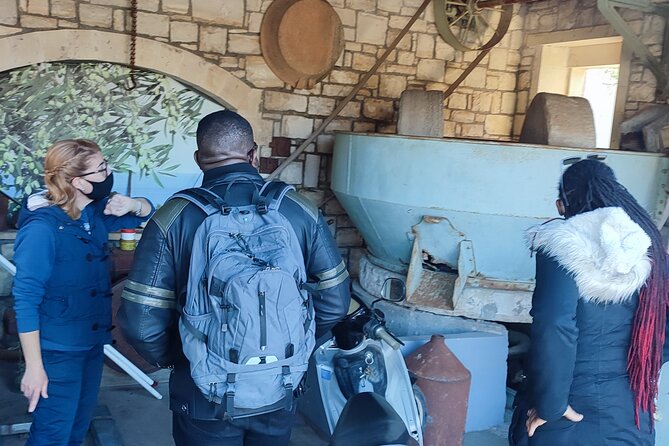
- See three olive oil mills: Paraschakis Olive Oil offers a free factory visit covering three mills and its modern production equipment.
- Visit historic Arkadi Monastery: Allow about an hour to see its Venetian church and learn why the monastery is a national symbol.
- Book a private vehicle for up to seven: Transportation, bottled water, air conditioning, and an English-speaking driver are included.
- Plan for your own lunch: Food, coffee, tea, and a tour guide cost extra or need to be arranged separately.
Four Cretan traditions in one private day
This outing works because it joins four very different stops. You get food production, a tasting, a craft workshop, and a major historic site without having to arrange separate rides across central Crete.
The day lasts about five to seven hours. That range matters. Driving time, the pace of your group, and any added lunch stop can push the schedule toward the longer end. One group added lunch and found that the journey ran longer, so do not plan a tight evening appointment afterward.
The advertised price is $722.47 per group, not per person, for up to seven people. For a full group, that can be fair value for private transportation and a full day of stops. For one or two people, it is a much bigger spend, and you may want to compare it with a shared tour or individual visits.
Pickup is offered from hotels, villas, cruise points, or other locations in Heraklion city and Rethymno city only. The stated pickup time is flexible, but confirm the exact arrangement before you go. The experience is offered in English and operates daily from 9:00 a.m. to 3:30 p.m. during the listed operating periods.
You can also read our reviews of more tours and experiences in Chania.
Paraschakis Olive Oil and the modern mill
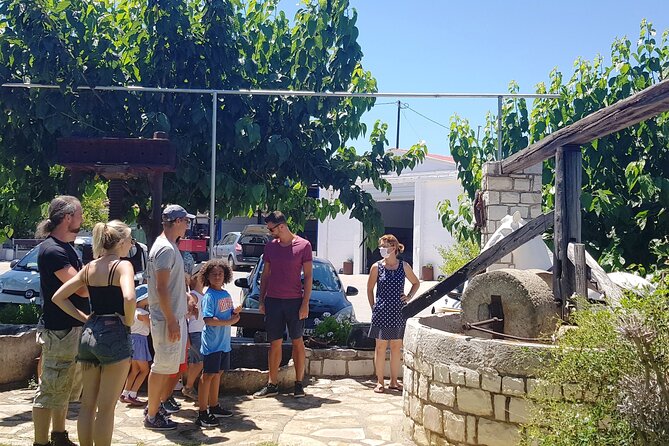
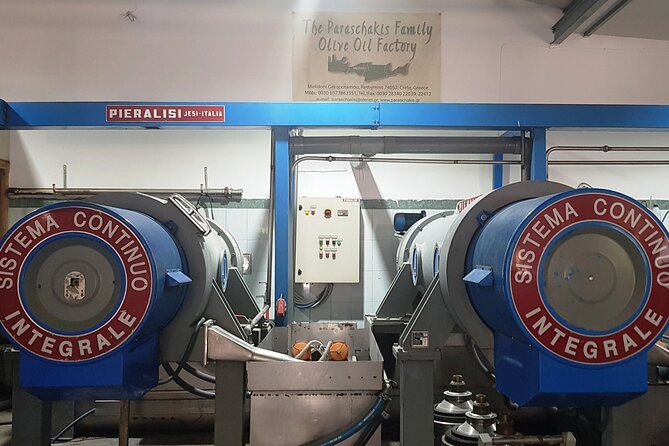
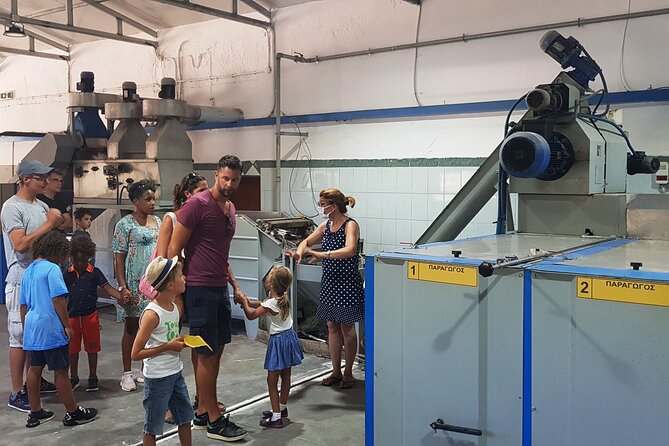
Your first stop is Paraschakis Olive Oil in Melidoni. The factory has three different mills, and the visit explains how modern equipment, production skill, and strict standards shape the final oil.
The factory visit is listed at about one hour, with admission included. This is useful if you want more than a quick shop stop. You get a look at the working side of one of Crete’s most important food products, rather than only seeing bottles on a shelf.
Still, keep your expectations measured. The quality of this stop may depend heavily on who is available to show you around. One account describes the olive oil visit as fast and lacking much explanation. That does not make the factory uninteresting, but it does mean you should ask questions if you want details about milling, storage, or tasting.
This is also where the difference between a driver and a guide matters. Your English-speaking driver handles the transport, but the package does not include a dedicated tour guide. If you want a formal explanation at every stop, arrange a licensed guide separately and confirm the added price.
Apithano Honey Museum and the tasting table
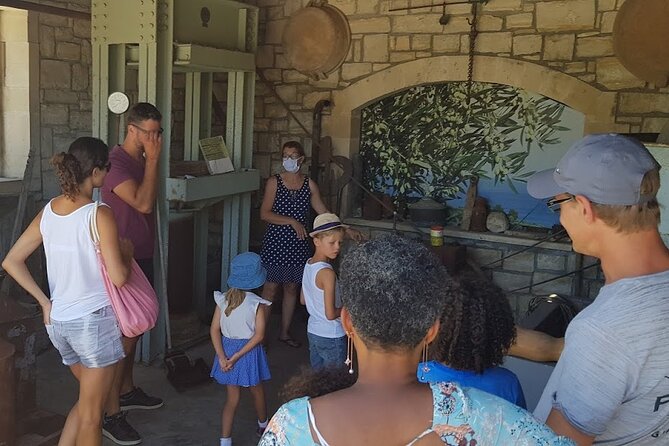
The Apithano Honey Museum offers a more focused look at bees and honey production in Crete. The visit includes time in the laboratory and an explanation of how honey is collected from selected areas of the island.
The museum presents honey as a product shaped by local plants, flowers, fruit juices, and nectar. Crete’s endemic vegetation gives the honey its own aroma and taste, which makes the tasting more useful than a simple sweet snack. You can connect what you taste with the plants and places described during the visit.
The stop lasts about an hour and admission is included. The honey portion may be brief, but it has a clear structure: learn about production, see the work area, then taste the result. I would save room in your shopping bag, since the food stops can lead to purchases, and one group even needed help finding an extra suitcase after buying so much.
If you care most about tasting, this may be one of the stronger parts of the day. If you want a long lesson about beekeeping, ask your driver to help you get more detail or arrange a guide in advance. The experience is private, so your questions can shape the pace.
Pottery in Margarites, the day’s hands-on highlight
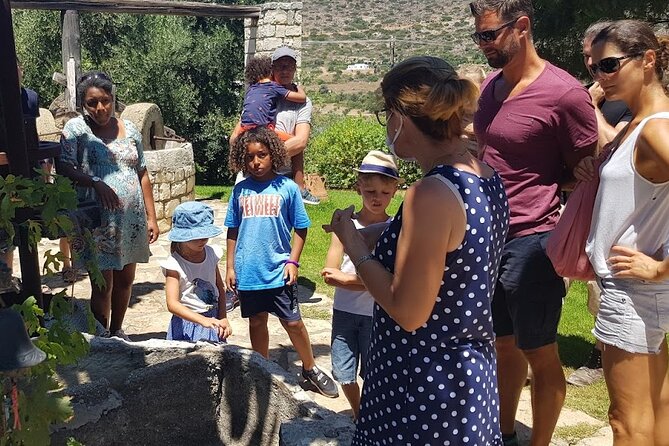
Margarites is described as Crete’s most important and best-known pottery center. Local clay deposits helped support a long pottery tradition, and the village is surrounded by two gorges with aromatic plants, trees, herbs, and flowers.
At Tsikalario Cretan Ceramics, you can make your own ceramic piece during a single-session workshop. The activity is free of charge and is designed for people who want one practical sample rather than a full pottery course.
This is the part I would prioritize if you like making things. You are not simply watching an artisan work. You get a chance to try the material yourself, then see the studio’s finished pieces and family craft tradition.
One especially warm account describes meeting a woman whose family has made ceramics for generations. That detail points to the real value of Margarites: the workshop connects the object in front of you with the people who make it. The experience may be simple, but it has more personal contact than a standard factory visit.
You should also allow room in your luggage. Pottery is a tempting souvenir, and the private vehicle makes it easier to carry purchases than a public bus would. Ask how your piece will be handled and whether it is ready to take with you before you leave the studio.
Arkadi Monastery and the story of 1866
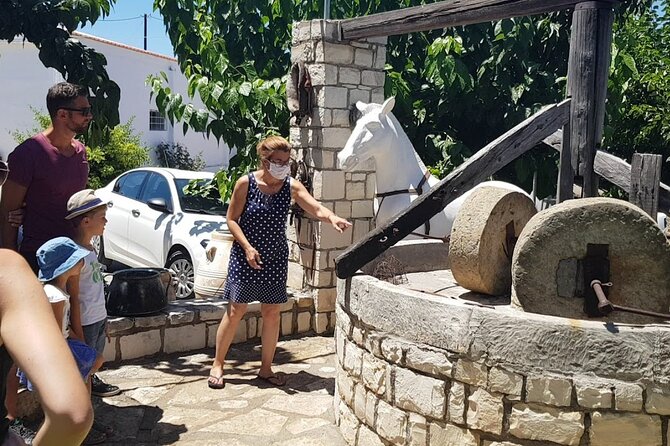
The final listed stop is Arkadi Monastery, one of Crete’s key historic sites. Its Venetian church is noted as one of the finest on the island, but the monastery’s deeper importance comes from the events of 1866.
Arkadi became a national symbol during Crete’s struggle for independence. An hour here gives you time to see the complex and consider the role it played in Greek history. This stop also changes the rhythm of the day. After food production and pottery, you move into a quiet place tied to sacrifice, resistance, and national memory.
The listing does not include a tour guide, so do not expect a detailed guided history lesson as part of the basic price. Your driver may share useful information, but the amount can vary. Read about Arkadi before you go, or hire a guide if historical context is central to your plans.
Even with limited commentary, the monastery is a strong finish. It gives the day more weight than a series of tastings and workshops. You leave with both a handmade object and a clearer sense of why this site matters to Crete.
What the private transport adds
The private, air-conditioned vehicle is a major part of the value. You avoid coordinating several buses or taxis, and your group can keep purchases, water, and pottery with you throughout the day.
Pickup and drop-off are offered from your hotel, villa, cruise point, or another agreed location in Heraklion or Rethymno. The service is not described as pickup from Chania, despite the experience being associated with Chania in the location information. If you are staying in Chania, confirm eligibility before paying, since the stated pickup area is limited to Heraklion city and Rethymno city.
Bottled water is included. Lunch, coffee, and tea are not. You can add a lunch stop, but that will extend the day, so discuss it early with your driver. The flexible schedule helps, but it does not remove the need to plan.
The private format also gives you control. If your group wants longer at the pottery studio and less time at the factory, ask. The final schedule may still depend on opening hours and the practical timing of each stop, but a private booking is better suited to requests than a large coach excursion.
Driver service versus a guided tour

This distinction deserves plain language. You receive an English-speaking driver, not a tour guide. The driver’s job is to provide private transportation and help your day run smoothly. Commentary may be offered, but it is not the same as having a professional guide at the monastery, museum, and factory.
The difference was clear in the feedback attached to the experience. One person found the driver kind but quiet, with most information coming only after questions. Another had a relaxed, helpful driver who went out of his way to locate an extra suitcase after the group made several purchases.
That range does not necessarily mean the service is unreliable. It means you should book according to your needs. If you want independence, transport, and access to several places, the arrangement can work very well. If you want continuous storytelling, ask for a licensed guide when booking.
I would prepare a short list of questions. At the olive oil factory, ask how the three mills differ. At the honey museum, ask which plants influence the samples. At Margarites, ask about the clay and the family’s pottery methods. At Arkadi, ask your driver what he recommends seeing first.
Is $722.47 a fair price?
For up to seven people, the price is easier to justify than it first appears. You are paying for a private vehicle, fuel, driver service, pickup and drop-off, bottled water, and four included admissions. The pottery session adds real value because you make a ceramic item instead of simply looking around.
For a family or group of friends, the per-person cost drops sharply. Seven people would pay about $103 each before lunch or guide fees. Two people would pay about $361 each, which is harder to call a bargain unless private transport and a flexible day are especially important to you.
The package also saves planning time. You do not need to arrange separate transfers to Melidoni, the honey museum, Margarites, and Arkadi Monastery. That convenience has a price, but it can be worthwhile during a short Crete stay.
I would not choose this tour mainly for luxury. The vehicle is air-conditioned, but the experience is about working producers, a practical craft session, and a historic monastery. The value lies in access and variety, not in elaborate meals or a high-end tasting menu.
Who will enjoy this day most?
This is a good fit for a private group that wants a broad taste of central Crete. Families can enjoy the pottery activity, food lovers get two production visits, and history-minded visitors have Arkadi Monastery as a serious cultural stop.
It also suits people who prefer a relaxed private vehicle to a fixed coach schedule. You can ask for a lunch stop, spend more time shopping, and keep your purchases close.
I would be more cautious if you want a specialist food tour. The olive oil and honey visits each last about an hour, but neither is presented as an advanced tasting course. I would also be cautious if you dislike shopping opportunities, since the food and pottery stops naturally invite purchases.
The tour is not ideal for someone who expects a guide to narrate every mile. The basic booking includes an English-speaking driver, not a guide. That single detail should shape your decision.
Practical details that affect the day
Confirmation is received when you book. Most people can participate, and service animals are allowed. The activity is private, so only your own group takes part.
The experience requires good weather. If poor weather causes cancellation, you are offered another date or a full refund. You can cancel for a full refund up to 24 hours before the start time, but changes or cancellations inside that window are not accepted.
Wear something comfortable for a day with several stops. The supplied information does not give a dress code, but Arkadi Monastery is a religious site, so modest clothing is a sensible choice. Bring space for food and pottery purchases, and do not assume lunch or drinks beyond the supplied bottled water are included.
The listed operating hours are 9:00 a.m. to 3:30 p.m., Monday through Sunday, for the stated booking periods. Confirm your exact pickup time, especially if you are coming from a cruise or need to return for another reservation.
Should you book the pottery, honey, and olive oil day?
Book it if you want private transport, local food production, a hands-on pottery session, and Arkadi Monastery in one manageable day. The Margarites workshop is the clearest reason to choose this experience, while the monastery gives the outing a worthwhile historical finish.
Think twice if you need a polished, highly narrated tour. The driver may be helpful and informative, but the package does not include a guide, and the olive oil stop may feel brief. Ask for a guide at the time of booking if you want more context.
For groups of five to seven, the price can make good sense. For couples, it is a premium way to travel. Either way, confirm the pickup area, leave time for lunch and shopping, and arrive ready to ask questions. That will help you get much more from a day built around Cretan food, craft, and history.
FAQ
Where does the tour pick up and drop off?
Pickup and drop-off are offered from hotels, villas, cruise points, or other agreed locations in Heraklion city and Rethymno city.
Is pickup available in Chania?
The supplied pickup details specify Heraklion city and Rethymno city only. If you are staying in Chania, confirm pickup availability before booking.
How long does the experience last?
The experience lasts approximately five to seven hours.
How many people can join the private tour?
The price covers one private group of up to seven people.
Is transportation included?
Yes. Private transportation in an air-conditioned vehicle is included, along with bottled water and an English-speaking driver.
Is a tour guide included?
No. The package includes an English-speaking driver, but not a tour guide.
Is lunch included?
No. Lunch is not included. Coffee and tea are also excluded.
Can I make my own pottery?
Yes. The pottery stop in Margarites includes a free single-session opportunity to make your own ceramic sample.
Are the admissions included?
Yes. Admission is included for the olive oil factory, Apithano Honey Museum, pottery workshop, and Arkadi Monastery.
What happens if the weather is poor?
The experience requires good weather. If it is canceled because of poor weather, you will be offered another date or a full refund.