Athens reveals itself best on foot, and this private 2.5-hour tour gives you a brisk introduction to the city’s ancient core and modern center. You will see the Evzones at Syntagma, walk beside the Acropolis, pass Hadrian’s Arch, and finish at the Academy of Athens. The clever part is the range: this is not only an ancient-monument walk.
I like the local perspective and the chance to ask questions as you go. I also like the route’s mix of famous sights and everyday Athens, from Plaka’s sandal and olive-oil shops to Kolonaki’s modern streets. The main drawback is clear: you see the Acropolis from outside, and entrance is not included. If you want the Parthenon itself, plan a separate visit.
In This Review
- Key points to know before booking
- Starting with Athens’ public stage at Syntagma Square
- Riding from Syntagma to the Acropolis station
- Walking the Acropolis from the outside
- Plaka, Adrianou Street, and the useful side of souvenir shopping
- Hadrian’s Arch and the Temple of Olympian Zeus
- The National Garden and Zappeion on the way to the stadium
- Kolonaki and the city that keeps moving
- What the private format adds
- Timing, clothing, and practical limits
- Who should book this Athens walk
- Should you book Private Athens: Must See Spots with Hidden Gems?
- FAQ
- Where does the tour begin?
- Does the tour go inside the Acropolis?
- Is the changing of the guard included?
- Is transportation included?
- What does the tour price include?
- Is the tour suitable for children?
Key points to know before booking

- The changing of the guard begins at Syntagma Square, where your guide explains the Evzones’ distinctive dress and traditions.
- The Acropolis is viewed from outside, with a walk along its walls and nearby ancient roads rather than an interior visit.
- The route uses the metro between Syntagma and Acropolis stations, and transport costs are not included.
- Panathenaic Stadium connects ancient sport with the modern Olympics, including the 2004 marathon finish.
- The tour ends at the Academy of Athens, near the modern city center and Kolonaki.
- The private format helps you shape the conversation, especially if you want more mythology, architecture, or modern Greek history.
Starting with Athens’ public stage at Syntagma Square
Meet your guide at 9:30 in the middle of Syntagma Square, by the fountain and the exit of the Syntagma metro station. This is a sensible meeting point. It is central, easy to find, and already gives you a quick look at Athens as a working capital rather than only an open-air museum.
Syntagma is surrounded by neoclassical buildings, with the Grande Bretagne hotel drawing much of the attention. The building was once a royal palace and later hosted figures such as Winston Churchill and Madonna. That small detail helps set the tone for the walk: Athens is a city where royal, political, ancient, and ordinary modern life overlap within a few blocks.
The first major stop is the Tomb of the Unknown Soldier, in front of the Greek Parliament. Here you watch the Evzones, the ceremonial guards of the Constitution. Their traditional uniforms include a white pleated skirt, red cap, and old rifle. The changing of the guard takes place every hour, so the morning schedule gives you a good chance of seeing the ceremony near the start of your walk.
Your guide adds meaning to what could otherwise be a quick photo stop. The uniforms and movements are tied to Greek military and national traditions, and the display has a formal rhythm that is easy to appreciate once you know what you are watching. Keep in mind that the ceremony is a public event, not a private performance arranged just for your group.
You can also read our reviews of more private tours in Athens


Riding from Syntagma to the Acropolis station
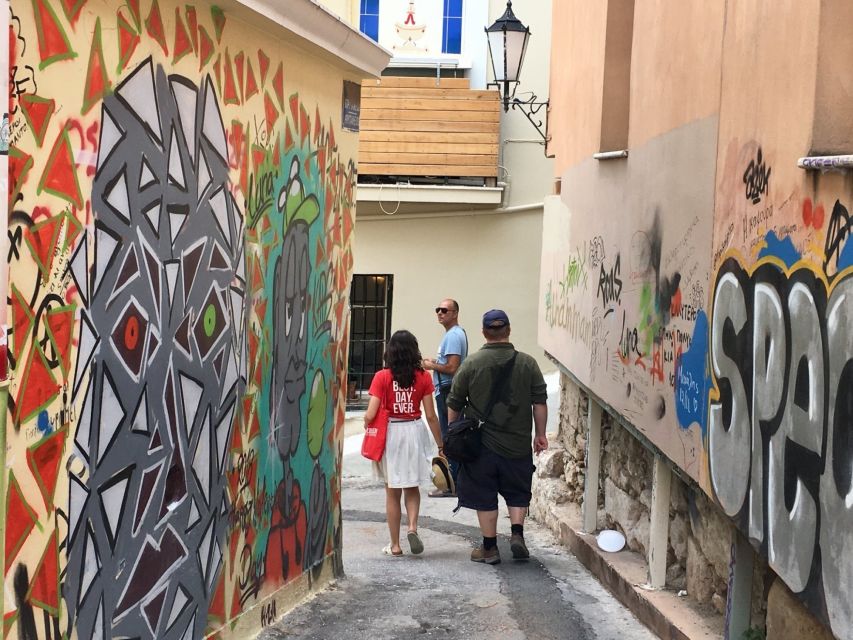
The route then uses the metro to reach Acropolis station. Transport is listed as not included, so you should expect to handle the metro fare yourself. The short ride is useful for another reason: both Syntagma and Acropolis stations display ancient remains found during metro construction.
These archaeological displays are behind glass, offering a quick look at the layers beneath present-day Athens. You do not spend a long time underground, but the stop makes a good point. In Athens, building a metro line can mean working around streets and structures that have been part of city life for thousands of years.
Because the tour lasts only 2.5 hours, the metro transfer also saves walking time. That helps the route cover more ground, though it means this is not a slow, wandering stroll. You will move from place to place at a steady pace, with explanations along the way.
Walking the Acropolis from the outside
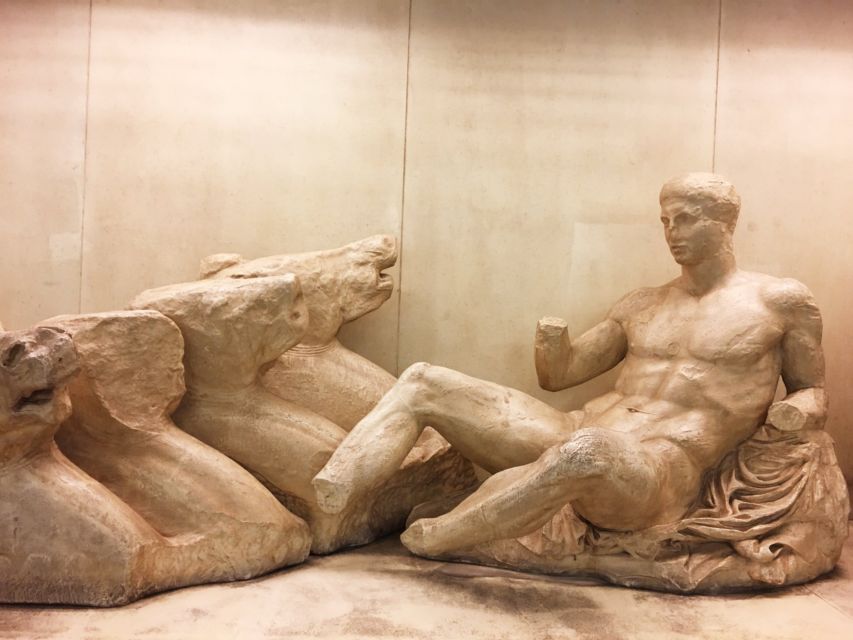
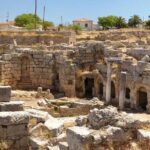
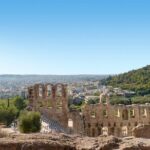
After leaving Acropolis station, you walk around the walls of the Acropolis and pass by the Ancient Agora. This is the heart of the tour’s ancient section. You see the rocky height of the Acropolis, the surrounding approaches, and roads that connect the famous monuments with the lower city.
Your guide can explain the stories, customs, and traditions tied to the area, while also pointing out newer buildings and the way modern Athens has grown around ancient sites. This is valuable if you are seeing Athens for the first time and need a clear sense of how the Acropolis fits into the wider city.
The important limitation is that the tour does not take you inside the Acropolis. Entrance fees are not included, and an interior visit must be arranged separately on your own time. That matters when you compare prices. You are paying for a private guide and a carefully linked city walk, not for admission to the Parthenon or the Acropolis complex.
If the Acropolis is your main reason for coming to Athens, set aside a separate visit before or after this experience. The outside walk gives you context and good orientation, but it cannot replace time among the monuments. You may prefer to visit the Acropolis independently when you can give it more than a quick look.
Plaka, Adrianou Street, and the useful side of souvenir shopping
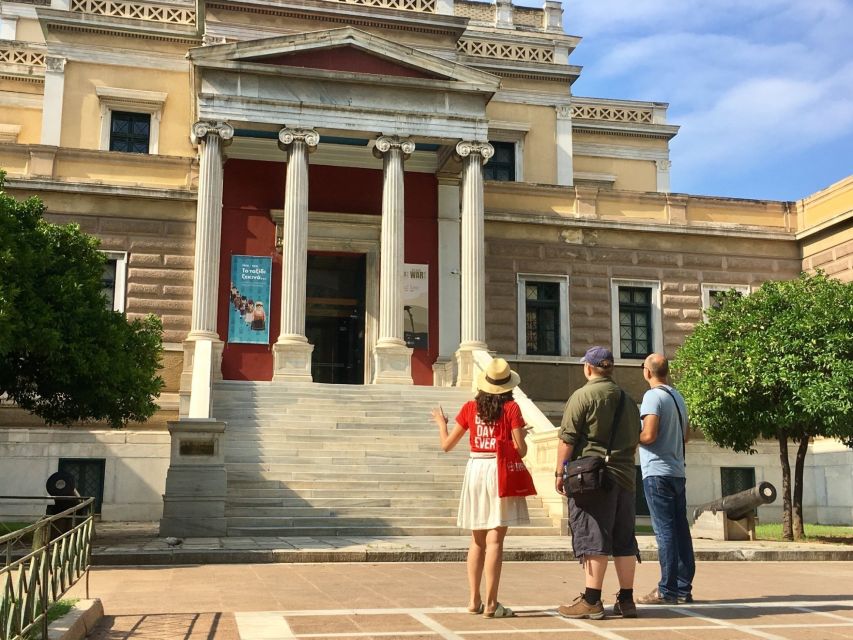
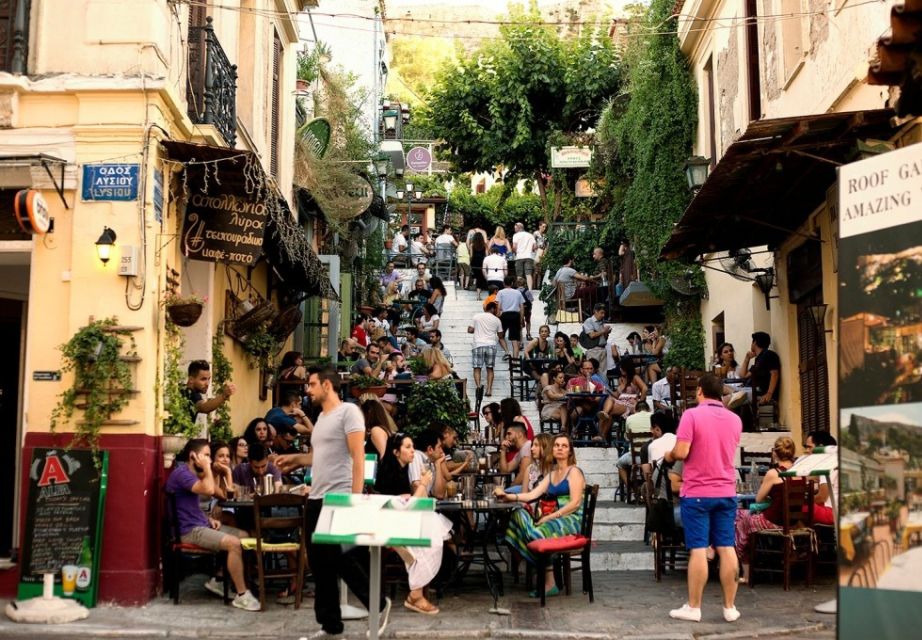
The route continues into Plaka, one of the city’s best-known central districts. Adrianou Street is lined with shops selling Greek products such as ouzo, olive oil, sponges, icons, leather sandals, and bags.
This part of the walk is practical as well as scenic. You can get ideas for gifts, learn which products are linked to Greek daily life, and ask your guide about what is worth buying. The shops are aimed at visitors, so this is not a purely local market experience, but the products give you a more tangible connection to Greece than another row of postcard racks.
You also get a change of pace after the ancient walls and archaeological talk. Plaka brings you back to the living city, where people shop, eat, and move through streets that still sit beside major monuments. The route does not treat Athens as a collection of isolated ruins. It shows how old sites share space with businesses and neighborhoods.
A Greek coffee or soft drink is included, but other drinks and lunch are not. There is no meal stop built into the short itinerary, so eat beforehand or plan lunch after the walk.
Hadrian’s Arch and the Temple of Olympian Zeus

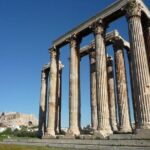
At Diogenis Square, you walk beneath the Acropolis walls and see Hadrian’s Arch. The Roman monument honors Emperor Hadrian, one of the best-known rulers connected with Athens after the city’s classical period.
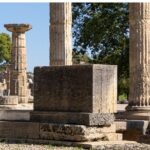
The arch is especially useful for understanding Athens as a city shaped by more than one era. Behind it are the remains of the Temple of Olympian Zeus, also known as the Olympieion. The surviving columns show the scale of the project and help connect Roman Athens with the older Greek world.
The route lets you view the Temple of Olympian Zeus area, but entrance fees are not included. As with the Acropolis, you should not assume that the tour includes access to the archaeological site itself. Your guide provides the setting and explanation from the route, while a separate ticket and visit would be needed for a closer look inside.
This is one of the tour’s stronger transitions. You move from Acropolis-era Athens to Roman Athens without needing a long lecture or a separate transfer. A good guide can make those changes easy to follow, especially if you are interested in how power and architecture shifted over time.
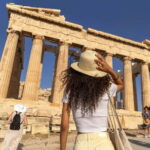


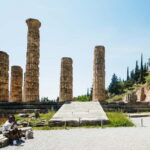
The National Garden and Zappeion on the way to the stadium

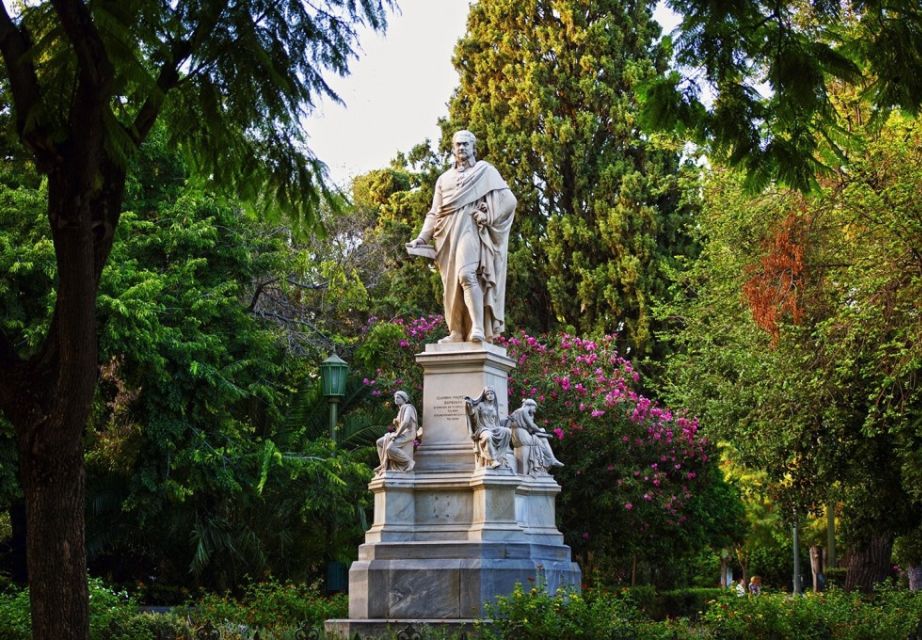
From the Temple of Olympian Zeus, the walk passes the National Garden and Zappeion. These stops offer a break from dense streets and stone ruins while keeping you close to central Athens.
The route then reaches the Panathenaic Stadium, built from white marble. It is closely tied to the first modern Olympic Games and also to the 2004 Olympic marathon, which ended here. That connection gives the stadium a wider appeal than an ancient-site visit alone.
You can think of the stadium as a bridge between ancient athletic traditions and the modern international Olympics. The tour includes a guided visit to the stadium area, but entrance fees are not included, so confirm what you want to see inside and plan for a separate ticket if needed.
The stadium is also one of the route’s more distinctive stops. Many Athens tours focus heavily on the Acropolis and nearby ruins. Adding the Panathenaic Stadium gives you a clearer picture of how Greece’s ancient past has been used and remembered in modern times.
Kolonaki and the city that keeps moving
The final part of the walk shifts toward Kolonaki, the center of present-day Athens. Here you see streets where locals shop, meet, and go about ordinary city life. The modern architecture and commercial rhythm provide a useful contrast to the ancient monuments earlier in the morning.
I like this ending because it prevents the tour from becoming a museum circuit. Athens is not frozen around the Acropolis. It is also a modern capital with neighborhoods, offices, cafés, shops, and changing styles. Kolonaki gives you a better sense of the city you will continue exploring after the tour ends.
The walk finishes at the Academy of Athens. From there, you can continue exploring on your own, or ask your guide for directions back to your hotel. The endpoint is helpful if you want to keep sightseeing rather than return immediately to Syntagma.
What the private format adds
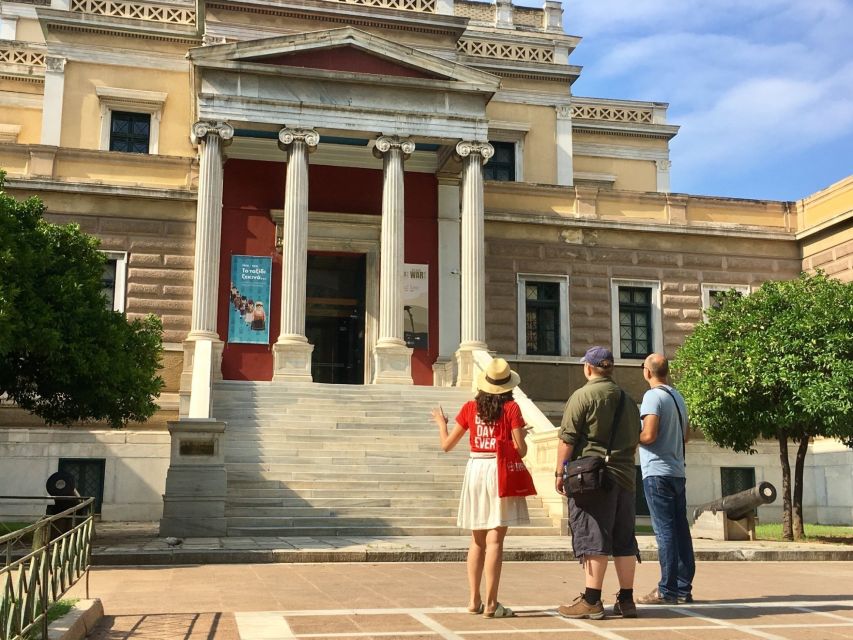
A private group is the main reason to consider the $280 per-person price. That cost is high for a 2.5-hour walk if you are comparing it with a large group tour, especially since transport, food, and entrance fees are extra. For a couple or small group, though, the value comes from personal attention and the ability to ask for more of what interests you.
You can focus on Greek mythology, architecture, ancient history, modern Greek history, or daily life. One guide, Babis, was praised for his passion for Athens and his ability to connect historical facts with the city around him. Another guide described in the booking feedback had several degrees, including a master’s degree in tourism, and handled questions about mythology, architecture, and modern Greece with ease.
Those details suggest that guide quality is central to the experience. The route itself is easy to follow, but the explanations are what turn a series of outside views into a useful introduction. Since guides can vary, remember that Babis is an example of a guide who has led the tour, not a guarantee that he will be assigned to your booking.
The private setting also helps families and mixed-interest groups. Children under six can join free, and the tour is described as child-friendly. Still, the walk packs several major areas into a short period, so you should be ready for steady walking and outdoor sightseeing.
Timing, clothing, and practical limits
The tour begins at 9:30 and lasts 2.5 hours. That makes it a good first morning in Athens. You get oriented, see several central sights, and finish with plenty of time for a separate Acropolis visit, lunch, or more sightseeing.
Wear comfortable shoes and dress for walking outdoors. Modest clothing is important if you enter churches during your wider Athens plans, with knees and shoulders covered. This specific route is mainly outdoors and does not include an interior Acropolis visit, but respectful clothing remains a smart choice in Greece.
The tour includes an English-speaking live guide and a Greek coffee or soft drink. Lunch, extra drinks, metro transport, and entrance fees are not included. Build those costs and plans into your day before booking, particularly if you want to enter both the Acropolis and the Panathenaic Stadium.
The operator describes the tour as carbon neutral and is a B Corp certified company committed to using travel for social and environmental good. That will not change the route itself, but it may matter if you prefer a company with a stated effort to reduce the impact of its tours.
Free cancellation is available up to 24 hours before the start time, and you can reserve now and pay later. These terms give you some flexibility, but check the final booking conditions when you reserve.
Who should book this Athens walk
I would choose this tour if you want a fast, private orientation to central Athens and value conversation more than a long interior visit. It works especially well for first-time visitors who want the city’s main markers connected into one story.
It also suits couples, families, and small groups with different interests. One person can ask about the Olympics, another about modern Greek politics or architecture, and the guide can adjust the conversation. The private format is most useful when you are willing to take advantage of that freedom.
I would look elsewhere if your main goal is an in-depth Acropolis visit. You will need a separate ticket and more time for that. I would also hesitate if you want a relaxed food tour, a long shopping stop, or a quiet archaeological study. This is a brisk introduction, not a full-day exploration.
Should you book Private Athens: Must See Spots with Hidden Gems?
Book it if you want to cover Syntagma Square, the Evzones, the Acropolis area, Plaka, Hadrian’s Arch, the Temple of Olympian Zeus, Panathenaic Stadium, Kolonaki, and the Academy in one well-planned morning. The private guide and local viewpoint are the real value, while the route’s mix of ancient and modern Athens keeps the experience from feeling repetitive.
Skip it if you expect Acropolis entry to be included or if $280 per person feels too steep for a short walking tour with extra costs. For the right small group, though, this is a smart way to get your bearings, ask direct questions, and save the rest of your Athens time for the places you want to explore at a slower pace.
FAQ
Where does the tour begin?
Meet your English-speaking guide at the exit of the Syntagma metro station in Syntagma Square, by the fountain in the middle of the square. The stated meeting time is 9:30.
Does the tour go inside the Acropolis?
No. The route walks around the Acropolis walls and nearby ancient roads, but an interior Acropolis visit must be arranged separately. Entrance fees are not included.
Is the changing of the guard included?
Yes. The tour stops at the Tomb of the Unknown Soldier in Syntagma Square, where you can watch the Evzones and hear an explanation of the ceremony and traditions.
Is transportation included?
No. The route uses the metro between Syntagma and Acropolis stations, but transport is not included in the price.
What does the tour price include?
The price includes an English-speaking guide and a Greek coffee or soft drink. Lunch, other drinks, transport, and entrance fees are not included.
Is the tour suitable for children?
Yes. It is described as child-friendly, and children under six may join free of charge.