REVIEW · RHODES
Private Tour: Discover the Secret World of Olives in Afantou
Book on Viator →Bookable on Viator
The most unusual part of this Afantou experience is its olive arboretum, a project described as the only one of its kind in Greece. Instead of seeing one olive grove and hearing a standard farm talk, you walk among about 150 different olive trees while learning how varieties, harvest methods, and oil quality differ.
I like the sea-view welcome on the terrace, and I like that the visit becomes a hands-on workshop. You help prepare olive-based delicacies and another recipe using olive oil, rather than simply watching a demonstration. The main consideration is the farm setting: expect animals, insects, uneven outdoor ground, and casual surroundings rather than a polished museum.
In This Review
- Key points at a glance
- A sea-view welcome at the Afantou farm
- Walking through 150 olive varieties
- How Rhodes harvests olives and makes oil
- Herbs, flowers, fruit trees, and farm animals
- Turning olives and oil into food
- What the three-hour schedule means for your day
- Is $62.48 good value for a private farm visit?
- Who will enjoy this Afantou olive tour?
- Small souvenirs and useful ideas to take home
- Should you book the Secret World of Olives in Afantou?
- FAQ
- Where does the olive farm tour begin?
- What time does the experience start?
- How long does the olive farm experience last?
- Is this a private activity?
- Is parking available at the farm?
- What happens if bad weather cancels the tour?
Key points at a glance
- 150 olive trees in one arboretum: Compare different tree and olive varieties while learning why they matter.
- A 4 p.m. start: The three-hour timing gives you an afternoon activity that finishes back at the farm meeting point.
- Emma leads a personal visit: This is a private experience, so only your group participates.
- Hands-on food preparation: Make olive delicacies and an olive oil recipe, with the instructions sent home afterward.
- More than an olive farm: Meet donkeys, dogs, cats, chickens, and ducks, and see herbs, flowers, fruit trees, bees, and butterflies.
- Seasonal olive preparation: From mid-September through the end of November, you can also prepare olives.
A sea-view welcome at the Afantou farm
The experience begins at 4 p.m. at the farm in Afantou, at 853F+R7X, Afantou 851 03. You arrive at the gate, where free parking is available in front, and the tour ends at this same meeting point.
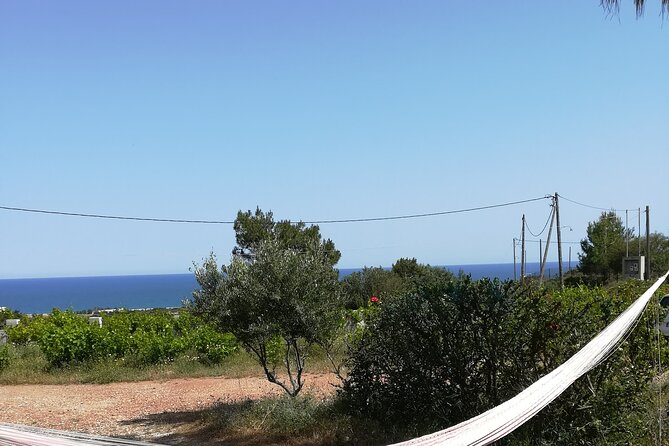
The first stop is the terrace, with a welcoming drink and a view toward the sea. This is a useful beginning because it gives you time to settle in before walking through the farm. The setting also makes clear that this is not a city-based food class moved outdoors. It is a working rural property with plants, animals, and open-air spaces.
You should wear casual clothes and shoes suitable for a farm. The setting includes dogs, cats, donkeys, chickens, ducks, bees, and butterflies. None of that sounds difficult, but it matters if you prefer highly controlled indoor activities or have a strong fear of insects or animals.
Because the tour is private, the pace can feel more personal than a large group excursion. You can ask questions about the trees, oil, recipes, or harvesting without trying to catch a guide’s attention across a crowd. Emma is named as the guide, and one of the strongest parts of the experience is the direct, personal way she introduces her small olive farm.
You can also read our reviews of more private tours in Rhodes

Walking through 150 olive varieties
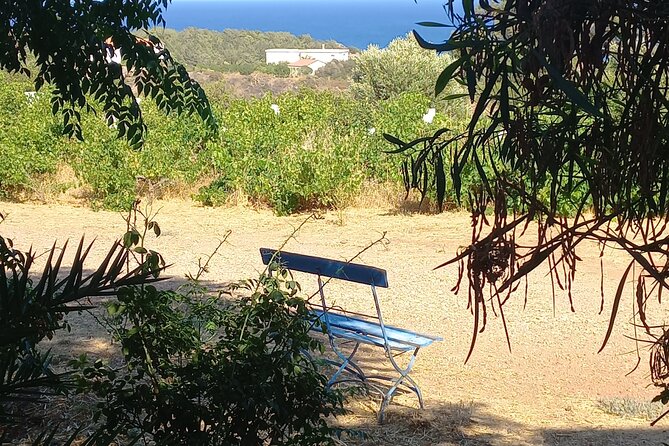
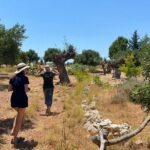
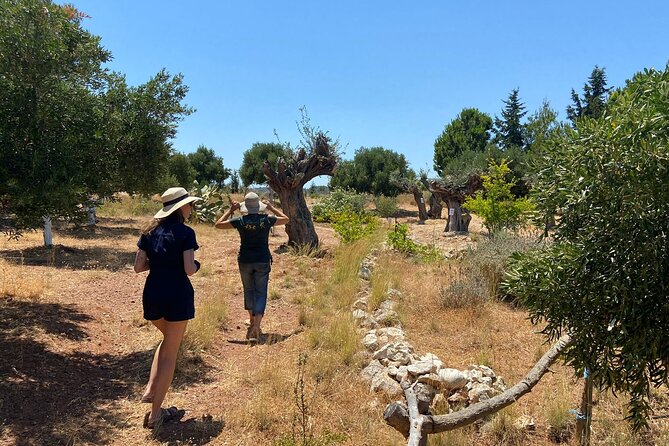
The olive grove is the heart of the visit. You learn about roughly 150 trees and the different varieties of olives they produce. That number gives the tour more substance than a quick stop beside a single row of familiar trees.
Olive trees can look much alike at first glance, especially to someone visiting Greece for the first time. A guided walk helps you notice the differences in the trees and olives, and it connects those details to the finished oil. You are not simply told that olive oil is important in Greek cooking. You get a clearer idea of how the fruit, the tree, the harvest, and the production process fit together.
The farm’s olive arboretum project is a particularly unusual feature. It is presented as the only olive arboretum in Greece, giving the visit a research and preservation angle as well as a tourism angle. You can think of it as a living collection of olive varieties, not just a grove planted for one harvest.
This section will suit anyone who likes food with a sense of place. You learn about olive varieties in the same environment where they grow, rather than from labels on bottles in a shop. Families may also find the different trees and farm animals more engaging than a long indoor lecture.
How Rhodes harvests olives and makes oil
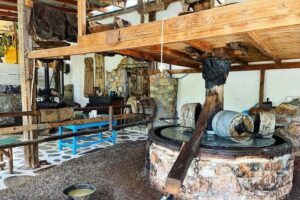
The tour covers the history of olive harvesting in Rhodes and explains how olive oil is made. The emphasis is practical. You learn how olives move from tree to oil and receive advice on using the finished product.
That advice can be useful after you leave the island. Many visitors buy olive oil in Greece, but it is easy to choose a bottle based only on its label or price. A conversation about how to use oil gives the tasting and food preparation a clear purpose. You can ask questions that matter in your own kitchen, such as how to use the oil in a recipe or how it fits into everyday meals.
The tour also offers an introduction to olive oil exhibitions and contests. You receive tips about what to look for at one of these events and how olive oil is assessed. This is a nice extra because it moves beyond the familiar travel message that olive oil is simply a local specialty. You get a look at the language and standards used when oils are displayed and judged.
Do not expect a formal professional certification course. The experience lasts about three hours and combines the grove, farm life, food preparation, and souvenirs. Its strength is the broad picture and personal guidance, not technical training for oil producers.
Herbs, flowers, fruit trees, and farm animals
Olives are the main subject, but the farm offers a wider look at rural life in Rhodes. You learn about local herbs and flowers, and you see many different fruit trees. The mix helps you understand how an olive property can function as a small ecosystem rather than a single-crop field.
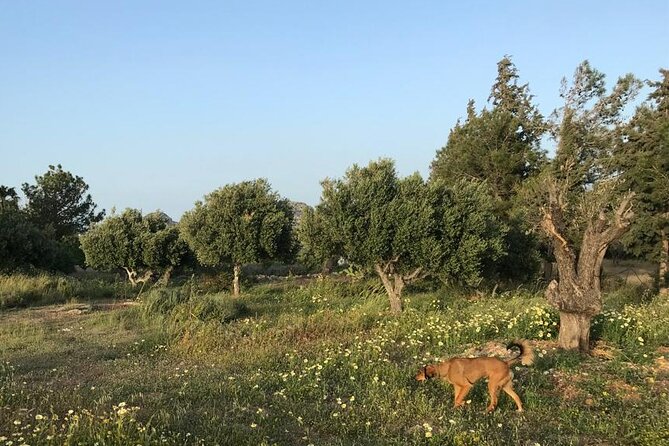
The animal life adds variety to the walk. You meet donkeys and may see dogs, cats, chickens, and ducks around the property. Bees and butterflies are also part of the farm setting. For children, these details may be as memorable as the olive trees. For adults, they add a more grounded sense of place to the food discussion.
This is also where you should keep expectations realistic. A farm is not arranged like a theme park. Animals may move around, the ground may be uneven, and the visit takes place outdoors. Casual clothing is specifically recommended, and that advice is worth following.
The farm’s mix of herbs, flowers, fruit trees, and animals makes the tour a good fit for people interested in small-scale agriculture and local food. If your only goal is to taste several premium oils in a quiet indoor room, this may feel less focused than you want.
Turning olives and oil into food
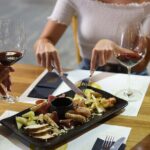
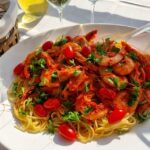
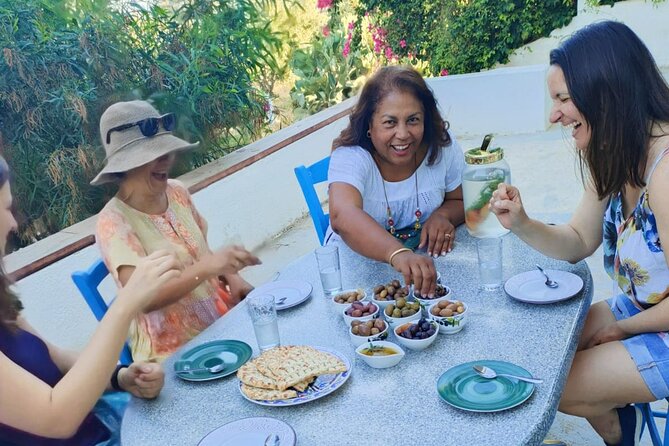
The workshop is one of the most appealing parts of the experience. You help prepare olive delicacies and make another recipe using olive oil. This changes the visit from a talk into something you can take part in directly.
Hands-on cooking gives you a better sense of how olives and oil are used in daily food. You are not only tasting a finished product. You are handling ingredients and seeing how olive oil works in a recipe. The activity is likely to be especially useful if you enjoy bringing food ideas home from a trip.
The recipes are sent to you afterward, so the experience does not end at the farm gate. You can repeat the dishes at home and connect them with the memories of Rhodes. That practical follow-up adds value to the tour price, since you receive more than a one-time tasting.
From mid-September through the end of November, the program also includes preparing some olives. This seasonal detail matters. If you visit in that period, you may see a more direct connection between the harvest season and the food on the table. Outside those months, the rest of the workshop still applies, but olive preparation is not listed as part of the program.

What the three-hour schedule means for your day
A three-hour activity beginning at 4 p.m. takes up a manageable part of your afternoon and early evening. It can work well after a slower morning in Rhodes, but you should leave enough time to reach Afantou without rushing.
The tour begins and ends at the farm. There is free parking at the gate, and the location is near public transportation. The information provided does not specify a pickup service, so plan to reach the meeting point on your own.
A mobile ticket makes entry simple. Confirmation is received at booking, which is useful when you are arranging several outings during a stay in Rhodes. The activity is private, so the schedule is built around your group rather than a large shared coach party.
The average booking lead time is about 35 days. That does not mean you must book that early, but it is a sensible warning for travelers planning a busy summer visit. Private activities with a fixed start time can fill before the more flexible sights do.
The tour requires good weather. If poor conditions cause a cancellation, you are offered another date or a full refund. You can also cancel for a full refund up to 24 hours before the start time. Changes or cancellations inside that 24-hour window are not accepted, so check the local time and your plans carefully.
Is $62.48 good value for a private farm visit?
At $62.48 per person, this is not the cheapest way to spend three hours in Rhodes. The value comes from the combination of a private guide, a farm visit, a sea-view welcome, food preparation, olive education, seasonal activity, and souvenirs.
A large group visit might offer a shorter explanation and a tasting at a lower price. Here, you are paying for personal attention and a wider range of activities. The recipes sent afterward also give the experience some use after your holiday.
The price makes the most sense for a couple, family, or small group that enjoys food and wants a local setting. It is less compelling if you want a fast stop, a major archaeological site, or a formal wine-and-oil tasting with a long list of samples.
The private format is important. With only your group participating, you can spend more time on the topics that interest you. A family may focus on animals and recipes, while food enthusiasts may ask more about varieties, harvesting, and oil contests.
Who will enjoy this Afantou olive tour?
I would recommend this experience to you if you like meeting local producers, learning through food, and seeing how a farm works. It suits people who prefer a personal visit over a standard sightseeing circuit.
It also works well for families, provided everyone is comfortable outdoors around animals and insects. The donkeys, chickens, ducks, cats, dogs, bees, and butterflies give younger visitors plenty to notice between the olive-focused explanations.
Couples may appreciate the terrace and sea view, especially with the late-afternoon start. The private format gives the visit a relaxed feel, and the workshop provides a shared activity instead of another passive stop.
You should think twice if you need a fully accessible, indoor, or weather-proof experience. The farm setting may include uneven ground, and the activity depends on good weather. The supplied details say most people can participate, but they do not provide specific information about wheelchair access or the exact walking conditions.
Small souvenirs and useful ideas to take home
The final souvenirs are a simple but welcome ending. They give you a physical reminder of the farm and the olive theme, while the recipes give you something more useful: a way to continue the food experience at home.
I like that the visit does not stop with a bottle or a quick sample. You leave with a better understanding of olive varieties, the harvest in Rhodes, oil production, and how to use olive oil in cooking. The practical tips about exhibitions and contests are also unusual for a short farm outing.
The strongest part of this experience is its variety. You walk among olive trees, hear about regional agriculture, meet farm animals, prepare food, and take home recipes. The possible weakness is the same thing: people who want a tightly focused tasting may find the program broad rather than specialized.
Should you book the Secret World of Olives in Afantou?
Book it if you want a private, hands-on look at Rhodes olive culture and you enjoy a relaxed farm setting. The olive arboretum, personal guidance from Emma, and cooking workshop give it more character than a basic grove photo stop.
Skip it if your schedule is tight, you dislike outdoor farm conditions, or your main interest is a formal technical tasting. At $62.48 per person, the experience earns its price through privacy, variety, and the recipes and souvenirs you take away.
For most food-minded visitors with an afternoon to spare, this is a thoughtful choice. Wear casual clothes, arrange your own route to Afantou, and book ahead if your Rhodes dates are fixed.
FAQ
Where does the olive farm tour begin?
The tour begins at 853F+R7X, Afantou 851 03, Greece, and ends back at the same meeting point.
What time does the experience start?
The start time is 4 p.m.
How long does the olive farm experience last?
The tour lasts approximately three hours.
Is this a private activity?
Yes. Only your group participates in the activity.
Is parking available at the farm?
Yes. Free parking is available in front of the gate. The location is also near public transportation.
What happens if bad weather cancels the tour?
The experience requires good weather. If it is canceled because of poor weather, you can choose a different date or receive a full refund.