REVIEW · RHODES
Private Tour in The Jewish Quarter & Grand Master’s Palace
Book on GetYourGuide →Operated by MBC Travel Rhodes Experts · Bookable on GetYourGuide
Rhodes Old Town is famous for its Crusader walls and knightly streets, but this tour begins with a less familiar story: the Jewish community that lived inside those walls for hundreds of years. You’ll walk through La Juderia, visit the oldest synagogue in Greece, and then follow the city’s medieval spine to the Palace of the Grand Master.
I like the private format, since your guide can adjust the pace and explain details that are easy to miss in a large group. I also like the pairing of the Jewish Quarter with the medieval city, giving you two very different chapters of Rhodes in four hours.
The main thing to check before booking is the palace visit. The entrance fee is not included, and one past group reported seeing the palace only from outside despite being told to bring cash for admission. The tour is also entirely on foot, so comfortable shoes, a hat, and sunscreen matter.
In This Review
- Key points to know before you book
- Why start with Rhodes’ Jewish Quarter
- Alhadeff Park and the streets named for a family
- The Square of the Martyred Jews and its seahorse fountain
- The Holocaust Memorial and Kahal Kadosh Synagogue
- The Jewish Museum of Rhodes
- From Jewish Rhodes to the city of the Knights
- Entering the 14th-century Palace of the Grand Master
- What the $436 private price buys you
- Timing, walking, and what to bring
- Who should choose this Rhodes tour
- Should you book the Jewish Quarter and Grand Master’s Palace tour?
- FAQ
- How long is the private Rhodes tour?
- What languages are available?
- Is the Palace of the Grand Master entrance included?
- Is this a private group tour?
- What should I bring?
- Can I cancel the tour for a full refund?
Key points to know before you book
- La Juderia reveals a quieter side of Rhodes Old Town: Narrow lanes, family names, memorials, and religious sites tell a story often missed on a standard medieval-city walk.
- Kahal Kadosh Synagogue is a major stop: It is described as the oldest synagogue in Greece and gives the Jewish Quarter a living cultural focus.
- The tour connects two eras: You begin with Jewish Rhodes and finish among the Knights of St. John on the Street of the Knights.
- The Palace of the Grand Master costs extra: Allow €9 for an adult ticket or €5 for a reduced ticket, and bring cash as requested.
- The private guide is the real value: Guides such as Nikos, Ioanna, Dimitri, and Izzy have been praised for clear explanations, kindness, and flexibility.
- Four hours means steady walking: One past group found the tour closer to three hours, so confirm the planned palace entry and timing when you meet your guide.
Why start with Rhodes’ Jewish Quarter
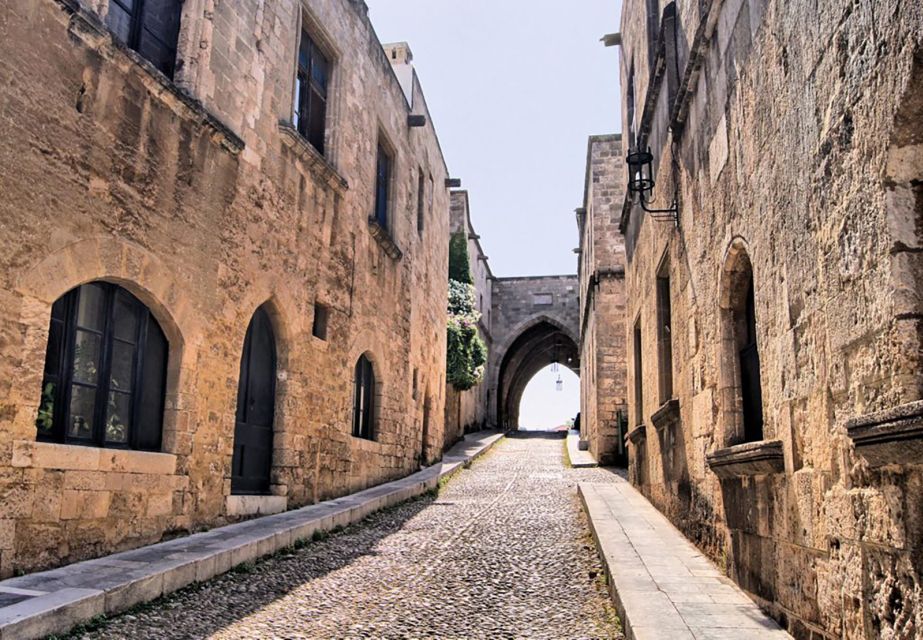
Most first visits to Rhodes Old Town head straight for the Knights’ quarter. This tour takes a better storytelling route by starting in La Juderia, the Jewish Quarter, where the city’s past feels more personal and less monumental.
You’ll walk narrow, winding lanes with a guide who explains how Jewish families made their home within the medieval walls. The value here is not just seeing old buildings. It is learning how a community fit into the daily life of a fortified city shaped by trade, religion, war, and changing rulers.
The quarter is compact, but the subject is broad. Your guide connects street names, public spaces, religious buildings, and memorials to the Jewish people who lived in Rhodes across many centuries. Without that context, these lanes can look like just another attractive part of Old Town. With it, the area becomes easier to read.
I would choose this tour if you have already seen the main harbor and want a more focused look at Rhodes. It is also a strong choice if you care about Jewish heritage, wartime remembrance, or the way different communities shaped one city.
You can also read our reviews of more private tours in Rhodes

Alhadeff Park and the streets named for a family
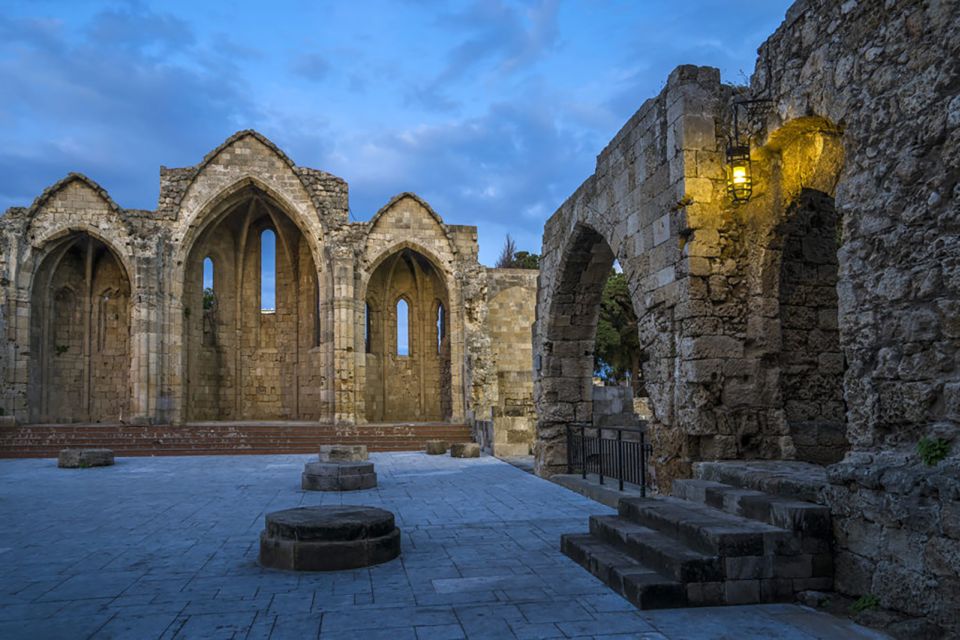
The first landmarks include Alhadeff Park and Alhadeff Street. Both are linked to the prominent Alhadeff family, giving your guide a useful way to explain the place of established Jewish families in Rhodes.
Street names can seem like small details, but here they help connect the modern town to people rather than just dates. As you walk, listen for the details your guide adds about the family and the wider Jewish community. The tour description promises local interpretation, and that is important because there are no long museum labels along every lane to explain what you are seeing.
The walking itself is part of the experience. The old quarter has tight passages and an irregular medieval layout, so you should expect a stroll rather than a series of formal stops. Wear shoes with good grip, especially if you dislike uneven historic paving.
Because this is a private group of up to four, you can ask for clarification without holding up a busload of people. That makes a difference on a subject with names, religious terms, and several periods of history.
The Square of the Martyred Jews and its seahorse fountain
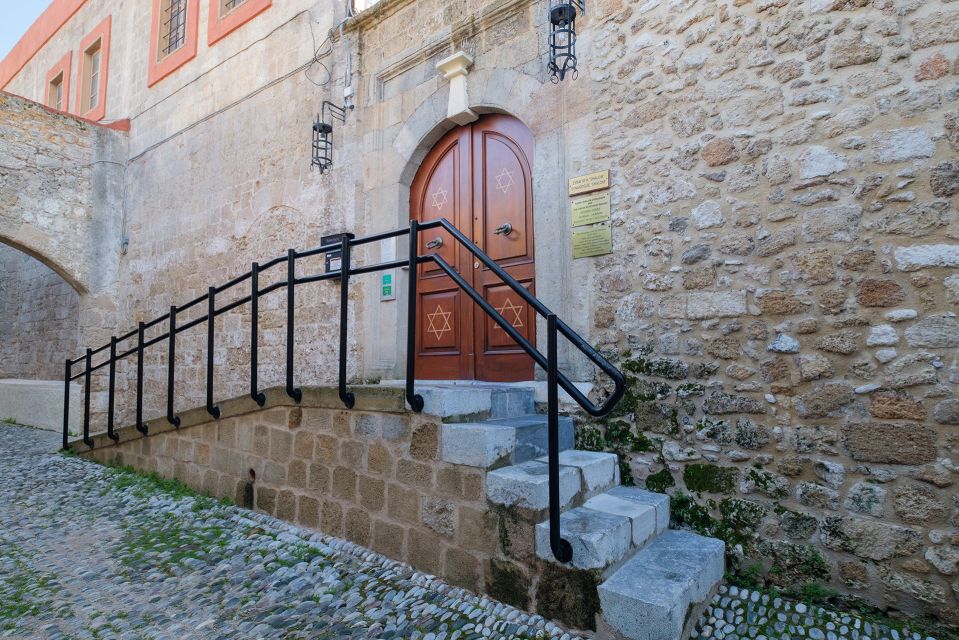
The Square of the Martyred Jews offers a more solemn part of the route. Its seahorse fountain is a distinctive detail, while the square itself points to the suffering and loss experienced by Rhodes’ Jewish population.
This is where the tour’s tone changes. The early streets and family references introduce a community; the square and memorials remind you that this community was later devastated. I appreciate tours that give such places enough meaning without treating them as quick photo stops.
Your guide is meant to explain the history behind the square, not simply point it out. The quality of that explanation matters greatly here. Past experiences have varied by guide and language. English-language guides received especially strong praise, while one Spanish-language group felt the information was thinner than expected.
If you book in Spanish, French, German, Italian, or Dutch, it is sensible to confirm the language and level of detail you want before the walk begins. The activity is offered in all six languages, but the individual guide assigned to your group will shape the experience.
The Holocaust Memorial and Kahal Kadosh Synagogue
The Holocaust Memorial is another important stop in La Juderia. It gives the route a direct connection to the Jewish community’s wartime story and keeps the visit from becoming only an architectural walk.
You should expect a serious, reflective section here. The memorial is not included as a decorative landmark. It helps you understand the scale of what happened to Rhodes’ Jewish population and why the quarter’s history cannot be separated from remembrance.
The tour also visits Kahal Kadosh Synagogue, identified as the oldest synagogue in Greece. For many people, this will be the central Jewish heritage stop. A synagogue gives the story a physical and spiritual center, while the surrounding lanes show where community life took place.
Access details are not specified, so do not assume that every interior area is always open or that the visit will work like a long museum tour. Your guide can explain what you are seeing and how it fits into the history of Rhodes. The private format gives you room to ask questions about religious customs, the building, or the community connected with it.
The Jewish Museum of Rhodes
The Jewish Museum adds another layer to the quarter. After walking through streets and public spaces, you get a place where objects and exhibits can help make the story more concrete.
I find this sequence useful: street, memorial, synagogue, then museum. It moves from the broad setting to individual evidence. You begin by seeing where people lived, then consider loss and remembrance, then visit a religious landmark, and finally spend time with museum material.
The description does not specify the museum’s size, exact exhibits, or how long you stay inside. Plan for it as one part of the walking tour rather than a separate half-day museum visit. If you enjoy reading every label, you may want to ask your guide how much time is available at this stop.
The private group also helps here. You can spend more time on an item that catches your interest, provided the rest of the itinerary allows it.





From Jewish Rhodes to the city of the Knights
After the Jewish Quarter, the tour shifts to the medieval history of Rhodes. Your guide explains how battles and sieges involving the Knights of St. John shaped the town you see today.
This change of subject works well because it shows that Rhodes Old Town is not one single story. The walls, lanes, religious buildings, and grand public structures were formed over different periods and used by different communities. The second half gives you the political and military setting behind the medieval city.
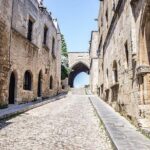
The route includes medieval monuments and the Street of the Knights. This is one of the best-preserved medieval streets in Europe, and it is easy to understand why once you are walking along its long, stone-lined route.
The street can feel grand even when it is crowded, but a guide helps you look beyond the façades. You’ll hear about the Knights of St. John and the role the street played in the medieval town. Rather than rushing through for photographs, pause to take in the heavy stone buildings and the way the street leads you toward the upper part of the Old Town.
This is also where the four-hour walking schedule becomes real. The Jewish Quarter and medieval center are both compact on a map, but historic paving, stops, explanations, and the palace can make the walk tiring. If someone in your group has limited stamina, mention it at the start.
One family traveling with a 77-year-old parent found that guide Nikos adjusted the experience with care. The company also arranged a short scenic drive for that group. That extra arrangement is not part of the stated tour, so do not count on it automatically, but it suggests that it is worth discussing mobility concerns in advance.
Entering the 14th-century Palace of the Grand Master
The tour finishes at the Palace of the Grand Master, a 14th-century fortress-like residence that once belonged to the leader of the Knights of St. John. Today, it operates as a museum.
Inside, you can expect medieval furniture, detailed mosaics, and archaeological displays from Rhodes. This is the most formal museum stop of the route, and it gives the medieval section a strong finish. After hearing about the Knights and the city’s defenses, you get to see the setting connected with their rule.
The entrance ticket is extra: €9 for adults and €5 at the reduced rate. The tour information specifically asks you to bring cash. For a group of four adults, that adds €36 to the cost, so include it when comparing the total price.
There is one practical wrinkle. A past group reported that the guide finished with an exterior visit rather than taking them inside, even though the instructions referred to the admission ticket. That may have been a timing, access, or communication issue, but I would ask clearly at the beginning: Is palace entry included in today’s walking plan, and how much time will we have inside?
This question matters because the palace is not a minor add-on. It is the final destination and one of the main reasons to choose this experience. If you only see the outside, the tour will feel different from the one described.
What the $436 private price buys you
The price is $436 per private group of up to four people. At full capacity, that works out to $109 per person before the palace admission. For two people, the per-person cost is much higher, but you are paying for exclusivity rather than a seat in a large group.
I think the price makes the most sense for a family or small party that wants a private guide and a focused subject. You get a licensed guide, a Jewish Quarter walk, and a medieval-city walk, all in one half-day. The guide’s ability to adjust explanations and pace is the main benefit.
It is less attractive if you mainly want to wander independently or only care about the Palace of the Grand Master. In that case, a private four-hour tour may be more than you need. The price also does not include admission to the palace, so compare the full cost rather than stopping at the headline figure.
The strongest guide experiences came from people who worked with Nikos, Ioanna, Dimitri, Izzy, and other named guides. Nikos was praised for both his explanations and his kindness, while Ioanna was described as professional and flexible. Izzy was singled out for adding extra information that made the tour more interesting.
Guide quality can vary, as it does with any walking tour. One Spanish-language experience received only an average assessment because the information felt limited, despite the guides being pleasant. If detailed interpretation is your priority, confirm your preferred language and ask what the tour will cover.
Timing, walking, and what to bring
The published duration is four hours, with starting times depending on availability. The tour is entirely a walking experience, not a coach excursion. Bring comfortable walking shoes, sunscreen, and a hat.
Rhodes can be hot, and much of the value comes from moving through open streets and old stone lanes rather than sitting indoors. Carry water, even though it is not listed as a required item. That is simple common sense for a four-hour walk in the Greek sun.
One past group said the tour lasted closer to three hours than four. I would not treat that as the normal schedule, but I would confirm the expected finish time if you have a ferry, cruise departure, meal reservation, or another timed visit afterward.
The private format gives you the best chance of setting a comfortable pace. Still, do not confuse private with effortless. Old Town streets can be uneven, and the route covers two substantial historic areas before reaching the palace.
Free cancellation is available up to 24 hours before the start, and you can reserve without paying immediately. Those terms are helpful if your Rhodes schedule is still moving, but the more important planning point is the palace admission and the walking requirement.
Who should choose this Rhodes tour
I would recommend it most strongly to:
- Small families who want a guide focused on their questions
- Visitors with an interest in Jewish heritage and Holocaust remembrance
- First-time visitors who want both Jewish and medieval Rhodes in one outing
- People who prefer historic context to a quick checklist of monuments
- Private groups that can comfortably walk for several hours
It may not suit you if you want a relaxed, vehicle-based tour, a short introduction to Old Town, or a guaranteed long visit inside the palace without confirming that detail first.
It is also worth thinking about the emotional tone. The Jewish Quarter and Holocaust Memorial are meaningful but serious. The tour is not simply a pleasant stroll through old streets. It asks you to consider both community life and destruction before shifting to the military world of the Knights.
Should you book the Jewish Quarter and Grand Master’s Palace tour?
Book it if you want Rhodes Old Town explained through two connected but distinct stories. The combination of La Juderia, the synagogue, the Jewish Museum, the memorials, the Street of the Knights, and the palace gives you a fuller picture than a medieval-only walk.
The private group is the main reason to pay the higher price. You can ask questions, request a gentler pace, and get more personal attention than on a standard group outing. Guides such as Nikos, Ioanna, Dimitri, and Izzy have shown the kind of warmth and flexibility that can turn a long walk into a very good family experience.
Before you commit, confirm three things: your guide’s language, the expected duration, and whether the Palace of the Grand Master will be entered. If those points are clear, and you are prepared for four hours on foot plus the €9 adult palace ticket, this is a thoughtful choice for seeing the less familiar side of Rhodes.
FAQ
How long is the private Rhodes tour?
The stated duration is four hours. Starting times depend on availability, and one past group reported a shorter experience, so confirm the expected timing with your guide.
What languages are available?
The live guide is available in Spanish, Dutch, English, French, German, and Italian.
Is the Palace of the Grand Master entrance included?
No. Admission costs €9 for adults and €5 at the reduced rate. Bring cash for the ticket.
Is this a private group tour?
Yes. The booking is for a private group of up to four people.
What should I bring?
Wear comfortable walking shoes and bring sunscreen and a hat. You should also bring cash for the Palace of the Grand Master entrance fee.
Can I cancel the tour for a full refund?
Yes. You can cancel up to 24 hours in advance for a full refund. You can also reserve now and pay later.