REVIEW · ATHENS
Santorini Dinner Class with Margarita in Athens
Book on Viator →Operated by IT IS GREEK · Bookable on Viator
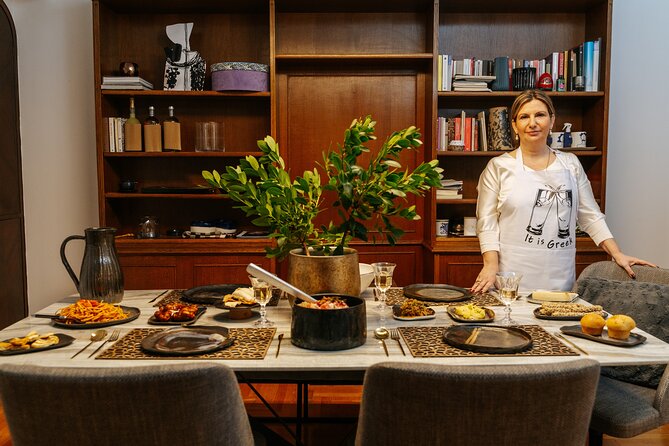
Santorini arrives in Athens by way of Margarita’s elegant home, where a small group spends about three hours cooking, tasting, and sharing a full island-style meal. The setting feels more personal than a standard restaurant visit, and the menu gives you a useful introduction to Santorini’s distinctive ingredients.
I especially like the chance to learn several dishes rather than simply sit down to dinner, and I like the full selection of Santorini wines, from Assyrtiko and Athiri to Mandilaria and Mavrotragano. The warm social format is another strength. Past visitors praised the friendly atmosphere, interactive cooking, and the feeling of leaving with new friends.
The main consideration is the price: at $272.09 per person, this is a costly four-hour evening, even with food, wine, and instruction included. It also starts at 7:00 pm and returns to the same central Athens meeting point, so it is best for visitors who want a special food-focused night rather than a budget meal or a sightseeing tour.
In This Review
- Key points to know before booking
- A Santorini evening without leaving Athens
- Meeting Margarita at 7:00 pm
- Five Santorini starters, each with a different character
- Learning Santorini garlic pasta
- Melitinia and the honey-almond finish
- Santorini wines from volcanic soil
- What the small group adds
- Is $272.09 a fair price?
- Booking details worth checking
- Who should book this Athens food experience?
- Should you book Santorini Dinner Class with Margarita?
- FAQ
- Where does the Santorini dinner class take place?
- What time does the experience begin?
- How long does the dinner class last?
- Does the activity end at the meeting point?
- Who hosts the experience?
- How many people can join?
- Is wine included?
- Is the activity offered in English?
- Can I cancel for a full refund?
Key points to know before booking
- Santorini cooking in central Athens: You explore the island’s food traditions without leaving the city.
- Margarita’s home setting: The experience takes place in the hostess’s elegant residence, not a regular cooking school or restaurant.
- Nine-course-style menu: The meal includes five starters, a pasta main course, and two desserts.
- Local island wines: Santorini varieties accompany the meal, including Assyrtiko, Athiri, Aidani, Mandilaria, and Mavrotragano.
- Small group size: No more than eight people allows for a more social and interactive evening.
- Useful cancellation window: You can receive a full refund if you cancel at least 24 hours before the 7:00 pm start.
A Santorini evening without leaving Athens
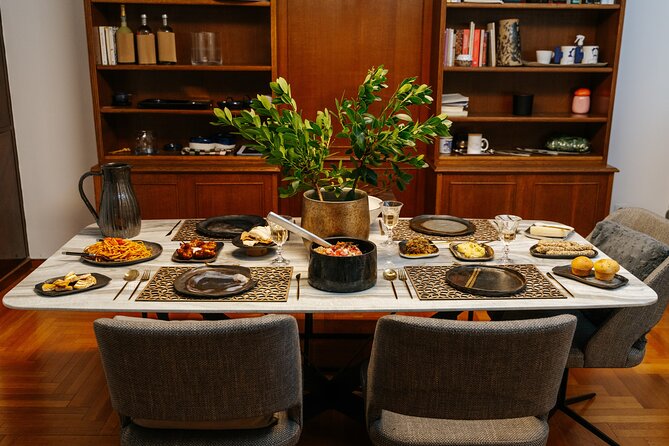
The clever idea here is simple: instead of taking a day trip to Santorini, you spend an evening learning about the island through its food. Athens provides the setting, but the menu takes you to the Cyclades, where volcanic soil, dry weather, local produce, and old family recipes shape the cooking.
That makes this more than a dinner reservation. You are introduced to ingredients that may be unfamiliar even if you already know Greek salad and feta. Santorini fava, white eggplant, tomato meatballs, chlorotiri, and melitinia all give you a more specific taste of the island.
Margarita hosts the experience in the home where she lives. That detail matters. A private residence creates a different rhythm from a commercial venue, with more room for conversation and a stronger sense that you are being welcomed into someone’s daily world.
The format is also well suited to a small social group. The maximum is eight people, so you are not being folded into a large cooking class with a crowd around one demonstration table. The available comments describe the cooking as interactive and fun, with time to exchange ideas and recipes.
A few more Athens tours and experiences worth a look


Meeting Margarita at 7:00 pm
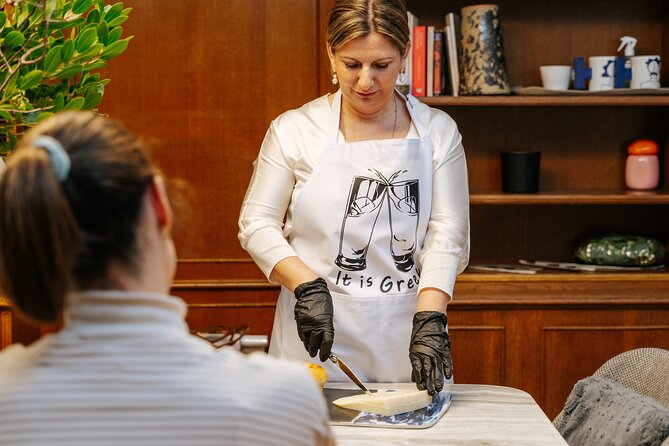
The meeting point is Akadimias 8, Athina 106 78, Greece. The activity begins at 7:00 pm and ends back at the same location, with the full experience lasting about four hours.
That timing works well if you have spent the day walking through Athens and want a seated evening activity. It is not a quick dinner. You should plan for a relaxed night that includes preparation, explanation, eating, and conversation.
The practical benefit of a fixed start and end point is that you do not need to arrange transportation between several venues. The location is near public transportation, and a mobile ticket is accepted. The activity is offered in English, which keeps the cooking instructions and food discussion accessible to English-speaking visitors.
The host’s name is Margarita, while one personal note connected with the experience thanks Magda and Yannis for their hospitality. The supplied information does not clarify their exact roles, so I would treat Margarita as the named hostess and focus on the home-cooking format rather than expect a formal restaurant team.
Five Santorini starters, each with a different character
The evening begins with a broad spread of starters. This is one of the best parts of the menu because you get to compare several small dishes instead of relying on one familiar Greek main course.
Chlorotiri is a local Santorini cheese made from goat’s or sheep’s milk. It has a strong, distinctive flavor, so this is not the mildest item on the table. If you like assertive cheeses, it gives you a quick sense of how island dairy products can differ from the feta served around Athens.
The smoked eggplant uses white eggplant, a Santorini variety valued for its natural sweetness. Smoking adds a savory note and turns a simple vegetable into a dish with more depth. I like this inclusion because it shows how Greek home cooking can make vegetables the center of attention.
Apochti is the menu’s Greek answer to carpaccio. Pork is processed through roasting with salt, vinegar, and herbs, giving it a seasoned, preserved character. It is a useful reminder that Santorini food is not limited to tomatoes, cheese, and olive oil. There is also a tradition of carefully treated meat with concentrated flavor.
The traditional Santorini fava with onions is one of the island’s signature foods. Despite the name, it is a purée made from yellow split peas rather than the broad beans many English speakers associate with fava. The onions provide contrast, while the smooth purée makes a gentle partner for the sharper cheese and smoked eggplant.
Then comes the tomato meatball, one of Santorini’s best-known appetizers. The recipe uses the island’s local tomatoes with basil and mint. Santorini’s dry growing conditions are part of the reason its tomatoes are so distinctive, and this dish puts their flavor at the front of the plate.
A Greek salad with feta, or Horiatiki, rounds out the starter course. It includes tomatoes, cucumbers, onions, olive oil, and oregano. This may be the most familiar dish of the night, but it provides a fresh pause between the stronger flavors of cheese, smoked eggplant, and seasoned pork.
The practical advantage of this menu is variety. You can taste the familiar Greek salad alongside foods that are more closely tied to Santorini. The possible drawback is volume. Five starters before the main course and desserts makes this a substantial meal, so arrive hungry but do not expect a light tasting menu.
Learning Santorini garlic pasta
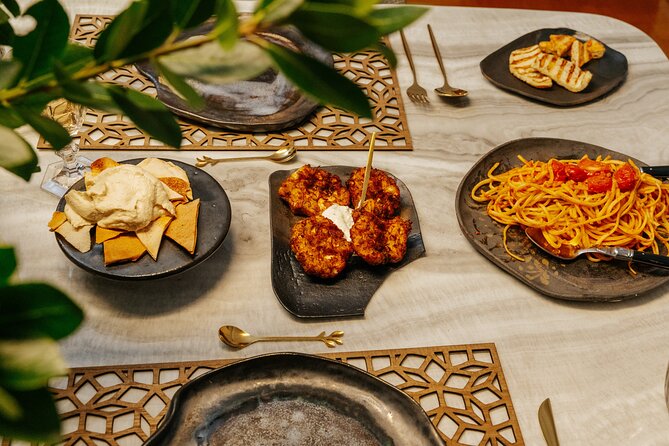
The main course is Santorini garlic pasta, made with Santorini tomatoes, olive oil, garlic, and salt. It is a straightforward combination, but that is part of its appeal. The dish depends on good produce and careful balance rather than a long list of ingredients.
For you, the cooking lesson is valuable because the menu is not built around complicated restaurant tricks. The recipes connect directly to the products of the island and to familiar Greek kitchen habits. You learn how tomatoes, olive oil, garlic, and salt can form the backbone of a satisfying meal.
The supplied information does not specify how much hands-on preparation each person completes or whether every step is demonstrated by Margarita. You should expect instruction and interaction, but not assume that you will independently cook every course from start to finish.
That distinction matters when comparing this experience with a formal culinary workshop. The evening is designed as a social food experience with cooking at its center, not as professional chef training. If your main goal is to learn practical Greek recipes in a friendly setting, it fits well. If you want a technical class with measured lessons, individual workstations, and a printed curriculum, the details provided do not promise that format.
Melitinia and the honey-almond finish
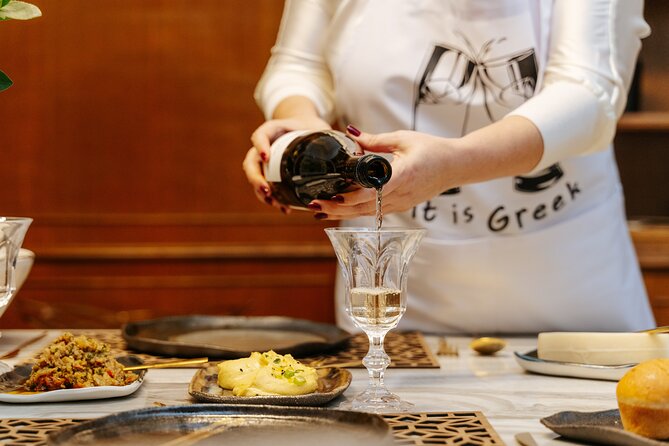
The desserts make the menu feel distinctly celebratory. Melitinia are small sweet treats made with salted mizithra cheese, yogurt, and mastic. They are traditionally associated with celebrations and weddings, so they add a festive note after the savory courses.
The second dessert is cufeto spoon sweet, described as a honey and almond custard and one of Santorini’s iconic sweets. The combination should give you a softer, sweeter finish than the tangy cheese-based melitinia.
I appreciate that the desserts are not generic baklava or a simple plate of fruit. They continue the Santorini theme and introduce ingredients such as mastic, mizithra, honey, and almonds. If you enjoy trying foods with a strong regional identity, this final course adds real value.
Dietary information is not provided. The menu contains dairy, pork, gluten in the pasta, and likely other ingredients that may matter for allergies or dietary restrictions. Ask about substitutions before booking rather than assuming the menu can be changed.
A few more Athens tours and experiences worth a look





Santorini wines from volcanic soil
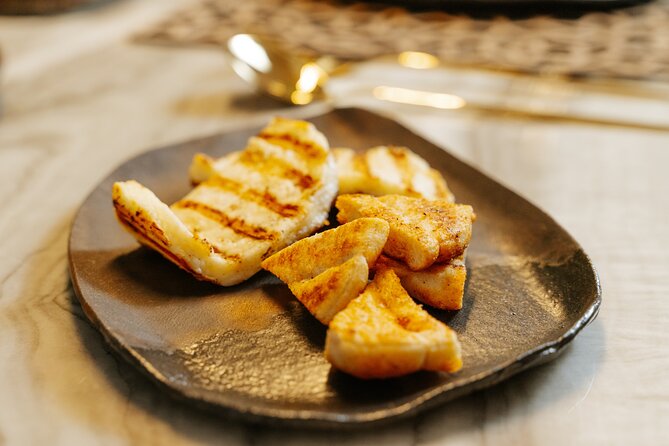
Wine is included, with local varieties from Santorini. The white grapes named are Assyrtiko, Athiri, and Aidani. The red varieties include Mandilaria and Mavrotragano.
Assyrtiko is probably the best-known of these names, but the useful point is that the evening does not stop at one standard Greek white wine. You get a broader introduction to Santorini’s wine culture, with several grapes connected to the island’s volcanic soils.
The meal’s many starters should work well with a wine tasting format. Fresh salad, salty cheese, smoky eggplant, tomato fritters, pork, and fava all bring different flavors to the table. The wine gives you another way to compare the dishes and understand why Greek meals often stretch over a long period.
The description does not state how many glasses or bottles are served, so I would not book this expecting a formal wine class or unlimited pours. Think of the wine as part of the dinner and the island story, not as a separate professional tasting.
What the small group adds
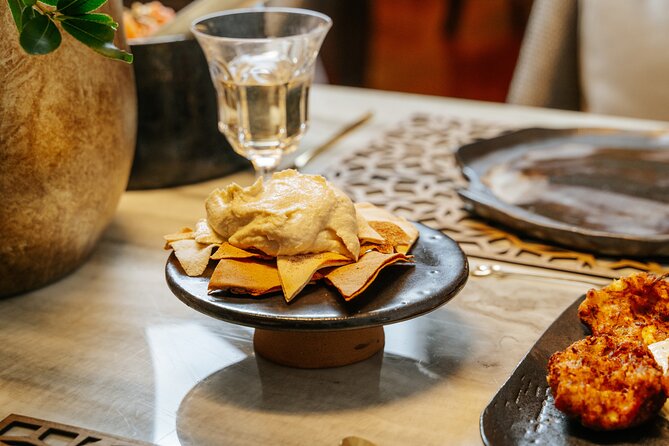
The maximum group size is eight people. That number is large enough for conversation but small enough to keep the evening from feeling like a banquet hall event.
I like this format for solo visitors, couples, and families who want a shared experience. One family arranged the evening for relatives from America and found the cooking both stylish and interactive. Another group of four friends enjoyed learning recipes, exchanging ideas, and spending time with the people they met.
The social side is not a minor extra. Home cooking works best when there is time to talk around the table. You are likely choosing this experience for the atmosphere as much as for the food, and the small capacity supports that goal.
Still, a home-based dinner is less predictable than a standard restaurant meal. The evening’s appeal depends on enjoying conversation with people you may not know and taking part in a hosted setting. If you prefer quiet dining, a fixed menu with no social element, or a quick meal before a show, choose something else.
Is $272.09 a fair price?
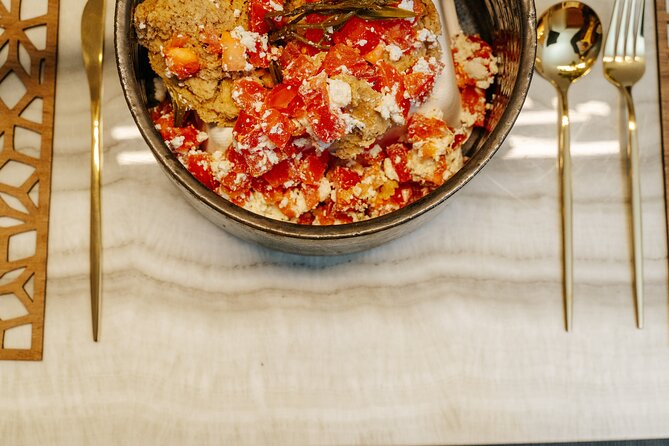
At $272.09 per person, this is an expensive evening by Athens dining standards. The value comes from several elements combined: a private-home setting, Margarita’s instruction, an extensive Santorini menu, local wines, and roughly four hours of hosted time.
I would not compare the price with the cost of a casual taverna dinner. A regular meal will be far cheaper, and you can find Greek food throughout Athens. Compare this instead with a private cooking and dining experience where the host provides the food, teaches recipes, serves wine, and creates the social setting.
The strongest value is for someone who wants a memorable food activity rather than just another restaurant meal. It may also suit a special family evening, a birthday, or a small group of friends looking for something different.
The value is weaker if you are mainly hungry and want a large dinner at a low price. It is also harder to justify if you do not drink wine, dislike group conversation, or have dietary needs that make much of the menu unsuitable.
Booking details worth checking
Confirmation normally arrives at booking, though reservations made within one day of the start time are confirmed as soon as possible and depend on availability. I would book ahead, especially because the group is limited to eight people.
Free cancellation applies when you cancel at least 24 hours before the 7:00 pm start. Cancel later than that and the payment is not refunded. Changes within 24 hours are also not accepted. Cutoff times use local Athens time.
The experience requires a minimum number of people. If that minimum is not reached and the activity is canceled, you are offered another date or experience, or a full refund.
Service animals are allowed, and the meeting point is near public transportation. The activity is offered in English and uses a mobile ticket.
Who should book this Athens food experience?
I would recommend it to you if you want to connect with Greece through regional food, enjoy meeting people at the table, and value a host-led evening in a home more than a conventional restaurant setting.
It is particularly well suited to food-focused couples, small groups of friends, and families introducing relatives to Greek cooking. The broad menu also works for curious eaters who want to go beyond souvlaki, moussaka, and standard Greek salad.
I would hesitate if you want a short, inexpensive dinner, a formal chef’s course, or a sightseeing activity. The evening is long, the price is high, and the experience centers on food and conversation rather than Athens monuments.
Should you book Santorini Dinner Class with Margarita?
Book it if the idea of learning Santorini recipes in an elegant Athens home sounds more appealing than checking another restaurant off your list. The strongest reasons are the small group, the unusual nine-dish menu, the range of local wines, and the friendly setting praised in the supplied comments.
Before paying, confirm any dietary requirements and decide how much you value the social, hosted format. At $272.09, this is a splurge, but it offers a focused and personal food evening that a normal Greek dinner cannot easily provide.
FAQ
Where does the Santorini dinner class take place?
The experience takes place in Athens at Akadimias 8, Athina 106 78, Greece.
What time does the experience begin?
The activity starts at 7:00 pm local time.
How long does the dinner class last?
The experience lasts about four hours, with approximately three hours devoted to the food-focused activity.
Does the activity end at the meeting point?
Yes. The activity ends back at Akadimias 8.
Who hosts the experience?
The hostess is Margarita, who welcomes the group into her elegant home and teaches the Santorini dishes.
How many people can join?
The activity has a maximum of eight participants.
Is wine included?
Yes. Local wines from Santorini are served, including white varieties such as Assyrtiko, Athiri, and Aidani, along with red varieties such as Mandilaria and Mavrotragano.
Is the activity offered in English?
Yes. The experience is offered in English.
Can I cancel for a full refund?
Yes, if you cancel at least 24 hours before the experience begins. Cancellations made less than 24 hours before the start time are not refunded.