REVIEW · RHODES
Rhodes: Hiking Tour to the Summit of Akramitis with Photos
Book on GetYourGuide →Operated by Trekking Hellas Rhodes · Bookable on GetYourGuide
Akramitis delivers big views with little fanfare. This guided day hike takes you from the rural village of Monolithos up to the summit of Akramitis, inside a Natura 2000 protected area where you’ll move through cypress slopes, rocky sections, and meadows. What I like most is how the trail gives you 360-degree viewpoints, and how the day includes simple Greek comfort food (a local pie snack) in the middle of the climb.
There is one reality check: the ascent includes real rock-hopping and steep uphill, so you’ll want proper footwear and a pace you can manage. If you’re expecting an easy stroll, you’ll probably feel it in your legs by the time you reach the chapel stop and start pushing toward the summit.
In This Review
- Key Things You’ll Remember
- Akramitis From Monolithos: Why This Rhodes Hike Feels Different
- Trail Snapshot: Distance, Time, and the Steep Part You Can’t Ignore
- Start in Monolithos: Cypress Slopes and Apollakia Bay Views
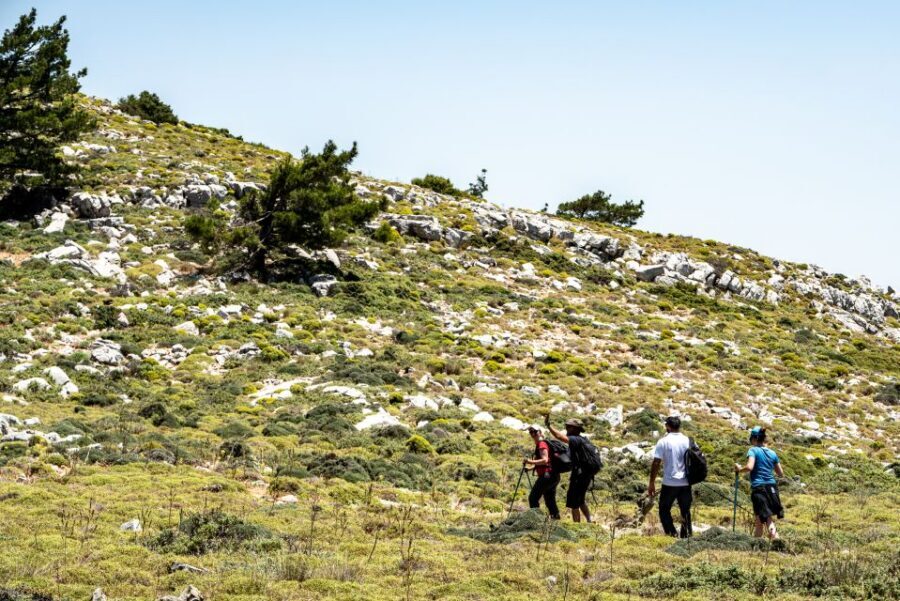
- The Climb Through Rocks and Colorful Shrubs
- The Chapel Stop at St John: Snack Break With Real Local Flavor
- Summit Time: 360-Degree Views and Rhodes Landmarks
- Down Through Tall Pine Trees: Why the Return Route Matters
- What’s Included in the Price (and What You Must Bring)
- Meeting Point and Pickup: Where You Start the Day
- Who This Hike Suits Best (and Who Should Skip It)
- Photo Tips for Rocky Switchbacks and Windy Summits
- Should You Book the Akramitis Summit Hike?
- FAQ
- How long is the Akramitis hiking tour?
- What distance will I hike?
- Where do I meet the guide if I’m not using pickup?
- Is hotel pickup available?
- What languages are spoken during the tour?
- Is this tour suitable for kids?
- What should I bring?
- What is included in the ticket price?
Key Things You’ll Remember
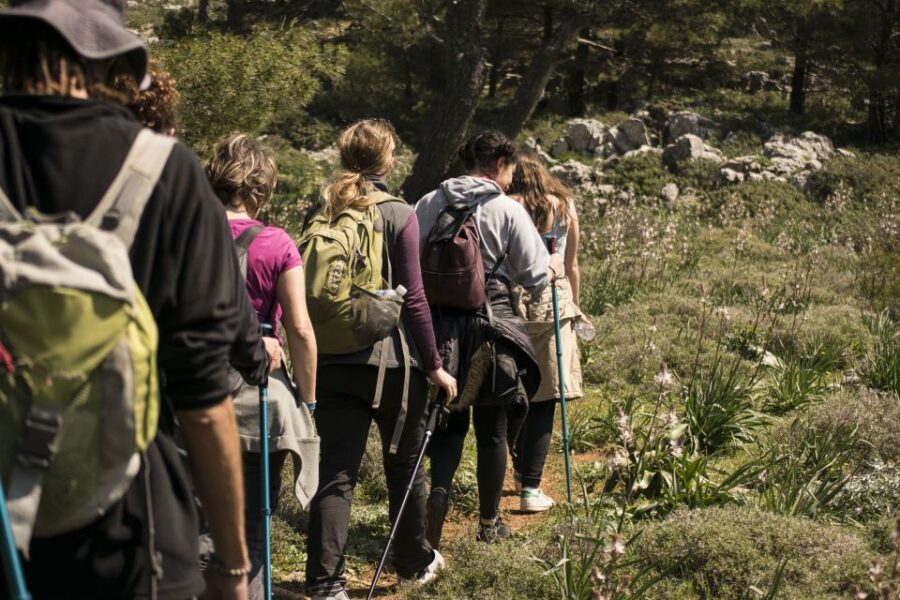
- Second-highest mountain on Rhodes: Akramitis rewards effort with summit views over sea and island interiors.
- Natura 2000 trail variety: forests, meadows, rocky peaks, and protected-area plant life along the route.
- Chapel snack break at St John: a small old chapel stop plus traditional pie-style food.
- Two-route walking day: the descent uses a different path through tall pine trees.
- Photos handled for you: souvenir photos are included, so you spend less time guessing camera angles.
- Real guide support: guides work at a comfortable pace and can adjust to different fitness levels (even if terrain stays terrain).
Akramitis From Monolithos: Why This Rhodes Hike Feels Different
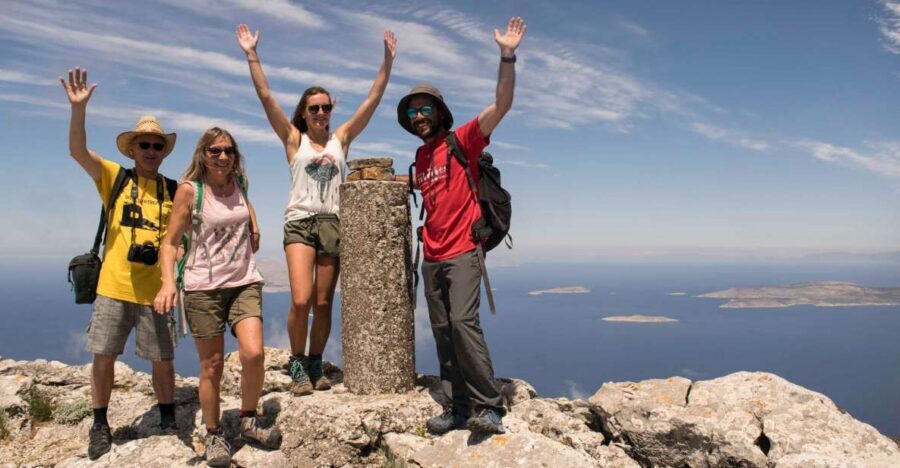
Rhodes is famous for beaches, Old Town lanes, and the usual postcard corners. This hike pulls you away from that loop and puts you on a mountain trail that locals care about. You start in Monolithos, on the island’s western side, then climb toward the peak of Akramitis for broad views that stretch across the Dodecanese.
Two things make it feel worthwhile fast. First, the scenery isn’t just “pretty”—it shifts constantly. You move from green slopes under cypress to rockier ground, then into shrub-filled areas and open meadow-like sections, all inside a protected setting. Second, the day is guided in a way that makes the route feel human, not like a self-guided slog. You’ll get help with timing, pacing, and what to look for as you go.
The watch-out is that this is not a flat nature walk. You should expect a steady uphill, rock surfaces that can be slippery, and a climb that asks for steady steps rather than speed.
You can also read our reviews of more hiking tours in Rhodes
Trail Snapshot: Distance, Time, and the Steep Part You Can’t Ignore
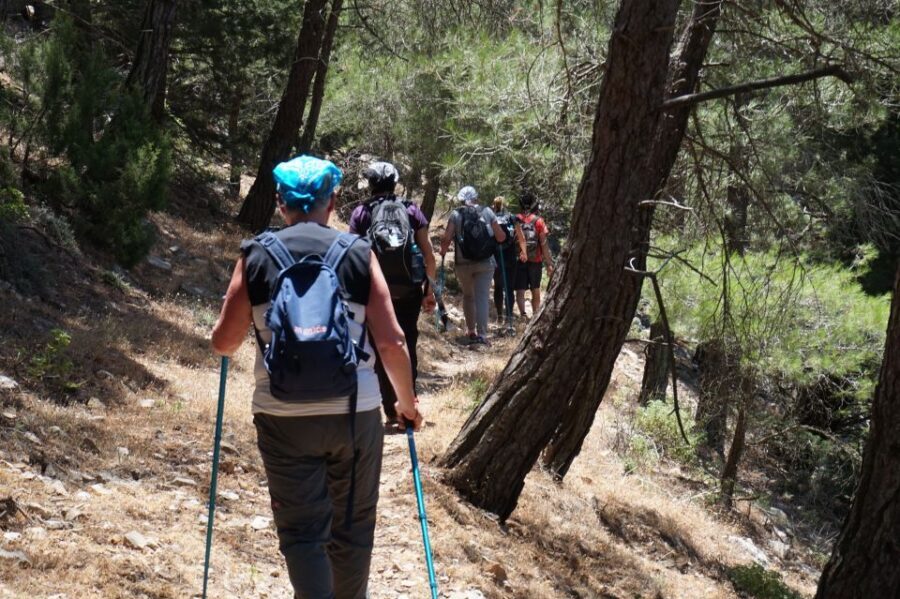
You’re covering about 9.1 km over the day, with roughly 4 hours of hiking time. The total experience typically lands in a 5–6 hour window when you include pickup/drop-off (if selected), plus breaks for snacks and photos.
In plain terms, this is a moderate-to-more-than-moderate hike. It’s not built like a long-distance endurance event, but the start can feel steep, and the mid-sections include rockier clambering. One of the guides’ strengths is keeping a workable pace for the group, and you can often match your effort to your own comfort level. Still, the terrain does not get gentler just because you’re thinking positive thoughts.
If you’re walking in shoes meant for city streets, this is where you’ll wish you brought hiking footwear. In one case, a participant noted the ascent involved a lot of stone and bergauf (uphill), which is exactly the kind of trail detail that matters.
Start in Monolithos: Cypress Slopes and Apollakia Bay Views
Your day begins in or near Monolithos, either with pickup from your accommodation (if you select it) or by meeting the guide at the north entrance of the village by Taverna Christos Corner. From there, you start the hike with a climb up green slopes, under cypress trees, looking out toward the bay of Apollakia.
This first phase is more than warm-up. It’s your first chance to get your bearings and settle into the route. You’re already high enough to feel the coastal angle, so the views start early rather than only at the top. And because you’re walking with a guide, you’re not guessing where the trail leads—you’re just walking, looking, and letting the day unfold.
You’ll also notice the trail transitions quickly. Before long, the route becomes more demanding as you move onto rockier ground. This is where you want to focus on footing, not perfect photo composition. If you rush, you’ll pay for it later.
The Climb Through Rocks and Colorful Shrubs
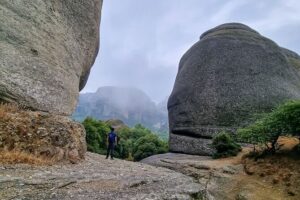
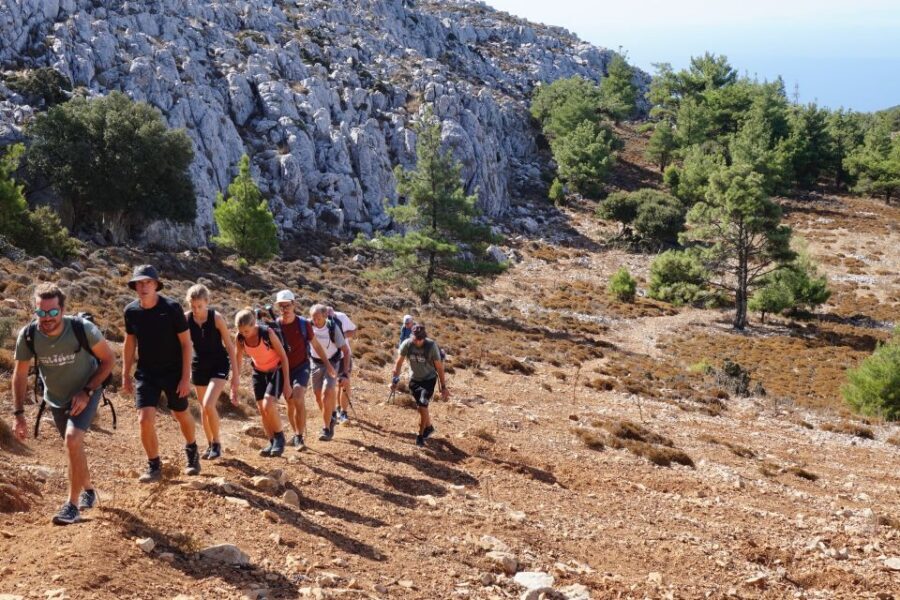
As the trail steepens, you’ll spend time on sections that feel like hands-on hiking—clambering over rocks and navigating uneven footing. This is the part that separates “I did a hike” from “I earned the view.”
After the toughest stretch, you enter a more varied pocket of the trail. Instead of constant rock underfoot, you’re surrounded by colorful shrubs and a meadow-like area. This change matters because it gives you a breather. You’re still walking uphill, but the ground feels more forgiving and your eyes have something new to track besides your next step.
If you go in spring, this stretch is where the plant life can really pop. You might see pretty flowers, fragrant herbs, and even rare Rhodian Orchids lining the way. Even if you don’t spot orchids, the guide’s attention to local plants is part of the experience, not a side note.
The Chapel Stop at St John: Snack Break With Real Local Flavor
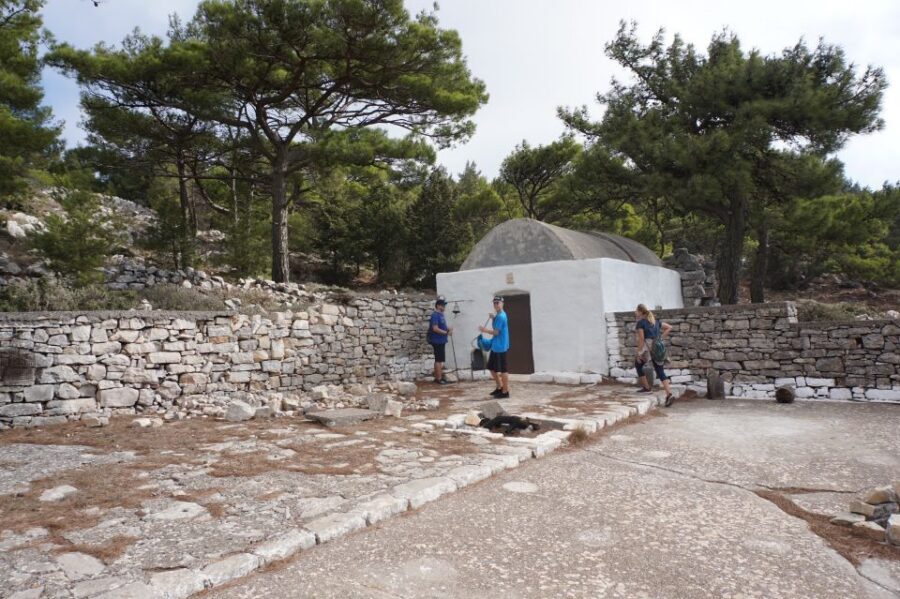
Just as you start to feel your legs again (in a good way), the day includes a stop at a tiny old chapel of St John. This is a short pause, but it’s timed perfectly. It gives you a moment to recover, hydrate, and regroup before the final push toward the summit.
The snack here is classic Greek comfort: you’ll enjoy a traditional pie-style offering that the region is known for. It’s not fancy, and that’s the point. It’s the kind of food that tastes right because you’ve been working for it.
You’ll also get photo opportunities around the chapel. It’s the first moment where the day feels like a story rather than a workout. The guide can help you with quick picture planning so you don’t end up with 40 almost-identical shots and one blurry masterpiece.
You can also read our reviews of more photography tours in Rhodes



Summit Time: 360-Degree Views and Rhodes Landmarks
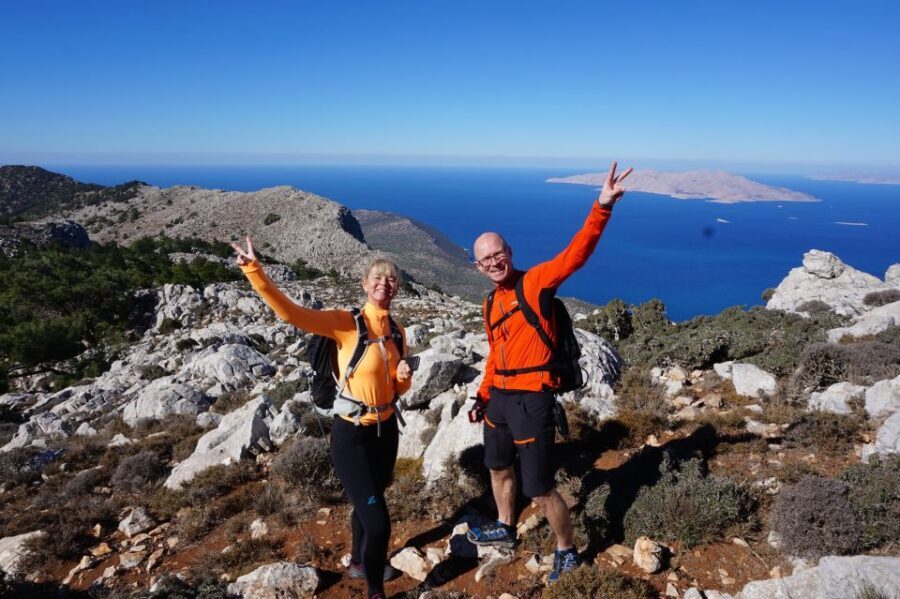
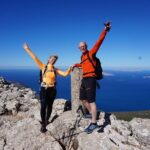
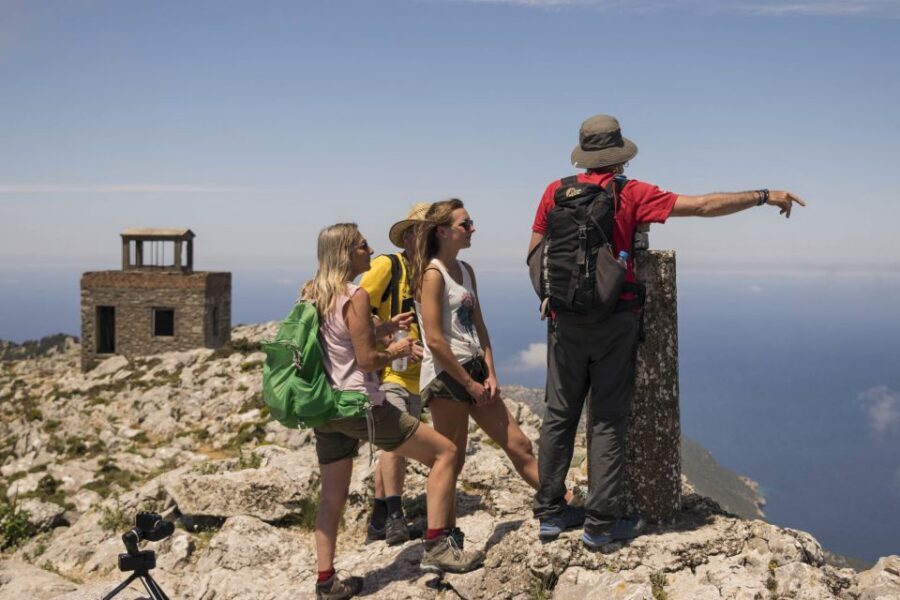
When you’re close to the top, expect a short rocky scramble. Once you reach the summit, the effort pays off with wide-open, 360-degree views.
From here, you can see both sides of Rhodes and a set of landmarks that helps the geography click into place. You’ll likely spot the nearby islands, the lake in Apollakia, and Attaviros, which is the highest mountain on Rhodes. Inland Rhodes also comes into view, so you’re not just seeing coastline—you’re seeing how the island actually sits and rises.
This is also the moment when the guides’ local context can make your photos better. Knowing what you’re looking at turns a scenic point into a mental map. And because the tour includes souvenir photos, you’ll get an outside perspective on your position, too—useful if you’re traveling solo or just don’t want to manage a camera setup while tired.
Also, remember this is a mountain top. Even in good weather, wind and sun can be intense. The view is the reward, but the conditions are part of the climb, so keep your hat and sunglasses handy.
Down Through Tall Pine Trees: Why the Return Route Matters
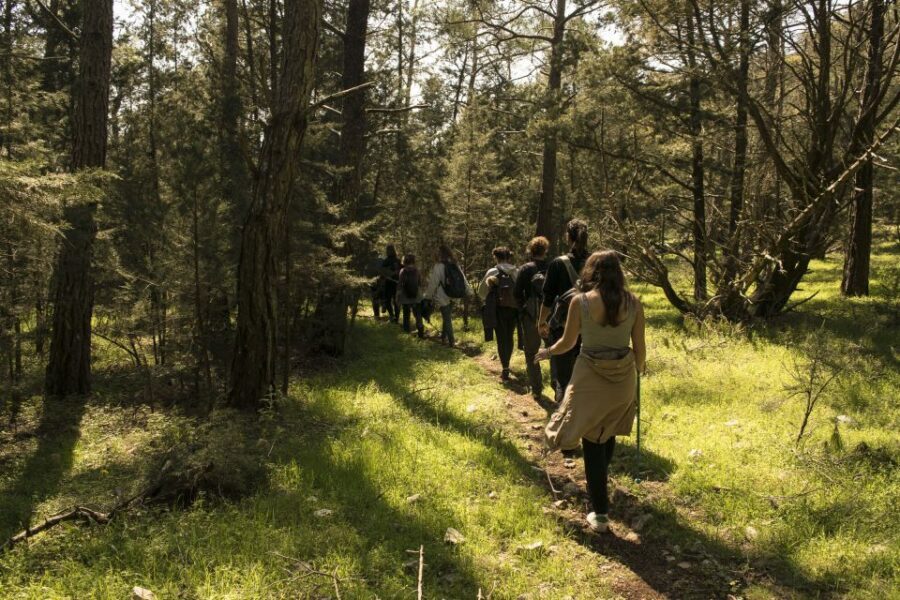
The hike down is not a replay of the climb. You’ll take a different route that leads through a forest of tall pine trees. That detail matters because it changes how the day feels at the end.
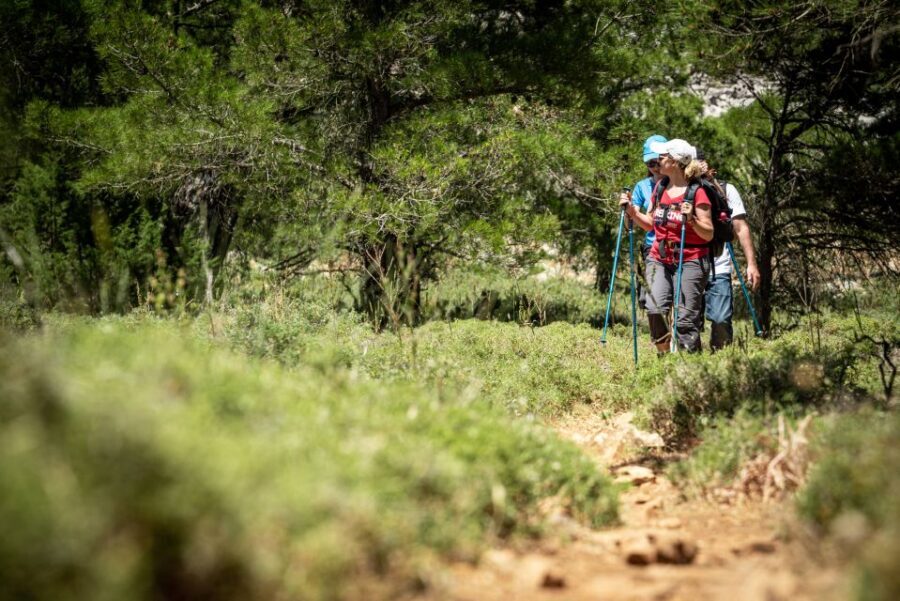
Rocky uphill demands focus. Pine-forest walking adds shade and a calmer rhythm. It’s easier on your mind even if your knees still notice the slope. And because the descent route differs, you’re not seeing the exact same views twice—you’re getting another angle on the terrain and the vegetation.
This part of the day is also a chance to slow down after the summit’s big moments. You’ll have time to take in plants and flowers again, even at the end of the hike, when you usually just want to finish. The guide keeps the pace comfortable, and if you need a breather, you’re not expected to “power through” without support.
What’s Included in the Price (and What You Must Bring)
The price is $76 per person, and it’s one of those trips where the value is in what’s handled for you. For that cost, you typically get:
- Hotel pickup and drop-off if you choose the pickup option
- A trekking guide (English and Greek)
- A traditional snack at the chapel stop
- Water
- First aid kits and necessary trekking equipment
- Souvenir photos
When you tally it up, you’re not just paying for a viewpoint. You’re paying for guidance, safety basics, equipment support, and transportation from major resort areas. Pickup is offered from many places including Rhodes town, Ixia, Ialysos, Kremasti, Paradeisi, Kallithea, Faliraki, Afantou, Kolympia, Vlycha, Haraki, Lindos, Pefkoi, and Kiotari.
What you bring is just as important:
- Hiking shoes (boots aren’t required, but shoes with grip are)
- Long hiking pants and a daypack
- Sunglasses and a sun hat
- A windbreaker (a windproof layer is recommended)
- Sunblock (the tour asks you to bring your own)
- A second bottle of water (the tour provides water, but you’re encouraged to carry extra)
If you want one simple rule: dress for wind and uneven ground, not for sitting at a seaside café.
Meeting Point and Pickup: Where You Start the Day
There are two straightforward ways to begin.
If you choose pickup, the guide collects you from selected areas around Rhodes, then drives you to the Monolithos start area. If you don’t choose pickup, you meet at the north entrance to Monolithos next to Taverna Christos Corner.
Either way, once you’re at Monolithos, the hiking story starts quickly. You’ll be on the trail with the guide, moving uphill under cypress trees and working your way toward the chapel and summit.
Who This Hike Suits Best (and Who Should Skip It)
This is a good fit if you want:
- A guided day in a less-touristy part of Rhodes
- Mountain views you can’t easily replicate from a bus stop
- Plant life and seasonal flowers (especially in spring)
- A hike that’s active, but not a multi-day expedition
The tour is not suitable for children under 10, and it’s also not recommended for people with mobility impairments. Even if you’re an experienced walker, the rockier sections mean this trail is about foot placement, not just endurance.
If you’re fit but cautious, you’ll likely do fine. If you’re not used to rocky trails, go slow at the start, plan for the steep sections, and don’t treat the rocks like a smooth path.
Also, group style matters. This can be private or in small groups, which usually helps you feel less rushed. Still, terrain can set the pace. If you’re the type who dislikes moving when you’re not ready, tell the guide early so they can adjust your rhythm.
Photo Tips for Rocky Switchbacks and Windy Summits
The tour gives you a lot of natural photo material: coastal views near Apollakia, the chapel of St John, and then the wide summit panorama.
To get better shots without turning your hike into a camera marathon:
- Keep your camera/phone secured until you’re on steadier footing
- Use the chapel stop to reset your settings before the summit rush
- Expect wind up top; hold your phone firmly or use a strap
- Bring sun protection so you can keep looking up instead of squinting through haze
And since souvenir photos are included, you don’t need to be the world’s most productive photographer. Let the guide help you capture the big angles, then use your own shots for the small details—plants, herbs, and the rock textures that change as you climb.
Should You Book the Akramitis Summit Hike?
If you want a Rhodes experience that feels like a real walk through the island instead of another queue line, I’d book it. The mix of 360-degree views, a snack stop at the chapel of St John, and a descent through pine trees gives you variety across the whole day. And at $76, the included guide, water, equipment support, and souvenir photos are the kind of add-ons that make the price feel fair.
Skip it if you hate uneven rocky terrain or if you’re traveling with mobility limitations. This hike asks for steady footing and a willingness to climb.
If you’re debating, choose this one if you can handle a steep start and don’t mind rocks underfoot. For the rest of your Rhodes trip, it will give you a different kind of memory—one you can’t buy from a beach chair.
FAQ
How long is the Akramitis hiking tour?
The tour runs about 5 to 6 hours total. Hiking time is around 4 hours, with breaks and photo stops included.
What distance will I hike?
The hiking distance is about 9.1 km (5.6 miles).
Where do I meet the guide if I’m not using pickup?
You meet the guide next to Taverna Christos Corner at the north entrance to the village of Monolithos.
Is hotel pickup available?
Pickup is optional. It’s offered from many locations including Rhodes town, Ialysos, Faliraki, Lindos, and several other resort areas.
What languages are spoken during the tour?
The live guide speaks English and Greek.
Is this tour suitable for kids?
No. It is not suitable for children under 10 years old.
What should I bring?
Bring windbreaker, sunglasses, sun hat, hiking shoes, and a daypack. You should also bring sunblock and an additional bottle of water.
What is included in the ticket price?
Included items typically cover the guide, trekking equipment and first aid kits, traditional snack, water, souvenir photos, and hotel pickup/drop-off if you select it.