REVIEW · METEORA
Meteora Small Group Hiking tour with Transfer and Monastery Visit
Book on Viator →Operated by Visit Meteora · Bookable on Viator
Meteora feels unreal on foot. This 4-hour small-group morning packs a guided hike through lesser-trodden trails plus monastery time, with transport handled for you. You’ll get the kind of views that are hard to recreate from a parking lot.
I love the mix of walking on natural paths and real monastery stops (not just a drive-by). I also like that the group stays small, so your guide can slow down for questions, photos, and a breather when the trail gets steep.
One thing to consider: this is physically active. The hike is described as manageable, but you still need decent shoes, a good attitude for stairs/uneven ground, and respect for strict monastery dress rules.
In This Review
- Key highlights that make this tour worth your time
- Meteora on foot: why this tour works better than just driving
- Getting there smoothly: Kalambaka or Kastraki pickup at 8:30
- The 2-hour Meteora hike: quiet trails and rock-forest views
- Great Meteoron Monastery: the biggest, oldest, and the one with the air of history
- Ypapanti Monastery: inside the rock cavity (and why the story is darker)
- Varlaam and Saint Nicholas of Anapafsas: the route’s extra depth
- Price and what you actually get for $36.28
- Dress code and walking pace: the small rules that make the day smooth
- Guides you might meet: Chris, Evan, Christos, Dimitris, Kristos
- Who this tour is best for (and who should adjust expectations)
- Should you book? My quick decision guide
- FAQ
- What time does the tour start?
- Where does pickup happen?
- How long is the tour?
- How many people are in the group?
- Are entrance fees included?
- What should I wear for the monasteries?
- Is the tour suitable for moderate fitness?
- Is the guide English-speaking, and will I get a ticket?
Key highlights that make this tour worth your time
- Max 12 people keeps the pace human and the questions coming
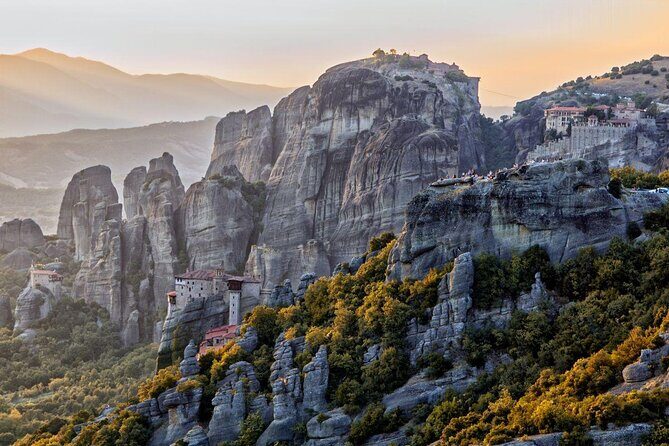
- Hidden-feeling hiking trails through Meteora’s rock-forest setting
- Great Meteoron + Ypapanti give you two very different monastery styles
- Round-trip minivan transfer from Kalambaka or Kastraki means less planning
- Admission fees not included (plan on about €5 per person), with Ypapanti noted as free
- Guides like Chris, Evan, Christos, Dimitris, and Kristos are repeatedly praised for pacing and storytelling
Meteora on foot: why this tour works better than just driving
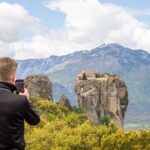
If you only visit Meteora by car, you miss half the magic. The real wow-factor here is how the rock pillars shape the air, the light, and even the route you’re able to walk. This tour uses that idea on purpose: you start with a guided hike, then you step into monasteries that grew right out of the terrain.
The small-group size matters more than it sounds. On a bigger bus, you’re pushed along. Here, you can actually follow along with the guide’s explanations—about geology, monastic life, and what you’re seeing around you—without the tour feeling rushed.
The other smart choice is the order: you walk first while the area still feels calm, then you visit monasteries. That means fewer frantic photo moments and less time “waiting your turn” in viewpoints.
You can also read our reviews of more hiking tours in Meteora

Getting there smoothly: Kalambaka or Kastraki pickup at 8:30
The day starts early, with pickup around 8:30am. If you’re staying in Kalambaka or Kastraki, your driver can pick you up directly from hotels or Airbnbs in those towns. You’ll travel in an air-conditioned minivan, and the tour includes bottled water, which is a small detail that can save you when you’re hiking.
This matters if you’re traveling without a car (or you just don’t want to wrestle with parking). Meteora can feel like a maze of roads and viewpoints, so having transportation handled lets you focus on the experience instead of logistics.
Tip: wear your hiking shoes on travel day. That way, you’re ready the moment you step out of the van.
The 2-hour Meteora hike: quiet trails and rock-forest views
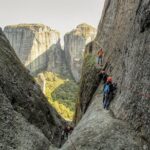
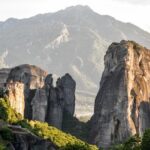
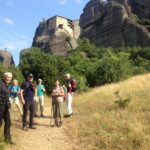
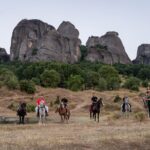
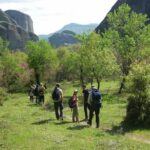
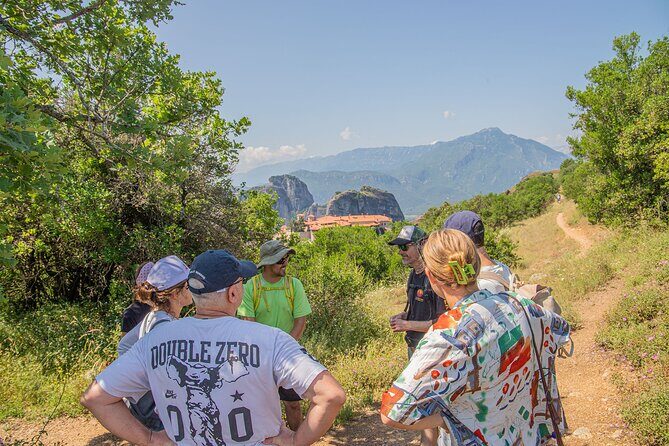
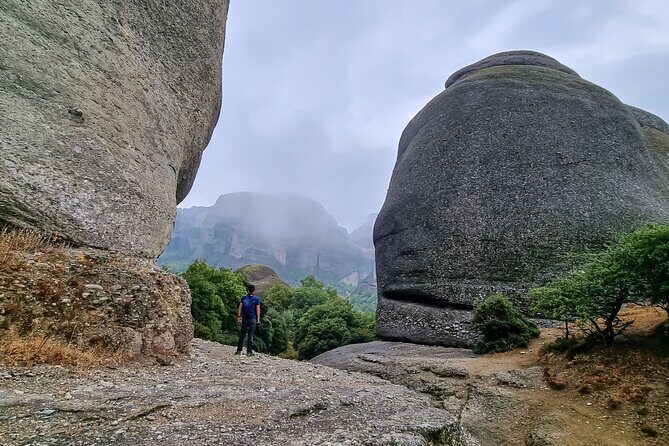
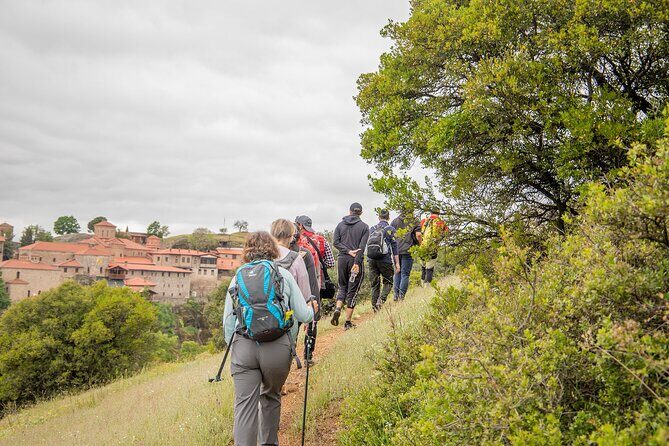
This tour’s hiking portion is about 2 hours, and it’s designed as a morning walk through Meteora’s famous “rock forest” environment. You’ll move among giant rock pillars, and you’ll follow guided routes described as trails that many locals know—routes that typically avoid the busiest crowd flow.
What you’ll like most here is the texture of the experience. You’re not just looking up at cliffs. You’re walking through the space between them, where the geology feels close-up. You also get context, since the guide explains the area’s UNESCO-listed monastic community and the unusual geological phenomenon behind the dramatic rock towers.
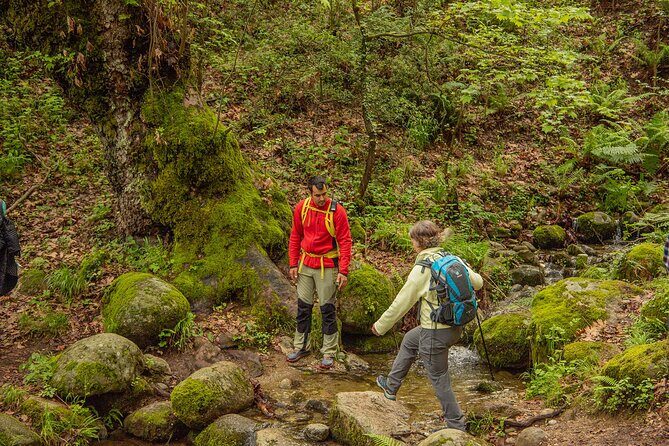
How hard is it? The tour calls for physical readiness, and the reviews you’ll find for this kind of route often highlight that it’s not a “sit and stroll” hike. One person noted it was manageable in hot conditions because the guide paced it and built in breaks. Another pointed out the hike stays doable for active walkers, but some sections can be tougher if you haven’t hiked in a while.
My practical advice: plan for uneven ground and stairs-like sections. If your knees are sensitive, go slow, hold steady footing, and take the offered breaks—those breaks are not just for show.
Great Meteoron Monastery: the biggest, oldest, and the one with the air of history
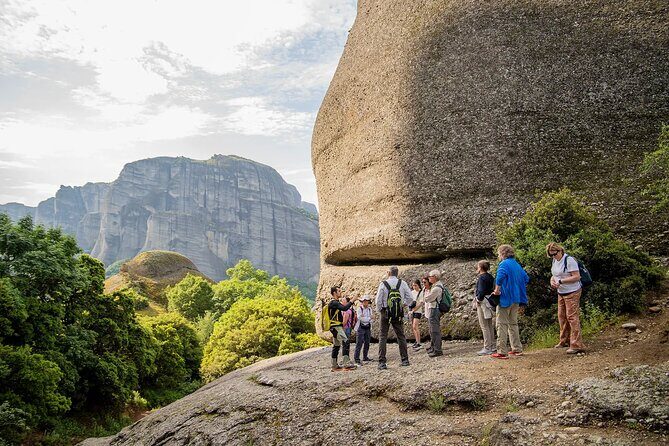
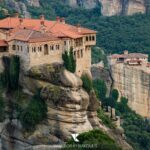
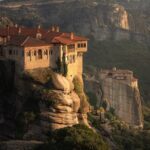
Next you visit Great Meteoro Monastery, described as the biggest and oldest. The name idea here is that the monastery was built on top of towering formations—so it looks as if it’s suspended in the air.
You’ll hear about its founding through Saint Athanasios the Meteorite, who is credited with organizing early monastic community life in Holy Meteora. The guide also connects the story to the “organized monasticism” turning point that helped shape what visitors see today.
What makes this stop valuable isn’t only the architecture. It’s the way the monastery location makes the surrounding rocks feel like part of the building. Standing there, you get why these communities chose this specific place—protection, isolation, and a kind of natural stage for devotion.
Timing is about 1 hour, and the key practical point is: you’ll want comfortable layers. Monasteries are cooler in shade, but the hike before it can warm you up.
Ypapanti Monastery: inside the rock cavity (and why the story is darker)
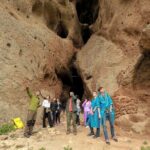
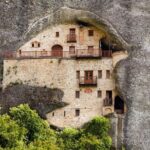
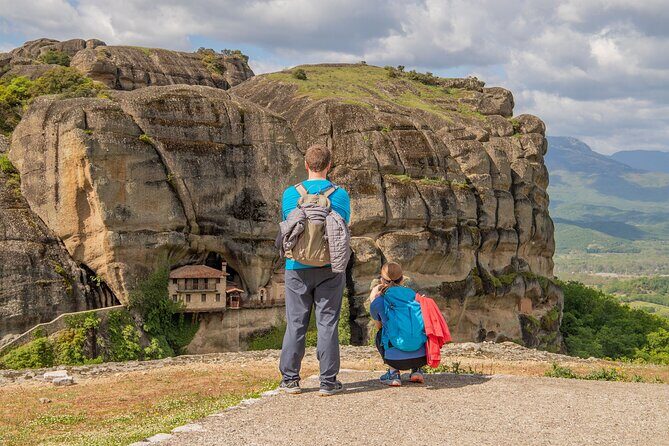
Then comes Holy Monastery of Ypapanti, a monastery with a totally different feel. Instead of perched on a peak, it’s described as being fully constructed inside a large cavity of rock. That single detail changes everything about your experience: it feels more sheltered, more enclosed, and more like you’re stepping into a carved pocket of time.
You’ll also get a historical thread that includes its founders: Nilos and Cyprianus, mentioned as starting the monastery in 1367 AD. The story continues with a difficult chapter—destruction in 1809, linked to local resistance and a Turkish army presence connected to Ali Pasha, with Papathymios Vlahavas arrested there.
The visit time is about 30 minutes, and entrance is noted as free for this stop. That’s a nice bonus because it helps balance the fact that other monastery entrances are extra.
If you’re the type who likes details, Ypapanti is the stop where those details add up fast: you’ll notice how the rock space shapes the mood and acoustics, even before you fully absorb the background.
A few more Meteora tours and experiences worth a look

Varlaam and Saint Nicholas of Anapafsas: the route’s extra depth
After Great Meteoron and Ypapanti, the tour includes additional monasteries as part of the overall circuit.
You’ll visit Holy Monastery of Varlaam, described as the second biggest, founded in the mid-14th century by Hosios Varlaam. This stop is also set up with art and design in mind. The tour description highlights the Catholicon church built in 1541–42 in honor of Agioi Pantes, plus decoration around 1548. There’s also an art attribution mentioned for wall paintings to Frago Catelano, based on stylistic criteria.
Then there’s Saint Nicholas of Anapafsas, described as the first monastery you encounter on the way up, founded at the end of the 14th century. The name “Anapafsas” gets explained with a couple of interpretations, including the idea that it served pilgrims and visitors as a resting place before continuing onward.
These additional stops are worth it because they help you see Meteora as more than two famous icons. The monasteries have different “personalities,” and the route logic helps you feel that variety instead of treating each building as an isolated postcard.
Price and what you actually get for $36.28
At $36.28 per person, this is one of those tours that feels fair when you break it down.
Here’s what’s included:
- Hotel pickup/drop-off from Kalambaka or Kastraki
- Air-conditioned minivan transport
- Local English-speaking mountain guide
- Bottled water
- A visit to Ypapanti (not just a photo stop)
What’s not included:
- Entrance fees of 5.00€ per person (the tour notes this as extra)
So the value comes from the combination: guided hiking + multiple monastery visits + transport. If you were to do the hike on your own and then chase monasteries by bus or taxi, you’d spend time and likely add costs anyway. The entrance fee is the main add-on you should plan for, and the tour already tells you that up front.
Also, the tour is often booked about 36 days in advance on average, which is a polite hint: don’t wait until the last minute if you want a morning slot.
Dress code and walking pace: the small rules that make the day smooth
Monasteries here have strict dress rules. Men must wear trousers and long sleeves, and women must wear a long skirt. If you show up in shorts or wrong lengths, the tour says trousers and skirts will be provided. That’s helpful if your packing plans are… optimistic.
For the hike, you’ll want comfortable, appropriate hiking shoes. A guide can help you plan your pace, but footing still matters.
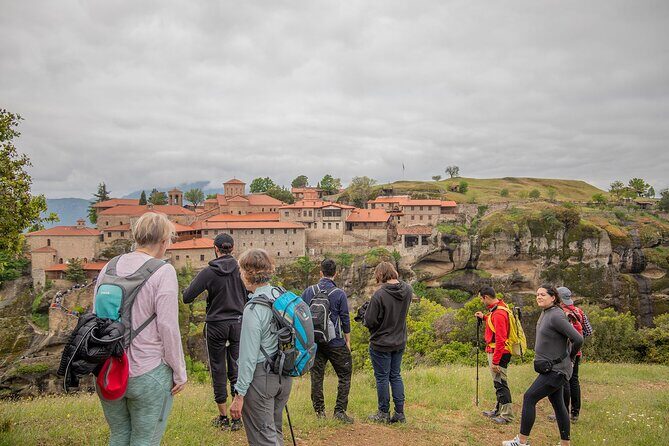
The pacing itself is a major theme in the experience. Many people highlight that guides like Chris and Evan build in breaks, keep the group safe, and adjust for different energy levels. One person even noted how the pace worked well for kids in the group—so the guide isn’t only thinking about experienced hikers.
Practical approach for you: bring water (you’ll get bottled water on tour), eat beforehand, and keep your expectations realistic. You’re getting an active morning plus monastery time. It’s not a lazy stroll.
Guides you might meet: Chris, Evan, Christos, Dimitris, Kristos
This tour tends to shine through the people leading it. Names that come up often include:
- Chris, praised for being entertaining, punctual, and packed with history plus geology explanations
- Evan (Evangelos), praised for being well spoken, patient, and good at making the hike feel manageable
- Christos, praised for safety, breaks, hydration check-ins, and encouraging the whole group
- Dimitris, praised for strong local attraction knowledge and a contagious passion for the area
- Kristos, praised for an engaging, fun approach to guiding the route and monasteries
If you like a guide who talks while you walk—about monks, plants, wildlife, and local transport tips—this tour style tends to match that.
One more real-world detail: weather can change the plan. One person described that a bad-weather day switched from hiking to a bus tour format so they could still see several monasteries. That’s not guaranteed, but it’s good to know this tour can adapt when conditions aren’t safe for full hiking.
Who this tour is best for (and who should adjust expectations)
This is a great fit if:
- You want Meteora with movement, not just viewpoints
- You like learning while you walk—history, monastery stories, and nature details
- You value avoiding the crowd feel of big buses by staying in a small group (max 12)
- You’re staying in Kalambaka or Kastraki and want transport solved
You might think twice if:
- You have limited mobility or difficulty with uneven ground and monastery stairs
- You’re expecting a very easy walk the whole way
- You’re not ready to follow dress code rules inside monasteries
That said, there are signals this route can work for a wide range of walkers. Multiple people describe it as not too hard when paced well, and even someone managing knee injuries said the experience was doable with the right pace and breaks.
Should you book? My quick decision guide
Yes, I’d book this tour if you want a smart, time-efficient Meteora morning that blends UNESCO monastic heritage with actual hiking through the rocks—while someone else handles pickup and transport.
Skip it only if you truly want a low-effort, short-distance experience. Otherwise, plan for real walking, bring the right shoes, respect the dress code, and expect an active 4-hour block with multiple monastery stops.
If Meteora is on your trip list, this is one of the easier ways to do it well: you get the best angles, the historical context, and the feeling of Meteora that you only get when your feet are on the trails.
FAQ
What time does the tour start?
Pickup and start time are listed as 8:30am.
Where does pickup happen?
Pickup is offered from hotels and Airbnbs located in Kalambaka and Kastraki village.
How long is the tour?
The duration is listed as about 4 hours.
How many people are in the group?
This is a small-group tour with a maximum of 12 travelers.
Are entrance fees included?
No. Entrance fees are listed as 5.00€ per person, and Ypapanti is noted as free.
What should I wear for the monasteries?
The monasteries have a strict dress code: men need trousers and long sleeves, and women need a long skirt. If you arrive without the proper clothing, trousers or skirts are provided.
Is the tour suitable for moderate fitness?
The tour requires customers to be physically fit and mentions moderate physical fitness level.
Is the guide English-speaking, and will I get a ticket?
The tour includes a local English-speaking mountain guide, and it offers a mobile ticket.