REVIEW · METEORA
Meteora: Morning Half Day Sightseeing and Monasteries Tour
Book on Viator →Operated by Meteora Trip · Bookable on Viator
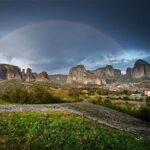
Monasteries in the sky, minus the stress. This half-day Meteora tour keeps you moving through the key viewpoints without dealing with roads, parking, or the crowd shuffle, while a local guide explains why these monasteries cling to the cliffs. You’ll also get quick stops at places like the Chapel of Doupiani and the St. George Mandilas cave area, so the day feels more like a tour of the whole rock world, not just a checklist.
What I like most is the stress-free setup: pickup in Kalabaka or Kastraki, a small group (max 15), and a driver who handles the mountain roads. Second, you get practical extras for photos and learning—free Wi-Fi in the minivan and audio guides in multiple languages (plus the chance to spend time inside three monasteries).
One thing to plan for: monastery entry fees are extra and paid in cash (€5 per person per monastery), and the site involves plenty of stair climbing and the usual strict dress code.
In This Review
- Key reasons this Meteora morning tour works
- How the morning tour flows (pickup to drop-off)
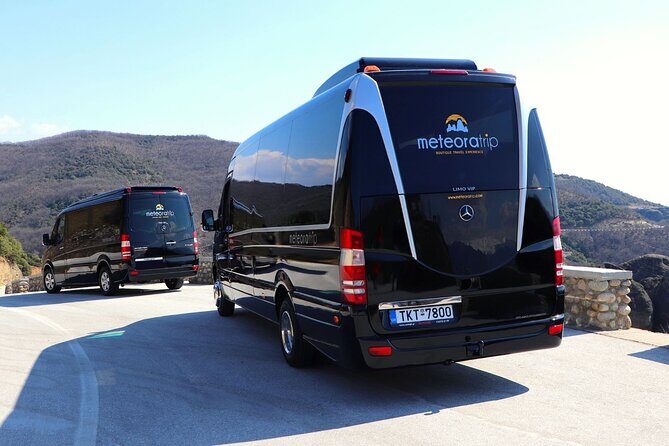
- VIP minibus comfort, Wi-Fi, and why it matters for Meteora photos
- Price reality check: what you pay now vs. what you pay at the monasteries
- Dress code + stairs: the Meteora workout you should expect
- Kastraki and the rock stops: where the story starts
- Saint Nicholas Monastery: the suspended-in-air feeling
- Roussanou and Great Meteoron: inside time on two major rocks
- Varlaam and the Holy Trinity challenge: when the steps start counting
- Holy Monastery of Saint Stephen: the easiest finish near Kalambaka
- Audio guides and how to use them without turning your brain into mush
- Timing, weather, and what fog or rain can change
- Who this tour fits best (and who should consider another plan)
- Should you book this Meteora morning half-day tour?
- FAQ
- What time does this Meteora tour start?
- Where do you pick me up for the tour?
- How much are the monastery entrance fees?
- Are guided tours inside the monasteries included?
- Do you provide audio guides, and what do I need?
- What should I wear for Meteora monasteries?
Key reasons this Meteora morning tour works
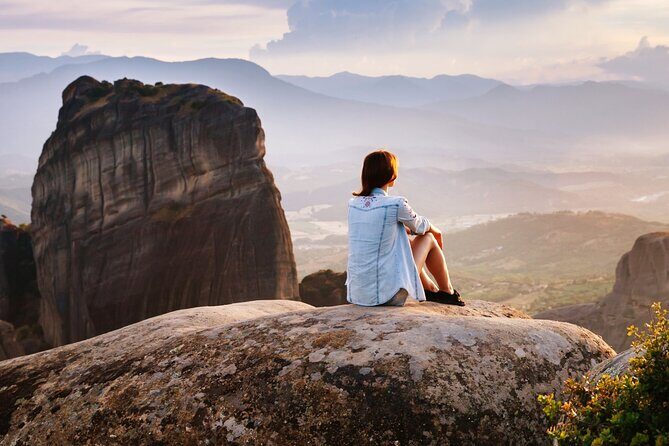
- Hotel pickup in Kalabaka or Kastraki: you start already seated, with no hunt for parking.
- VIP minibus + max 15 people: easy pace compared with larger buses, and more room for photo stops.
- Free Wi-Fi on the ride: upload a few shots before your phone battery gives up.
- Audio guides in many languages: Spanish, French, German, Italian, Japanese, Chinese, and Korean, all via your smartphone and earphones.
- Three monastery interiors included: you don’t just look from outside; you get time to see inside.
- Time left for the “other side”: quick viewpoint and special-site stops help you understand why hermits chose these caves.
How the morning tour flows (pickup to drop-off)
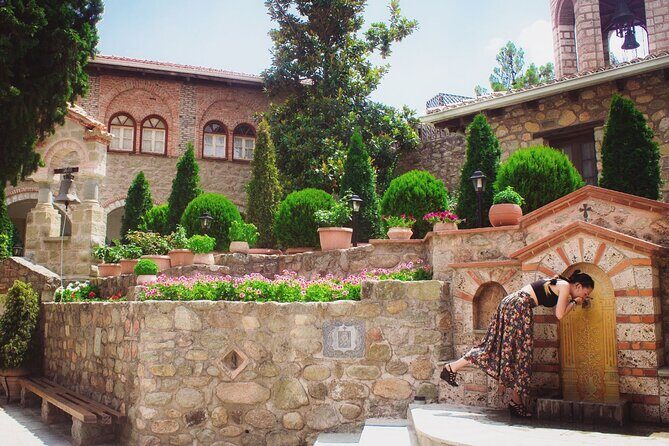
This is built for a smooth start. The tour begins at 9:00 am, with pickup happening between 8:45–9:00 from Kalabaka or 9:00–9:15 from Kastraki. If your accommodation isn’t listed, you’ll need to send your exact address to the operator after booking. The whole idea is simple: you show up where you’re staying, then you’re transported up and around Meteora without spending your vacation time playing GPS roulette.
Once you’re in the minivan, the rhythm is: drive to a rock-top monastery, get your bearings, walk in the right direction, and then settle into your visit time window. Your guide also builds in short context stops along the way—so you’re not just marching from one viewpoint to the next, you’re understanding what you’re looking at.
Group size matters here. With a maximum of 15 travelers, the tour feels manageable. You can still wander at each stop, but you’re not waiting around for someone stuck in the wrong parking area or trying to figure out which path goes where.
A few more Meteora tours and experiences worth a look
VIP minibus comfort, Wi-Fi, and why it matters for Meteora photos
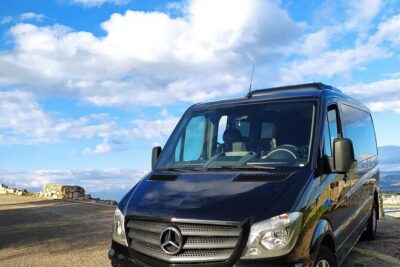
Meteora is stunning, but the logistics can drain your energy. Parking is tight, roads are winding, and getting around on your own can turn into a time-sink. The minibus approach removes that hassle. You’ll travel in a VIP minibus, with free Wi-Fi onboard—great for two things:
- sending photos home while you still have signals and charge,
- and checking your bearings in between stops without burning data.
You should still bring your own charging strategy. Wi-Fi is useful, but Meteora visits can be long on foot and phones tend to run hot in daylight. Still, this is one of the rare tours where the ride itself helps you keep up with your camera roll.
Also, the guide and driver are part of the experience. In the feedback I saw, people singled out how smoothly the driver handled the mountain roads and how enthusiastic guides kept things moving. If you’ve ever tried to navigate cliff roads at the wrong time of day, you’ll appreciate not having to do it.
Price reality check: what you pay now vs. what you pay at the monasteries
The tour price is $36.30 per person, for about 4 hours. That’s not just transportation. You’re buying:
- hotel pickup and drop-off,
- the guided sightseeing routing,
- an English-speaking local guide,
- free audio guides in several languages,
- and Wi-Fi in the bus.
But the big line item to know is this: monastery entrance fees are not included. You pay €5 per person per monastery, and the information here is clear that they only accept cash for entrance fees.
One more nuance: entry to monasteries is time-based and you’ll have time inside three monasteries, but any separate guided tour inside the monasteries is listed as not included. Practically, that means you’ll still be guided by your tour guide overall, but don’t expect a second, separate inside guide service to be bundled in.
If you want to budget without surprises, count how many monasteries you plan to enter during your stops. The tour includes six monasteries on the routing, and each one has its own €5 cash entrance fee if you go inside.
Dress code + stairs: the Meteora workout you should expect
Plan your outfit before you even pack. Meteora monasteries enforce a strict dress code:
- Men: long trousers and a shirt with sleeves.
- Women: skirts that fall below the knee; trousers are not permitted. Shoulders must be covered.
- Alternative: a long scarf can be wrapped around the waist to meet the rules.
This tour also includes monasteries that are easier and harder to reach. The tour description highlights that Holy Trinity is the most difficult access—visitors cross a downhill path and then climb 145 steps carved into the rock. That’s not an “optional stroll” if your legs are already tired.
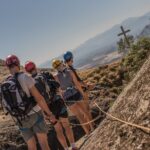
Also, the monastery site is full of stair steps even when the access is “easy.” Several people noted the uphill and down-up stair reality. So if you have knee issues or stamina limits, go in with a plan: wear grippy shoes, pace yourself, and use your visit time to stop, breathe, and then keep going.
Kastraki and the rock stops: where the story starts
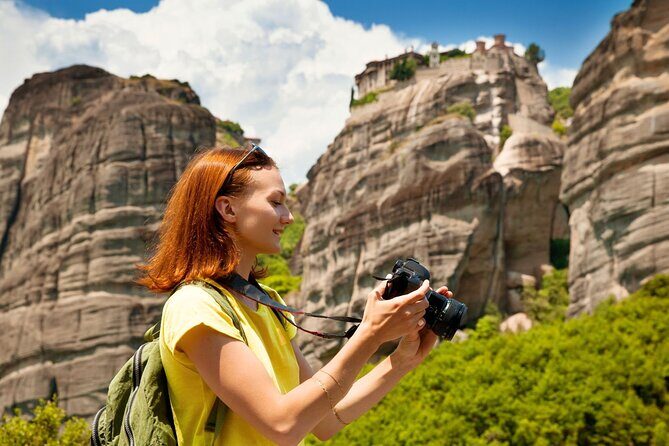
Your day connects Meteora’s monastery world with the human-scale town side first. After pickup, the tour heads toward Kastraki—a village meaning small castle, tied to a Byzantine castle tradition and ruins you can see around the area.
From there, the route sets the tone with early rock-top monastery views and a couple of “not just the obvious” stops. Along the way, you’ll see spectacular areas such as:
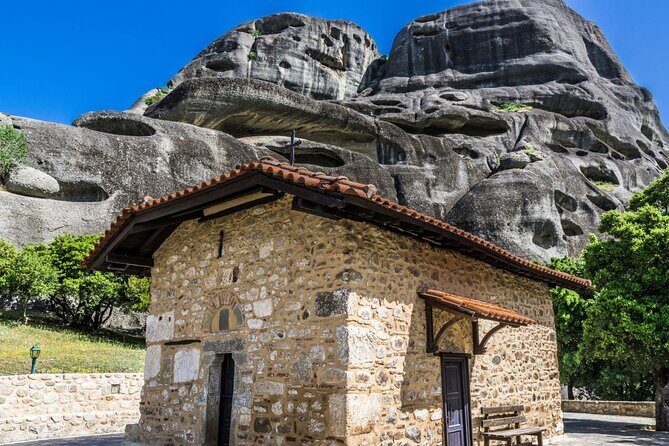
- the ancient Chapel of Doupiani,
- and the St. George Mandilas cave area.
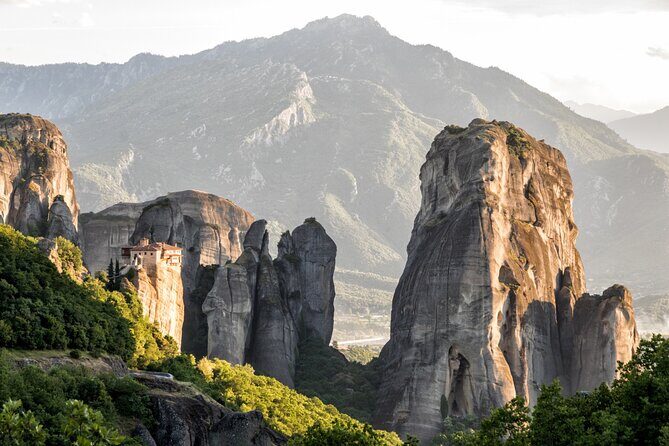
These are the kinds of stops that make the experience feel bigger than the monasteries themselves. You get a better sense for why hermits settled here roughly a thousand years ago—remote, visually dramatic, and tied to a life of isolation and devotion rather than convenience.


Saint Nicholas Monastery: the suspended-in-air feeling
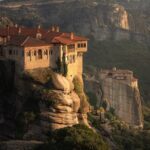
One of the first actual monasteries on the route is Saint Nicholas Monastery (Saint Nicholas of Anapafsas). It’s described as literally suspended on a small rock, and it’s also the first monastery encountered on the way from Kastraki toward the Holy Meteora rocks.
Your time here is about 20 minutes. That’s enough to:
- walk up and take in the look,
- enter if you choose (remember cash entrance fee),
- and understand why this monastery gives a “wow, it’s impossible” feeling even before you’re halfway through the day.
This is also a smart stop for photos because early in the tour the crowd pressure is lower than it can be later, and the light can still be flattering depending on the day.
Roussanou and Great Meteoron: inside time on two major rocks
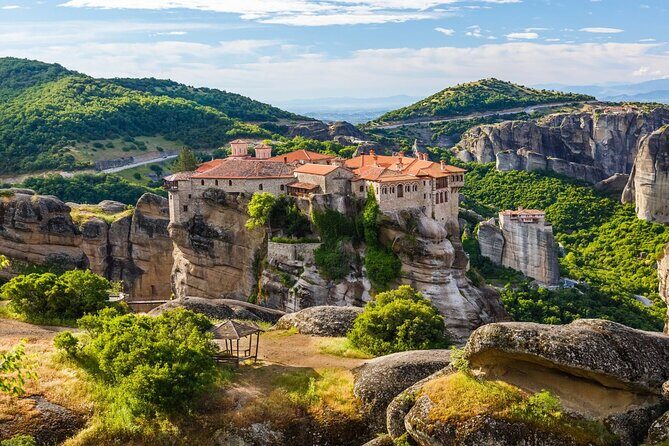
Next comes Roussanou Monastery (also known as Arsani). It sits on a steep cliff between Saint Nicholas Anapafsas and Varlaam. Your visit time is about 1 hour. This longer window matters because it gives you room to move slowly, take in details, and not feel like you’re rushing through a sacred space.
Then the tour moves to Great Meteoron (Transfiguration of Christ). This one is described as the oldest and most important monastery in Meteora. It’s also one of the best “big picture” stops because standing there helps you see the scale of the whole complex. Your visit here is about 1 hour as well.
If you care about meaning, these two stops give you the contrast:
- Roussanou gives you the cliff edge drama.
- Great Meteoron gives you institutional history—how the monastic system became anchored at such a hard-to-reach altitude.
The key practical point: both of these stops are time-consuming. Plan to do the stairs slowly, keep your phone protected from glare, and use your time inside to look around rather than sprinting for the single best photo angle.
Varlaam and the Holy Trinity challenge: when the steps start counting
After Great Meteoron, your routing takes you to Varlaam Monastery (Monastery of All the Saints), located opposite Great Meteoron. Like the previous stop, it’s allotted about 1 hour, giving you time to appreciate the rock setting and then settle into the interior views.
Then the tour includes Holy Trinity Monastery, described as the third oldest monastery and also the most difficult to reach. Your time here is about 20 minutes—short by design, because the access is physical. Visitors cross a downhill path and then climb 145 steps carved into the rock. The tour information also shares a tradition: early hermits supposedly used rope ladder and a net, taking 70 years to carry materials needed.
You don’t need to be an athlete to visit, but you should understand what the stop asks of you. With only 20 minutes on-site, it’s more about:
- getting up there,
- absorbing the scale,
- and using the time for the best views and interior entry if you’re able.
If you’re choosing between effort levels on the day, Holy Trinity is the clear one to treat as your “workout stop.”
Holy Monastery of Saint Stephen: the easiest finish near Kalambaka
To close the circuit, the tour goes to Saint Stephen Monastery (Agios Stefanos), positioned just above Kalambaka. It’s called the most accessible option because there are no steps to reach the entrance, and it’s reached through a small stone bridge.
Your visit time is about 20 minutes. This is a nice way to end: you get a final monastery moment without the same stair intensity as Holy Trinity. It also helps if you’re thinking about continuing your own exploration afterward. You’ll typically leave with enough energy to wander Kalambaka or grab a meal rather than collapsing into a post-tour slump.
Audio guides and how to use them without turning your brain into mush
Audio guides are included, and the languages offered are extensive: Spanish, French, German, Italian, Japanese, Chinese, and Korean (with the main guide speaking English). The key is what you need:
- bring your smartphone,
- bring earphones.
In practice, I like using audio guides at the moments you’re waiting between photo stops or when you’re standing in front of a wall or icon and want context. You’ll get a clearer sense for what you’re seeing without feeling forced to listen every second.
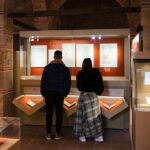
Also, the tour gives you interior time in three monasteries. That’s when audio helps most, because your eyes can be doing a lot at once. With audio running, the place starts making more sense.
Timing, weather, and what fog or rain can change
This experience is weather-dependent. The tour notes that it requires good weather, and if it can’t run due to poor conditions, you’ll be offered a different date or a full refund. That matters in Meteora because visibility affects everything: cliff views, distance perception, and photography.
If you end up with fog or light rain, the experience can still be very moving—just different. Plan for slower walking on wet stone and keep your sleeves and shoulders covered even if it’s warm.
Who this tour fits best (and who should consider another plan)
This tour is a strong match if you want:
- a half-day structure that shows you the major monasteries without car stress,
- time inside multiple monasteries,
- and photo-friendly stops with guidance.
It’s also ideal if you’re staying in Kalabaka or Kastraki and don’t want to manage parking or tricky roads. Several people in the feedback highlighted exactly that point—zero parking headaches and easier driving choices.
You might want to consider a different pace or a more flexible plan if:
- stairs are a major issue for you (Holy Trinity alone includes 145 steps),
- cash-only entrance fees are a problem because you can’t or don’t want to carry cash,
- or you’re expecting a long, inside-only guided program inside every monastery (this tour focuses on routing with guided context, while specific inside guided tours are listed as not included).
Should you book this Meteora morning half-day tour?
If you want the best “first look” at Meteora without turning your day into a navigation project, I’d book it. The combination of hotel pickup, small group size, free Wi-Fi, and the chance to see interiors in multiple monasteries makes this a practical deal for a limited schedule.
Just do two things before you go: pack for the dress code and bring cash for the €5 monastery entries. If you do that, you’ll spend your time where it counts—on the rocks, inside the monasteries, and learning why these places were built here in the first place.
FAQ
What time does this Meteora tour start?
The tour starts at 9:00 am. Pickup time depends on where you’re staying, with pickup from Kalabaka between 8:45 and 9:00 and from Kastraki between 9:00 and 9:15.
Where do you pick me up for the tour?
Pickup is offered from accommodations in Kalabaka or Kastraki. If your accommodation isn’t listed, you’ll need to contact the operator after booking with your accommodation name and address.
How much are the monastery entrance fees?
Entrance fees are not included. The tour lists a €5 per person entrance fee for each Meteora monastery, and you pay using cash.
Are guided tours inside the monasteries included?
The tour includes time to see the interiors of three monasteries, but a guided tour inside the monasteries is listed as not included.
Do you provide audio guides, and what do I need?
Yes. Free audio guides are provided in Spanish, French, German, Italian, Japanese, Chinese, and Korean. You’ll need your smartphone and earphones to use them.
What should I wear for Meteora monasteries?
Monasteries require covered shoulders and specific clothing. Men need long trousers and long-sleeve shirts. Women need skirts that fall below the knee, and trousers are not permitted; shoulders must be covered, or you can use a long scarf wrapped around the waist.