REVIEW · METEORA
Meteora Monasteries Half-Day Small Group Tour with Transport
Book on Viator →Bookable on Viator
Meteora makes your neck crane fast. This half-day small-group tour keeps things practical with pickup transport and an English local guide, taking you through the UNESCO rock-world of Meteora with photo stops along the way. I also like that you get interior time in three monasteries, plus exterior views of the rest, so you leave with the full picture. The one drawback: expect stairs, plus separate entrance fees once you’re onsite.
You start at 9:00 am from Kalambaka or Kastraki, and the group stays small (max 18). It’s designed for a true half-day—about 4 hours total—so it’s a smart choice if you want the Meteora highlights without losing your whole day.
In This Review
- Key highlights to know before you go
- Meteora in 4 hours: what this tour actually covers
- Pickup and getting oriented (Kalambaka or Kastraki, 9:00 am start)
- Saint Nicholas of Anapafsas: the “first on the way up” stop
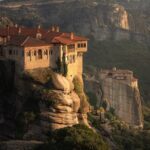
- Roussanou Monastery: easier access, big story
- Varlaam Monastery: the second-biggest, with a standout catholicon
- Great Meteoron: the oldest, the biggest, and the “suspended in air” legend
- Agia Triada (Holy Trinity) and Agios Stefanos: two steep viewpoints, two approaches
- Dress code and stairs: how to avoid a rough morning
- English-only guidance, smart audio support, and what that means for you
- Price and value: how $36.30 works once you add entrance fees
- Who this half-day tour is for (and who might want something else)
- Should you book this Meteora tour?
- FAQ
- What time does the Meteora tour start?
- Where is pickup offered for this tour?
- How long is the tour?
- What’s included in the tour price?
- Are monastery entrance fees included?
- What languages are available?
- Do I need cash for the monasteries?
- What should I wear for the monasteries?
- What is the cancellation policy?
Key highlights to know before you go
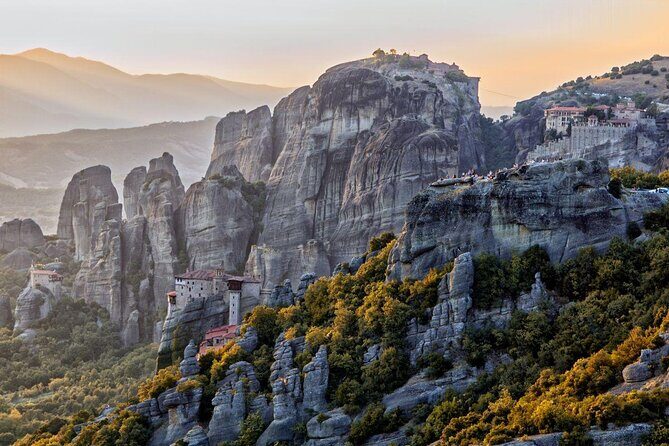
- Three interior monasteries, with extra exterior viewpoints to help you “read” Meteora fast
- English-guided route plus a free smart audio guide in multiple languages
- Photo-stop planning, with viewpoints timed around the drive and walking
- UNESCO + Natura 2000 context, so you understand why these rocks matter beyond faith
- Stairs and dress code are real, but you’ll be set up with clear guidance and optional solutions
Meteora in 4 hours: what this tour actually covers
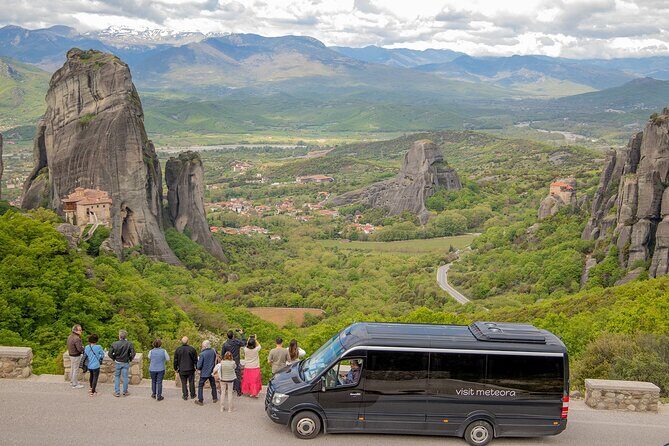
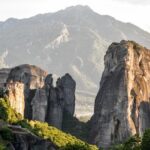
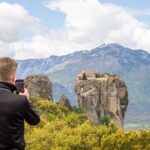
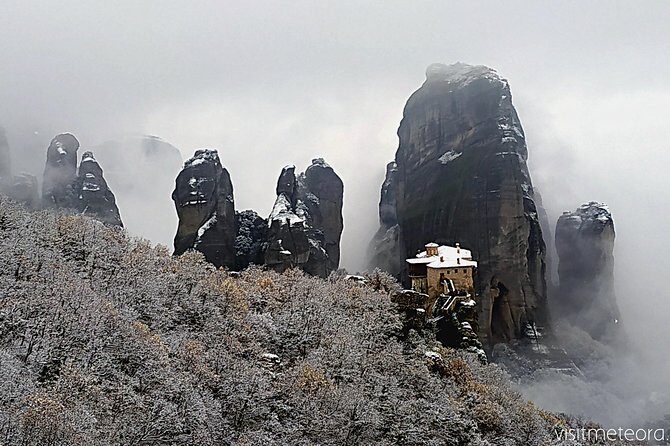
Meteora is one of those places where the setting feels like the main attraction—and it is. The rocks were topped by monasteries beginning in the 14th century through the 16th. At the peak, there were 24 monasteries scattered across summits, and today six monasteries remain open for exploring.
This tour is built around the most useful reality: you can’t see everything in one morning, but you can understand the “why” and still get inside the key sites. You’ll spend time at the monasteries that visitors can enter, then use outside stops and viewpoints to connect the dots across the plateau.
Also worth knowing: the region is UNESCO-listed, and the Meteora–Antichassia area has been recognized as a Natura 2000 ecological zone by Greece’s environment ministry. That matters because it frames the place as more than just architecture—it’s also birds and rare plants living in a protected landscape.
You can also read our reviews of more tours and experiences in Meteora.

Pickup and getting oriented (Kalambaka or Kastraki, 9:00 am start)
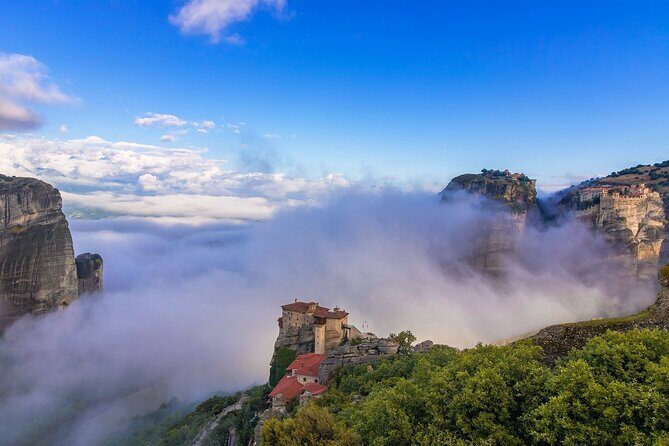
Logistics matter at Meteora because you’re bouncing between viewpoint roads and steep footpaths. This tour includes round-trip transport with hotel pickup and drop-off from Kalambaka and Kastraki (including Airbnbs in those areas), which saves you from hunting for buses or taxis with timing pressure.
Once you’re onboard, you’ll have bottled water and free WiFi. The day is paced to keep the travel time useful, not dead time—there are photo stops on the way and you get context before you climb.
The small-group size (up to 18) is one of the sneaky benefits. It’s not huge-coach crowded, and that helps when you need a quick bathroom break or when the guide needs to get the group moving before everyone starts wandering toward the next view.
Saint Nicholas of Anapafsas: the “first on the way up” stop
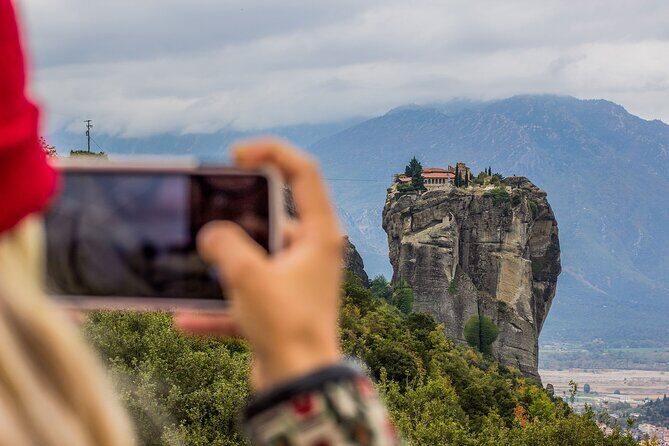
Your route begins with an encounter monastery that functions like a warm-up: Saint Nicholas of Anapafsas. It’s the first monastery you meet on the way to Holy Meteora, and it was founded at the end of the 14th century.
What I like here is that the guide uses this stop to explain how names and placement work in Meteora. Anapafsas has a few popular interpretations, including one tied to the monastery’s location: it was likely the first place up the rock route, so it may have served as a resting spot for pilgrims and visitors before continuing.
This is also a good moment to get your “walking brain” on. Even if you haven’t done the longest climb yet, the setting makes it obvious that every monastery visit is a small hike plus a dress-code performance.
Roussanou Monastery: easier access, big story
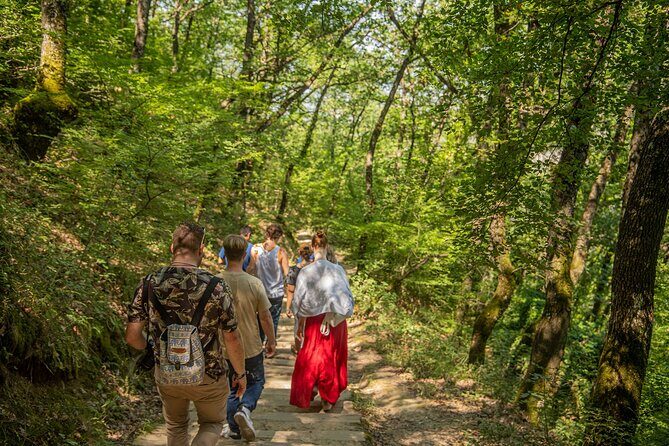
Next up is Roussanou, one of the monasteries with a lower elevation than some of the others. That matters because Meteora steps can feel endless, so a slightly more accessible rock gives you breathing room without taking away the magic.
The monastery is named for what’s believed to be the first hermit who settled on the rock. The main cathedral was founded at the end of the 16th century and decorated about thirty years later. It also has a clearer “life story” than many sites: it was originally founded by monks, then it suffered severe damage during World War II, and later became a convent in 1988.
You’ll typically spend around 45 minutes, and because it’s a monastery you enter, this is one of your best moments to slow down and notice details that you’d miss from the outside.
A practical note: entrance fees are not included for Roussanou. The stated cost is €5 per booking for this stop, so bring cash just in case.
Varlaam Monastery: the second-biggest, with a standout catholicon
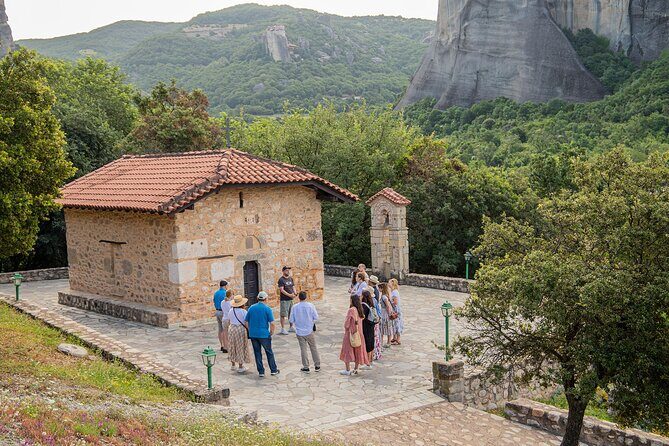
Varlaam is the second biggest monastery site, positioned opposite Great Meteoron. It was founded in the mid-14th century by Hosios Varlaam. This monastery is a great stop if you want “scale.” It just feels larger in the way it’s laid out on its rock.
The catholicon honoring the Agioi Pantes was built in 1541–1542 by two priest-monks from Ioannina. The main church decorations followed in 1548. One particularly interesting detail: a wall-painting is attributed—based on stylistic criteria—to a hagiographer from Thebes, Frago Catelano.
Varlaam also gives you a strong sense of how the monasteries were planned as a network across the rocks. You get a view line back toward Great Meteoron, which helps you understand the layout even if you’re not visiting every site inside.
Plan for about 45 minutes. Like Roussanou, entrance fees are separate (Varlaam is also listed as €5 per booking). Again: cash can be the simplest answer because not all monasteries accept cards.
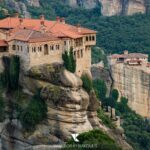
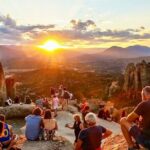

Great Meteoron: the oldest, the biggest, and the “suspended in air” legend
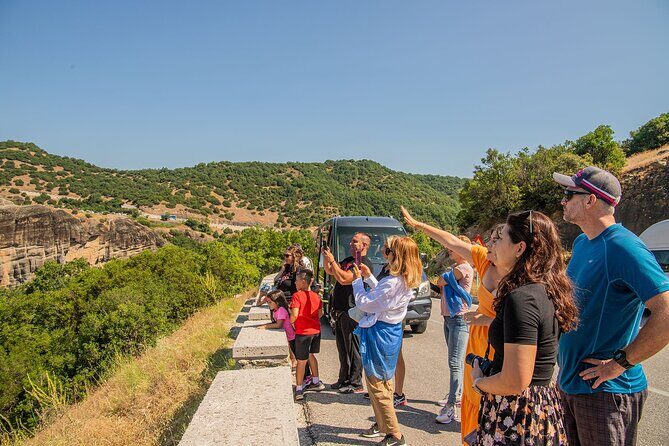
This is the anchor stop: Great Meteoron (the Great Meteoro Monastery). It’s the biggest and oldest monastery among those you’ll visit on this route, and it got the nickname tied to being “suspended in the air”—meteoro—because of the gigantic rock it sits on.
The story here matters because it connects the monasteries to organized monastic life. Great Meteoron was founded by Saint Athanasios the Meteorite, who organized systematic koenovion (community monastic life). In other words, it isn’t just an impressive building. It’s presented as a turning point—often treated as a beginning of organized monasticism in Holy Meteora.
You’ll spend about 1 hour, and because it’s the most prominent interior visit on this half-day route, it’s the best place to take your time with photos and details (without treating it like a quick “look and leave”).
Entrance is not included for this stop either, with a stated fee of €5 per person. If you’re trying to budget tightly, this is where planning ahead pays off.
Agia Triada (Holy Trinity) and Agios Stefanos: two steep viewpoints, two approaches
This is where Meteora starts testing your legs.
Agia Triada (Holy Trinity) is described as the most difficult to reach. Once you get to the top, though, the panoramic view is the payoff. You’ll follow a pathway first and then climb about 140 steps to get there. It’s also linked to documentation indicating it was organized as a monastery by 1362, referenced in a document connected to Symeon Uressis Palaeologos.
Then there’s Agios Stefanos, which is the opposite style. Instead of steps, you cross a small bridge to reach the entrance. That makes it a smart choice if stairs are your limit but you still want a real Meteora monastery experience. The beginning of monastic life on the rock of Agios Stefanos dates back to the early 12th century, with later founders/renovators mentioned as Hosios Antonios and Hosios Philotheos, who rebuilt the catholicon from its foundations in 1545.
Even if you’re not entering every single site here, these stops help you understand how Meteora’s “access” varies. Some monasteries feel like a climb to a fortress; others feel like a doorway into a cliff-top world.
Dress code and stairs: how to avoid a rough morning
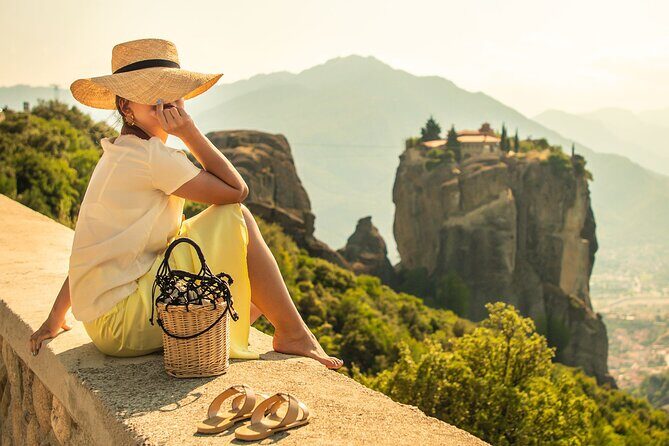
Meteora monasteries use a strict dress code, and it’s not optional. Men must wear trousers and long sleeves. Women must wear a long skirt. If you show up in shorts, trousers, or a short skirt, the tour notes say trousers and skirts will be provided.
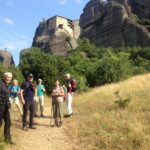
Shoes are the other big one. Bring comfortable shoes, because you’re dealing with uneven stone surfaces and uphill paths. This isn’t a gentle stroll.
One more practical tip: if you’re a solo traveler or you’re trying to get photos without disrupting the group, the guide and driver often help with timing and photo placement. In real-world experiences with this tour style, people have specifically appreciated guides who pause for viewpoint photos and take an active role in helping solo travelers capture good shots.
English-only guidance, smart audio support, and what that means for you
The tour is guided in English only, led by an English-speaking local guide. That’s great if you want a consistent narrative across stops rather than reading off signs.
On top of that, there’s a free smart audio guide available in multiple languages, including French, Spanish, German, Italian, Portuguese, Chinese, Japanese, Polish, and more. So if you have a partner who reads better in another language, you can use the audio as a backup without slowing the group down.
This matters for Meteora because the stories aren’t just dates. They include naming interpretations (like Anapafsas), rebuilding details, and the way monasteries relate to each other on the rocks.
Price and value: how $36.30 works once you add entrance fees
The listed price is $36.30 per person, and the value comes from what’s wrapped in: pickup and drop-off, guided time, bottled water, and time management through a small-group route.
Here’s the part to budget for: monastery entrance fees are not included. The tour data lists:
- Great Meteoron: €5 per person
- Roussanou: €5 per booking
- Varlaam: €5 per booking
So if you’re planning your day with the exact stops, you’re looking at additional cash on arrival (and it may vary slightly based on how the fees are charged per booking versus per person). The tour explicitly suggests you bring cash, because some monasteries don’t accept credit cards.
Still, for many visitors, the pricing makes sense because you’re not just buying access. You’re buying orientation and time efficiency. Meteora isn’t hard to see from afar—but it’s easy to miss why each monastery matters without someone putting the pieces together.
Who this half-day tour is for (and who might want something else)
This tour is a strong fit if you:
- want a morning plan that doesn’t swallow your whole day
- like guided context more than self-driving a route
- want inside access to major monasteries, not only exterior viewpoints
- prefer a max 18 group size over crowds
It may be less ideal if you’re trying to do ultra-detailed interior study of art, inscriptions, and museum displays. This route focuses on core visits and viewpoints, so if you’re chasing deep, slow interior attention across multiple sites, you might want a longer day or a more tailored approach.
One more note: the route includes both steep climbs and an easier access monastery option (Agios Stefanos with a bridge). That said, it’s still a walking day. If your mobility is limited, you’ll want to plan around stairs and uneven paths before committing.
Should you book this Meteora tour?
If you want Meteora in a half-day with transport, an English guide, and inside time at three monasteries, this is a very reasonable way to do it. The pacing is built for getting your bearings fast, especially if it’s your first visit and you don’t want to spend time figuring out parking and timing.
Book it if you value practical guidance and photo-stops that actually help you. Consider another option if you need lots of downtime, want every interior detail at a slower pace, or don’t want to deal with dress-code rules and stairs.
Either way, bring cash, wear shoes you trust, and accept the simple truth: Meteora is hard work. The views are the reward.
FAQ
What time does the Meteora tour start?
It starts at 9:00 am.
Where is pickup offered for this tour?
Pickup is offered from hotels and Airbnbs located in Kalambaka and Kastraki.
How long is the tour?
The duration is about 4 hours.
What’s included in the tour price?
The tour includes hotel pickup and drop-off, bottled water, free WiFi on board, interior visits to 3 monasteries, and you’ll see the other monasteries from the outside. It also includes an English-speaking local guide plus a free smart audio guide in multiple languages.
Are monastery entrance fees included?
No. Entrance fees for Great Meteoron (€5 per person), Roussanou (€5 per booking), and Varlaam (€5 per booking) are not included.
What languages are available?
The tour is guided in English only, and other languages are available via a free audio guide.
Do I need cash for the monasteries?
You should bring cash because some monasteries don’t accept credit cards.
What should I wear for the monasteries?
There is a strict dress code: men should wear trousers and long sleeves, and women should wear a long skirt. If you don’t have the right clothes, trousers and skirts can be provided.
What is the cancellation policy?
You can cancel for a full refund up to 24 hours in advance of the experience start time. If you cancel less than 24 hours before, it’s not refunded.