REVIEW · METEORA
Meteora Panoramic Morning Small Group Tour with Local Guide
Book on Viator →Operated by Meteora Thrones -Travel Center · Bookable on Viator
Monasteries perch on impossible rock. This half-day Meteora tour hits the big UNESCO sights by visiting all six monasteries on the cliffs and letting you step inside three, with round-trip pickup from Kalabaka or Kastraki. I love the 20-person max and the chance to enter three monasteries, not just look from afar. The one thing to consider is the pacing: it’s efficient, so you’ll want comfy shoes and you may feel a bit shortchanged if you like to linger.
Guides and drivers can make or break Meteora logistics. I like that this tour uses a local English-speaking team—people I’ve seen praised include Yannis, Nancy, Alexandra, Maria, Clement, Debbie, Anastasia, and Kristo—and the mini-bus handles the curvy roads so you’re not hunting parking spots. Expect air-conditioned comfort plus frequent stops for viewpoints and quick explanations of how the rocks formed—handy because you’ll be walking on uneven stairs and cliff paths.
In This Review
- Quick hits before you go
- What a 4-hour Meteora morning is really like
- Pickup, timing, and how not to waste energy
- Meteora cliffs and the monastery “why” at Stop 1
- Great Meteoron Monastery (Stop 2): what 50 minutes buys you
- Varlaam Monastery (Stop 3): another interior, different feel
- Rousanou (St. Barbara) Monastery (Stop 4): keep your energy for the last interior
- The “six monasteries” part: why the exteriors matter
- Walking, stairs, and what to wear (this part is not optional)
- Who this tour suits best
- Price and value: what you’re paying for
- My booking verdict: should you book?
- FAQ
- What time does the Meteora morning tour start?
- How long is the tour?
- Does the tour include entry fees to the monasteries?
- Will I visit all six monasteries?
- What if a monastery is closed?
- What should I wear to enter the monasteries?
- Is the tour affected by weather?
Quick hits before you go
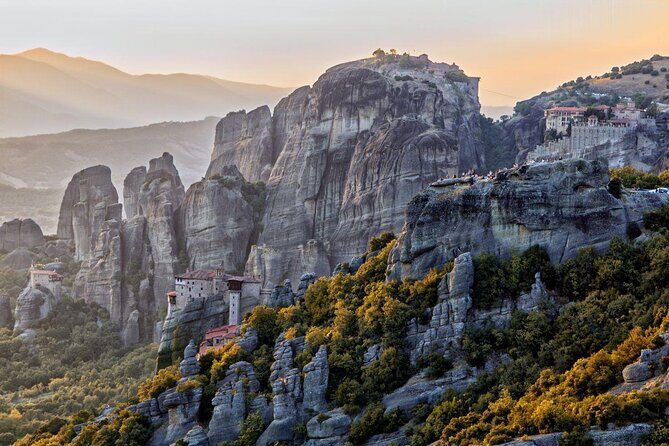
- All six monasteries, three interiors: you’ll see the full lineup and step inside where allowed by the daily timetable
- Viewpoint stops plus short walks: the stops are built for photos and for understanding the rock setting
- Local guide commentary (in English): from monastery life to geology, you won’t be guessing what you’re looking at
- Hotel pickup from Kalabaka or Kastraki: fewer hassles than trying to DIY it and time buses yourself
- Small group feel: a max of 20 travelers, so you’re not stuck behind a crowd at every stop
What a 4-hour Meteora morning is really like
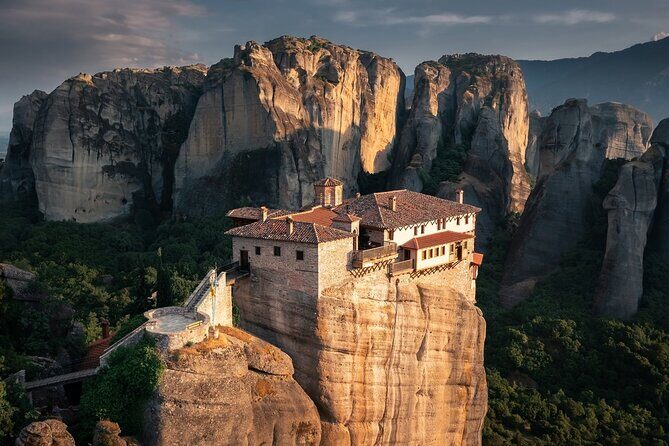
A half-day sounds short until you see the stairs. This tour is designed to fit everything in around the monasteries’ opening times, so it moves with purpose. The upside is you’ll get an overview fast—how the monasteries relate to each other, why monks chose these heights, and what the rock formations mean—without losing half your day to transit.
From the start, you’re set up for comfort and time: pickup is usually around 8:40–9:15 (depending on where you’re staying), and the tour runs about 4 hours total. You’ll ride in a luxury air-conditioned mini-bus, then hop off for viewpoint stops and a few short walks. Think of it as a guided hits-and-views route, not a slow museum stroll.
You can also read our reviews of more guided tours in Meteora

Pickup, timing, and how not to waste energy
The tour begins at Meteora Thrones – Travel Center in Kalampaka (Trikalon 28). If you’re staying in Kalabaka or Kastraki, you’ll be picked up from your hotel and brought back to the meeting point afterward. Since pickup timing depends on your hotel, it pays to be ready a little early—Meteora mornings can get busy, especially during peak season.
The mini-bus matters here. Meteora roads are twisty and hilly, and you don’t want to add driving stress to stair stress. In reviews, the driving gets praised again and again—people mention feeling safe while the bus handles difficult conditions. Also, you get free Wi-Fi, which is a nice bonus for quick messaging or map sanity checks while you wait to roll.
One more practical note: this tour is offered in English, and it’s built for a broad range of travelers. Children must ride with an adult. Service animals are allowed.
Meteora cliffs and the monastery “why” at Stop 1
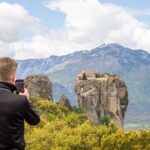
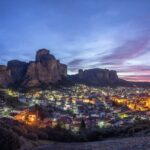
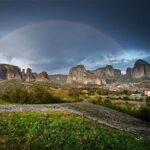
Stop 1 is the heart of the story: Meteora itself—those towering rocks rising toward about 2,000 feet. You’re not just visiting buildings; you’re learning how one of Greece’s biggest monastic communities could take root in a landscape that looks almost impossible at first glance.
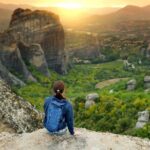
This is where the guide’s explanations become useful. You’ll get short walks and multiple viewpoint opportunities, plus commentary about geology and why the rock shape matters to the monasteries. Even if you’ve seen photos before, this is the moment when the place clicks: the vertical scale, the way paths and lookout points connect, and how the monasteries feel like they’re part of the cliff rather than sitting on top of it.
There’s also a good “photo rhythm” here. You’ll pause often enough to catch the light and angles, but not so often that you burn out before the real interiors.
Great Meteoron Monastery (Stop 2): what 50 minutes buys you
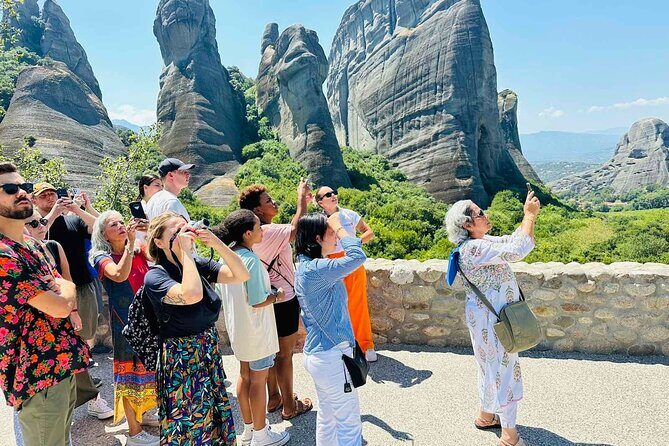
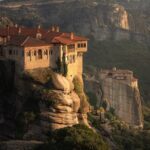
Great Meteoron is a centerpiece, and you’ll visit inside for about 50 minutes. This stop is all about getting a first true look at what monastic life looked like—and still looks like—in this setting.
A key thing to understand: admission fees for each monastery are separate. The tour covers the route and guiding, but you’ll pay the monastery entry fee on-site (listed as €5.00 per person for each monastery). The guide inside the holy monasteries isn’t included, so expect your tour leader to set up context and help you understand what you’re seeing, but the formal entry process is still on your own.
If Great Meteoron is closed on that particular day, the itinerary notes that they’ll go to another monastery following the timetable. That’s not a problem—it’s a reality of Meteora—just know your exact inside lineup may shift based on openings.
Pro tip: If you’re planning to photograph, balance your time between wide shots outside and details inside. The interiors reward slow looking, but your schedule is tight.
Varlaam Monastery (Stop 3): another interior, different feel
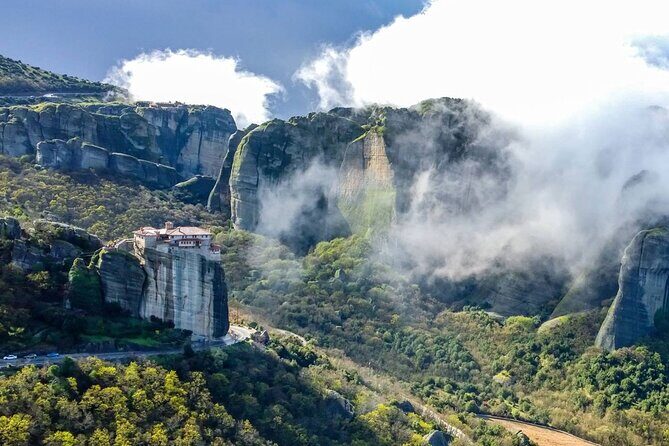
Varlaam is next, with about 45 minutes inside. This is a good second interior stop because it lets you compare. Even when monasteries follow a similar Orthodox monastic pattern, each site has its own layout and sense of space, shaped by the rock and the path that leads up to it.
The same practicals apply: the entrance ticket for the monastery is not included, and you should expect stairs and uneven steps as you move between viewpoints and interiors. If you’ve been imagining Meteora as a short walk-up, adjust your expectations now. Reviews repeatedly flag that walking up and down steep inclines and stair sections is real.
Pro tip: Use the guide’s notes before you head inside. A little context on what to look for saves time because you don’t spend your visit trying to decode everything on your own.
A few more Meteora tours and experiences worth a look
Rousanou (St. Barbara) Monastery (Stop 4): keep your energy for the last interior
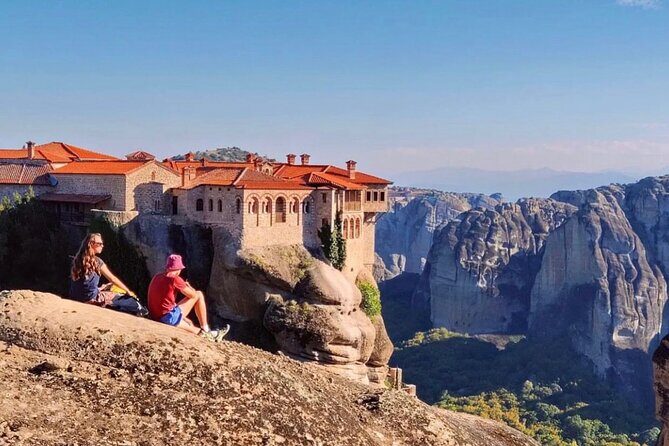
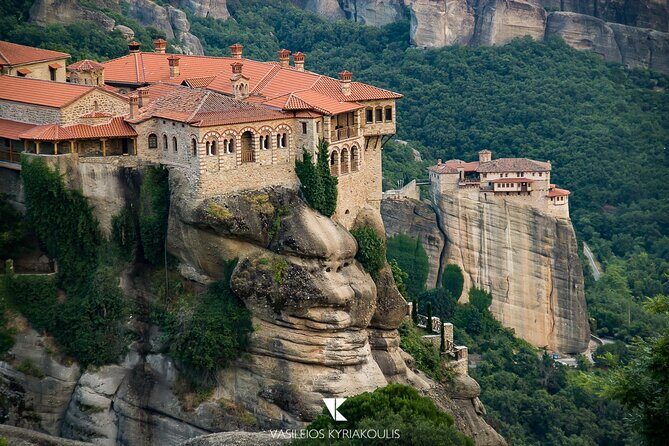
Rousanou (St. Barbara) is also about 45 minutes inside. By the time you reach this stop, you’ve already seen the big-picture layout of the cliff system—and you’ve likely absorbed a lot of the guide’s explanation. Now it becomes a deeper look at how these places functioned as spiritual centers in a remote, dramatic environment.
The tour keeps you moving, but this is still enough time to experience the space without feeling rushed every minute. Still, if you’re the type who likes to stop and reflect for a long stretch, you might feel the time squeeze. More than one review suggests the monasteries could use a bit more time inside. That doesn’t mean you can’t enjoy it—it just means you should plan to come back later for a slower personal visit if Meteora is your top priority.
The “six monasteries” part: why the exteriors matter
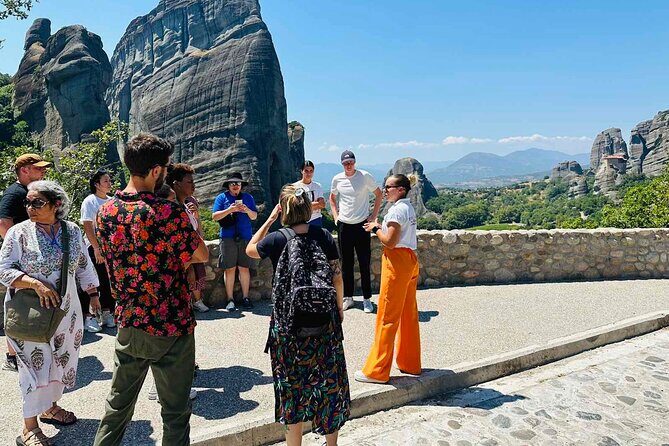
The highlight says you’ll see all six monasteries, with chances to enter three. The magic of Meteora isn’t only the interiors. The exteriors tell you how the sites connect visually: different vantage points, different cliff ledges, and different ways the paths cut into rock.
Seeing the full set gives you a cleaner mental map. Without that, you can end up treating each monastery like a separate postcard. With the full route, you start to understand the monastic geography—how monasteries form communities at different positions and how the views must have supported communication and daily life.
That’s also why the viewpoint stops aren’t filler. They help you interpret what you’ll see on the cliff edge and later while you walk.
Walking, stairs, and what to wear (this part is not optional)
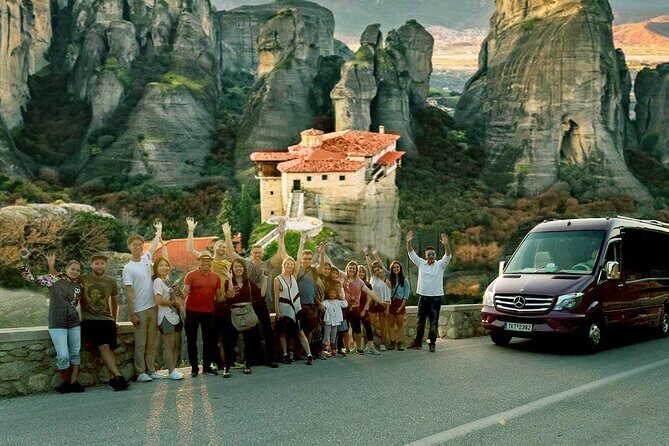
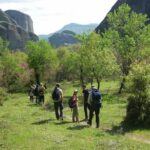
Meteora is a sightseeing tour, but it’s also a leg workout. Expect steps, steep inclines/declines, and short rocky paths between stops. If you’re even mildly nervous about heights or footing, wear shoes you trust.
Clothing rules for monastery entry are strict. Plan ahead:
- For ladies: skirts by the knee or longer are required. No pants, no shorts, no sleeveless shirts.
- For men: sleeveless clothing and shorts over the knee are prohibited.
The good news: the tour operates in all weather conditions, so you’ll want layers for wind or cooler morning air. The bad news: if you show up in outfits that don’t match the rules, you may have trouble entering. Bring something that fits the dress code and feels comfortable for stairs.
Who this tour suits best
This is a strong fit if you:
- Want a structured overview without the headaches of driving and parking
- Like learning as you go, especially about Greek Orthodox monastic life and the rock setting
- Prefer a small-group pace over a massive bus tour
It’s also a good choice for first-timers. Multiple guides are noted in reviews as engaging and effective in English—people name Yannis, Nancy, Alexandra, Maria, Clement, Debbie, Anastasia, and Kristo. That pattern suggests this operator takes guiding seriously, not as a checklist.
It may be less ideal if you:
- Want long, slow time inside each monastery
- Get annoyed by a tight schedule that depends on opening times and switching stops if needed
Price and value: what you’re paying for
At $36.30 per person for about 4 hours, this tour is priced like a practical morning “route plan” with transport and guidance. The real value question is the extra cost of monastery entrances.
On the day, you should expect an additional €5.00 per person for each monastery you enter. Since the tour aims for three interior visits, your typical add-on is around €15 total (exact total depends on what’s open and which monasteries are swapped in per the timetable).
Also note what’s not included:
- Meals and soft drinks
- Admission fees
- Guide inside the holy monasteries
So yes, there’s an extra line-item. But the tour does give you something you’d otherwise have to build yourself: efficient route planning, pickup from Kalabaka or Kastraki, safe transport up to the cliff area, and a guide who explains why these monasteries ended up here and how the geology supports the story.
If you’re trying to DIY it, you’ll spend time figuring out road access, timing openings, and parking. Paying this price often means you spend your energy looking, not routing.
My booking verdict: should you book?
Book this tour if Meteora is on your list but you want structure. The combination of round-trip pickup, a small group size, viewpoint stops, and three monastery interiors makes it a high-efficiency way to see the big UNESCO highlights in one morning.
Skip (or consider a slower plan) if you know you’ll want lots of quiet time inside each monastery. The schedule is designed for coverage, not lingering. In that case, you can still use this as your overview day—then return later to your favorite monastery when you’re ready to slow down.
If your goal is to get the lay of the land, understand the cliffs and monastic logic, and avoid the driving headache, this is a smart pick.
FAQ
What time does the Meteora morning tour start?
It starts at 9:00 am, with hotel pickup typically around 8:40–9:15 depending on your location in Kalabaka or Kastraki.
How long is the tour?
The duration is approximately 4 hours.
Does the tour include entry fees to the monasteries?
No. Admission tickets are not included. The cost listed is €5.00 per person for each monastery.
Will I visit all six monasteries?
You’ll see all 6 Holy Monasteries. You’ll have a chance to look inside 3 of them.
What if a monastery is closed?
The itinerary works off the monasteries’ timetable. If a specific site is closed, the tour goes to another monastery instead.
What should I wear to enter the monasteries?
You need appropriate clothing. For ladies: skirts by the knee or longer; no pants, no shorts, no sleeveless shirts. For men: no sleeveless clothing and no shorts over the knee.
Is the tour affected by weather?
It operates in all weather conditions, but it requires good weather. If it’s canceled due to poor weather, you’ll be offered a different date or a full refund.
If you tell me your hotel area (Kalabaka vs Kastraki) and your comfort level with stairs, I can help you decide whether the morning format fits your pace.