REVIEW · METEORA
Meteora: Private Morning or Sunset Monasteries Tour
Book on Viator →Operated by Meteora Trip · Bookable on Viator
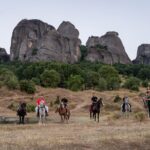
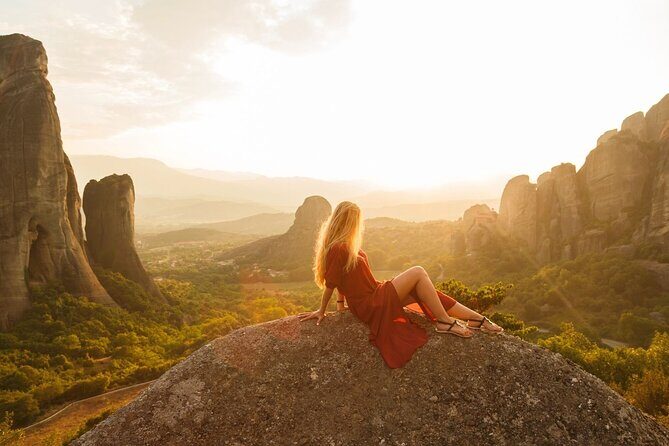
Meteora works best with the right plan. This private 4-hour tour in Meteora pairs hotel pickup with a local guide and timed stops, so you can see major monasteries in smart order. Pick the morning option for more time inside, or choose sunset for a slower golden-hour feel.
I love the chance to visit up to three monasteries on the morning tour without feeling rushed. I also like that the guide builds context as you move—so you understand why each monastery sits where it does, not just what it looks like.
One thing to factor in: this is not the same as a fully guided walk-through inside every site by default. The van/route has a guide, but entrance fees and guided time inside monasteries are not included unless you arrange it on request, and that can change how hands-on you expect it to be.
In This Review
- Key things that make this Meteora tour worth your time
- The real advantage: a private Meteora route with a guide who sets the scene
- Morning tour: up to three monasteries plus the best light for photos
- Roussanou Monastery: cliff-top drama with a quick stop feel
- Varlaam Monastery: the second largest rock monastery across from Great Meteoron
- Great Meteoron: the oldest and most important monastery in the complex
- Saint Nicholas of Anapafsas: suspended-feeling monastery on a small rock
- Holy Trinity (Agia Triada): more effort, bigger payoff if you’re up for stairs
- St. Stephen’s Monastery: easiest access and often a great “balance” stop
- Sunset tour: one monastery, plus the Byzantine church and the hermit-cave canyon vibe
- Byzantine Church of the Assumption of the Virgin Mary: oldest preserved monument detail
- The sunset monastery side: Saint Nicholas Badovas (Kofinas) and hermit-cave context
- Admissions, guide style, and how not to be surprised
- Van comfort and pacing: why the transport matters in Meteora
- Cost and value: is $240.96 per group a smart deal?
- Practical tips to make your Meteora day easier
- Should you book this private morning or sunset tour?
- FAQ
- What is included in this Meteora private tour?
- How many monasteries can I visit on the morning tour?
- How many monasteries can I visit on the sunset tour?
- Which sites are included on the sunset option?
- Are entrance fees included?
- Does the tour include a guided tour inside the monasteries?
- Is the tour really private?
- Where does pickup happen?
- How long is the tour?
- What’s the weather situation?
Key things that make this Meteora tour worth your time
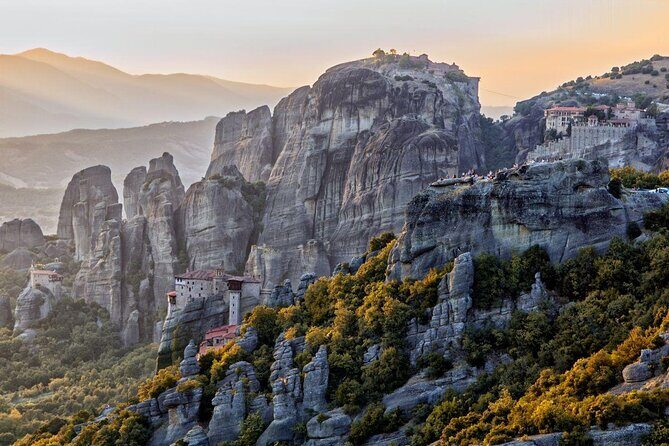
- Morning option = up to 3 monasteries in about 4 hours, hitting the big-name rock complexes efficiently.
- Sunset option adds the Byzantine Church of the Assumption of the Virgin Mary, plus the hermit-cave canyon area.
- Comfortable pickup from Kalabaka or Kastraki and transport by luxury van or minibus keeps logistics easy.
- St. Stephen’s Monastery is the most step-free option on the list, which helps if stairs tire you out.
- You may be guided by well-reviewed guides such as Nicolas/Nicholas or Vassilis, known for tailoring pacing and answering questions.
The real advantage: a private Meteora route with a guide who sets the scene
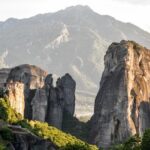
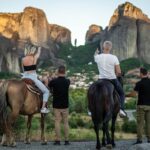
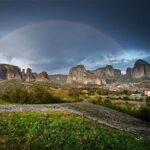
Meteora can be overwhelming at first. You’ll see the famous rock pillars, the monasteries clinging to cliffs, and you’ll wonder where to go so the day makes sense. This tour removes most of that stress with a private vehicle, pickup from your hotel area (Kalabaka or Kastraki), and a local guide who shapes the order of stops.
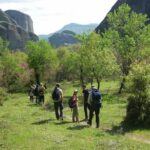
Because it’s private (your group only), you’re not forced into someone else’s pace. That matters in Meteora, where walking from parking to viewpoint can be short but the stair counts and cliff-top paths add up fast.
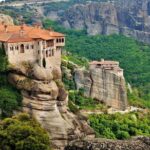
The guide also helps you see patterns. For example: Varlaam and Great Meteoron are positioned like opposites across the rocks, while Roussanou sits between other key monasteries. Once you catch those relationships, your photos start making more sense too.
You can also read our reviews of more private tours in Meteora

Morning tour: up to three monasteries plus the best light for photos

If you want maximum monastery time, choose the private morning tour. You can visit up to three monasteries, and the timing is often ideal when it’s cooler and daylight is crisp for photos.
A practical note: each monastery stop is relatively short on paper, but you’re usually not racing through them. You’ll be on the clock, yet you’ll have enough time to take in the views, walk the areas you’re allowed into, and get a feel for how each site sits on its rock.
Here’s what your morning route can include.
Roussanou Monastery: cliff-top drama with a quick stop feel
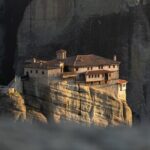
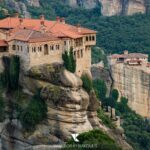
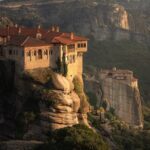
Roussanou (also known as Arsani) sits on an impressive steep cliff, between Saint Nicholas Anapafsas and Varlaam. Plan for about 30 minutes here.
What makes it special is the setting. This is Meteora as pure vertical spectacle—stone perched in midair. The upside of a shorter stop: it lets you see it without burning your legs before the bigger complexes.
Possible drawback: if you’re easily fatigued by uneven paths and stairs, a quick stop can feel just as short as you’d like it longer. Still, it’s a solid choice early in the day.
Varlaam Monastery: the second largest rock monastery across from Great Meteoron
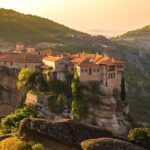
Varlaam (Monastery of All the Saints) is on an imposing rock opposite Great Meteoron. Expect about 1 hour.
This is the stop that tends to feel most substantial. If you want time to look around, read the details you can, and absorb the scale, Varlaam gives you breathing room.
Keep in mind that the “best view” often comes with “more walking.” If you know you’ll need rest breaks, morning is easier to manage than midday.
Great Meteoron: the oldest and most important monastery in the complex
Great Meteoron (Transfiguration of Christ) is the oldest and most important monastery. It usually gets about 30 minutes.
This is a must-see stop if it’s your first Meteora visit. The site’s importance shows in the architecture and the way the monastery dominates the rock-top experience. Even if you only have a short visit, it’s the kind of place where you still feel like you saw the main event.
You can also read our reviews of more evening experiences in Meteora


Saint Nicholas of Anapafsas: suspended-feeling monastery on a small rock
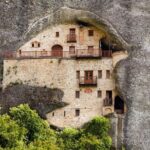
Saint Nicholas of Anapafsas is literally described as suspended in air on a small rock, and it’s the first monastery you typically meet on the way from Kastraki toward Holy Meteora. Expect about 30 minutes.
This is a good stop when you want variety. Roussanou, Varlaam, and Great Meteoron give you three strong “big picture” sites; Saint Nicholas adds a different rock-top feel and keeps your route from repeating the same view angle.
Holy Trinity (Agia Triada): more effort, bigger payoff if you’re up for stairs
Holy Trinity is noted as the third oldest monastery and the most difficult to reach, because you cross a downhill path and then ascend 145 steps carved into the rock. It’s about 30 minutes.
This is where you need to be honest with yourself. If stairs are a problem, you might choose to skip or go slowly with built-in rest. If stairs aren’t a concern, it can be one of the most rewarding stops because the approach itself is part of the experience.
Also, if you’re traveling in hotter months, the morning choice helps here.
St. Stephen’s Monastery: easiest access and often a great “balance” stop
Saint Stephen’s Monastery sits just above Kalampaka and is considered the most accessible of the listed monasteries. There are no steps to reach the entrance, and access is easy through a small stone bridge. Expect about 30 minutes.
I like this stop because it gives your legs a break without sacrificing a monastery setting. It’s also a smart addition if you’re doing a multi-monastery route and want at least one easier visit.
Sunset tour: one monastery, plus the Byzantine church and the hermit-cave canyon vibe
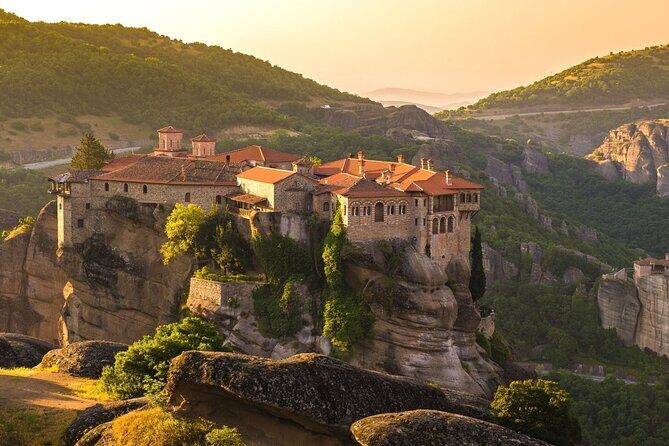
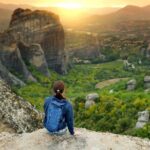
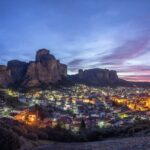
Pick the private sunset tour if you want Meteora to feel slower and more dramatic. The sunset format is built around twilight timing, and you’ll also include the Byzantine Church of the Assumption of the Virgin Mary, the hermit caves, and sunset viewpoints.
In the sunset tour, you can visit one monastery. That means less hopping, more time at the moments that matter most: golden light, big views, and the older sacred layer of the region.
Byzantine Church of the Assumption of the Virgin Mary: oldest preserved monument detail
The Byzantine church sits in Kalampaka’s old district and is described as the oldest preserved monument in the Meteora region. It’s believed to have been built before the 7th century, but the officially dated church is the 11th century (about 300 years before the construction of the monasteries in Meteora). Plan on about 30 minutes here.
What I find memorable about this church is that remnants of an ancient Greek temple of Apollo were embedded in the wall. Even if you only catch those details briefly, it anchors Meteora in a longer timeline than the monastery story alone.
The sunset monastery side: Saint Nicholas Badovas (Kofinas) and hermit-cave context
For the sunset experience, the monastery area described as Saint Nicholas Badovas or Kofinas fits nicely with the hermit-cave theme. It’s located on the edge of Meteora in the canyon that separates Kastraki from Kalampaka, inside a cave in a steep cliff.
A few specifics to know before you go:
- It was founded in the 14th century on the site of an older hermitage.
- It was renovated in 1893 by Eugenia, the first woman nun.
- The monastery was structured into six levels at about 50 meters from the ground.
- Inside, the temple (on the fifth floor) has superb 18th-century murals and ecclesiastical heirlooms.
- Today it remains uninhabited.
- You can also follow paths toward the hermitages of Saint Gregory the Theologian and Saint Anthony.
If you’re the kind of traveler who likes places with a story you can feel in the walls, this is a great match. If stairs and steep terrain are a deal-breaker, you should think carefully here, because multi-level cliff monasteries tend to involve lots of vertical movement even when visits are short.
Admissions, guide style, and how not to be surprised
This tour includes transportation and an English-speaking local guide, plus pickup from Kalabaka or Kastraki. What it does not include is the money for entries.
Entrance fees listed:
- €5 per person for each Meteora monastery
- €2 per person for the Byzantine Church
So your total cost depends on your choice:
- Morning: up to three monasteries means up to €15 per person in monastery entry fees, plus no mention of Byzantine church fees.
- Sunset: one monastery means €5 per person for that monastery, plus the €2 Byzantine church entry.
Also, guided tours inside monasteries are available upon request, but they’re not included by default. One review-style concern that’s worth taking seriously: the experience can feel closer to a private guided route with self-guided monastery time than a constant guided walkthrough inside every site.
That’s not automatically bad. It can work well if you prefer wandering at your own pace and using the guide’s explanations as you go. Just go in knowing you may still be doing a lot of your monastery time by yourself unless you arrange extra guided entry.
Van comfort and pacing: why the transport matters in Meteora
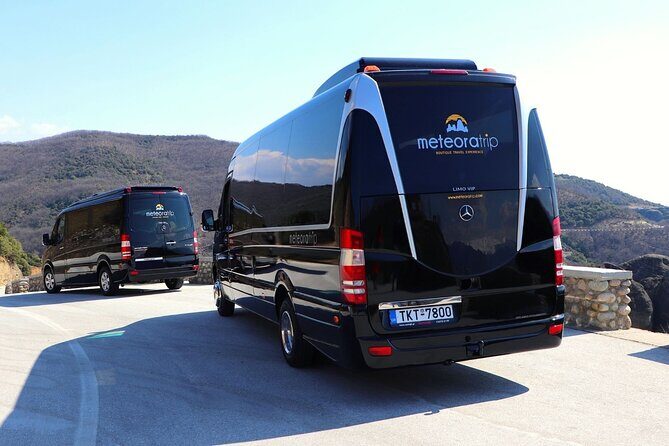
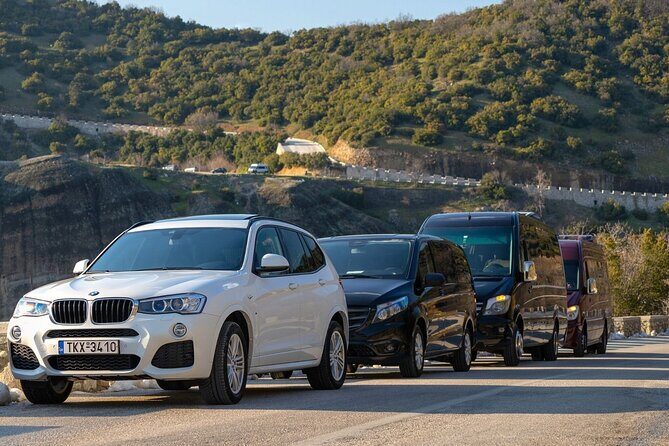
Your transport is a luxury van or minibus with convenient pickup and dropoff. In Meteora, that’s more valuable than it sounds.
You’re switching between viewpoints, cliff-top areas, and the monastery access roads. When you’re on your own, you spend time figuring out parking, routes, and getting everyone back together. With a private setup, you spend that time actually looking.
It also helps that the guide can tailor the morning for your group needs. One memorable detail from guide feedback: a guide handled mobility limitations with care and without turning it into a fuss, making the pace workable while still hitting multiple monasteries.
If you’re traveling with someone who needs a slower cadence, this is a strong sign to book rather than plan a self-drive day.
Cost and value: is $240.96 per group a smart deal?
The price is $240.96 per group, up to 3 people, for about 4 hours. If you have a full group of three, that’s roughly $80 per person before monastery entry fees. If you’re traveling as a pair, the per-person value drops, but you still gain the private vehicle and pickup.
So where does the value come from?
- You save time and stress by starting with pickup and ending with dropoff.
- You get a local guide to explain what you’re seeing and why the monasteries are where they are.
- You control pacing more than you would on a larger group tour.
Where it might not be the best deal:
- If you’re comfortable driving yourself and you’re fine with a do-it-yourself route, you may save money on transport and guide time.
- If you want a guide inside every monastery for the full visit, you may need to request additional guided time and factor that into your planning.
Practical tips to make your Meteora day easier
A few things can make a big difference, especially since monastery access often involves uneven ground and stairs.
- Wear shoes with solid grip. Meteora paths can be steep and rocky.
- Bring water, especially for the morning route and for Holy Trinity’s 145 steps climb.
- For Holy Trinity (Agia Triada), plan extra time for the stair effort. Even though the stop is listed as about 30 minutes, you’ll move slower if you take breathers.
- If you’re choosing sunset, dress for temperature changes. Twilight can feel cooler than you expect after a warm afternoon.
- Have realistic expectations about what’s included: transport and route guidance are included; monastery entry fees and optional guided time inside may not be.
Should you book this private morning or sunset tour?
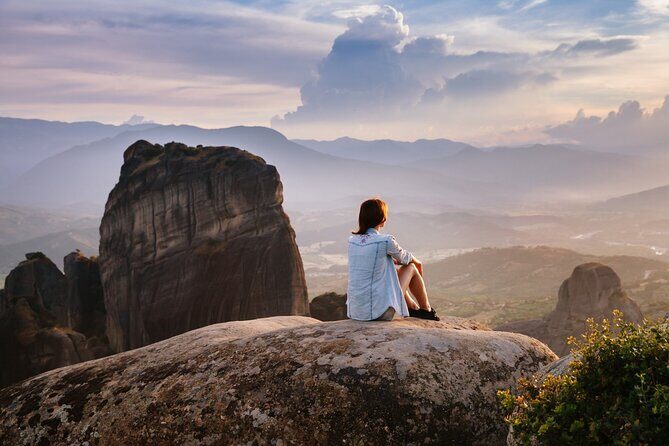
Yes, I’d book it if you want an easier day with fewer logistics and you like learning as you go. The private transport plus pickup from Kalabaka or Kastraki makes Meteora manageable, especially if you don’t want to stress about parking and route timing.
Choose the morning tour if your priority is seeing more monastery interiors—up to three stops is a strong way to get the main sights without turning the day into a marathon. Choose the sunset tour if you care about atmosphere, want the Byzantine Church of the Assumption in Kalampaka, and like the hermit-cave canyon story tied to Saint Nicholas Badovas (Kofinas).
Skip or consider carefully if you’re expecting a fully guided walkthrough inside every monastery at no extra cost. If you’re okay with self-paced interior time and you’ll use the guide for context outside and between stops, you’ll likely love how smooth the day feels.
FAQ
What is included in this Meteora private tour?
You get a 4-hour private morning or sunset sightseeing tour, an English-speaking local guide, pickup and dropoff from your accommodation in Kalabaka or Kastraki, flexible starting time, and transport by a luxury van or minibus. You also receive a mobile ticket.
How many monasteries can I visit on the morning tour?
On the private morning tour, you can visit up to three monasteries during the 4-hour experience.
How many monasteries can I visit on the sunset tour?
On the private sunset tour, you can visit one monastery during the experience.
Which sites are included on the sunset option?
The sunset option includes the Byzantine church of the Assumption of Virgin Mary in Kalampaka, the hermit caves, and Meteora’s sunset. You will also visit one monastery.
Are entrance fees included?
No. Entrance fees are not included. Meteora monastery entrance fees are listed as €5.00 per person per monastery, and the Byzantine church entrance is listed as €2.00 per person.
Does the tour include a guided tour inside the monasteries?
Guided tours inside the monasteries are not included by default, but they can be arranged upon request.
Is the tour really private?
Yes. This is a private tour/activity, meaning only your group participates.
Where does pickup happen?
Pickup and dropoff are offered from your accommodation in Kalabaka or Kastraki.
How long is the tour?
It’s listed as about 4 hours.
What’s the weather situation?
The experience requires good weather. If it’s canceled due to poor weather, you’ll be offered a different date or a full refund.